ADVERT
World2 min(s) read
Published 10:24 07 Sep 2018 GMT
Yesterday, in the Gulf coast state of Veracruz, Mexican investigators announced that they had uncovered a mass grave containing 166 human skulls. For security reasons, the exact location of the site cannot be disclosed, but detectives have implied that it is most likely a clandestine pit used by a drug cartel in order to dispose of victims they have killed.
The Veracruz state prosecutor, Jorge Winckler, has disclosed that the human remains were believed to be at least two years old, and there was still the possibility that more bodies would be discovered as the investigation goes on.
Already, other human remains such as skeletons and items of clothing have been unearthed, but investigators are focusing on the skulls for now because it gives a better indication of how many people have been dumped on the land.
The investigation into the site began around a month ago, when a witness told law enforcement officers that "hundreds of bodies" were buried at the site.
Families of missing people had already been searching the area for evidence of bodies, but were told to stay away once the police got involved. Many people were unhappy about this, especially as investigators have been known to botch operations similar to this one in the past.
Lucia Diaz, an activist who works with Colectivo Solecito in order to locate burial grounds, has said that she is wary about this most recent announcement.
"We don’t trust the work they do, we have a lot of reasons," she told Associated Press. "In this case they took out 166 bodies in one month? It cannot have been done properly. It’s impossible, too quickly."
According to her, similar operations in the past have seen some of the human remains get damaged by investigators handling them incorrectly or working in a hurry rather than taking their time to uncover and preserve all the evidence.
[[twitterwidget||https://twitter.com/falllikeweather/status/1037861755068674048]]
This is not the first time that a grave of this size has been discovered, either.
In 2016 and 2017, investigators in the same state discovered the remnants of 253 people just outside of the capital. Again, they were tipped off by relatives of some of the missing people, who in turn had been informed by someone who gave them a hand-drawn map of the gravesite.
What's more, 236 bodies were found in the capital of Durango state seven years ago, and 193 corpses were unearthed in Tamaulipas state - just north of this most recent gravesite.
Officials believe that most of the bodies found in past investigations belonged to Mexicans who were attempting to flee the country and head into the USA, but were tragically kidnapped and killed before they could reach their destination.
[[twitterwidget||https://twitter.com/RT_Dailey/status/1037800715769532416]]
So far, investigators have found 114 ID cards in 32 separate burial pits within the site - but the search is far from over. On the contrary, it has only just begun, as the bodies have all yet to be identified, and their murderers put to justice.
For families of missing people in the area, this discovery has come as a heavy blow to any hopes they may have had left that their loved ones were alive. But, at the same time, it gives them hope that this terrible part of their lives may soon be put to rest.
world3 min(s) read
Published 08:58 02 Jul 2025 GMT
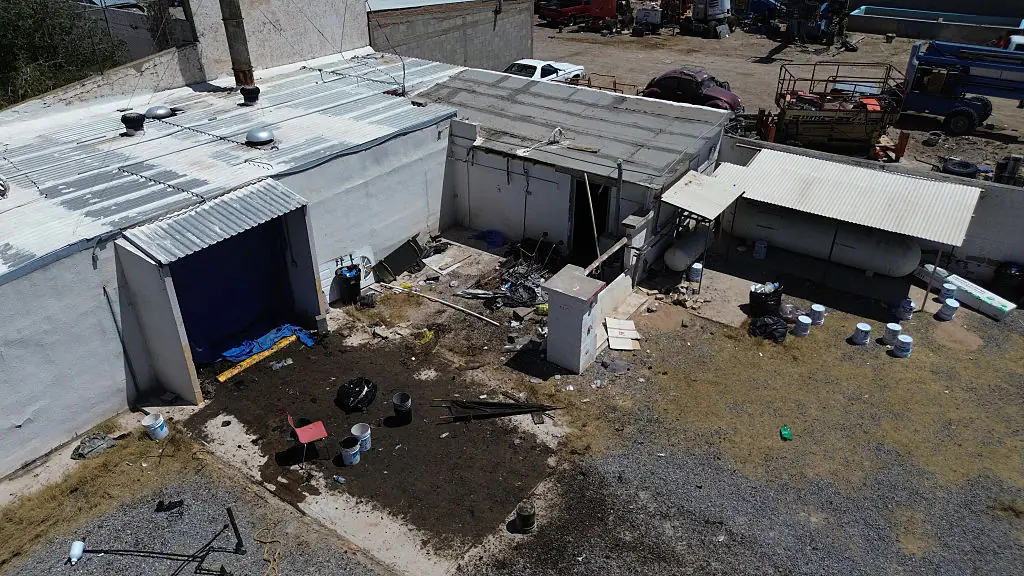
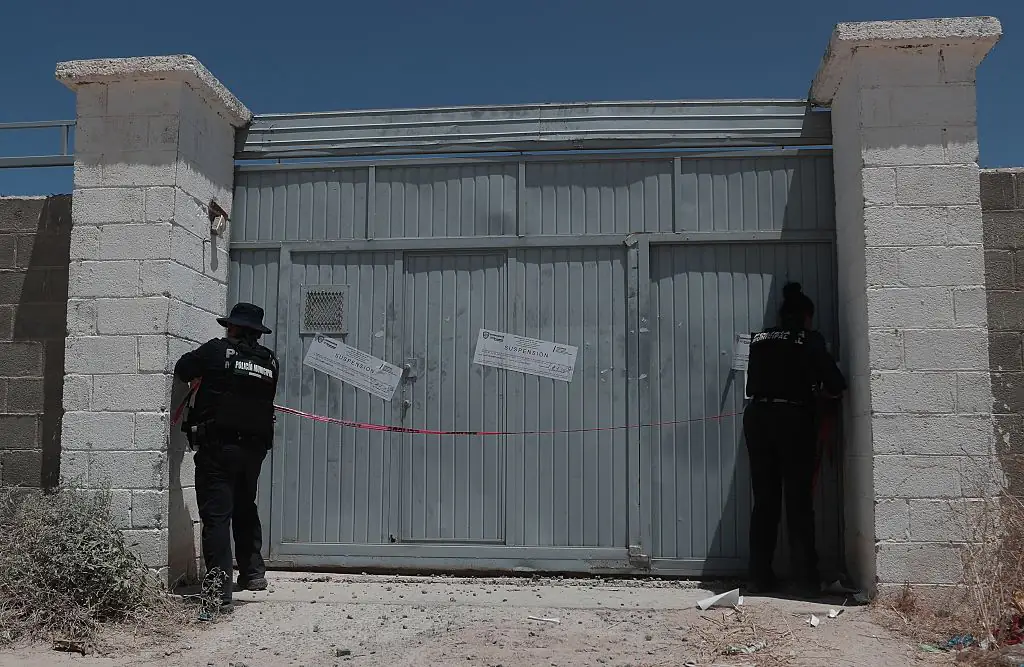
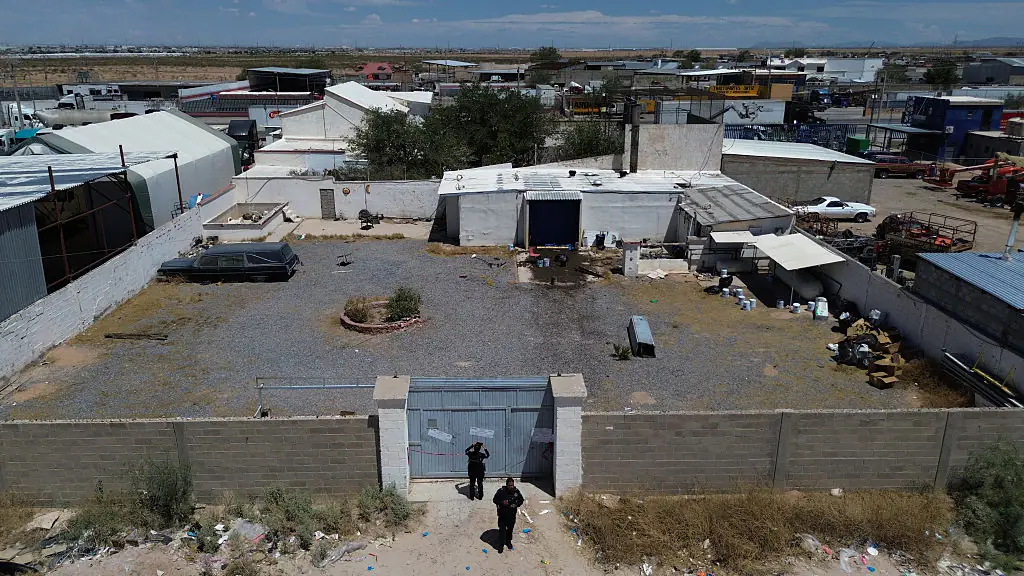
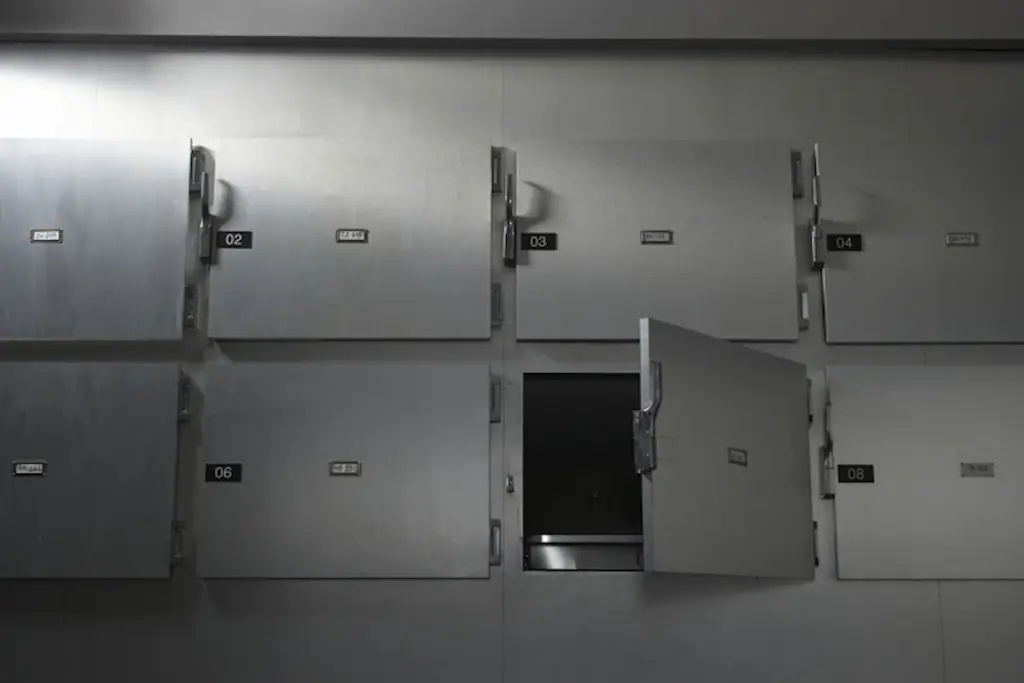
Police have discovered nearly 400 neglected corpses abandoned on the floor of a private crematorium.
The shocking find was made in Ciudad Juarez, just across from El Paso, Texas, at a nondescript building, per KVIA.
Investigators were led to the property by a tip, uncovering what is now being described as a scene of gruesome neglect.
The Chihuahua state prosecutor’s office revealed that “preliminarily we have 381 bodies that were deposited irregularly in the crematorium, which were not cremated,” according to communications coordinator Eloy Garcia, per the New York Post.
Garcia described how the corpses were “stacked” on top of one another at random through various rooms in the building, adding: “They were largely just thrown like that, indiscriminately, one on top of the other, on the floor.”
The bodies, many of which had been embalmed for funerals or transport, were left abandoned, with authorities estimating some had been lying there for up to two years.
Families who believed they were receiving the ashes of their loved ones were instead given “other material” in lieu of ashes, Garcia said, adding it was unclear what exactly those items were.
State officials said many of the bodies came from six different funeral homes in Juarez, with relatives under the impression their loved ones' bodies had been properly processed.
“They constantly received bodies for cremation,” Chihuahua Attorney General Cesar Jauregui said.
“They misrepresented hundreds of times to funeral companies that they would be cremating those bodies.”
Owner Jose Luis Arellano Cuaron and an employee will face charges of improper disposal of bodies, and further charges could follow as remains are examined to determine whether any are victims of foul play.
While the owner reportedly had three licenses to operate at one point, it remains unclear if the business was in good standing.
The governor of Chihuahua condemned the crematorium’s operators as “irresponsible and unscrupulous people who misused these licenses and permits.”
The discovery could bring answers for many families in a city plagued by cartel violence and disappearances.
“Of course, all the families and we ourselves were worried and wondered who is there? What bodies are there? Are they identified? The mothers told us, ‘My daughter is not there,’” said Yadira Cortez, a representative from the Ciudad Juárez Women’s Roundtable Network, per KFOX.
Garcia pointed to “carelessness and irresponsibility” on the part of the crematorium, noting: “You can’t take in more than you can process.”
He explained that some staff had fled before the raid, and one administrator turned himself in to prosecutors.
The case also highlights Mexico’s struggle with overwhelmed forensic systems due to the sheer number of bodies needing processing, limited staff, and tight budgets.
The state has opened a process for families who believe their loved ones may be among the bodies, asking them to bring an official ID, a description of what their loved one last wore, and the name of the funeral home that handled their remains.
us2 min(s) read
Published 08:15 20 Jul 2018 GMT
Despite its relatively short history, the USA has a lot of skeletons in its collective closet - some of which are less metaphorical than others.
In April of this year, while working on the construction of a new school, the Fort Bend Independent School District of Texas discovered the remains of almost 100 bodies in an unmarked cemetery. The bones, which have been estimated to be from around 1878 to 1911, were turned over to archaeologists in order to determine their origin - and, as of this week, the researchers believe they might know how the bodies wound up there.
As you may have been able to predict, though, it's not exactly a happy story.
About half of the remains have been exhumed so far and, of those that have, around 20 have been analysed. So far, from that small sample, archaeologists have learned that all but one of them is male and that they range in age from 14 to 70.
Most disturbingly, though, is that all of them are African American, which - along with other evidence - indicates that these remains belong to people who were forced into slavery after the barbaric practice was declared illegal. It is believed that those laid to rest here were part of the "convict lease" system, whereby the state of Texas sent black criminals to live and work on plantations instead of serving out their terms in prison.
The strongest evidence for this is that the land the bodies were found on was a known for its sugar cane plantations and prison camps. It was nicknamed the "Hellhole on the Brazos" on account of how many convicts died while working in harsh conditions.
[[twitterwidget||https://twitter.com/KPRC2Syan/status/1018878824669425671]]
Reginald Moore, who was once a Texas State prison guard in the 1980s, has been working hard to get recognition for those who died while serving their terms on plantations during the late 19th/early 20th centuries.
Even before the bodies were uncovered, Moore had suspected that a mass grave may have been lying undiscovered in the area.
"I always had a feeling something was there," he said.
"I felt like I had the duty to be an advocate for them and to speak from the grave for these people ... When I went out there and seen those bodies, I felt so elated that they would finally get their justice. It was overwhelming for me. I almost fainted."
University of Houston anthropologist Ken Brown, who is now involved in uncovering more information about the 95 dead, expressed his disappointment that nobody listened to Moore sooner. However, he also acknowledged that sites like this are difficult to find.
[[twitterwidget||https://twitter.com/HistMiss/status/1019702108428406784]]
"When you have plantations where you have African-American cemeteries, they’re not marked in the same way as European-American cemeteries," Brown explained. "They’re not recorded as well, and they have a tendency to be either removed from the ground or simply built over."
Moore has said that he would like to see the gravesite being preserved as it is, with a marker for those that lost their lives at the hands of an unfair justice system.
world4 min(s) read
Published 13:14 18 Sep 2023 GMT
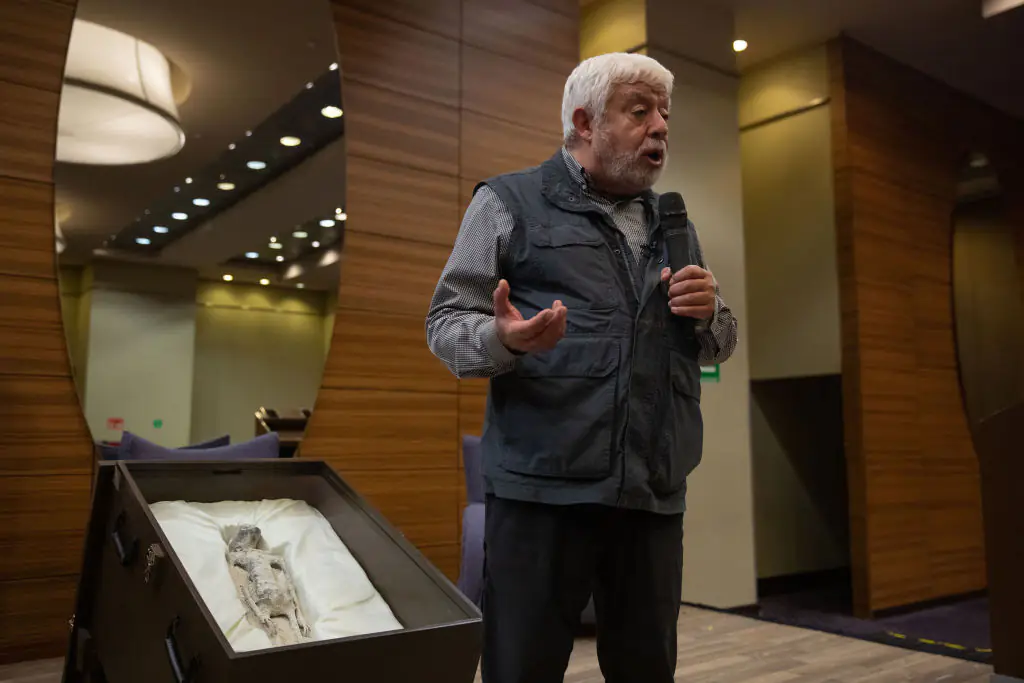
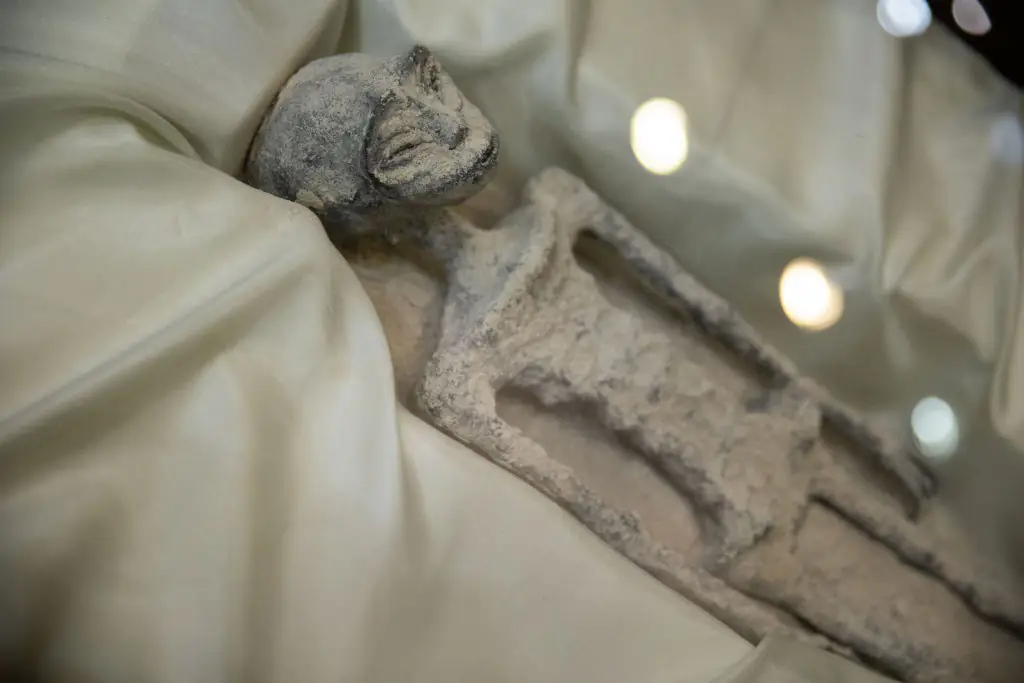
Following the unveiling of alleged "alien corpses" in Mexico, a criminal probe has been launched into the expert who presented them.
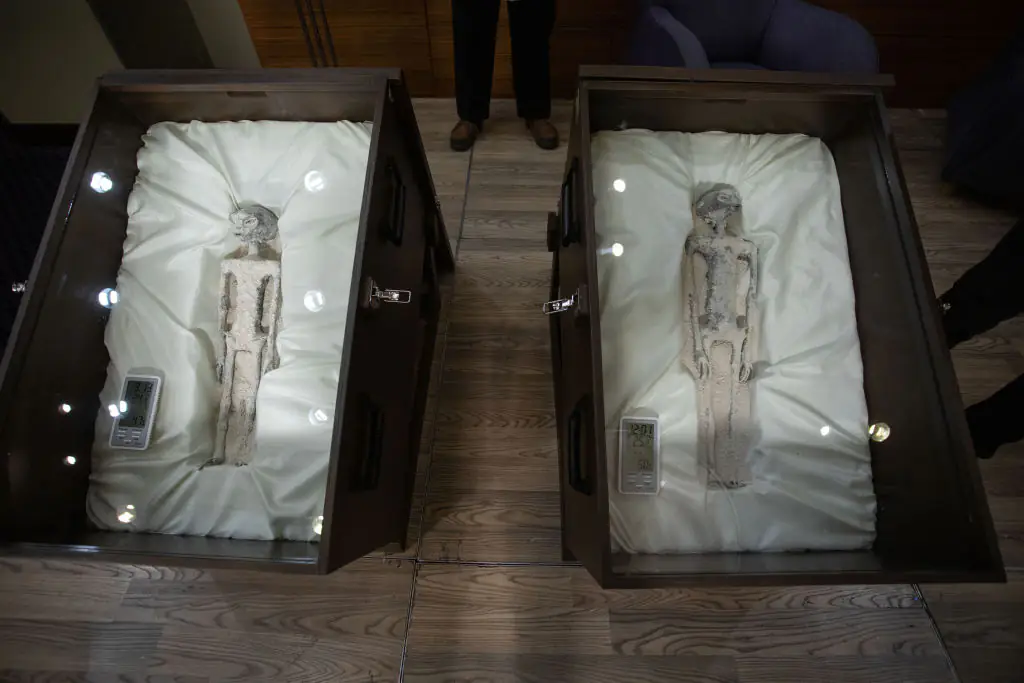
As previously reported, renowned UFO investigator Jaime Maussan, accompanied by a team of distinguished scientists, presented two intriguing specimens before the Mexican Congress on September 12.
The remains, securely encased in transparent containers and allegedly recovered from the depths of Cusco, Peru, have raised eyebrows with their otherworldly characteristics.
Researchers assert that these entities do not fit into the human evolutionary chain, leaving approximately 30 percent of their genetic makeup shrouded in mystery.
As reported by Sky News, these ancient remains are estimated to be approximately 1,000 years old. Carbon dating conducted by the National Autonomous University of Mexico (UNAM) confirmed their age, revealing features like three-fingered hands, a conspicuous absence of teeth, and stereoscopic vision - all dating back over a millennium.
The figures, displayed in the congressional setting, exhibited a humanoid shape with a retractable neck and elongated skulls. These beings possessed lightweight yet robust bones and were entirely toothless.
However, critics have pointed out an unusual anomaly - the specimens appeared to be coated in a substance resembling sand, a detail rarely seen in well-preserved fossils subjected to rigorous scientific scrutiny.
Following this remarkable discovery, Maussan now finds himself at the center of a criminal probe, as officials in Peru are questioning how he obtained the remains and got them out of the country.
As reported by LBC, Peruvian officials insist that the remains are from Earth, with Culture Minister Leslie Urteaga adding that they are investigating how the "pre-hispanic" bodies left the country.
Maussan said: "I'm not worried. I have done absolutely nothing illegal," but refused to explain how he obtained the bodies, adding that he would reveal all at a later date.
Retired US Navy Director and former Navy pilot Ryan Graves, a witness to UAP sightings and government classifications, was also at the presentation.
Graves had previously asserted that UFOs were an "open secret" within the military, disclosing that his squadron had routinely detected unidentified objects off the coast of Virginia in 2014.
However, it would appear that Graves also has doubts about the validity of Maussan's findings.
He tweeted: "After the U.S. Congressional UFO hearing, I accepted an invitation to testify before the Mexican Congress hoping to keep up the momentum of government interest in pilot experiences with UAPs [unidentified anomalous phenomena].
"Unfortunately, yesterday’s demonstration was a huge step backwards for this issue. My testimony centered on sharing my experience and the UAP reports I hear from commercial and military aircrew through ASA’s witness program.
"I will continue to raise awareness of UAP as an urgent matter of aerospace safety, national security, and science, but I am deeply disappointed by this unsubstantiated stunt."
This wouldn't be the first time that Maussan's findings were shrouded in controversy, as in the past he had presented similar findings, only for them to be proven to be the mummified remains of children.
UNAM has confirmed that although they assessed the remains to be over 1,000 years old, they were unable to verify the origins.
us3 min(s) read
Published 10:03 04 Nov 2025 GMT
Federal authorities are investigating a shocking discovery made near Las Vegas after more than 300 piles of cremated human remains were found scattered across the desert.
This unsettling find has raised serious questions about how the ashes ended up in such a remote location and whether a local funeral home or cremation business may be responsible.
The investigation began in July when a local man stumbled upon roughly 70 suspicious piles of human ashes along a dirt track near Searchlight, Nevada, about an hour south of Las Vegas, per News4.
What initially seemed like an isolated incident soon escalated when further searches revealed additional piles, eventually totaling 315 separate locations of cremated remains, which were confirmed to be human.
Crews from Palm Mortuaries and Cemeteries were called in to handle the remains, which were described as "cremains" - pulverized bone fragments from cremation.
The remains were found in a desolate stretch of land on Bureau of Land Management (BLM)-managed territory, far from any urban areas.
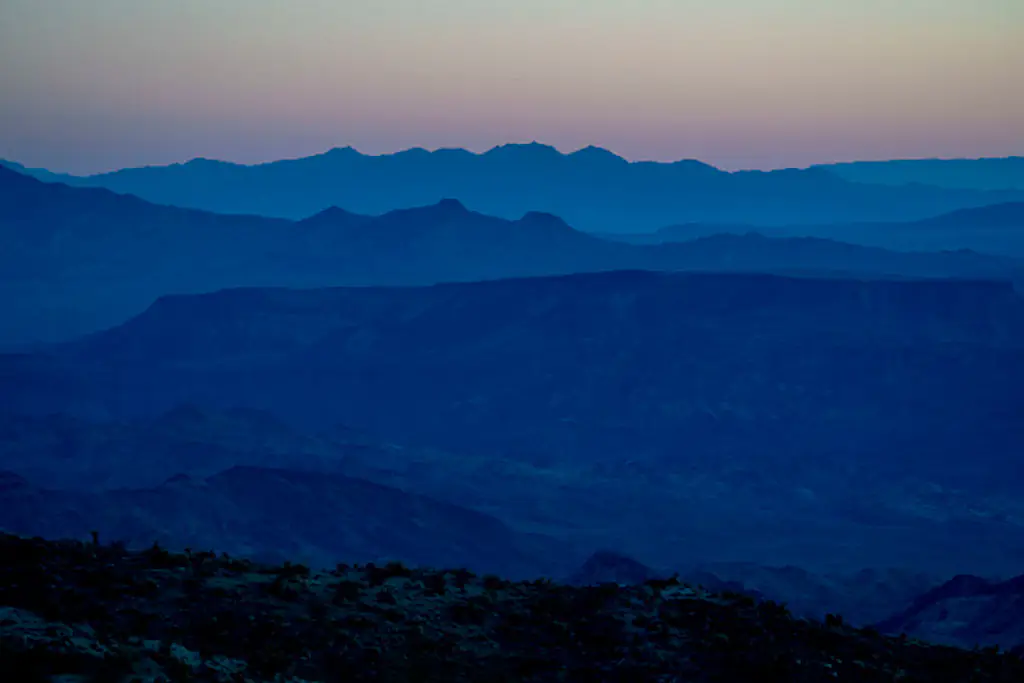
Searchlight, Nevada, where the remains were discovered. Credit: Kyle Grillot / The Washington Post / Getty
Although Nevada law allows individuals to scatter cremated remains on public land, there are strict regulations surrounding the commercial distribution of ashes, per Fox News.
Under federal law, commercial entities are prohibited from disposing of cremated remains on federal land without permission.
This has led investigators to consider the possibility that a local funeral home or cremation business may have illegally dumped the ashes in the desert.
As of now, authorities have not been able to confirm whether the ashes are connected to any specific mortuary or cremation service.
However, suspicions have been raised that the remains may have come from such a business, given the large number of piles and the location on BLM-managed land.
Palm Mortuaries and Cemeteries volunteered to assist with the recovery of the cremains, ensuring that the remains were treated with dignity.
Celena DiLullo, president of Palm Mortuaries, explained the importance of the effort.
"I think it’s important to us to make sure that these people are not forgotten and not left," she told KLAS news. "It’s important to our community and our profession that we demonstrate how much we care about these people."
By Wednesday, the remains were successfully removed from the desert and transferred to a cemetery crypt for respectful storage.
"I don’t know if it was the wishes of these people to be out there. That’s what goes through my mind, whether this is how they wanted to be remembered," DiLullo said in a statement.
The remains have been removed by a mortuary. Credit: Darren Klimek / Getty Images.
As the investigation continues, authorities are working to piece together the origins of the ashes and determine whether any local businesses were involved in the illegal disposal.
Investigators are also seeking to identify the individuals behind the unethical act, which could lead to criminal charges for violating BLM regulations.
The U.S. Bureau of Land Management (BLM), which oversees public lands in the western United States, is cooperating with local law enforcement agencies to resolve the case.
The agency has yet to confirm whether it will pursue charges against any funeral home or cremation business that may be responsible.
us2 min(s) read
Published 11:30 03 Nov 2025 GMT
Authorities in Nevada have launched an investigation after hundreds of piles of human ashes were discovered scattered across a remote desert area outside Las Vegas.
The unsettling find was first reported by a man who noticed roughly 70 suspicious piles along a dirt track near the small town of Searchlight, Nevada. When authorities arrived to investigate, tests confirmed the substance was cremated human remains.
A wider search of the area led to the discovery of a second site nearby, bringing the total number of ash piles recovered to 315, News4 reports. Investigators now believe the remains may have been dumped by a funeral home or cremation business operating in the region.
While Nevada law allows individuals to scatter ashes on public land, U.S. federal law prohibits commercial entities from disposing of cremated remains on federal land without permission. The desert area where the ashes were found is managed by the Bureau of Land Management, which oversees public lands across the western United States.
“It’s just such a shame,” said Celena DiLullo, president of Palm Mortuaries and Cemeteries, in an interview with 8 News Now. “I don’t know if it was the wishes of these people to be out there. That’s what goes through my mind, whether this is how they wanted to be remembered.”
Palm Mortuaries and Cemeteries volunteered to assist authorities with the recovery effort, ensuring the remains were handled with dignity. By Wednesday, staff had collected and transferred the 315 piles of ashes from the desert to a crypt at one of their cemeteries.
“I think it’s important to us to make sure that these people are not forgotten and not left,” DiLullo said. “It’s important to our community and our profession to show how much we care about these people.”
The investigation remains ongoing as authorities work to determine who is responsible for the illegal dumping.