ADVERT
World4 min(s) read
A man who stored his Bitcoin on a device specifically designed to make it unhackable has had all of it stolen after a software bug gave criminals a way in.
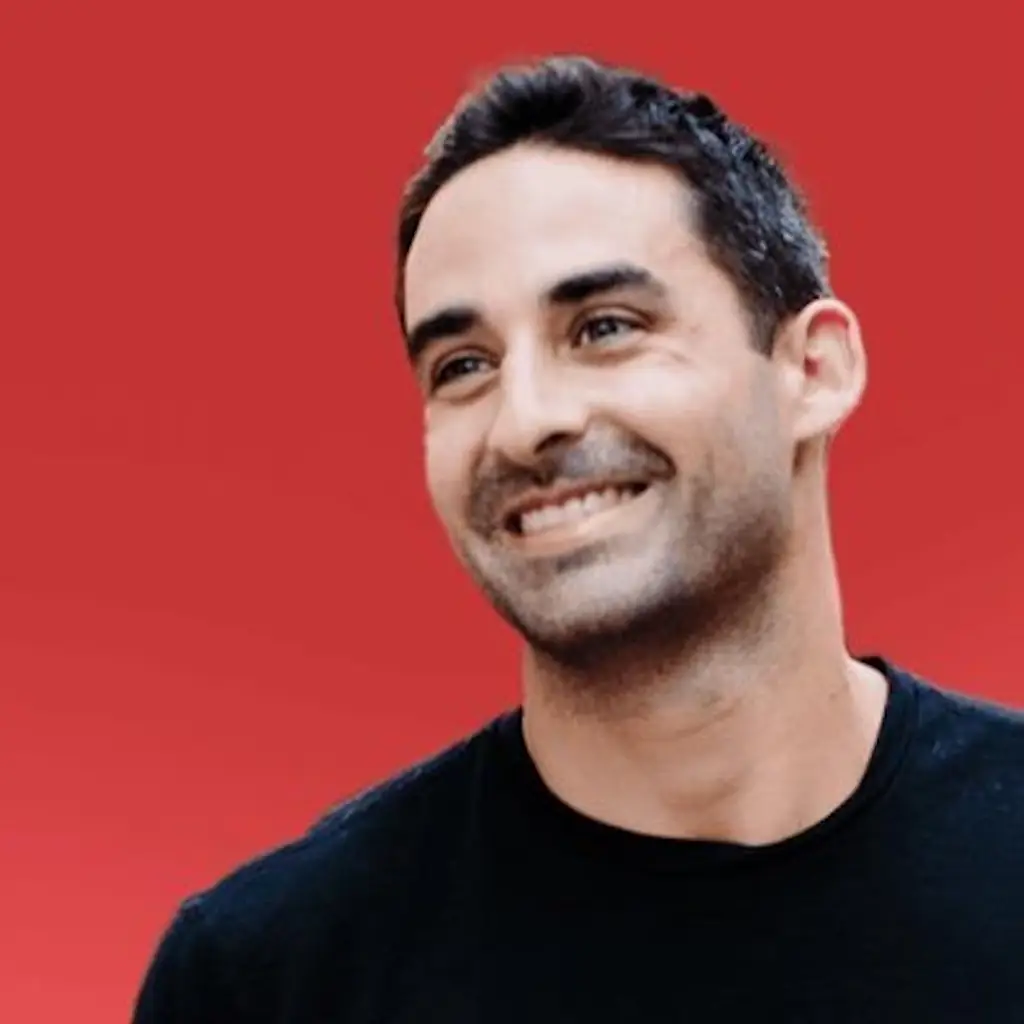
Jonathan Goodman owned 18.25 Bitcoin, worth $1.6 million Canadian.
He had been buying since the end of 2020. He kept his seed phrases on a Coldcard hardware wallet made by Canadian company Coinkite and locked it inside a safe-deposit box.
He thought he had done everything right.
On July 31, he sat down at a library computer to check his account and discovered that all three of his wallets had been emptied two days earlier, between 9:36pm and 9:43pm on July 29.
Seven minutes to lose everything he had spent four years building.
Coldcard devices store seed phrases offline - that is the whole point.
The seed phrase is the key to a crypto wallet, and if nobody can reach it digitally, nobody can steal what is inside.
Except Coinkite announced last month that a software bug in their firmware had allowed hackers to reconstruct seed phrases remotely, without ever needing physical access to the device.
The bug affected an unknown number of Coldcard units. Over $100 million in Bitcoin has been stolen as a result.
Goodman never shared his phrase with anyone. His device never left the safety deposit box. None of that mattered.
"My incorrect assumption was that the only way to get my seed phrase would have been to gain access to my Coldcard device," he told LADbible.
He was scrolling Facebook at the library when he saw a friend post about the hack.
His first thought was that it probably didn't affect him. He saw stories about hacks online every day.
Then he remembered his Bitcoin was on a Coldcard.
He opened the Wasabi software he uses to view his wallets.
It took a couple of minutes to load because he rarely opens it.
The moment it did, he saw red lines for withdrawals across all three accounts.
"It took a minute or two to load because I don't open it often," he said.
"The moment it loaded I knew I was screwed because I saw red lines for withdrawals."
Then he had to go home and tell his wife.
"I have some really bad news," he told her.
"What?"
"All of our Bitcoin was stolen."
"What the [expletive]. How could that even happen?"
He explained as best he could.
As far as he had known, everything was '100 percent secure and stored offline in a safety deposit box'.
A friend who was deep in the crypto space had recommended Coldcard as an extra layer of protection. Until last month, experts had praised it as one of the safest ways to store sensitive information.
Coinkite has told customers to move their funds to new wallets immediately if their seed was generated using the affected firmware.
"We understand there is real anger at this moment," the company said in a statement.
"Users have suffered real losses, and for those impacted, no public statement is enough."
They added: "We also believe this vulnerability is a warning for every company building Bitcoin hardware and software, not only us."
The company has advised that users whose seed phrases were generated without at least 50 independent dice rolls and without a strong BIP-39 passphrase should consider their wallets compromised.
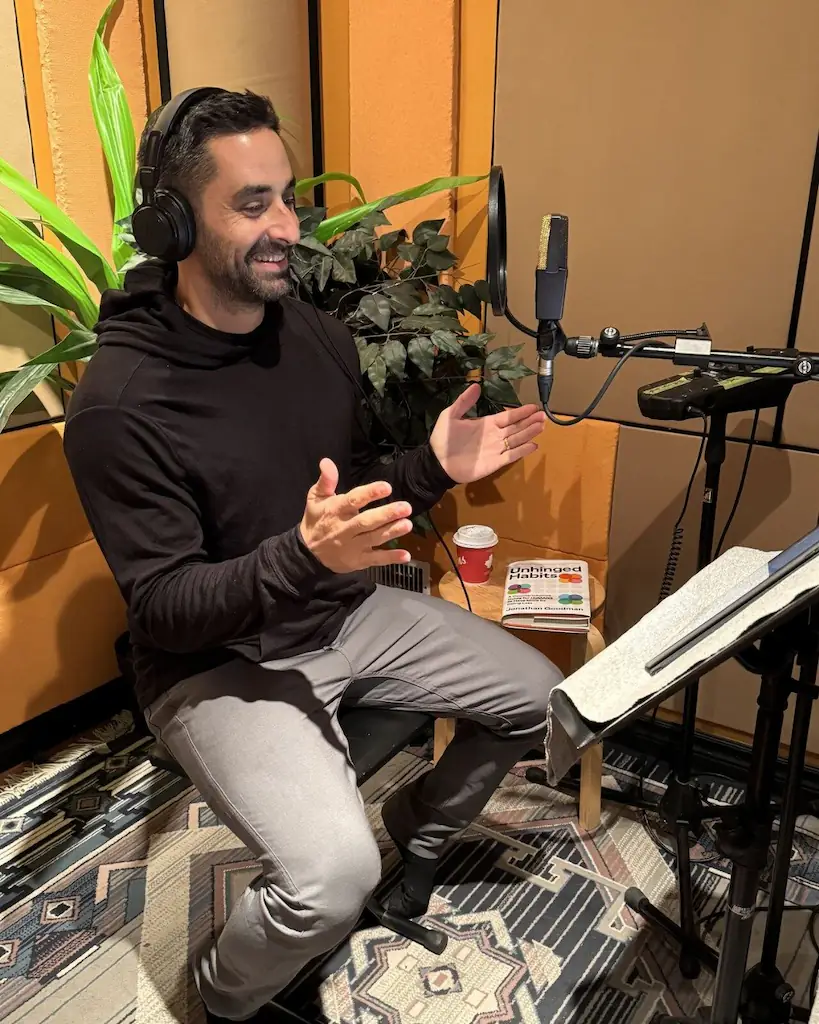
Goodman has gone to the police.
He says they have been 'great' and told him that arresting the people responsible is a priority. Whether any of the money can actually be recovered is a different question entirely.
He says he is done with crypto.
No more Bitcoin. No more of any of it.
That's understandable when you consider he did everything he was told to do, stored his keys on a device built specifically to be secure, locked the thing in a safe-deposit box, never showed it to a soul, and still lost the lot because of a bug in someone else's code.
innovation2 min(s) read
science & tech2 min(s) read
weird4 min(s) read
us4 min(s) read
In 2009, a Norwegian engineering student called Kristoffer Koch spent $22 on 5,000 Bitcoins while writing his master's thesis on encryption.
Each coin cost him a fraction of a cent. He described it at the time as a bit of fun.
Then he got busy with his degree, got a job, and completely forgot about it.
Four years later, Bitcoin was suddenly all over the news.
Koch saw the coverage, remembered he had a wallet somewhere, and spent an evening trying different passwords until he got back in.
The 5,000 coins were worth $850,000.
He sold about a fifth of his coins, around 1,000 Bitcoins, and bought himself a flat in Tøyen, one of Oslo's more desirable neighbourhoods, his $22 bet had turned into property.
He kept the other 4,000.
"Not in my wildest dreams could I have imagined that they would have soared like this," he told Norwegian broadcaster NRK in 2013.
"It's bizarre, these psychological reflexes that make us attach a value to something that doesn't have any in itself."
Bitcoin hit an all-time high of $126,000 per coin in October 2025 before falling back sharply.
As of today (July 20) it is trading at around $65,500.
If Koch still holds those 4,000 Bitcoins - and nobody has confirmed otherwise - they are worth approximately $250 million.
His original 5,000 coins, had he never sold any of them, would be worth over $310 million.
From $22.
Possibly, but the competition for that title is thin, because almost nobody who bought Bitcoin in 2009 managed to hold on to it.
Erik Finman bought $1,000 worth of Bitcoin at 12 years old in 2011 and is now a multimillionaire.
50 Cent accidentally accumulated 700 Bitcoins in 2014 after letting fans buy his album Animal Ambition using crypto.
He forgot about the account entirely until someone told him it was worth between $7 and $8 million.
Koch's story is different because of the scale.
$22 into a quarter of a billion dollars is not a return that belongs in the real world. It belongs in a thought experiment about time travel.
For every Koch, there is a Stefan Thomas.
Thomas is a Swiss-born programmer in San Francisco who got paid 7,002 Bitcoins in 2011 for making an animated explainer video about cryptocurrency.
He stored the coins on an encrypted USB device called an IronKey and wrote the password on a piece of paper.
He lost the paper.
The IronKey gives you 10 attempts before it locks permanently.
Thomas has used eight. He has two left. The coins on the drive are currently worth more than $430 million.
"I would just lay in bed and think about it," he told the New York Times.
"Then I would go to the computer with some new strategy, and it wouldn't work, and I would be desperate again."
Then there is James Howells, an IT worker from Newport in Wales who mined 8,000 Bitcoins on his laptop in 2009.
His partner accidentally threw the hard drive in the bin during a clear-out in 2013. It ended up in a landfill. Howells spent the next decade trying to get permission to dig the site up.
In 2025, a High Court judge threw the case out. The coins are still under there somewhere. At current prices, roughly $500 million worth.
A lot. Crypto data firm Chainalysis estimates that about 20 per cent of all Bitcoin ever mined, somewhere around 3.7 million coins, is sitting in wallets that nobody can access.
Lost passwords, dead hard drives, people who threw things away before they knew what they were worth. At current prices, that is over $230 billion in frozen crypto.
The recovery industry has boomed as a result.
One woman who runs a business called Professional Crypto Recovery told Business Insider that demand tripled as prices climbed.
A hypnotist in South Carolina started charging one Bitcoin plus five per cent of whatever he helped people find, offering to put clients under to help them remember their passwords.
Koch didn't need any of that. He just forgot, remembered, guessed his password, and logged in to find $850,000 sitting there waiting for him.
Most people who got into Bitcoin early either sold too soon, lost their keys, or chucked a hard drive in a skip. Koch forgot about his and got lucky.
He bought a flat. He kept the rest. And the rest turned into a quarter of a billion dollars.
All from $22 and a thesis about encryption.
For most people, forgetting a password is a mild inconvenience, but for one man, it could mean losing a fortune.
Stefan Thomas, a well-known figure in the cryptocurrency world, is locked out of a digital wallet that holds a staggering 7,002 Bitcoins - now worth roughly $609 million.
And he has only two tries left before the device deletes itself permanently.
Here’s how one of crypto’s early pioneers ended up in a digital nightmare that could cost him hundreds of millions.
Stefan Thomas isn’t just another name in the crypto crowd. He’s one of the earliest developers in the Bitcoin ecosystem, helping to shape the digital currency from its infancy, per GulfNews.
His influence goes far beyond just buying and selling - Thomas has held major leadership roles, including Chief Technology Officer at Ripple and CEO and co-founder of the financial services startup Coil.
Back in 2011, Thomas created the animated explainer “What is Bitcoin?”, which quickly became the go-to video for anyone trying to understand the new digital currency.
He also launched WeUseCoins.com, which at the time was the largest online resource for Bitcoin newbies.
With over 15 years of experience as an open-source developer, he didn’t stop there. Thomas co-invented the Interledger Protocol - a revolutionary open payments standard that connects different payment networks around the world.
Born in 1986 near Munich, Germany, Thomas was writing code as a teenager.
After graduating with top honors in computer science from the Technical University of Munich, he dove into the tech world and discovered Bitcoin around 2011.
By 2012, he had moved to the United States to seize bigger opportunities in blockchain development. At Ripple, he wasn’t just a team member - he became the CTO and eventually served as Chair of the Interledger Foundation.
While there, he played a key role in creating Codius (a smart contracts platform) and Mojaloop, a project aimed at improving financial access for underserved communities.
Thomas has long been an advocate for using digital currencies to break down barriers in global finance.
He sees crypto as a tool for financial inclusion, allowing people who are typically shut out of traditional systems to finally take part in the global economy.
Back in 2011, Thomas was paid 7,002 Bitcoins for his now-famous Bitcoin explainer video. At the time, those coins were worth just $2,000. He stored them on an IronKey - a highly secure USB wallet - and wrote the password on paper.
But then, he lost the paper.
Today, with Bitcoin valued at about $87,000 each, those 7,002 coins are worth a jaw-dropping $609 million. But there's a catch: IronKey allows only 10 password attempts before it wipes itself clean. Thomas has already used eight of those tries.
According to bit2me crypto news, Thomas has just two more chances to guess the correct password before the wallet erases all of its contents forever. That’s a risk he’s not willing to take lightly.
Over the years, he’s tried everything - even enlisting friends and hackers who specialize in password recovery, as reported by Coinpaper. But none have been able to crack the IronKey’s intense security.
There may be hope. Cybersecurity company Unciphered claims it has found a way to bypass the IronKey’s restrictions using a method that simulates 200 trillion password attempts - all without triggering the device’s self-destruct function.
The firm reportedly contacted Thomas, offering their help to retrieve the fortune. But Thomas declined, citing a previous verbal deal with two other teams who he promised a share of the Bitcoin if they succeeded in unlocking the wallet.
So far, there's no official word that the IronKey has been successfully opened. If it has been, any information is likely being kept under wraps due to security or legal concerns.
[[twitterwidget||https://twitter.com/TheOnlyTheodora/status/951081976626384896]]
In a recent interview with MarketWatch, the articulate Theodora explained that: "It's a form of psychological domination where money is the tool for the transfer of power. It’s quite common for powerful men like politicians or CEOs to look for a form of sexual release by submitting to a woman - they are in control all the time during the day - and giving up control financially is a more tangible instrument of power for them ... I take donations and also have people mining for me. I take a lot of geek clients who like new technology and they were really excited when I taught them how to build a mining rig for me so they could mine 24/7 from their home." She added: "I have seven or eight different currencies - I see it a bit like play money and try to adjust to which is growing the most. If you anticipate growth, that’s where it will become interesting. Everyone is now interested in Bitcoin because the growth has been exponential. Soon it will be too high for individuals to invest in, so you have to invest in others. I think it’s smart to have diverse portfolios of currency ... Bitcoin could crash in two days, you don’t know what’s going to happen, so if you have enough to invest in smaller currency you should. For me, it’s play money. You have to bet on several currencies to see what will happen, and if it’s your main source of income you have to be smart with it." Indeed, because most of her clients are high-powered businessmen, Theodora has managed to develop a pretty impressive sense of financial acumen and watches the market like a true Wall Street broker. Theodora is now convinced that the growth of Bitcoin has been so exponential that it will soon become too expensive for individuals to invest in, and that the end of net neutrality might mean that Bitcoin is too closely regulated to profit from successfully. Theodora is also careful not to push her clients straight into bankruptcy and claims that she has to very carefully budget how much money she takes away from them and how long her miners spend working for her. I suppose you could argue that she's being compassionate, but I think it's probably just her good business sense shining through again. After all, you can shear a sheep as many times as you like, but you can only skin it once; so pushing a client too far, or demanding too much, could lead to them becoming completely broke. Now, some of you out there might assume that this is easy money and that it's high time you quit your day job, invested in an all-leather wardrobe, and got to work forcing fetishists to get cracking. Personally, I don't think that Bitcoin is stable enough for me to sink my career over it. Sure, you get occasional success stories like this one, but far more failures. Over Christmas, my own uncle had been left completely depressed after losing a huge sum of money over Bitcoin. So I think I'll stick to making cash the old-fashioned way. Besides, bits and blocks aren't really my bag, and neither are wax and whips.