


World4 min(s) read
MH370 mystery deepens with new evidence that search may have been in the wrong place
.jpg_xKEaT0?tr=cr-0.328.2730.3058,f-webp,q-70,w-100)
Potential new evidence has emerged in the search for MH370, 12 years on from its disappearance.
The Malaysia Airlines aircraft went missing on its planned route from Kuala Lumpur to the Chinese capital of Beijing, back on March 8, 2014.
There were 227 passengers and 12 crew members onboard the Boeing 777 flight, all of whom have been presumed dead since the aircraft vanished.
Over a decade on from the biggest aviation mystery of the 21st century, it still remains a mystery.
It's well documented that crew onboard failed to send any distress calls despite losing contact with air traffic control at 1:19 AM over the South China Sea.
The aircraft then veered off course and flew an unknown path for seven hours before vanishing, never to be seen again.
But according to some new evidence, teams may have been looking in the wrong place this whole time.
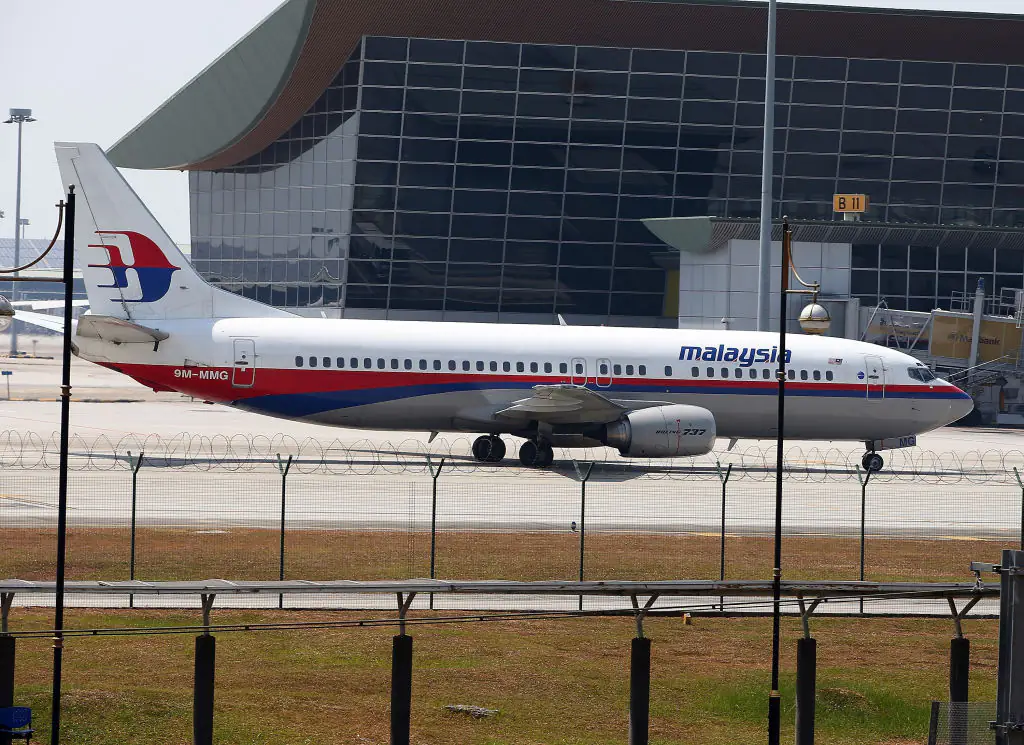
New evidence suggests new search area
Social media content creator Dr. Harini Bhat, a clinical pharmacist turned science communicator, has explained in a recent episode of series Today I Learned Science, that everything we know about MH370 may be incorrect.
She explained in a video: "In early 2014, a French researcher named Jean Yves Royer was running a network of underwater microphones across the southern Indian Ocean.
"The network is called Ohasis Bio, and it's been listening to the ocean floor since 2010 and was built to detect seabed earthquakes and track whale migration... just a few weeks after these microphones were deployed, MH370 disappeared on March 8th, 2014," Dr Bhat said.
He then realized that they may have recorded the plane's crash into the sea, but the issue was that he couldn't listen to the recordings.
The hydrophones store recordings internally before being recovered, so Royer had to wait almost a year before they floated back to the surface.
Following years of analysis, Royer's findings were handed to authorities, who chose not to include it in their public records.
Apparently, it was too similar to hydrophone data they'd already reviewed, so his findings were long a mystery.
What does it mean for the investigation?
Malaysia officially extended its agreement with seabed exploration firm Ocean Infinity through mid-2027 under a "no-find, no-fee" contract, giving the company additional time windows to complete the remaining search area along the southern Indian Ocean seabed.
But while they used satellites, Royer's hydrophones were already in the water.
The creator explained: "A 2024 study by Cardiff University researcher Usama Kadri found that aircraft crashes at sea do produce acoustic signals that travel up to 3,000 miles through water.
"MH370's presumed crash zone was about 1,000 miles from the nearest hydrophone, so a signal should be detectable."
Unfortunately, she said that the global hydrophone network found nothing but a low-frequency rumble recorded west of Rottnest Island around 1:30 UTC on March 8th.
The source pointed to the Chagos-Laccadive Ridge, which is far from the presumed crash site of the seventh arc - this suggested a natural event such as an underwater earthquake.
Is there any hope for MH370?
"No signals near the seventh arc does not necessarily mean MH370 left no trace," Dr Bhat claimed, adding: "It completely depends on how the plane hit the water.
"A high-speed, uncontrolled impact would have been loud, but a controlled ditching, where a pilot carefully sets the aircraft down on the ocean surface, would be very quiet."
She cited research by Dr. Usama Kadri of Cardiff University regarding how crash dynamics (such as a controlled ditching versus a high-speed impact) affect underwater acoustic signals, suggesting that quieter impact profiles might explain why certain hydrophone networks missed the event.
While other hydrophones are built to monitor the world's oceans, Royers were built for the southern Indian Ocean, being more sensitive and better positioned to detect a quieter event.
Unfortunately, the hydrophone closest to MH370's presumed crash zone was lost during recovery.
She explained: "The one instrument with the best shot at detecting something near the seventh arc is gone, but the remaining hydrophone survived.
"And from those recordings, Royer identified five acoustic events in the early hours of March 8th, around the time the plane disappeared.
"Two of these overlap with sounds already in the CTBTO data. Three are new."
While some online commentators speculate that unexplained acoustic signals near the Chagos-Laccadive Ridge could point to a different crash site, official investigators previously determined that the 2014 Rottnest Island signal was consistent with natural seismic activity, reaffirming the satellite-calculated 7th Arc as the primary target area.
If correct, this could mean that teams have been searching for the plane wreckage in the wrong place for over a decade.