


World4 min(s) read
Putin just made chilling announcement about three countries and it could pave the way for an invasion
.jpg_xKEaT0?tr=cr-0.328.2730.3058,f-webp,q-70,w-100)
The Kremlin has issued a warning to three nations about potential upcoming invasions, for one specific reason.
Russia has not been afraid of brandishing threats towards its adversaries over the years, but it has now issued a fresh warning to the Baltic states.
The new pressure has been confirmed by a new image, which was published by former Ukrainian internal affairs minister Anton Gerashchenko.
This comes just weeks after video footage circulated online, revealing Russia's successful launch of the Samrat missile, the latest and 'most powerful' missile in the nation's arsenal.
Russia had test-fired its newest intercontinental ballistic missile, as President Vladimir Putin further flexed the power at his fingertips.
The nation has no intention of slowing down in military action now, as Gerashchenko claimed that Moscow is looking to appeal to the International Court of Justice over the 'suppression of the rights of Russian speakers' in Latvia, Lithuania and Estonia.
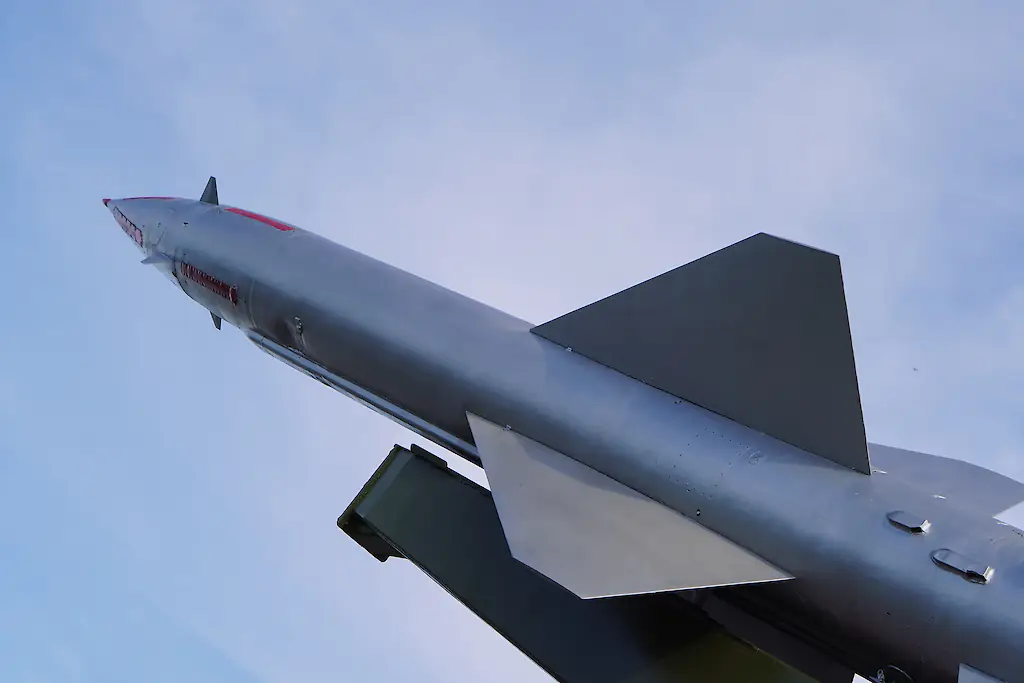
Warning issued to Baltic states
But in reality, he said the move is 'another element of a systematic effort to build a legitimacy framework for possible intervention.'
Gerashchenko explained on X: "Moscow’s rhetoric is standard and familiar: 'language bans,' 'Russophobia,' and 'persecution of dissent,'
"The foreign ministry pretends that negotiations 'have yielded no results' and that complaints submitted to the UN and OSCE have been ignored — therefore, the Kremlin is allegedly forced to go to court."
He further detailed that logic, which involves 'exhausting all available means,' is not actually a legal strategy, but instead the 'preparation of a narrative.'
The former minister said that every refusal to follow Russia's orders will be considered as 'Western bias,' resulting in 'extrajudicial actions.'
He further wrote: "The scheme is not new. Before the 2008 war in Georgia, Russia spent years talking about the 'genocide of Ossetians,' distributing passports to residents of Abkhazia and South Ossetia, and then used the claim of 'protecting Russian citizens' as a formal justification for invasion."
After this war, the Russian President at the time was Dmitry Medvedev, and he signed amendments to Russia's Law on Defense.
This meant that the military could be utilized overseas to protect Russian citizens.
He highlighted: "The Kremlin then moved the concept of 'protecting compatriots' from propaganda into formal law."
What can we expect next?
Gerashchenko said that this pattern repeated itself in 2014, with the annexation of Crimea, which again occurred in 2022 with Russia's invasion of Ukraine.
The state Duma adopted new legislation on May 13 this year, and on May 25, Putin signed a law allowing the use of Russian military overseas 'to protect Russian citizens from persecution by courts whose jurisdiction Moscow does not recognize.'
"What an astonishing coincidence: two steps taken on the same day - a legal claim and expanded legal authorization for the use of force, formalized simultaneously," Gerashchenko wrote on social media.
However, the Baltic states are members of the EU and NATO, and Russia can only appeal to those considered 'compatriots' and 'Russian speakers' as opposed to 'Russian citizens.'
The former minister said that the weakness of the legal basis won't stop Putin, though, explaining: "NATO membership remains the main deterrent for Moscow,
"Therefore, the real goal of the campaign is to create a 'gray zone' in the perception of the conflict and build an international record of an 'unresolved issue concerning the rights of Russians."
He concluded by writing: "This objective becomes especially significant against the backdrop of April statements by the Trump administration regarding a possible U.S. withdrawal from NATO - uncertainty of this kind creates precisely the conditions under which the Kremlin’s human rights narrative becomes operationally useful."