ADVERT
World3 min(s) read
A housing complex exists with over 20,000 residents who have no reason to ever leave it as everything they could possibly need is contained inside.
When looking for a place to live, many of us choose to buy or rent somewhere that's convenient for the commute to work, near to good schools for children, or even just close to amenities such as shopping and nightlife.
Well, all those boxes and more are ticked for the 20,000 residents of the massive Regent International complex in Hangzhou’s central business district Qianjiang Century City.
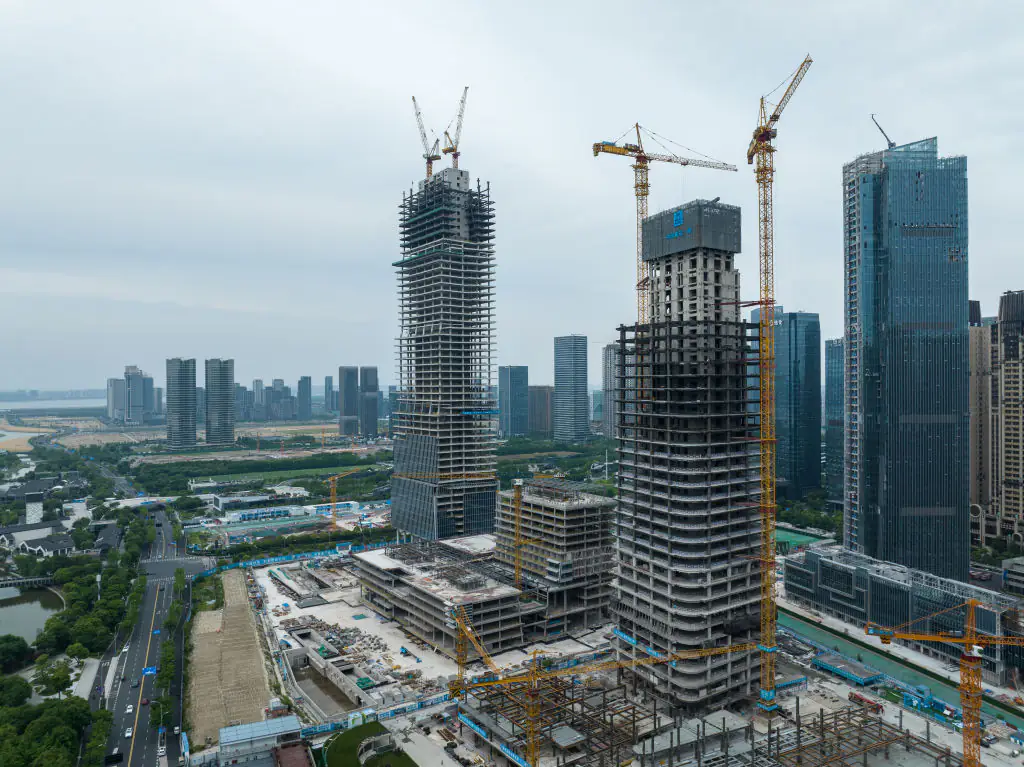
Those living in the 675-foot-tall S-shaped building, which is one of the largest buildings in China at 260,000 square feet, have little to no reason to ever leave their block as everything they could need is contained within.
The building, which can accommodate a total of 30,000 residents at full capacity, offers a wide variety of amenities and businesses spread across 36 or 39 floors depending on which side of the building you live on.
Residents have access to an enormous food court as well as nail salons, hairdressers and barbershops, medium-sized supermarkets, and even internet cafes.
They can also relax with a swim in an on-site pool, should they choose to remain in the building.
While it may seem a bit claustrophobic to spend your entire existence never stepping foot outside your building, the Regent International has been fascinating social media users.
One TikToker showed just how gargantuan the building was by using drone footage, and the housing has also been praised for being super sustainable by having everything under one roof.
The building was designed by Alicia Loo, who was the chief designer of Singapore Sands, the world's second seven-star hotel, and the building was initially intended to be a six-star hotel.
It ended up being made into thousands of apartments instead, proving hugely popular with students and graduates, who make up the majority of the residents, along with young professionals as well as small business owners and influencers.
The units are also very affordable, with Chinese news agency Sin reporting that small apartments usually go for around 1,500 Chinese Yuan, which equates to around $210 a month, though those apartments usually come without windows.
If you'd prefer to enjoy some natural light and a bit of outdoor space, larger units with balconies are still pretty cheap at 4,000 Yuan ($562) a month.
After videos of the complex were shared on TikTok, social media users shared their thoughts... and they weren't all so positive.
"Scary building! If there are structure issues, how will they fix it.. I would feel so unsafe in it," one person commented.
A second added: "This stresses me out.. what's the fire drill situation like?"
"As an introvert, this would be my greatest nightmare," a third wrote.
And a fourth commented: "[You] can have a long distance relationship in the same building."
Personally, I'd definitely be forking out the extra for some more space, fresh air, and natural light but each to their own.
travel2 min(s) read
lifestyle2 min(s) read
travel3 min(s) read
Depending on how you see it, Hong Kong is either a sprawling metropolis brimming with profitability or a curious leftover of colonialism. Frequented by men in suits from all over the world, it is a global city which plays host to hundreds of multinationals. However, while westerners may fly in and out without giving much thought to the locals, their lives are far from modern or progressive.
Hong Kong is home to more millionaires per square mile than any other city which, on the face of it, seems like a good thing. However, all this money has actually made it a fairly inhospitable place. It has the highest rent of any city in the world - meaning many people are priced out of regular housing.
[[youtubewidget||https://www.youtube.com/watch?v=hLrFyjGZ9NU]]
Instead, thousands of the city’s inhabitants live in “bedspace apartments”. Here, residents live in coffin-like boxes or narrow, metal cages. Overcrowded and often unhygienic, it is a life far removed from the comfort of the Rolls Royces which prowl the city.
“My previous rent was HK$3,000 [$380]. That was too expensive, so I came here,” explains bedspace apartment resident Choi Wan to Rice Media. “I get HK$1,800 [$230] from the government, and my friends give me HK$100 [$13] extra to help me pay my rent. Many volunteers come and donate food. I don’t know how I would survive otherwise.”
According to the Society for Community Organization, around 100,000 people live in inadequate housing in Hong Kong. Often, a regular apartment will be subdivided into two to three separate residences. If that means that one of these residences doesn’t have a kitchen then, in many cases, residents simply make do and cook in the bathroom. Here, wages simply can't keep up with the cost of living.
“I am 70 years old now, no one will employ me,” says Michael, another resident. “I used to be a security guard.” Like many of his peers, he survives on money - the equivalent of $640 per month - from the government. “My favourite food is rice,” he continues. “I like char siu fan [barbecue pork and rice]. I know a place you can get it for HK$20 [$2.50].” Michael then adds: “But the money always runs out.”
“I used to be a security guard too, but I got very sick,” explains Sam. “My liver has a lot of problems and I cannot work anymore. No one will hire someone who falls sick all the time.”
The cages tend to measure 6ft by 2.5ft and house everything from clothing to cooking equipment. Often, pads, yoga mats or old linoleum are used as a barrier against the wooden slats of the cages - where bedbugs lurk. In most cases, the cages of Hong Kong’s highrises can be seen as an unfortunate symptom a fractured society. But others are taking a more pragmatic approach.
Sandy Wong is a Chinese entrepreneur who believes that his pods - or “luxury cage homes” as they are being called - are the answer to Hong Kong’s housing problem. Costing somewhere between $360 and $580, they provide creature comforts such as wifi, charging ports, air conditioning and a light-up mirror which bathes the pod in a futuristic purply blue light.
Installing as many as 18 of these pods in small to medium sized apartments, it would still be something of a nightmare for anyone with claustrophobia. Furthermore, they are not without their detractors and are an easy target for anyone keen to see the problem solved rather than the situation normalised.
[[instagramwidget||https://www.instagram.com/p/Bj_x3g_gjHD/]]
However, they do provide a temporary solution to a housing crisis which doesn’t look like it’s going away. “[Inadequate housing] is an issue that can't be solved,” Wong Explains to CNN. “But if you're living in these comparatively nicer spaces, then you can accept sharing facilities.”
Often, up to 20 people live in spaces of around 300 square ft (28 square metres). However, bedspace apartment resident Sam seeks refuge in the open air. “It’s nice there and there is fresh air,” he says, speaking fondly of his local park. “It’s better than being inside all day. Then I come home and sleep.”
Here in Hong Kong, the median property price is 19 times the median annual household income. It is a means to an end not just for those who rely on government support, but also those who work regular jobs but can’t afford the extortionate rent.Within spitting distance from these overcrowded tower blocks are soaring skyscrapers containing some of the world’s most luxurious apartments. From the marble-clad comfort of these sprawling residences, the cages of the tower blocks opposite are almost visible. In no other city is the divide between rich and poor this stark.
A premium can be charged for much-sought-after space in the world's most popular cities, and with so many people vying to live there at once, sometimes the best solution is to move into a micro-studio.
These tiny apartments are particularly popular in New York City, where rent is notoriously high and space is limited, and now one woman has shown how she makes the best of the limited space she has.
Sharing a tour of her 170 square foot apartment on TikTok, user Emily Kohn shows how she makes the best of a very limited amount of space to create what actually looks like quite a cozy home.
In fact, her space management is so on point that she has got room for a furry friend!
Watch Emily's TikTok tour of her apartment below:
[[tiktokwidget||https://www.tiktok.com/@emviolin417/video/6894737211535838469]]
Emily's "studio" contains a "living room," an "office," a kitchen, a bathroom, and a bedroom - all within the amount of space that the majority of people have for their bedroom.
She describes her home as a "micro-studio" and it's safe to say that this is a pretty accurate description. It's got everything you'd expect in a studio flat but on a much smaller scale.
As Emily shows TikTok her home, she labels each "room" in the video, leaving many users of the social media website in awe of her efficient use of space.
Praising the apartment, one TikTok user wrote: "Am I the only one who doesn't hate the idea of a small apt like this? So easy to clean and cute."
A second wrote: "Looks cozy. If I was single [sic] this would probably be the size of my apartment."
A third added: "you found a place for everything. love it! [sic]"
However, the internet being the internet, not everyone was so complimentary about Emily's small living space.
One TikToker wrote: "The dog is like 'Its a no for me.' [sic]"
A second added: "My bedroom is bigger yikes... [sic]"
Some TikTok users also took umbrage with the fact that Emily appeared to have a dog in what they believed to be a less-than-suitable home, and she clarified in the comments section that he lives with her parents in a much larger place - he was simply visiting her micro apartment!
Regardless of what people on social media have to say about the apartment, it's clear that Emily is living her best life there and that's all that matters!
In the realm of billionaire tycoons and business moguls, opulent residences are par for the course.
However, one controversial entrepreneur has redefined luxury living by elevating mansions to unprecedented heights — 400 feet, to be exact.
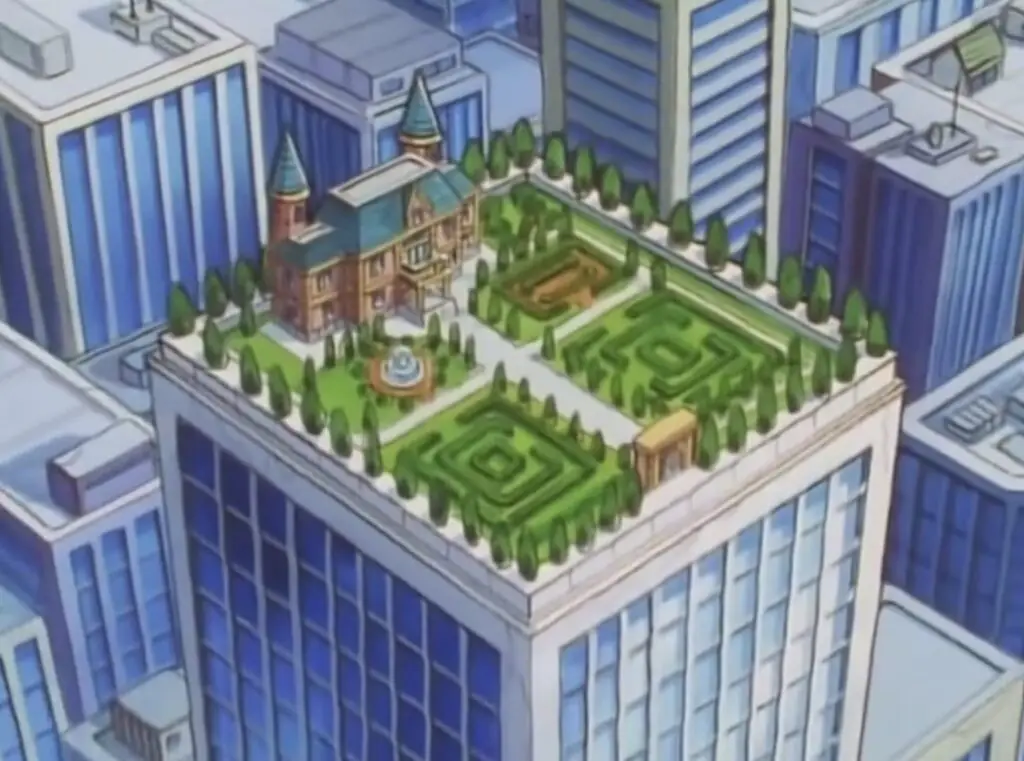
Perched atop a 33-story luxury apartment complex in Bengaluru, India, this sky mansion sprawls over 40,000 square feet, spanning two floors. Complete with a helipad, verdant gardens, an infinity swimming pool, and a 360-degree viewing deck, it stands as a testament to extravagance.
Notably, this sky mansion is entirely distinct from the apartments nestled within the building below, offering an exclusive retreat high above the city.
Irfan Razack, chairman of Prestige Estates Projects, involved in the tower's joint development agreement, remarked per Business Insider: "It was a challenge to construct the mansion on a huge cantilever at that height, but we have ensured we build it exactly the way it was conceived."
While Prestige Constructions declined to provide BI with further comment, the outlet estimates the mansion's value at a staggering $20 million!
In a twist of fate, however, its intended resident - businessman and politician Vijay Mallya - may never step foot inside.
Eight years ago, Mallya - known as the "king of good times" - fled India for the UK amidst mounting debts exceeding $1 billion (£842 million) and faced various charges, including fraud.
According to the Business Standard, Mallya is in debt to 17 Indian banks. However, in 2016, he slammed many of the claims made against him, saying in a statement: "All enquiries conducted have failed to find evidence of misappropriation of funds by Kingfisher Airlines or myself [...] Despite pledging blue-chip securities and depositing significant amounts in court, a successful disinformation campaign has ensured my becoming the poster boy of all bank NPAs."
British Security Minister Tom Tugendhat addressed Mallya's extradition last year, affirming the UK's stance against harboring individuals seeking to evade justice. He emphasized that both India and the UK have legal processes to uphold, signaling the UK's commitment to accountability.
Mallya continues to grow his wealth through his Kingfisher beer brand.
Meanwhile, the sky mansion remains unoccupied, suspended 400 feet above ground. Despite its vacancy, onlookers often marvel at its grandeur, appreciating its lush gardens and captivating infinity pool.
Commenting on the spectacle, one X user described the mansion as "a testament to luxury and innovation", with a second writing that it is "certainly an impressive feat of architecture and engineering".
I mean, you can't deny that it certainly is an impressive feat -- although, it does remind me of that episode of Pokèmon with the Drowzee-loving fan club:
Scientists have unveiled a remarkable interactive map that shows every one of the planet’s 2.75 billion buildings.
From ancient villas in Rome to skyscrapers in Shanghai, every building on the planet is now just a click away thanks to a groundbreaking new tool developed by German researchers.
The GlobalBuildingAtlas, an astonishingly detailed interactive map, charts the size and location of 2.75 billion buildings worldwide in 3D - a full billion more than any previous dataset. And the best part is that you can search for your own home and view it in realistic 3D.
Created by scientists at the Technical University of Munich (TUM), the atlas combines more than 800,000 satellite photos, primarily taken in 2019, with artificial intelligence to generate a model that calculates building height, volume, and even proximity to neighboring structures.
The dataset offers an unparalleled level of resolution - up to 30 times finer than previous models - especially in dense urban centers.
Unlike older tools that depended on costly laser-scanning aircraft, this model uses existing satellite data and machine learning to fill in the gaps, making full global coverage possible.
Since launching just a few days ago, the site has attracted nearly 300,000 visits - far more than expected.
While intriguing to explore, the GlobalBuildingAtlas serves a deeper purpose beyond just curiosity.
According to TUM's Professor Xiaoxiang Zhu: “3D building information provides a much more accurate picture of urbanization and poverty than traditional 2D maps.
“With 3D models, we see not only the footprint but also the volume of each building, enabling far more precise insights into living conditions.”
The AI tool’s analysis can reveal how housing and infrastructure vary between nations and even neighborhoods, offering insight into inequality, density, and development.
Researchers have created a new online atlas that shows the location of 2.75 billion buildings in 3D (Stock image). Credit: zf L / Getty
One of the most eye-opening uses of the data is a new metric: building volume per capita. The idea is simple: the more building space per person, the better off a population tends to be.
“We introduce a new global indicator: building volume per capita, the total building mass relative to population – a measure of housing and infrastructure that reveals social and economic disparities,” Zhu continues.
“This indicator supports sustainable urban development and helps cities become more inclusive and resilient.”
For example, Finland ranks at the top in Europe with over 3,900 cubic meters of building space per person and is frequently named one of the world’s happiest countries.
Greece, by contrast, has six times less space per person and has endured years of economic hardship.
Globally, Asia holds the largest share of the world’s buildings, with 1.22 billion structures, followed by Africa with 540 million, and Europe with 403 million.
The Americas have fewer buildings in total - 295 million in North America and 264 million in South America. Oceania trails far behind with just 14 million buildings.
Beyond offering insights into inequality and wealth, the GlobalBuildingAtlas has real-world applications in disaster response, climate research, and infrastructure planning.
The German Aerospace Center is already exploring how to use the tool to support emergency operations in disaster-prone regions.
The AI model also differentiates between buildings, roads, trees, and open spaces, enabling planners and scientists to monitor how human structures are encroaching on natural areas.
To explore the map, users can visit the website and enter any address in the input bar at the top. The system then generates a 3D model of the area using satellite data, from dense city blocks to remote rural villages.
If you hate the thought of having neighbors, then this city in Alaska is not for you.
When you think of Alaska you probably think of amazing scenery and a lot of open ground for people to live, right?
Now that is still absolutely the case, but there is one place that is so remote the residents have decided to stick together inside one building.
Doesn't bode well for when you have noisy neighbors.
Situated 60 miles southeast of Anchorage along the Passage Canal, Whittier is home to just 263 residents as of 2023.
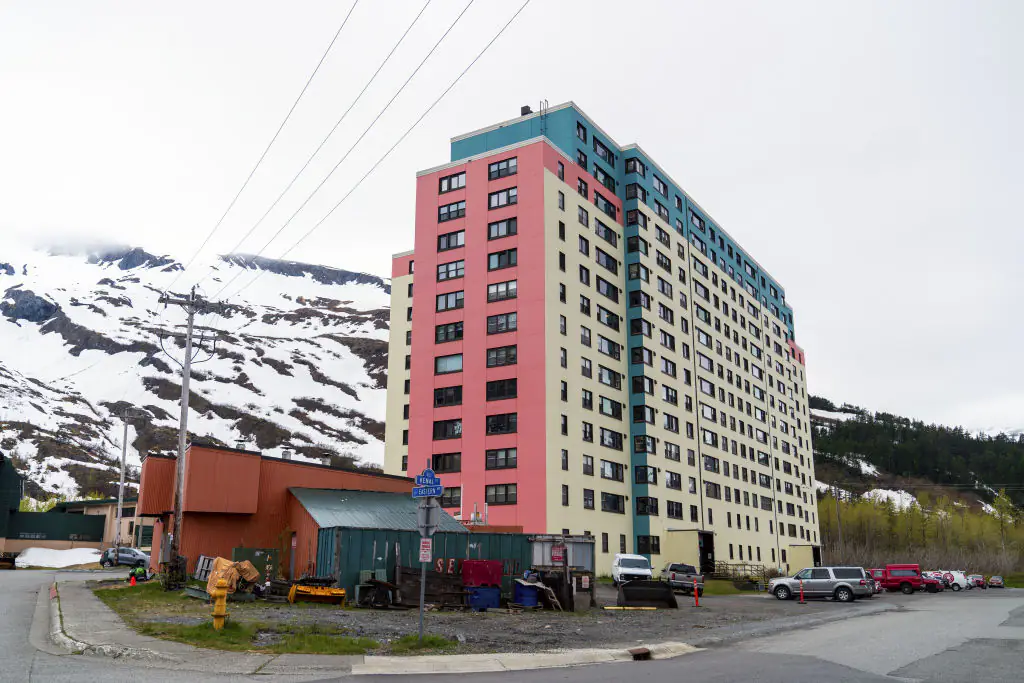
Known for its damp climate and lack of expansive infrastructure, the town has earned the nickname “the town under one roof” due to the majority of its population residing in the Begich Towers Condominium, a 14-story building that houses nearly all local amenities.
Inside Begich Towers, residents have access to a post office, corner store, laundromat, church, indoor playground, and even a tunnel leading to the school, per Realtor.com.
Travel influencer Nikki Delventhal, who recently visited Whittier, shared her amazement in a viral YouTube video.
“I discovered the strangest city in Alaska,” Delventhal said. “This is Whittier, a city where the population lives under one roof. Not only that, they don’t even have to leave.”
Delventhal highlighted the building’s convenience, which once even included an on-site police station. However, she also noted the town’s isolation, which is reinforced by a 2.5-mile, one-way tunnel - the only road access to Whittier - that closes at night.
“Now Whittier is locked between water and steep mountains, and the only way to get there is between a 2.5-mile, one-way tunnel that closes down at night,” Delventhal explained. “You could literally get stuck here.”
Whittier’s origins trace back to World War II when the U.S. Army established it as a port city shrouded in natural protection, including steep mountains and frequent cloud cover.
According to the town’s official website, the military built infrastructure such as the Federal railroad to Portage Valley and developed the port, which remains ice-free year-round.
“Whittier was established by the U.S. Army during World War II as the location was nestled amidst mountains and blanketed by thick cloud cover making discovery of the port city difficult,” the town’s website explains.
“The military remained active in Whittier until 1960 with a total population of about 1,200 people.”
After the Army’s departure, the population dwindled, and Whittier became an incorporated city in 1969.
The Begich Towers, originally built for military families, became the heart of the town’s living arrangement.
Whittier wasn’t always confined to one main residence. The Buckner Building, a massive high-rise once nicknamed “the city under one roof,” housed over 1,250 Army personnel in the 1950s.
It included an array of facilities such as a theater, bowling alley, barber shop, and hospital.
Despite its small population, Whittier draws thousands of visitors each year. Known as a gateway to Prince William Sound, the town is celebrated for its stunning natural beauty and historical significance.
During summer months, when the sun shines for up to 22 hours a day, Whittier hosts over 700,000 visitors annually.
“Situated at the head of Passage Canal, Whittier is by far the most visited gateway to the mesmerizing wilderness of Prince William Sound,” the town’s website notes.
Worth a visit?