


World3 min(s) read
Simulation shows how nine hikers died in one of the most famous unsolved mysteries of all time

A gruesome simulation has demonstrated how nine experienced hikers died in the Ural Mountains in 1959 in one of history's most baffling cases, with the circumstances surrounding their deaths continuing to attract speculation over 60 years on.
The group was traveling through the Soviet Union when the devastating events unfolded during the night of February 1 into February 2 causing them to cut their way out of their tent and flee into freezing conditions without adequate clothing.
The incident, which became known as the Dyatlov Pass mystery after the group's leader, Igor Dyatlov, left investigators with a disturbing scene and numerous unanswered questions.
What does the simulation suggest?
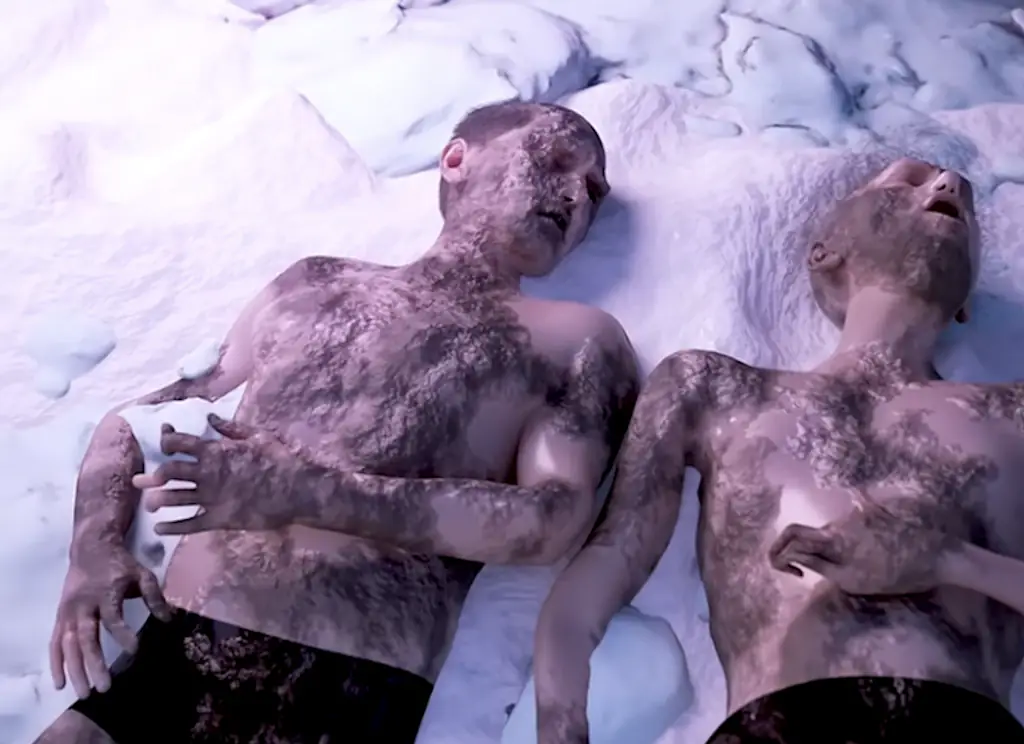
Six of the hikers died from hypothermia, while the other three suffered fatal traumatic injuries, with two of the bodies found without eyes, and one was missing its tongue.
With none of the nine surviving to explain what happened, the mystery has inspired countless theories about what could have forced the group to abandon their shelter in the middle of the night.
Now, a simulation created by YouTube channel Zach D. Films has offered a visual interpretation of the disturbing incident rescue workers may have encountered when they discovered the bodies.
The reconstruction depicts the hikers' final circumstances, including the damaged tent and the shocking condition of some of the bodies, with rescuers finding that the tent had been cut open from the inside, suggesting the group had made a desperate last-ditch effort to escape rather than leave through the entrance.
Among those discovered were Lyudmila Dubinina and Semen Zolotarev, both of whom were missing their eyes, and in the instance of Dubinina, was also found without her tongue.
Other members of the group had sustained severe injuries, including a fractured skull and a twisted neck, while some of the victims showed signs of internal trauma.
Perhaps most disturbingly, several of the hikers were discovered outside the tent wearing little more than socks and underwear, despite the deadly temperatures and heavy snow.
The extraordinary circumstances have fuelled a range of conspiracy theories over the years, with many focusing on why the hikers abandoned their tent and what could have caused their injuries.
Some have suggested that a yeti was responsible for the deaths, while others have proposed that members of the group were connected to the KGB and had been involved in a secret mission to meet American agents.
Expert investigators provide different explanation

However, Russian authorities have previously offered a more conventional explanation for the tragedy.
An investigation by Russia's prosecutor-general's office concluded that an avalanche was responsible for the deaths, suggesting the hikers had been caught in dangerous conditions while attempting to protect themselves.
Andrei Kuryakov, a senior state prosecutor involved in the investigation, explained that the group had been caught in a situation where their efforts to survive ultimately proved unsuccessful.
"This was a natural avalanche limiter. They did everything right. But here is the second reason why the group was doomed," he claimed.
"When they turned around, they could not see the tent. Visibility was 16 metres (52ft)," he added.
Despite the years of speculation surrounding the case, the prosecutor described the hikers' struggle to survive as a desperate fight against the elements.
"It was a heroic fight. There was no panic, but they had no chance in these circumstances," he said.
Temperatures in the area reportedly plunged to between -40°C and -45°C, meaning the hikers who did not sustain immediately fatal injuries would have faced an extremely dangerous battle against hypothermia.
If the explanation of an avalanche is correct, then the group would have been forced to make life-or-death decisions in darkness, with freezing temperatures and limited visibility making it difficult to return to safety.
Nevertheless, aspects of the case, including the circumstances surrounding the injuries and the decision to leave the tent, have continued to intrigue researchers and amateur investigators.