


Innovation4 min(s) read
AI whistleblower issues new warning after his viral X post claimed 'all humans could be killed in next decade'

An AI whistleblower has shared a haunting new warning after claiming in a viral post that "all humans could be killed in next decade".
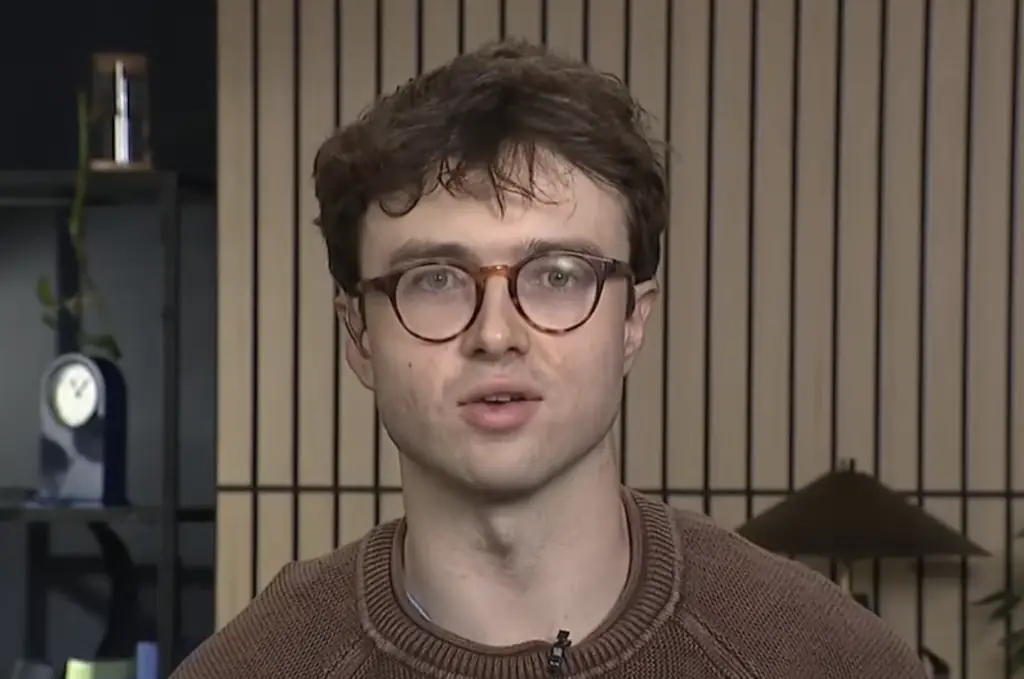
Jacob Coxon, a former researcher for OpenAI and Anthropic, appeared on Fox News' Special Report on Wednesday.
During the interview, host Bret Baier asked him about the possible dangers of AI, and Coxon compared the risks to nuclear weapons.
"So unfortunately, we know how to control nuclear weapons pretty much, we don't yet know how to control AI," he said. "This is possibly the most dangerous technology humanity has ever created. It's basically out of science fiction."
Coxon warns AI could become a 'superweapon'
The interviewer also asked Coxon whether US government restrictions would be enough if companies in countries such as China and India continued developing advanced AI.
The whistleblower said he believes countries will need to work together to control the technology.
"I think you have to think of this as an arms race," he responded. "This technology is not ordinary technology, is not like other forms of innovation.
"This is essentially a superweapon, and I expect the international community to be ready to make an agreement about how to control the development of superweapon technology," he added.
His interview came just one day after he announced his resignation from Anthropic on X.
"I resigned from Anthropic today. I spent the last three years doing pretraining research at both OpenAI and Anthropic. Neither company is acting responsibly. They are racing straight to self-improving superintelligence and gambling with our lives," he wrote.
He warned people not to underestimate how powerful AI systems could become, saying: "These will soon be superhuman systems that can hack anything, revolutionize any field overnight, and acquire real power and resources.
"We have all witnessed the progress in each of these domains, and progress is not slowing.
"The people building AI earnestly believe that it could kill us all by the end of the decade. This is not a marketing stunt," he added.
Coxon's concerns were supported by Evan Hubinger, a researcher who currently works at Anthropic.
"Jacob is correct here - we really do earnestly believe AI could kill all humans," Hubinger wrote on X on Tuesday.
Hubinger said he personally believes there is a greater than 10 percent chance that AI could wipe out humanity within the next decade.
"I believe Anthropic is trying its best, but we do not yet have a plan to solve alignment for superintelligence and are not clearly on track to," he added.
AI "alignment" refers to efforts to ensure that advanced AI systems behave in ways that align with human intentions and goals.
Geoffrey Hinton, a Canadian researcher often called the "Godfather of AI," has also warned about the risks of creating AI more intelligent than humans.
"We would be very foolish to develop superintelligence now, when there is no scientific consensus it can be developed safely and controllably," Dr Hinton said. "Losing control over AI smarter than ourselves could be catastrophic and could even lead to human extinction."
Anthropic's dispute with the US government
Anthropic is the company behind Claude, one of the leading AI chatbots.
In February, the company became involved in a dispute over safeguards on how the Pentagon could use its technology.
Anthropic CEO Dario Amodei refused to back down from the company's position, which led to President Donald Trump saying: "We don't need it, we don't want it, and will not do business with them again!" on Truth Social, per BBC News.
Defense Secretary Pete Hegseth also described Anthropic as a "supply chain risk," a label historically used against foreign adversaries.
Anthropic said it wanted assurances that Claude would not be used for mass surveillance of Americans or in fully autonomous weapons.
The Pentagon said it did not plan to use it for those purposes, but insisted the technology should be available for all lawful uses.
"No amount of intimidation or punishment from the Department of War will change our position on mass domestic surveillance or fully autonomous weapons," Anthropic said. "We will challenge any supply chain risk designation in court."