


Tech & Innovation3 min(s) read
Deep-sea shark's terrifying eye caught on camera as it approaches submarine in moment 'nothing can prepare you for'

Extraordinary footage has captured the moment a colossal shark was seen from inside a submarine.
The clip shows a huge bluntnose sixgill shark swimming towards the vessel before researchers manage to attach a satellite tracking device to its body.
The remarkable footage from 2019, which has resurfaced online, is from a mission to study one of the ocean's most mysterious predators.
The shark comes from an ancient family that dates back further than dinosaurs
The shark, which can grow to more than 16 feet long, belongs to an ancient lineage that existed long before the dinosaurs and has remained relatively unchanged for millions of years.
The expedition was led by Florida State University marine ecologist Dr Dean Grubbs, and researchers Brendan Talwar and Edd Brooks from the Cape Eleuthera Institute.
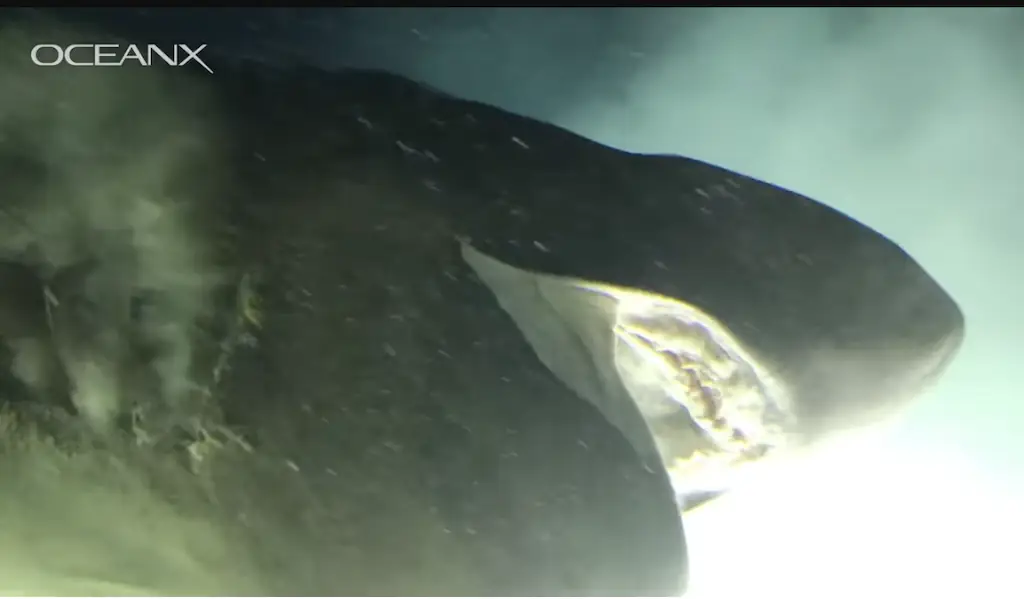
Until the mission, scientists had only been able to attach satellite tags to sixgill sharks by bringing them to the ocean's surface.
In a YouTube video made by OceanX, a narrator explained: "The lead scientist on the mission, FSU Marine Lab's Dr. Dean Grubbs, has been the first to put a satellite tag on one of these elusive sharks, but until now had only been able to do so by bringing them up to the surface."
The team used a submarine called Nadir to go more than 1,700ft below the surface, with two satellite tags and a small chance of being able to attach them.
The operation was far from straightforward, with two previous attempts abandoned because of bad weather and malfunctioning spear guns.
Researchers also needed an enormous 2,000lbs of bait to attract the elusive creatures.
On June 29, 2019, they finally succeeded when a sixgill shark approached the submarine, giving the scientists a chance to fire the tracking device.

The scientists recalled the moment the shark approached them
Gavin Naylor, director of the Florida Program for Shark Research, described the encounter as an extraordinary experience.
He recalled: "It was like seeing a T. rex in the water. This lineage has been around for 100 times as long as Homo erectus (the ancient ancestor of humans), and these sharks haven't changed that much".
He later admitted that successfully attaching the tag was down to "dumb luck".
Dr Grubbs also noted how little is known about the species despite its enormous size, saying: "So much money has been expended on tagging great whites, and here we have a comparably sized predator, and we know almost nothing about it. Are they really rare? The answer may be that not many people are looking for them".
Sixgill sharks typically inhabit depths between 650ft and 3,300ft, an area of the ocean often referred to as the Twilight Zone.
The historic expedition has provided researchers with valuable information about a creature that remains one of the deep sea's most mysterious inhabitants.