Uncategorised3 min(s) read
Published 16:58 31 Oct 2017 GMT
Uncategorised3 min(s) read
Published 16:58 31 Oct 2017 GMT
health3 min(s) read
health4 min(s) read
uncategorised3 min(s) read
Published 09:48 12 Jan 2018 GMT
entertainment news4 min(s) read
Published 16:23 22 Oct 2024 GMT
A surgeon has revealed the dangers that could arise from oral sex, including one deadly disease.
Oral sex is something that is largely accepted in today's world, with many people engaging in the activity.
Although some perceive it as a safer alternative to unprotected sex, some dangers come with it.
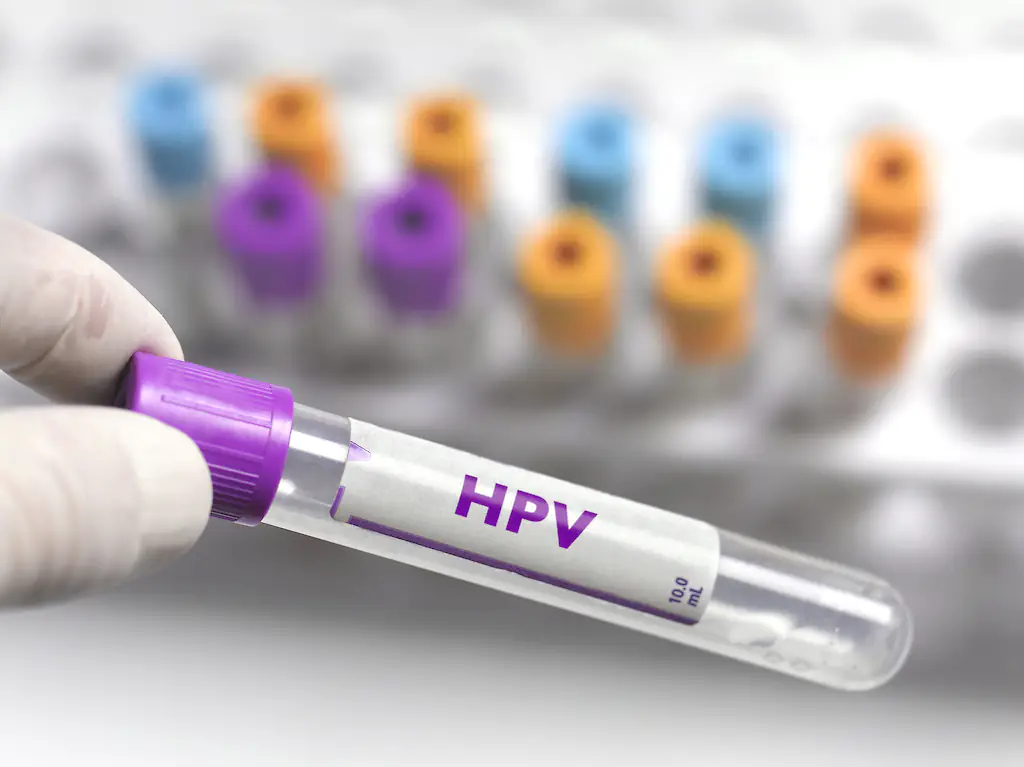
Approximately 18,000 Americans are diagnosed annually with oropharyngeal cancer, a form of head and neck cancer that is increasingly linked to human papillomavirus (HPV), according to medical experts at Yale Medicine.
While this type of cancer historically affected older adults, more cases are emerging in younger generations, with one UK-based surgeon pointing to a specific cause.
“Oropharyngeal cancer is sexually transmitted. For oropharyngeal cancer, the main risk factor is the number of lifetime sexual partners, especially oral sex,” said Dr. Hisham Mehanna, a professor at the University of Birmingham, UK, in a piece published on The Conversation.
“Those with six or more lifetime oral sex partners are 8.5 times more likely to develop oropharyngeal cancer than those who do not practice oral sex,” Mehanna added.
Oropharyngeal cancer affects the middle section of the throat, including the soft palate, tonsils, and the back of the tongue.
Common symptoms include persistent sore throat, difficulty swallowing, ear pain, unexplained weight loss, lumps in the mouth, throat, or neck, and a persistent white patch in the mouth.
Treatment options include radiation, chemotherapy, a combination of both, or surgery to remove the tumor.
While oropharyngeal cancer linked to HPV often has a better prognosis than cases associated with heavy smoking or alcohol use, survival rates remain a concern.
About 70% of patients with HPV-related oropharyngeal cancer survive five years or longer after diagnosis.
HPV, the most common sexually transmitted infection in the US, is known to cause genital warts, cervical cancer, and oropharyngeal cancer.
Over 42 million Americans carry a strain of the virus capable of causing disease, and more than 13 million new infections are reported each year, per the New York Post.
“The prevailing theory is that most of us catch HPV infections and are able to clear them completely. However, a small number of people are not able to get rid of the infection, maybe due to a defect in a particular aspect of their immune system,” Mehanna explained.
“In those patients, the virus is able to replicate continuously, and over time integrates at random positions into the host’s DNA, some of which can cause the host cells to become cancerous,” he added.
To reduce the risk of HPV-related cancers, Mehanna and health authorities recommend the HPV vaccine for both girls and boys.
The Centers for Disease Control and Prevention (CDC) advises starting the vaccination series at age 11 or 12, though it can begin as early as age 9.
For those who did not receive the vaccine as adolescents, catch-up vaccinations are recommended up to age 27.
Despite the medical consensus on the vaccine’s effectiveness, Mehanna acknowledged that resistance remains.
“There is a significant proportion of some populations who are opposed to HPV vaccination due to concerns about safety, necessity, or, less commonly, due to concerns about encouraging promiscuity,” he said, adding: “As always when dealing with populations and behavior, nothing is simple or straightforward.”
Published 16:28 10 Mar 2026 GMT
An expert has explained why men appear to be disproportionately affected by HPV-related oral cancers, as cases linked to the virus continue to be diagnosed across the UK.
HPV, or human papillomavirus, is the most common sexually transmitted infection in the US. There are more than 200 strains of the virus, and about 14 are known to cause cancer. While many infections clear naturally, health officials say nearly all sexually active people will contract at least one type of HPV at some point in their lives.
According to the CDC, about 10 per cent of men and 3.6 per cent of women are known to carry the virus. In many cases, the infection disappears within one to two years. However, experts warn it can take decades before HPV develops into cancer in the back of the throat, also known as oropharyngeal cancer.
Actor Michael Douglas was diagnosed with throat cancer in 2010. The Hollywood star later said publicly that the stage four disease was possibly linked to oral sex, although he also acknowledged other risk factors, including smoking and drinking.
Around two in three new HPV-related head and neck cancer cases in the UK are diagnosed in men.
Karis Betts, a cancer epidemiologist from Cancer Research UK, said HPV infections may remain unnoticed for years before developing into cancer.
She told LADbible that “it can take decades” for HPV to show up.
Betts also explained that certain groups appear to face higher risks. She said: “There are studies that look at risk for different people. Straight women who have sex with men have a higher risk than women who have sex exclusively with women. And men who have sex with men have higher risk than straight men.
“The HPV vaccine is also available up to age 40 for men who have sex with men because the risk is slightly higher.
“Men have higher rates of head and neck cancers than women. This kind of historically links to other risk factors as well.
“If you look a few decades ago, there were really high rates of smoking in men, high rates of alcohol, and they’ve consistently been higher than women.
“Men have higher rates of head and neck cancers, particularly in the mouth and throat, and these cancers are also caused by other things that are more prevalent in men.”
She added that “smoking and alcohol are going to be much bigger drivers of head and neck cancers than HPV”.
Nearly one in 96 UK females and one in 43 UK males will be diagnosed with head and neck cancer during their lifetime.
HPV spreads through close skin-to-skin contact, including vaginal, anal and oral sex, touching, and sharing sex toys. Condoms can lower the risk of transmission, although experts note “they’re not 100 percent effective”.
Betts said prevention efforts should focus on vaccination and screening.
“The big kind of preventable measures against HPV in the population are vaccination and cervical screening,” she said.
“Vaccines kind of work best, and that's why they work best at that school age, because it's before people have had any exposure to the virus.
“If people are worried about their cancer risk, the best things that they can do, especially for head and neck cancer, is to not smoke, or stop smoking, and reduce their alcohol intake.
“Things like that will have a much bigger benefit on your cancer risk than kind of worrying about an HPV infection.”
She stressed that avoiding sex is not the recommended solution, explaining that “the advice isn’t going to be stop having sex”, before adding: "People should live and enjoy their lives, and sex is part of that."
Health experts say throat cancer can present a range of symptoms. According to the Cleveland Clinic, warning signs may include:
Persistent sore throat
Pain or difficulty swallowing
Trouble opening your mouth or moving your tongue fully
Unexplained weight loss
Constant or unexplained ear pain
A lump in the back of the throat or inside the mouth
A lump or swelling in the neck
Coughing up blood
A white patch on the tongue or inside the mouth that doesn’t disappear
Head and neck cancer accounts for around three percent of all new cancer cases in the UK.
Published 15:52 07 Aug 2024 GMT
A new study has revealed why women who don't have enough sex are purportedly more likely to "die early."
A recent study involving 2,267 participants in the US found that women who have sex less than once a week may have a higher likelihood of dying early compared to those who engage in sexual activity more frequently.
Researchers analyzed data from a national health survey that included 14,542 participants, although not all provided details about their sex lives.
Among the more than 2,000 people who did, 94.4% reported having intercourse at least once a month, while 38.4% stated they had sex more than once a week.
The study's authors, whose research was published in the Journal of Psychosexual Health last month, explained, "Sexual activity is important for overall cardiovascular health, possibly due to a reduction in heart rate variability and increased blood flow."
"Using findings from our study, we can infer that sexual activity, broadly defined, may ameliorate the loss of function that can occur with age and the progression of disease," the researchers noted.
Previous studies have indicated that the average adult in the US has sex 54 times a year, roughly equivalent to once a week. For this study, the 2,267 participants, aged 29-50, were divided into two groups: those who have sex more than once a week and those who have sex less frequently.
The study discovered that women with a lower sexual drive were 1.7 times more likely to die from any cause by the end of 2015 compared to their more sexually active counterparts. Additionally, a pattern emerged: the less sex a woman had, the higher her mortality risk.
While the study did not find the same correlation in men, it revealed that sexual activity had a "modifying relationship" on depression in both sexes.
Participants suffering from depression were approximately three times more likely to die during the follow-up period if they did not engage in frequent sex.
"Individuals with depression but high sexual frequency don't feel the harmful effects of depression as much," Dr. Srikanta Banerjee, the study's lead author, told DailyMail.com.
"Depression leads to increased mortality due to health outcomes. So perhaps sex is more effective because of the severity of how depression impacts females," Dr. Banerjee explained.
However, the researcher noted that "there are multiple theories" regarding the study's findings.
"For instance, sex releases endorphins that may prevent severe health outcomes," he added.
Published 09:42 09 Sep 2025 GMT
Michael Douglas has never been one to shy away from frank revelations, but his explanation for the cause of his stage four throat cancer was pretty surprising.
The Basic Instinct and Fatal Attraction star, now 81, has a long history of speaking openly about his past, including substance abuse, smoking, drinking, and a reputation - disputed by him - for being "sex-obsessed."
In 1992, Douglas checked into rehab for alcohol addiction in Arizona’s Catalina Mountains, though some reports at the time claimed he was also being treated for sex addiction.
He denied that allegation, but nearly two decades later, he made a claim that reignited that image.
In 2013, Douglas told The Guardian that his throat cancer was caused by the human papillomavirus (HPV), which, he said, can be contracted through performing oral sex.
Asked whether years of smoking, drinking, and drug use might have been responsible for his illness, he replied: “No. No. Ah, without getting too specific, this particular cancer is caused by something called HPV [human papillomavirus], which actually comes about from cunnilingus.”
He went further, adding: “I did worry if the stress caused by my son's incarceration didn't help trigger it. But yeah, it’s a sexually transmitted disease that causes cancer. And if you have it, cunnilingus is also the best cure for it.”
HPV is the most common sexually transmitted infection in the U.S., according to the Cleveland Clinic, and is best known for its link to cervical cancer.
Research has shown the virus can also cause cancers of the throat, particularly in the oropharyngeal region.
Studies cited by London consultant head and neck surgeon Mahesh Kumar show that HPV type 16 is present in 57% of oral cancer cases, and the last decade has seen a dramatic rise in such cancers, especially in younger patients.
“It has been established beyond reasonable doubt that the HPV type 16 is the causative agent in oropharyngeal cancer,” Kumar said, noting higher recovery rates for HPV-related cancers.
Even so, Kumar expressed scepticism that HPV alone caused Douglas’s illness and flatly rejected the suggestion that more oral sex could cure it.
“Maybe he thinks that more exposure to the virus will boost his immune system. But medically, that just doesn’t make sense.”
Douglas’s road to diagnosis began in August 2010, after months of oral discomfort.
Despite seeing several specialists, his tumor went unnoticed until he visited a friend’s doctor in Montreal. "I will always remember the look on his face," Douglas recalled. “He said: ‘We need a biopsy.’ There was a walnut-size tumor at the base of my tongue that no other doctor had seen.”
The diagnosis was stage four throat cancer — a level often considered terminal.
Douglas began an aggressive eight-week course of chemotherapy and radiation, refusing a feeding tube even as the treatment burned his palate and left him on a liquids-only diet.
“That’s a rough ride. That can really take it out of you,” he said. “Plus the amount of chemo I was getting, it zaps all the good stuff too. It made me very weak.” He lost around 20kg (45 pounds) during treatment.
Remarkably, the treatment worked.
Two years later, Douglas was given the all-clear and has remained in remission. He now attends check-ups every six months and says that, with his type of cancer, "95% of the time it doesn’t come back."
Douglas, who has two children with his wife, Catherine Zeta-Jones, and an older son, Cameron, from his first marriage, acknowledged the role stress may have played in his illness.
At the time of his diagnosis, Cameron was serving a prison sentence for drug-related offenses, later extended after being caught with drugs while incarcerated.