Uncategorised3 min(s) read
uncategorised3 min(s) read
sport1 min(s) read
A little over three and a half years ago, Aaron Hernandez was sentenced to life in prison for the murder of his fiancee's sister's boyfriend, Odin Lloyd. It is believed that he killed the 27-year-old because he might have known too much about two previous killings in which Hernandez was a suspect.
Two years later, in April 2017, the former New England Patriots player killed himself in his prison cell after being acquitted of two other homicides which took place in 2012.
Stories about Hernandez, who was only 27 when he died, have been resurfacing recently - and many of them are disturbing, to say the least.
Brandon Lloyd, one of Hernandez's former teammates, has recently spoken out about the footballer's volatile mood swings.
"There would be swings where he’d be the most hyper-masculine, aggressive individual in the room, where he’d be ready to fight somebody in fits of rage," he said. "Or he’d be the most sensitive person in the room, talking about cuddling with his mother. Or he’d ask me, ‘Do you think I’m good enough to play?'"
Lloyd noted that the extremes of these mood swings were particularly disturbing. "It was like he went from this child-like, laughing, disruptive behaviour, and he storms off in a fit of rage."
On more than one occasion, too, other players approached Lloyd in order to discuss Hernandez's worrying states of mind.
Wes Welker, who played for the Patriots for six years, approached Lloyd at one point in order to warn him about some disturbing comments that Hernandez was making.
Recalling the conversation, Lloyd said: "[Welker] is looking at me wide-eyed. And he says, ‘I just want to warn you that [Hernandez] is going to talk about being bathed by his mother. He’s going to have his genitalia out in front of you while you’re sitting on your stool. He’s going to talk about gay sex. Just do your best to ignore it. Even walk away.’"
On another occasion, Hernandez had apparently threatened to "f**k up" Welker.
A brain scan performed on Hernandez after his death revealed that he had chronic traumatic encephalopathy (CTE), a progressive degenerative disease caused by severe or repeated blows to the head. This may have gone some way towards explaining why the footballer had such extreme mood swings, but - of course - does not excuse his crimes.
Tom Brady, who was once friends with the convicted killer, said after his death: "It’s just very tragic, for everyone involved. To have a teammate who we were all in the huddle with, played some great games with. It’s just a tragic story all the way around. For everybody involved, it’s just a horrible thing. I don’t know what to make of it. It’s just very, very, very sad."
Hernandez was known to be a problematic person long before he joined the Patriots, and his anger was no secret during his time on the team. Whether or not anything could have been done to help him is uncertain, and - even if there was - there's every chance it would have been too little, too late.
sport3 min(s) read
The cause of death for former Dallas Cowboys player Marshawn Kneeland has been revealed after he died aged 24 in November.
The defensive end died on Wednesday 5 November 2025 and it has now been revealed that he had been diagnosed with stage 1 chronic traumatic encephalopathy (CTE).
Eight months on from his tragic death, the Concussion and CTE Foundation announced that he had been diagnosed with early CTE following post mortem brain analysis.
In addition to this, the organization confirmed that he had died by suicide.
“Mr. Kneeland played in the modern era of concussion protocols and better helmets, and yet he still developed CTE."
After the announcement, Kneeland’s girlfriend Catalina Mancera and Kneeland’s family released a statement of their own, discussing the ongoing issue of traumatic brain injury in the NFL and beyond.
"While this diagnosis does not change the tragedy of his passing, it provides important context about some of the struggles he may have been facing.
“We share this information to help people understand what NFL and other high contact sport athletes might be struggling with.
“Raising awareness is important to us.
“We continue to remember Marshawn with compassion for the person he was, rather than defining him by the final moments of his life. One Love."
Despite these findings, the CTE Center put out a warning to observers that this discovery does not mean that a post mortem CTE diagnosis should be considered the cause of his suicide.
There are many issues at play, and it had been noted in the past that Kneeland had struggled with his mental health.
In 2020 when he was at Western Michigan there were concerns raised, and at one stage he was required to hand over a firearm to police until notice from a counselor.
Another incident saw police called by a friend to check on Kneeland’s wellbeing.
He was hospitalized after being found on railway tracks claiming he wanted a train to hit him.
Police in Texas found Kneeland dead on November 6th after he had eluded officers during a traffic chase.
He crashed his car and ran away, and police were then later informed that Kneeland had expressed ‘suicidal ideations’.
Brain injury and CTE are a huge issue in sport, but particularly in the NFL, and more research must be done to work out how to keep athletes safe.
Adding to her statement, Dr McKee said: "Thanks to the generosity of our brain donor families, we now better understand the earliest stages of CTE, and it is bringing us closer than ever to diagnosing it during life.
“My team and I are fully dedicated to finding effective treatments and a cure for CTE."
uncategorised3 min(s) read
us4 min(s) read
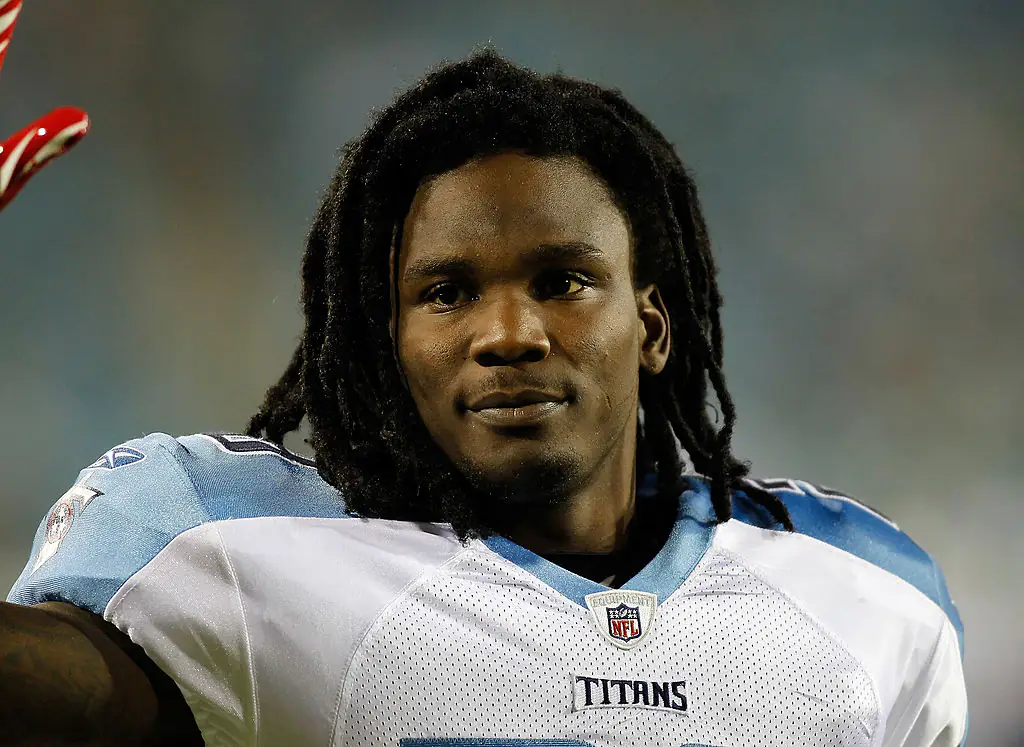
Former NFL running back Chris Johnson revealed today (June 29) that he was diagnosed with Amyotrophic Lateral Sclerosis (ALS).
The former Tennessee Titans star shared the emotional news on Good Morning America via a speech-generating device using his recorded voice, as ALS has taken away his ability to speak.
Johnson, the 2010 NFL Offensive Player of the Year, explained to Michael Strahan: “There’s no history of ALS in my family,
“My doctors believe my case is what’s called sporadic ALS, which is actually how the vast majority of ALS cases happen.”
Now 40, Johnson was only told about the condition at the age of 39.
Despite the situation worsening at pace, the former NFL player said that he has no intention to give up the fight.
Johnson continued to speak on the show, adding that sporadic ALS is "one of the reasons this disease can be so shocking," as "it can happen to someone who never expected it."
The host asked him about the condition, with the former New York Jet claiming: “Honestly, I don’t know if you ever fully process it,
“At first, you’re in shock. Then you realize you have two choices. You can give up, or you can fight. I chose to fight.”
He recalled first noticing something was wrong while spending time with his wife and four children, when his right hand began feeling weaker than usual.
“At first, it was little things like my grip didn’t feel right, and I wasn’t as strong as I’ve always been,” Johnson said.
His family believed that the condition was likely linked to his football career, after being selected in the first round of the 2008 draft and playing a decade at the top level after years in school and college.
Wife Brittany told Strahan: “I thought because of football and, you know, his career, that it had to be something with that,
“Maybe… a pinched nerve or something along those lines, but never ALS.”
Johnson says that the disease hasn't changed who he is, despite its effects on the body: “People sometimes look at the physical disability and assume you’re not still the same person inside,
“I still think the same. I still dream. I still love my family. My body just doesn’t cooperate.”
He also gushed over the support shown by his wife and kids, stating: “They give me a reason to keep going.”
Amy Adams Strunk, the controlling owner of the Titans, said in a statement on X: "Some people leave a mark on an organization that you just can't put into words.
"Chris Johnson is one of those people for us. His leadership on the field, in addition to his impact in the locker room and Nashville community have written him permanently into the story of this franchise," she said of the running back who spent six seasons with them.
Strunk added: "Learning this news is extremely difficult, and we will support Chris every step of the way throughout his journey.
"We are holding him and his family close, and join our fans around the world in expressing our love for Chris."
The New York Jets also said on X: “Our entire Jets family is with you, @ChrisJohnson28. Sending strength and support as you face this challenge.”
Thirdly, the Arizona Cardinals also wrote on the site: "The Cardinals join the entire football community in sending strength, love and support to Chris Johnson.
"We know he will face this latest challenge with the same tenacity and toughness as he has all others."
ALS, also known as Lou Gehrig’s Disease, has an average life expectancy of three to five years, with just 10 percent of those diagnosed living for 10 or more years.
Johnson also said he is willing to try experimental treatments, saying: “It’s continued to progress much faster than I ever imagined. I want people to understand just how quickly ALS can attack your body,
“Just over a year ago, I was picking up my 7-year-old daughter so she’d make a wish with her birthday cake. Today, I couldn’t do that.”