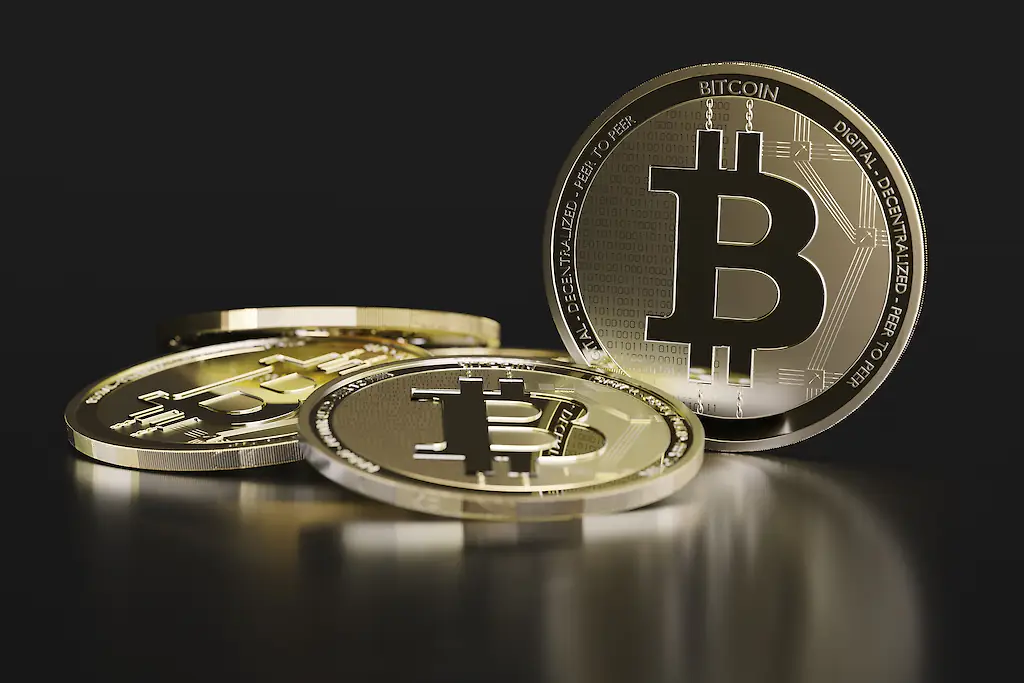
For many people, fighting their way through the maze of financial jargon can be a challenge. As much as we hate to admit it, there’s probably a reason that why the world of top-level finance is controlled by a select few. But for the whizz-kids with the financial and technological know-how, there is a whole new universe just opening up - the modern equivalent of the gold rush, with the internet as the wild west - and for those who get it right, there are big bucks to be made. Welcome to the world of cryptocurrencies. For those of us not “mining” cryptocurrencies (and yes, that is the official term), they’re are essentially just lines of complex code generated by a computer, to which monetary value is attached. Unlike with regular money, there is no physical form; instead they work through peer-to-peer transactions based in cryptography. Operating away from the centralisation of banks or governments, bitcoin can be stored offline and although investment is still considered risky, their value has skyrocketed in recent times.At the time of writing, one Bitcoin - the most well known and frequently used cryptocurrency - is worth $16,445. But, as with any financial system, it seems the wealth is not being shared as equally as it could be: while the digital currency economy is now estimated to be worth $460 billion, it is believed that less than four per cent of those engaged with it are female. So why are women missing from this industry? And does it matter?
[caption id="attachment_52161" align="aligncenter" width="4032"]
Credit: Pexels[/caption]
First, a little background. Bitcoin first came about in 2009. It was initially written off as a fad, and was once associated with sites on the dark web, owing largely to the autonomy that it provided. Rooted in chat rooms, originally using the software of gaming nerds, and invented at a time when even fewer coders were female, the majority of the earliest adopters of this new financial system were, unsurprisingly, male. Today although the picture is changing, it is still the case that globally less than 12 per cent of coders, on which Bitcoin is so heavily dependent, are female. This lack of female programmers has undoubtedly contributed to the gender imbalance affecting cryptocurrency, but it also creates a catch-22 situation, where some women feel discouraged from challenging it or immersing themselves in this world. So let's make one thing clear: just because someone on a team doesn't shout loudest, that doesn't mean they're not the most talented. This hesitancy cannot be helped by reports of women being sidelined by the assumption that they play supporting roles - even Meltem Demirors, an advisor to the World Economic Forum, recalls being mansplained to about how cryptocurrency works, whilst delivering the keynote speech on the subject at a world conference. A quick glance in Bitcoin forums will also show you how this also functions at ground level: “just ask yourself: do they need bitcoins in the kitchen?” wrote one contributor to a bitcointalk.org forum around women in the industry. Another wrote: “Most women aren't smart enough or tech savvy enough to be into Bitcoin.” This, of course, is total BS. In a 2016 study, researchers from the University of North California found that coding contributions written by women actually tend to be accepted and approved more frequently than those written by men - but only if the creators hide their gender. It translates then that if cryptocurrency is to reach its full potential, more women need to be actively encouraged its ranks. Writing off the talents of half of the population on the basis that they have a vagina seems short-sighted at best. The absence of women from the cryptocurrency frontier contrasts with a world financial system just starting to shake off the clutches of the proverbial old boys’ club, with the number of women in senior financial roles creeping up year-by-year. That is not to say, however, that epic women in cryptocurrency do not exist. Among those leading the way for women in the cryptocurrency world is Galia Benartzi, co-founder of Bancor, which raised $150 million in June alone: “We have an opportunity to rebuild the financial system,” she explained to Bloomberg. “Are we going to do it with all guys again?” She’s got a point - if cryptocurrency is to be truly global, as it is intended to be, then omitting half of the world’s population from it, intentionally or otherwise, is basically falling at the first hurdle. To rebuild the financial system online without women, is simply to do it beyond the reach of efforts toward parity and equality. Less than a decade old, cryptocurrency is still, despite its huge reach, in its infancy; the quicker women get involved, the less likely this is to happen.
[caption id="attachment_52203" align="aligncenter" width="1280"]
Credit: Pixabay[/caption]
They say that money makes the world go round, and even beyond issues of female equality and the desire to make the financial system representative of the many, is the matter of economic spending potential. With more retailers than ever accepting Bitcoin as a legitimate form of payment, including giants such as Expedia, and more women than ever in possession of disposable income. Arianna Simpson, an early-investor in cryptocurrency and advocate for women in the sector explained how everyone stands to benefit from greater female involvement: "The Bitcoin ecosystem really needs women in order to thrive," Simpson said. "In the U.S. alone, they control anywhere between $5 [trillion] and $15 trillion in annual spending power, which is huge. It would be a shame for both women and for Bitcoin not to leverage that potential."At the end of the day the truth is clear: if the cryptocurrency world is to continue to thrive, if the bubble is to avoid bursting, then the power of women as coders, inventors, entrepreneurs and spenders needs to be harnessed. And despite the generous helpings of girl power being dished out by Demirors, Benartzi and Simpson, and others amongst their ranks, at the moment, this hasn't happened yet.
If there's one subject that economists can't seem to stop talking about, it's Bitcoin. After a sudden drop in value, it seemed that the financial fad might blow over. But it appears as though the opposite has happened. First invented back in 2009 and released as open-source software by an anonymous group or individual going by the moniker "Satoshi Nakamoto", it's easy to see why Bitcoin has taken off the way it has on the internet, where peer-to-peer sharing and digital transfers make it easy to understand and use.
In layman's terms, the word "Bitcoin" refers to interchangeable online tokens; random sequences of numbers and letters which humans, called "miners", attempt to guess the value of, using complex computer programs. When a miner eventually guesses the sequence correctly, (and everyone can see for themselves that they guessed right), then they receive that Bitcoin and know how much it is worth.
Real world money is mostly generated through transactions: after all, it's easier to buy Bitcoin from people who already solved the puzzles, rather than mine it yourself. Once it's bought, you can use the sequence to store money or share it with friends and family. Miners mine these sequences until they have 50 Bitcoin, which is called a "block". Blocks are collectively referred to as "blockchains", which contain the entire history of every transaction which has occurred in the Bitcoin network.
Currently, the reason Bitcoin is so profitable is that huge bidding wars are breaking out for certain blocks, which means that the value of Bitcoin can fluctuate wildly in a short space of time. In theory, one could avoid the whole process of bidding and mine Bitcoin, but it would take a long time and a vast amount of manpower. Who would sit and mine Bitcoin for someone for free? Well, a woman named Theodora has worked out a way to amass a gigantic Bitcoin fortune at no personal expense, by mobilising a vast voluntary army of slaves. What's her secret? I'll tell you: Theodora is a dominatrix, and in her line of work, consensual slavery is all just part of the game. Pretty smart way to make a million dollars, right?
Theodora, who boasts over 1,200 followers on Twitter, is a professional dominatrix who specialises in psychological domination. Rather than relying on whips, gags and hot wax, Theodora prefers to humiliate and debase her willing clients by getting inside their heads, employing subtle methods such as hypnosis and, in this instance, financial domination. Yes, it sounds like a pretty expensive kink, but some people get a strong sexual thrill out of becoming voluntary victims of blackmail and extortion, putting their own money, bank accounts and credit cards in the hands of a willing dom for the sake of erotic gratification. Using Twitter, Theodora was able to convince hundreds of her randy drones into becoming Bitcoin miners and they gleefully worked away to make her a fortune.
In a recent interview with MarketWatch, the articulate Theodora explained that: "It's a form of psychological domination where money is the tool for the transfer of power. It’s quite common for powerful men like politicians or CEOs to look for a form of sexual release by submitting to a woman - they are in control all the time during the day - and giving up control financially is a more tangible instrument of power for them ... I take donations and also have people mining for me. I take a lot of geek clients who like new technology and they were really excited when I taught them how to build a mining rig for me so they could mine 24/7 from their home."
She added: "I have seven or eight different currencies - I see it a bit like play money and try to adjust to which is growing the most. If you anticipate growth, that’s where it will become interesting. Everyone is now interested in Bitcoin because the growth has been exponential. Soon it will be too high for individuals to invest in, so you have to invest in others. I think it’s smart to have diverse portfolios of currency ... Bitcoin could crash in two days, you don’t know what’s going to happen, so if you have enough to invest in smaller currency you should. For me, it’s play money. You have to bet on several currencies to see what will happen, and if it’s your main source of income you have to be smart with it."
Indeed, because most of her clients are high-powered businessmen, Theodora has managed to develop a pretty impressive sense of financial acumen and watches the market like a true Wall Street broker. Theodora is now convinced that the growth of Bitcoin has been so exponential that it will soon become too expensive for individuals to invest in, and that the end of net neutrality might mean that Bitcoin is too closely regulated to profit from successfully.
Theodora is also careful not to push her clients straight into bankruptcy and claims that she has to very carefully budget how much money she takes away from them and how long her miners spend working for her. I suppose you could argue that she's being compassionate, but I think it's probably just her good business sense shining through again. After all, you can shear a sheep as many times as you like, but you can only skin it once; so pushing a client too far, or demanding too much, could lead to them becoming completely broke.
Now, some of you out there might assume that this is easy money and that it's high time you quit your day job, invested in an all-leather wardrobe, and got to work forcing fetishists to get cracking. Personally, I don't think that Bitcoin is stable enough for me to sink my career over it. Sure, you get occasional success stories like this one, but far more failures. Over Christmas, my own uncle had been left completely depressed after losing a huge sum of money over Bitcoin. So I think I'll stick to making cash the old-fashioned way. Besides, bits and blocks aren't really my bag, and neither are wax and whips.
It's fair to say that Bitcoin mania has gripped the world and nobody, not even the most respectable expert, knows whether the cryptocurrency is going to thrive, stagnate, or crash harder than a meteorite. Bitcoin has changed the way people do business in some pretty unexpected ways. As it turns out, even the adult entertainment industry has been affected - and is capitalising on the craze in a pretty novel way. For those who are unfamiliar with the way it works, allow me to briefly explain.
Bitcoin was originally invented in 2009 and was released as open-source software by either an anonymous group or an individual going by the name "Satoshi Nakamoto". The term "Bitcoin" refers to interchangeable online tokens; random sequences of digits and characters which people (referred to as "miners") attempt to estimate the value of using computer programs. Once a lucky miner manages to guess the sequence, they receive the Bitcoin for themselves and know its value. The profit is generated through transactions, since it's simpler to buy Bitcoin from those who have already solved the puzzles, rather than tediously mine all day. You can use Bitcoin to store money or share it with associates, and try to make 50 Bitcoin or a "block". Blocks are collectively referred to as "blockchains", which contain the entire history of every transaction which has occurred on the Bitcoin network.
But now, a Las Vegas strip club has announced that it will be accepting Bitcoin, as well as other types of cryptocurrency, as a form of payment for customers who are looking to be a bit more discreet when enjoying a night out. Clients can pay for dancers directly via Bitcoin transfers, in case they're married or in a relationship and want to disguise their payments from their significant others, or if they just want to impress others with their more modern method of solicitation.
Dancers will now wear temporary QR tattoos on their bodies while strutting their stuff on stage and those people who want to buy a private dance can simply scan barcodes from the dancers' bodies using their smartphones. Users are invited to purchase Bitcoin from the lobby ATM and buy specialised tokens which provide members with VIP privileges.
The strip club, which is named The Legends Room, opened back in May 2017 and can be found on South Valley View Boulevard. The bar's homepage specifically states: "The most poplar [sic] form of digital currency used in the club is bitcoin followed by our own token, LGD. We’ve has customers pay in Ethereum, DASH, and Litecoin too. Best to call ahead if you want to use coins other than Bitcoin or Ethereum ... Our staff is well versed in accepting digital payments in the club ... As an added incentive, if you pay with the Legends coin, you will receive a 20 per cent bonus on club services."
The bar was founded by former martial artist Nick Blomgren, who claims that the Bitcoin venture is also a ploy to attract more millennial customers to the bar. In a recent interview with Las Vegas Now, Blomgren explained: "It's the best place to spend it if you don't want your wife to know or you don't want your boyfriend to know.... In the beginning it was like a lot of Bitcoin guys came in, a lot of members came in and wanted to use their [tokens] to see if they can buy anything here at the club because nobody really thought that the club existed in the beginning So now it's, it's become like a curiosity. 'Let's go down there and see if we can use our cryptocurrency.'"
The Legends Room even hired their own cryptocurrency specialist for the grand opening. Peter Klamka is the man responsible for the club's foray into the world of Bitcoin, and he believes that adding Bitcoin and QR codes to the strip club’s repertoire will help it to attract a wealthier and more sophisticated clientele. In a recent interview with Motherboard, Klamka stated: "If you think about who owns Bitcoin and who uses it - younger, technologically inclined, likes the idea of nightclubs and beautiful women— we created an opportunity for somewhere they’d really want to spend it ... Vegas is all about what’s new, what’s different. So let’s put a QR code on a porn star’s thigh and you can scan your app or even your blockchain wallet right on her thigh - Then all of a sudden you’ve got a real draw."
It all feels pretty Black Mirror, doesn't it? Well, as a matter of fact, this isn't the first time that people who are well-versed in the erotic arts have used Bitcoin to give them an extra edge. Check out this article about the online dominatrix who employed a slave army to mine bitcoin for her - turning her into a bona fide millionaire.
The word that's on the lips of every economist these days is "Bitcoin", and it's safe to say that the cryptocurrency has got many people worried. Many thought that the financial fad would be nothing more than a flash in the pan. But the allure of big bucks has given Bitcoin an unexpected longevity. First invented and released as open-source software in 2009, the system of peer-to-peer sharing and digital transfers have made it easy to use, and there have been real success stories.
Bitcoin is, of course, a digital form of currency. However, it's a bit more complicated than you might think. They are actually random sequences of numbers and letters which humans "mine" using complex computer programs to estimate their value. Once the sequence is correctly guessed, you will receive that Bitcoin and know how much it is worth. The profit comes through the transactions, since it's easier to buy Bitcoin rather than mine them yourself.
Once purchased, you can use the sequence to store cash or share it, and once you have obtained 50 Bitcoin, it is called a "block". Blocks are collectively referred to as "blockchains", which contain the history of every other transaction which has occurred in the Bitcoin network.
But is it all too good to be true? Certainly, that's the question that any sound economist will ask themselves when things seem to be going too well. Just think back to the 2008 housing market crash. Back then, nobody could have expected the housing market to have imploded so spectacularly, but the perfect storm of subprime mortgages, synthetic CDOs and bonds led to complete chaos. Is the bubble going to burst in the same way with Bitcoin?
Well, traditionally bubbles occur when a new resource or piece of technology is exploited beyond its capacity to make money - like when the dot com bubble burst in the late nineties after too many people attempted to invest in websites. Media coverage also makes the bubbles expand, drumming up more and more publicity for overzealous investors to join the craze. It's possible that the rampant speculation of Bitcoin's price would overestimate its fundamental value; add to that the fact that the value of Bitcoin has soared, but with many fluctuations along the way, and things look somewhat grim for the future.
The issue of implosion rests on the fact that the majority of the estimated $366.8 billion in Bitcoin's market value is in the hands of a Silicon Valley oligarchy, which operates most of the large-scale cryptocurrency mining. As Garrick Hileman, a University of Cambridge financial researcher, explains: "It will be like 2000, when the tech bubble popped. The largest and strongest players, the Amazons of the crypto world, will consolidate and propel themselves further ahead. But a lot of bitcoin companies – exchanges, wallet companies, etcetera - will go out of business."
If there was eventually enough accumulated debt and credit to constitute a financial crisis, then the collapse of Bitcoin could end up contaminating other forms of cryptocurrency. For example, alternative cryptocurrencies which have also experienced a boom in investors, such as Ethereum, Litecoin and Monero, could potentially end up guilty by association, and lose their value. But for this to occur, miners would have to start getting into serious debt. If cryptocurrencies developed a model where they could start getting into debt through lending and credit, then a crash is all but inevitable.
Some cypto-exchanges have already begun to flirt with this as a viable business model. Japanese exchange BitFlyer allows its investors to borrow up to 15 times their original cash deposit to purchase Bitcoin. That's all very well when their value is increasing, but where their value to drop irrevocably, then those people would end up penniless. Other, more obsessive miners have reportedly ended up remortgaging their homes just to buy more.
One outcome is certain: a Bitcoin implosion would mean that cryptocurrency would have to become more regulated. Financial authorities will be forced to become more interventionist, and governments will inevitably introduce legislation that would restrict Bitcoin profits. As Brent Goldfarb, associate professor of management at the University of Maryland states: "It would create regulatory pressure on the currency ... There would be an upswing in complaints and political pressure to do something about [bitcoin]. That's what created the US Securities and Exchange Commission, which was established after the crash of 1929.”
Much like the issue of net neutrality, enforcing regulation on a digital currency that was intended to be used anonymously would be challenging. One obvious thing for governments to do would be to impose stricter rules on cryptocurrency exchanges. As a result, Bitcoin would recede. The currency would return to the shadowy corners of the dark web, only used by libertarians and anarchists suspicious of government interference. But the important thing to remember is that this is only one possible outcome. There are plenty of Bitcoin supporters who believe that they could be worth hundreds of thousands of dollars in the near future.
In 2009, a Norwegian engineering student called Kristoffer Koch spent $22 on 5,000 Bitcoins while writing his master's thesis on encryption.
Each coin cost him a fraction of a cent. He described it at the time as a bit of fun.
Then he got busy with his degree, got a job, and completely forgot about it.
Four years later, Bitcoin was suddenly all over the news.
Koch saw the coverage, remembered he had a wallet somewhere, and spent an evening trying different passwords until he got back in.
The 5,000 coins were worth $850,000.
What did Koch do with the money?
He sold about a fifth of his coins, around 1,000 Bitcoins, and bought himself a flat in Tøyen, one of Oslo's more desirable neighbourhoods, his $22 bet had turned into property.
He kept the other 4,000.
"Not in my wildest dreams could I have imagined that they would have soared like this," he told Norwegian broadcaster NRK in 2013.
"It's bizarre, these psychological reflexes that make us attach a value to something that doesn't have any in itself."
What would the remaining coins be worth today?
Bitcoin hit an all-time high of $126,000 per coin in October 2025 before falling back sharply.
As of today (July 20) it is trading at around $65,500.
If Koch still holds those 4,000 Bitcoins - and nobody has confirmed otherwise - they are worth approximately $250 million.
His original 5,000 coins, had he never sold any of them, would be worth over $310 million.
From $22.
Kristoffer Koch. Credit: Kristoffer Koch
Is he the luckiest Bitcoin investor ever?
Possibly, but the competition for that title is thin, because almost nobody who bought Bitcoin in 2009 managed to hold on to it.
Erik Finman bought $1,000 worth of Bitcoin at 12 years old in 2011 and is now a multimillionaire.
50 Cent accidentally accumulated 700 Bitcoins in 2014 after letting fans buy his album Animal Ambition using crypto.
He forgot about the account entirely until someone told him it was worth between $7 and $8 million.
Koch's story is different because of the scale.
$22 into a quarter of a billion dollars is not a return that belongs in the real world. It belongs in a thought experiment about time travel.
Thomas is a Swiss-born programmer in San Francisco who got paid 7,002 Bitcoins in 2011 for making an animated explainer video about cryptocurrency.
He stored the coins on an encrypted USB device called an IronKey and wrote the password on a piece of paper.
He lost the paper.
The IronKey gives you 10 attempts before it locks permanently.
Thomas has used eight. He has two left. The coins on the drive are currently worth more than $430 million.
"I would just lay in bed and think about it," he told the New York Times.
"Then I would go to the computer with some new strategy, and it wouldn't work, and I would be desperate again."
Then there is James Howells, an IT worker from Newport in Wales who mined 8,000 Bitcoins on his laptop in 2009.
His partner accidentally threw the hard drive in the bin during a clear-out in 2013. It ended up in a landfill. Howells spent the next decade trying to get permission to dig the site up.
In 2025, a High Court judge threw the case out. The coins are still under there somewhere. At current prices, roughly $500 million worth.
Credit: Westend61/Getty
How much Bitcoin is lost forever?
A lot. Crypto data firm Chainalysis estimates that about 20 per cent of all Bitcoin ever mined, somewhere around 3.7 million coins, is sitting in wallets that nobody can access.
Lost passwords, dead hard drives, people who threw things away before they knew what they were worth. At current prices, that is over $230 billion in frozen crypto.
One woman who runs a business called Professional Crypto Recovery told Business Insider that demand tripled as prices climbed.
A hypnotist in South Carolina started charging one Bitcoin plus five per cent of whatever he helped people find, offering to put clients under to help them remember their passwords.
Koch didn't need any of that. He just forgot, remembered, guessed his password, and logged in to find $850,000 sitting there waiting for him.
Most people who got into Bitcoin early either sold too soon, lost their keys, or chucked a hard drive in a skip. Koch forgot about his and got lucky.
He bought a flat. He kept the rest. And the rest turned into a quarter of a billion dollars.
When Bitcoin was first introduced all the way back in January 2009, almost a decade ago, it might have seemed like a pipe dream. But now people are making a lot of money off the cryptocurrency, especially its elusive founder. Little is known about this person, apart from the name Satoshi Nakamoto. The name is a masculine Japanese name, but it could easily be representative of a group rather than one individual.
Regardless, one thing is known: Nakamoto is loaded. No one has heard from the founder since an email sent back in 2011, but it is known that they have never spent a single bitcoin they owns, which amounts to a staggering one million. This means they could have as much as $17 billion at their disposal, making him the 52nd richest person in the world.
[[twitterwidget||https://twitter.com/binarybits/status/938784176198901760]]
Bitcoin is one of those topics which everyone seems to be talking about but most people know nothing about. Even when it comes to those who have invested in the cryptocurrency, it's still a topic that many don't understand. Regardless of the confusion around the topic, it seems that things have skyrocketed for Bitcoin, with a lot of us having missed the boat. After all, if your grandma is asking you what Bitcoin is, it probably means it's too big to get on board with at this stage.
[[twitterwidget||https://twitter.com/norm/status/940731645195272192]]
Yet one person who believed in the currency at an early stage was none other than American rapper 50 Cent. In what was a risky move at the time, the artist accepted Bitcoin as payment when he released the album Animal Ambition in 2014, which sold its fair share of copies despite receiving a mixed critical response. During this period the currency was valued at around $663, so after the album pulled in around 700 bitcoin in sales, it all amounted to $400,000.
[[instagramwidget||https://www.instagram.com/p/BeTjTI2l-LO/?hl=en&taken-by=50cent]]
Now, however, the value of Bitcoin has risen drastically. It now is valued at around $10,000 to $12,000 per coin - which potentially means that the rapper could be sitting on between $7 million and $8.5 million for that sale alone.
[[twitterwidget||https://twitter.com/50cent/status/22201409032]]
Only recently the cryptocurrency was rising towards $20,000 value per coin, but last week it fell over 10 percent, with its total drop in the last month equating to 40 percent. On the other hand, its overall rise is up to 1,300 percent over the course of the last year, so these drops aren't quite as significant as they sound.
Not everyone is so keen on Bitcoin. South Korea promised to outlaw the sale of Bitcoin, recently settling to ban anonymous bank accounts being used to buy or sell cryptocurrencies - something that will have a significant effect on one of the world's most popular Bitcoin markets.
[[twitterwidget||https://twitter.com/questCNN/status/940363458805039104]]
There's general fear that the lack of regulation can lead to exploitation by certain persons, with even the wolf of Wall Street himself, Jordan Belfort, warning people away from what he refers to as a "huge danger" with the potential to be a "f***ing disaster". As it stands now, there's no way to know for sure, but fiddy is raking it in regardless.