


Film & TV3 min(s) read
Jamie Foxx explains how Samuel L Jackson helped Leonardo DiCaprio say the N-word during filming for 'Django Unchained'

Jamie Foxx has explained the coaching Samuel L. Jackson took Leonardo DiCaprio through while filming Quentin Tarantino's Django Unchained.
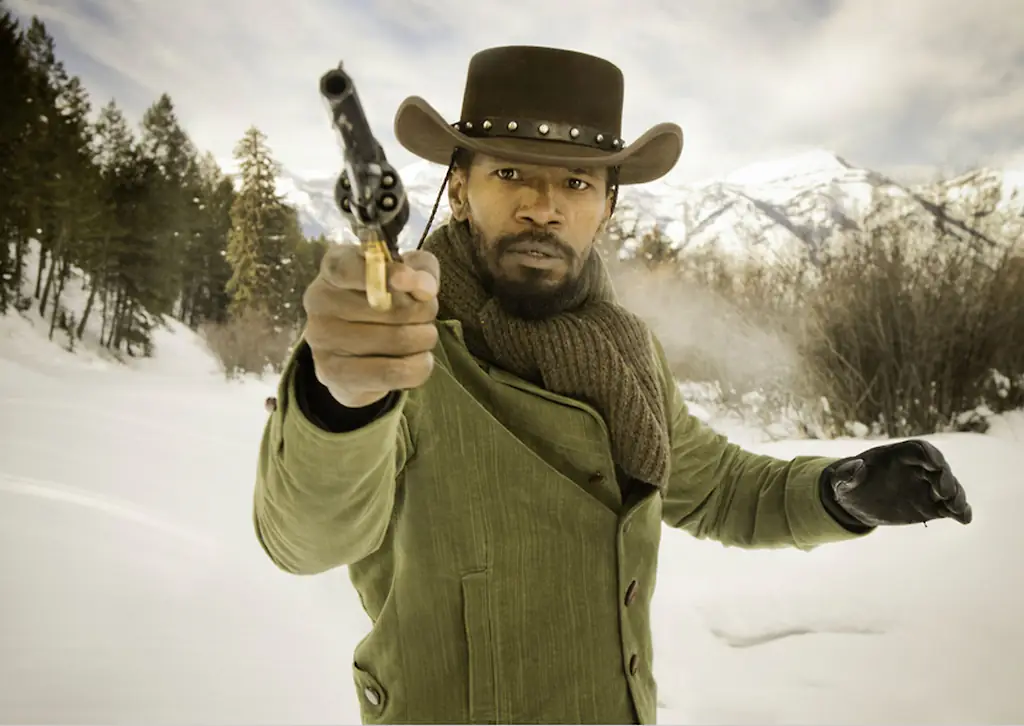
Released in 2012, Django Unchained was a huge commercial and critical success; a revisionist Western film, it stars Jamie Foxx as the titular character, an enslaved Black man who teams up with a bounty hunter (Christoph Waltz) to rescue his kidnapped wife (Kerry Washington) from a sadistic white land owner (Leonardo DiCaprio).
Django Unchained ultimately gained five nominations at the Academy Awards, but its release didn't come without controversy.
Critics and audiences at the time were quick to point out the large amount of graphic violence included in the film, as well as the amounts of racial slurs.
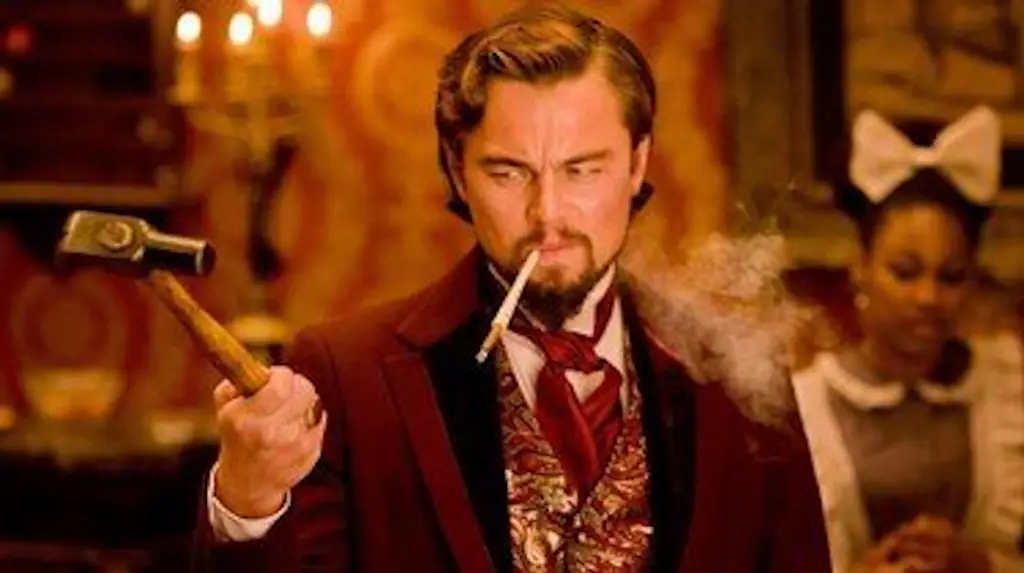
How Samuel L. Jackson helped Leonardo DiCaprio to say the N-word during filming
In the film, DiCaprio takes the role of Calvin J. Candie, the picture's main villain. Tarantino regular Samuel L. Jackson plays Stephen, Candie's house slave.
In an interview with Howard Stern, Foxx remembered how hesitant DiCaprio was to say the N-word on camera (throughout the film, the slur is used approximately 110 times).
"For Leo, it was tough because Leo had to say [the n-word] a whole lot," Foxx said. "You know why that's tough? Because if it goes horribly wrong, you're going to be branded a f**king racist a**hole."
Foxx said on a set filled with 'Titans' like himself, Jackson, and Tarantino, DiCaprio was able to overcome his hesitation, especially after some rather direct advice from Jackson.
"Leo had a problem," Foxx said. "And Samuel L. Jackson said 'Hey motherf**ker, hey motherf**ker! you say that s**t, it's just another Tuesday with these motherf**kers. F**k these motherf**kers!"
For what it's worth, Foxx said that he also had his own advice for DiCaprio: "I told Leo that in slavery days we would never talk to each other. I’m not your friend. I’m not Jamie Foxx. I’m Django."
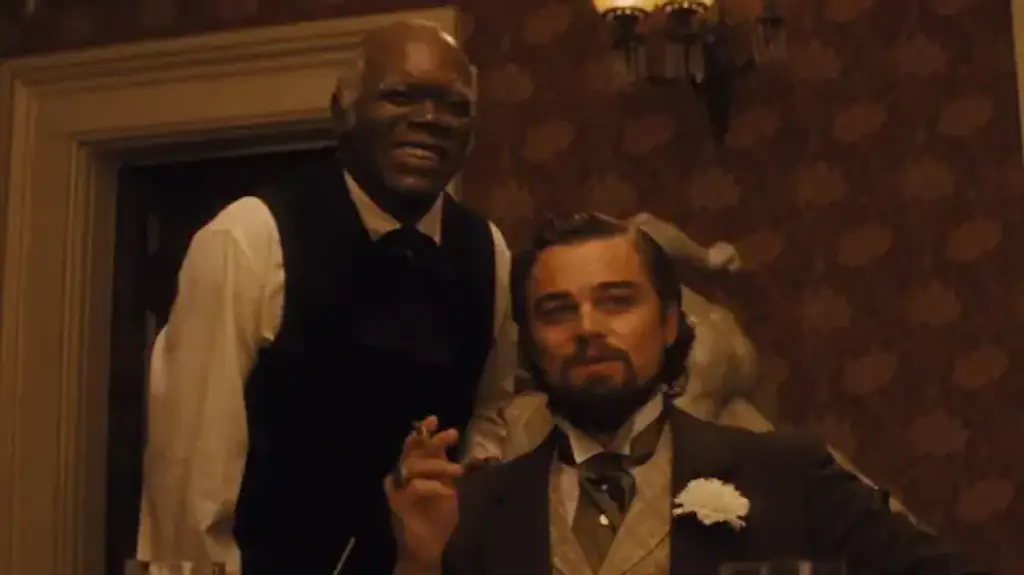
Samuel L. Jackson thought the controversy over Django Unchained was "unfair"
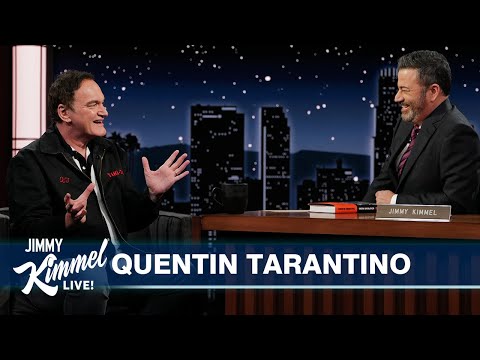
Samuel L. Jackson corroborated Foxx's story in a later interview with The Times, where also admitted that the controversy around the use of the racial slur in the film - which was set during a time period where it was very much part of everyday vernacular - was "unfair" on the director himself.
"Every time someone wants an example of overuse of the N-word, they go to Quentin," Jackson said. "It's unfair. He's just telling the story and the characters do talk like that."
.jpg_I4Ebof?tr=cr-0.338.2730.3068,f-webp,q-70,w-100)
.webp_lli6Ty?tr=cr-74.9.445.380,f-webp,q-70,w-100)


.webp_QQJmGo?tr=cr-345.0.1535.1190,f-webp,q-70,w-100)

.jpg_I4Ebof?tr=cr-0.338.2730.3068,f-webp,q-70,w-1024)


.webp_lli6Ty?tr=cr-74.9.445.380,f-webp,q-70,w-1024)


.webp_QQJmGo?tr=cr-345.0.1535.1190,f-webp,q-70,w-1024)