ADVERT
Film & TV5 min(s) read
Published 12:04 12 Aug 2026 GMT
A film that was banned for 24 years, described by censors as 'shocking, disgusting and revolting', and once prompted the police to physically raid a London cinema for trying to screen it, is getting a new release in 4K Ultra HD.
Salò, or the 120 Days of Sodom is coming out through the British Film Institute on October 26.
51 years after it was made, and 50 years after police seized it from a projectionist's booth.
Its director was beaten to death, run over by a car multiple times, and set on fire three weeks before the film premiered.
The case has never been fully solved.
There's a lot of weird stuff going on around this film, in short.
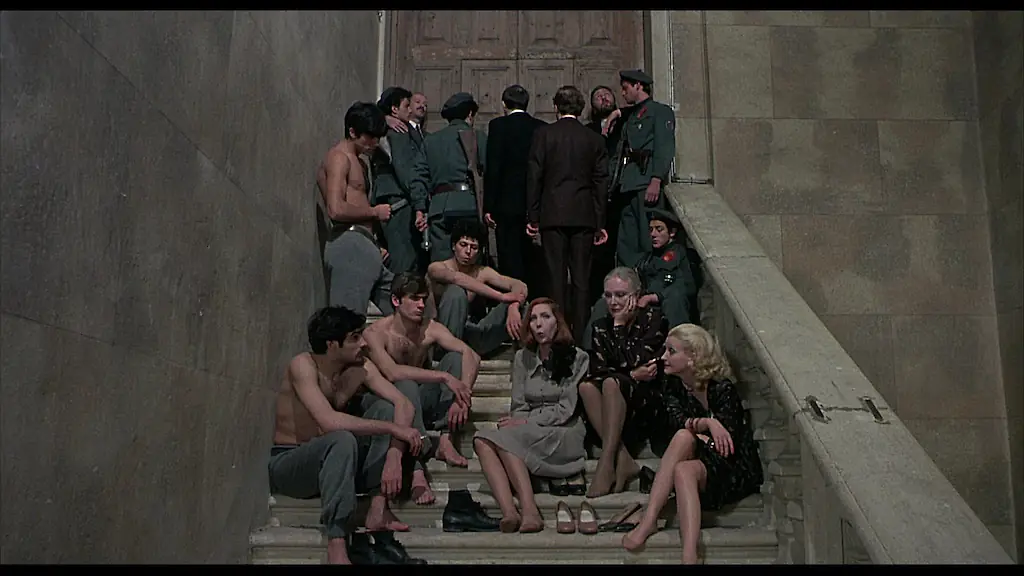
The film is set during the final days of Mussolini's Republic of Salò, a puppet fascist state created by Nazi Germany in northern Italy during World War Two.
Four wealthy, powerful Italian men kidnap 18 teenagers and subject them to 120 days of systematic physical and sexual torture.
The scenes include rape, mutilation, forced coprophagia, scalping, eye gouging, and acts of sadism that most viewers will not be able to sit through.
It was directed by Pier Paolo Pasolini, one of the most celebrated Italian filmmakers and poets of the 20th century.
He intended the film as a commentary on the corruption of power under fascism, drawing on the Marquis de Sade's 18th-century novel The 120 Days of Sodom and transplanting it into wartime Italy.
It is a film that makes you feel sick, but that is the point.
The BBFC refused to classify it in 1976.
Secretary James Ferman called it 'one of the most disturbing ever to be seen by the Board'.
He described it as 'shocking, disgusting and revolting' but also acknowledged it carried a 'deeply serious' message.
He said he declined to approve it with cuts because the cuts 'would destroy the film's purpose by making the horrors less revolting and therefore more acceptable'.
In 1977, the Compton Cinema Club in London screened it anyway.
The Metropolitan Police raided the venue, seized the film, and threatened legal action against the owners.
It stayed banned for 24 years.
In 2000, the BBFC changed its guidelines and adopted a policy of only intervening with adult material if it was 'illegal or harmful'.
Salò was passed uncut with an 18 certificate.
The eventual release was the same version that was seized from the projectionist's booth in 1977.
On October 26, 2026, the BFI is releasing Salò in 4K Ultra HD with a Blu-ray of extras.
It will be available to order through the BFI's website and specialist retailers.
Physical copies of the film in the UK have been rare since its classification in 2000.
Screenings are uncommon and streaming availability is patchy at best.
For anyone who has wanted to watch it legally, the BFI release is the most accessible option in years.
The extras include a track titled 'OSTIA (The Death of Pasolini)', a tribute to the director's murder.
On November 2, 1975, 21 days before Salò premiered at the Paris Film Festival, Pasolini was found dead on a beach in Ostia, near Rome.
He had been beaten with a wooden plank.
He had been run over by his own car multiple times and his testicles had been crushed with a metal bar.
His body was set on fire, so he was nearly unrecognisable when they found him.
A 17-year-old male sex worker called Giuseppe Pelosi was found driving Pasolini's car.
He confessed, saying the director had made sexual advances and they had scuffled after he refused.
Pelosi later took it back.
He said a group of men had attacked Pasolini, calling him a 'communist', and that they had threatened to hurt his family unless he took the blame.
Pasolini's friends never believed the original confession.
Some suggested it was politically motivated. Others pointed to stolen reels of film from Salò and suggested Pasolini had been killed after refusing to pay a ransom for their return.
In 2023, Italy's parliamentary anti-mafia commission released a report suggesting that 'major criminal gangs' may have been involved in his death.
A new plea was filed to reopen the case. It has not been resolved.
Alberto Moravia, speaking at Pasolini's funeral in front of thousands of mourners, said: "We have lost a man of deep goodness, mildness, gentleness."
He was only 53 years old.
Depends what you mean by 'most disturbing'.
A Serbian Film goes further in terms of raw shock content. It is banned in more than 40 countries.
Cannibal Holocaust features real animal slaughter on camera.
The Human Centipede exists purely to disgust.
Found has been called more disturbing than all of them.
But none of those films are considered great cinema.
Salò is. It is part of the Criterion Collection.
Martin Scorsese publicly backed it after it was banned in the US. It is studied in film schools. It is discussed by serious directors as a serious work of art.
That is what makes it different.
It is not trying to gross you out for the sake of it. It is trying to show you what fascism does to human beings when power is absolute and accountability does not exist.
The fact that watching it feels unbearable is the film working exactly as intended.
Whether that makes it a masterpiece or an endurance test you never want to repeat is the argument that has followed Salò for 51 years.
The BFI clearly think it is the former, as they are putting it out there in 4K.
film & tv3 min(s) read
film & tv7 min(s) read
film & tv3 min(s) read
Published 15:26 12 Jul 2024 GMT
There's a horror movie out there that is so messed up that it is banned in more than 40 countries.
With that being said, this article will contain information that some might find disturbing.
Horror films aren't something that I dabble in too often, mainly because I don't want to spend my down time hiding behind the sofa.
Whereas some people love horror movies... but occasionally one comes along that manages to repulse everyone at the same time.
While many people enjoy a good scare, this particular movie has pushed the boundaries of what is acceptable, leaving viewers profoundly unsettled.
Directed by Srđan Spasojević, the film follows Miloš, a semi-retired adult star who accepts an offer to appear in an art film, only to find himself trapped in a production filled with extreme sexual content and other horrific elements.
This is, of course, A Serbian Film.
Director Srđan Spasojević explained the inspiration behind the film to Indiewire: “We just wanted to express our deepest and honest feelings towards our region and also the world in general — a world that is sugar-coated in political correctness, but also very rotten under that façade.”
Released in 2010, A Serbian Film immediately sparked widespread controversy. Every country that allowed its release required substantial cuts for it to receive a rating.
Watch the trailer below, viewer discretion advised:
In the US, approximately one minute was cut to secure an NC-17 rating, while in the UK, three minutes and 48 seconds were removed across 11 scenes to allow its release.
Of the 46+ countries that have banned the film, major markets like Spain, Australia, and Malaysia have prohibited its screenings entirely.
The New York Times reported that Ángel Sala, the director of the Sitges Film Festival, was charged with exhibiting child pornography for screening the movie.
However, EL PAÍS later reported that the charges were dropped; had Sala been convicted, he would have faced jail time.
Critics are sharply divided on the film. Some acknowledge the director’s vision, while others denounce it as repulsive.
Mark Kermode, writing for Thoughtnova, said: “The director says it’s allegorical… if it is so, then the allegory just gets lost in the increasingly stupid splatter. The most annoying thing about it is – torture porn is one thing, but pompous, pretentious torture porn is something else.”
One fan review on Rotten Tomatoes reads: "This movie is literally just stuff I can’t say, there is a huge controversial scene I can’t even mention. This movie is disgusting, hard to watch, and in general has a terrible story. Watch it at your own risk, you might throw up."
Aleksandar Radivojević, the film’s co-writer, defended the movie in an interview with TPortal, calling it “a metaphor for our national cinema” and criticizing state-funded Serbian films as “boring, predictable, and altogether unintentionally hilarious.”
Director Spasojević went further, describing the project as “a diary of our own molestation by the Serbian government” in an interview with Monsters, Madness and Magic.
He argued that the film’s extreme nature was necessary to convey its message, drawing parallels between the plot and the manipulative power of leaders.
Might be best to give this one a miss.
Published 15:19 03 Jul 2024 GMT
There's a horror movie out there that is so messed up, that you can't legally watch it in a number of countries.
There's something about a movie being banned that makes it even more desirable to watch...
I'll be honest, I am not a horror movie fan because I see no value in spending my down time with sweaty palms and an accelerated heart rate.
That being said, I know that there are millions if not billions of horror movie lovers out there, which is why the genre does so well.
But there's one movie that you probably haven't watched and it's because of how deeply disturbing it is.
The movie in question is Found, which came out in 2012.
When it was initially released, it was banned in places like the UK and Australia and certain scenes that depicted sexual violence had to be cut before it was allowed to be shown to audiences.
The synopsis, as per Letterboxd, reads: "Marty is the ideal fifth grader—he gets good grades, listens to his teachers and doesn’t start trouble in class.
"But a darkness is beginning to fall over Marty’s life, the kids at school won’t stop picking on him, his parents just don’t seem to understand him, and now Marty must grapple with a terrible secret that threatens to destroy life as he knows it - his big brother is a serial killer."
Check out the trailer - Viewer discretion is advised:
One Reddit user took to the forum to express their thoughts on the movie, and when someone on Reddit say's its disturbing, then it probably is.
In their post, the user said: "Found 2012 - Maybe even more disturbing than A Serbian Film. Never thought I'd write those words. And yet, this movie is fantastic. Here's why.
“Unlike A Serbian Film, I think it's actually a good movie. It's shocking, but not merely for the sake of shock. There's nothing wrong with shock for shock's sake, but I've always been a bit miffed at Serbian Film's IMO bulls**t deeper meaning posturing.
"The gore is... intense. I haven't seen this kind of thing outside of the French extreme horror cinema. This film manages to make gore shocking again. As for what makes the film shocking... firstly, there isn't a ton of gore, but the gore that IS shown in the film is gratuitous, graphic, and wonderfully tasteless.
"At the risk of repeating myself, the way the film introduces the gore is ingenious. Amazing. See this movie. I'm blown away. I've seen about forty horror films in the last two or three weeks, and this one beats them all.”
Yikes.
People in the comments echoed these points, as one person said: "I just saw this. Gotta admit, i wasn't ready for it. The last ten minutes that is."
A second added: "Easily one of my favorite horror films this year. Some of the best writing and character development I have seen in the a horror film and the kid actor was just amazing, and normally I do not like kid actors. I can't recommend this enough."
A third person said: "I'm a big fan of this film. I consider it one of the best low budget indie films to be released in the last few years. It truly captures a specific era in my life when I would peruse the horror section of my local video rental place."
For context, A Serbian Film, which the movie was compared to, was the 2010 feature directorial debut of Srđan Spasojević, following a pornstar who is struggling financially and agrees to take part in an 'art film', only to discover that he has been drafted into a snuff film with pedophilic and necrophilic themes.
The film attracted a huge amount of controversy for its depictions of graphic violence and sexual content and was itself banned in many countries, including Australia, Spain, New Zealand, the Philippines, Malaysia, and Norway, and needed compulsory cuts to be released in the UK.
The movie remains known as possibly the most disturbing movie of all time.
Despite the glowing recommendations for Found, I will be giving it a miss.
Will you seeking the movie out?
Published 17:09 30 Jun 2026 GMT
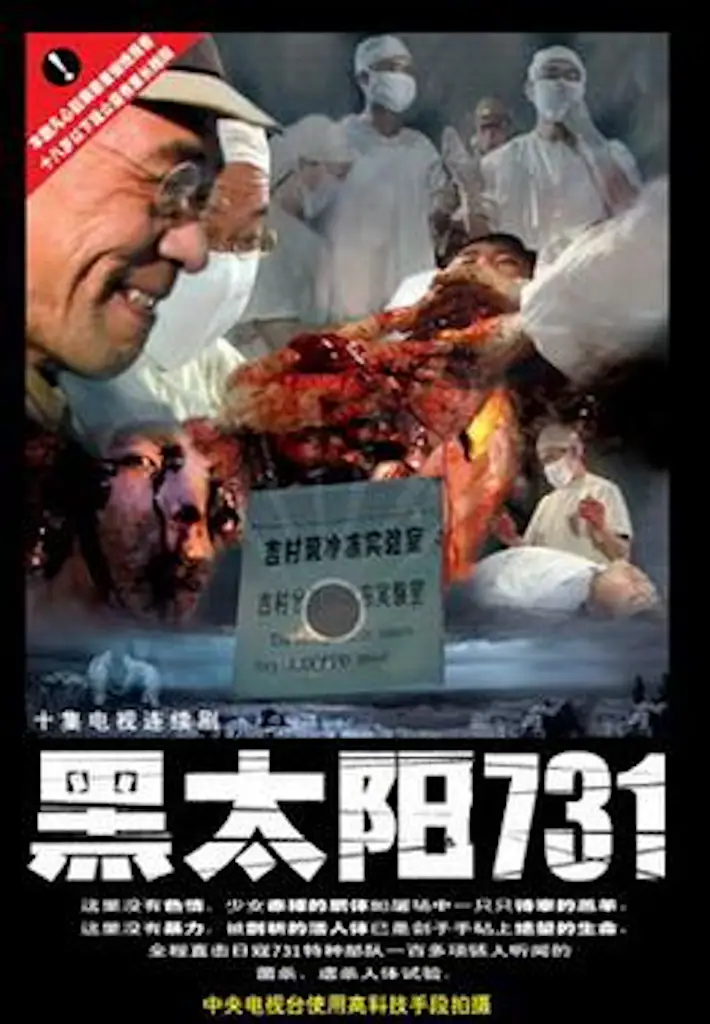
There are films that push the boundaries of taste, and then there is Men Behind the Sun.
The 1988 Hong Kong horror film has been a fixture on 'most disturbing movie ever made' lists for decades, and for good reason.
It depicts the real-life atrocities committed by Japan's Unit 731 during the Second World War, and it does so using actual human corpses, real body parts, and what the director claims is genuine autopsy footage of a child.
It is not an easy watch, but ultimately it is not supposed to be.
The film, directed by T. F. Mou, tells the story of Unit 731 - a covert biological and chemical weapons research unit operated by the Imperial Japanese Army during the Second Sino-Japanese War.
The unit was based in Pingfang, China, and is estimated to have killed at least 200,000 people through its experiments.
Prisoners were referred to internally as 'logs'.
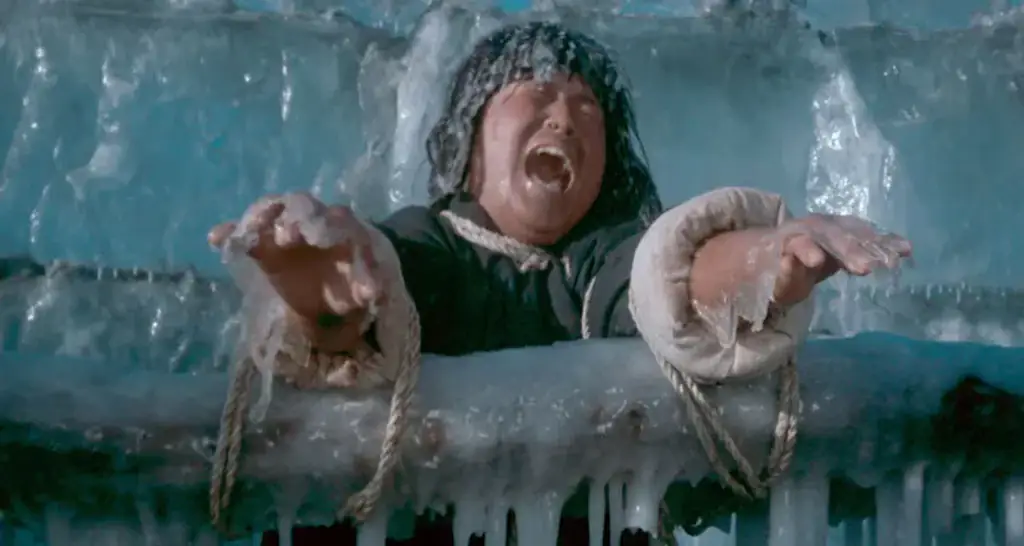
They were subjected to live vivisections, deliberately infected with bubonic plague, frozen alive, placed in decompression chambers, and used as human targets for weapons testing.
None of it was consensual. None of the victims survived.
The film follows a group of young Japanese soldiers conscripted into the Youth Corps and assigned to the unit.
They befriend a local mute Chinese boy who is later taken by senior medical staff and vivisected.
His organs are harvested for research.
It opens with a caption that reads: "Friendship is friendship; history is history."
The graphic content alone would have been enough to cause outrage.
But the real controversy comes from how that content was created.
Director Mou has confirmed that the film used actual corpses and real human body parts in several scenes.
For a frostbite sequence - in which a woman's arms are frozen and the flesh is then stripped from the bone - Mou's own niece held the arms of a real corpse in sub-zero temperatures to achieve the effect.
The most infamous scene involves the autopsy of the mute boy.
Mou claims that when a local child died in an accident during production, he persuaded the doctors performing the post-mortem to allow him to film it.
The doctors reportedly even dressed in Japanese military uniforms to complete the scene.
The organs shown being removed are said to be from a pig, though given everything else, that distinction offers limited comfort.
Then there is the cat scene.
A cat appears to be thrown into a room full of starving rats and eaten alive.
Mou has given contradictory statements over the years about whether the animal was harmed, initially claiming the cat was merely covered in honey and the rats licked it off, although that has been disputed.
In several countries, yes.
It was banned outright in Australia and required several minutes of mandated cuts before it could be released in the United Kingdom.
It became the first film to receive Hong Kong's equivalent of an NC-17 rating.
In Japan, the reaction was even more severe.
The film caused a public outcry and Mou received death threats.
Japanese critics condemned it as anti-Japanese propaganda, while Hong Kong-based writers argued that its exploitation-film presentation stripped any educational value from the subject matter.
The film has never had an official release in the United States, even after an English dub was produced.
Mou has always maintained that his intention was to make an anti-war film, not an exploitation picture.
He has said that the real experiments carried out at Unit 731 were far worse than anything he depicted on screen, and that his goal was to force audiences to confront what actually happened.
"Friendship is friendship; history is history," the film's opening line reads - and Mou has used that phrase repeatedly to defend his approach.
He wanted to show that historical atrocities should not be softened or sanitised, even when the result is unwatchable.
Not everyone agrees.
Variety dismissed the film as a 'lowbrow exploitationer' that took dramatically potent material and reduced it to 'nauseating sensationalism'.
American horror critics acknowledged the film was horrifying but criticised its writing, narrative structure, and lack of educational merit.
Men Behind the Sun has never been a mainstream film.
It has not received the kind of lavish Blu-ray or DVD reissue that even the most controversial horror films tend to get after a few decades.
Yet it continues to appear in online discussions about the most disturbing films ever made.
Part of the reason is that the line between fiction and reality is genuinely blurred.
Films like A Serbian Film or Found are extreme, but they are fiction.
Men Behind the Sun is based on documented historical events, uses real human remains, and was made by a director who actively sought out a dead child's body to include in his film.
That puts it in a category of its own.
The other reason is that Unit 731 itself remains relatively unknown in the West.
Japan has never fully acknowledged the extent of what happened at the facility, and unlike Nazi war crimes, the atrocities committed by Unit 731 were largely covered up after the war.
The unit's commander, Shirō Ishii, was granted immunity by the United States in exchange for handing over his research data. He was never prosecuted.
For some viewers, the film - however crude its execution - remains one of the few mainstream depictions of events that deserve to be more widely known.
For others, it is exploitation dressed up as education, a film that uses real death to sell tickets.
Men Behind the Sun spawned three sequels - Unit 731: Laboratory of the Devil (1992), Unit 731: A Narrow Escape (1994), and Black Sun: The Nanking Massacre (1995).
None achieved the same level of notoriety.
Mou continued to defend the original film for the rest of his career.
He has said he does not regret any of the decisions he made during production, including the use of real autopsy footage.
The film remains difficult to find through legitimate channels.
It has no official US release, limited availability in Europe, and is still banned or restricted in several countries.
Yet bootleg copies have circulated online for years, and clips from its most extreme scenes have been shared widely on horror forums and social media.
It is not a film many people will want to watch. But for those who do, it is also not one they are likely to forget.
There are plenty of films that have been banned, censored, or restricted over the years for pushing the limits of what audiences can stomach.
Men Behind the Sun is one of the few where the most disturbing thing about it is that almost all of it actually happened.
Published 17:12 08 Jan 2026 GMT
A horror film that shocked audiences nearly 20 years ago is terrifying viewers again, and its director is now pushing back against “torture porn” claims.
In 2008, James Watkins released his directorial debut, Eden Lake, which stars Kelly Reilly and Michael Fassbender as a couple hoping for a quiet weekend getaway at a remote lake.
But their romantic plans are shattered when they are confronted, and ultimately hunted, by a gang of violent teenagers.
Now available on streaming services 18 years after its original release, the film is once again making audiences squirm.
One X user wrote: "Eden Lake isn’t “T*rture P*rn,” says the director - yet it leaves viewers shaken. Many felt sick, angry, and hollow after watching the film."
Another user penned that while they are "desensitized to most things," Eden Lake "genuinely f***ed me up. It’s a great film, but incredibly harrowing and definitely not for the faint of heart. I’ll never watch this again lol."
A third person wrote: "Think I've just seen the scariest film I've ever seen," before warning others: "I feel sick. Don't watch it."
A fourth said that the movie makes them sick "every time," while one more echoed that they also thought they were going to "be sick" after watching the horror.
In response to the renewed backlash, Watkins defended Eden Lake against being labeled as “torture porn” - a term often associated with films that depict graphic violence for shock value.
“Not really,” he said when asked if he considered his film part of that genre. “For me it’s just trying to tell the story and tell the story true to the characters," cited by Den of Geek.
He pointed to one of the film’s most brutal scenes involving Fassbender’s character, Steve, being overpowered by the gang.
"It’s about Brett imposing his will on the gang and peer pressure in terms of the other kids not wanting to be there," he continued. "So I think it’s very far removed from the sort of gleeful celebration of violence you get in a film like Saw... I don’t think you can watch any of the violence in Eden Lake with a smile, or with titillation.
"The violence has consequences, and the consequences are bad. It’s queasy and it’s sick-inducing, and that’s as it should be in my mind. I don’t think it is torture porn in terms of Eden Lake, but when I was writing it, I wasn’t really thinking about that, I was trying to get immersed in the story and see where that takes me," he added.
Despite its intense content, Eden Lake earned strong critical praise upon its release. The film currently holds a 76% rating on Rotten Tomatoes based on 33 reviews.
Time Out describes the ending as "well earned and genuinely shocking," while Metro wrote: "It's the latest proof that, when it comes to scary movies at least, the British film industry is alive and screaming."
The Guardian hailed it as “the best British horror film in years: nasty, scary and tight as a drum,” while The Times called it “a claustrophobic marvel, and an impressive debut by Watkins.”
Published 12:40 14 Nov 2025 GMT
One of the ‘most depressing and scary films ever made’ which has only been shown on mainstream TV a handful of times, is now available for all to watch.
Doesn’t that fill you with joy?
Seriously though, if watching grim tales of post-apocalyptic hellscapes is your thing, we can only recommend this classic to you.
Picture the scene - a world beset by the threat of another horrific and life-consuming world war, constantly peering towards the skies in fear of the threat of nuclear conflict.
Sounds a world away from where we are currently, doesn’t it?
No, we’re not talking about World War Three, saber-rattling between Donald Trump and Vladimir Putin, the ongoing and potentially escalating conflict in Ukraine, or even ‘rocket man’ Kim Jong-Un’s North Korean nuclear ambitions.
We’re talking about a film set in the British city of Sheffield in the 1980s.
Rather aptly, a film that came out in 1984.
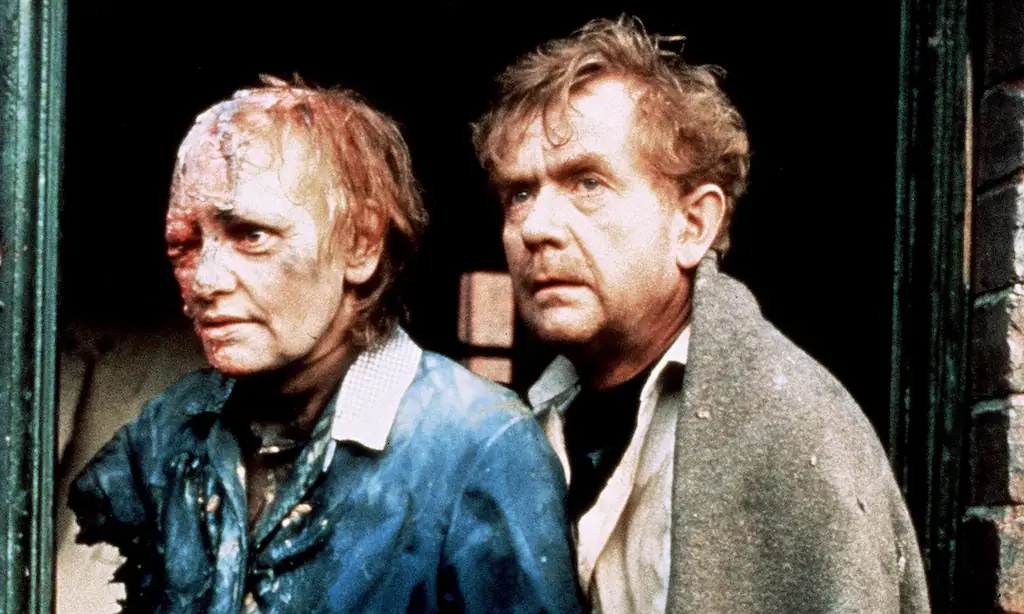
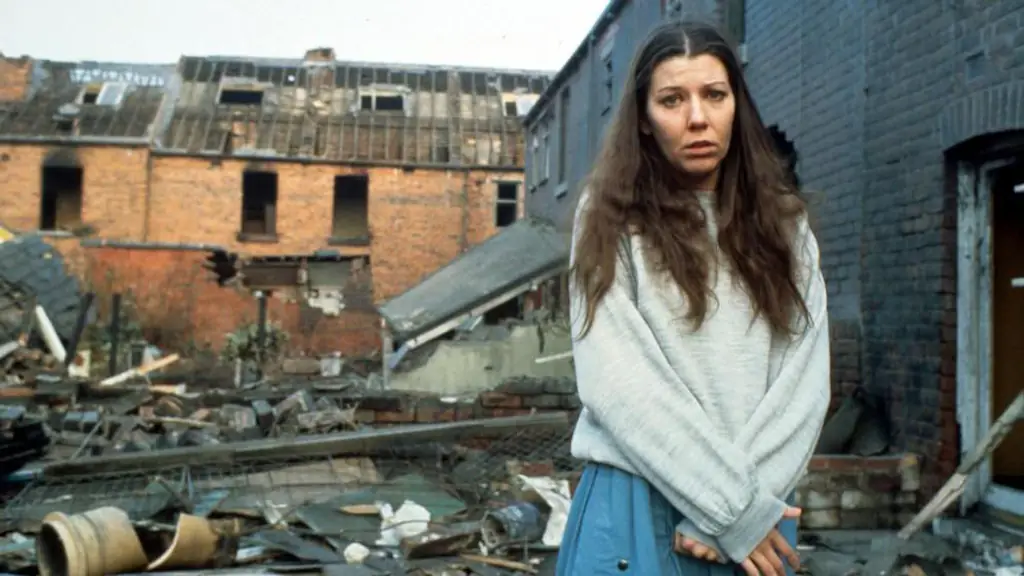
Threads is a seriously grim tale. Credit: BBC
It’s called Threads, and it’s been nightmare fuel to many since it was released.
Sure, it’s an important watch, but it’s one that you're probably only going to want to watch once.
It stars Reece Dinsdale and Karen Meagher as a couple who are expecting a baby, but end up having their plans somewhat altered after a global thermonuclear war breaks out between the USA and the Soviet Union.
Don’t you just hate when that happens?
The film shows the full aftermath of the nuclear attack in grim detail, from the initial blast that kills most people in the country, to the fallout that leaves many wishing they had been killed.
It was first broadcast on the BBC in 1984, and again a year later, but then it wasn’t shown for another 18 years.
After that, it was 21 further years until it was shown again, this time for the 40th anniversary of the film itself.
If you’re in the UK, you can stream the film on BBC iPlayer, or - if you're outside the UK - it’s available in full on YouTube.
It tells the sad story of a nuclear war. Credit: BBC
It’s grim, it’s altogether too close to a world that could exist for us soon, but it’s ultimately a classic for a reason, and an important watch.
So, if you’re stuck for something to watch this weekend, why not sit yourself down in front of Threads and count your lucky stars we don’t live in that terrible timeline.
Yet, anyway.