Loading...
Sport3 min(s) read
us3 min(s) read
sport4 min(s) read
us3 min(s) read
Published 09:45 14 Jun 2026 GMT
us3 min(s) read
us3 min(s) read
Published 10:00 16 Jun 2026 GMT
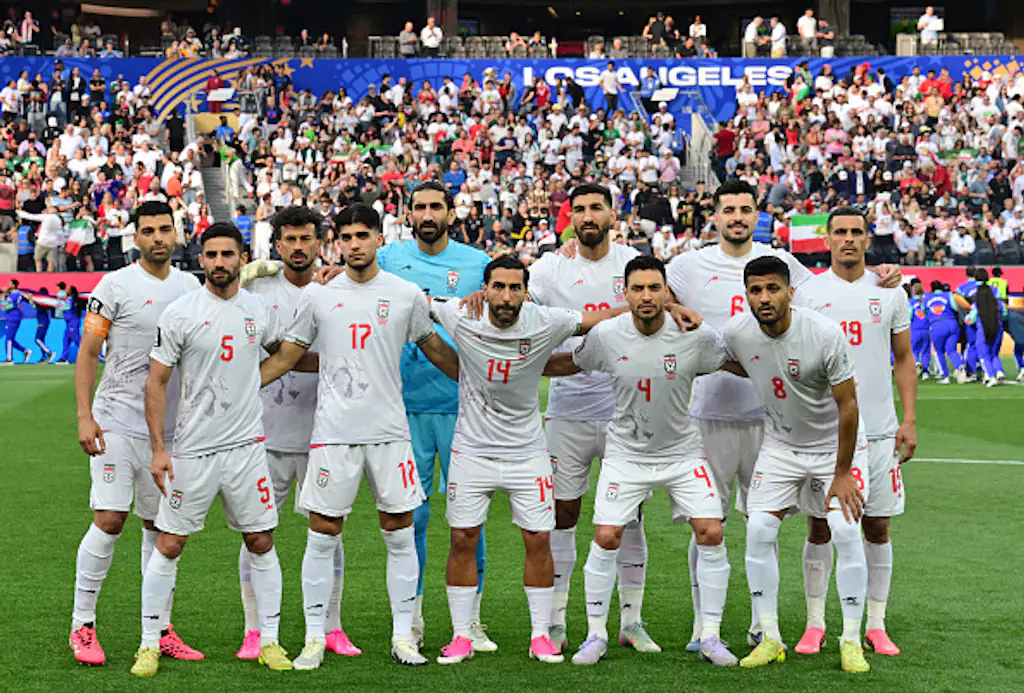
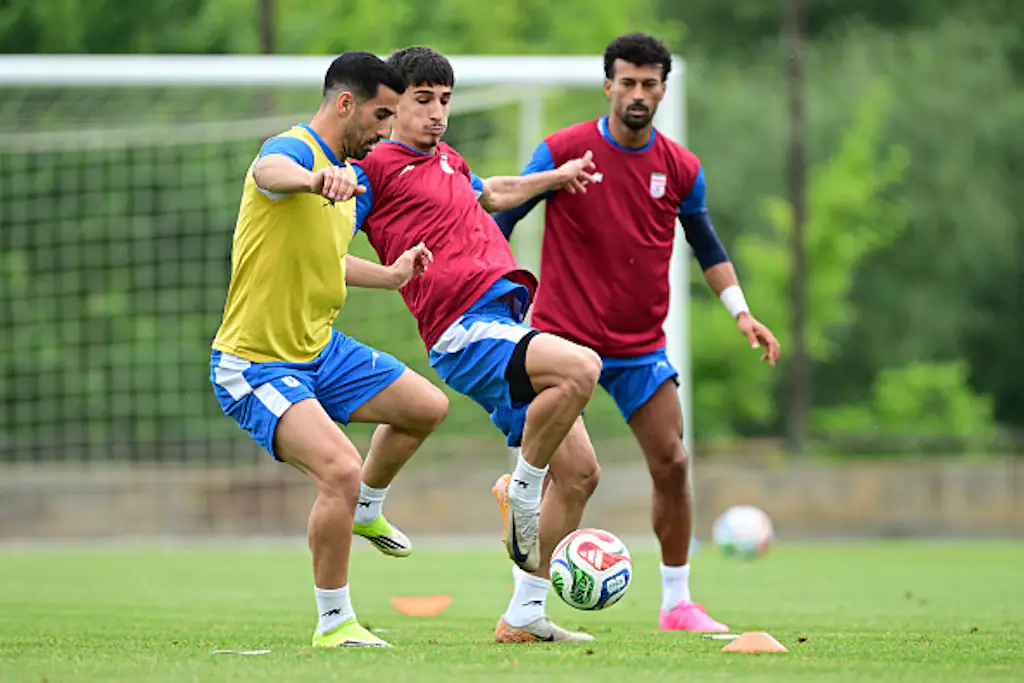
Iran’s national football side has hit out at the United States and FIFA following their 2-2 draw against New Zealand in their opening game of the World Cup.
Having encountered a string of visa obstacles and doubts over their participation in this instalment of the World Cup entirely, they have overcome the logistical restrictions to keep their place in the 48-team competition.
It has been well-publicized that Iran’s football team has been forced to stay and train in Mexico throughout the competition, and are only permitted to enter the U.S. to play games, before being expected to leave immediately after the full-time whistle.
Despite Donald Trump’s recent announcement regarding a peace deal with Iran and the reopening of the Strait of Hormuz, tensions in the Middle East still remain.
According to reports, Iran had initially planned to stay in California for a short recovery, before returning to their official camp in Tijuana, Mexico, on Tuesday. However, those plans were quickly scrapped after their opener.
Iranian head coach, Amir Ghalenoei, revealed that his side had been instructed to leave immediately after the game had concluded on Monday.
“After the game today they said to us, ‘You have to leave immediately,’” Ghalenoi said. “Whereas today it’s very important for us to have recovery.
“We’ve been asked to get on a plane and return to our camp in Tijuana and we are really troubled by that. They are forcing us to go back early. They are making the situation more and more difficult, more hurdles, but we’re not going to let that stop us from doing our best."
“We don’t know why they’re returning us, to be honest. I think it’s very strange," he added.
"It seems like others are doing the planning for us. We were supposed to arrive two nights before the game but they didn’t permit [it]. We were supposed to stay here tonight to recover and return tomorrow lunchtime."
“I think our team is the most oppressed one in the whole World Cup," added Ghalenoei. "Our federation isn’t here, our media isn’t here, our management isn’t here.”
FIFA president Gianni Infantino entered the Iran dressing room after the game and spoke to the squad.
“You showed to your families, friends, to your people, to the world, that you’re in the World Cup, that you perform and you have two more games to go,” Infantino said.
“In these two games, you will make again everyone in the world proud of what you do. Thank you for being here.
“It is also a big, big emotion. I know what you go through, I understand, but you are stronger than everything. You send a strong message to the entire world. Like tonight you united the whole stadium here, you united the whole stadium behind you, behind Team Melli. You are sending such a strong message to the world.
“Let me say one more thing: this is just the beginning of the World Cup. You are writing history, the whole world is watching you. Continue to play with your heart, for your people, your families, for your fans and for everyone in the world that is falling in love with Team Melli. You are stronger than everything.”
Published 13:12 10 Jun 2026 GMT
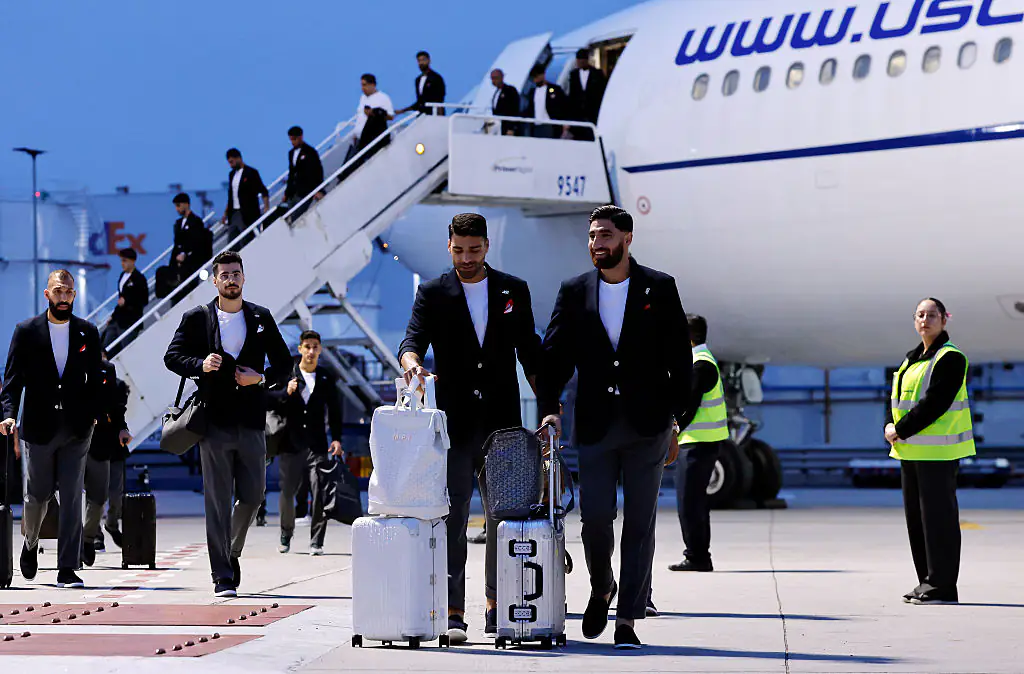
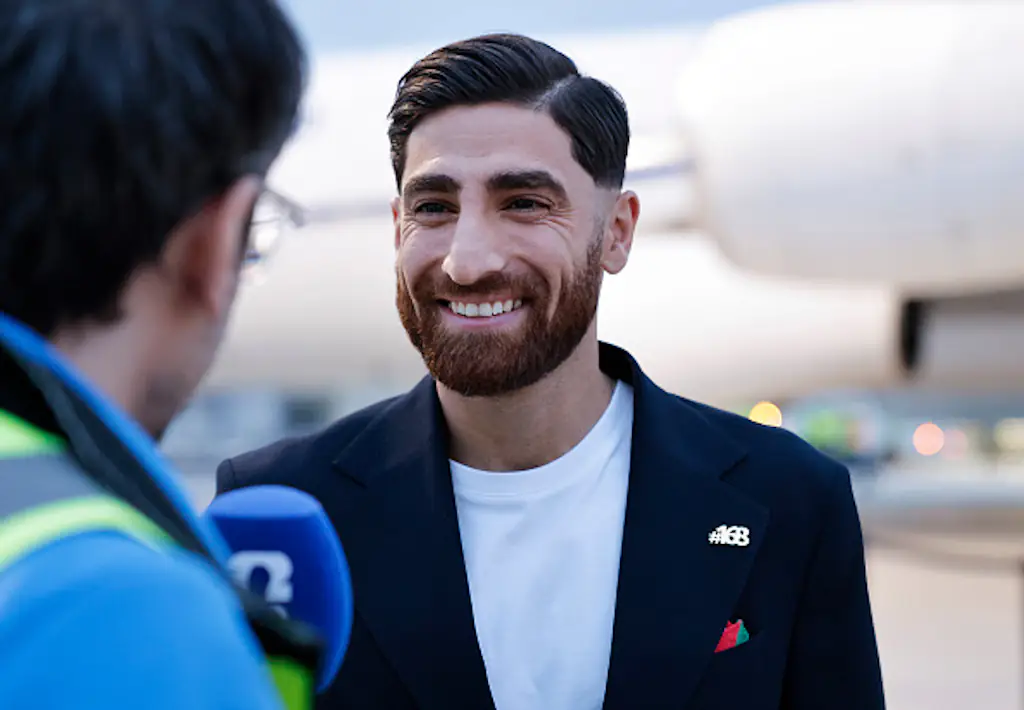
Iran's national team drew attention upon arriving in Tijuana, Mexico, on Sunday ahead of the World Cup after players were seen wearing lapel badges marked "#168."
The badge, designed to resemble a social media hashtag, references what Iranian officials say was the number of children killed at an elementary school on the opening day of the U.S.-Iran war on February 28, 2026. According to Iran's foreign ministry, the figure commemorates the victims of that attack.
The gesture comes amid ongoing controversy surrounding reports about the strike. The New York Times, citing U.S. officials and individuals familiar with preliminary findings, reported that an ongoing military investigation concluded the United States was responsible for the missile attack.
However, neither Donald Trump nor the U.S. government has publicly confirmed those findings.
Interestingly, the Iranian squad was not wearing the badges when they departed their training camp in Antalya, Turkey, on Saturday.
During the journey, which included a refueling stop in Spain, the badges were added to players' dark blue jackets and were visible when they arrived in Mexico before heading to their hotel.
Whether the badges violate FIFA regulations still remains unclear.
Because the players were not participating in an official match or team event when they wore them, the situation falls into something of a gray area.
However, the incident has raised questions about whether political messaging could become an issue during the tournament as geopolitical tensions continue.
FIFA regulations state that "equipment must not have any political, religious or personal slogans, statements or images" and warn that players or teams may face sanctions from either FIFA or competition organizers.
The rules apply not only to players but also to officials in the technical area. If head coach Amir Ghalenoei or other staff members were to wear similar badges during official activities, they could potentially face disciplinary action.
FIFA's guidelines acknowledge that political issues can be difficult to define, noting that political infringements are "less clear" in some circumstances.
However, the regulations specifically prohibit "slogans, statements or images" relating to "any person(s), living or dead" or "any specific political act/event."
The Athletic has reportedly contacted FIFA seeking clarification on whether wearing the badges while travelling to the World Cup constitutes a rules violation. The publication also asked the Iranian Football Federation whether players intend to continue wearing the badges during the tournament.
This is not the first time Iran's national team has used public displays to commemorate victims linked to the war.
Before a friendly match against Nigeria during the March international break, Iranian players held school bags during the national anthem as a tribute to the children who died.
A few days later, ahead of a game against Costa Rica, members of the squad displayed photographs of victims, including children, as well as images of sporting and cultural sites damaged in bombing raids.
Although those actions were presented as acts of remembrance, they also appeared to test FIFA's restrictions on political displays.
Following those incidents, FIFA told The Athletic that any potential disciplinary action would be handled under its disciplinary code. No formal punishment was ultimately announced.
FIFA president Gianni Infantino was present at the Costa Rica match and witnessed the display, which took place in a stadium where FIFA branding was prominently displayed.
More recently, before warm-up matches against Gambia and Mali in Turkey ahead of their departure for Mexico, Iranian players stood during the national anthem with their right hands placed across their chests, another symbolic gesture that attracted attention as the team prepared for the World Cup.
Published 13:14 10 Mar 2026 GMT
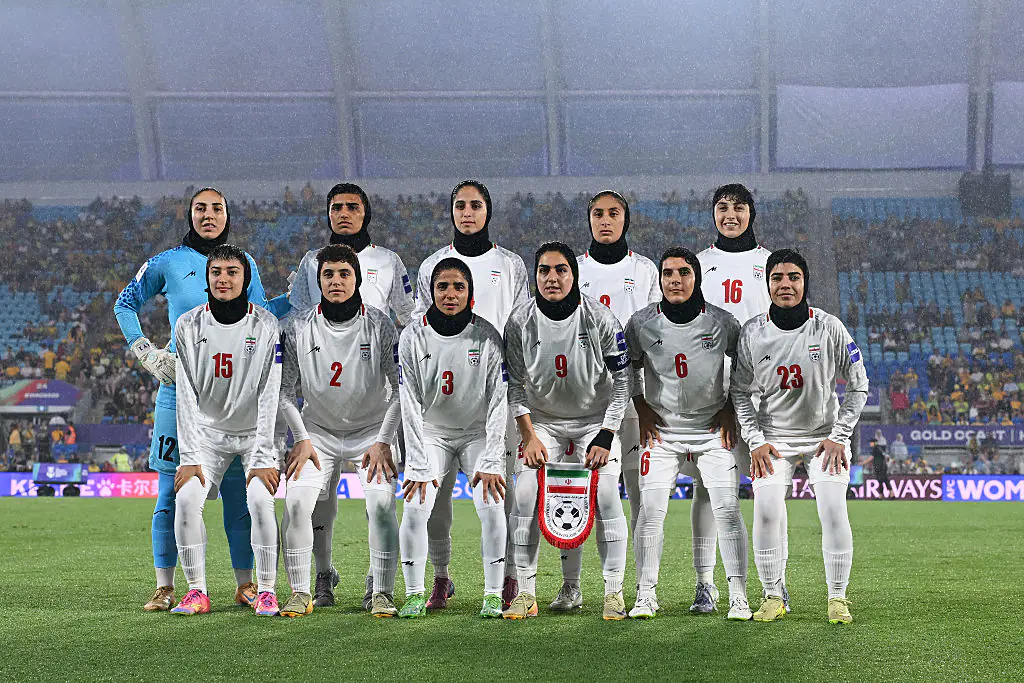
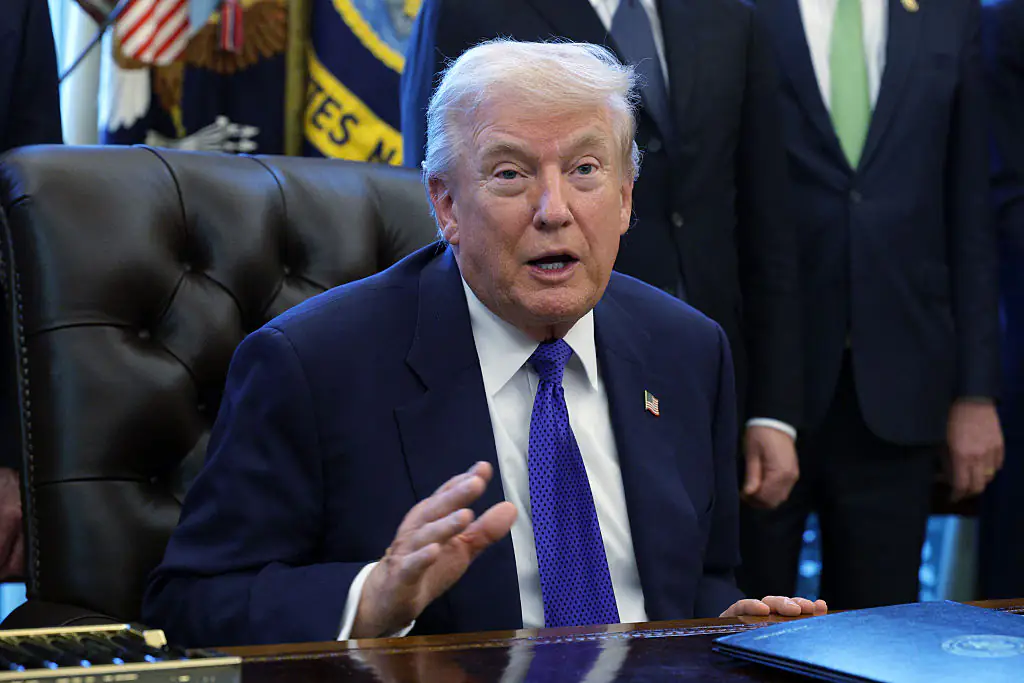
President Donald Trump has spoken out after fears emerged that members of Iran’s women’s football team could face the death penalty if they return home.
The team had traveled to Australia to compete in the AFC Women’s Asian Cup, but concern grew after reports suggested some players could face persecution for refusing to sing their country's national anthem before their opening match.
The 79-year-old president took to social media to warn that sending the players back could have deadly consequences.
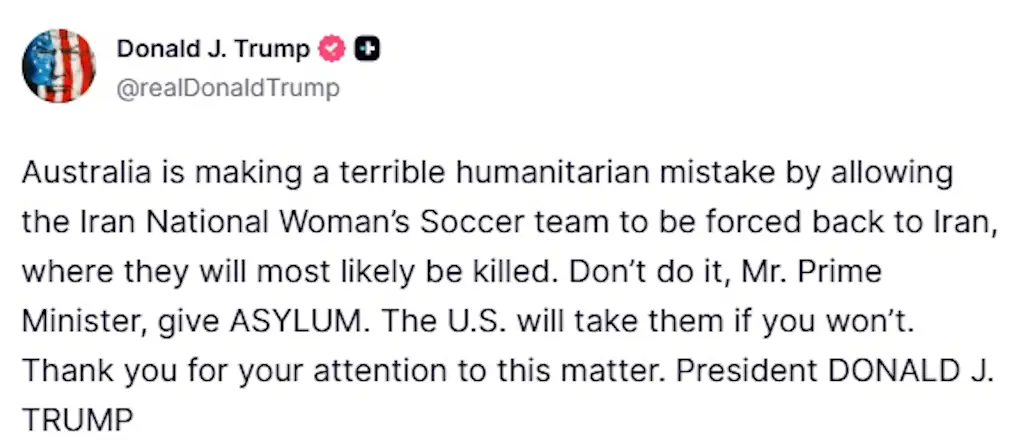
"Australia is making a terrible humanitarian mistake by allowing the Iran National Woman's Soccer team to be forced back to Iran, where they will most likely be killed," he penned.
"Don't do it, Mr. Prime Minister, give asylum. The U.S. will take them if you won't. Thank you for your attention to this matter. President Donald J. Trump," he added.
Soon after the situation gained international attention, five members of the Iranian squad were granted humanitarian visas to remain in Australia.
Australian Prime Minister Anthony Albanese confirmed that the government had stepped in to assist the players after they made it clear they wanted help.
“Australians have been moved by the plight of these brave women. They are safe here and they should feel at home here," he said, per Sky News. "Once it was made clear these women wanted assistance, the Australian federal police moved them to a safe location where they remain."
The visas offer a pathway to permanent residency, though it is not yet clear if more players will request similar assistance, The Guardian reported.
Home Affairs Minister Tony Burke confirmed the visas were given after discussions between officials and members of the team.
"They are welcome to stay in Australia," Burke told reporters. "They are safe here, and they should feel at home here...I say to the other members of the team: the same opportunity is there. Australia has taken the Iranian women’s soccer team into our hearts.
"These women are tremendously popular in Australia, but we realise they are in a terribly difficult situation with the decisions that they’re making. But the opportunity will continue to be there to speak to Australian officials if they wish to," he added.
Trump later returned to social media to praise Albanese after learning that five of the players had already been granted visas.
"He's on it! Five have already been taken care of, and the rest are on their way," he wrote. "Some, however, feel they must go back because they are worried about the safety of their families, including threats to those family members if they don't return."
Trump added: "In any event, the Prime Minister is doing a very good job having to do with this rather delicate situation. God bless Australia!"
The Iranian women’s national team had been competing in the AFC Women’s Asian Cup in Australia but finished bottom of Group A after defeats to South Korea, Australia, and the Philippines.
The five players granted visas have been identified as Fatemeh Pasandideh, Zahra Ghanbari, Zahra Sarbali, Atefeh Ramazanzadeh, and Mona Hamoudi.
Albanese said the Australian government is "willing to provide assistance to other women in the team, noting that this is a very delicate situation, and it is up to them".
"But we say to them, if you want our help, help is here, and we will provide that," he added.
Authorities in Mexico are investigating after a corpse was discovered near a stadium in Tijuana, where Iran's national soccer team has been preparing for its upcoming World Cup match against New Zealand.
According to officials, the body was found on Friday in a parking lot opposite Estadio Caliente.
Police were alerted to a gray vehicle emitting a strong odor and opened the trunk, where they discovered a body inside a bag.
The grim discovery occurred while Iran's national squad was based in Tijuana during the World Cup.
The team chose the Mexican border city because of visa delays and travel restrictions affecting some members of its coaching and administrative staff.
Iran is scheduled to travel to Los Angeles next week for its opening group-stage match against New Zealand's All Whites on June 15 at SoFi Stadium in Inglewood.
Originally, the team had planned to train in Tucson, Arizona. However, after the outbreak of the Iran war in late February, officials opted to relocate their training base to Mexico due to security concerns.
Earlier this year, Iran also attempted to have its World Cup group-stage matches moved from the United States to Mexico, although that request was unsuccessful.
In addition to facing New Zealand, Iran is set to play Belgium on June 21, also at SoFi Stadium, before taking on Egypt in Seattle on June 26.
The incident has once again drawn attention to security concerns in Tijuana, which ranks among Mexico's most violent cities according to the Citizens' Council for Public Security, a Mexican think tank that tracks homicide rates nationwide.
City records show that Tijuana registered 1,219 homicides last year among a population of more than 2.3 million people.
While officials noted this represented a 32 percent decrease compared to 2024, violence remains a significant challenge for both the city and the country as a whole.
Located on Mexico's Pacific coast directly south of San Diego, Tijuana sits along one of the world's busiest international borders.
The region has long been associated with drug trafficking routes used by criminal organizations and has also become a major hub for migrants seeking entry into the United States.
Investigators have not yet released information about the identity of the deceased person or any potential connection between the case and the nearby stadium.
The investigation remains ongoing.
Published 12:07 19 Nov 2025 GMT
The 2026 FIFA World Cup is shaping up to be one of the biggest sporting events in history – but two surprise qualifiers on Donald Trump’s newly reinstated travel-ban list are already raising major questions about how smoothly the tournament will run on U.S. soil.
The expanded 48-team competition, jointly hosted by the United States, Mexico, and Canada, kicks off next summer. With qualifying nearly wrapped, 42 nations have already booked their place, including debut appearances from Curaçao, Cape Verde, Jordan, and Uzbekistan.
But the celebrations come with a looming problem.
In June, President Trump reintroduced a sweeping travel ban targeting several countries. The list includes Afghanistan, Iran, Libya, Somalia, Sudan, Yemen, Myanmar, Chad, Congo-Brazzaville, Eritrea, Equatorial Guinea, and Haiti. Another group – including Cuba, Venezuela, Sierra Leone, Togo, and Turkmenistan – faces partial restrictions.
Iran, who topped their Asian qualifying group with 23 points, have made it to their seventh World Cup. Haiti joined them this week after a decisive 2–0 win over Nicaragua, securing only their second-ever appearance at the tournament.
But both Iran and Haiti remain on the banned list. Reports suggest U.S. authorities have already blocked the Iranian delegation from entering the country for December’s World Cup draw – a worrying sign of what could follow for players, staff, and fans.
On paper, Trump’s restrictions bar most nationals from banned countries from entering the U.S. as immigrants or tourists. That includes thousands of fans who would otherwise be traveling to support their teams.
However, athletes competing in major international sporting events are exempt – meaning players, coaches, and essential staff from the affected nations will be allowed in. Immediate family members are reportedly also covered.
The real uncertainty lies with supporters.
The U.S. hosts 11 World Cup cities, and FIFA expects to make more than six million tickets available, according to The Guardian. But fans from banned nations will need to navigate a more complicated visa process than most.
To handle the massive influx of applications, U.S. embassies will use a newly created FIFA Prioritised Appointment Scheduling System (PASS). Fans with verified tickets will be bumped to the front of the line for visa interviews, though approval still isn’t guaranteed.
“America welcomes the world,” FIFA president Gianni Infantino said, calling PASS “a very concrete example” of efforts to make 2026 the most inclusive World Cup ever.
Secretary of State Marco Rubio added that PASS “guarantees you an expedited appointment” but stressed that all applicants face the same vetting process, BBC News reports.
Meanwhile, Trump has continued warning host cities that they could lose their matches if they don’t crack down on crime – most recently aiming threats at Seattle after similar remarks about Boston.
With the World Cup draw set for December 5 and the tournament just months away, FIFA, U.S. officials, and competing nations are working through the diplomatic complications.
For now, Iran and Haiti remain fully qualified — and fully restricted. Whether the political tension spills onto the pitch is a storyline no one expected heading into 2026, but it’s already shaping up to be one of the tournament’s biggest off-field dramas.
Published 16:28 04 Jun 2026 GMT
The 2026 FIFA World Cup is due to kick off at the Estadio Bonarte in Mexico City on June 11, but fans of some nations may face some trouble if they're traveling to any games in the US.
Back in June 2025, the Trump Administration provided a list of 75 countries whose citizens were handed "suspended immigrant visa processing."
It's made the travel situation more stressful, with many countries' fans left in limbo with just one week to go until the tournament kicks off.
The tournament is taking place across the North American continent, with the US, Canada, and Mexico hosting games.
However, the majority of games, including the final, will be played on American soil.
So, with the biggest tournament in world soccer fast approaching, how will Trump's immigration restrictions affect those looking to make the trek to the US?
A footballer has already fallen victim to the US' new visa restrictions, as Swiss forward Breel Donald Embolo couldn't fly to the US with the squad after his ESTA (Electronic System for Travel Authorization) was denied.
However, it is believed that this was due to a criminal case from his home nation in 2023, as he was found guilty of making multiple threats, and he was also given a suspended fine following an altercation back in 2018.
It isn't clear if similar issues have taken place on a wider scale yet, but with the World Cup fast approaching, fans are bracing themselves.
The move to suspend immigrant visa processing for citizens of 75 countries is expected to have numerous effects, having first been implemented in January 2026.
As one of the biggest changes to US immigration practices under the Trump administration, it was decided to reduce legal immigration by restricting entry for individuals from countries deemed likely to rely on public assistance.
It has primarily affected applicants from a number of regions such as Africa, Asia, Latin America, the Middle East, and Eastern Europe.
Luckily, this suspension should not affect non-immigrant visas such as those for tourism or business travel, which will continue to be processed.
The full list of nations affected by the move includes several countries with a range of political, economic, and security conditions.
These countries have been affected by immigrant visa processing:
Once again, fans for all but one nation seem to be safe from visa restrictions, as this list only covers those looking to secure immigration status to the US.
The only nation whose fans may face trouble is the Ivory Coast.
According to Fragomen, it was listed in January as a country whose non-immigrant visa issuance was suspended in the B, F, M, and J visa classifications, for temporary visitors, students, and exchange visitors.
For nationals of the other 19 countries, the new proclamation suspends immigrant visa issuance, as well as nonimmigrant visa issuance in only the B, F, M, and J visa classifications for temporary visitors, students, and exchange visitors.
In a positive move, the Trump administration confirmed that ticket-holding supporters from Algeria, Cape Verde, the Ivory Coast, Senegal, and Tunisia will be exempt from the requirement to post a visa deposit, from May this year.