Loading...
US3 min(s) read
world3 min(s) read
us3 min(s) read
us3 min(s) read
world3 min(s) read
Published 09:45 14 Jun 2026 GMT
Authorities in Mexico are investigating after a corpse was discovered near a stadium in Tijuana, where Iran's national soccer team has been preparing for its upcoming World Cup match against New Zealand.
According to officials, the body was found on Friday in a parking lot opposite Estadio Caliente.
Police were alerted to a gray vehicle emitting a strong odor and opened the trunk, where they discovered a body inside a bag.
The grim discovery occurred while Iran's national squad was based in Tijuana during the World Cup.
The team chose the Mexican border city because of visa delays and travel restrictions affecting some members of its coaching and administrative staff.
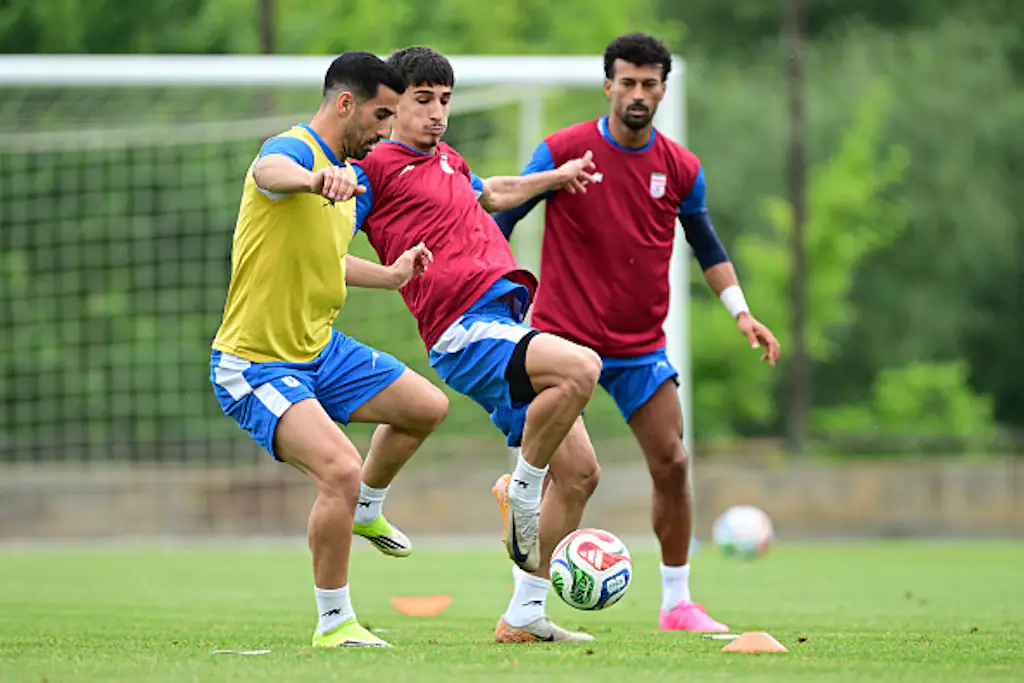
Iran is scheduled to travel to Los Angeles next week for its opening group-stage match against New Zealand's All Whites on June 15 at SoFi Stadium in Inglewood.
Originally, the team had planned to train in Tucson, Arizona. However, after the outbreak of the Iran war in late February, officials opted to relocate their training base to Mexico due to security concerns.
Earlier this year, Iran also attempted to have its World Cup group-stage matches moved from the United States to Mexico, although that request was unsuccessful.
In addition to facing New Zealand, Iran is set to play Belgium on June 21, also at SoFi Stadium, before taking on Egypt in Seattle on June 26.
The incident has once again drawn attention to security concerns in Tijuana, which ranks among Mexico's most violent cities according to the Citizens' Council for Public Security, a Mexican think tank that tracks homicide rates nationwide.
City records show that Tijuana registered 1,219 homicides last year among a population of more than 2.3 million people.
While officials noted this represented a 32 percent decrease compared to 2024, violence remains a significant challenge for both the city and the country as a whole.
Located on Mexico's Pacific coast directly south of San Diego, Tijuana sits along one of the world's busiest international borders.
The region has long been associated with drug trafficking routes used by criminal organizations and has also become a major hub for migrants seeking entry into the United States.
Investigators have not yet released information about the identity of the deceased person or any potential connection between the case and the nearby stadium.
The investigation remains ongoing.
Published 10:12 27 Nov 2025 GMT
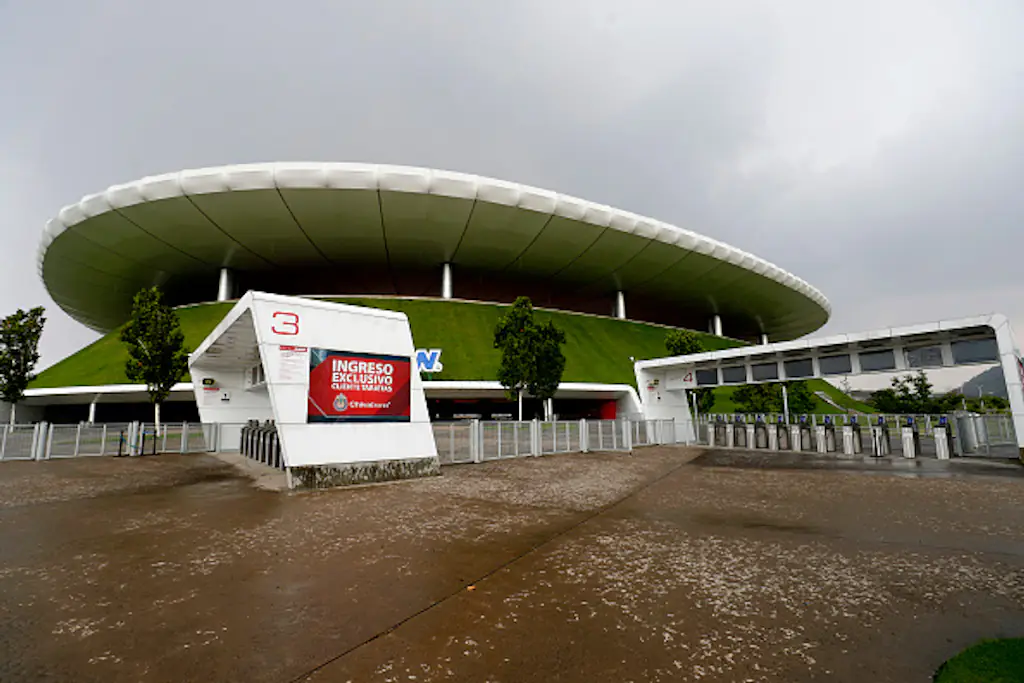
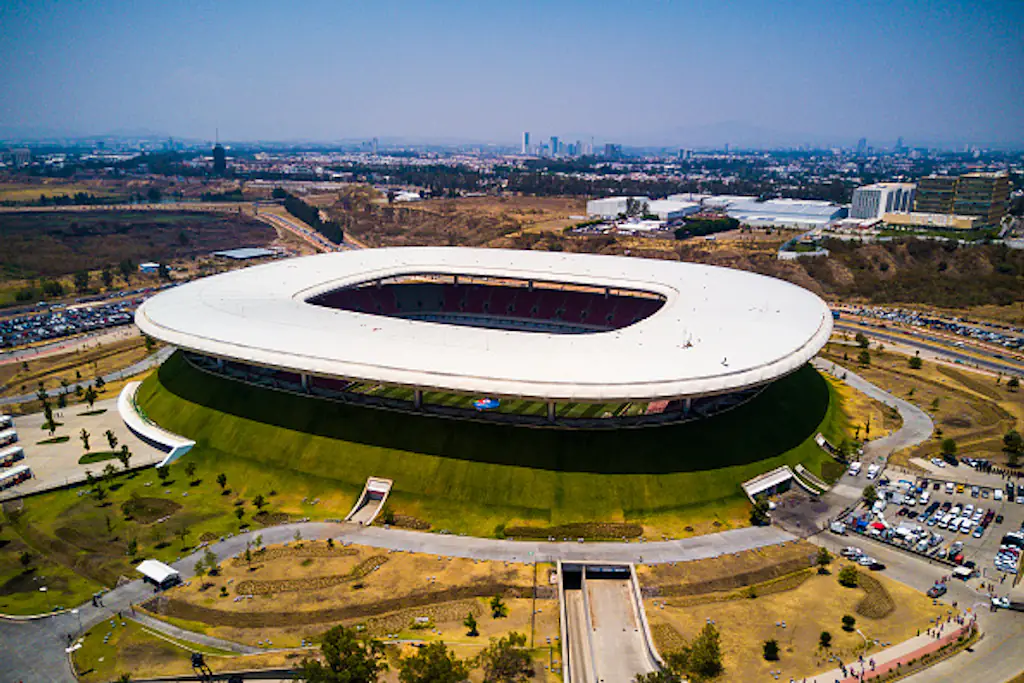
With fewer than 200 days until the 2026 World Cup kicks off in North America, one of Mexico’s host cities is facing a disturbing crisis. Search collectives in Jalisco have uncovered hundreds of bags filled with human remains in areas surrounding Akron Stadium – the home of Chivas de Guadalajara and one of the venues set to host multiple World Cup matches.
According to volunteer search groups, the most recent discovery occurred in September. Since 2022, at least 456 bags of remains have been recovered near the stadium, raising urgent concerns as Mexico prepares for an international spotlight.
José Raúl Servin García, a member of the search collective Guerreros Buscadores de Jalisco, confirmed that the latest discovery was made during construction for a nearby housing project. He said the work opened up an opportunity for families to continue searching for missing relatives.
One of the most troubled zones is an area known as Las Agujas, where construction workers uncovered 290 bags while building a new development. “We are now at about 456 bags, more or less, and all of this is near Akron Stadium,” Servin García said, per the Latin Times. “It is painful that a World Cup will be held here while there is so much evil.”
The discoveries extend beyond Las Agujas. Search groups report that 130 bodies were recovered from a cemetery close to the stadium, while 89 additional bags of remains were found in the communities of Nextipac and Plan de la Noria between 2018 and 2022.
Collectives like Guerreros Buscadores de Jalisco have long accused the state government of failing to report many of the clandestine graves uncovered by both search groups and authorities, according to Infobae México. They also allege that forensic teams face threats from organized crime, further complicating recovery efforts.
Servin García said authorities consistently avoid fully disclosing the scale of the discoveries. “They do not want to bring all the graves to light,” he explained. “We have to dig and recover the bags so prosecutors and forensic teams can remove them, but this does not work in their favor.”
He added that criminal groups sometimes threaten forensic staff, influencing which bodies are processed or returned to families.
Families Say the World Cup Is Being Prioritized Over Missing Persons
Jalisco remains one of the states with the highest number of disappearances, according to the 2025 national report from the Mexican Institute of Human Rights and Democracy. Despite this, Servin García alleges that the government is more focused on preparing for the World Cup than on addressing the region’s human rights crisis.
“They even remove our missing persons posters so visitors do not notice the magnitude of the problem,” he said.
Although members recently met with Jalisco Governor Pablo Lemus, Servin García believes the state is trying to rush recovery efforts to present a clean image before the tournament. “They want everything to look normal when the World Cup arrives,” he said. “We will keep working, with or without the World Cup, to bring to light whatever we find.”
He also criticized the federal government, saying families have been left without continued support. “In our second meeting, we agreed to keep following up in Mexico City, but they have completely forgotten about us,” he said.
Published 13:12 10 Jun 2026 GMT
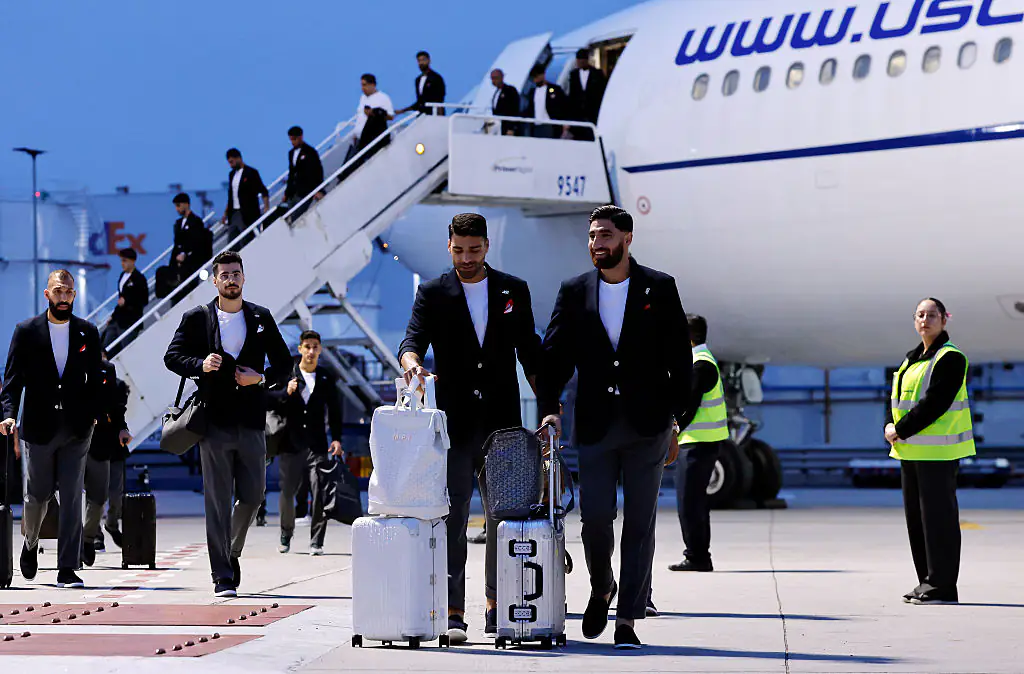
Iran's national team drew attention upon arriving in Tijuana, Mexico, on Sunday ahead of the World Cup after players were seen wearing lapel badges marked "#168."
The badge, designed to resemble a social media hashtag, references what Iranian officials say was the number of children killed at an elementary school on the opening day of the U.S.-Iran war on February 28, 2026. According to Iran's foreign ministry, the figure commemorates the victims of that attack.
The gesture comes amid ongoing controversy surrounding reports about the strike. The New York Times, citing U.S. officials and individuals familiar with preliminary findings, reported that an ongoing military investigation concluded the United States was responsible for the missile attack.
However, neither Donald Trump nor the U.S. government has publicly confirmed those findings.
Interestingly, the Iranian squad was not wearing the badges when they departed their training camp in Antalya, Turkey, on Saturday.
During the journey, which included a refueling stop in Spain, the badges were added to players' dark blue jackets and were visible when they arrived in Mexico before heading to their hotel.
Whether the badges violate FIFA regulations still remains unclear.
Because the players were not participating in an official match or team event when they wore them, the situation falls into something of a gray area.
However, the incident has raised questions about whether political messaging could become an issue during the tournament as geopolitical tensions continue.
FIFA regulations state that "equipment must not have any political, religious or personal slogans, statements or images" and warn that players or teams may face sanctions from either FIFA or competition organizers.
The rules apply not only to players but also to officials in the technical area. If head coach Amir Ghalenoei or other staff members were to wear similar badges during official activities, they could potentially face disciplinary action.
FIFA's guidelines acknowledge that political issues can be difficult to define, noting that political infringements are "less clear" in some circumstances.
However, the regulations specifically prohibit "slogans, statements or images" relating to "any person(s), living or dead" or "any specific political act/event."
The Athletic has reportedly contacted FIFA seeking clarification on whether wearing the badges while travelling to the World Cup constitutes a rules violation. The publication also asked the Iranian Football Federation whether players intend to continue wearing the badges during the tournament.
This is not the first time Iran's national team has used public displays to commemorate victims linked to the war.
Before a friendly match against Nigeria during the March international break, Iranian players held school bags during the national anthem as a tribute to the children who died.
A few days later, ahead of a game against Costa Rica, members of the squad displayed photographs of victims, including children, as well as images of sporting and cultural sites damaged in bombing raids.
Although those actions were presented as acts of remembrance, they also appeared to test FIFA's restrictions on political displays.
Following those incidents, FIFA told The Athletic that any potential disciplinary action would be handled under its disciplinary code. No formal punishment was ultimately announced.
FIFA president Gianni Infantino was present at the Costa Rica match and witnessed the display, which took place in a stadium where FIFA branding was prominently displayed.
More recently, before warm-up matches against Gambia and Mali in Turkey ahead of their departure for Mexico, Iranian players stood during the national anthem with their right hands placed across their chests, another symbolic gesture that attracted attention as the team prepared for the World Cup.
Published 13:46 26 May 2026 GMT
It has been reported that a serial killer may be on the loose in a popular tourist town in Mexico, weeks ahead of the start of the 2026 FIFA World Cup.
Officials have been warned of the murders of three women, as police have been gathering evidence and observing surveillance footage as they search for connections between the deaths, which took place in Puerto Vallarta, Mexico.
The first female victim was discovered on May 10, near a well-known viewpoint known as Rancho El Piruli, in Chimborazo.
Within five days of this discovery, the second body would be found at a roadside stop along a highway.
Later, the third and latest body was found on a dirt road located in the Parque Las Palmas neighbourhood.
All three women were in their early-to-mid thirties, and all of them had tattoos.
The victims' bodies were discovered in isolated areas of the town, and all three of them were partially undressed.
None of the women have been identified thus far.
The third body was found with tattoos around her neck, hand, and forearm, featuring some distinctive designs.
This included a skull, a woman with horns covering her mouth, and a woman's name, all of which could help to identify the victim.
Her body also showed signs of violence, according to Mexico News Daily.
The fact that all the victims were partially undressed and inked up had led investigators to explore the possibility that the killings were following a pattern.
Reports on social media suggest that the latest victim could be missing 22-year-old Elizabeth Martinez, though these remain unconfirmed.
Martinez, a Mexican national, had vanished in April, and authorities noticed that some of her tattoos match the ink on the victim, a missing person report detailed.
The investigation is still ongoing, as police have also looked at the possibility of these bodies being transported to Puerto Vallarta after being murdered in different locations.
The murders of the three women pile onto the tourist town's problems, as just months ago, there was an outburst of cartel violence.
This was primarily caused by members of the Jalisco New Generation Cartel, who set buses on fire and looted shops after they found out about the death of their leader, El Mencho, following a military operation.
Tourists could be seen fleeing through Guadalajara airport, as cartel members made their way through the building while firing off shots.
Gangs formed roadblocks, shutting down the city in protest of El Mencho's death, as some even set cars alight, causing thick clouds of smoke to cover the sky.
Due to this, many have feared for the safety of football fans ahead of the World Cup, though Mexico stated that almost 100,000 police, soldiers, and guards will be deployed to protect soccer fans.
The tournament, which kicks off on June 11, will have games hosted in three stadiums in the North American nation - one in Mexico City, one in Monterrey, and one in Guadalajara.
Published 12:05 18 Nov 2021 GMT
The women's soccer team in Jordan has demanded that an Iranian goalkeeper undergo a "gender verification check" after she saved two penalties in a match earlier this year, Insider reports.
In September, Iran played Jordan in a qualification match for the 2022 Women's Asian Cup, which saw Iranian goalkeeper Zohreh Koudaei save two penalties during a shootout.
As a result of the impressive saves, Iran won the game 4-2 on penalties following a match draw, with neither side having scored a goal.
However, now Iran's opponents are calling into question Koudaei's eligibility to compete in a women's tournament.
The game in question took place on September 25, and it was six weeks later, on November 5, that Jordan's team submitted a formal complaint.
The president of the country's FA, Prince Ali bin al-Hussein, recently took to Twitter to share a letter from the country's general secretary Samar Nassar to the general secretary of the Asian Football Confederation Dato' Windsor John requesting an investigation into the matter.
In the letter, Nassar said:
"Considering the evidence submitted by JFA (Jordan Football Association) and given the importance of this competition, we request the AFC to initiate a transparent and clear investigation by a panel of independent medical experts to investigate the eligibility of the payer in question and others on this team, particularly that the Iranian Women Football team has a history with gender and doping issues."
Also in the tweet, Bin al-Hussein urged the Asian Football Confederation to "wake up."
Al-Hussein states in his letter: "We duly acknowledge article 47 of the AFC Women's Asian Cup India 2022 Competition Regulations and understand that gender verification is not mandatory for participating players.
"However, the article reserves the right for AFC to investigate and take appropriate measures if there is doubt on the eligibility of a participating player."
It appears that Jordan's team has not submitted any evidence to corroborate their beliefs that that Koudaei was assigned male at birth.
Per Saudi broadcaster Al Arabiya, Koudaei has previously had her gender called into question but denies claims that she was born into a different body from that of her teammates and opponents.
The Iranian's team manager Maryam Irandoost has also dismissed the claims and argued that Jordan simply feels aggrieved at having lost the game.
Irandoost told the sports news site Varzesh 3: "The medical staff have carefully examined each player on the national team in terms of hormones to avoid any problems in this regard, and so I tell all fans not to worry.
"These allegations are just an excuse not to accept the defeat against the Iranian women's national team.
"The Jordanian team considered themselves the big favorite to qualify and when they lost it was natural to seek relief under false pretenses and to escape responsibility for this failure.
"We will provide any documentation that the Asian Football Confederation wishes without wasting time."
Zohreh Koudaei has since broken her silence, slamming the Jordanian FA for accusing her of being a man.
Koudaei though has vigorously denied the claims from al-Hussein and spoke with Turkish outlet Hurriyet, stating she will now be taking legal action against the Jordan FA.
She said: "I am a woman. This is bullying from Jordan. I will sue the Jordan FA."
A spokesman of the AFC said: "The AFC does not comment on ongoing investigations and/or proceedings, whether actual or potential."
Published 08:53 27 May 2026 GMT
Investigators have determined that there may be a serial killer on the loose in Mexico, after discovering three bodies in the same region.
Authorities have been gathering evidence, including surveillance footage, while they look for any connections between the deaths of the women, as their bodies were found in Puerto Vallarta, Mexico.
The first female victim was found on May 10, near the well-known viewpoint of Rancho El Piruli, in Chimborazo.
The second victim's remains would be found just five days later, at a roadside stop along a highway, with the third body being uncovered on a dirt road in the Parque Las Palmas neighbourhood.
Police say that these women were aged from their early-to-mid thirties.
These deaths have come mere weeks before the 2026 FIFA World Cup is set to kick off in Mexico City, with Guadalajara and Monterrey also hosting games.
All the victims were found partially undressed, and all had tattoos, as police believe that this may indicate a pattern.
The bodies were found in isolated areas of the tourist town, but none of the women have been officially identified so far.
However, the third body discovered had tattoos around her neck, hand, and forearm.
These were some distinctive designs, including a skull, a woman with horns covering her mouth, and a woman's name, all of which could help identify the victim.
Local outlet Mexico News Daily reports that her body showed signs of violence.
Reports suggest that the victim might be the missing 22-year-old Elizabeth Martinez, but these claims have not been confirmed yet.
Mexican national Martinez had mysteriously vanished in April, with authorities noticing that some of her ink matched that of the victim, according to a missing person report.
The investigation into these murders is currently ongoing, with police considering the possibility of these bodies being transported to the region after being killed elsewhere.
The town was already dealing with cartel issues, with a spike in violence just months ago after members of the Jalisco New Generation Cartel protested after the death of their leader, El Mencho.
They would set shops and vehicles on fire, creating roadblocks around the region, with fears rising for soccer fans who are looking to fly to Mexico in the next couple of weeks ahead of the World Cup.
While Mexico City, the capital, is safe and a better spot for visitors, Guadalajara has raised safety concerns as a hub for cartel organizations.
Speaking to the Daily Mail, Mario Braga, a Latin American security expert, explained: "I think the best advice is, of course, to monitor how the situation evolves,
"It can quickly change and there can be triggers that lead to an escalation of violence."
He continued: "If you are in a different country, it's important to understand the kind of local dynamics that may help mitigate these security risks."
Braga advised tourists not to wander alone at night, and if they are driving, to be aware of which neighborhoods to avoid.
He also told tourists to speak to locals about safe transportation methods or travel routes which would not put them in danger.