ADVERT
Sport3 min(s) read
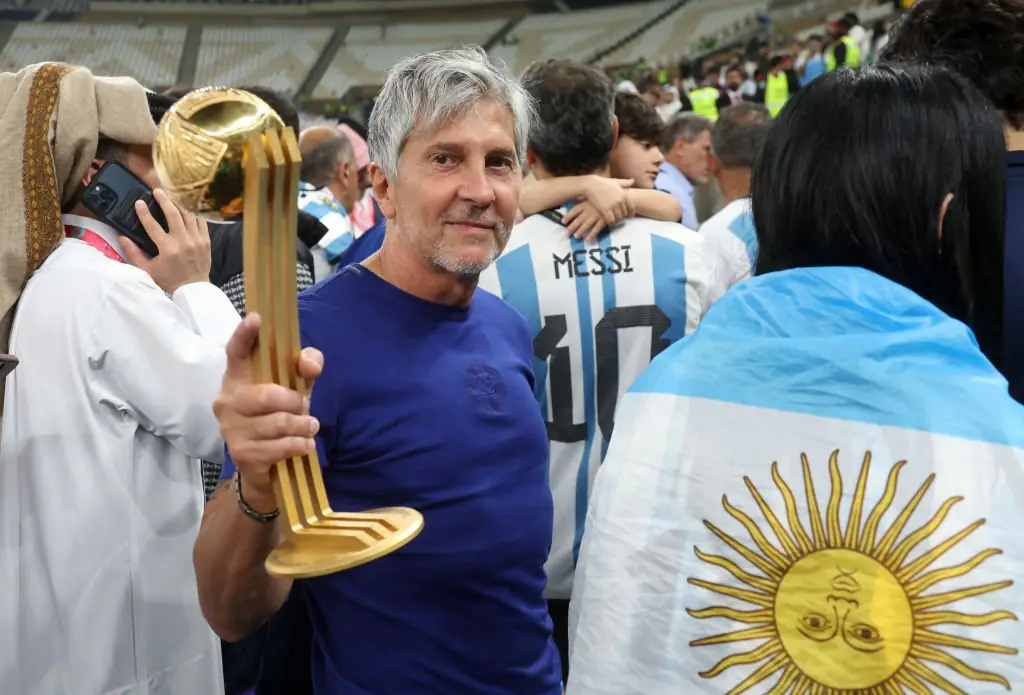
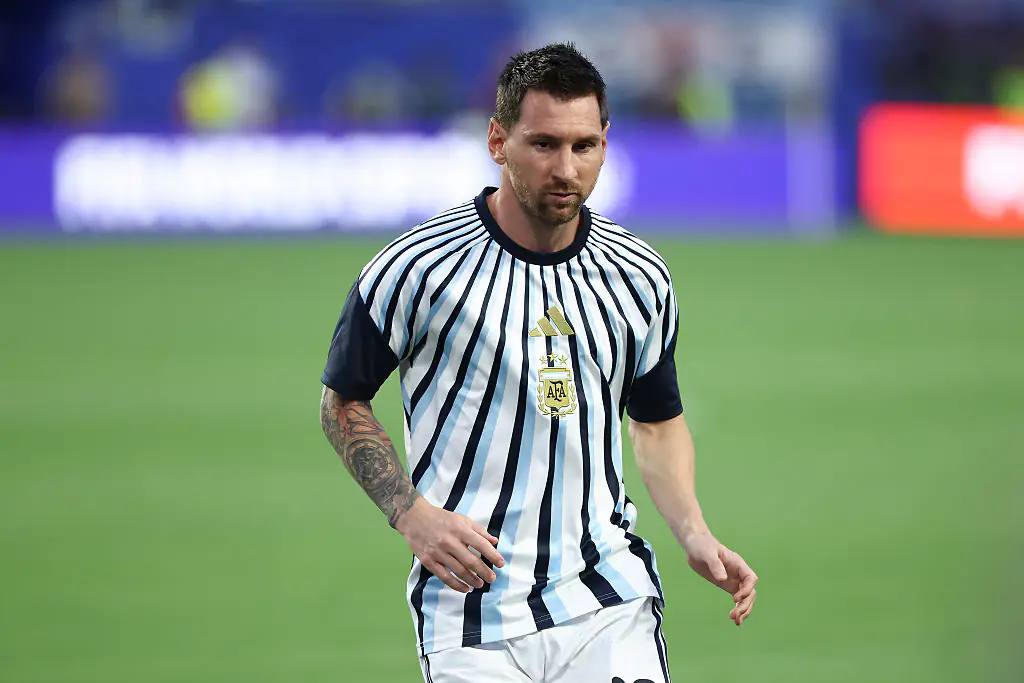
The father of soccer star Lionel Messi has died aged 68, just weeks after the World Cup.
The family had confirmed in June that Jorge Messi had been dealing with a "health-related situation", before he passed away at around 10PM on August 7, per The Sun.
According to reports, Jorge died at a clinic in Rosario, Argentina, where he had been receiving treatment.
Newell's Old Boys, Lionel's childhood soccer club, paid tribute on social media, writing on X (formerly Twitter): "Club Atlético Newell's Old Boys bids farewell with deep sorrow and grief to Jorge Messi, who passed away at the age of 68 in the city of Rosario.
"Recognized leproso fan, businessman, and father of the Argentine national team captain, Lionel Andrés Messi.
"Jorge was the pillar and the person who supported with vision, rigor, and affection the career of the greatest player of all time alongside his wife, Celia Cuccittini."
The tribute added: "His constant companionship and behind-the-scenes leadership were essential in backing every step of Lionel, from his beginnings at Malvinas to the pinnacle of world football glory.
"Thank you for teaching him to love these colors.
"The Board of Directors, members, athletes, and the entire leprosa family embrace with affection Celia, Lionel, Rodrigo, Matías, and María Sol, and all their loved ones and close ones in this difficult moment."
It comes just weeks after Lionel played in the 2026 World Cup final, as Argentina were ultimately defeated by Spain.
The soccer captain was visibly emotional at times throughout the tournament, admitting, per The Sun: "Honestly, it is something completely unrelated to sport. It has been a difficult, complicated few days."
After reports of Jorge's ill-health came to light, a reporter had mistakenly announced his death during the tournament.
Florencia Peña made the false claim live on Luzu TV's El Show del Verano, saying: "I don't want to break bad news, but Messi's father just died."
Peña ultimately ended up resigning from her job after the blunder, saying in a statement explaining her decision that she was ashamed to have spread false information, despite claiming it had been passed to her during the live broadcast by the show's production team.
She added: "I take responsibility for being part of the mistake, and that's why I decided to step aside and end my participation in Luzu. I apologize again from the heart; I was wrong."
celebrity3 min(s) read
world1 min(s) read
celebrity3 min(s) read
sport3 min(s) read
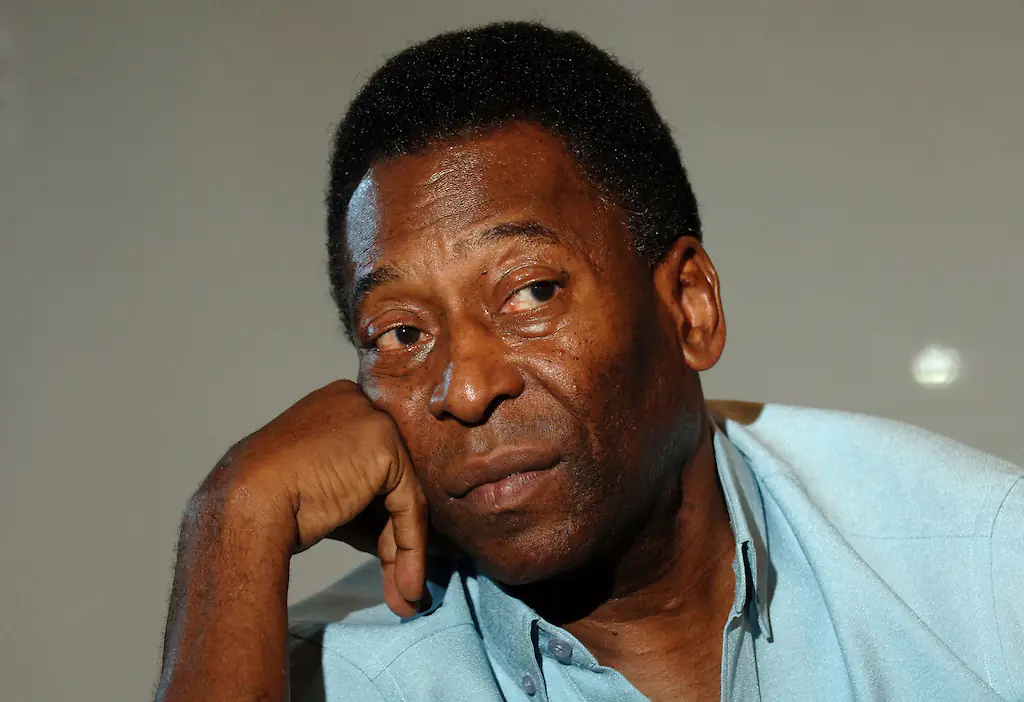
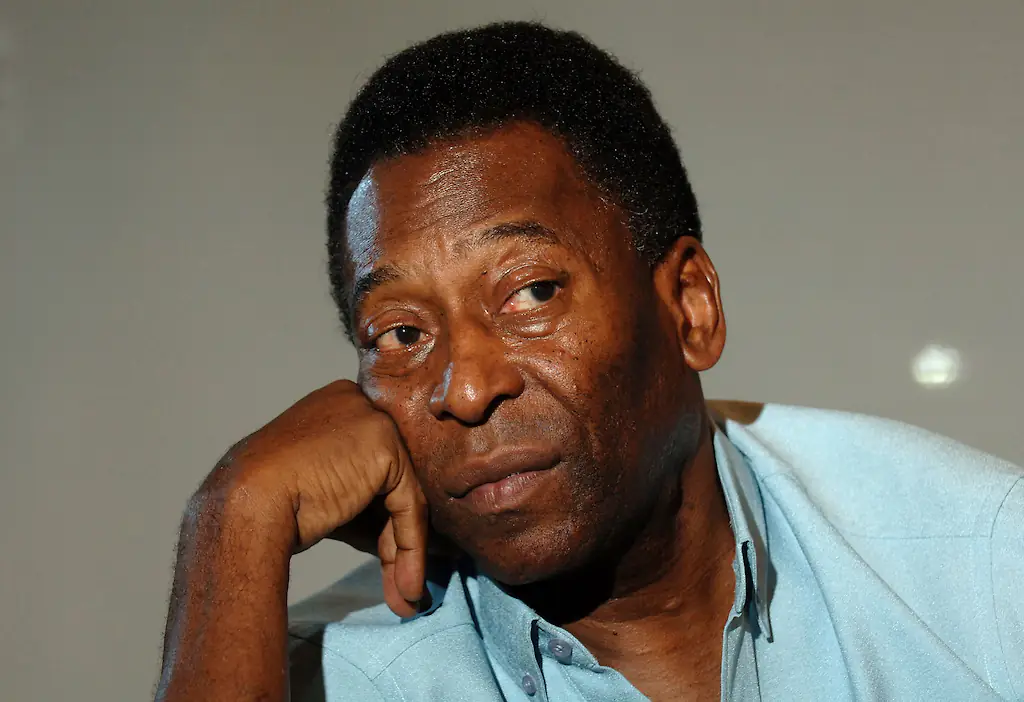
Pelé's children have shared heartbreaking final images with their father after he died following a lengthy battle with cancer.
Pelé - born Edson Arantes do Nascimento - sadly passed away yesterday (December 29) and tributes have been pouring in for the soccer legend.
Born in Brazil, the star was raised in a household without much money, but that didn't stop his aspirations to become the best in the world at the sport he loved so much.
The legend goes that Pelé would stuff socks into a ball shape and use that to practice as he developed into one of the greatest players the world will ever see.
In 2021 the soccer legend was diagnosed with colon cancer, and in early December of this year (2022), he was moved into palliative care as chemotherapy treatment got suspended, per Reuters.
Before the news of his passing, his son and daughter shared heartfelt final images with their father as they gathered around his bedside.
On December 23, Pelé's daughter Kely Nascimento shared an image of herself hugging her father as he lay in a hospital bed with the caption: "Here we go, in the fight and in faith. One more night together."
Three weeks before his father's passing, his son Edinho Nascimento also posted on Instagram showing a black and white image of himself as a young boy being spoken to by his father.
The caption read: "If there weren't many lessons, maybe because life didn't allow it. There were many examples. Thank you for everything. Keep it up my dad, my king."
Tributes have been pouring in for the legend from other stars of the beautiful game, including from recent World Cup winner Lionel Messi.
The Argentinian posted three images on his Instagram with the simple caption: "Rest in peace Pelé."
Other stars paying tribute to the Brazilian legend included Cristiano Ronaldo who called Pelé the "king of football", and promised his memory will live long in the minds of soccer fans. "A mere 'goodbye' to the eternal King Pelé will never be enough to express the pain that the entire football world is currently embracing," he added.
Barack Obama and Joe Biden also took to social media to pay their respects to Pelé, alongside a long list of others who wished to share how the Brazilian touched their lives or to simply pay respects to a man who will forever be remembered as one of the greatest soccer players of all time.
Our thoughts are with Pelé's friends and family, and all those mourning the loss of the king of soccer.
According to reports, Argentinian football legend Diego Maradona has passed away at the age of 60.
Per the BBC, the 60-year-old died after suffering cardiac arrest, just two weeks after undergoing successful surgery in hospital on a blood clot in his brain.
[[twitterwidget||https://twitter.com/BBCSport/status/1331638068189818881]]
[[twitterwidget||https://twitter.com/Argentina/status/1331637593457520642]]
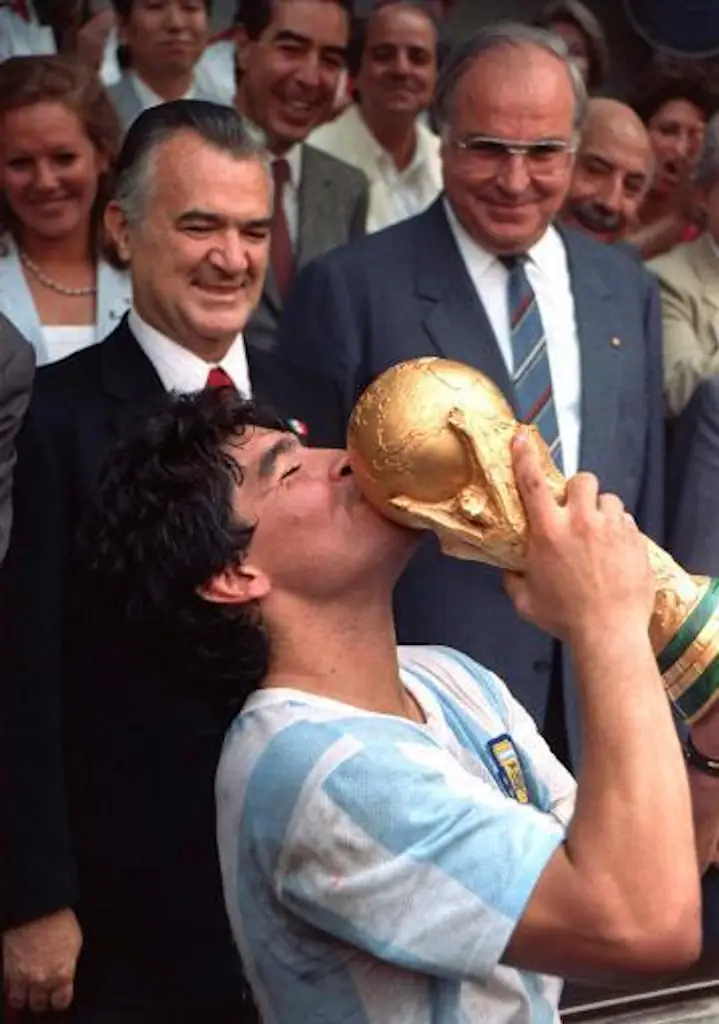
Maradona is widely regarded as one of the greatest football players of all time and captained Argentina when they won the 1986 World Cup, producing a series of jaw-dropping performances along the way.
He scored 34 goals in 91 appearances for his country and represented them at four World Cups.
The legendary player retired from football on the day of his 37th birthday during his second spell with Argentinian giants Boca Juniors. Maradona would go on to manage the Argentina national team in 2008, leaving the position after his side were knocked out of the 2010 world cup in the quarter finals by Germany.
Maradona played for Barcelona and Napoli during his club career, winning the Serie A title twice with the Italian club.
According to the BBC, he was set to be treated for alcohol dependency.
Our thoughts are with Maradona's family, friends, and fans at this time...
The legendary soccer star Pelé has sadly passed away aged 82 following a battle with cancer, it has been confirmed.
Pelé - full name Edson Arantes do Nascimento is one of the most famous soccer players of all time and is often believed to be one of the greatest to play the sport.
The Brazilian's father - João Ramos do Nascimento - was a soccer player himself, but the money for players meant Pelé was not raised in a wealthy household, per Football History.
The legend goes that his family couldn't afford to buy him a football in his youth, so the future star would stuff socks and mold them into the shape of a ball.
Sadly, it has been revealed that following a battle with cancer, Pelé has passed away aged 82.
The news comes after Reuters reported in early December that the star had been moved to palliative care as his condition worsened.
In the weeks that followed, Pelé's daughter Kely Nascimento shared heartfelt images of her with her father on his hospital bed as well as family gathering by his bedside.
The news of his death was broken by his agent who informed the associated press.
Pelé broke many soccer records during his career, some of which still stand today. FIFA reports that the legend scored 1281 goals in 1363 games, but this figure is often disputed.
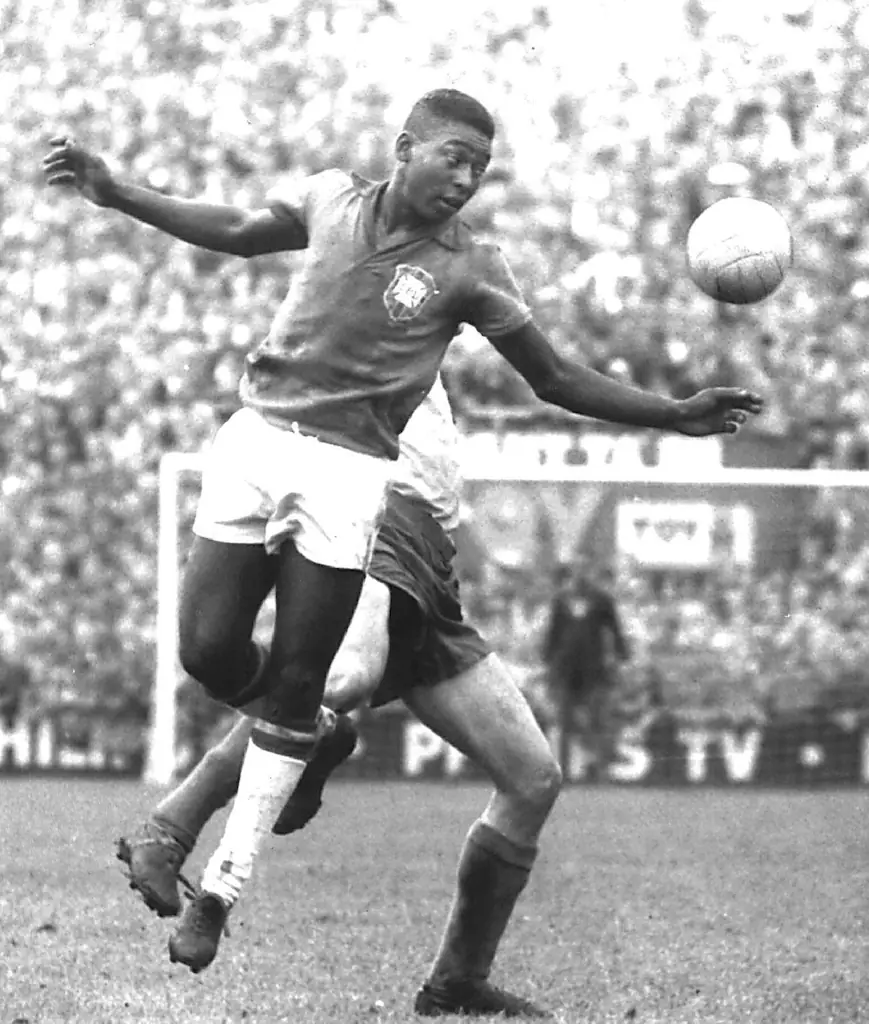
His time in the sport didn't get off to the best start as a series of clubs rejected him. But his professional career began in 1956 with the Brazilian club Santos and he scored during his debut appearance.
Just a year later, the budding young talent was the top scorer in the Brazilian league and this attracted the attention of the Brazilian national team.
In the 1958 World Cup, aged just 17, Pelé was instrumental for the South American side, scoring important goals in the semi-final and final to bring the trophy home to Brazil.
He was declared a national treasure by the Brazilian government, and his name was already cemented into the history of the country.
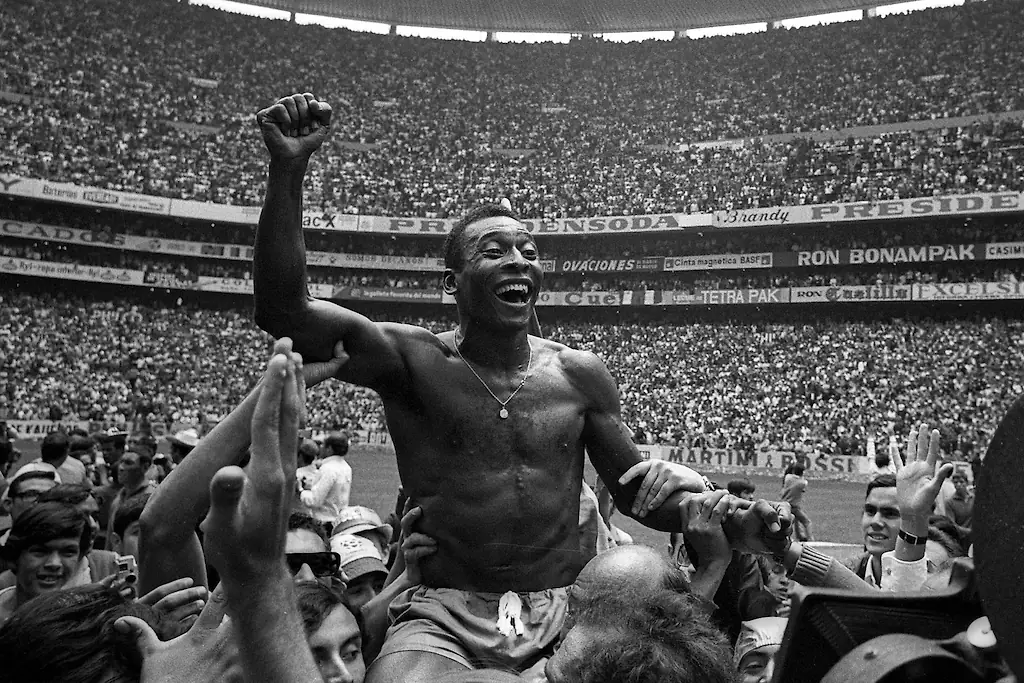
Pelé would go on to win a further two World Cups for Brazil, making him the player who has won the most with three - a record he still holds today.
Pelé announced his retirement in 1974, before briefly making a return to action for New York Cosmos. After winning the 1977 championship with the Cosmos, he hung up his boots for the final time.
Pelé was named athlete of the century by the French sports outlet L’Equipe in 1980 and received the same honor from the International Olympic Committee in 1999, per Britannica.
He will forever be remembered as one of the greatest to take to the pitch.
Our thoughts are with Pelé's friends, family, and fans during this time.
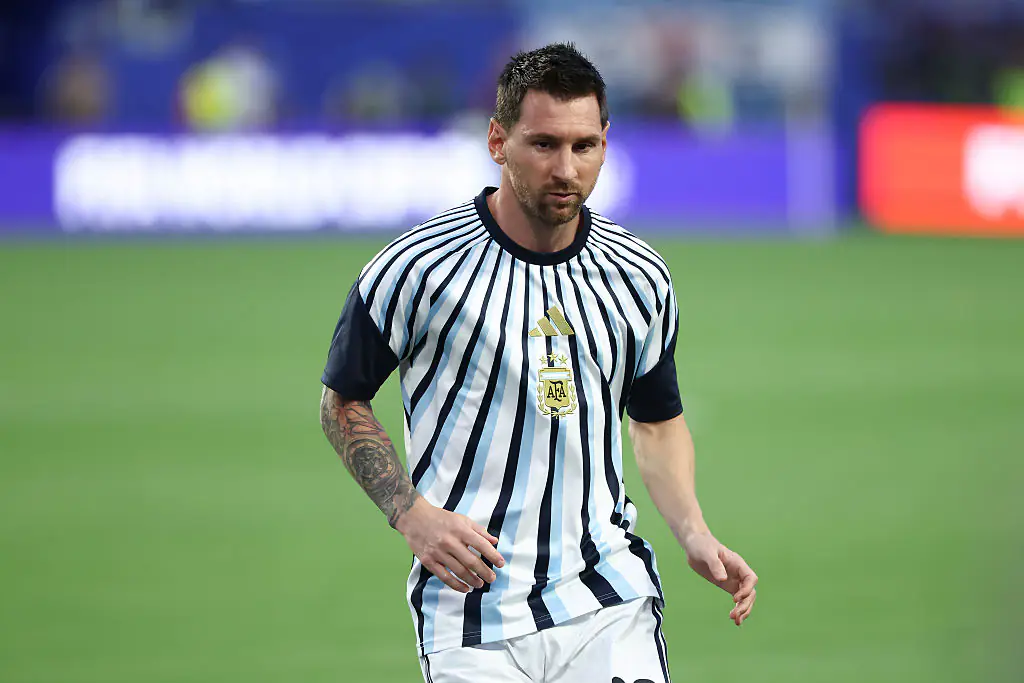
Lionel Messi has not eaten pizza or drunk a soda in 12 years.
He starts every morning with yerba mate from a gourd he has carried with him since childhood.
He has scored 20 World Cup goals - more than any man in history - and he turned 39 three days before the crowd at AT&T Stadium chanted his name so loudly that he could hear it on the bench.
He is, by any reasonable measure, not supposed to still be doing this.
But here he is, leading the 2026 World Cup Golden Boot race with eight goals, playing in his record sixth tournament, and lining up against Egypt in the round of 16 today in Atlanta.
Argentina have won all five of their games so far. Messi has scored in eight consecutive World Cup matches - a run that has no historical precedent in the men's game.
Even his rivals cannot quite believe it.
After Messi scored a hat trick against Algeria on the opening day - breaking Cristiano Ronaldo's record as the oldest player to score a World Cup hat trick in the process - Erling Haaland, who had scored twice himself earlier that afternoon, posted a single reaction on Snapchat: "Messi is a madman."
The question everyone keeps asking is how.
In 2014, Messi was a different player physically.
He was plagued by recurring vomiting episodes during matches and persistent soft-tissue injuries.
His diet at the time included chocolate, fizzy drinks, and regular fast food.
His then-manager Pep Guardiola told him bluntly that if he wanted to extend his career at the highest level, pizza and carbonated drinks had to go permanently.
Messi listened, and he has not touched either in 12 years.
He began working with Italian nutritionist Giuliano Poser, who stripped the diet back to five core categories: water, extra virgin olive oil, whole grains, fresh fruit, and fresh vegetables.
Refined sugars and processed flour were eliminated entirely.
His daily intake now revolves around lean proteins - particularly roasted chicken with root vegetables, prepared with minimal salt and a drizzle of olive oil, which he has described as his favourite meal.
He eats fresh fish regularly, uses olive oil as his primary cooking fat, and focuses on low-GI carbohydrates that release energy slowly rather than spiking blood sugar.
The results were almost immediate.
Within months of overhauling his diet, the vomiting stopped, the soft-tissue injuries became less frequent, and his body composition visibly changed.
It is a different approach to the one taken by Haaland, whose own World Cup campaign has been fuelled by a 6,000-calorie daily intake built around beef heart, liver, and a self-blended 'magic potion' of raw milk, spinach, and kale.
Where Haaland eats like a Viking, Messi eats like a nutritionist's case study.
Both are level on seven tournament goals so far.
The first thing Messi does every morning - before food, before training, before anything - is prepare yerba mate.
It is an Argentine tradition, but for Messi it borders on the sacred.
He drinks it from a gourd through a metal straw called a bombilla, and has done so every single day since he was a child in Rosario.
"Yerba mate is part of my life," he has said.
"It has always been. Since I was a child. I can't imagine a morning without it."
The drink delivers caffeine and theobromine - the same compound found in dark chocolate - providing a smooth, sustained energy release without the crash associated with coffee.
It has travelled with him from Rosario to Barcelona to Paris to Miami, and now across the United States as Argentina chase a second consecutive World Cup title.
Messi does not wake at 4am. He does not post topless gym selfies. He is not Cristiano Ronaldo.
Ronaldo, who at 41 is the oldest outfield player at this World Cup and the first man to score in six separate tournaments, is famous for training six times a week, sleeping in five precisely timed 90-minute cycles, and maintaining a biological age reportedly assessed at 28.9 years old.
His approach is pure optimisation - every hour of every day engineered for performance.
Messi's is the opposite.
He typically rises between 8 and 9am, eats breakfast with his wife Antonela and their three sons - Thiago, Mateo, and Ciro - and arrives at training mid-morning.
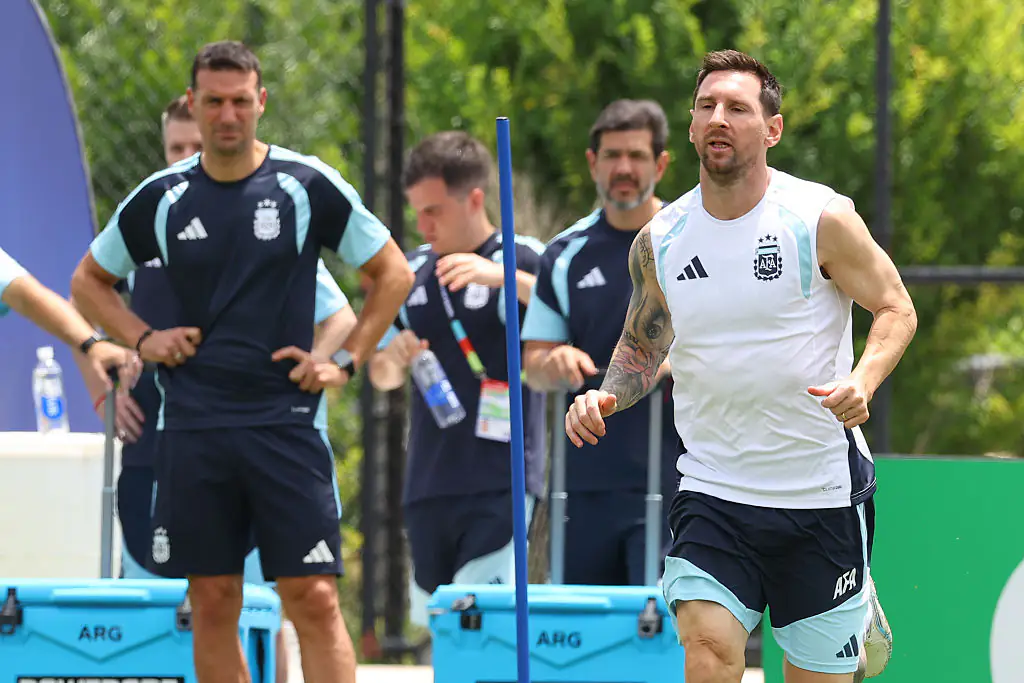
His sessions are built around functional movements designed to maintain the speed, agility, and balance that define his game.
His programme includes multi-directional speed drills, linear sprinting work, strength training focused on his core, back, glutes, and lower body, and extensive flexibility and mobility sessions.
He finishes every training day with 10 to 20 minutes of stretching.
The emphasis is on injury prevention rather than muscle building.
At 5ft 7in and around 72kg, Messi's advantage has never been physical power - it is his low center of gravity, his explosive first step, and his ability to change direction at full speed.
His training is designed entirely to protect those attributes.
His former Barcelona physio Juanjo Brau, who worked with him for over a decade, built daily prehab and rehab sessions into his schedule that were as non-negotiable as training itself.
After training, Messi follows a structured recovery protocol that includes contrast water therapy - alternating between hot and cold water immersion - and soft tissue work with his physiotherapy team.
At Inter Miami, his recovery load is managed based on match frequency and training intensity.
His evenings are deliberately low-key.
He eats a light dinner of lean protein and vegetables, spends time with his family, and goes to bed early.
He has described family time not as a luxury but as a genuine recovery tool - a mental reset that has sustained him over a career spanning more than two decades.
Guardiola once explained Messi's most misunderstood habit: walking.
During matches, Messi spends long stretches barely moving, which casual viewers interpret as laziness. Guardiola saw the opposite.
"Don't try to describe him - watch him," Guardiola said.
"He walks and reads, then acts."
Analysts have since confirmed that during those walking phases, Messi performs more visual scans of the pitch than almost any other player, absorbing positional data before exploding into action. It is not rest. It is preparation.
The numbers border on absurd.
Messi scored a hat trick in Argentina's 3-0 opening win over Algeria - his first ever at a World Cup and a performance that earned a perfect 10 rating from WhoScored.
He added two more against Austria to break Miroslav Klose's all-time World Cup goalscoring record, then came off the bench against Jordan to curl in a free kick and seal a perfect group stage campaign.
In the round of 32 against Cape Verde, he scored his seventh of the tournament in the first half and then played all 120 minutes as Argentina were pushed to extra time by the African debutants before eventually winning 3-2.
He scored again from a corner-kick assist situation, taking his tally to eight and his career total to 20 - two clear of Kylian Mbappé in second place.
He has scored in eight consecutive World Cup matches.
Twelve goal contributions in knockout rounds.
He has scored more World Cup goals after turning 35 (nine) than Diego Maradona, Rivaldo, Thierry Henry, and Romário scored in their entire careers.
His manager Lionel Scaloni has run out of ways to describe it.
"What you're seeing, I'm seeing the same thing," Scaloni said after the Jordan game.
"It's a little bit of an uncomfortable situation every single time people ask because I no longer know what to say."
Egypt are up first.
Today. Mohamed Salah against Lionel Messi in Atlanta - two of the greatest forwards of their generation, meeting in the World Cup knockout rounds for the first time.
The Opta supercomputer gives Argentina a 69 per cent chance of winning in normal time.
Beyond that, the bracket opens up in a way that could produce one of the great World Cup storylines.
A quarter-final could pit Messi's Argentina against one of the tournament's surprise packages. A semi-final could mean England or Norway - and Haaland, the only player currently matching Messi's output, after knocking Brazil out with a second-half brace in the round of 16.
A final could mean France and a rematch of 2022 - widely considered the greatest World Cup final ever played.
Messi has not confirmed whether this will be his last World Cup.
He has not needed to. At 39, with 20 goals, eight straight scoring appearances, and a diet that has not included a slice of pizza since 2014, the answer appears to be that he will stop when his body tells him to.
It has not told him yet.
For more sport coverage, including all the latest from the 2026 World Cup, follow VT.
Amongst the chaos that broke out between Argentina and Spain’s soccer players after the final whistle was blown at Sunday’s World Cup final, two of the team’s most well-known players shared a sweet moment.
An investigation has been launched after the losing team’s Leandro Paredes launched himself at Spain’s Gavi. Then, Nahuel Molina appeared to throw a punch at one of the Spain subs running on to join in with his team-mates’ celebrations.
Tensions were particularly high as the game was set to be legendary soccer player Lionel Messi’s last appearance for his country in an international competition, so he was hoping to go out with a bang.
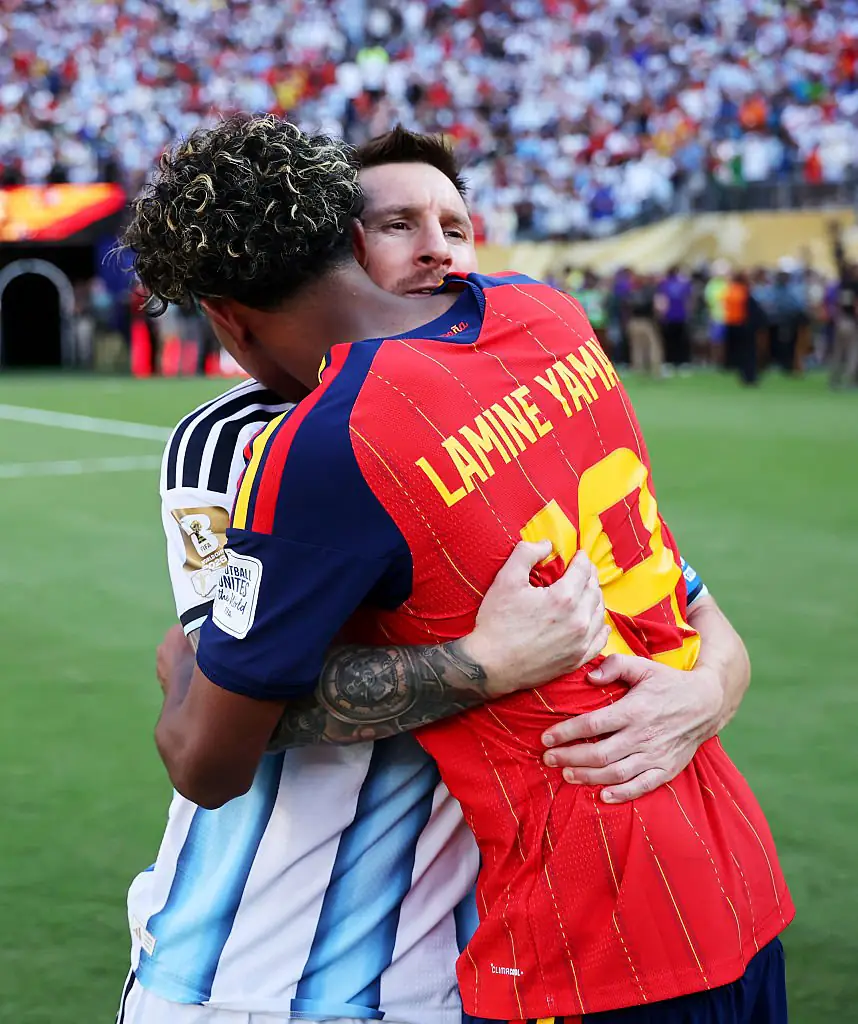
Setting an example of proper sportsmanship, Messi stayed out of the scrap and instead found Spain’s youngest player, 19-year-old Lamine Yamal, who is on track to match the Argentinian’s record as the only person to compete in six World Cups.
The pair embraced and exchanged sweet words of encouragement, which Yamal shared with the media. He told Spanish publication Marca: “He’s the greatest player in history and someone I’ve always looked up to. After the match, I wanted to show him my respect.
“He told me to keep following my path and that the future belongs to our generation. Those words are worth as much as the gold medal hanging around my neck.
“If someone had told me a few years ago that I’d be here lifting the World Cup after playing against Lionel Messi, I would have thought they were crazy.”
News of the heartwarming interaction comes shortly after Messi took to Instagram to share his dismay at losing the last World Cup he plans to compete in.
In the moving post, he wrote: “The pain is immense, and this wound will take time to heal.
“But I also hold onto all the good things… The matches we turned around by giving it our all - moments that will remain in our memories forever - and the support of an entire country which, combined with this group’s hard work and effort, brought us back among the world’s elite once again. It is hard to fully appreciate our achievement right now, but this group reached two consecutive World Cup finals.
“Thank you from the bottom of my heart for every greeting and message. Once again, we managed to unite as a country and stand together, sharing the immense pride of being Argentine.
“I also want to congratulate Spain on winning the championship.”