


Health4 min(s) read
Doctor explains the one decision people who avoid dementia make within 30 minutes of waking up
.jpg_xKEaT0?tr=cr-0.328.2730.3058,f-webp,q-70,w-100)
One doctor has claimed that there's something we can all do to reduce the likelihood of developing dementia.
The medical expert has claimed that a new morning routine could be the answer to swerving the health condition altogether.
Rates across the globe could drop if Dr Neal K. Shah is to be believed, as he has explained that new scientific data points towards nonagenarians (people aged 90 or over) who remain "cognitively sharp."
The medical expert and YouTube content creator pointed towards neurological experiment stats, which reveal that the habit lies in their morning routine, which may be more important than we think.
Apparently, the human brain carries out a full cleaning cycle every night in our sleep, which gets rid of toxic proteins that fester and build up in Alzheimer's patients.
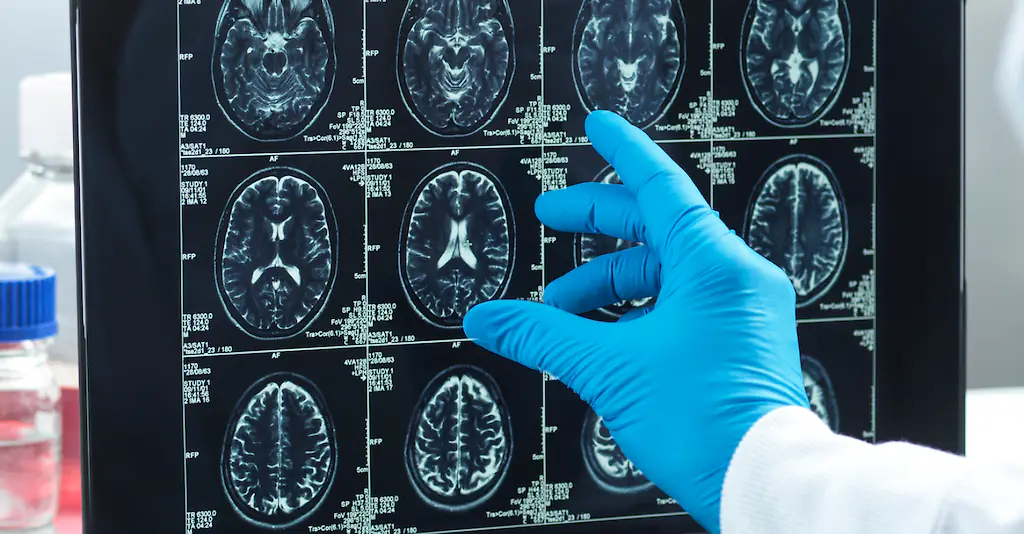
How do morning routines link to dementia?
In a YouTube Short, the doctor said: "Neurologists studied people who stayed cognitively sharp into their 90s and they kept finding the same thing in their morning routine. But first, you need to understand what happens to your brain at night."
"Here's what most people don't know: the quality of tonight's cleaning cycle is determined by what you do tomorrow morning," he revealed.
Apparently, the first half hour of your day is paramount.
He explained: "Within the first 30 minutes of waking, most people grab their phone, scroll, and in doing so they accidentally sabotage the most protective thing in their ageing brain
"Your brain has a master clock, one specific trigger sets it every morning. Get it right and tonight's sleep is deep and restorative, get it wrong for years and the proteins will start building up.
"This habit is free, it takes 10 minutes and almost nobody does it deliberately," he insisted - so what is it?
Well, it's all to do with getting sunlight into those tired eyes.
"Within the first 30 minutes of waking, before any screens, even before coffee, before anything. That one decision sets your cortisol levels, your melatonin and your brain's overnight cleaning cycle," he claimed.
While it is easier to enjoy year-round morning sun in some states compared to others, doing it while possible could be a lifesaver.

Prior research linked to the theory
According to a 2022 study published in the BMC Medicine journal, it was found across 362,094 UK Biobank participants that people who spent two hours outside in the summer and one hour outside in the winter had the lowest chance of dementia.
However, it also revealed that too much sunlight can also increase the risk of dementia, similar to getting too little sunlight.
A separate study by the University of Exeter published in 2014 involved 1,658 Americans, finding that people with a serious Vitamin D deficiency were twice as likely to get dementia.
Those with a moderate deficiency were 53 percent more likely to develop the condition too - people can increase their intake of the vitamin by eating oily fish, red meat and egg yolks, in addition to sunlight exposure.

Early signs of dementia
According to the CDC, there are some signs to look out for when it comes to detecting dementia in its early stages.
Symptoms
- Issues paying attention
- Problems with communication
- Loss of memory
- Reasoning, judgment, and problem solving
- Vision problems such as depth perception, processing visual cues, or recognizing objects
Telltale signs
Other signs of dementia include:
- Forgetting the name of a close family member or friend.
- Forgetting old memories.
- Getting lost in a familiar neighborhood.
- Using unusual words to refer to familiar objects.
- Not being able to complete common tasks on your own.



.jpg_I4Ebof?tr=cr-0.338.2730.3068,f-webp,q-70,w-100)











.jpg_I4Ebof?tr=cr-0.338.2730.3068,f-webp,q-70,w-1024)


