ADVERT
Health4 min(s) read
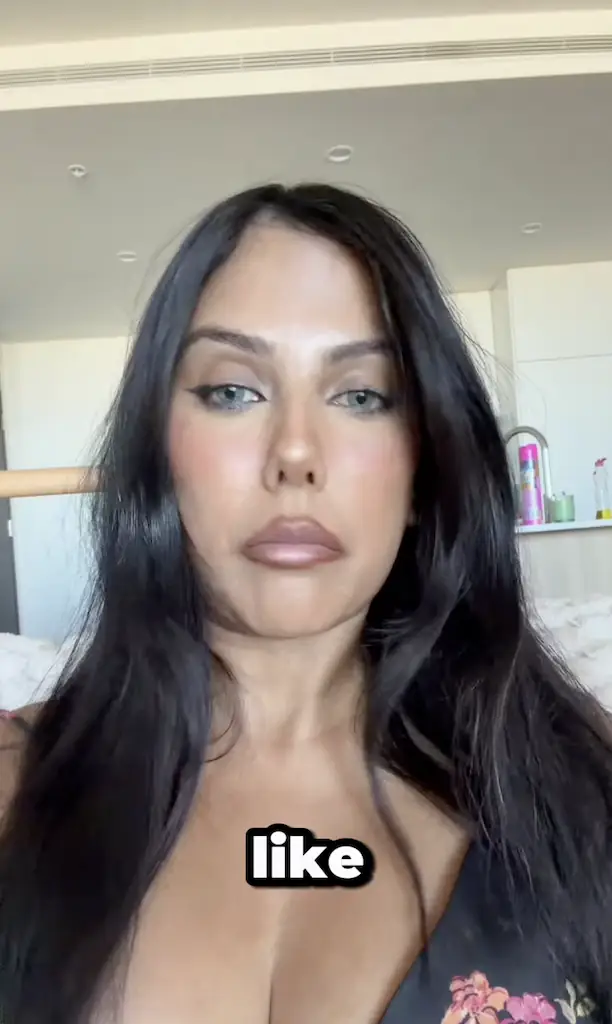
An Australian influencer who is known for opening up about having anti-social personality disorder has revealed a rule she has in the bedroom.
Kanika Batra, 30, was diagnosed with anti-social personality disorder (ASPD), and she has decided to use her platform to spread awareness of the condition.
People with the condition are often described as sociopaths, with the Brisbane-native admitting that she was diagnosed with the condition at 21.
Some of the most common traits include an absence of guilt, manipulation, and a disregard for others.
Speaking to news.com.au in 2024, Batra explained: “I was getting a lot of migraines and I tried to end my life because none of the doctors were taking me seriously when I told them how bad the pain was.”
She revealed that she ended up in hospital and slept for 15 hours - upon waking up, she was given the choice of "going to the psych ward or seeing a psychiatrist as an outpatient."
After choosing the latter and seeing a psychiatrist for 18 months, the expert found that she had ASPD and major depressive disorder.
He also found that she had conduct disorder as a child, with behaviors such as criminal acts and discarding people fitting into the bracket.
She said it was eye-opening, and that the mental health professional helped with her risk-taking behavior, which included going bankrupt after going on a trip she couldn't afford, or flying overseas to see someone she'd never met before.
She admitted that it was hard to see how any other conclusion could be drawn after reading up on ASPD, and shared her experience online.
Batra explained: “Not only is the disorder itself rare. It’s even rarer when it’s a woman,
“If a woman displays any characteristics, they are automatically assumed to have borderline personality disorder.”
Batra, who is now very vocal on her condition, revealed that she often gets asked about whether she feels emotions and love, and that she is asked for dating advice from her perspective.
She started to explain some of these questions: “How to not get attached so quickly, how to not get their empathy exploited and how to avoid abuse tactics like gaslighting and negging [giving someone backhanded compliments to manipulate them], which has been happening in the modern dating world.”
The former beauty pageant contestant said that women often get attached to men quickly, which can lead to them getting hurt, so she encourages women to "date like a sociopath."
This can involve avoiding forming emotional bonds until men show a sense of respect.
She admitted: “Fellow sociopaths, males, tend to go for particular women who are vulnerable and display certain traumas that are linked to things they can exploit.”
Describing her own dating life as "serial monogamy," she revealed: “But, when I am dating, I usually date three to four people at the same time.”
But Batra, who is bisexual, says she won't sleep with them, outlining risks such as emotional bonding, pregnancies and sexually transmitted diseases.
“I personally don’t engage with that until I’m in a committed relationship and I feel comfortable enough to be in that position,” the Aussie influencer admitted.
Batra said that she doesn't have mood swings and that her emotions are over within the hour.
She feels joy and excitement, but negative emotions like anger tend to be stronger, as she added that there “isn’t much under the surface,” though it allows her to fit into different settings.
The influencer admitted that there are negatives, as many, including doctors, don't believe her due to her diagnosis.
Psychiatrists can refuse to treat people with ASPD due to lying tendencies, and she's had people in the past not believe her when she's opened up on awful things that have happened to her.
Batra says some have accused her of lying to get sympathy as a sociopath.
health2 min(s) read
celebrity5 min(s) read
health4 min(s) read
celebrity4 min(s) read
A woman diagnosed with antisocial personality disorder has revealed the surprisingly simple sentence she claims helps her figure out whether someone else might be a sociopath.
Kanika Batra shared her thoughts in a YouTube video posted in January 2023, where she spoke openly about living with antisocial personality disorder, often referred to as ASPD. The condition is clinically defined as a long-term pattern of disregard for others, repeated deceit, impulsivity, and lack of remorse.
In her video, Batra argues that many people assume sociopaths are easy to identify. According to her, that assumption is wrong. She says high-functioning individuals with the disorder can blend into everyday life without raising suspicion, and she believes she has developed a way to spot them quickly.
At the start of the video, Batra introduces herself by saying, "I'm a diagnosed sociopath and this is how I spot fellow sociopaths." She immediately points to eye contact as the first thing she notices.
Describing what she looks for, she says, "The first thing I look out for is eyes. We have dead eyes. I had to teach myself to blink more frequently so I wouldn't freak people out."
She suggests that a lack of natural blinking or what she calls flat eye contact can make others uncomfortable, which is why she consciously trained herself to adjust it.
Batra also stresses that sociopaths are not as common as some might think, stating that they're "only one to four percent of the population."
That estimate aligns with commonly cited prevalence rates for antisocial personality disorder.
The most talked about part of her explanation is the social experiment she says she runs in conversation.
Batra explains, "I can test sociopaths. The way I do this is by saying something absolutely ridiculous and seeing if they'll mirror me."
The example she gives is intentionally unexpected. "I tell them that I spend my free time knitting, somehow they knit as well or their uncle does."
According to her, the goal is to see whether the other person immediately mirrors the unusual hobby in order to build rapport.
Mirroring is a common social behavior and can help people bond. However, Batra believes that in individuals with ASPD, it may be used more deliberately as a tactic.
She goes on to say, "I also bring up a range of different emotions and see how they react to them. Since lying is second nature to us, I try to catch them out in one. The mask of sanity and kindness slips very fast at this point."
In her view, inconsistencies begin to show when someone is pushed outside rehearsed responses.
More celebrities have come forward to reveal their autism diagnoses and speak openly about the signs that led to their discovery.
Autism spectrum disorder (ASD) is a developmental condition that impacts how individuals perceive others and interact socially, often leading to challenges with communication and relationship-building.
Per Mayo Clinic, ASD encompasses several conditions that were previously considered separate diagnoses, including: Autism, Asperger’s syndrome, childhood disintegrative disorder, and unspecified pervasive developmental disorders.
Though there is currently no cure for it, early intervention - particularly during the preschool years - can significantly improve outcomes and quality of life.
Here are some celebrities who have publicly shared their autism diagnoses:
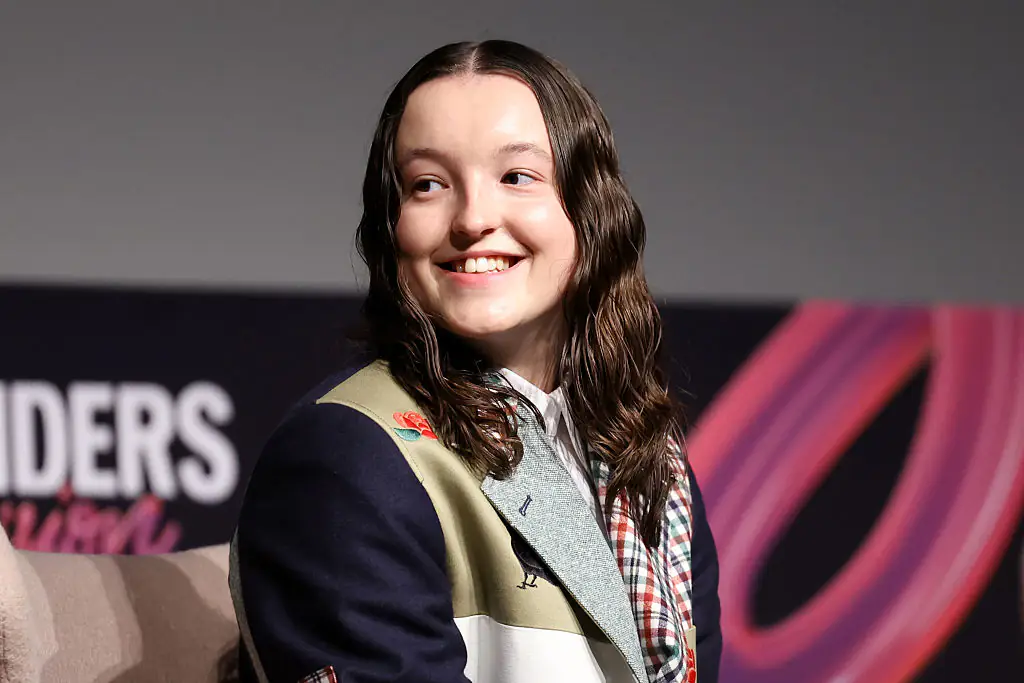
Bella Ramsey
In March 2025, The Last of Us star revealed in an interview with British Vogue that they were diagnosed with autism while filming the HBO hit.
Ramsey said they always suspected they were autistic but were prompted to seek assessment after a crew member made an observation.
Receiving the diagnosis felt “freeing,” they explained: “It enables me to walk through the world with more grace towards myself about not being able to do the easy everyday tasks that everyone else seems to be able to do.”
They added that while gender and sexuality labels feel restrictive, “the label of being autistic has been helpful,” and that the diagnosis has allowed them to “unmask immediately.”
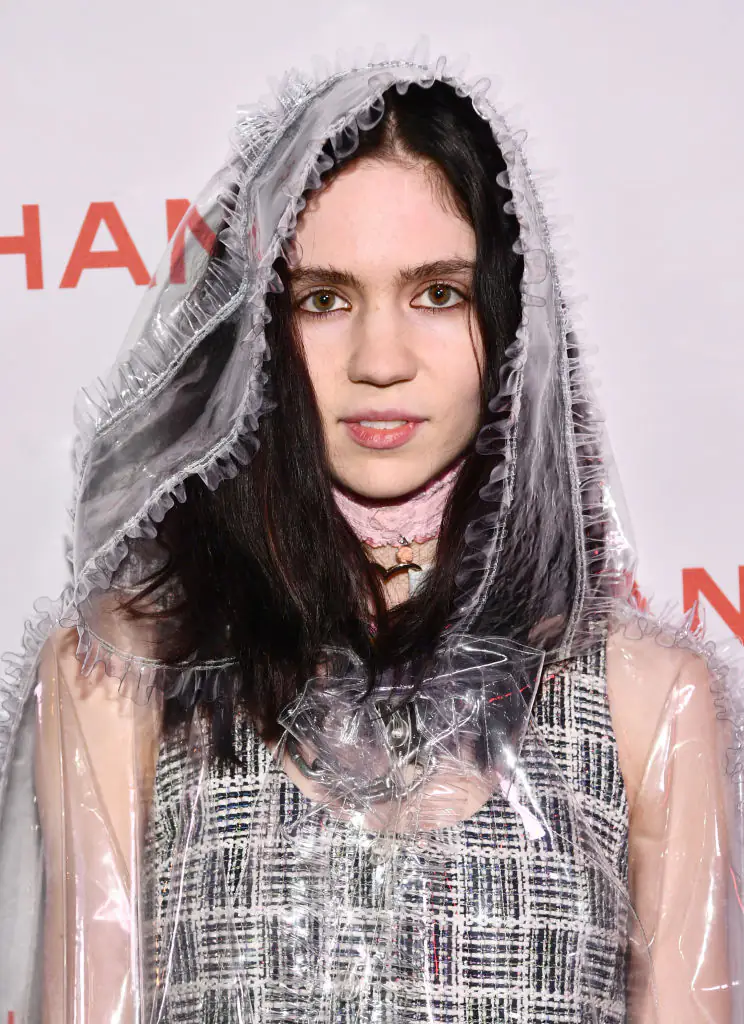
Grimes
Grimes shared on X in March 2025 that she has both ADHD and autism.
She said if she had known earlier, she would’ve changed how she approached her early life: “I would have worked so much less hard, been on drugs, and so many of the weird obsessions and motivations I had would have been seen as pathological and I could have written off certain things that were very hard for me but I'm glad I over came them."
Elon Musk
Grimes' ex-partner Elon Musk, who is also the father of her children, also shared in 2021 that he has Asperger’s, joking on SNL that his monotone speech “makes for great comedy.”
Tallulah Willis
The daughter of Demi Moore and Bruce Willis opened up about her diagnosis in March 2024 after sharing a childhood video on her Instagram page.
“Found out this summer and it’s changed my life,” she wrote in the comments.
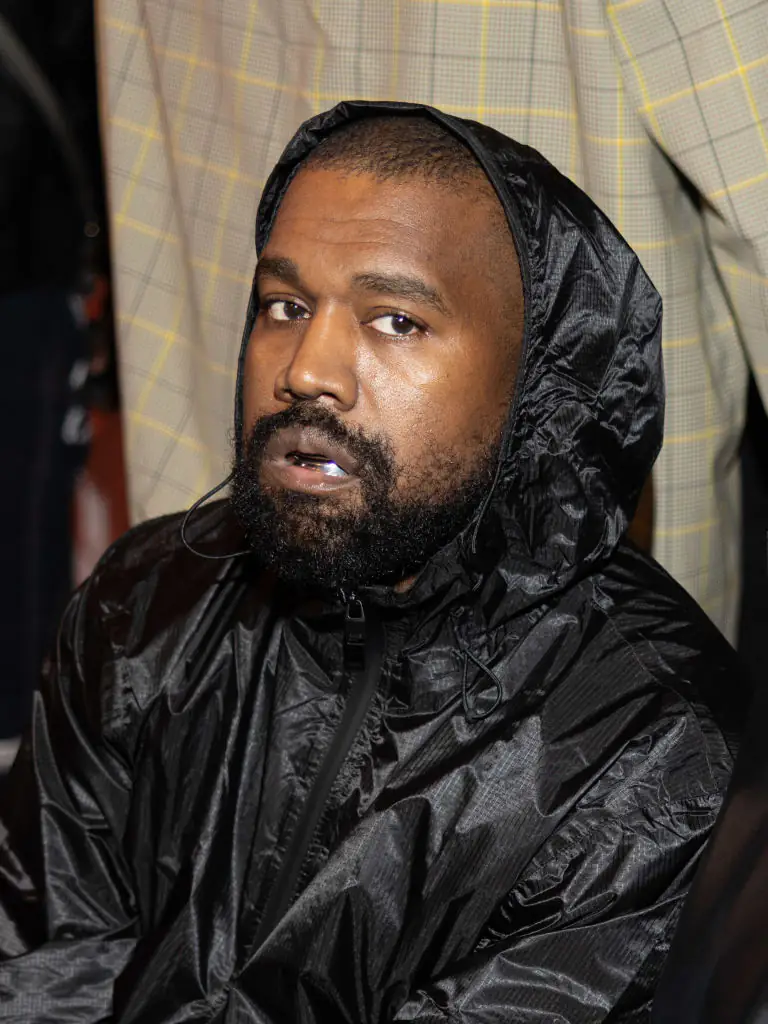
Kanye West
The controversial rapper said that he was diagnosed with autism after his wife questioned his previous bipolar diagnosis.
"I went to this doctor… My wife took me to do that because she said, ‘Something about your personality doesn’t feel like it’s bipolar, I’ve seen bipolar before.’ And I’ve come to find that it’s really a case of autism that I have,” he said during an interview.
He said the diagnosis helped him better understand some of his behavioural patterns, such as in 2018 when he wore a cap reading Make America Great Again and praised President Trump.
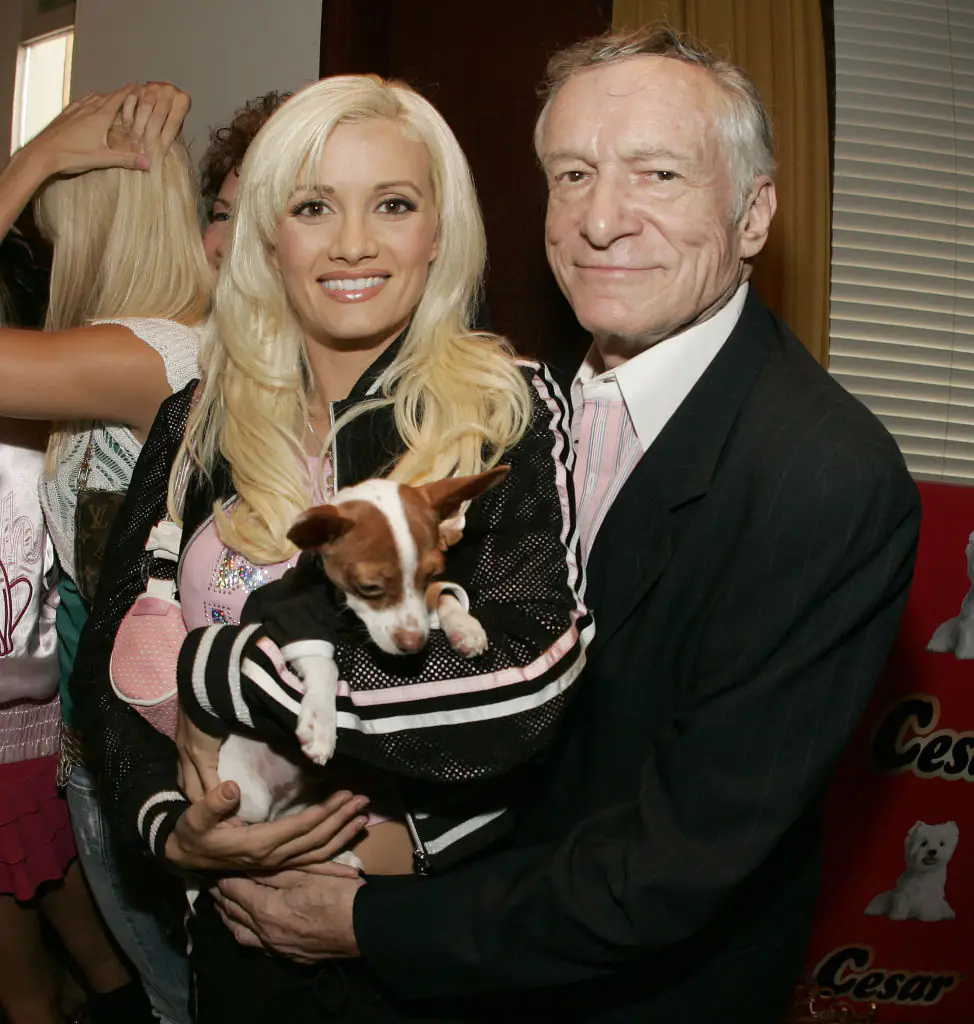
Holly Madison
In a December 2023 podcast appearance, the former Playboy said she was diagnosed with high-functioning autism.
“I just made excuses for it,” she explained. “I’m just not on the same social wavelength as other people.”
Others in entertainment have also gone public with their diagnoses:
Real Housewives of Orange County star Tamra Judge discovered she was “on the spectrum” while in therapy.
“I have a really hard time processing stuff,” she said on her Two Ts in a Pod podcast. “I have a lot of sensory issues - sound, light, touch - but [my therapist] says that is not my biggest problem. My biggest problem is working through trauma that I had in my life.”
Actor Anthony Hopkins, best known for his role in The Silence of the Lambs, said his Asperger’s diagnosis helped explain his creative compulsions and multitasking tendencies.
Wentworth Miller, the Prison Break star, shared in 2021 that being autistic is “central to who I am… to everything I’ve achieved," adding that "access to a diagnosis is a privilege many do not enjoy," and admitting that his diagnosis was "a shock," but "not a surprise," per PEOPLE.
As more stars speak openly about being neurodivergent, they’re helping shift the conversation around autism - from stigma to strength.
1. This woman describes feeling "out of control"
2. This must be so awkward
3. Some describe it as a "thrill"
4. Sometimes kleptomaniacs alienate their friends
5. After a while, you can get really good at it
6. But it can destroy relationships
7. This person "wants help" but believes that "nothing works"
8. Some use petty reasoning to make themselves feel better about it all
9. Others find shoplifting borderline erotic
10. You don't need a reason to become a kleptomaniac
11. At least this person is getting help...
12. The double whammy
13. It can be an unconscious problem, too
14. It all makes sense...
Hopefully that provided some insight for those of us who know very little about the psychological disorder. In other news, a new study claims that magic mushrooms can "reboot" the brains of depressed people...A person who lives with dissociative identity disorder (DID) has opened up about being told they were "possessed" before getting their diagnosis.
Bo, who shares details of their experiences on social media, has been open about living with DID - a mental health condition where a person has multiple separate personalities that control their behavior at different times, per the Cleveland Clinic.
The identities are usually caused by living through trauma, meaning people "dissociate" and may experience several different personalities, known as "alters".
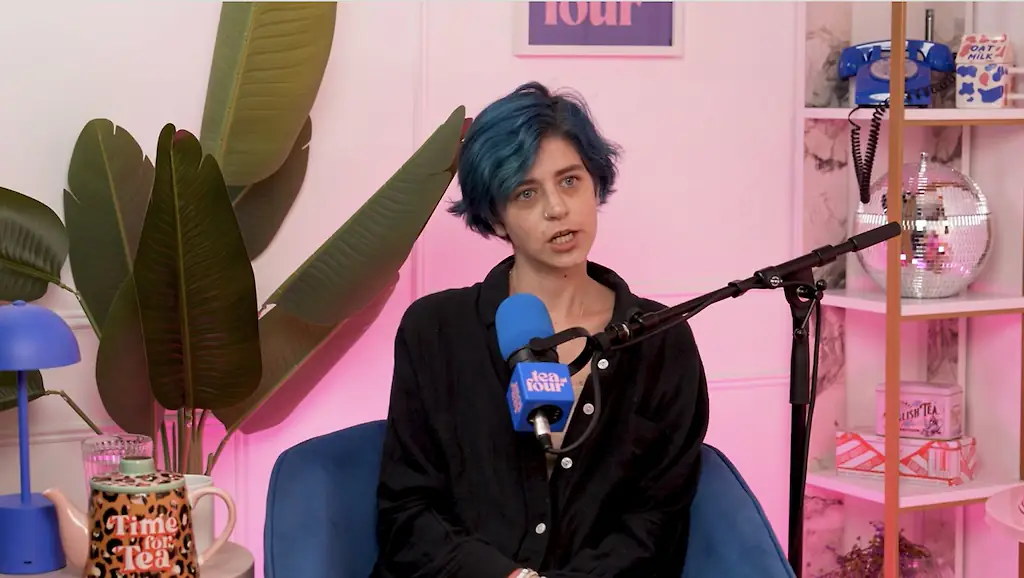
Bo opened up to the Tea At Four podcast about how they finally got their diagnosis and the effect it had on their life.
When asked if the diagnosis made it easier or harder, they admitted: "It was a bit of both. In terms of myself, it was a lot easier because it was like ‘I’m not crazy, I’m not possessed.’
"That was one of my biggest fears as well, because a lot of people tell me I’m possessed and that it’s demons."
They explained: "Everyone thinks it’s demons, everyone thinks I’m possessed, and they would tell me that when I was younger.
"These people would come out and they’d hurt them, and my friends would say it was a demon.
"Having a doctor come along and say ‘it’s not demons, you’re not possessed, you’re not crazy and you’re not making it up.’ Then, having this answer and this title, I was able to do research, I was able to find people that were like me. Seeing it in other people and seeing what happens during the blackouts made a lot more sense, it was a lot less confusing for me. Filming myself as well, that helped make it a lot less confusing."
While it was helpful for them to come to terms with their condition, Bo admitted that it wasn't so easy for their family to accept it, as they had to face up to their role in creating the trauma that led to their DID.
They revealed: "Then on the other end, my family now know, my friends know, I’ve been on TV, so people know that about me.
"My family are not very happy with it, because it’s one of those things - very rarely does a mental condition slap you in the face and say ‘your family is abusive’.
"If you’ve got OCD your brain a little bit rewired wrong. If you’ve got autism, your brain is rewired wrong. If you’ve got DID, your family were abusive - that’s it.
"Either they were the abusers, or they neglected you, because it can not happen without that."
Bo revealed that their mother asked them directly whether it was related to a certain incident in their childhood but found it difficult to accept the answer.
Their first alter arrived when they were just four years old in the form of a woman from the 1920s, though they were not aware what the condition was at the time.
Bo now has between 10 and 12 main alters, though there are "up to 30" other lesser personalities that have cropped up for short periods depending what is happening in their life.
When they experience a "switch" into one of the other personalities, Bo likens it to blacking out or being asleep as they have little to no memory of what happens during the time they are dissociated.
The alters can also have different skills or conditions to the main host, with Bo revealing that one of theirs is ambidextrous and is able to color with both hands, something they themself unable to do.
As DID stems from trauma, the condition can sometimes be managed or even cured by extensive therapy to work through the root cause and the memories which trigger the switch.
Catch the full episode with Bo on Tea At Four on Spotify and YouTube now.
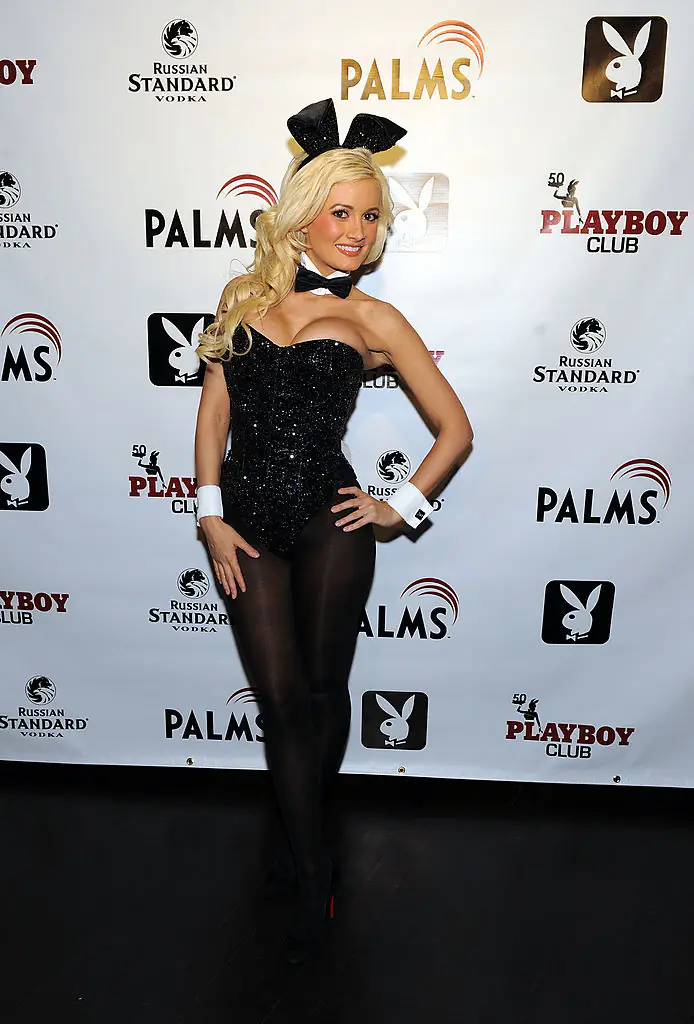
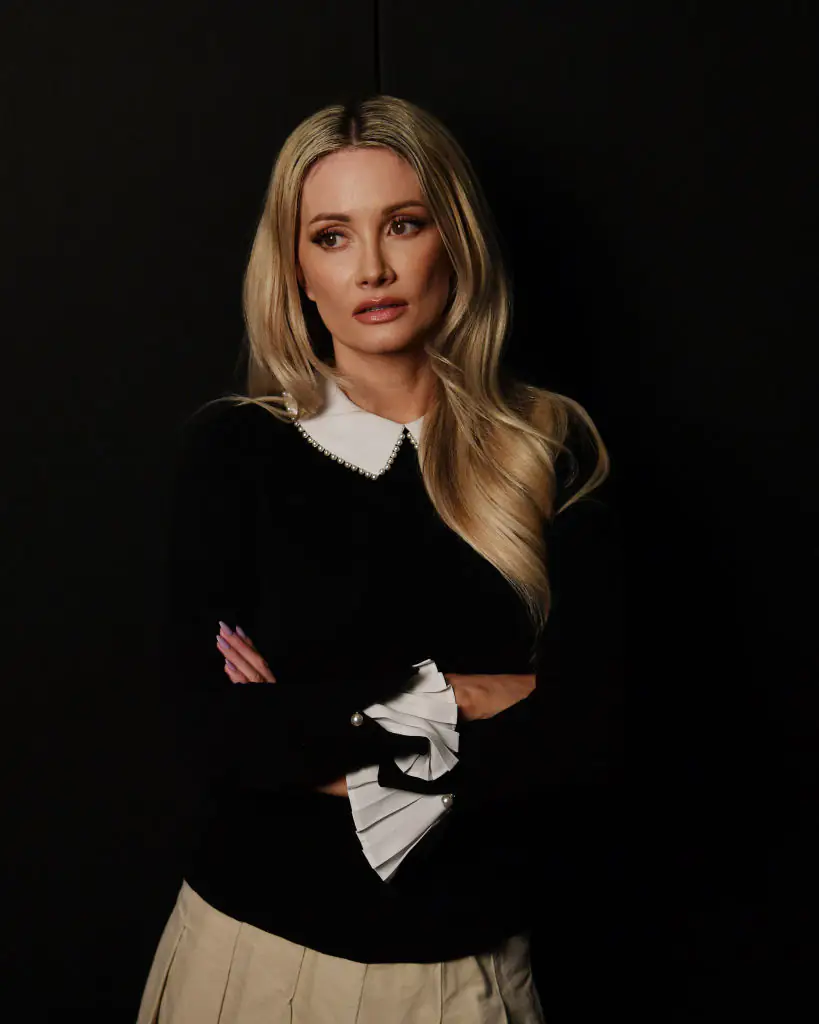
Holly Madison has opened up about her autism diagnosis.
The 43-year-old television personality - best known for dating the late Playboy founder Hugh Hefner for seven years, until they parted ways in 2008 - recently spoke out about living with the developmental disorder on the Talking to Death podcast.
"The doctor told me that I have high executive functioning, which means I can pretty much go about my life and do things 'normally,'" the Girls Next Door alum said. "I think because I’m more quiet, I’ve only recently learned to make eye contact, I’m often in my own thoughts, things like that, so people take that as offensive."
"They’re like, 'Damn, you’re not super interested in me, f*** you,'" she explained with a laugh. "Like, I'm just not on the same social wavelength as other people but don’t take it personally. So I like being able to explain that."
Autism spectrum disorder (ASD) is known as a spectrum disorder because there is wide variation in the type and severity of symptoms people experience.
It is a neurological and developmental disorder that is characterized by some degree of difficulty with social interaction, communication, learning, and behavior, per the World Health Organization. Although it can be diagnosed at any age, symptoms generally appear in the first two years of life.
The Down the Rabbit Hole author revealed to host Payne Lindsey that it was important for her to share her diagnosis publicly so people could understand her better. "I feel like throughout my life, people have not really liked me or have been like, rubbed the wrong way or been offended," she said.
"They think I'm like, stuck up or snobby or think I'm better than everybody else," she continued. "I also don't really have a gage for when other people are done speaking, so I tend to interrupt a lot, which pisses people off."
Like many people on the spectrum, the former reality star often finds it challenging to be flexible about the way she perceives others. "She said I have a hard time understanding why other people might think differently," Madison said about her doctor, "or do things differently than me."
Despite this challenge, Madison has learned to navigate social situations that may come more easily to her neurotypical peers, such as making eye contact. "I was never making eye contact before at all. I can apologize to people if I interrupt or talk over them and tell them why," she shared.
Furthermore, the author said that this "helps other people be more understanding" with her and not take her behavior personally.
"I have a little bit more patience now, and I don't take things as personally," she added.
The former Playboy model first talked about not being "neurotypical" and having "a hard time fitting in" during her childhood in an appearance on the Call Her Daddy podcast back in April 2021.
She explained to host Alex Cooper that she believed she had Asperger's - a diagnostic term that was reclassified as an autism spectrum disorder in 2013 - and was thinking about seeing a doctor.
She later confirmed in September on the Ahead of the Curve with Coco Mocoe podcast that she received a "formal diagnosis" as "someone on the spectrum".