Uncategorised3 min(s) read
entertainment news3 min(s) read
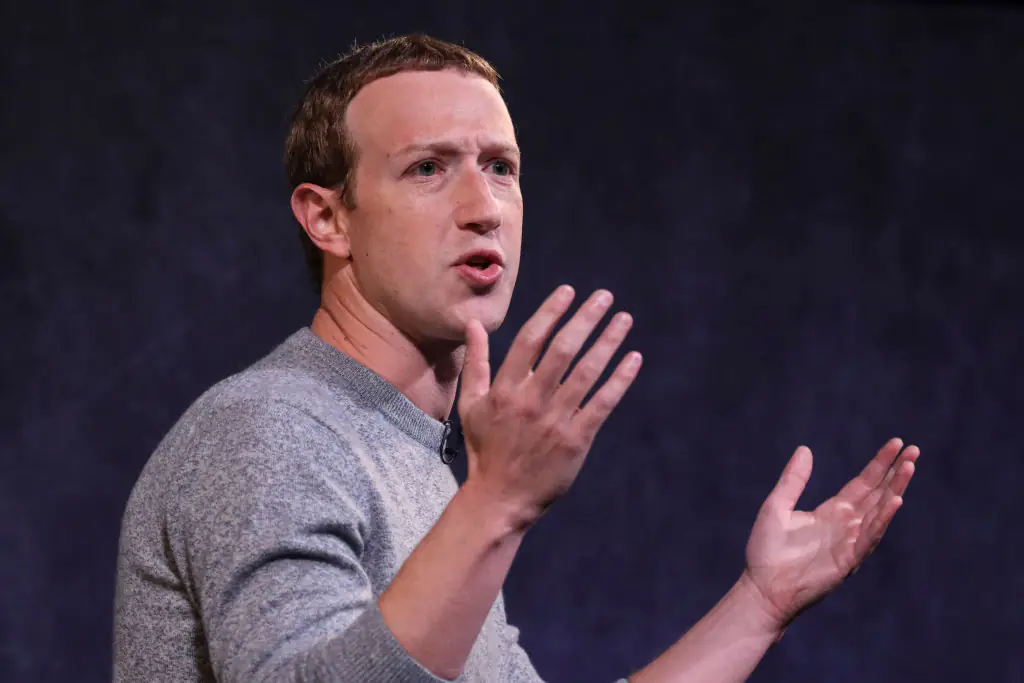
Mark Zuckerberg has returned to Twitter for his first appearance in 11 years - and the timing couldn't be more perfect.
Zuckerberg's company, Meta, has dived head first into the world of text-based social media as it looks to add to its portfolio of Facebook and Instagram.
The new platform, named Threads, appears to operate in a very similar fashion to Twitter, meaning it could rival the popular platform very soon.
Twitter has been in the spotlight a lot recently after it imposed a limit on the number of tweets that people could read in a day, as the CEO of the company, Elon Musk, wrote: "To address extreme levels of data scraping & system manipulation, we’ve applied the following temporary limits: Verified accounts are limited to reading 6000 posts/day - Unverified accounts to 600 posts/day - New unverified accounts to 300/day."
Naturally, people were left slightly confused by this announcement so the timing of Threads being launched could be a stroke of genius as Meta looks to capitalize on the current chaos surrounding Twitter.
So much so, that Zuckerberg has made a stunning return to Twitter as he has posted his first tweet since January 18, 2012.
Simply posting a meme of Spiderman meeting another Spiderman, which is usually used in instances where people want to highlight how similar something is, it seems that the Facebook founder is poking fun at Twitter.
For those who aren't on Threads yet, it is linked up to any Instagram account you might have and will transfer all of your data, and more importantly your followers, to your new Threads account.
It operates similarly to Twitter as it is text-based, with the option to add images and videos. You can like and repost threads that you enjoy, and engage with others.
Danni Hewson, head of financial analysis at investment platform firm AJ Bell had some strong words about the launching of Threads, as they said: "Investors can't help but be a little excited about the prospect that Meta really has a Twitter-Killer poised to launch on the app store."
While we are way off seeing Threads be a "Twitter-Killer", it's certainly heading in the right direction as Zuckerberg himself said: "It’ll take some time, but I think there should be a public conversations app with 1 billion+ people on it. Twitter has had the opportunity to do this but hasn’t nailed it. Hopefully, we will."
As per the Daily Star, he continued: "Our vision is to take the best parts of Instagram and create a new experience for text, ideas, and discussing what’s on your mind. I think the world needs this kind of friendly community, and I’m grateful to all of you who are part of Threads from day one. Threads is available in the app store now."
If you're running to download Threads right now, you can follow VT and watch us navigate the new social media platform by clicking here!
us2 min(s) read
Facebook is officially changing its name to Meta, it was announced on Thursday, October 28.
While the apps Facebook and Facebook Messenger will keep their names, the parent company that also owns WhatsApp and Instagram will henceforth be known as "Meta".
WhatsApp and Instagram will also be keeping their names - so, essentially little changes for the users of Meta's social media and messaging platforms.
The new company name, as well as its new logo, was unveiled at Meta's annual Connect conference, Time reports.
The move reflects their goal of building the metaverse, which the social media giant says will be a "hybrid of today's online social experiences, sometimes expanded into three dimensions or projected into the physical world."
Meta CEO Mark Zuckerberg wrote in his founder's letter: "We are at the beginning of the next chapter for the internet, and it's the next chapter for our company too."
The 37-year-old entrepreneur continued: "Today we’re seen as a social media company. Facebook is one of the most used technology products in the history of the world. It’s an iconic social media brand.
"Building social apps will always be important for us, and there’s a lot more to build. But increasingly, it’s not all we do. In our DNA, we build technology to bring people together. The metaverse is the next frontier in connecting people, just like social networking was when we got started.
"Right now our brand is so tightly linked to one product that it can’t possibly represent everything we’re doing today, let alone in the future. Over time, I hope we are seen as a metaverse company, and I want to anchor our work and our identity on what we’re building towards."
Elsewhere in the statement, Zuckerberg shared: "From now on, we will be metaverse-first, not Facebook-first. That means that over time you won’t need a Facebook account to use our other services.
"As our new brand starts showing up in our products, I hope people around the world come to know the Meta brand and the future we stand for."
celebrity1 min(s) read
News has emerged today that Mark Zuckerberg has joined the centibillionaire club alongside Jeff Bezos and Bill Gates after his fortune surpassed $100 billion.
The price of Facebook shares surged after the social media website announced that it would be launching a new platform to rival the video-sharing app TikTok.
This video details how Zukerberg made his fortune:
[[youtubewidget||https://www.youtube.com/watch?v=uN1HEZlnOr4]]
The news was broken after Facebook revealed that it would be rolling out Instagram Reels by the Bloomberg Billionaires Index, the daily ranking of the world's richest people.
Reels is a tool that enables users to create videos to share with friends and those on Instagram, giving them the ability to edit 15-second multi-clip videos with audio, effects, and new creative tools.
Users can share their creations on their newsfeeds or with the wider community in a new space in Explore.
This comes after Donald Trump signed an Executive Order in a bid to have TikTok banned from the US.
The president's ruling states that America "must take aggressive action against the owners of TikTok to protect our national security".
According to the Executive Order, people will have 45 days to purchase the rights to the app from ByteDance, the Chinese-owned parent company, before transactions with the company are banned on September 20.
It states that "additional steps must be taken to deal with the national emergency with respect to the information and communications technology and services supply chain".
It continues: "The spread in the United States of mobile applications developed and owned by companies in the People's Republic of China (China) continues to threaten the national security, foreign policy, and economy of the United States.
"[The app] automatically captures vast swaths of information from its users, including Internet and other network activity information such as location data and browsing and search histories.
"This data collection threatens to allow the Chinese Communist Party access to Americans' personal and proprietary information - potentially allowing China to track the locations of Federal employees."
The app has denied that users' data can be passed back to China or used for any nefarious purposes.
In a statement to The Verge last month, a TikTok spokesperson said: "We have no higher priority than promoting a safe and secure app experience for our users. We have never provided user data to the Chinese government, nor would we do so if asked."
world politics2 min(s) read
Facebook has revealed the reason behind its chaotic six-hour crash on Monday.
On October 4, social media users were forced to turn to Twitter after Facebook - along with the company's other platforms Instagram, Messenger, and WhatsApp - all went offline.
From approximately 11:30AM to 5:30PM (EST), users were left unable to post, like, comment, share, message, or refresh their newsfeeds - leaving many people stuck for something to do while on the toilet.
The outage quickly became an online joke, and with people flooding to Twitter for some social interaction, we were treated to tweets like this:
And this:
Fortunately, once Facebook had sorted its issues, they were able to provide a reasoning behind the outage with its users. Writing in a blog post on Monday evening, officials for the company stated that the mass blackout was caused by a "faulty configuration change".
The post - titled 'Update about the October 4th outage' - read:
"Our engineering teams have learned that configuration changes on the backbone routers that coordinate network traffic between our data centers caused issues that interrupted this communication.
"This disruption to network traffic had a cascading effect on the way our data centers communicate, bringing our services to a halt."
The post also stressed that no "user data was compromised" during the outage, and added: "We apologize to all those affected, and we’re working to understand more about what happened today so we can continue to make our infrastructure more resilient."
Mark Zuckerberg, the CEO of Facebook, also issued an apology for the "disruption", writing in a post of his own:
"Facebook, Instagram, WhatsApp and Messenger are coming back online now. Sorry for the disruption today -- I know how much you rely on our services to stay connected with the people you care about."
With the outage in our rearview mirrors, I guess the only thing left to do is enjoy these memes of the Facebook outage (no surprise, they're all from Twitter):
That reminds me, I better reactivate my Bebo account... just in case.
world politics2 min(s) read
It's pretty hard to imagine the richest one per cent ever worrying about money. When you think about the lives of the seriously rich (multi-millionaire or billionaires that is) the idea that they could ever struggle financially, or even lose money at all, seems preposterous. When you have that many assets, that much property or those many investments, trust funds and savings, it's like you're the winning player in a global game of Monopoly. You're unbeatable. You can't be touched.
But the reality of life for the ultra-wealthy is a lot different. After all, you're now that much more of a target for the taxman and swindlers, and there are plenty of people out there who are only too happy to take that money off your hands. All it takes is a few poor decisions or an untrustworthy advisor, and suddenly it's like you've flushed your millions down the toilet. If you don't believe me, then prepare for some shocking news. Apparently this week has been financially catastrophic for the richest people in the world, particularly for Facebook founder and CEO Mark Zuckerberg, who has officially lost more money than any other human being on the planet. Ouch; that's gotta bruise his ego a little bit, not to mention lighten his wallet.
[[twitterwidget||https://twitter.com/i/moments/969679869515792384]]
Financial reports indicate that the 500 richest people on the planet have managed to lose a combined total of a whopping $107 billion this week. This staggering sum equals more cash than the entire market capitalisation of the Goldman Sachs Group or Lockheed Martin. For once, as opposed to other economic crisis, it was the wealth of billionaires in the United States which suffered the most, (declining by a combined total of $34 billion) followed by Chinese tycoons, who lost around $16 billion.
Mark Zuckerberg suffered from the biggest financial loss of $3.2 billion, after large cap stocks disappointed the social media guru for the fourth day in a row. The Facebook chief executive officer's losses managed to outstrip those of Spain’s Amancio Ortega and Mexico’s Carlos Slim, who also both lost approximately $2.4 billion. Meanwhile, the estates of Alphabet Inc.’s Larry Page and Sergey Brin also shrank by $2 billion, according to figures from the Bloomberg Billionaires Index. That's one hell of a bad week.
[[twitterwidget||https://twitter.com/i/moments/969679869515792384]]
Certain financial experts have blamed this colossal loss on United States president Donald Trump after set the stage for trade wars between nations, after slapping tariffs on steel and aluminum imports from overseas to encourage the growth of American-based industries. Trump's policies of economic nationalism could have led to this monetary tightening, especially after the president European Commission, Jean-Claude Juncker, claimed that the the bloc is prepared to respond by targeting imports of American products, such as Harley-Davidson motorbikes, Levi jeans and bourbon whiskey.
Although this loss seems pretty bad on paper, I wouldn't expect to see Zuckerberg begging for change on the streets anytime soon, since his estimated net worth is already around $70.9 billion. In the face of this figure, this week hasn't even touched him; but even so, it's scant encouragement for Facebook's 25,000 employees.