ADVERT
US6 min(s) read
Published 09:40 18 Jun 2026 GMT
The US has announced a 14-point peace plan, which they officially agreed with Iran on Wednesday (June 17).
It is titled the 'Islamabad Memorandum of Understanding between the United States of America and the Islamic Republic of Iran.'
A senior US administration official read out the document, which outlined agreements to reopen the Strait of Hormuz, in addition to financial restrictions on Iran and the plan for the Middle Eastern nation’s nuclear programme.
The document was made public following criticism that it wasn’t released in full.
Speaking to the public, the official explained that 'this is fundamentally an agreement that allows us to open the Strait of Hormuz immediately.'
The memorandum is set to be formally signed on Friday, which will start a 60-day window to negotiate the finer details of the deal.
The official text begins: "The United States of America and the Islamic Republic of Iran have jointly agreed in good faith on [ __ date] on the following:"
Here are all 14 points outlined in the groundbreaking document, as per CNN.
The US and Iran, as well as their allies, will sign the document to 'declare the immediate and permanent termination of military operations on all fronts, including in Lebanon.'
They will not 'initiate any war or any military operation against each other, and to refrain from the threat or use of force against each other.'
"The final deal will confirm the permanent termination of the war on all fronts, including in Lebanon and other provisions of this paragraph," it read.
The document read: "The United States of America and the Islamic Republic of Iran undertake to respect each other’s sovereignty and territorial integrity and to refrain from interfering in each other’s internal affairs."
"The United States of America and the Islamic Republic of Iran commit to negotiating and achieving the final deal in maximum 60 days, extendable with mutual consent," it detailed.
The document states that the US will prevent any interference or obstruction against Iran and restore traffic to its full capacity within 30 days.
It further reads: "During this period, the traffic of vessels will be in proportion to the numbers of pre-war traffic being restored by the Islamic Republic of Iran.
"The United States of America further undertakes to remove its forces from the proximity of the Islamic Republic of Iran within 30 days after the final deal."
The nation must move merchant ships from the Persian Gulf to the Sea of Oman and vice versa within 30 days to pre-war volume.
They will also 'make arrangements using its best efforts for the safe passage of commercial vessels with no charge, for 60 days only.'
They must also work with the Sultanate of Oman to define the 'future administration and maritime services in the Strait of Hormuz,' in line with international law and other sovereign rights of coastal states of the Strait.
The US will work with partners to supply financing of at least $300bn 'for the reconstruction and economic development of the Islamic Republic of Iran.'
This will be finalized in the final deal, as 'all required licenses, waivers and permissions needed for the relevant financial transactions will be granted by the United States of America.'
The document explains that the US will stop all sanctions against Iran, which includes 'the United Nations Security Council resolutions, IAEA Board of Governors resolutions, and all unilateral US sanctions, primary and secondary, in an agreed upon schedule as part of the final deal.'
It is said that the nations understand the 'critical importance' of terminating these sanctions.
The nation must reaffirm that it will not procure or develop nuclear weapons, adding that the countries 'have agreed to resolve the disposition of stockpiled enriched material pursuant to a mechanism that will be mutually agreed upon.'
The methodology involves being down-blended on-site, under the supervision of the International Atomic Energy Agency.
They will also discuss the issue of enrichment and 'other mutually agreed matters related to the Islamic Republic of Iran’s nuclear needs.'
"The United States of America and the Islamic Republic of Iran acknowledge the critical importance of the nuclear issues above mentioned.
"They express their intention to immediately address these issues in the negotiations in order to achieve mutual agreement on them," it confirms.
The peace deal reads: "Pending the final deal, the United States of America and the Islamic Republic of Iran agree to maintain the status quo.
"The Islamic Republic of Iran will maintain the current status quo of its nuclear program, and the United States of America will not impose any new sanctions and will not deploy additional forces in the region."
The US agree, until the termination of sanctions, to 'issue waivers for the export of Iranian crude oil, petroleum products and derivatives, and all associated services, including banking transactions, insurances, transportation, etc.'
The US will unfreeze Iran's frozen or restricted funds and assets of Iran following the implementation of the MOU (Memorandum of Understanding).
It is revealed that the US and Iran will agree on the procedures linked to the release of these funds.
"Such funds, whether retained in the original account or transferred, shall be made fully usable for payment to any ultimate beneficiary designated by the Central Bank of the Islamic Republic of Iran," it reads, adding that the US will issue licenses and authorizations required.
The MOU reads: "The United States of America and the Islamic Republic of Iran agree that an executive mechanism will be established to monitor the successful implementation of this MOU and the future compliance of the final deal."
The document explains that following the signing of the document and subject to its implementation of said measures, 'the United States of America and the Islamic Republic of Iran will start negotiations regarding the final deal exclusively on the other paragraphs.'
"The final deal will be endorsed by a binding UN Security Council (UNSC) resolution," the final point reads.
us2 min(s) read
Published 17:29 25 Mar 2026 GMT
Iran has rejected the 15-point peace plan put forward by US President Donald Trump, calling the proposal "excessive."
Per CBS News, this rejection comes as both countries continue to offer conflicting accounts about the status of peace negotiations. Trump has insisted that the talks are progressing, describing them as "very good and productive," even claiming that Iran had sent him a significant gift.
However, Iran has accused Trump of "negotiating with himself" and sending "backstabbing" emissaries.
According to the US plan, key conditions include a 30-day ceasefire, reopening the Strait of Hormuz, limitations on Iran's missile capabilities, and an end to Iran's support for regional groups like Hezbollah and Hamas. Iran, however, has firmly rejected these terms, and instead, outlined its own conditions for peace.
A senior Iranian official, speaking to Press TV, outlined five conditions that Tehran requires before agreeing to end the war:
A complete halt to "aggression and assassinations" by the enemy.
The establishment of mechanisms to ensure that the war is not reinstated on Iran.
Clear guarantees for the payment of war damages and reparations.
The conclusion of the war across all fronts, including for all resistance groups involved.
Iran’s sovereignty over the Strait of Hormuz must be recognized, and this is seen as a guarantee for the implementation of the other party's commitments.
The official emphasized that Tehran would continue to "inflict heavy blows" on the enemy until its demands are met and reiterated that any ceasefire would only be considered if all of Iran's conditions were accepted.
The official also made it clear that no negotiations would take place before Iran's terms were met, stating via BBC News, "No negotiations will be held prior to that." Iran insisted that the war would end when it decided, not according to Trump's timeline or vision.
The ongoing conflict has already led to over 3,000 Iranian casualties, and the situation remains tense as both sides continue to push their demands.
us3 min(s) read
Published 09:51 11 May 2026 GMT
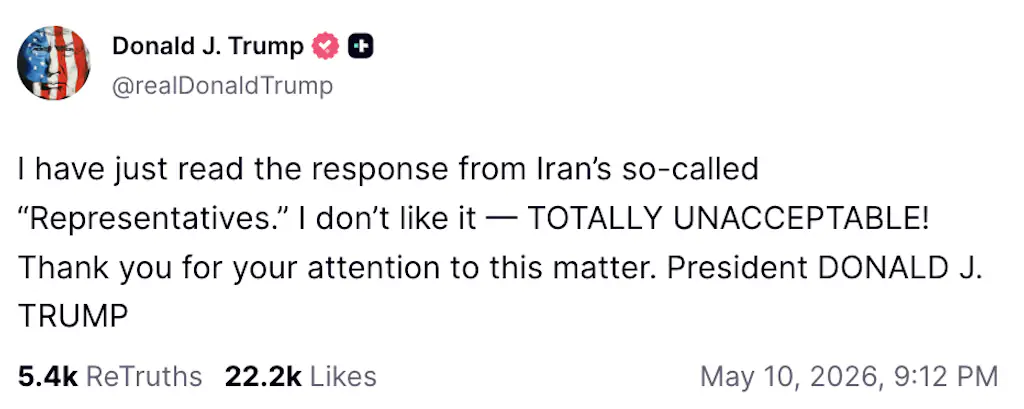
President Donald Trump has rejected Iran’s latest response to his proposed peace deal, calling the country’s counteroffer “totally unacceptable” as tensions over the ongoing US-Israeli conflict with Tehran continue to rise.
The war shows little sign of ending despite a fragile ceasefire holding for the past month. Negotiations remain stalled while the Strait of Hormuz stays closed to shipping traffic, raising fears for the global economy as a significant share of the world’s oil supply remains trapped in the Persian Gulf.
Per The New York Post, Iranian officials were reportedly handed a 14-point peace proposal through Pakistani intermediaries last week. The one-page plan demanded that Tehran abandon nuclear enrichment for the next 20 years and surrender its enriched uranium stockpile to its enemies.
In response, Iran sent a counterproposal back to the White House through Pakistani mediators. The offer reportedly included reopening the country’s oil supplies for 30 days, agreeing to a shorter moratorium on uranium enrichment, and refusing to dismantle existing nuclear facilities.
Trump quickly dismissed the proposal after reviewing it, writing on Truth social: “I have just read the response from Iran’s so-called ‘representatives’. I don’t like it – totally unacceptable.”
The president also appeared increasingly frustrated by the lengthy negotiations and the lack of progress toward reopening the Strait of Hormuz.
Earlier on Sunday, Trump said in a separate Truth Social post that Tehran “has been playing games with the United States, and the rest of the World, for 47 years,” before adding that officials in the country “will be laughing no longer”.
Israeli Prime Minister Benjamin Netanyahu has also signaled that the conflict is far from finished, warning publicly that the war is “not over” despite the current ceasefire.
Sporadic drone attacks have reportedly continued during the month-long pause in fighting, while both sides remain locked in tense negotiations over Iran’s nuclear capabilities.
Any agreement that allows Iran to continue enriching uranium would likely face resistance from Trump, who repeatedly criticized the Obama-era nuclear agreement during his first presidency.
Speaking to CBS’ 60 Minutes, Trump said: “It’s not over, because there’s still nuclear material – enriched uranium – that has to be taken out of Iran. There’s still enrichment sites that have to be dismantled.”
US intelligence is reportedly still monitoring Iran’s uranium stockpiles following the destruction of a major enrichment facility in Isfahan during a military exchange in June 2025.
Although the strike reportedly devastated the site, intelligence assessments suggest that parts of Iran’s enriched uranium stockpile may still be buried beneath the ruins.
Discussing the Isfahan facility this week, Trump said on Full Measure: “We’ll get that at some point … We have it surveilled. I did a thing called Space Force, and they are watching that … If anybody got near the place, we will know about it – and we’ll blow them up.”
Without a breakthrough in negotiations, the conflict continues to threaten global energy markets as oil shipments through the Persian Gulf remain heavily disrupted.
us4 min(s) read
Published 09:53 25 Mar 2026 GMT
Iran has warned of "special plans" for the US following recent claims by President Donald Trump of peace talks aimed at resolving the ongoing conflict.
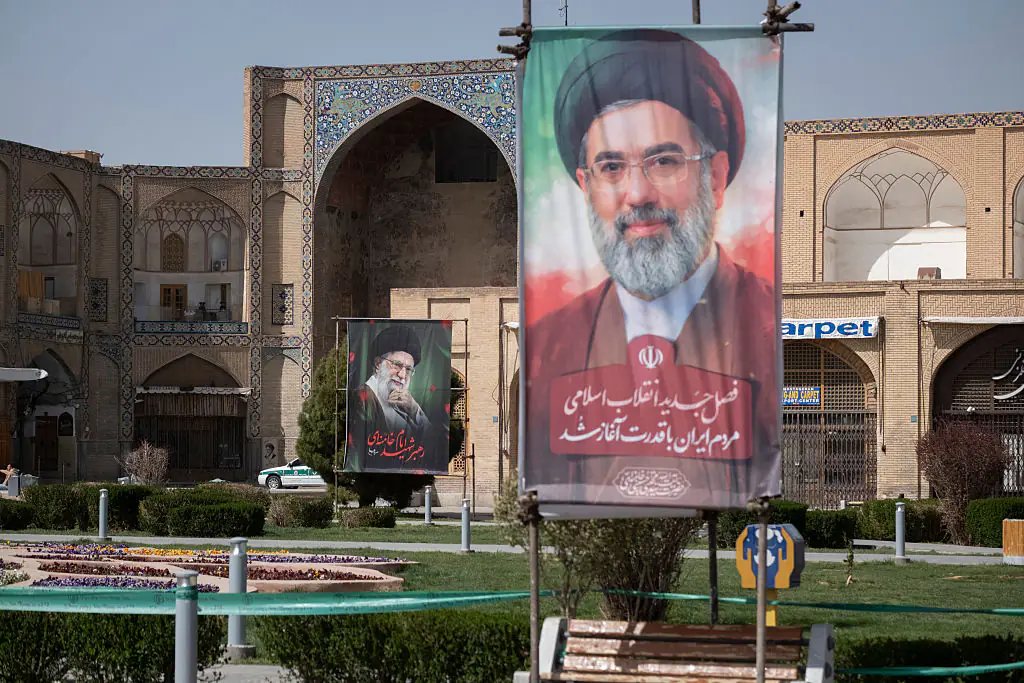
Supreme Leader, Ali Khamenei, was killed in a coordinated strike by US and Israeli forces on February 28, prompting an immediate military response from Iran.
Tehran launched missiles targeting US military bases across the Middle East, including locations in Dubai, Kuwait, and Qatar.
Despite the leadership change with Khamenei's son, Mojtaba Khamenei, now in charge, the regime's determination has not wavered.
Recently, Trump escalated tensions by issuing a threat to Iran. The 79-year-old warned on his Truth Social platform that if the country did not reopen the Strait of Hormuz, a key oil passage, within 48 hours, the US would strike Iran’s energy infrastructure.
"If Iran doesn’t FULLY OPEN, WITHOUT THREAT, the Strait of Hormuz, within 48 HOURS from this exact point in time, the United States of America will hit and obliterate their various POWER PLANTS, STARTING WITH THE BIGGEST ONE FIRST!" he wrote on March 21.
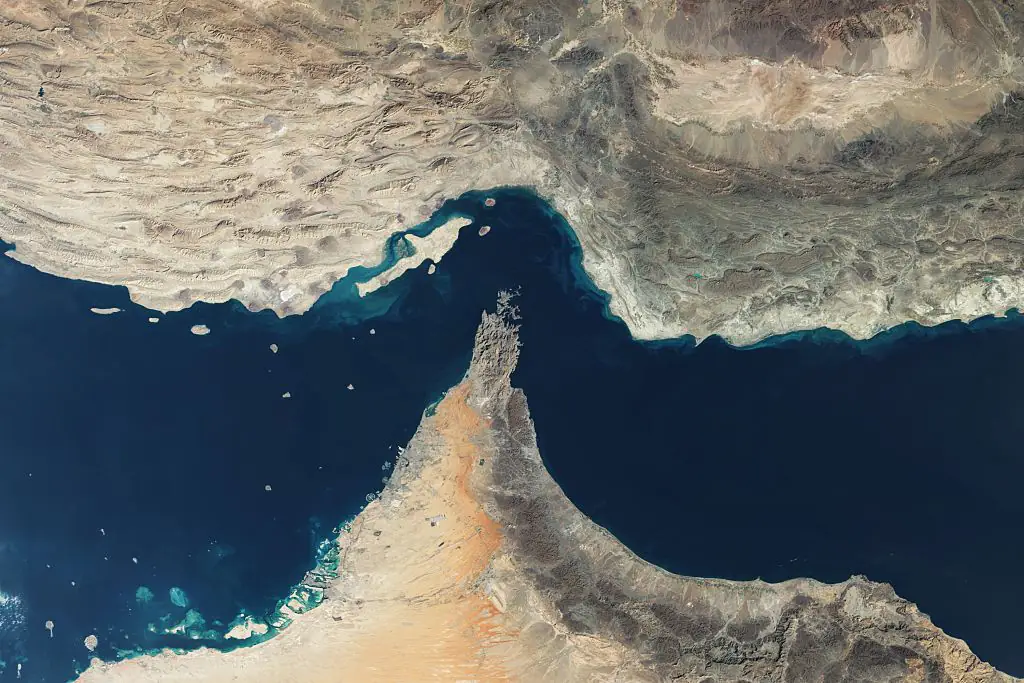
The closure of the strait, which lies between Oman and Iran and links the Gulf to the north with the Gulf of Oman to the south and the Arabian Sea beyond, has led to soaring energy prices globally.
In response to the president, Iranian officials have made it clear that they have "special plans" for both the US and Israel, which they claim will eliminate any hope of peaceful negotiations.
According to Iran’s state-run Fars News Agency, a source said: "Tonight, special events are planned for Tel Aviv and some regional allies of the US and Israel that will completely remove the hope of negotiations from the minds of the aggressors," per LBC.
Another message allegedly shared on Telegram from Iranian officials stated that until the US withdraws entirely from the region and ensures that it will not engage in further aggression, there will be no peace, and the Strait of Hormuz will remain closed.
"Even after the possible end of the war, the situation in the Strait of Hormuz will not return to the pre-war situation," they added.
This follows a denial by Iranian officials regarding any peace talks with the US. Iranian Parliament Speaker Mohammad Bagher Ghalibaf dismissed Trump's claims of negotiations as "fake news".
"No negotiations have been held with the US, and fakenews is used to manipulate the financial and oil markets and escape the quagmire in which the US and Israel are trapped," Ghalibaf posted on X.
Despite the Iranian denials, Trump made a contradictory announcement on March 22, stating that the US and Iran had engaged in "very good and productive conversations" over the past two days.
He also claimed to have instructed the US Department of War to postpone any military strikes on Iranian power plants for five days while the discussions continued.
"I am pleased to report that the United States of America, and the country of Iran, have had, over the last two days, very good and productive conversations regarding a complete and total resolution of our hostilities in the Middle East,” he wrote on Truth Social.
"Based on the tenor and tone of these in-depth, detailed, and constructive conversations, I have instructed the Department of War to postpone any and all military strikes against Iranian power plants and energy infrastructure for a five-day period," he added.
Trump further remarked to reporters: "They [Iran] want very much to make a deal. We'd like to make a deal, too. We're going to get together today [by phone.] We're doing a five-day period, we'll see how that goes, and if it goes well, we're gonna end up settling this...Otherwise, we'll just keep bombing our little hearts out."
While Trump’s statements suggest an ongoing dialogue, the White House has confirmed that no formal meetings have been scheduled between US and Iranian officials.
White House Press Secretary Karoline Leavitt said: "These are sensitive diplomatic discussions, and the US will not negotiate through the press."
"This is a fluid situation, and speculation about meetings should not be deemed as final until they are formally announced by the White House," she added.
us3 min(s) read
Published 12:59 15 Apr 2026 GMT
President Donald Trump has claimed that he is going to open the Strait of Hormuz despite recently reaching an impasse on peace talks with Iran.
He took to social media to confirm the news, which will be music to the ears of numerous nations around the world who were approaching, or already experiencing a shortage in oil.
The Strait of Hormuz is responsible for the export of 20 percent of the world's total crude oil, and its closure over the past couple of months has had a detrimental effect on the world economy.
This claim comes just hours after the President told Fox News that the war in Iran is "very close" to ending, in a snippet of a new interview.
He claimed: "I think it’s close to over, yeah. I view it as very close to being over,
"If I pulled up stakes right now, it would take them 20 years to rebuild that country. And we’re not finished,
"We’ll see what happens. I think they want to make a deal very badly."
Taking to Truth Social, he said that he will be opening the strait, claiming that Chinese president Xi Jinping will give him a “big, fat hug” when they next meet.
He wrote, in full: "China is very happy that I am permanently opening the Strait of Hormuz. I am doing it for them, also - And the World.
"This situation will never happen again. They have agreed not to send weapons to Iran. President Xi will give me a big, fat, hug when I get there in a few weeks.
"We are working together smartly, and very well! Doesn’t that beat fighting??? BUT REMEMBER, we are very good at fighting, if we have to - far better than anyone else!!!"
US-Iran peace talks in Islamabad, Pakistan, failed to progress over the weekend, leaving a question mark over the world's economy.
But after the US started their blockade, it was reported by Iranian news agency Mehr News that they would start to use alternative ports for their exports to bypass the US military.
The Strait of Hormuz is used for the majority of Iran's exports, including oil, which is the nation's most profitable export by far.
A report from the Washington Post reveals that the US military is set to send thousands more troops into the Middle East in the next few days.
The decision was made as the Trump administration has decided to continue its attempts to keep pressure on Iran to agree to a deal to end the war.
This latest report cited US officials, though it is not clear how many troops will be sent to the region.
It is yet to be confirmed publicly by any official figures.
us3 min(s) read
Published 10:13 06 Apr 2026 GMT
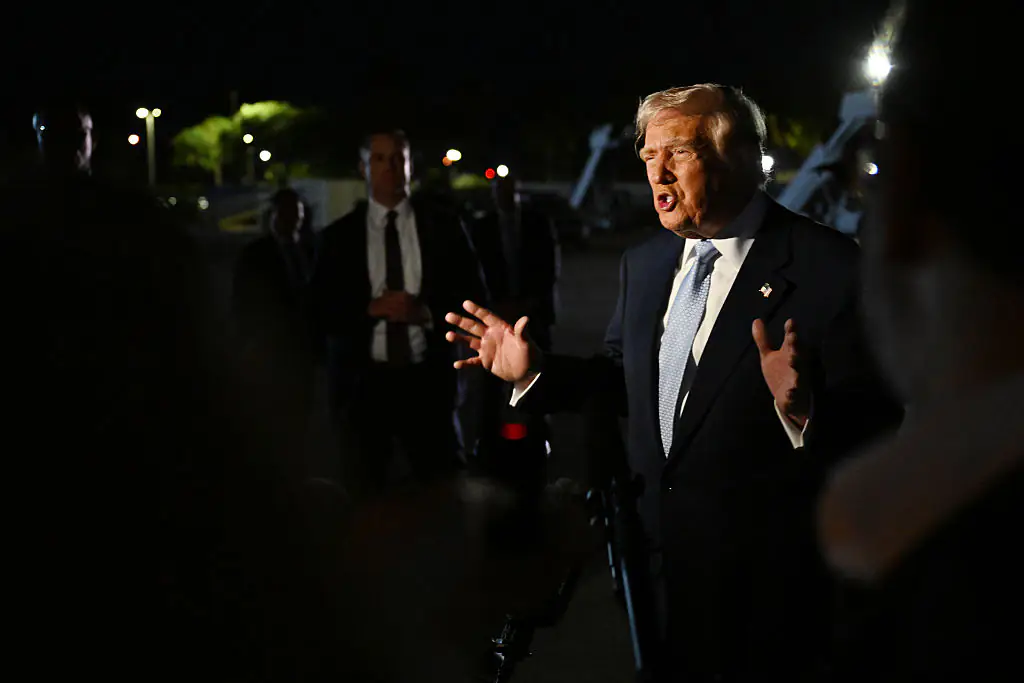
US President Donald Trump has issued a furious new warning to Iran, setting a fresh deadline and threatening massive destruction if key demands are not met.
The explosive message, posted on his Truth Social platform over the weekend, came as tensions in the region continue to spiral during the sixth week of conflict.
The president doubled down on his demand for Iran to reopen the Strait of Hormuz, a crucial global shipping route, while hinting that a deal could still be reached. At the same time, officials on both sides traded threats, with Tehran dismissing Trump’s comments and signaling it would not back down without compensation tied to war damage.
The dramatic escalation followed a high-risk US rescue mission deep inside Iran, where a stranded service member was recovered after his fighter jet was shot down. The operation involved hundreds of personnel and added fresh urgency to an already volatile situation.
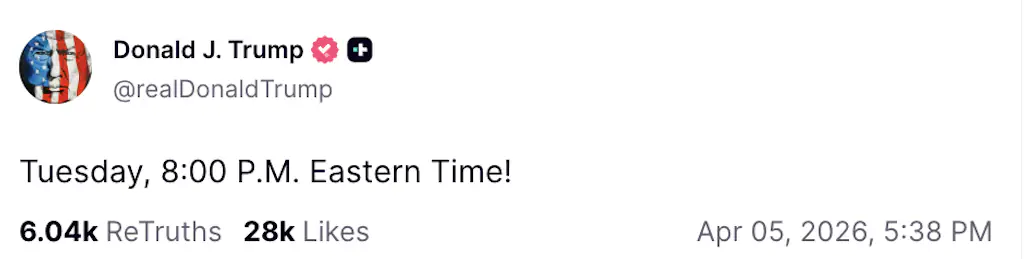
Trump’s latest ultimatum included a revised timeline for Iran to act. After initially setting earlier deadlines that were repeatedly pushed back, he posted: "Tuesday, 8:00 P.M. Eastern Time!" signaling a new cutoff point for action.
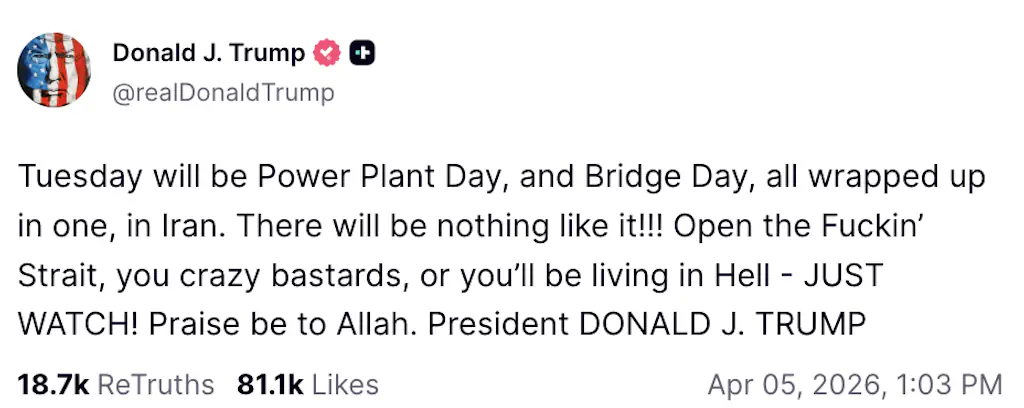
In a separate message containing explicit language, he warned: "Tuesday will be Power Plant Day, and Bridge Day, all wrapped up in one, in Iran. There will be nothing like it!!! Open the Fuckin' Strait, you crazy bastards, or you'll be living in Hell - JUST WATCH! Praise be to Allah. President DONALD J. TRUMP"
He later told Fox News there was a "good chance" a deal could be reached, but also said he was considering "blowing everything up and taking over the oil" if negotiations failed.
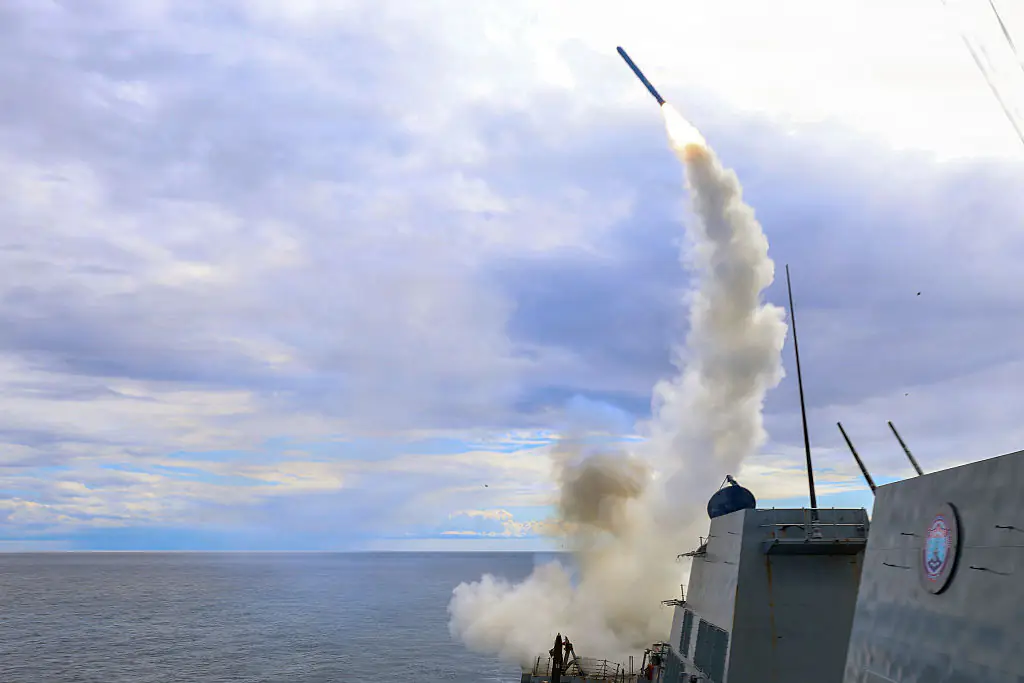
Trump has previously threatened to "obliterate" Iran’s power infrastructure and has repeatedly extended deadlines tied to reopening the strait.
Iranian officials were quick to respond, with one military leader calling Trump’s threat a "helpless, nervous, unbalanced and stupid action" (via BBC News) and warning that "the gates of hell will open" in return.
Tehran has maintained that the Strait of Hormuz will remain restricted until it receives compensation, with officials suggesting transit tolls could be introduced to offset war-related damage.
The strategic waterway handles about a fifth of the world’s oil and gas supply, and disruptions have already sent global energy prices soaring while raising fears of wider economic fallout.
The conflict has continued to expand across multiple fronts, with ongoing strikes and rising casualties reported in several countries. Iran has launched drones and missiles targeting Israel and US-aligned Gulf states, while US and Israeli forces have carried out attacks on Iranian infrastructure.
In Israel, a ballistic missile strike on a residential building in Haifa left people injured, while additional attacks and fires have been reported in places including Abu Dhabi, Kuwait, and Bahrain. In Lebanon, at least 11 people have been killed, including a young child, according to CNN.
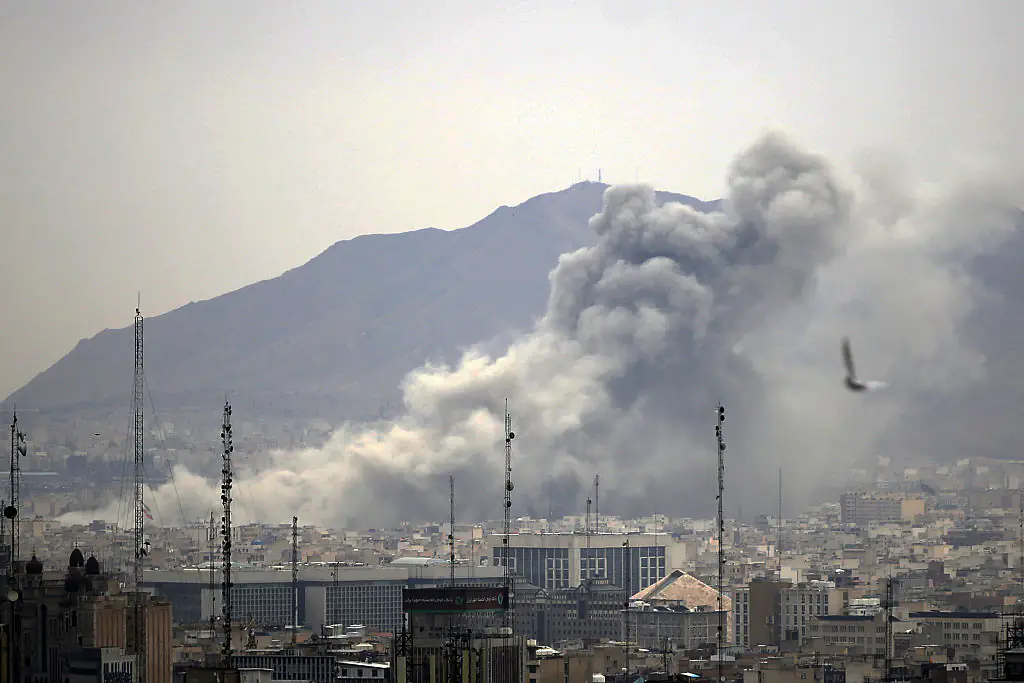
Meanwhile, US-Israeli strikes hit areas near Tehran, with fatalities reported in residential zones. Iranian-linked groups have also targeted US diplomatic facilities in Iraq, adding another layer of tension to the conflict.
Behind the scenes, diplomatic efforts involving countries such as Oman, Pakistan, and Egypt are ongoing, though no breakthrough has been confirmed.