


US3 min(s) read
Horrific new detail emerges about the needles used in Christa Pike's botched execution

Troubling new information has emerged about the needles used in Christa Pike's botched execution.
As widely reported, the 50-year-old was due to be executed on September 30 after spending 30 years on death row.
However, her procedure went disastrously wrong when officials struggled to establish an intravenous line to administer the lethal drug pentobarbital.
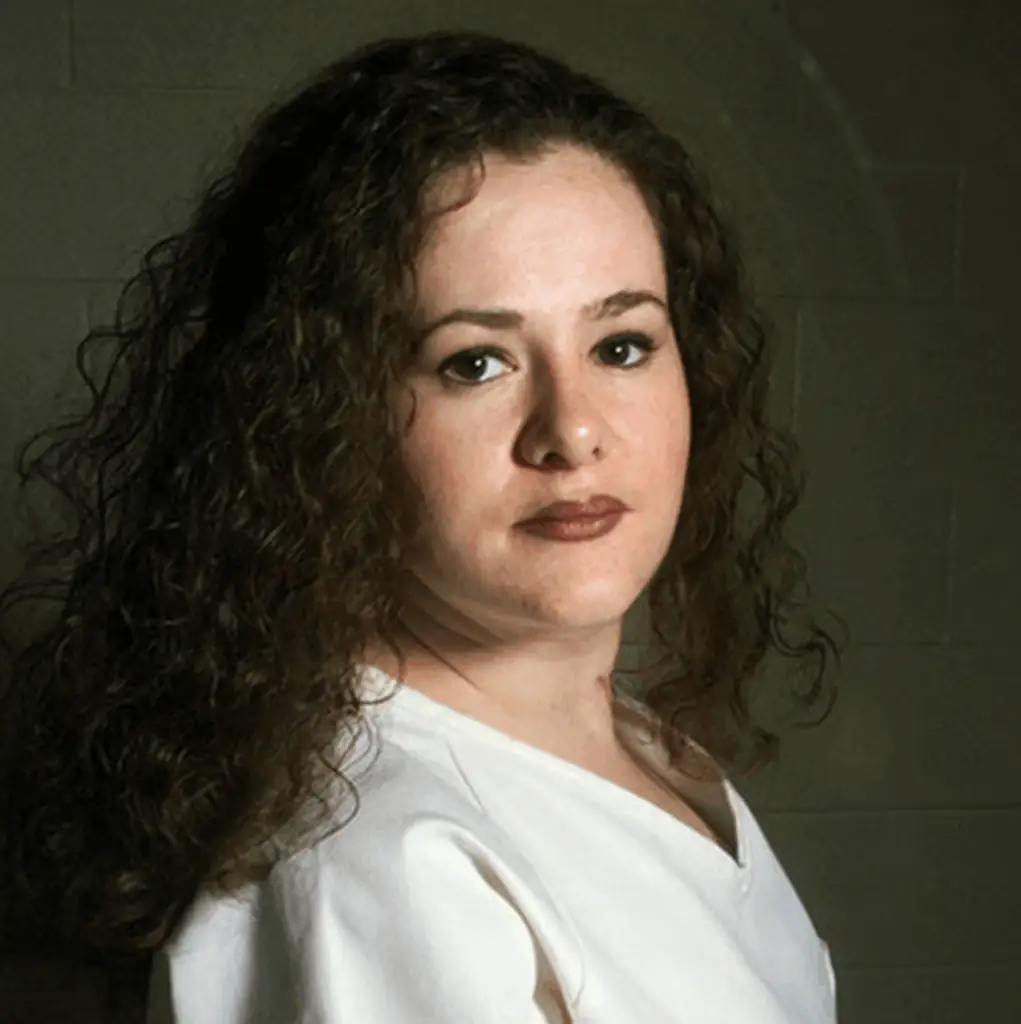
Execution team reportedly used 10 needles
According to new court documents obtained by Associated Press, the team responsible for executing Pike feared her veins had "blown" as they repeatedly tried to insert IV lines into her arms.
The inmate's lawyer, Randy Spivey, wrote in the October 22 filing that the execution team used approximately 10 needles during the process.
Spivey said that during the injection, his client continued breathing and making choking-like sounds, prompting officials to halt the execution.
Pike was transported to hospital in critical condition, placed on a ventilator, and spent several days unconscious.
"This event is the worst we’ve seen and unlike any other botched execution in the modern era," Robin Maher, the executive director of the Death Penalty Information Center, previously told The New York Times. "There is no precedent."
Pike's condition after surviving execution
Pike eventually regained consciousness in early October and was discharged back to Tennessee's Deborah K. Johnson Rehabilitation Centre, where she had spent the last three decades.
Her lawyers say she is walking more independently and speaking in full sentences, although questions remain about the potential long-term effects of the execution attempt.
Her attorney told TMZ that her cognitive and psychological functioning is still being monitored, and it could take another month or longer before there is a clearer picture of any lasting effects.
In a previous statement, the legal team said Pike is "dealing with the profound psychological trauma" of surviving the failed execution, "including the terror, pain, and uncertainty of believing she was about to die".
"Christa also continues to experience cognitive challenges with concentration and memory," they added.

Pike was scheduled to become the first woman executed in Tennessee in over 200 years.
She was sentenced to death after being convicted of brutally murdering her Job Corps classmate, 19-year-old Colleen Slemmer, in 1995.
She, along with her then-boyfriend, Tadaryl Shipp, and their friend Shadolla Peterson, lured Slemmer to a wooded area of the University of Tennessee’s agricultural campus on January 12, 1995.
Pike, who was convicted of murder and conspiracy to commit murder the following year, was the only defendant sentenced to death.
Although she has acknowledged her role in Slemmer’s killing, her attorneys have argued that her age at the time, mental illness, and a history of severe sexual abuse should warrant a life sentence instead.
Following the unprecedented incident, Tennessee Governor Bill Lee paused all remaining executions this year and ordered an independent review into what went wrong.
"Carrying out a lawfully imposed sentence is among the State’s most serious responsibilities, and the people of Tennessee expect it to be done in a manner that is not only legal and constitutional, but is effective," he said.