ADVERT
US3 min(s) read
Published 10:28 28 Jul 2026 GMT
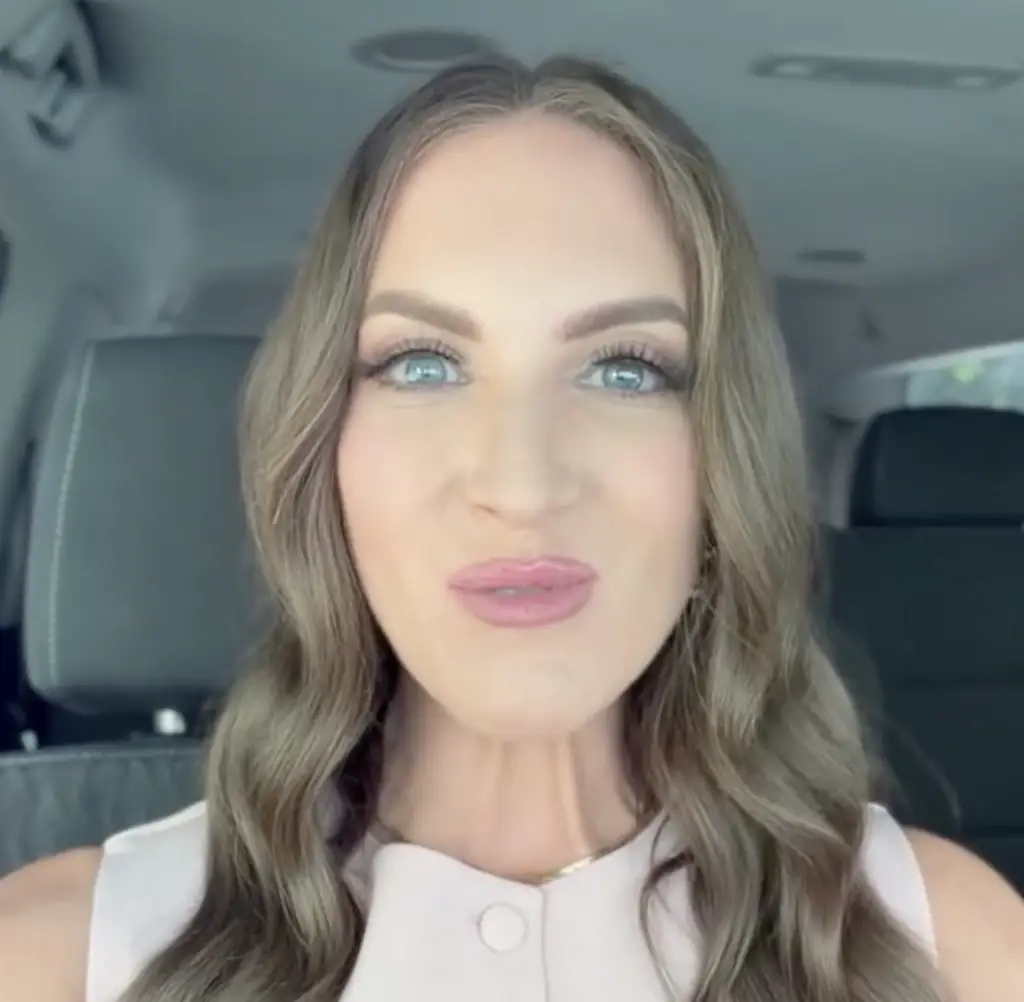
A Los Angeles pastor whose dramatic healing services have attracted millions of views online is once again facing criticism after footage from a recent book signing appeared to show worshippers collapsing, shaking and convulsing as she prayed over them.
Kathryn Krick, who leads Five-Fold Church (5F Church) in LA, has built a huge online presence, with more than 500,000 Instagram followers and a rapidly growing TikTok audience.
Her supporters believe she delivers miraculous healings and spiritual deliverance, while critics have accused her ministry of displaying cult-like behavior.
The latest controversy followed a visit to Houston, Texas, where Krick was promoting her new book, Ignite Revival. Videos from the event show attendees falling to the floor, trembling and appearing to convulse while Krick prayed for them and signed copies of her book.
Sharing footage from the gathering on social media, Krick wrote: "How God moved in that bookstore among the people amazed us!"
Supporters claimed the event brought healing from illness, emotional trauma and spiritual oppression.
One attendee described the experience as completely transformative, writing: "This was one of the best days of my life! I will never forget how powerfully I was touched by the anointing at this book signing. I couldn’t stay on my feet as I stepped forward to have my book signed! So many were beautifully touched."
However, others questioned the unusual scenes.
One social media user wrote: "Whoa. A lot happening here."
They continued: "I'm just wondering, as a Christian who has received and seen a ton of healing, why with @apostlekathrynkrick do these people tremble and shake and seize? What's so different about this specific healing vs others?"
According to Church Leaders, Krick launched her ministry around nine years ago after relocating to LA to pursue careers in acting and music.
She has spoken about battling insecurity while preaching, explaining that although she doubted herself, she believed God had called her into ministry.
Since then, her profile has grown significantly through social media, where short clips of healing services frequently attract millions of views.
Krick has also credited Tanzanian minister Prophet GeorDavie as her spiritual mentor, saying his guidance helped shape her ministry and influenced her claims of delivering faith healings and casting out demons.
Those claims, however, have drawn much criticism from several prominent Christian figures.
Bible teacher Mike Winger has repeatedly criticized Krick on Facebook, describing her as a "cult leader" who promotes "false teachings" and questionable spiritual practices.
He has also questioned why well-known Christian leaders have publicly endorsed her ministry.
Meanwhile, Pastor Chris Rosebrough has argued on YouTube that Krick accepts an unhealthy level of admiration from followers that should belong to Jesus alone.
Despite the criticism, Krick has insisted the backlash is driven by jealousy and misunderstanding, writing on Instagram that opponents have misrepresented her ministry.
As videos of worshippers collapsing and shaking continue to circulate online, debate surrounding the pastor remains deeply divided.
Supporters believe the footage captures genuine encounters with God, while critics argue vulnerable believers may be placing their faith in the wrong person.
celebrity3 min(s) read
us3 min(s) read
film & tv2 min(s) read
celebrity5 min(s) read
us3 min(s) read
Published 14:28 17 Oct 2023 GMT
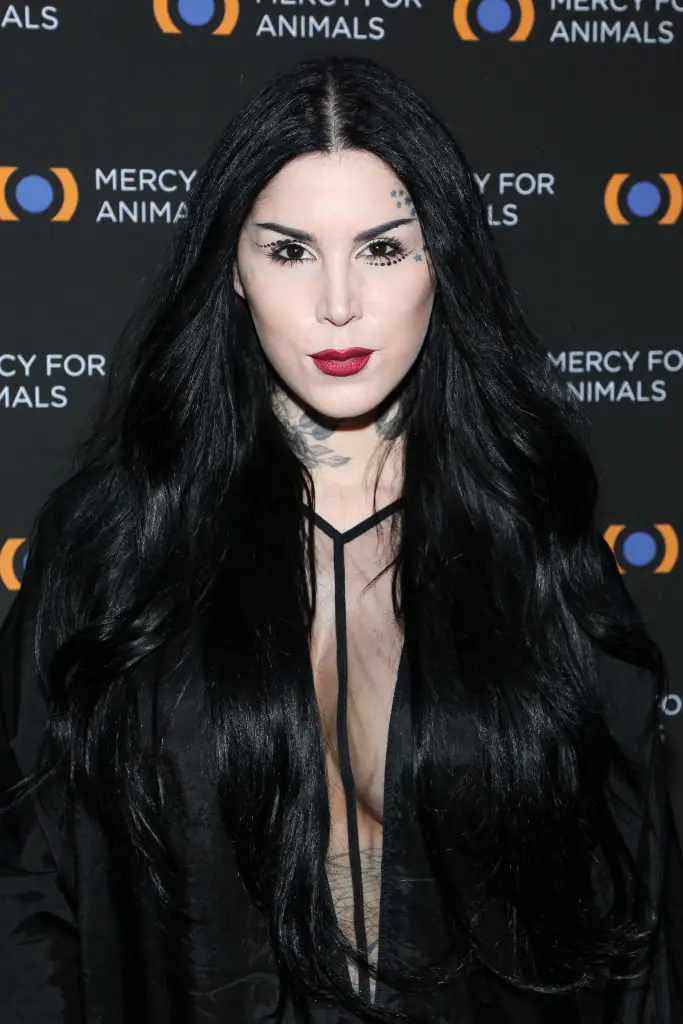
The iconic tattoo artist and star of LA Ink, Kat Von D, recently faced a whirlwind of reactions after converting to Christianity.
Her baptism video, which was shared on Instagram, drew mixed reactions. However, a major portion of this backlash came from the Christian community itself.
In the video, an emotional Kat Von D could be seen immersing herself into the baptismal pool, marking a pivotal moment in her spiritual journey. This transformation was significant, especially since just a year prior, she had publicly renounced witchcraft and parted ways with books that no longer reflected her as a person.
The response from viewers varied. While one might assume that those opposed to Christianity would spearhead the criticism, it was, in fact, the opposite. Taking to Instagram on October 16, Kat addressed this.
Kat Von D responds to the backlash her baptism caused:
She expressed, "You would think that all the hate would be coming from people who are against religion or against Christianity and stuff...But it was really the Christians who were the worst." The criticism took many forms, from questioning the authenticity of her baptism to labeling it a mere PR stunt.
A bewildered Kat Von D responded, "I think one of the comments that I would see repeatedly would be people saying that I was faking it...which I think is so weird." She emphasized that her posts are not monetized and that her conversion might even alienate some of her followers. Yet, she was more taken aback by the criticism she received from the Christian community than any negativity from her fans or friends.
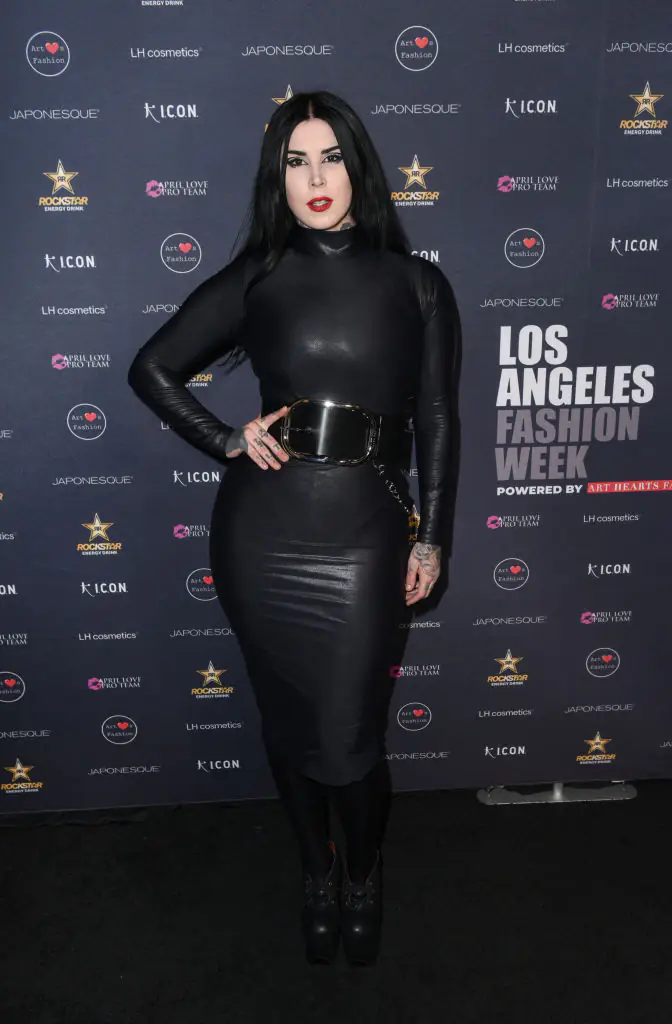
Unsurprisingly, some of the feedback she received was directed at her unique style and appearance. To this, she fiercely retorted, "I wasn't aware that there's a uniform that you're supposed to wear once you give your hearts to Jesus." A poignant reminder that in today's age, the adage "don't judge a book by its cover" still holds ground.
Concluding her video, Kat emphasized the profound nature of her decision, clarifying, "I didn't get baptized to be saved. I was already saved." Her conversion was not an act of seeking attention, but a genuine expression of faith. To her critics, she left a thoughtful message, hoping that they would introspect their views and perhaps reassess their quick judgments.
The story serves as a reminder that even in matters of faith and spirituality, which are deeply personal, public figures like Kat Von D are not immune to judgment. But in the face of criticism, it's heartening to see individuals stand firm in their convictions, inspiring many along the way.
Published 11:43 11 Nov 2025 GMT
A viral TikTok experiment by influencer Nikalie Monroe has sparked national debate over compassion and hypocrisy within faith communities, after more than 30 churches failed to respond to a fictional mother begging for baby formula.
The social media saga, which now spans 43 parts, began as a simple test of empathy and has since snowballed into a wider commentary on religion, charity, and public accountability.
On Halloween, Monroe launched her social experiment by calling various churches across the United States (including Charlie Kirk’s church) posing as a struggling mother unable to afford food for her baby.
She recorded the phone calls and uploaded them to TikTok, where they quickly went viral, racking up millions of views. To add realism, Monroe sometimes played a faint sound of a crying baby in the background as she explained her plight.
Her request was simple: could the church help her feed her child?
More often than not, the answer was no. Reasons varied from logistical excuses to outright refusals, with some church staff telling her:
Of the 43 faith-based institutions contacted, only 10 offered help, and the first to respond positively were Islamic centers and mosques.
The rest, largely Christian churches, declined in varying tones. Some were polite but unhelpful; others were dismissive. Monroe’s series highlighted how frequently people in need are redirected or ignored when seeking basic aid.
The videos struck a nerve online, drawing millions of views and igniting fierce debate in comment sections. Supporters praised the project for revealing gaps in religious outreach, while critics accused Monroe of deception for faking distress.
After the videos gained traction, several churches publicly responded. Some attempted to clarify their charitable practices, while others condemned the influencer directly.
A pastor from Baton Rouge addressed the controversy during a Sunday sermon, insisting his church helps those in need but calling Monroe’s phone call a “dirty deed.” He then referred to her as an “evil witch” who would be “dealt with swiftly” if she ever visited the church.
Another pastor reportedly devoted nearly 20 minutes of his service to denouncing Monroe, describing her as “folly, seductive and knowing nothing,” while labeling her a “woke liberal.”
One man, whose role in his congregation was unclear, bluntly stated that it was not his “obligation” to help people in such circumstances.
The ongoing saga has divided TikTok and beyond, with some viewers saying Monroe’s experiment exposed moral failings in institutions that preach compassion, while others claim it unfairly targets religious communities.
As the series continues to unfold, Monroe maintains that her goal is to highlight how people (and organizations) respond when empathy is tested.
This viral experiment shows no signs of slowing down, and with more churches expected to respond, the conversation around faith, charity, and accountability is only getting louder.
VT has contacted Dream City Church for comment.
Published 16:41 13 Jun 2022 GMT
Viewers of Netflix's latest documentary series have been left scarred by its shocking story.
The four-part show digs deeper into a polygamous religious cult known as the Fundamentalist Church of Jesus Christ of Latter-Day Saints (FLDS) and pays particular attention to its leader, the self-professed prophet Warren Jeffs.
Titled Keep Sweet: Pray and Obey, the doc reveals the strict rules imposed on female members of FLDS, who are forced to dress a certain way, pray every hour, and marry men far older than them.
It also delves into the polygamous practices endorsed by the church and the reports that began to emerge of child brides being raped and abused. During his tenure as head of the FLDS, it was believed that Jeffs had up to 69 wives, many of whom were teenage girls as young as 12.
In 2008, Jeffs' West Texas ranch was raided, and he and other key members of the church were charged with child abuse. He has since been found guilty of two counts of sexual assault against a child and is serving a life sentence in prison.
But the fact that Jeffs is safely behind bars hasn't made watching Keep Sweet any easier for viewers, many of whom have taken to Twitter to brand the documentary "traumatizing" and "sickening".
"Just finished 'keep sweet: pray and obey'. I don’t have the words. need everyone to try and watch this, it’s so sickening," one person tweeted, while another wrote: "Keep Sweet: Pray and Obey on Netflix is damn near traumatizing."
Other viewers went so far as to say that the doc made them feel physically ill. "I thought the new season of Stranger things season was dark… then I watched Keep Sweet; Pray and Obey and it made me physically nauseous," one wrote. Another agreed, tweeting: "I'm 20 minutes into the Keep Sweet: Pray and Obey documentary and I feel ill."
Meanwhile, one viewer even thought it was more appropriate to describe it as a horror flick than a documentary.
"I nominate Keep Sweet: Pray and Obey for horror movie of the year," they tweeted.
Keep Sweet: Pray and Obey is available to watch on Netflix now.
Published 12:22 08 Nov 2023 GMT
Kat Von D has addressed her decision to give up witchcraft and embrace Christianity after sharing a video of her getting baptized.
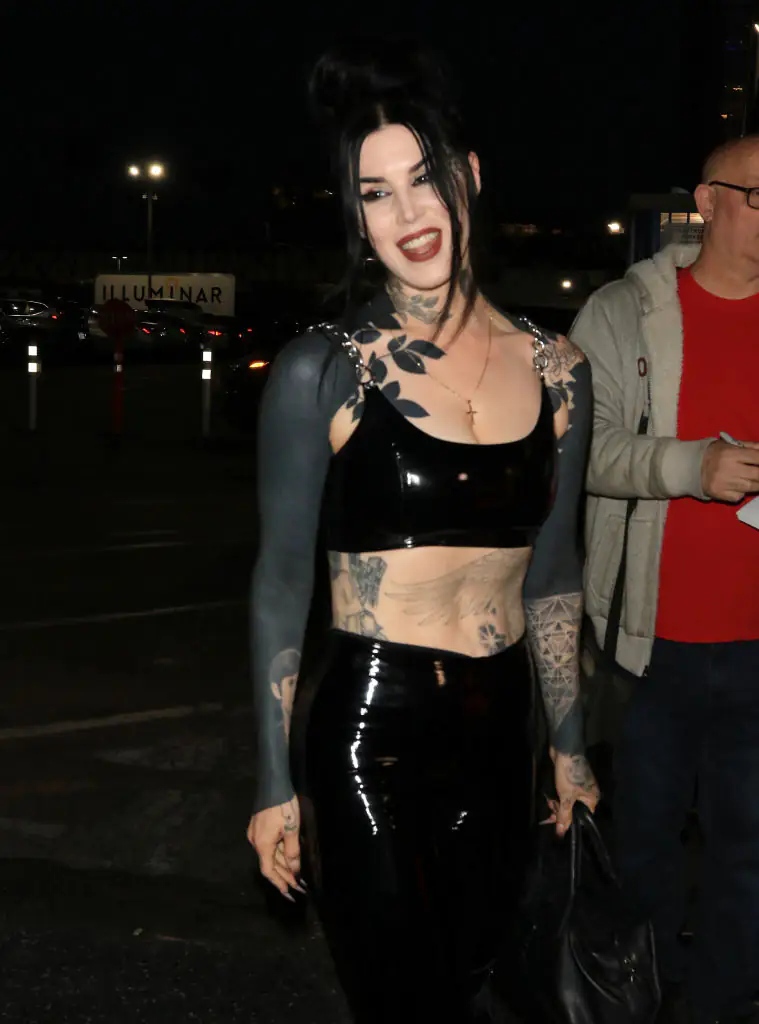
The tattoo artist and TV star, 41, has been embracing a new lifestyle after making the choice to also black out the many tattoos adorning her body.
Kat had earlier been faced with unexpected backlash. after revealing she was converting to Christianity, saying at the time: "You would think all the hate would be coming from people who are against religion or against Christianity. It was really the Christians who were the worst."
She added: "I think it's really insane we live in a time where people still judge a book by its cover. I wasn't aware that there's a uniform you're supposed to wear once you give your heart to Jesus."
Before getting baptized, Kat had denounced her former ties to witchcraft and the occult by showing her discarding books on that and tarot.
She said at the time: "I just had to ask myself what is my relationship with this content? And the truth is, I just don’t want to invite any of these things into our family’s lives, even if it comes disguised in beautiful covers."
Kat - born Katherine von Drachenberg and raised by missionary Christian parents - has now given fans more detail on why she decided to overhaul her whole life while appearing on a recent episode of the Relatable podcast with host Allie Beth Stuckey.
She explained that she had initially ended up straying from Christianity after her parents moved the family from Mexico to the US when she was six, and really started to "resent" the church when she got to 14: "As I got into my 20s I started looking - without knowing - into new age stuff."
The LA Ink star began practicing spiritualism by embracing tarot cards, meditation, and spiritual retreats, but began to find she was "miserable" ahead of the start of the pandemic in 2020.
She explained: "I started just kind of re-evaluating. Going down the list of what I'm doing with my life and what my perspectives are and then it got to the part of my spirituality and that's where I started really rethinking a lot of things.
"I just desired more and more and more and so I just started studying the Bible."
Kat began watching sermons every Sunday and started cleansing her home of books connected to witchcraft, meditation, and yoga.
She said: "I came to this really awesome realization that night that I don't want these crutches in my life anymore - and that's what I really saw them as. I just want Jesus.
"I feel like it's a very narrow road. I feel like these breathing techniques or spellwork or nature worship - all of these things are just crutches. They're not really my answer. I would rather eliminate any distractions and this is just what works for me."
Kat added: "I'm on fire for Jesus. I don't plan on this dimming out. The more and more I learn the more and more excited I get about things and the more at ease I am about what's happening in this world and what's happening in my marriage or in all of it."
As part of her new life, Kat has also decided to free herself from much of her old ink by blacking out large parts of her body.
In a preemptive Q&A, she explained her choice to not to have them removed by laser, stating: "Laser is a slow (and extremely painful) process which can take more than 10 sessions. While laser tattoo removal is effective, I personally wasn’t a good candidate considering how much coverage I wanted to remove."
She also expressed her preference for the "simplicity of the black", adding that there won't be any added white ink layering.
Opening up about the deeper personal transformation, she added: "The tattoos represented a part of my life that no longer aligns with who I am today.
"Some people are fine with keeping these types of landmarks in time on them — I personally grew tired of waking up to them, and seeing those constant reminders every time I looked in a mirror."
She also previously addressed the backlash she got for converting back to Christianity and getting baptized, and why she wanted to share the journey publicly.
Kat explained: "It went from 'well her hand wasn't completely submerged underwater so it doesn't count' to 'she's faking it this is just for a PR stunt. People weren't there.
"I'm not an idiot. I knew that when I posted that video that people would have questions."
She described it as "one of the most important days" of her life, adding: "To publicly proclaim this was me setting some things right.
"It was important to me to share that because I could have just kept it to myself and just kept going on but I was like no this is something I want to celebrate and I want to be open and honest about it."
Published 17:20 10 Nov 2025 GMT
A social media experiment by TikTok influencer Nikalie Monroe has sparked a wave of controversy, drawing attention to how American religious institutions respond to pleas for help in emergencies.
Monroe's viral series, which consists of over 40 videos, explores whether churches, mosques, and temples across the United States are willing to offer assistance to those in need - particularly when the need is as immediate as baby formula for a hungry infant.
One of the most talked-about moments in Monroe’s series came from a call to Dream City Church, a large Assemblies of God megachurch in Phoenix.
The church, which has historical ties to Charlie Kirk, became the focal point of criticism when a representative told Monroe that she would have to wait "a couple of days to weeks" for approval before receiving any baby formula.
The response sparked backlash from social media users who felt the church failed to act in a timely manner, especially considering its large resources and high public profile.
This delay stood in contrast to Monroe's experiences with other religious organizations, some of which responded quickly to her request for help.
Monroe's experiment, which began in October and continued through Halloween, involved calling 39 different religious institutions across Kentucky, Tennessee, North Carolina, and other nearby states.
Posing as a mother in need of baby formula, Monroe received a mix of responses.
In many cases, churches and other religious organizations declined to offer help, citing various reasons, such as a lack of resources, a policy of only helping members, or simply directing her to local food banks.
One particular response came from a Baptist church in South Carolina, which told Monroe they could not assist her because she wasn’t a member of their congregation.
In contrast, a few institutions were more forthcoming.
A Catholic church in Alcoa, TN, and an Islamic Center in Charlotte, NC, immediately offered assistance, providing the much-needed baby formula and clear instructions on how to pick it up.
These responses were a rarity in Monroe’s experiment but stood out as examples of compassion in action.
While the majority of institutions Monroe contacted failed to help, some have since responded to the fallout.
In Baton Rouge, a pastor addressed the controversy in a sermon, defending his church’s charitable works and condemning Monroe's actions as a "dirty deed."
He called her an "evil witch" and suggested that if she ever visited his church, she would be dealt with swiftly.
Another pastor spent over 20 minutes in his sermon discussing the experiment, dismissing Monroe as a "woke liberal" and a "woman of folly."
Some leaders, however, pushed back against the experiment by arguing that it’s not their “obligation” to help those outside their congregation.
This perspective has drawn ire from viewers who feel that the essence of religious teachings should include helping those in immediate need, regardless of their membership status.
Of the 39 religious organizations Monroe contacted, only 9 were willing to assist her in some way.
This included a mix of Buddhist temples and mostly Islamic and Catholic centers.
The vast majority of churches, however, redirected Monroe to local food banks or refused outright, either due to her lack of membership or because they did not have the resources at the time.
VT has contacted Dream City Church for comment.