ADVERT
World3 min(s) read
Published 10:41 22 Jun 2026 GMT
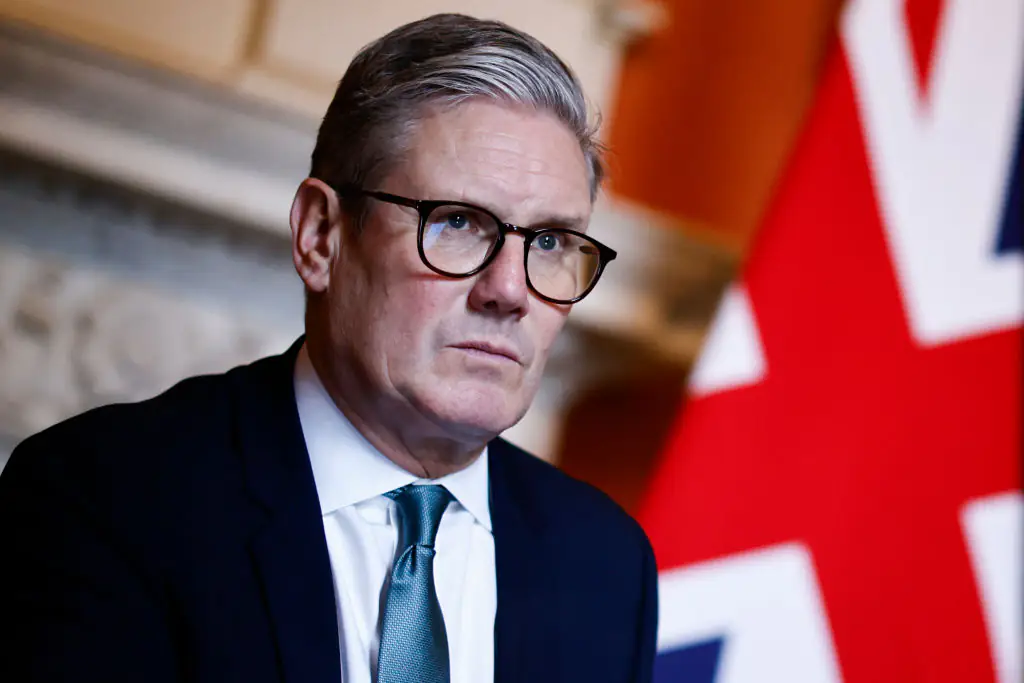
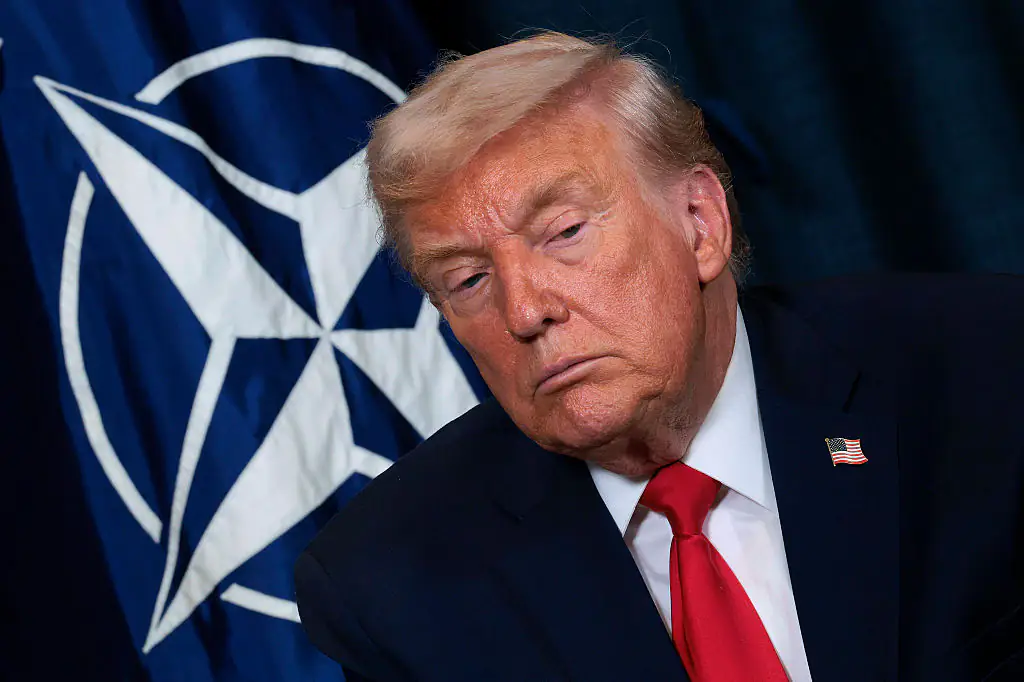
There could be all kinds of implications following the announcement of British Prime Minister Sir Keir Starmer’s resignation from office, and AI has weighed in on what it could all mean for Donald Trump and the United States, suggesting the political fallout could have consequences on both sides of the Atlantic.
According to the AI analysis, Starmer's departure comes at a time when relations between the UK prime minister and the US president had already become strained.
While the pair were once seen as close allies, tensions reportedly increased following disagreements linked to the Iran war.
“The relationship is already strained,” the AI said. “Although Trump and Starmer once shared a strong alliance, their relationship has become increasingly splintered amid the fallout of the Iran war.”
The analysis argued that Starmer's exit brings to an end an increasingly strained partnership, adding: “So a departure wouldn't end a warm partnership — it would close out one that had already soured.”
The AI also suggested Trump could use the situation to strengthen his own political narrative, particularly because he publicly predicted Starmer's resignation before any official confirmation emerged.
“Trump's stake in this is partly about being seen to be right,” it explained. “He publicly predicted the resignation before Downing Street confirmed anything, so if Starmer goes, Trump can frame it as vindication.”
The AI noted that Trump had criticized Starmer's handling of key issues, claiming the British leader had “failed badly” on immigration and energy policy while urging the UK to increase North Sea drilling.
However, it stressed that there is no evidence that Trump had inside knowledge of any resignation plans.
“The caveat matters: it remains unclear whether Trump has definitive knowledge or is simply speculating,” the AI said, adding that any suggestion Trump accurately predicted events would be based on “a prediction, not inside information.”
Looking ahead, the analysis suggested the identity of Starmer's successor could have a bigger impact on US-UK relations than Starmer's departure itself.
“The bigger US implication is the successor,” it stated, identifying Andy Burnham as a leading contender. The AI noted that Burnham has previously criticised American-style politics as “poisonous” and argued that Trump's political approach has created instability on the global stage.
Those comments, it warned, “could complicate the UK-US relationship if he becomes PM.”
As a result, the AI concluded that Trump could end up losing a familiar counterpart, even if relations had cooled. “From Trump's perspective, a Starmer exit could trade a soured-but-familiar counterpart for a more openly critical one.”
The analysis also highlighted ongoing questions surrounding Peter Mandelson's appointment as the UK's ambassador to Washington. It noted that Starmer had faced scrutiny over the decision after reports emerged that concerns had previously been raised about Mandelson's links to the late Jeffrey Epstein.
“A leadership change raises the question of who represents the UK in Washington going forward,” the AI added.
Summing up the situation, the AI said: “Net effect for the US: short-term, Trump gets a rhetorical ‘I told you so’; medium-term, he may face a UK government less inclined to accommodate him.”
uk3 min(s) read
Published 08:39 22 Jun 2026 GMT
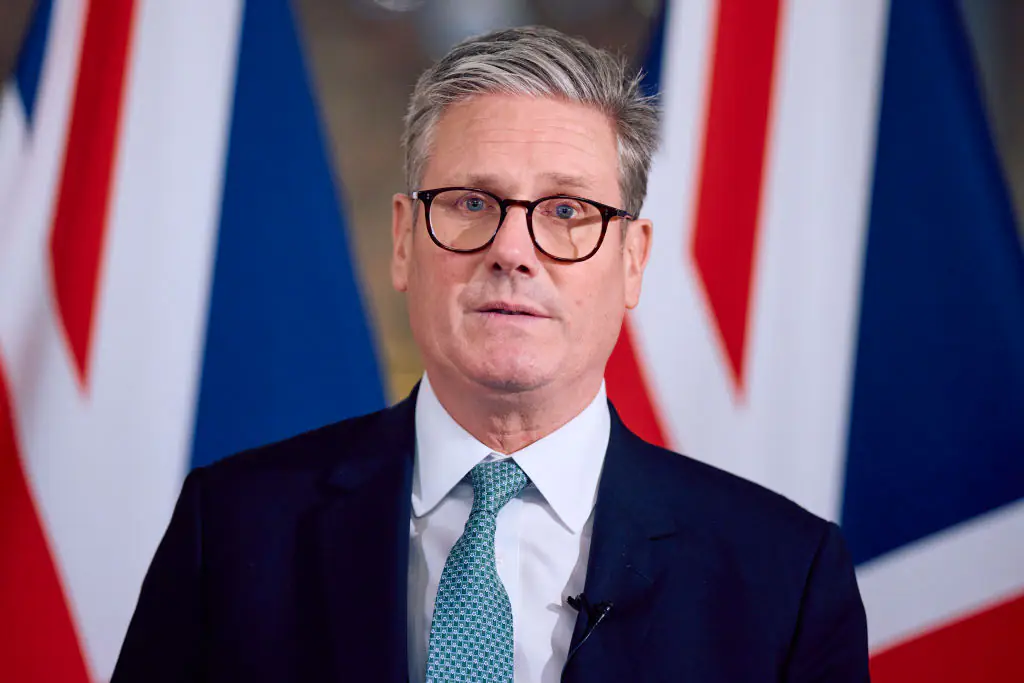
UK Prime Minister Sir Keir Starmer has announced his resignation sparking a leadership content in his party.
The Labour PM has been in charge for around two years since winning an historic landslide election victory, but now finds himself facing the exit door.
Newly-elected Makerfield MP Andy Burnham is expected to head the field for his job, although there will be other challengers from around the wider party.
Despite several significant wins during his time in 10 Downing Street, and after inheriting a country in disarray following 14 years of unrest that saw Rishi Sunak, Boris Johnson, David Cameron and Liz Truss all struggle as Conservative Prime Ministers, Starmer’s popularity has tanked in recent times.
The wave of optimism that saw Labour finally oust their longstanding rival party has quickly dissipated and left the party membership and wider British public unhappy with their leadership.
With the rise of Reform, led by Nigel Farage, and a recent heavy defeat for the government in the local elections in Britain, Starmer’s premiership has been the subject of much scrutiny and speculation about his position at the top.
With Mayor of Greater Manchester Burnham now an elected Member of Parliament and expected to take his seat in the House of Commons today, Starmer was believed by many to be on borrowed time, and he has taken the opportunity to end things on his own terms.
Speaking at the lectern outside the PM’s official residence, he said that he would leave the ‘biggest job in the country’ to take more time for the ‘most important job’.
He added: "Being the best husband I can, to my fantastic wife Vic, who has been a rock by my side through good times and bad,
"And being the best dad that I can be to two beautiful children, who are my pride and joy.”
The visibly emotional Labour leader also pledged his full support to whoever follows him in the role, as well as thanking his colleagues and friends, as well as the ‘extraordinary civil service’.
A leadership election will take place, with a decision set to be made before Parliament returns from its summer recess in September.
After speaking to the National Executive Committee of his party, Starmer has asked for a leadership content to be held with nominations opening on July 9.
That will mean that the content should be concluded no later than the date that MPs break up for their summer holidays.
Until then, Starmer will remain as Prime Minister.
us4 min(s) read
Published 14:07 01 Apr 2026 GMT
With the war in Iran still dividing the world’s allies and enemies in a big way, Donald Trump has now threatened to leave NATO.
But what would happen if he actually followed through on his threat?
The US President has been flinging out threats left, right and center in recent times, from allies like Denmark over Greenland to enemies like Iran, who he actually followed through on his threats against.
He also captured Venezuelan President Nicolás Maduro, once again proving that sometimes he really is as good as his word.
But now he’s threatened the allies that are closest to him, the countries in NATO - the North Atlantic Treaty Organization.
NATO was established in 1949 after the signing of the treaty and is made up of 32 nations, 30 from Europe and two from North America.
All the big hitters are there, the US, France, the UK, Germany - everyone pretty much.
Notably, Russia isn’t there, but you can probably guess why that is.
Ukraine isn’t there either, which is an issue for another day.
However, in recent times, Trump has been issuing declarations that the US might leave NATO because of the other countries’ reluctance to join him in the war with Iran.
Many nations have distanced themselves from the war, both from within the bloc and elsewhere, and Trump is not happy about that, it would be fair to say.
He’s said that the discussion about leaving NATO is ‘beyond reconsideration’ and confirmed that he was allegedly never actually that keen on it anyway.
In an interview with The Telegraph, the 79-year-old POTUS said: "I was never swayed by NATO. I always knew they were a paper tiger, and Putin knows that too, by the way."
Secretary of State Marco Rubio also confirmed that the US will ‘re-examine’ its relationship with the organization.
"If now we have reached a point where the NATO alliance means we can’t use those bases to defend America’s interests, then NATO is a one-way street,” he told FOX News.
"If NATO is simply about us having troops in Europe to defend Europe, but when we need them to allow us to use their military bases, their answer is no – then why are we in NATO?”
If Trump decided to pull the plug on the USA’s involvement with the political and military group, they’d be shooting themselves in the foot somewhat.
The NATO website states that the purpose of the group is to ‘safeguard the freedom and security of its member countries and their one billion people’.
Members are therefore ‘committed to protecting each other from any threat’.
So, the US loses that to start with.
It also loses access to other countries’ military bases around the world, which would be a problem.
According to one report in Modern Diplomacy, this could have a massively detrimental effect on the US Navy, if they were to lose access to friendly ports.
The article adds: "Our bombers couldn’t reach targets halfway around the world without support from allies.”
Sure, the US could survive just fine alone - after all, Russia claims that it does - but it would undoubtedly be stronger as part of the union of countries.
As for whether Trump has the power to take this decision, it’s definitely true that he could put the question out there.
However, in 2023 a law was passed that stated that the US would need congressional approval to withdraw from NATO.
But, these things can and do happen, as the UK proved in 2016 with the Brexit vote to leave the European Union.
As for NATO, if the US decided to leave, it would still be a bloc with 31 members including the big powers of Europe and Canada, so while they wouldn’t be thrilled with the USA leaving, it would be able to continue.
world4 min(s) read
Published 13:17 05 Jan 2026 GMT
British Prime Minister Keir Starmer has issued a sharp warning to Donald Trump amid rising fears the US president may be eyeing a military move to take control of Greenland.
The 63-year-old spoke to reporters on Monday (January 5) morning and threw his support behind Danish Prime Minister Mette Frederiksen, who has rejected Trump's renewed efforts to claim the vast Arctic island for the United States.
“I stand with her, and she's right about the future of Greenland,” Starmer said, cited by The Mirror. “Greenland and the Kingdom of Denmark are to decide the future of Greenland, and only Greenland and the Kingdom of Denmark.”
The PM added: “Denmark is a close ally in Europe, it is a NATO ally, and it's very important the future of Greenland is, as I say, for the Kingdom of Denmark, and for Greenland, and only for Greenland and the Kingdom of Denmark.”
The comments come just days after a U.S. military operation in Venezuela saw the capture of President Nicolás Maduro, sparking fears that the 79-year-old, who said the US would now “run” Venezuela, may try to use similar force to secure control over Greenland.
Trump reignited the controversy over the Danish territory last weekend, claiming the island is crawling with Russian and Chinese ships and is essential for U.S. national security.
“It’s so strategic right now,” he said.
“Greenland is covered with Russian and Chinese ships all over the place. We need Greenland from the standpoint of national security, and Denmark is not going to be able to do it.”
Asked whether the U.S. operation in Venezuela was a preview of what could happen in Greenland, Trump responded: “They are going to have to view it themselves. I really don’t know.”
The comments added fuel to ongoing tensions after Trump’s long-standing interest in acquiring Greenland resurfaced.
In a statement, Danish Prime Minister Mette Frederiksen said Trump has “no right to annex” the island and warned him to “stop threatening a historically close ally.”
Denmark already provides the U.S. with broad access to Greenland under existing NATO security agreements, but Frederiksen warned: “I would therefore strongly urge the U.S. to stop threatening a historically close ally and another country and people who have made it very clear that they are not for sale.”
Greenland’s Prime Minister Jens Frederik Nielsen called Trump’s renewed annexation efforts a “fantasy," per BBC News.
“No more pressure. No more insinuations. No more fantasies of annexation. We are open to dialogue. We are open to discussions. But this must happen through the proper channels and with respect for international law," he added.
The tensions escalated further after Katie Miller, wife of former Trump adviser Stephen Miller, posted an image of Greenland photoshopped with the American flag and the word “SOON.”
The Danish ambassador to the U.S. responded with a “friendly reminder” that Denmark expects respect for its territorial integrity.
Starmer’s stance stands in contrast to comments from Home Office minister Mike Tapp, who appeared reluctant to oppose a potential U.S. intervention during an interview on Sky News.
Pressed repeatedly, Tapp said: “When it comes to Greenland, Denmark and the United States, these are both NATO members... I can't see this being any different to any previous conversations that need to be had between NATO members.”
Sky News host Sophy Ridge responded: “I find it extraordinary that you can't just say flat out that Donald Trump needs to not intervene on Greenland.”
Tapp deflected again, saying it was a matter for NATO: “The Venezuela issue is very different to the Greenland issue, but that's for them to have those discussions... working together with our allies and sticking to international laws is what we stand for as a country.”
Former Defence Secretary Ben Wallace quickly criticized the government’s silence, posting on X: “We must now look to our Danish friends and fellow NATO allies. We must make it very clear to the Trump administration that threats to them is unacceptable. No more weak Government Ministers saying nothing on media rounds.”
world3 min(s) read
Published 16:20 14 Oct 2025 GMT
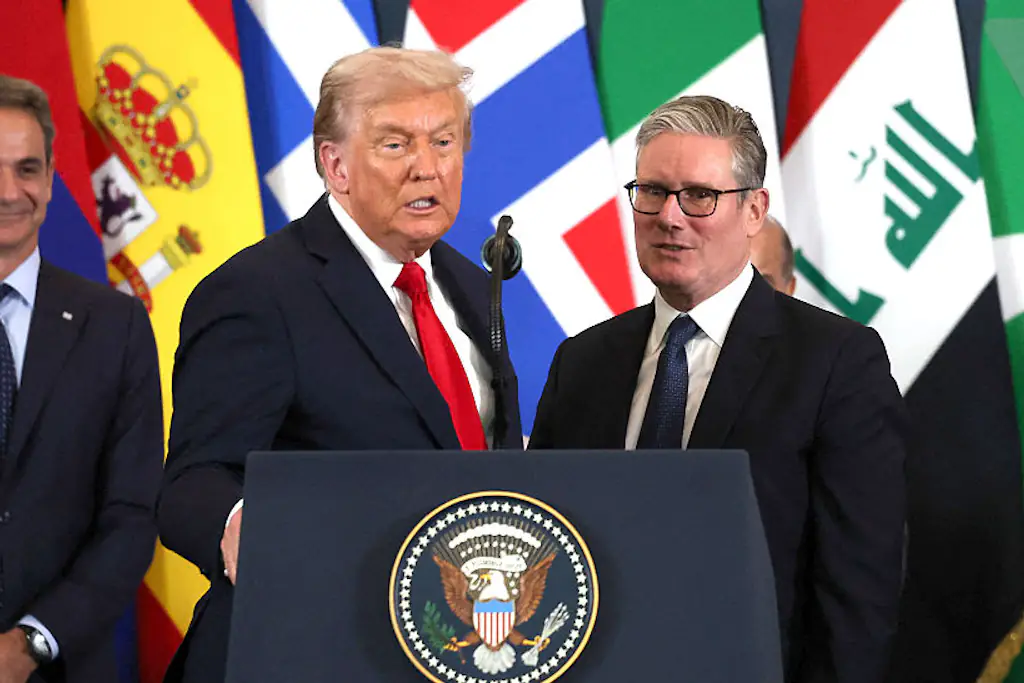
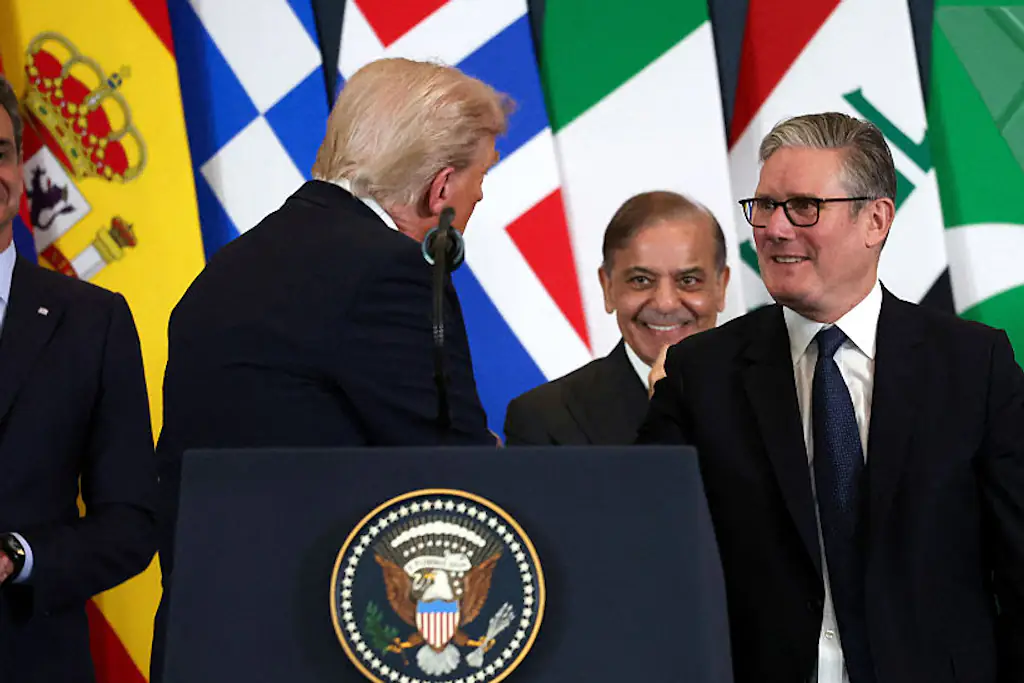
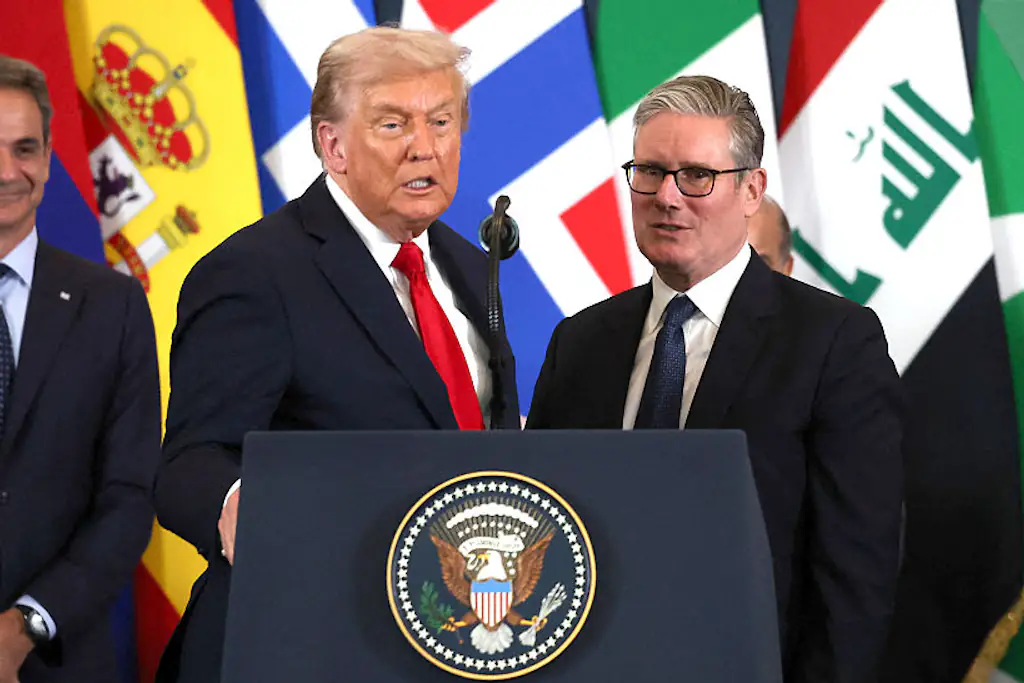
Following accusations that Donald Trump "humiliated" UK Prime Minister Sir Keir Starmer, a new video has come to light showing another awkward moment.
The world’s leaders gathered in Sharm el-Sheikh for the signing ceremony of what Trump referred to as a “historic agreement” aimed at resolving the Israel-Hamas conflict.
Starmer’s attempt to align himself with Donald Trump’s high-profile Gaza peace deal took a turn for the worse, and the internet responded as you'd expect.
At the conclusion of the press conference, Canadian PM Mark Carney walked over to Trump and engaged in what seemed to be a friendly conversation.
As the two world leaders from North America conversed, the British Prime Minister approached them and appeared to stand awkwardly waiting for them to finish speaking.
He smiled along with the conversation, and just as his turn to speak appeared, he was once again interrupted and was left awkwardly standing next to Trump.
Prior to this, another awkward moment took place.
Arriving several hours late, President Trump took his time meeting freed Hamas hostages in Israel before finally arriving at the Red Sea resort.
Once there, he began delivering an extended speech, calling out countries alphabetically — starting with Paraguay and Norway. Meanwhile, Starmer waited in the background, unsure of when his moment would come.
Finally, Trump called out: “Where is the United Kingdom? Come here,” prompting Starmer to raise his hand and quip: “Behind you as usual.”
After shaking hands and exchanging brief pleasantries, Trump asked: “Is everything going good?” to which Starmer replied: “Very good.”
But instead of handing the podium over to Starmer, Trump simply turned his back and continued speaking. The Prime Minister was left to awkwardly return to his place without the opportunity to address the gathering.
The moment quickly became the subject of online mockery. Some users were laughing at the awkwardness, while others accused Trump of humiliating Starmer in front of the global audience.
One X user commented: “I’ve lost count of how many times Trump has humiliated Starmer this year, but this is by far the best. After listing a multitude of countries, the only person he invites to the podium is Starmer – and then brushes him off and sends him packing. Brutal.”
Another added: “President Trump pretty much forgot that Keir Starmer was there, he then thought he was going to speak, the look on his face before he walked back.”
In an effort to salvage some dignity, Starmer took to social media, posting a photo of his handshake with Trump and writing: “President Trump, this is your achievement. I thank you for your tireless efforts to deliver this moment. The UK stands ready to support a full implementation of the peace plan.”
Despite his attempt to stay positive, the reaction was less than forgiving. Earlier comments from the U.S. ambassador to Israel had already dismissed the idea that the UK played a “key role” in the peace deal, even labeling one British minister as “delusional,” according to The Daily Mail.
We've all been embarrassed in our lives before, but luckily, our moments of humiliation didn't come during an event that was seen by millions around the world.
world4 min(s) read
Published 11:17 14 Oct 2025 GMT
Prime Minister Keir Starmer’s attempt to align himself with Donald Trump’s high-profile Gaza peace deal took an embarrassing turn.
What was supposed to be a moment of statesmanship in Sharm el-Sheikh ended in awkward silences, snubs, and political jabs that played out in front of the world’s media.
Starmer had traveled to Egypt for the signing ceremony of Trump’s Middle East peace plan, but what unfolded was more humiliation than headline-grabbing diplomacy - and Trump is getting the blame.
World leaders gathered at the Red Sea resort to mark what Trump called a “historic agreement” aimed at ending the conflict between Israel and Hamas. But as the cameras rolled, Sir Keir was left sidelined.
Arriving several hours late, Mr. Trump took his time meeting freed Hamas hostages in Israel before landing in Sharm el-Sheikh. When he finally appeared, the president delivered a lengthy speech — calling out countries alphabetically, starting with Paraguay and Norway — while Starmer waited in the background.
“Where is the United Kingdom? Come here,” Trump eventually said, prompting Starmer to raise his hand and approach with a quip: “Behind you as usual.”
The two shook hands, exchanged brief pleasantries — “Is everything going good?” Trump asked, to which Starmer replied: “Very good” — before the president turned his back and continued speaking.
The Prime Minister, left without an invitation to speak, returned silently to his position among the leaders.
The moment was very awkward.
People were either laughing or cringing at the awkward moment, but some have taken a more serious tone and have accused Trump of "humiliating" Starmer.
One X user wrote: "I've lost count of how many times Trump has humiliated Starmer this year, but this is by far the best. After listing a multitude of countries, the only person he invites to the podium is Starmer - and then brushes him off and sends him packing. Brutal."
A second added: "President Trump pretty much forgot that Keir Starmer was there, he then thought he was going to speak, the look on his face before he walked back."
Yikes.
In an attempt to save face, Starmer posted a photo of the handshake on social media, writing: “President Trump, this is your achievement. I thank you for your tireless efforts to deliver this moment. The UK stands ready to support a full implementation of the peace plan.”
But critics weren’t convinced. An earlier statement from the US ambassador to Israel had already dismissed claims that the UK played a “key role” in the deal, calling one British minister “delusional,” per the Daily Mail.
Starmer wasn’t the only leader navigating uneasy diplomacy. French President Emmanuel Macron also had a notably tense interaction with Trump during the ceremony.
As the two leaders shook hands, what began as a friendly embrace quickly devolved into what appeared to be a low-key power struggle. The pair gripped each other's arms tightly, their hands swinging side to side in a display more intense than diplomatic.
Lip reader Nicola Hickling told the Daily Mail the encounter carried more emotional weight than a casual greeting: “Nice to see you, so you agreed?” Trump reportedly asked Macron. After the French leader muttered something inaudible, Trump pressed him further: “Are you being genuine?”
“Of course,” Macron replied, according to Hickling.
Trump then tightened his grip and followed with: “Okay, so now I want to know why, you hurt me. I already know.”
He squeezed Macron’s hand once more as the French president looked down, avoiding the cameras. The cryptic exchange comes just weeks after Macron was seen mocking Trump alongside other world leaders.