Loading...
World3 min(s) read
weird3 min(s) read
world2 min(s) read
uncategorised4 min(s) read
Published 14:17 29 Nov 2017 GMT
space2 min(s) read
innovation2 min(s) read
Published 13:45 19 Jun 2026 GMT
Experts have once again attempted to calculate how much time humanity may have left, and while the answer isn't immediate doom, it's still far from comforting.
Over the years, experts have offered different predictions about the fate of our species.
One Nobel Prize-winning physicist has suggested humans could disappear within the next 30 years.
A supercomputer at the University of Bristol estimated that humanity could survive for another 250 million years.
This latest prediction lands somewhere between those extremes. The scientist behind it claims the estimate is 95 percent accurate, although the reasoning has sparked plenty of debate.
The idea traces back to 1983, when astrophysicist Brandon Carter introduced a concept known as the "doomsday argument".
Carter began by estimating how many humans had ever lived. His calculation put the figure at roughly 117 billion people throughout history. For comparison, today's global population sits at just over eight billion.
Using the Copernican principle, inspired by astronomer Nicholas Copernicus, who demonstrated that Earth is not the center of the universe, Carter applied similar logic to humanity itself.
His argument suggested that if you lined up every human who has ever lived on a timeline, it would be statistically more likely that any one person occupies a relatively ordinary position in that sequence rather than appearing right at the beginning or near the very end.
To explain the concept, Scientific American compared it to choosing between two boxes of numbered balls.
One box contains balls numbered one to ten, while the other contains balls numbered one to 100,000.
If someone randomly draws ball number four, it's far more likely that it came from the smaller box than the much larger one.
Applying that same logic to humanity, Carter argued that if modern humans are roughly the 117-billionth people to be born, then it's statistically more likely that we're somewhere around the middle of the total human population rather than at the beginning of an unimaginably large future population.
Based on this reasoning, Carter estimated that approximately 2.34 trillion people will ever be born.
Using current birth trends, the calculation becomes relatively straightforward.
With around 130 million babies born every year over the last four decades, Carter projected that it would take roughly 17,100 more years for humanity to reach a total of 2.34 trillion births.
That would place humanity's potential endpoint around the year 19,100 AD.
In other words, according to this theory, that's when we may need to start worrying.
Unsurprisingly, many scientists remain skeptical of Carter's conclusions.
One major criticism is that the prediction relies entirely on probability and mathematics rather than real-world evidence about the future of civilization.
The theory doesn't account for technological advances, social changes, environmental shifts, or catastrophic events that could dramatically alter humanity's trajectory.
And given present-day concerns such as climate change, global instability, and the threat of nuclear conflict, some experts argue that predicting humanity's fate 17,000 years into the future may be overly optimistic.
Whether Carter's calculation proves accurate or not, one thing is certain: humanity's future remains impossible to predict with complete certainty, even if the maths suggests we might have until around 19,100 AD before reaching the end of the line.
Published 11:23 26 Sep 2024 GMT
Another day, another prediction of when humans will be wiped off of the face of the Earth.
In fairness, if you keep predicting, it will probably be correct one day.
I think we should all give ourselves a pat on the back for how many supposed apocalyptic events we've lived through.
2012 is probably the biggest one that comes to mind, but I also remember sitting in school one day absolutely convinced that the Large Hadron Collider was going to destroy the Earth.
And yet, as a species, we persist... for now.
At the University of Bristol, researchers have recently unveiled a startling revelation about the eventual fate of life on our planet, per LBC.
Utilizing a supercomputer to analyze geological and atmospheric data, their findings point toward a dramatic conclusion: the formation of a colossal supercontinent that will reshape the Earth as we know it.
Dubbed Pangea Ultima, this future landmass is envisioned as the culmination of millennia of tectonic movement, where continents merge to form a singular entity.
Dr. Alexander Farnsworth, a member of the research team, explained the implications of this discovery, stating: "The newly-emerged supercontinent would effectively create a triple whammy, comprising the continentality effect, hotter sun, and more CO2 in the atmosphere, of increasing heat for much of the planet."
The envisioned landscape of Pangea Ultima paints a grim picture of scorching temperatures and inhospitable conditions.
With average temperatures projected to soar between 40 and 50 degrees Celsius, coupled with high humidity levels, life as we know it would face unprecedented challenges.
The ability to regulate body temperature through sweating, a fundamental mechanism for mammals, would be heavily impacted.
Despite the dire forecast, the study suggests that a fraction of Pangea Ultima's landmass - estimated between eight and 16 percent - could potentially sustain life.
But even those areas wouldn't be comfortable to live in.
In short, it's going to get very hot and we won't be able to survive it.
The convergence of tectonic plates could trigger a surge in volcanic activity, further complicating the environmental landscape.
The formation of new, massive volcanoes could certainly make things a lot worse than they already are.
Don't worry, all of this probably won't impact you unless you've found the fountain of youth.
The projected timeline for these events extends over the course of 250 million years. This vast timeframe offers humanity ample opportunity to prepare and adapt.
You'd hope that with Elon Musk wanting to colonize Mars right now, we'd have it sorted in 250 million years.
But for now, let's just do our bit to keep the planet as hospitable as we can!
Published 13:39 21 Apr 2026 GMT
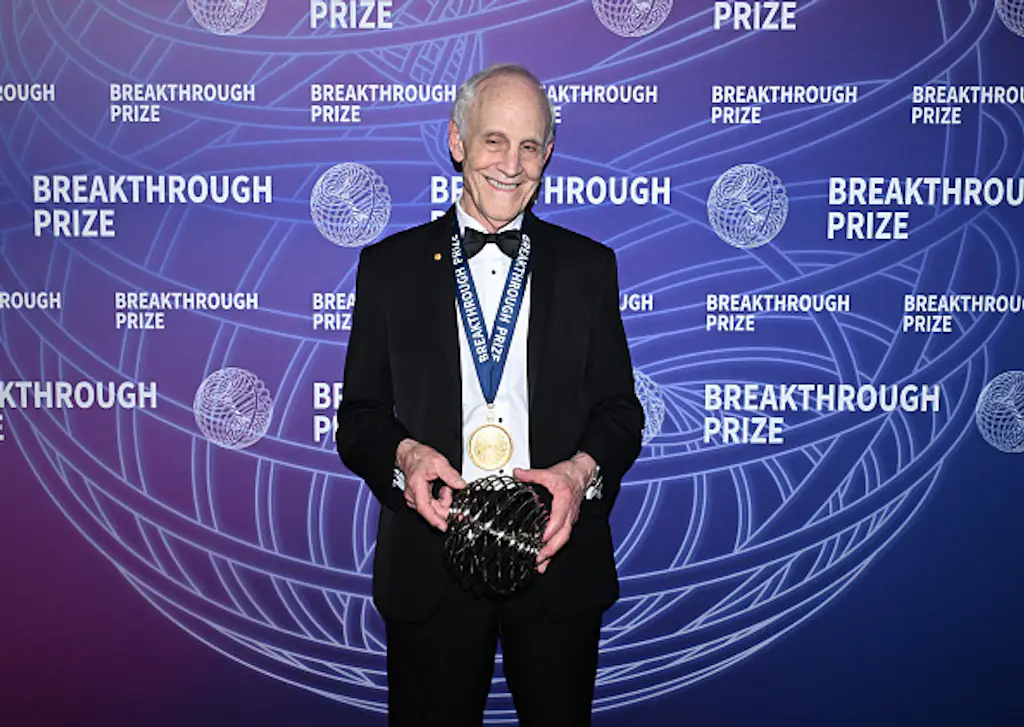
A physicist who won a Nobel Prize in 2004 has raised major concerns about the future of humanity, even suggesting a possible timeline for world-ending events.
David Gross, who was recognised for his work in physics with the illustrious award, has claimed that today’s world feels increasingly unstable, with rising tensions such as the threat of nuclear war, ongoing fighting in Europe, unrest in the Middle East, and unpredictable global leadership all contributing to uncertainty.
Gross warned that humanity could face extinction within a few decades. Speaking to Live Science, he said: "Even after the Cold War ended, when we had strategic arms control treaties, all of which have disappeared, there were estimates that there was a one percent chance of nuclear war every year."
He added: "I feel it's not a rigorous estimate that the chances are more likely two percent. So that's a one-in-50 chance every year."
Gross went further, emphasizing how this risk compounds over time: "Currently, I spend part of my time trying to tell people … that the chances of you living 50 [more] years are very small."
He continued: "Due to the danger of nuclear war, you have about 35 years."
Based on that outlook, he implies a potential endpoint around the year 2061. He also highlighted how global conditions have deteriorated, saying: "Things have gotten so much worse in the last 30 years, as you can see every time you read the newspaper."
Beyond nuclear threats, Gross also expressed concern about the growing role of artificial intelligence. While acknowledging its advantages, he warned it could become dangerous, especially if integrated into military systems: "The agreements, the norms between countries, are all falling apart.
"Weapons are getting crazier. Automation, and perhaps even AI, will be in control of those instruments pretty soon. It's going to be very hard to resist making AI make decisions because it acts so fast."
He also noted the unreliability of AI systems, adding: "If you play with AI, you know that it sometimes hallucinates."
Another indicator often cited in discussions about global risk is the Doomsday Clock, which symbolically represents how close humanity is to self-destruction. This year, it was set at 85 seconds to midnight, closer than the previous year.
With war waging across the globe, and many of the world’s major powers at loggerheads, it’s unsurprising that skepticism remains over whether hands remain firmly hovering over red buttons, making humanity’s future uncertain.
Published 12:17 18 Mar 2018 GMT
There are many people who claim to be prophets that can predict the end of the world and, if we're being real, most of them are simply spouting out BS. However, if there's one person's prediction that you're going to believe when it comes to the end of our time on this planet, it's going to be Stephen Hawking's.
The legendary professor, who sadly passed away last week, submitted a paper just two weeks before his death in which he outlined how we can detect evidence of other universes and predicted the end of our existence.
The paper, which was finished on his deathbed, discusses the idea that we could potentially measure the scope of other universes by using a detector on a spaceship.
It's believed that if this evidence had been found during Hawking's lifetime, it would've scooped him the Nobel Peace Prize - something which evaded him throughout his entire career. Thomas Hertog, who co-authored the paper named A Smooth Exit from Eternal Inflation, told the Sunday Times: "He has often been nominated for the Nobel and should have won it. Now he never can."
Hawking is a believer in the Big Bang, with him writing a 1983 paper in which he explains how the universe came into existence through the explosion, which would've created an infinite number of other universes.
However, while this theory of inflation was impossible to test, Hertog claimed that he and Hawking wanted to take the idea of a "multiverse" and turn it into a "testable scientific framework."
The potentially ground-breaking research also suggests that Earth will fade into darkness when the stars eventually run out of energy.
The idea is a controversial one, with cosmologists such as Pressor Neil Turok, the director of Canada's Perimeter Institute, saying that he was confused as to why Hawking would even find the idea interesting.
However, on the other hand, some scientists believe that Hawking's latest work could be the breakthrough that cosmologists have required when it comes to studying the end of the world. Carlos Frenk, a professor of cosmology, argued that it has previously been impossible to measure other universes but also says that Hawking's work could be the first theory to be realistically tested.
He said: "The intriguing idea in Hawking's paper is that [the multiverse] left its imprint on the background radiation permeating our universe and we could measure it with a detector on a spaceship."
Frenk argues that finding evidence of other universes would completely alter our perception of our place in the cosmos and could lead to further enlightening studies.
So, while the end of the world predictions can often seem cliche and tedious, it turns out that Hawking's may actually have some weight to it. Of course, as with all these theories, the end of time is still some way off, so there's no need to run of the grocery store and stock up on tinned food just yet.
Published 17:09 14 Oct 2018 GMT
Dr Stephen Hawking's death was a gigantic loss to humanity and to science. The renowned physicist's profound insights into black holes, the Big Bang and the formation of the universe have been critical to our understanding of the world, and the book that he authored, A Brief History of Time, is still one of the best-selling popular science books available. However, before he died, Dr Hawking made a number of worrying predictions about humanity's future, and how technology, if left unchecked, could spell doom for our own species.
In a collection of essays which have recently been made public in the British newspaper The Sunday Times, Dr Hawking predicted that the wealthy elite could potentially harness genetic engineering to new species of superhuman beings, which would oppress and eventually destroy the remainder of humanity.
[[youtubewidget||https://www.youtube.com/watch?v=fFLVyWBDTfo]]
Dr Hawking wrote: "I am sure that during this century people will discover how to modify both intelligence and instincts such as aggression. Laws will probably be passed against genetic engineering with humans. But some people won’t be able to resist the temptation to improve human characteristics, such as memory, resistance to disease and length of life. Once such superhumans appear, there will be significant political problems with unimproved humans, who won’t be able to compete, Presumably, they will die out, or become unimportant. Instead, there will be a race of self-designing beings who are improving at an ever-increasing rate."
Other scientists have concurred with this theory, including University College London professor Chris Rapley. Commenting on Dr Hawking's predictions, Rapley wrote: "Humans have arguably reached a critical moment. We have moved beyond affecting the planet at the landscape scale to interfering with its very metabolism at the global scale. All the indications are that the limitations of our brains, both individually and collectively, leave us incapable of addressing the challenge. On this basis, the future looks desperately gloomy."
[[twitterwidget||https://twitter.com/ProSyn/status/1050678963939332098]]
Dr Hawking was also concerned about rates of obesity and heart disease in the mostly-sedentary first world, writing: "At the moment humanity faces a major challenge and millions of lives are in danger. I see the world as a whole and I am here to address one of the most serious public health problems of the 21st century. Today too many people die from complications related to weight and obesity. We eat too much and move too little. Fortunately, the solution is simple: More physical activity and change in diet. is not rocket science and for what its worth, how being sedentary has become a major health problem is beyond my understanding."
So there you have it: if you want to save humanity and take Dr Hawking's advice, then get rid of all the junk food in your fridge and get yourself a gym membership. Seriously: according to him the survival of our very species may well depend upon you hitting the Stairmaster.