Uncategorised3 min(s) read
Published 22:03 05 Dec 2017 GMT
Uncategorised3 min(s) read
Published 22:03 05 Dec 2017 GMT
sport1 min(s) read
sport3 min(s) read
sport3 min(s) read
world2 min(s) read
Published 12:29 03 Mar 2022 GMT
sport5 min(s) read
Published 11:13 09 Dec 2019 GMT
Russia has been banned from all global sporting events, including the 2020 Olympic Games and the 2022 football World Cup.
The ban has been issued by the World Anti-Doping Agency (WADA), which has imposed a four-year ban on the country from all global sporting events, as a result of persistent state-sponsored doping of its athletes.
Watch this news report about the ban below:
[[jwplayerwidget||https://content.jwplatform.com/videos/jB4Qw38l-Q0L14jDU.mp4||jB4Qw38l]]
According to a report by BBC News, the WADA made a unanimous decision after the organization's executive committee met last week in Lausanne, Switzerland.
Russia's Anti Doping Agency, which was found guilty of manipulating laboratory data earlier this year, now has 21 days to appeal against the ban by referring to the Court of Arbitration for Sport.
It was discovered that Moscow had been planting fake evidence and deleting files linked to positive doping tests which helped identify drug cheats. Sports Minister, Pavel Kolobkov, attributed the discrepancies in the laboratory data to technical issues.
Commenting on the move, WADA vice-president Linda Helleland stated: "I wanted sanctions that can not be watered down. We owe it to the clean athletes to implement the sanctions as strongly as possible."
[[twitterwidget||https://twitter.com/juliaioffe/status/1203987715840192512]]
More than 150 Russian athletes competed under a neutral flag at the 2018 Winter Olympics in Pyeongchang, after the country was banned from competing. This followed a major scandal during the 2014 Soch Olympics, where Russian athletes won 33 medals, after several members of the team were found to be using steroids.
However, Russia will be able to compete at Euro 2020 (hosted in St Petersburg) since European football's governing body UEFA is not defined as a ''major event organization'' according to the terms set by the WADA.
Published 22:07 28 Feb 2018 GMT
Russia's not exactly known for its liberal policies, from its persecution of artists who criticize Putin to its multiple laws oppressing the gay community. But it turns out they're pretty chill when it comes to drugs. The Moscow Times reports that soccer fans will be able to bring marijuana, cocaine and heroin to the 2018 FIFA World Cup. Because if there's one thing soccer hooligans need, it's cocaine. They're so low energy.
Of course, there is a catch. People that want to bring these aforementioned drugs will have to fill out the necessary paperwork - and that doesn't mean ZigZags for your blunts. The Russia-led Eurasian Economic Union grants travelers the right to bring banned substances so long as they bring documentation written in the Russian language that the narcotics are for medical use. So good luck with that. While medical marijuana is a thing, I've never heard of medical cocaine or medical heroin. What’s next, medical crystal meth? But hey, if you can convince your doctor to write you a note, in Russian, you can bring all three drugs to the World Cup, and party it up. (If you survive.)
The Russian 2018 World Cup Organizing Committee says that law enforcement officers will be on duty at the stadium to verify the authenticity of the drug prescriptions. It's unclear how they're going to decide which prescriptions are real or fake. They simply say, "Security officers will monitor the enforcement of rules for carrying prescription drugs to stadium grounds at checkpoints." (I mean, all the doctors' notes for cocaine and heroin will be forgeries, right?)
In addition, Russia’s Federal Customs Service says that soccer fans carrying the drugs will have to fill out a customs declaration, which is hilarious. Finally, filling out those annoying little forms and going through customs will be fun. "Yes, officer, I'm just declaring my weed, coke and heroin. But it's okay. I have a doctor's note. I need weed because I have trouble sleeping. I need coke because I have trouble staying trouble awake. And I need heroin to cheer me up when I'm feeling blue."
However, don't think anything goes at this stadium. Smoking of all kinds is forbidden. Unlike shooting up heroin and snorting cocaine, smoking cigarettes serves no medical purpose - according to the Russians, anyway. But I guess we shouldn't be surprised Russia has such lax laws on drugs, considering their athletes were busted doping in the 2014 Winter Olympics, and again at the 2018 Winter Olympics. (Or maybe this is all a scam to troll and get free publicity for the World Cup. Well played, Russians. You win again!)
Russia will host the World Cup from June 14 to July 15, with events in 11 cities, including Moscow, St. Petersburg and Sochi. Soccer is the number sport in every country in the world, except the United States. But you know what? I bet if America adopted these rules for our soccer matches, allowing fans to bring in marijuana, cocaine and heroin, attendance would spike through the roof. (And so would overdoses.)
Published 12:01 17 Feb 2022 GMT
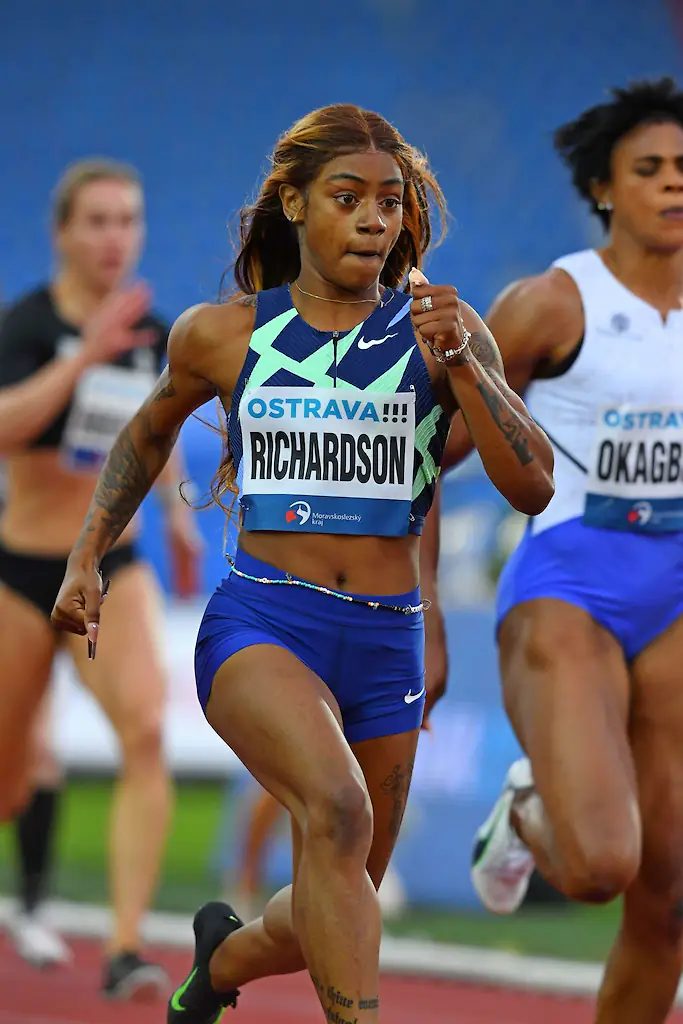
The International Olympic Committee (IOC) has rejected Sha'Carri Richardson's accusations of double standards.
The American sprinter was banned from competing in the Tokyo Olympics last summer after she tested positive for marijuana.
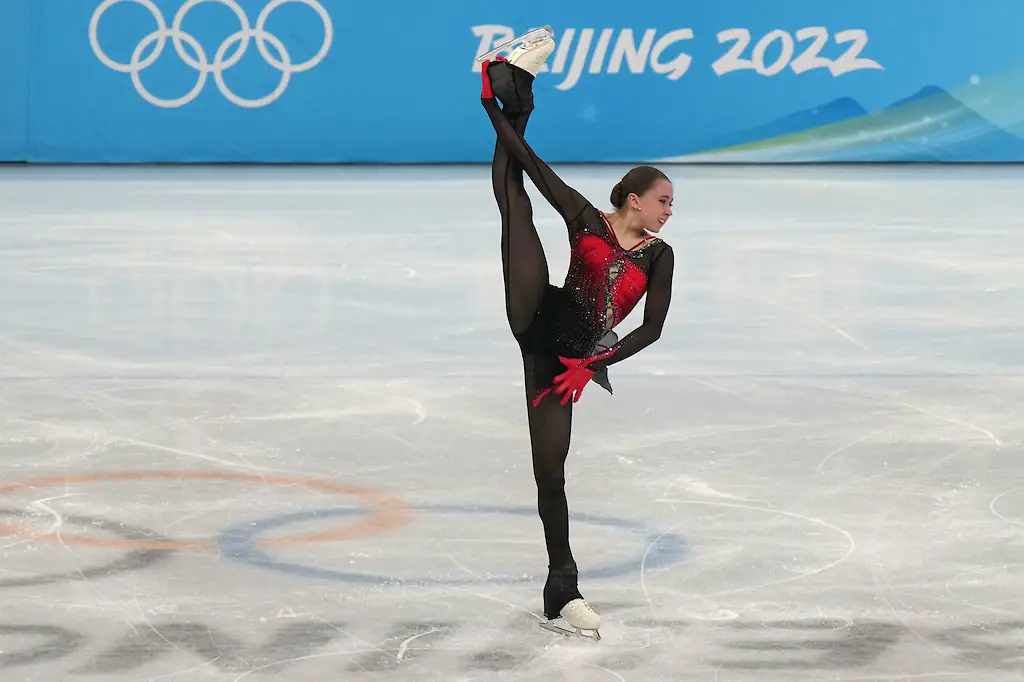
Now, the star athlete has called out the IOC on social media, after Russian teenager Kamila Valieva was permitted to continue competing in the Winter Games despite failing a drug test at Christmas.
Richardson - who was a top contender in the women's 100m - took to Twitter last week to compare her situation to Valieva's. The 15-year-old figure skater tested positive for trimetazidine on Christmas day, but her test result only surfaced after she had begun competing in the Beijing Winter Games.
Despite her failed drug test, the Court of Arbitration for Sport (Cas) ruled that Valieva - who is the star of the Russian women's figure skating team - could continue to compete.
Richardson took to Twitter in protest, writing: "Can we get a solid answer on the difference of her situation and mine? My mother died and I can’t run and was also favored to place top 3. The only difference I see is I’m a black young lady. It’s all in the skin."
Now, IOC spokesperson Mark Adams has responded to Richardson's accusation, claiming that her case and Valieva's have "nothing in common", per Independent.
"You can’t talk about double standards in relation to Russian and American athletes, each case is individual," Adams said. "Richardson’s positive doping test was discovered on 19 June, and the result was received before the start of the Olympics."
"She was suspended for a month. There is nothing in common between these two cases," he added.
He went on to express concern for Valieva, saying: "This Games, which has not concluded, concerns an issue in December. She is in the center of a lot of speculation. It must be very tough for her."
"We of course are in touch with the team, her welfare is the team’s first priority, and obviously we are very careful of that but there’s only so much that we can do," Adams added.
Athletes from Russia and Belarus have been banned from competing in the 2022 Winter Paralympic Games.
As reported by BBC News, the International Paralympic Committee has faced heavy criticism over their initial decision not to bar athletes from Russia and Belarus from taking part in the games, which will begin on Saturday in Beijing.
In a statement released on Thursday, IPC president Andrew Parsons announced that they had reversed their policy and that athletes from these two countries will no longer be able to compete as 'neutrals'.
Parsons expressed sympathy for the athletes, describing them as "victims of your government's actions" per BBC News.
"We are very firm believers that sport and politics should not mix," Parsons said. "However, by no fault of its own the war has now come to these Games and behind the scenes many governments are having an influence on our cherished event."
"Ensuring the safety and security of athletes is of paramount importance to us and the situation in the athlete villages is escalating and has now become untenable," he added.
Parsons went on to apologize to the 72 Russian competitors and 12 Belarusian competitors who were set to compete, saying: "To the Para-athletes from the impacted countries, we are very sorry that you are affected by the decisions your governments took last week in breaching the Olympic Truce."
"I hope and pray that we can get back to a situation when the talk and focus is fully on the power of sport to transform the lives of persons with disabilities, and the best of humanity," he concluded.
Governing bodies and political figures called out the IPC for not taking decisive action after Russia launched an aggressive military invasion of Ukraine last week.
Parsons said that there had been pressure from an "overwhelming number of members" to ban Russian and Belarusian athletes from competing.
This included the athletes of Ukraine, who released a joint statement with the Global Athlete group criticizing the committee. One Ukrainian Olympian - skeleton racer Vladyslav Heraskevych - hit out, saying: "They put Russia above the interest of other countries" and added that "anything less than a full ban is unacceptable."
If you would like to know how you can support the Ukrainian people at this time, click HERE to find a list of organizations and groups dedicated to helping those affected by this crisis.
Published 11:54 06 Feb 2026 GMT
The Olympics has once again become the center of an unusual story heading into the 2026 Winter Games.
Just days before athletes compete in the Milano Cortina Olympics on Feb. 6, officials from the International Ski and Snowboard Federation responded to reports that male ski jumpers were attempting to alter their bodies in pursuit of an advantage.
The controversy sparked when Germany’s Bild newspaper published a report suggesting some competitors may have injected hyaluronic acid into their genital area to slightly increase circumference before being measured for their suits.
These measurements, conducted with a 3D scanner before each season, help determine the fit of jumpers’ outfits, with the genital area considered one of the lowest points in the scan, according to the original reports. That raised questions about whether even a small change in body size could yield performance benefits.
FIS officials pushed back on the speculation in public comments, stressing there is no proof supporting the claims. “There has never been any indication, let alone evidence, that any competitor has ever made use of a hyaluronic acid injection to attempt to gain a competitive advantage,” FIS communications director Bruno Sassi told BBC Sport.
Representatives offered additional clarity on the science and legality of the substance, which is popular in cosmetic procedures, while noting it is not specifically banned in their sport.
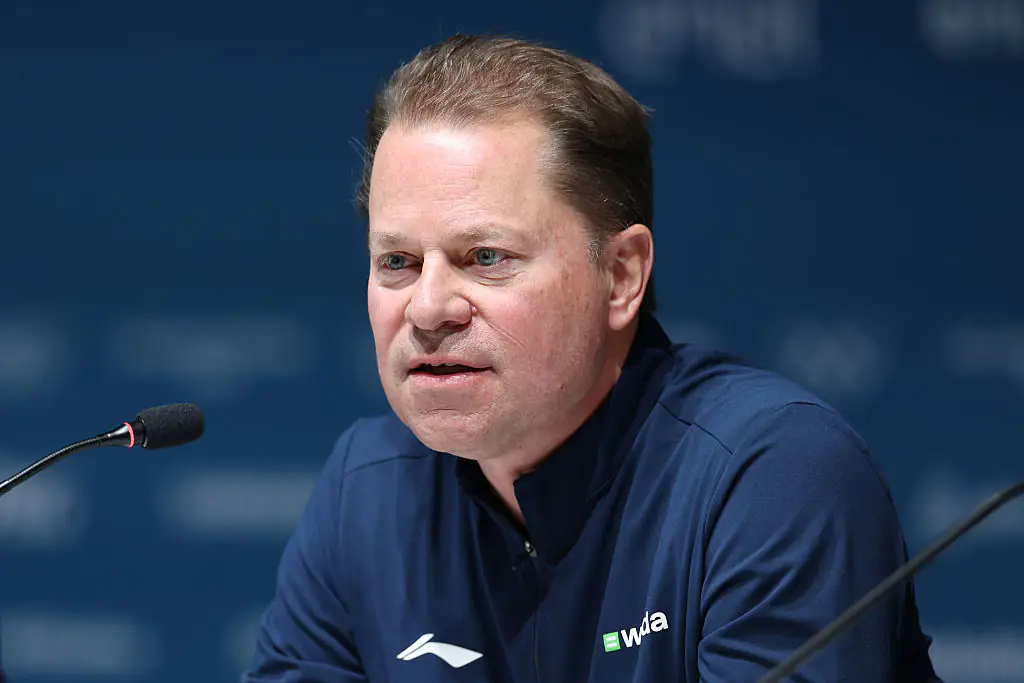
World Anti-Doping Agency director general Olivier Niggli also addressed the matter at a press event in Milan. “I am not aware of the details of ski jumping, and how that could improve performance,” he said, according to the BBC, adding that if any concerns did arise, they would examine them through the lens of anti-doping rules.
Hyaluronic acid is a naturally occurring compound that helps maintain moisture in skin and joints, and it is widely used in cosmetic treatments. The non-surgical filler can increase girth depending on the amount used and is said to last around 18 months, according to coverage.
Beyond its common applications in skincare clinics, it was described in media coverage as sometimes used as a penis filler for cosmetic reasons — though there is no verified evidence linking that practice to ski jumpers trying to gain an edge.
Top athletes from around the world continue their preparation for competition in a wide range of disciplines.
Francesco Friedrich of Germany hopes to add more Olympic golds to his collection after dominating bobsled events for years. “I am constantly trying to find out new things and trying to make even small improvements,” he said, per E! Online.
Eileen Gu, a standout freestyle skier for China, is focused on pushing boundaries. “My whole thing was, it’s all upside,” she explained to Time about her strategy for a difficult trick. Marco Odermatt of Switzerland remains committed to excellence across alpine events. “For me, this is the best tactic,” he told a podcast.
Italy’s short track speed star Arianna Fontana looks forward to competing on home ice. “I feel like it’s going to be my homecoming party,” she told Olympics.com.
For skaters like Japan’s Kaori Sakamoto, this Olympics may be a final chance at competition. “Winning at least silvers in both the individual and team events would be mission completed,” she explained, via NBC Sports.
French biathlete Quentin Fillon Maillet is chasing more podiums after a breakthrough performance in Beijing. “I put so much hard work in over the years so this feels like a really special reward,” he said.
Japanese ski jumper Kobayashi Ryoyu is already thinking about life after competition. “Even after I retire, I want to make a contribution to the world of ski jumping, to liven it up and make it more popular,” he shared.
Ester Ledecká of the Czech Republic reacted to schedule clashes that prevent her competing in two events. “I cried a bit few times about it, but we did the best we could,” she said.
Canadian hockey star Sarah Nurse reflected on her growth in the sport. “If you had asked me five years ago if I would be doing any of the things that I’m doing now, they wouldn’t have even been in the realm of possibility,” she said.
Italy’s Stefania Constantini and Amos Mosaner hold high hopes for curling after dominating mixed doubles in recent competition. “Getting back on the ice and competing again is something beautiful, and doing it for the Italian colours is always important for us,” Mosaner explained.
Austrian ski jumper Stefan Kraft aims to make history as an individual champion while savoring the arrival of his first child. “Welcome to the world, our little princess,” he wrote on Instagram.
Cross-country legend Johannes Hosfløt Klæbo credits the sport with shaping his life. “Cross-country skiing was what moved my soul,” he wrote.
Returnees like Canada’s Sidney Crosby remain focused on Olympic success. “Work hard and have fun,” he said about his guiding philosophy.
Finally, the German doubles luge pair Tobias Wendl and Tobias Arlt continue to thrive, claiming multiple Olympic gold medals and embracing the teamwork that brought them success.