An astronaut who spent 178 days in space has revealed the realization he came to after seeing Earth.
Across his career, former NASA astronaut Ron Garan racked up 71 million miles in outer space, orbiting the Earth a total of 2,842 times.
But his one takeaway from all that experience in the great, big beyond?
That humanity was 'living a lie.'
The one moment that changed Ron Garan's perspective on Earth
Looking over at Earth from the vastness of space, Garan told Forbes that he came to a "sobering" conclusion about the state of our planet.
"I saw the paparazzi-like flashes of lightning storms, I saw dancing curtains of auroras that seemed so close it was as if we could reach out and touch them," Garan recalled to Big Think.
But seeing this just made him come to a realization that left him questioning what hope there was for the future of Earth.
He went on to explain: "I saw the unbelievable thinness of our planet's atmosphere.
"In that moment, I was hit with the sobering realization that that paper-thin layer keeps every living thing on our planet alive."
Garan said that the Earth at that point seemed to him to be "an iridescent biosphere teeming with life" and not just something to be mined for resources.
Expanding on that thought, he said: "Our human-made systems treat everything, including the very life-support systems of our planet, as the wholly owned subsidiary of the global economy, it’s obvious from the vantage point of space that we’re living a lie."
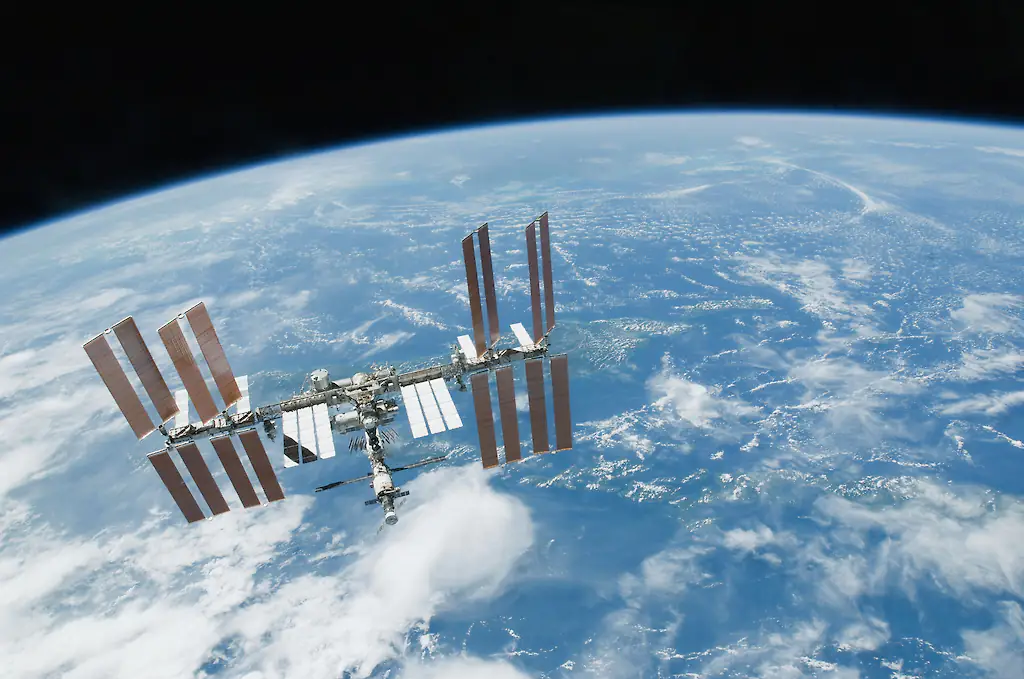
Garan performed over 2,000 orbits around the Earth during his time as an astronaut (Credit: Stocktrek Images / Getty Images)
Why seeing Earth from space made Garan change his perspective on humanity
Garan said, however, that by far and away the strangest realization he came to during his time in space was a reconfiguration of his thoughts about human life on Earth.
"The other thing I felt," Garan said, "and I can’t really explain it, is that being completely detached from Earth also made me feel deeply connected with everyone on the planet.
"It was this overwhelming kinship."
It seems that Garan's experience in outer space really did change his perspective on life too.
After retiring as an astronaut, he's dedicated his life to becoming a vocal advocate for the environmental stewardship of Earth.
His aims in stepping up and doing so seemed rooted in the realization that the Earth needs to be protected, and he's now fighting to prioritize the Earth's health over exploiting it for financial gain.
NASA astronauts Barry "Butch" Wilmore and Sunita "Suni" Williams have returned to Earth after what was supposed to be an eight-day mission turned into nine months in space.
With their return to Earth, Wilmore and Williams will have spent approximately 285 days in space, making them the sixth longest-serving NASA astronauts for a single mission.
Their time in space is just shy of Peggy Whitson’s 289-day record, while Frank Rubio holds the longest NASA spaceflight record at 371 days, per the New York Post.
During their time in space on this mission, they completed 4,576 trips around Earth.
However, their extended stay aboard the International Space Station (ISS) has taken a toll on their bodies, as seen in before-and-after images that highlight the physical effects of prolonged exposure to space.
The Physical Toll of Nine Months in Space
As reported by BBC News, the two astronauts splashed down safely in the Gulf of Mexico on March 18 and were immediately stretchered away — a standard procedure for astronauts returning from long missions in microgravity.
In images from their arrival back on Earth, Wilmore and Williams appear thinner and visibly weaker than when they first launched in June 2024.
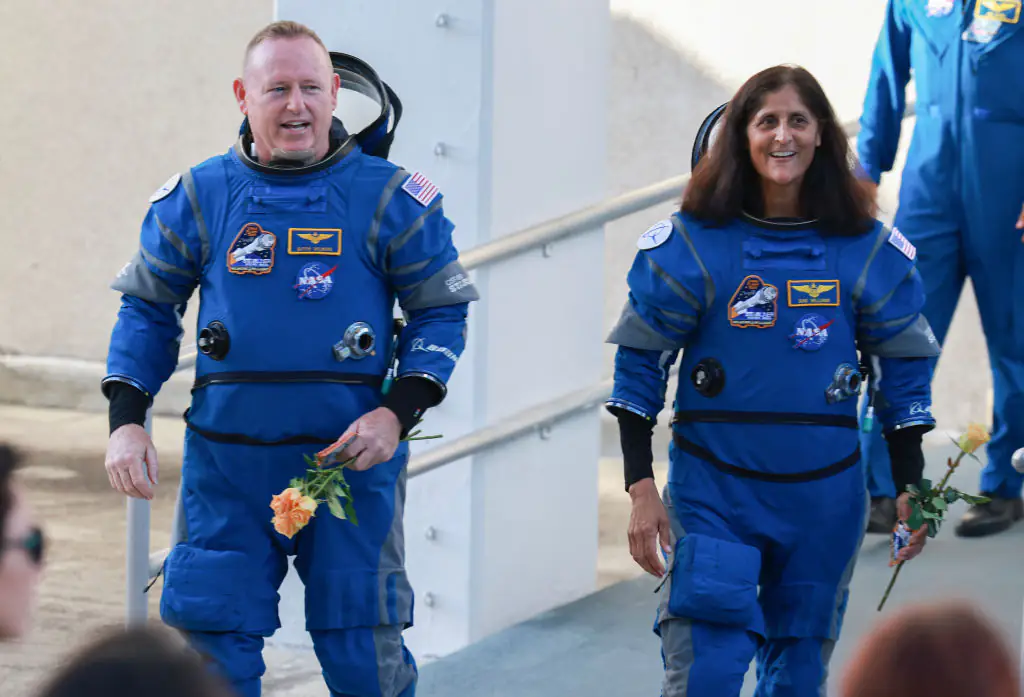
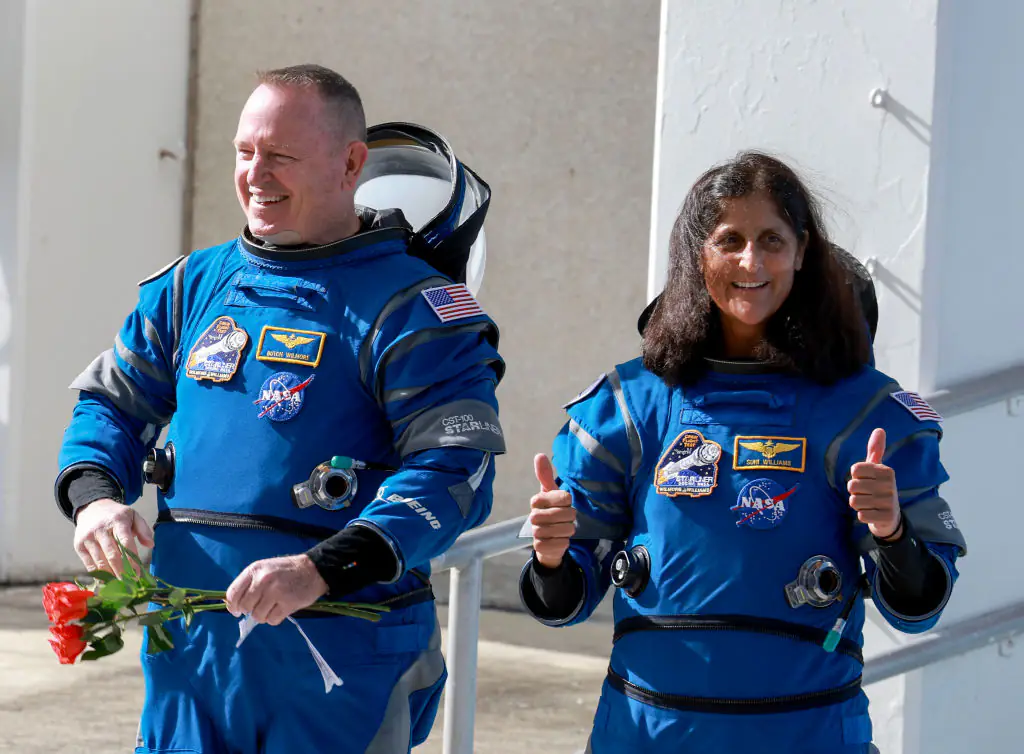
Before their departure, the pair were photographed looking fit and prepared for their expected short-term mission. Now, their post-mission images serve as a stark reminder of how space travel affects the human body. Take a look below:
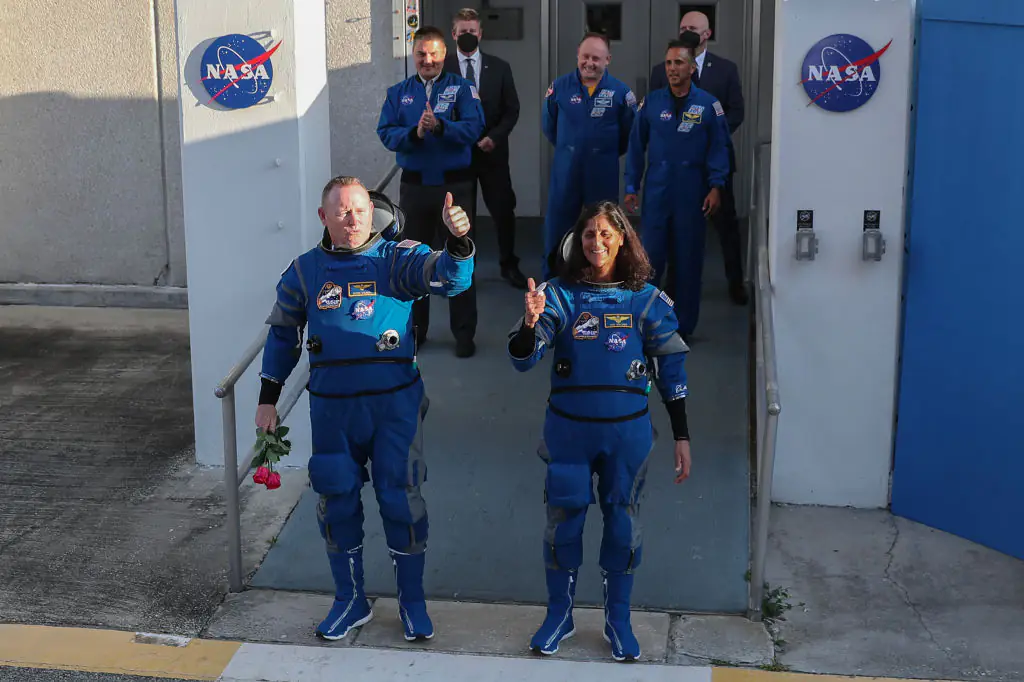
Before their departure, the pair were photographed looking fit and prepared for their expected short-term mission. Credit: Joe Raedle / Getty
The astronauts were only supposed to spend eight days in space. Credit: Joe Raedle / Getty
What Happens to the Human Body in Space?
Per the BBC, spending time away from Earth’s gravity causes significant physical changes:
Loss of muscle mass and bone density: For every month in space, astronauts lose about 1% of their bone density. After nine months, Wilmore and Williams have likely experienced considerable weakening in their bones and muscles.
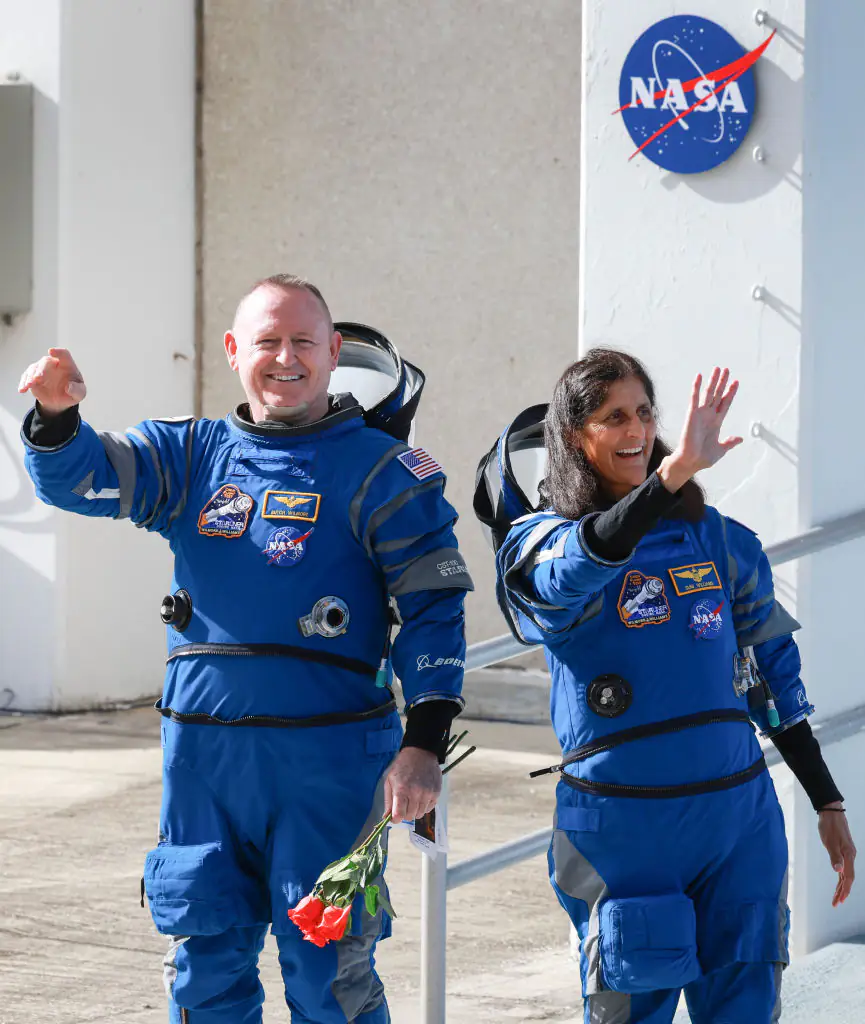
Sunita "Suni" Williams. Credit: NASA / Getty
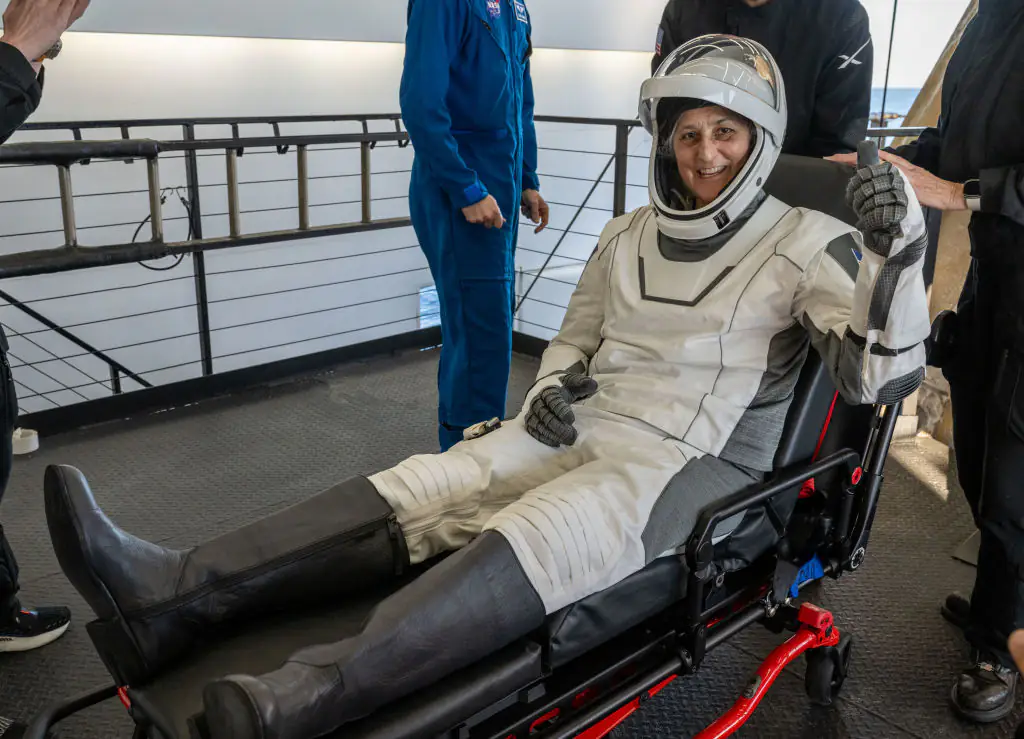
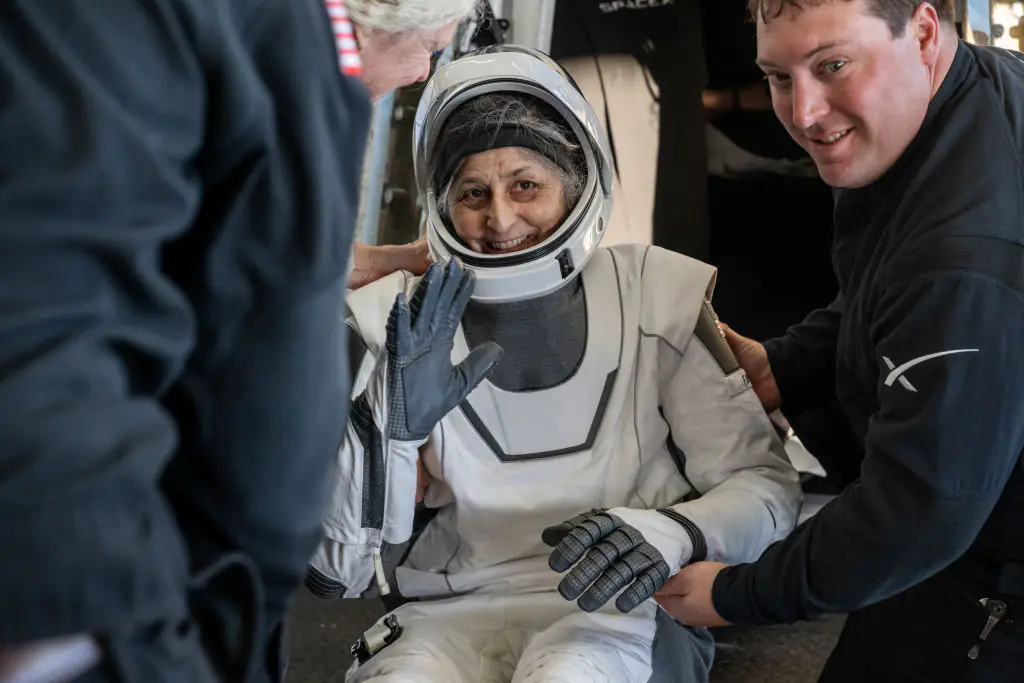
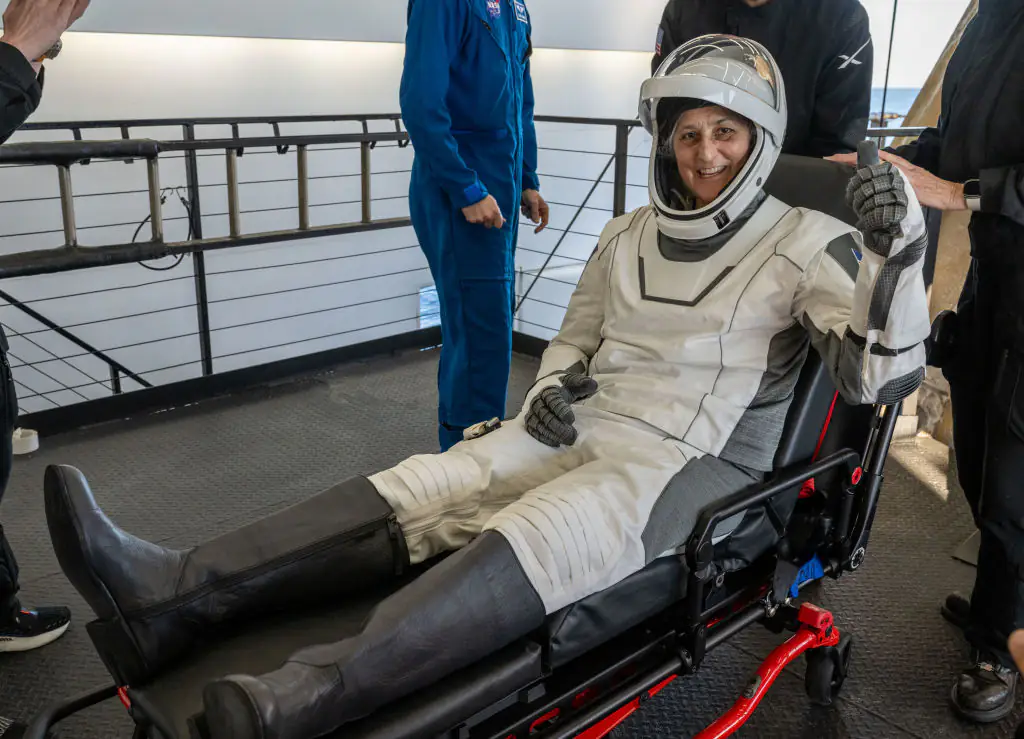
Suni Williams pictures upon her return to Earth. Credit: NASA / Keegan Barber / Handout/Anadolu via Getty Images
Weakened cardiovascular system: Their hearts will have become weaker because they haven’t needed to work as hard to pump blood in microgravity.
Changes to vision: Spaceflight alters the shape of the eye, often leading to deteriorating eyesight for returning astronauts.
Psychological effects: These can include anxiety and depression, due to prolonged isolation in a confined space.
Barry 'Butch' Wilmore. Credit: NASA / Getty
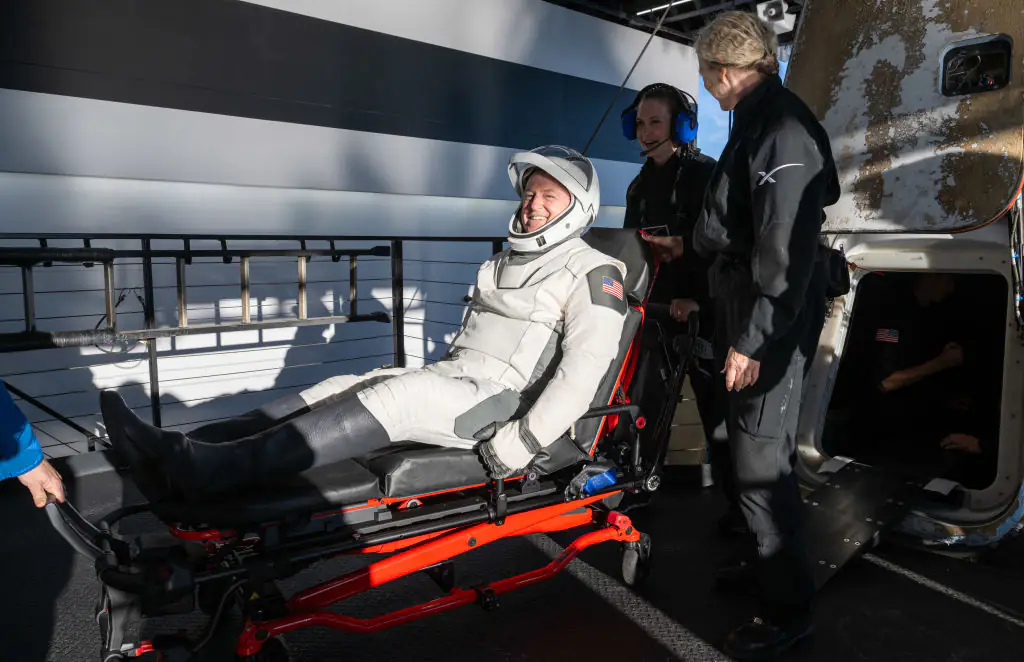
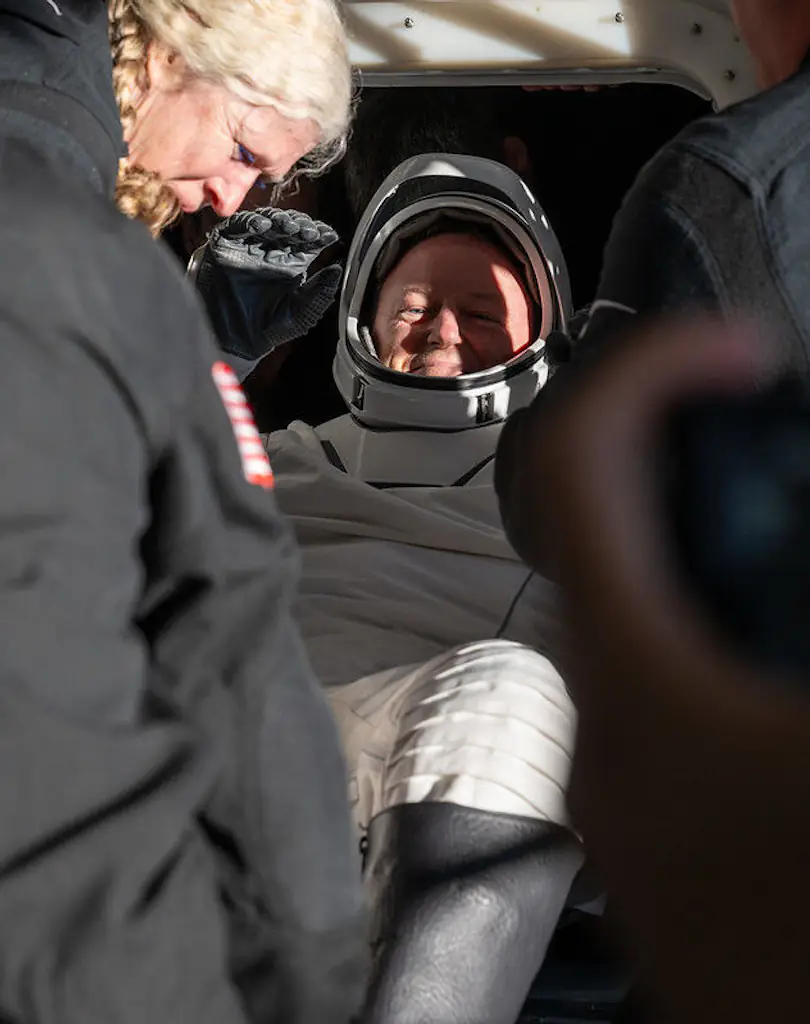
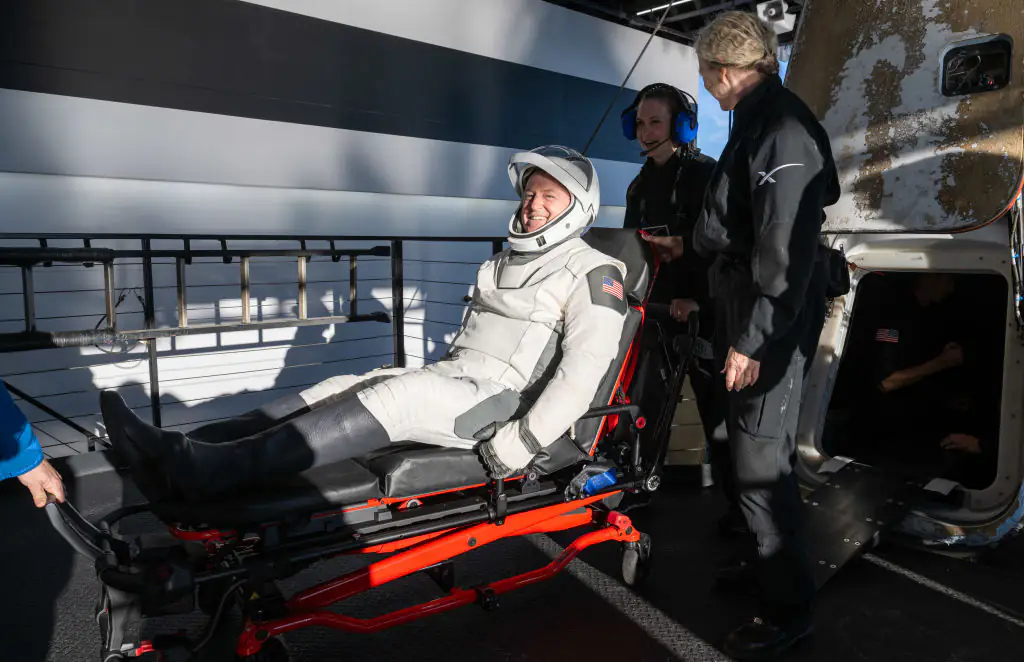
Butch Wilmore is helped out of the SpaceX Dragon spacecraft. Credit: NASA / Keegan Barber / Handout/Anadolu via Getty Images
Fluid buildup in the head: Without gravity pulling fluids downward, astronauts often experience a "stuffy head" feeling, similar to having a cold.
Increased radiation exposure: While NASA scientists expect most DNA damage from cosmic radiation to repair itself within a few months, long-term exposure remains a major concern.
Former NASA astronaut Terry Virts has recently described his own struggles upon returning from the ISS and shared what Williams and Wilmore are likely to experience.
“For me, I felt two things: I felt really heavy and really, really dizzy," he said. Virts added that it took time for his sense of balance to fully recover.
NASA astronaut Leroy Chiao explained on NewsNation Prime that the returning crew may experience a painful condition known as "baby feet"
"You basically lose the thick part of the skin on your feet. You kind of have baby feet when you come back," Chiao said.
This transformation makes walking painful and uncomfortable until the skin toughens up again — a process that can take anywhere from a few weeks to a couple of months.
Chiao also echoed Virts' comments regarding severe dizziness and balance disruption. “To me, it feels kind of like having the flu. It takes a couple of weeks to get back to normal,” he said.
Despite the toll Williams and Wilmore have put their bodies through, Joel Montalbano, Deputy Associate Administrator of NASA's Space Operations Mission Directorate, hailed the work they performed in space, saying: “Suni and Butch did 150 experiments and 900 hours of research during their stint on the ISS.”
Montalbano added that the work carried out "benefits the nation" and increases the chance that NASA will be successful in hitting its goal of landing a person on Mars by the end of the decade.
Adjusting Back to Life on Earth
Rehabilitation is now a crucial part of Wilmore and Williams' recovery. They will undergo weeks of physical therapy to regain strength and mobility.
NASA reportedly has a strict post-space rehabilitation program designed to help astronauts gradually reacclimate to Earth’s gravity. This includes:
Gradual walking reintroduction, starting with soft surfaces
Strength training and cardiovascular exercises to rebuild muscle and bone density
Balance training to restore coordination
Psychological support to help astronauts adjust mentally
Though their extended stay fueled speculation and political controversy, NASA officials have repeatedly denied claims that the astronauts were "stranded" in space.
NASA Administrator Bill Nelson defended the decision to return the Starliner to Earth unmanned in September 2024, stating: "Spaceflight is risky, even at its safest and most routine. A test flight, by nature, is neither safe, nor routine.
"The decision to keep Butch and Suni aboard the International Space Station and bring Boeing’s Starliner home uncrewed is the result of our commitment to safety: our core value and our North Star."
Despite these challenges, their extended mission provided valuable data on the long-term effects of space travel — information that will be essential for future missions to the Moon and Mars.
NASA will continue monitoring the astronauts' recovery, but their return highlights both the incredible resilience of the human body and the challenges of deep-space exploration.
Two NASA astronauts who ended up stranded in space for nine months have shared their reactions to finding out their trip had to be extended.
Suni Williams and Butch Wilmore ended up spending nine months in space. Credit: Joe Raedle / getty
Barry 'Butch' Wilmore, 62, and Sunita 'Suni' Willians, 59, had initially been due to travel to the International Space Station for just eight days.
However, their short mission aboard Boeing's Starliner capsule ended up being a nine-month stint due to technical malfunctions.
The pair finally splashed down on Earth after 286 days in space, and have now spoken out about how they felt when they found out the length of their trip had increased dramatically.
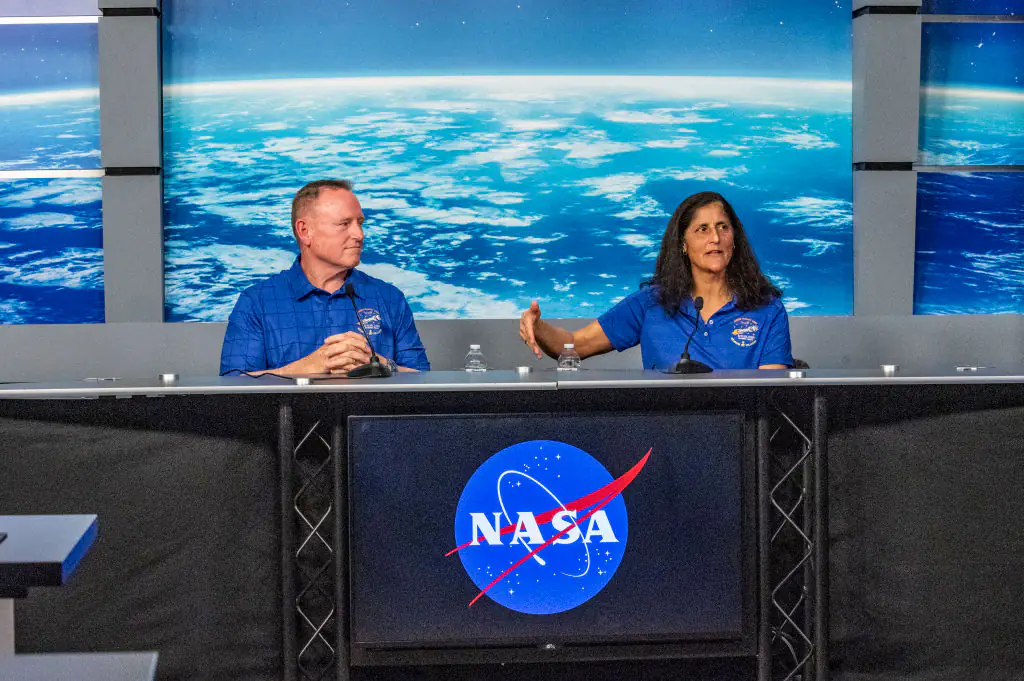
The pair have revealed their first reactions during a new interview with Fox News’ America’s Newsroom.
Williams said: "My first thought was, we just got to pivot, right? I was like, ‘OK, let’s make the best of it.’
"We planned, we trained that we’d be there for some part of a time, so we were ready to just jump into it and take on the tasks that were given to us."
Wilmore revealed that while he was sad to miss out on most of his daughter's senior year at high school, he pushed his own emotions to one side.
He explained: "It’s not about me, it’s not about my feelings. It’s about what this human space flight program is about. It’s our national goals.
"I have to wrap myself, my mind, around ‘what does the nation need out of me right now?’
"Did I think about not being there for my daughter’s high school year, of course… certainly, deal with the personal side of it, but I can’t let that interfere with what I’m called to do."
The pair finally returned to Earth aboard Elon Musk's SpaceX's Crew Dragon on March 18, having blasted off on Boeing's new Starliner last June.
When asked about Musk and Donald Trump's interest in space exploration, Williams responded: "They’ve earned my trust, and for that, I am grateful that our national leaders actually are coming in and taking part in our human space flight program.
"It is hugely important [of] global significance that they take an active role. Based on the past and what we see now with them doing that, it is refreshing, not just refreshing, it’s empowering. It’s strengthening," per the New York Post.
Wilmore and Williams are currently undergoing a comprehensive 45-day rehabilitation program at NASA's Johnson Space Center to combat the effects of such a long time in space.
The absence of gravity in space causes muscle atrophy and bone density loss. According to medical experts, astronauts can lose up to 1% of bone density for each month spent in microgravity, potentially resulting in a 9% loss over their mission duration.
Their rehabilitation regimen includes physical therapy to rebuild muscle strength, cardiovascular exercises, and balance training to restore coordination.
A former astronaut has shared the surprising payout that NASA astronauts Butch Wilmore and Suni Williams could receive following their prolonged mission in space.
Butch Wilmore and Suni Williams have returned to Earth. Credit: Joe Raedle / Getty
Wilmore and Williams initially set out last June for what was meant to be an eight-day test flight aboard Boeing’s Starliner spacecraft.
However, due to persistent technical setbacks, the mission stretched into an unexpected 286-day stay in orbit before they finally returned to Earth on Tuesday (March 19) night aboard a SpaceX Crew Dragon capsule.
With their return, the astronauts now rank as the sixth longest-serving NASA crew members for a single mission, spending nearly 285 days in space.
Their time just falls short of Peggy Whitson’s 289-day record, while Frank Rubio remains the longest-serving NASA astronaut with 371 days in space, according to The New York Post.
Despite the 278 extra days beyond their planned itinerary, the financial compensation for Wilmore and Williams's prolonged mission may be far less than one might expect.
According to former astronaut Cady Coleman, NASA astronauts receive incidental pay, similar to federal workers on a business trip.
Coleman revealed to The Washingtonian that she earned about $4 per day during her own 2010 mission.
Though the exact rate for astronauts in space today is unclear, the federal travel allowance currently sits at $178 per day - which could significantly impact their compensation, per The New York Post.
Coleman explained that the small daily stipend is a legal obligation meant to cover incidentals like food and lodging.
Based on her experience of earning $636 during a 159-day mission, Wilmore and Williams might receive approximately $1,148 each for their unplanned stay. However, if NASA applies the full $178 daily travel rate, that number jumps to over $51,000 per astronaut.
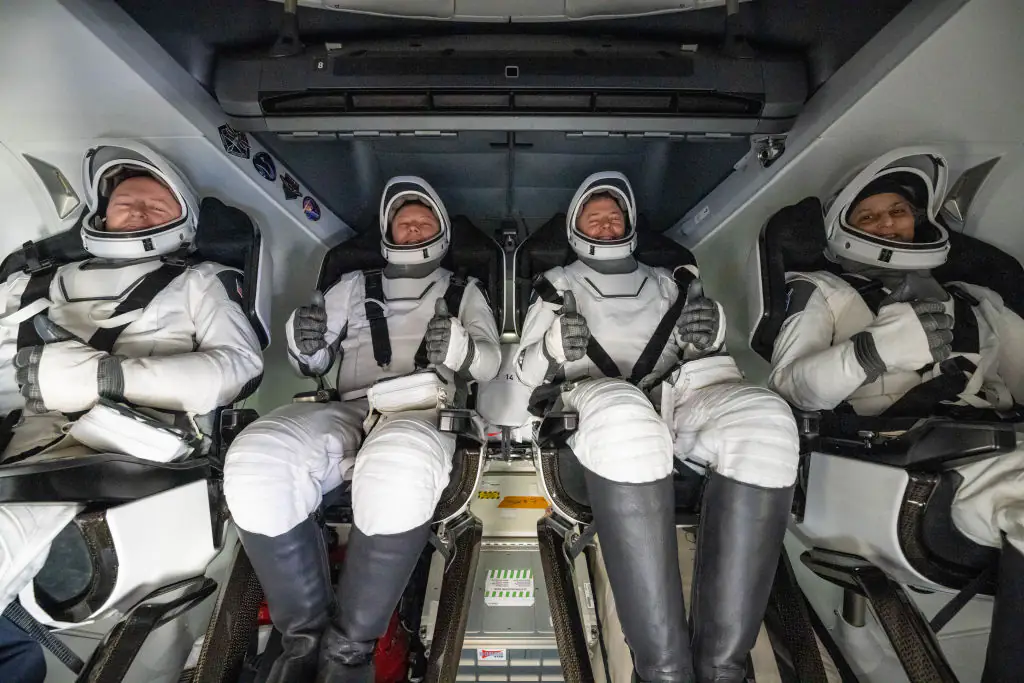
Wilmore and Williams alongside Roscosmos cosmonaut Aleksandr Gorbunov and NASA astronaut Nick Hague. Credit: Keegan Barber/NASA via Getty Images
Wilmore and Williams are classified under the GS-15 pay scale, which places their annual salaries between $125,000 and $163,000.
While other astronauts have spent longer durations in space, none have faced as much uncertainty or an unexpectedly extended mission quite like this.
Their dramatic return to Earth was met with cheers and relief, as they emerged from their capsule in the Gulf of Mexico, smiling and waving before being assisted into reclining stretchers for routine medical checks.
Now back on solid ground, they will spend weeks in physical therapy to regain strength and mobility after months without Earth's gravity.
NASA will reportedly enforce a strict rehabilitation program for returning astronauts, which includes: gradual walking reintroduction and starting with soft surfaces, strength training, and cardiovascular exercises to rebuild muscle and bone density.
They will also undergo balance training to restore coordination and psychological support to help astronauts adjust mentally.
Featured image credit: NASA / Keegan Barber / Handout/Anadolu via Getty Images
A doctor has revealed the brutal reality the NASA astronauts stranded in space will face after they return.
NASA astronauts Sunita Williams and Barry ‘Butch’ Wilmore have spent more than nine months stranded in space. Credit: Houston Chronicle/Hearst Newspapers / Getty
After spending more than nine months stranded in space, NASA astronauts Sunita Williams and Barry ‘Butch’ Wilmore are finally set to return to Earth - but their challenges won’t end once they touch down.
The pair originally launched from Cape Canaveral Space Force Station on June 5 for what was supposed to be an eight-day mission.
But they became stranded when the thrusters on their capsule malfunctioned as they approached the International Space Station (ISS).
While they have been keeping busy with maintenance tasks and spacewalks, Williams and Wilmore are expected to land in a SpaceX capsule on March 19 or 20 - and the moment they do, they’ll head straight into an intense rehabilitation process.
After spending so much time in microgravity, the astronauts will need extensive medical evaluations and physical rehabilitation before they can regain their full strength.
Dr. Vinay Gupta, a pulmonologist and Air Force veteran, told the Daily Mail that the recovery process could take up to six weeks.
Beyond the loss of muscle mass and bone density, experts are also concerned about space radiation exposure, which could increase their risk of serious health complications.
"If I was their physician, I would think about a more proactive strategy for cancer screening," Dr. Gupta explained. "We want to take a different approach here, given that they had such a unique exposure history."
The astronauts are stuck in the International Space Station. Credit: Stocktrek Images / Getty
Spending nearly a year in space takes a toll on the human body. Dr. John Jaquish, a biomedical engineer, emphasized how essential Earth’s gravitational pull is for basic bodily functions.
"The human body needs the Earth's gravitational pull, and in an absence of that, a lot of things are not functioning correctly," he explained.
Astronauts exposed to space radiation for long durations face higher lifetime risks of cancer, central nervous system effects, and cardiovascular diseases.
To minimize these risks, Williams and Wilmore have been staying active on the ISS, consistently exercising to maintain their strength.
However, despite their efforts, Williams recently admitted that being in space for so long has made even basic human functions feel foreign.
Speaking to students at Needham High School in Massachusetts, she said: "I've been up here long enough right now I've been trying to remember what it's like to walk. I haven't walked. I haven't sat down. I haven't laid down. You don't have to. You can just close your eyes and float where you are right here."
Sunita Williams and Barry ‘Butch’ Wilmore will go through a three-phase rehabilitation program when they return to earth. Credit: Houston Chronicle/Hearst Newspapers / Getty
The first phase of the rehabilitation program will involve the astronauts regaining basic movement and muscle strength after months of weightlessness.
Phase two consists of proprioceptive exercises and cardio reconditioning, and phase three is working towards returning to peak physical performance and regaining the full strength needed for daily activities.
While Williams and Wilmore will likely be relieved to be back home, their journey to full recovery is only just beginning.
After an unexpected nine-month stay in space, NASA astronauts Sunita "Suni" Williams and Barry "Butch" Wilmore have triumphantly returned to Earth.
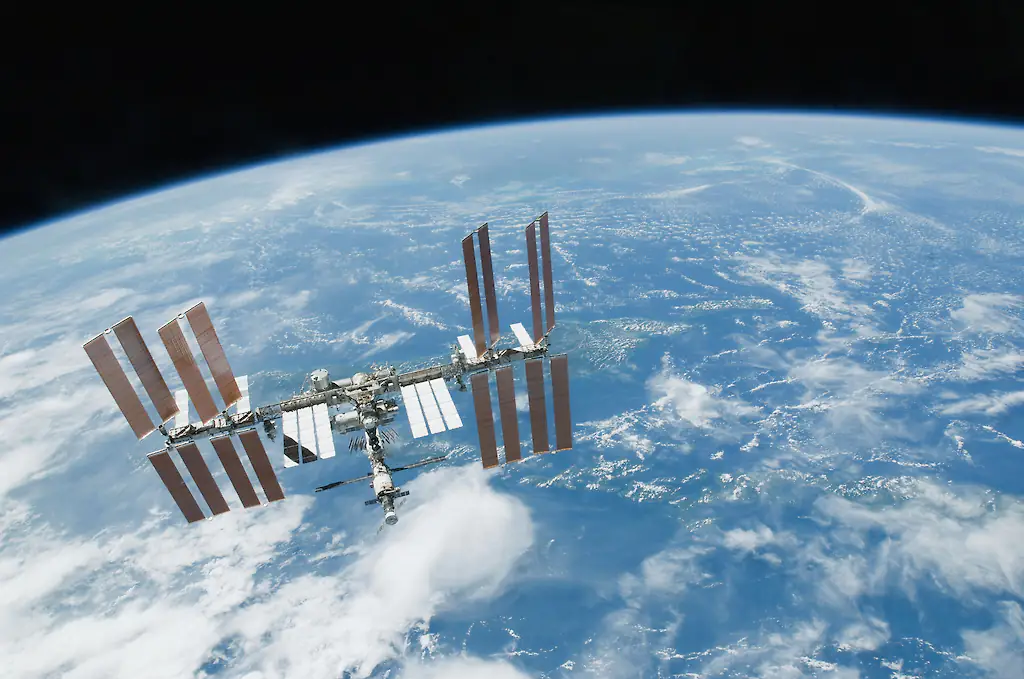
Their mission, initially slated for a brief eight-day stint, transformed into an extended stay aboard the International Space Station (ISS) due to unforeseen technical challenges.
The Unexpected Extension
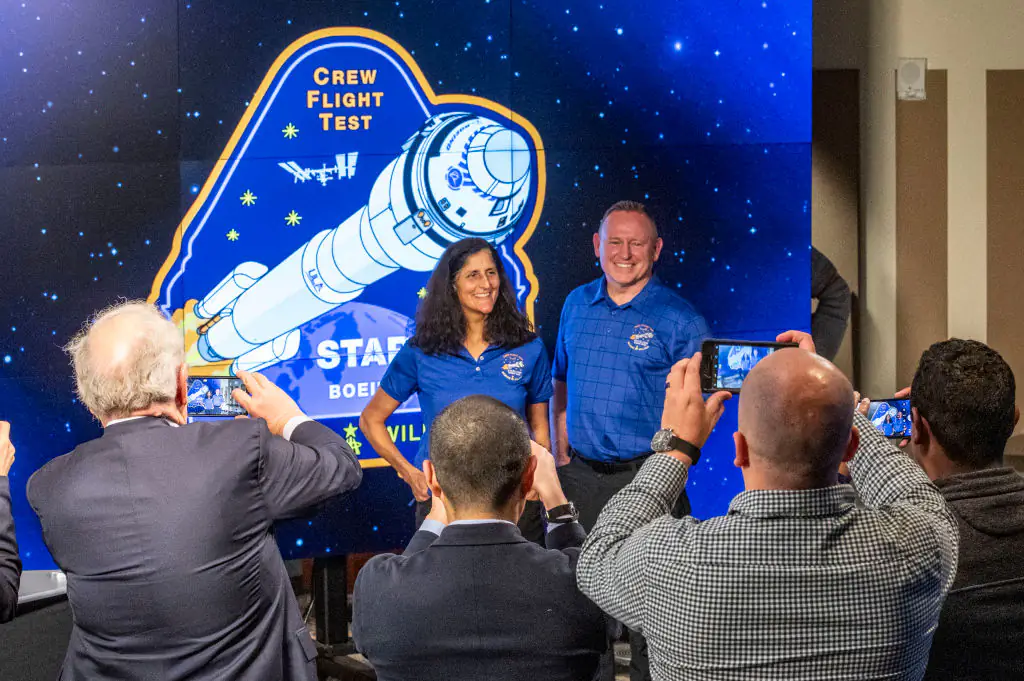
In June 2024, Williams and Wilmore embarked on a mission aboard Boeing's CST-100 Starliner, marking its inaugural crewed test flight.
The plan was straightforward: spend eight days in space, conduct essential tests, and return home.
Butch Wilmore and Suni Williams back in July of 2024. Credit: Joe Raedle/Getty
However, upon docking with the ISS, the Starliner experienced propulsion system malfunctions - critical for slowing the capsule upon re-entry - rendering it unsafe for the crew's return journey, per CNN.
NASA, prioritizing astronaut safety, made the prudent decision to send the Starliner back to Earth unmanned in September 2024, leaving Williams and Wilmore aboard the ISS to await an alternative ride home.
NASA Administrator Bill Nelson has defended this decision, saying: “Spaceflight is risky, even at its safest and most routine. A test flight, by nature, is neither safe, nor routine. The decision to keep Butch and Suni aboard the International Space Station and bring Boeing’s Starliner home uncrewed is the result of our commitment to safety: our core value and our North Star."
Life Aboard the ISS
During their extended tenure, Williams and Wilmore seamlessly integrated into the ISS crew, contributing significantly to the station's operations.
They participated in over 150 experiments, dedicating approximately 900 hours to research that holds promise for future deep-space missions and the quest to land humans on Mars.
Speaking at today's press conference marking the crew's return home, Joel Montalbano, Deputy Associate Administrator of NASA's Space Operations Mission Directorate, said: “Suni and Butch did 150 experiments and 900 hours of research during their stint on the ISS.”
Wilmore and Williams alongside Roscosmos cosmonaut Aleksandr Gorbunov and NASA astronaut Nick Hague. Credit: Keegan Barber/NASA via Getty Images
Their roles expanded beyond research; they undertook routine maintenance tasks and even conducted spacewalks to upgrade the station's systems. Montalbano stressed that the work carried out "benefits the nation" and increases the chance that NASA will be successful in hitting its goal of landing a person on Mars by the end of the decade.
The Journey Home
The path to their return was meticulously planned. NASA collaborated with SpaceX to facilitate the astronauts' safe journey back to Earth.
Williams and Wilmore, along with NASA astronaut Nick Hague and Russian cosmonaut Aleksandr Gorbunov, boarded the SpaceX Crew Dragon capsule -- the aptly named "Freedom".
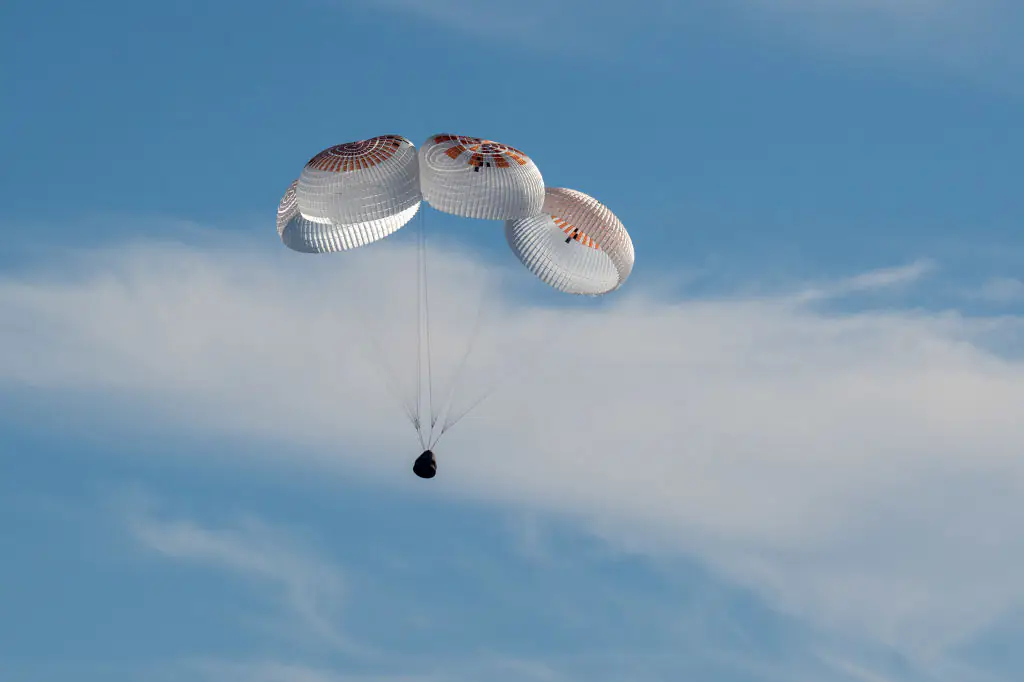
After 17 hours, the crew splashes down. Credit: Keegan Barber/NASA via Getty Images)
After a 17-hour voyage, the capsule executed a flawless re-entry, deploying its parachutes and gently splashing down off the coast of Tallahassee, Florida, at 5:57PM ET on March 18, 2025.
As the hatch opened, the astronauts emerged smiling and waving, their joy palpable with the nation after months in microgravity.
A Warm and Unusual Welcome
In a delightful twist, a pod of dolphins greeted the astronauts' capsule as it bobbed in the ocean, awaiting retrieval.
Suni Williams seen back on Earth. Credit: Keegan Barber/NASA via Getty Images
Barry "Butch" Williams returns to Earth. Credit: Keegan Barber/NASA via Getty Images
Once aboard the recovery ship, the crew underwent standard medical evaluations to assess their readjustment to Earth's gravity. Personalized footrests were provided to help ease them back into the effects of gravity.
They are expected to spend some time reacclimating and will soon reunite with their families.
Former NASA astronaut Terry Virts has recently described his own struggles upon returning from the ISS and shared what Williams and Wilmore are likely to experience.
“For me, I felt two things: I felt really heavy and really, really dizzy," he said. Virts added that it took time for his sense of balance to fully recover.
NASA astronaut Leroy Chiao explained on NewsNation Prime that the returning crew may experience a painful condition known as "baby feet"
"You basically lose the thick part of the skin on your feet. You kind of have baby feet when you come back," Chiao said.
This transformation makes walking painful and uncomfortable until the skin toughens up again — a process that can take anywhere from a few weeks to a couple of months.
Chiao also echoed Virts' comments regarding severe dizziness and balance disruption. “To me, it feels kind of like having the flu. It takes a couple of weeks to get back to normal,” he said.
Other common issues facing returning astronauts include:
Muscle deterioration due to the lack of resistance from gravity
Decreased bone density, increasing the risk of fractures
Fluid shifts, which can affect vision by putting pressure on the optic nerve
Slight heart shrinkage, as the heart doesn’t have to work as hard to pump blood in space
Psychological effects, including anxiety and depression, due to prolonged isolation in a confined space
NASA’s Plan to Help Wilmore and Williams Recover
NASA reportedly has a strict post-space rehabilitation program designed to help astronauts gradually reacclimate to Earth’s gravity. This includes:
Gradual walking reintroduction, starting with soft surfaces
Strength training and cardiovascular exercises to rebuild muscle and bone density
Balance training to restore coordination
Psychological support to help astronauts adjust mentally
Addressing the "Stranded" Narrative
Throughout their prolonged mission, narratives emerged suggesting that Williams and Wilmore were "stranded" in space.
However, both astronauts and NASA officials refuted these claims.
"We came up prepared to stay long even though we planned to stay short; that is what we do in human spaceflight," Wilmore previously told reporters, per Space.com.
NASA emphasized that - despite the extended duration - the crew remained safe, engaged, and fully supported. The decision to delay their return was rooted in safety considerations and the availability of a reliable spacecraft to ensure their secure passage home.
Per BBC News, NASA’s Associate Administrator Ken Bowersox addressed their extended stay, explaining: “The SpaceX folks helped us with a lot of options for how we would bring Butch and Suni home on Dragon in a contingency.”
Though NASA explored multiple return strategies, none were deemed practical due to budget constraints and the necessity of maintaining ISS operations.
“But we ruled them out pretty quickly just based on how much money we've got in our budget, and the importance of keeping crews on the International Space Station,” Bowersox added. “They're an important part of maintaining the station.”
With their return to Earth, Wilmore and Williams will have spent approximately 285 days in space, making them the sixth longest-serving NASA astronauts for a single mission.
Their time in space is just shy of Peggy Whitson’s 289-day record, while Frank Rubio holds the longest NASA spaceflight record at 371 days, per the New York Post.
During their time in space this mission, they completed 4,576 trips around Earth.
Featured image credit: Keegan Barber/NASA via Getty Images)



.webp_SmgFsc?tr=cr-292.0.1244.952,f-webp,q-70,w-100)
.webp_lli6Ty?tr=cr-74.9.445.380,f-webp,q-70,w-100)
.jpg_DDwZw6?tr=cr-0.0.1.0.67,f-webp,q-70,w-1024)




.webp_vBqgAR?tr=cr-242.0.1293.1051,f-webp,q-70,w-100)

.webp_SmgFsc?tr=cr-292.0.1244.952,f-webp,q-70,w-1024)

.webp_lli6Ty?tr=cr-74.9.445.380,f-webp,q-70,w-1024)


.webp_vBqgAR?tr=cr-242.0.1293.1051,f-webp,q-70,w-1024)