ADVERT
Space1 min(s) read
Published 12:32 28 Oct 2019 GMT
NASA has shared a stunning picture of the sun during an eruption of solar flares, which makes our star resemble a Halloween jack-o-lantern.
The picture of the sun was allegedly taken way back in 2014 but has been reposted by the space agency in the run-up to the October holiday. The image in question was taken by the Solar Dynamics Observatory satellite and shows a number of visible flares ultraviolet light from the star's most active regions.
Check out this astonishing footage captured by the Juno spacecraft orbiting Jupiter:
[[jwplayerwidget||https://content.jwplatform.com/videos/ikNUmKSF-sKUnNGKf.mp4||ikNUmKSF]]
As a result of the positions of the flares, and the interplay of light and shadow in the picture, the gigantic ball of firey gas does indeed bear a superficial resemblance to the grinning rictus of a carved pumpkin with a candle burning inside.
The picture was uploaded to NASA's official Facebook and Twitter pages, and was accompanied by the caption: "Even our star celebrates the spooky season — in 2014, active regions on the Sun created this jack-o'-lantern face, as seen in ultraviolet light by our Solar Dynamics Observatory satellite. ☀️?? [sic]"
[[facebookwidget||https://www.facebook.com/NASASunScience/photos/a.118111491569416/2417928458254363/]]
In a statement regarding the image, a spokesperson for NASA wrote: "Active regions on the sun combined to look something like a jack-o-lantern’s face on Oct. 8, 2014. The image was captured by NASA's Solar Dynamics Observatory, or SDO, which watches the sun at all times from its orbit in space."
They added: "The active regions in this image appear brighter because those are areas that emit more light and energy. They are markers of an intense and complex set of magnetic fields hovering in the sun’s atmosphere, the corona. This image blends together two sets of extreme ultraviolet wavelengths at 171 and 193 ? ngströms, typically colorized in gold and yellow, to create a particularly Halloween-like appearance."
Check out this awesome video of a tiny Hunter's Moon:
[[jwplayerwidget||https://content.jwplatform.com/videos/MwGAxt1j-Q0L14jDU.mp4||MwGAxt1j]]
But this isn't the only incredible celestial event we've documented this month. Check out our article all about the amazing Hunter's Moon that was visible on October 13.
space4 min(s) read
Published 12:54 09 Apr 2024 GMT
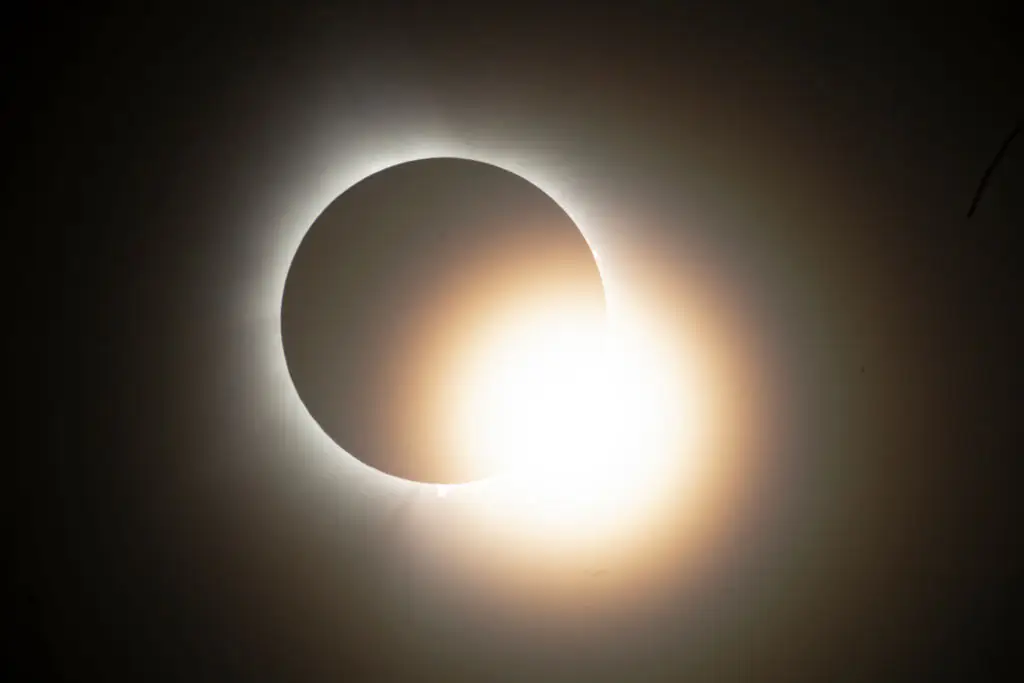
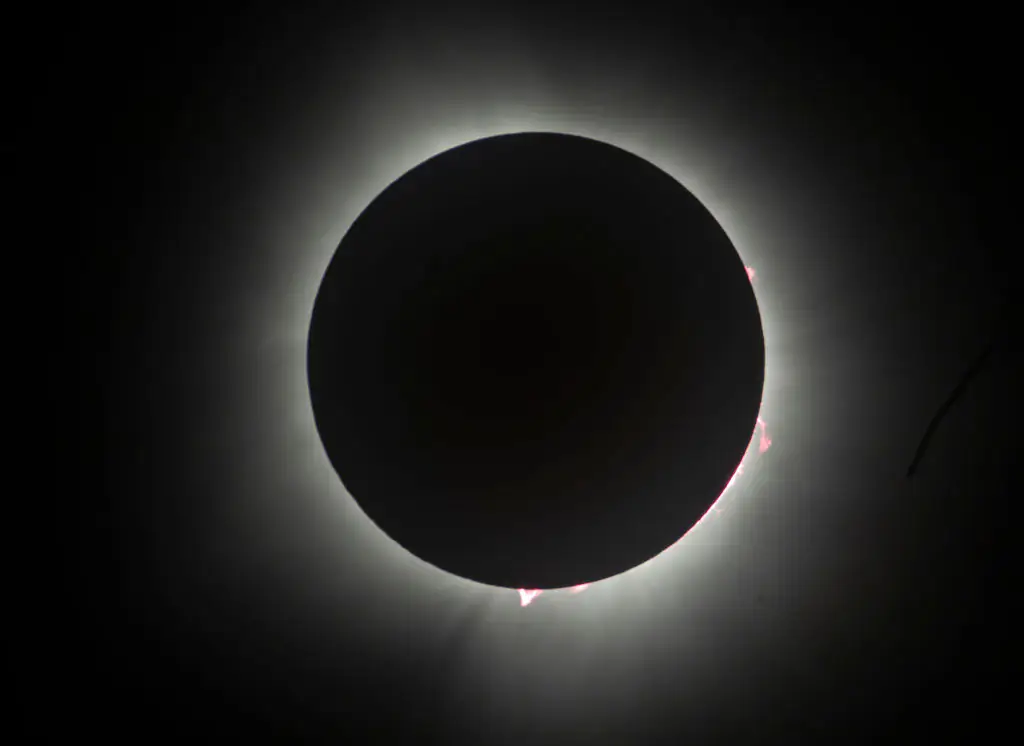
NASA has revealed a breathtaking picture that showed what the solar eclipse looked like from an astronaut's perspective in outer space.
Solar eclipses are a rare spectacle that occurs when the moon passes between Earth and the sun, temporarily blocking the sun’s light and casting a stunning shadow on Earth.
The sun is about 400 times further from our planet than the moon is, but as the Sun is much bigger, they appear to be the same size when they pass each other during this extraordinary event, showcasing the Sun's eye-catching solar bursts from the sides.
According to Space.com, the last century has witnessed a total of 75 solar eclipses, spanning from 1925 to 2024, including annular-total/hybrid and non-central total eclipses.
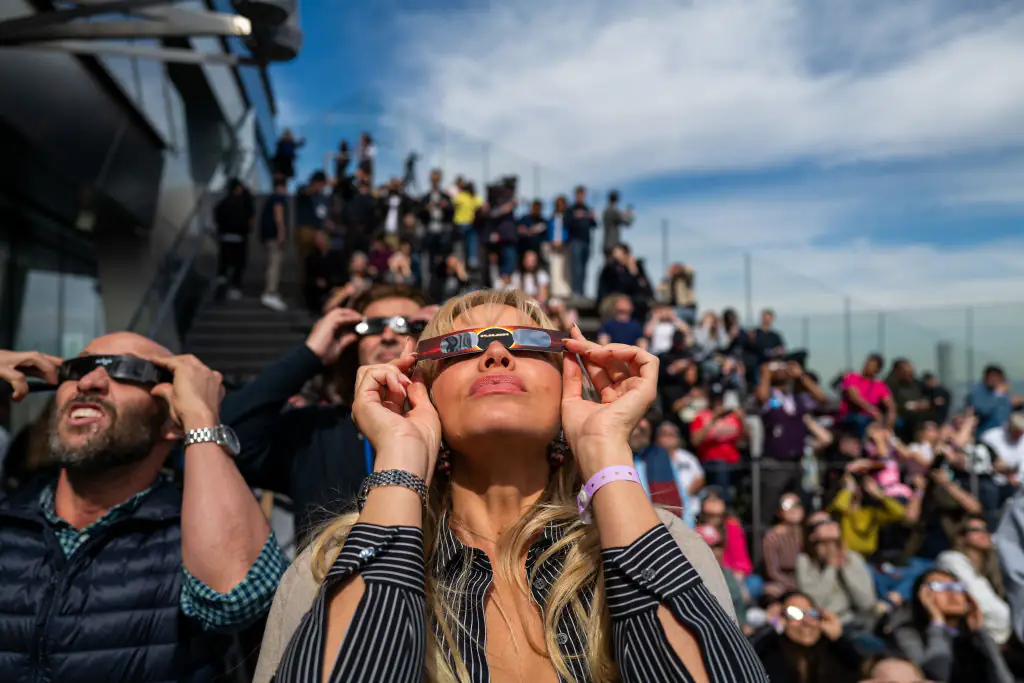
This year, tens of millions of people were treated with the rare and dazzling celestial event as it swept across North America on Monday afternoon (April 8).
For stargazers, eclipse chasers, and astronomy enthusiasts, NASA shared a riveting video of what the eclipse looked like from space. The footage shows an unsettling black blotch floating across our planet, which makes it look like a frightening scene from a dystopian film.
Watch how the solar eclipse looked from space below:
Former NASA scientist and veteran astronaut Terry Virts has witnessed the spectacle in space, and opened up about the occasion to USA Today, sharing: "When I was in space in 2015, we saw an eclipse over the North Atlantic.
"It was an eclipse that very few humans saw I think, but it was a really unique experience to look down and just see this big black circle kind of moving across the planet," he continued.
"It was unlike anything I've ever seen," Virts added. "I joke I'm glad they told us there was an eclipse because it would have been unsettling to look down at Earth and see this black spot moving across. It was really cool."
Almost 32 million people were in the path of totality as the moon’s shadow traversed the Mexico-Texas border and crossed 15 states, although many in the south and midwest, were denied a clear view by low clouds and rain.
The phenomenal affair reached a maximum duration of four minutes and 28.2 seconds in north-central Mexico, firmly securing its position in the "Four Minute or Greater Club," per Space.com
President Joe Biden shared a message from the White House, describing the eclipse as an event "worth marveling at," and advising people to use safety glasses to look at the sun.
Pam Melroy, the deputy head of NASA, and a retired astronaut who has degrees in astronomy and planetary sciences, said that there's "something very mysterious about a total solar eclipse," adding: "When literally day turns to night, animals start to behave differently, and we see changes in the Earth’s atmosphere.
"It’s a mystical, mysterious experience. And I love the thought that millions of Americans stood together today, looking up into the sky," she explained, as cited by The Guardian.
The total eclipse is also an excellent chance for scientists to examine changes in part of the Earth's upper atmosphere known as the ionosphere, as it affects radio waves used for transmission and navigation.
"Disturbances in this layer can cause issues with GPS and communications," said Kelly Korreck, the eclipse program manager at NASA headquarters, as per Phys.org.
The next total solar eclipse visible from parts of the U.S. won't happen until August 23, 2044.
space3 min(s) read
Published 17:35 19 Dec 2023 GMT
Get ready to see Uranus like you've never seen it before as NASA has treated us to some images of never-seen-before features of the planet.
Many people have pondered what the planet might hold and these discoveries will help future missions to head to Uranus.
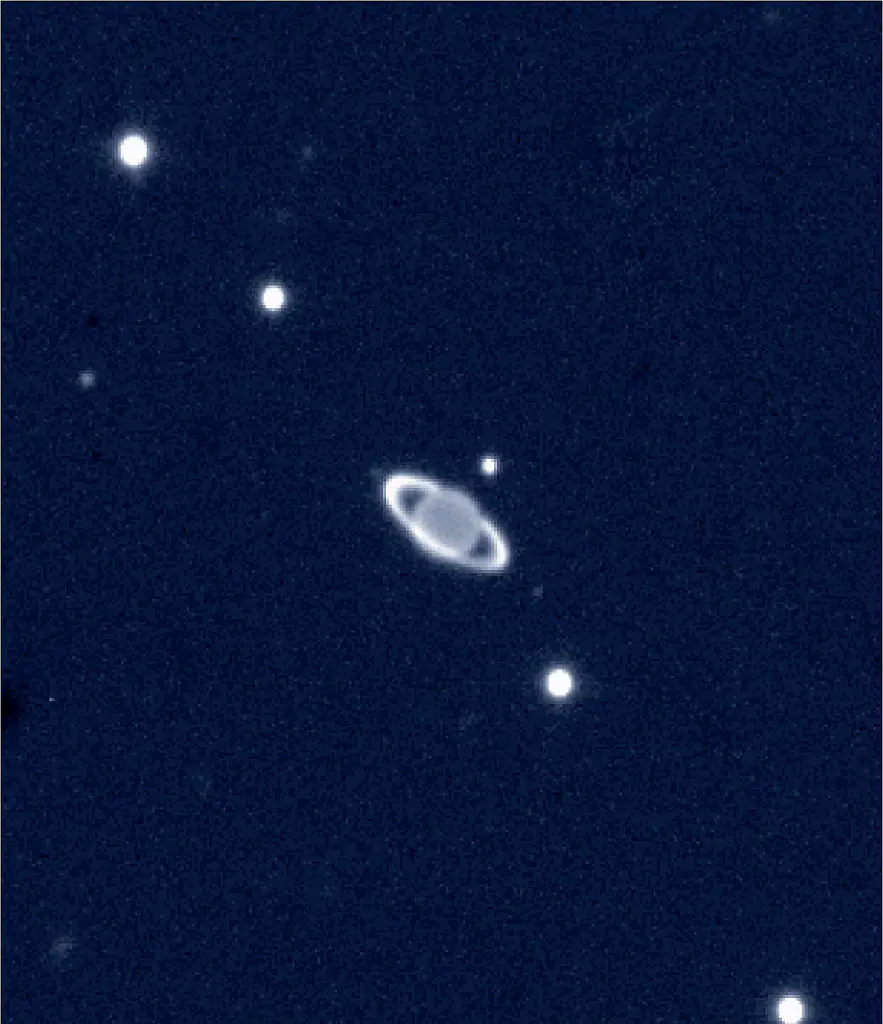
As reported by the New York Post, NASA's James Webb Space Telescope has revealed some incredible new images, which have given us the first glimpse at the incredible ring of Uranus.
Okay, now we've had a laugh at the word Uranus, let's get on with the actual cool bit.
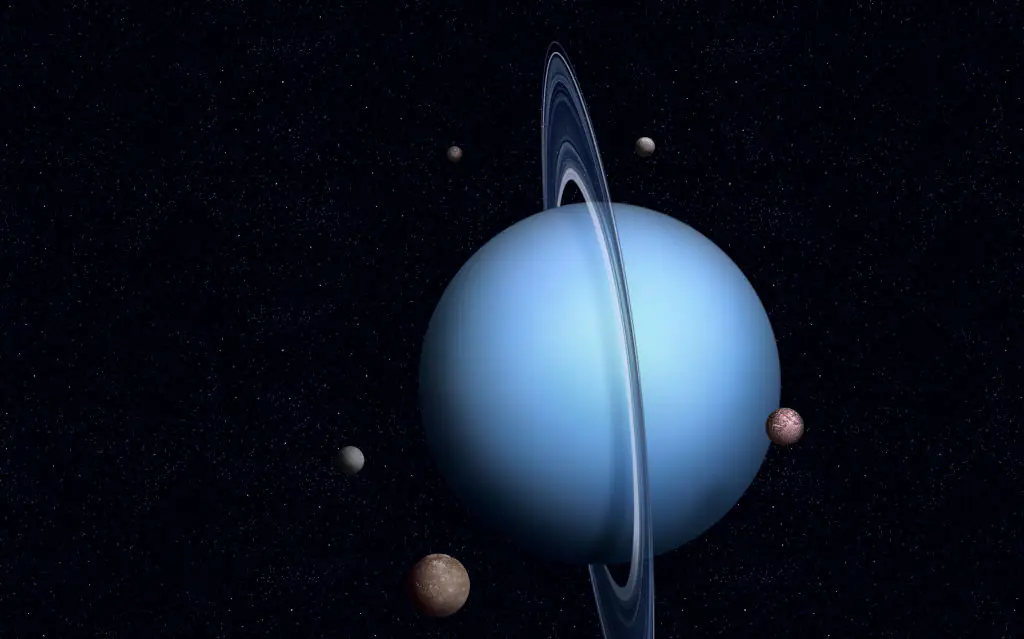
Take a look at the new images below:The stunning visuals, released on Monday, provide an unprecedented perspective of the icy giant and its intricate ring system, along with other celestial features.
Captured through the lens of NASA's high-powered telescope, the images showcase Uranus adorned with both inner and outer rings, highlighting nine of its 27 known moons and a distinctive seasonal polar cap.
Among the revelations is the debut of the "elusive" Zeta ring, an ethereal and faint ring in close proximity to the planet, presenting itself in a striking reddish-brown hue. Multiple other rings are depicted in a captivating glowing blue.
The James Webb telescope doesn't just focus on the aesthetic; it also offers glimpses into the atmospheric dynamics of the frigid planet. The images reveal Uranus' seasonal north polar cloud cap and several storms in its vicinity.
Uranus, with its extreme seasons, owes its peculiar climate to a unique characteristic - it spins on its side at a tilt of approximately 98 degrees. This axial tilt results in an extraordinary seasonal cycle where one pole experiences sunlight while the other plunges into a prolonged 21-year winter.
"With Webb’s unparalleled infrared resolution and sensitivity, astronomers now see Uranus and its unique features with groundbreaking new clarity," states NASA. The detailed imagery, especially of the enigmatic Zeta ring, proves invaluable for future mission planning to Uranus.
NASA emphasizes the significance of Uranus as a key player in advancing our understanding of exoplanets. The planet and its newfound images will aid scientists in studying nearly 2,000 exoplanets of similar size discovered over the past few decades.
"This 'exoplanet in our backyard' can help astronomers understand how planets of this size work, what their meteorology is like, and how they formed," asserts NASA. "This can, in turn, help us understand our own solar system as a whole by placing it in a larger context."
Hopefully, you've enjoyed this detailed look at Uranus.
space1 min(s) read
Published 13:33 30 Jan 2020 GMT
It's fair to say that most of us take the sun for granted, and it's no exaggeration to say that were it not for that giant burning ball of gas out there in space, life on this planet literally could not exist.
Of course, we all know that actually looking at the sun is damn near impossible and blinding, but now a team of scientists working at the Inouye Solar Telescope in Hawaii has harnessed their state-of-the-art technology to reveal the most detailed pictures of the surface sun ever taken.
[[facebookwidget||https://www.facebook.com/US.NSF/photos/pb.30037047899.-2207520000../10157690204862900/]]
The images were shared on the official Facebook page of the US National Science Foundation, the images show what looks like a flat display of golden yellow popcorn kernels. Yet each of these 'kernels' represents a colossal nuclear explosion, with each 6000-celsius bubble of super-hot plasma measuring roughly the same size as the state of Texas.
[[facebookwidget||https://www.facebook.com/NationalSolarObservatory/photos/a.413396628695179/3001426843225465/?type=3&theater]]
Commenting on the stunning pictures in the Facebook caption, the National Science Foundation's director France Córdova stated: "NSF’s Inouye Solar Telescope will be able to map the magnetic fields within the sun’s corona, where solar eruptions occur that can impact life on Earth. This telescope will improve our understanding of what drives space weather and ultimately help forecasters better predict solar storms."
[[facebookwidget||https://www.facebook.com/NationalSolarObservatory/videos/582957998952805/]]
The video above was shared to Facebook by the National Solar Observatory, along with the caption: "Our star, in action, doing what it does."
In another post, they wrote: "The National Science Foundation (NSF)'s Inouye Solar Telescope images the sun in more detail than we’ve ever seen before. The telescope can image a region of the Sun 38,000km wide. Close up, these images show large cell-like structures hundreds of kilometers across and, for the first time, the smallest features ever seen on the solar surface, some as small as 30km."
Per British tabloid newspaper The Sun, the NSF researchers apparently aim to use the Inouye telescope to investigate solar storms; vast eruptions that can disrupt electronics on Earth and lead to profound meteorological changes.
To better understand the workings of our local star, NSF intends to measure the magnetic field strength and direction of the bubbles on the sun's surface. They will then try to trace the field as it extends out into the million-degree corona, the outer atmosphere of the Sun.
Take a look at this gorgeous footage of a tiny Hunter's Moon rising over the horizon:
[[jwplayerwidget||https://content.jwplatform.com/videos/MwGAxt1j-Q0L14jDU.mp4||MwGAxt1j]]
But this isn't the first exciting space news we've covered lately. Check out this article we penned all about the giant star 1,400 times bigger than our own sun, which astronomers predict is about the explode.
weird4 min(s) read
Published 10:31 11 May 2024 GMT
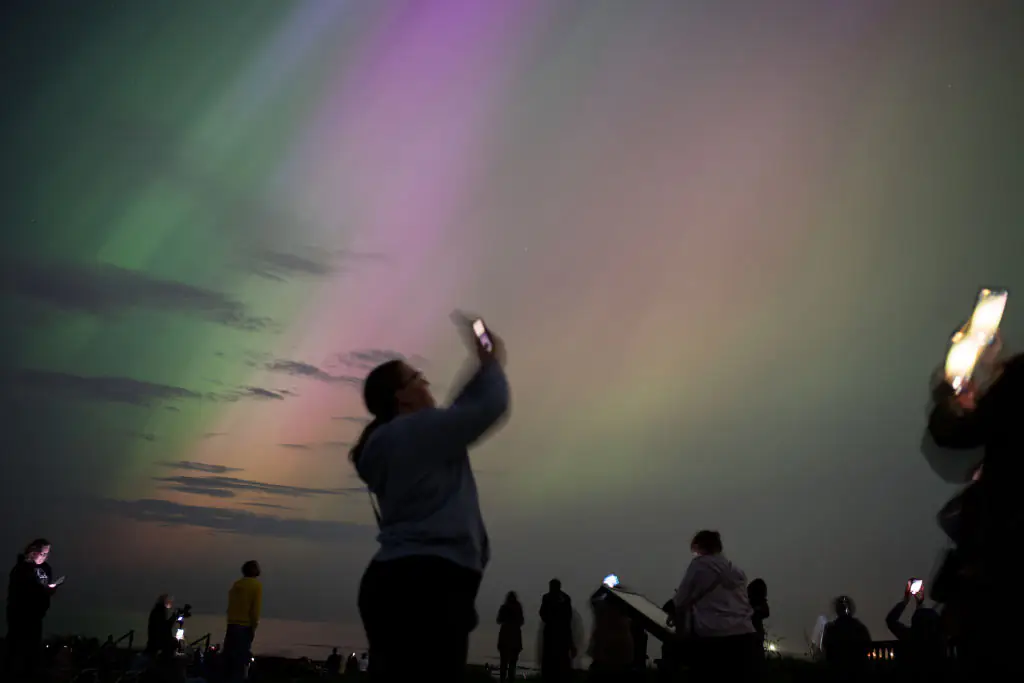
For thousands of people across the US, UK, and Europe, last night was the first time that they ever witnessed the celestial phenomenon known as the Northern Lights.
Also called the aurora borealis, the dazzling displays of light are created by the interaction of charged particles from the Sun with gases in the Earth's atmosphere. As these charged particles collide with atmospheric gases, they energize atoms and molecules, causing them to emit light.
The distinct colors of the aurora are a result of different gases in the Earth's atmosphere being energized by the incoming charged particles. Nitrogen and oxygen are the two most abundant gases in the atmosphere, with oxygen atoms emitting predominantly green light - the most common color observed in the Northern Lights.
Nitrogen atoms, on the other hand, emit hues of purple, blue, and pink.
In the UK, the lights were seen as far south as the Isle of Wight, and in the US, states like Alabama and northern California were lucky enough to see the stunning lights.
Due to it being the first time many people had witnessed the breathtaking display, it's no surprised that '#auroraborealis' and 'Northern Lights' were trending on X (formerly known as Twitter).
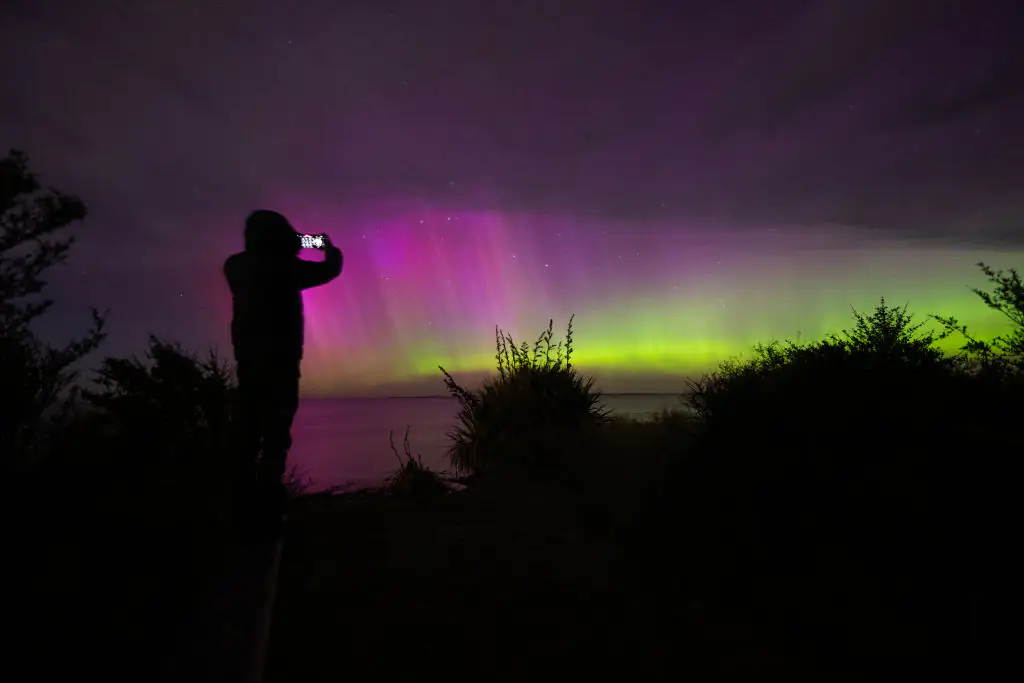
But many social media users were then left stunned to hear of a phenomenon they've never heard of before: The Southern Lights.
A second added: "Never thought about it but my sister said there was Southern Lights too in Melbourne she missed as well !! These are Southern lights !! Never twigged they’d be a thing!!"
Even people in the southern hemisphere didn't know, with one X user writing: "Just found out aurora australis (SOUTHERN lights) are a thing and they were visible here too and i didn't even look outside???"
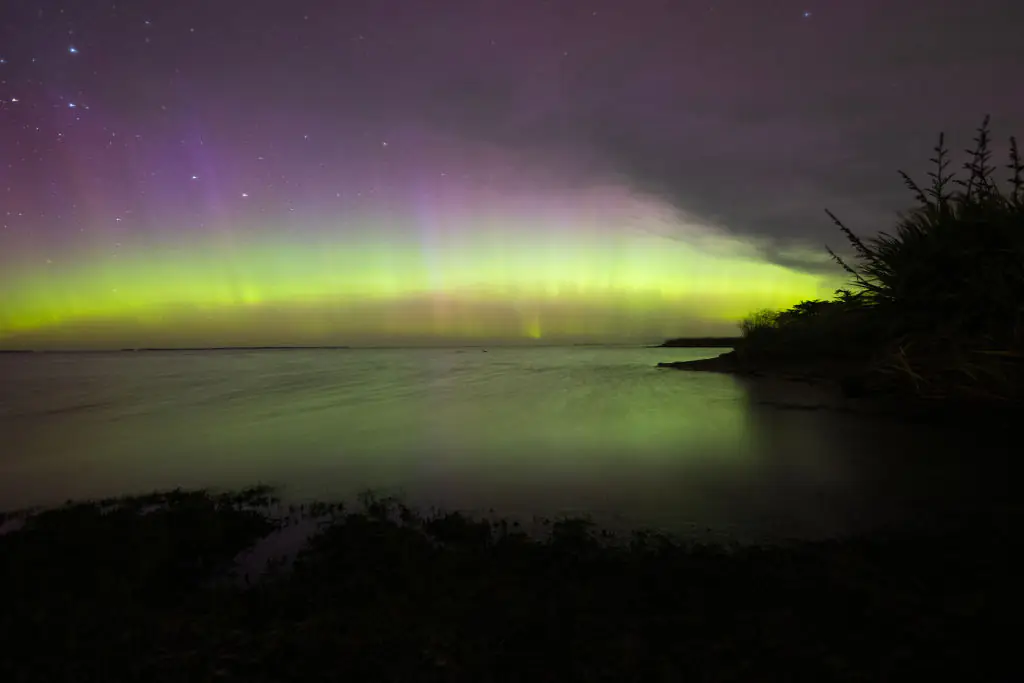
Yes, for those unaware, the Southern Lights are very much a thing.
So, what sets apart the northern lights from their southern counterpart?
Named after Aurora, the Roman goddess of dawn, and Boreas, the Greek god of the North Wind, the Aurora borealis received their moniker from renowned scientist and astronomer Galileo Galilei.
Throughout history, the northern lights have been steeped in myth and legend, with the Vikings perceiving them as reflections of Valkyries' shields guiding the souls of fallen warriors, while Greenlandic folklore believed them to be the spirits of children lost at birth.
In contrast, the Aurora australis, named after Auster, the Greek god of the South Wind, have fewer myths surrounding them, though the Maori of New Zealand once regarded the southern lights as the luminous echoes of past generations' torches and campfires.
Both the northern and southern lights stem from solar winds propelled from the sun toward Earth. Guided by the Earth's magnetic field, the charged particles of these winds collide with atmospheric atoms and gas molecules, resulting in the emission of photons – tiny bursts of light.
The vibrant colors of the auroras are dictated by the gases encountered by these charged particles; oxygen molecules contribute to green or red hues, while nitrogen molecules produce blue or violet displays.
Essentially, the same phenomenon occurs at both the southern and northern magnetic poles, rendering little disparity between the two - but there are certainly come differences to look out for.
According to PolarTours, witnessing the southern lights proves more challenging than their northern counterpart due to the sparse landmasses surrounding the Antarctic Circle. Unlike the accessibility of the northern lights in the Arctic, where one can venture into the tundra for a glimpse, Antarctica's rugged terrain – characterized by vast expanses of pack ice – presents formidable obstacles to observing the southern lights.
Remarkably, the southern lights are often deemed even more spectacular than their northern counterpart, boasting vivid displays and an expansive palette of colors.
Unimpeded by light pollution, the southern auroras offer a dazzling array of hues - with people in the southern hemisphere more likely to see golden or yellow hues.
This heightened brilliance is also attributed to the highly charged particles penetrating deeper into the Earth's atmosphere at greater speeds, colliding with larger and denser gas molecules.
So, there you have it. Maybe it's time the aurora australis gets a little more love and recognition.
space1 min(s) read
Published 15:29 26 Apr 2020 GMT
Keep your fingers crossed for clear skies this evening, because tonight we will be treated the "Earthshine" on the Moon.
The celestial phenomenon is also known as "planetshine" and "The old Moon in the new Moon's arms", and takes place several times throughout the year, but according to NASA, April, May, and June are the best months to see "Earthshine" at its finest.
Relive the moment Buzz Aldrin planted the US flag on the moon:
[[jwplayerwidget||https://content.jwplatform.com/videos/DFWxNDLh-Q0L14jDU.mp4||DFWxNDLh]]
But what is "Earthshine"?
During a new Moon, all of the Sun's light is reflected away from the Earth, and the side of the Moon facing our planet is barely visible. Sometimes, the dark face of the Moon catches Earth's reflected glow and returns that light - giving the dark face of the Moon a faint shine, resulting in what NASA describes as a "ghostly version of a full Moon".
[[twitterwidget||https://twitter.com/cosmicwandere05/status/1254380748729008129]]
This phenomenon is called Earthshine.
Tonight, (April 26), the Moon will be 12% illuminated by the Sun, meaning you will be able to see a small sliver of the luminescent crescent moon.
But thanks to Earthshine, if you look at the left-hand side of the Moon (its darker part), you will be able to perceive some detail there thanks to the Earth's "albedo" - that is, the sunlight being reflected off the Earth and onto the Moon's lunar landscape.
Essentially, it works similar to how a bright Moon often illuminates the Earth's surface.
[[twitterwidget||https://twitter.com/c_gathier/status/1254143076265852928]]
This will last for a few nights until the sheer brightness of the lit-up crescent waxes.
Per Forbes, the best time for people living in the Northern Hemisphere to see Earthshine is April, May, and June, as this is when the Earth's Arctic ice and snow reflects the most light.
Tonight, Moon-gazers may also be able to see Venus close to the Moon, as this is when the planet is at its brightest.