ADVERT
Stories3 min(s) read
Published 13:21 23 Jul 2026 GMT
In 2018, a BBC film crew broke one of the most important rules of wildlife documentation after discovering a group of Emperor penguins trapped during an extreme Antarctic storm.
The extraordinary decision happened while the crew was filming Dynasties, the BBC Earth series narrated by 100-year-old legendary naturalist Sir David Attenborough. The team was documenting the lives of Emperor penguins when they encountered a colony facing a potentially fatal situation.
A catastrophic storm had left a group of penguins stranded in a deep ravine, separated from the main colony. Temperatures had plunged to around minus 50 degrees Celsius, creating dangerous conditions for the birds and their chicks.
The adult penguins struggled to climb the steep, icy walls of the ravine while protecting their young. Some chicks had already died from the freezing conditions, while others were vulnerable to predators.
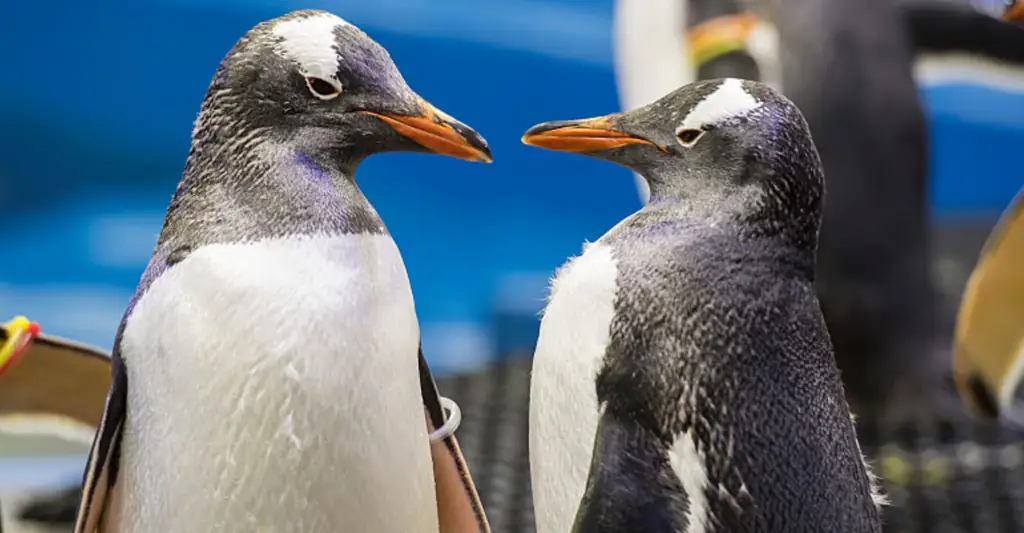
For wildlife filmmakers, intervening in such situations is generally considered a major breach of the unwritten rules of nature documentaries. The general guideline is that filmmakers should observe animals without influencing their behaviour or interfering with natural events.
However, the crew faced an agonising choice as they watched the penguins struggle to escape.
Director Will Lawson later explained that the decision to intervene was extremely complicated. The team had to consider whether helping the birds would distort the natural story they were documenting, or whether standing by would be cruel, allowing animals to die in circumstances when a simple intervention could potentially save them.
After the storm passed, the crew made a carefully planned intervention. Rather than physically rescuing the penguins and potentially harming them through human contact, they dug a shallow ramp into the icy slope, creating a route that could allow the birds to climb out on their own.
The crew then stepped away and allowed the penguins to decide whether to use it.
Their gamble worked, and the penguins eventually used the ramp to climb out of the ravine and make their way back to their colony.
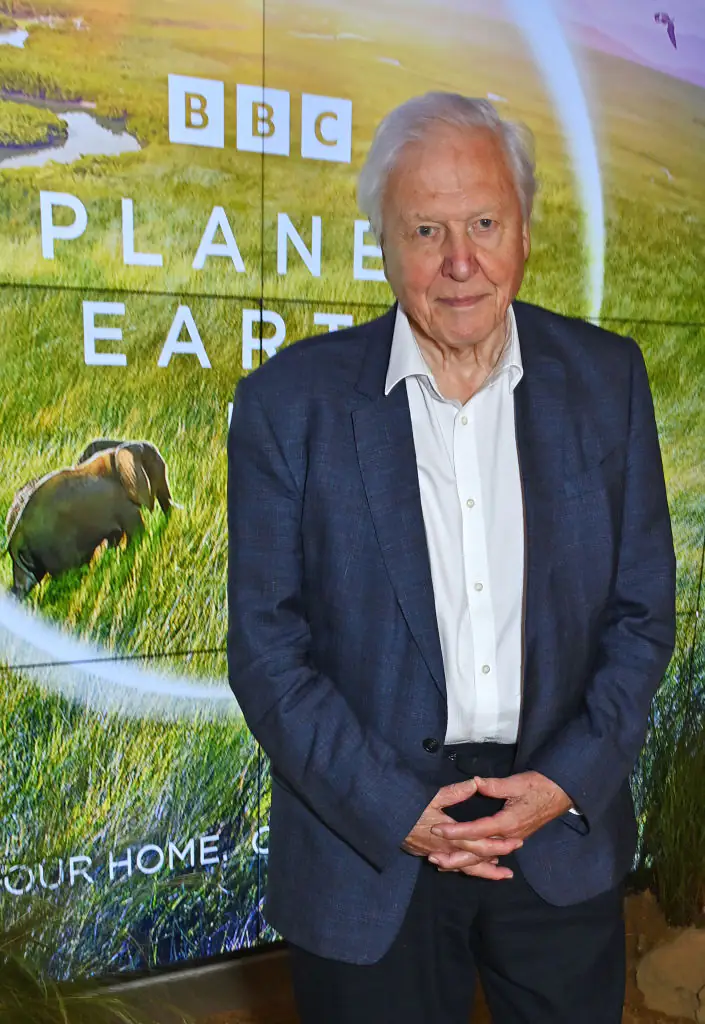
Attenborough, who has long supported the principle of allowing nature to take its course, backed the decision. He said it was extremely unusual for a film crew to intervene but acknowledged that the simple act of creating steps in the ice could give some of the birds a chance of survival.
Producer Mike Gunton also defended the choice, arguing that the penguins faced death because of an unusual event and that doing nothing would have been difficult to justify.
The intervention sparked widespread approval from viewers, who praised the crew for finding a way to help without directly handling or rescuing the animals.
For the filmmakers, the incident was a rare exception to a long-standing rule. By creating the ramp and leaving the penguins to use it themselves, the crew found a compromise between observing nature and offering a small helping hand when the circumstances became life-threatening to the penguins.
film & tv3 min(s) read
stories2 min(s) read
film & tv1 min(s) read
uk3 min(s) read
Published 16:09 20 Oct 2022 GMT
People have been bowled over by Sir David Attenborough's emotional final plea to help the environment.
The 96-year-old broadcaster has spent his life teaching people about the natural world. In recent years, he has turned his attention to the devastating impact humans and climate change are having on animals and nature.
To mark the end of his most recent BBC documentary series Frozen Planet II, Attenborough delivered an impassioned final plea to audiences, asking them to do something to ensure a future for our planet.
Watch Sir David Attenborough's emotional plea here:During the episode - which aired on BBC One last Sunday (October 16) - viewers were confronted with heartbreaking footage of polar bears and penguins struggling to survive. They were also shown the brutal toll that receding sea ice is taking on wildlife around the world.
At the end of the episode, iconic broadcast Sir David spoke directly to the camera, begging audiences: "If we can do something about it, then do it."
"We can do it. We must do it. Then there will be a future for the planet," he said.
Attenborough's words clearly moved viewers. Many took to Twitter to discuss the episode, calling on policymakers to heed his warning and saying that it should be "compulsory viewing".
"Just wept watching #FrozenPlanet2 - heartbreaking. Should be compulsory viewing for every single politician, leader and policy maker. As Sir David Attenborough said 'We CAN do it. We MUST do it'. For the sake of our beautiful planet, we have to act NOW and all do our bit," one person wrote.
"Watching #FrozenPlanet2 tonight was tough. If David Attenborough can't convince people of the #ClimateEmergency then who can? This should be made compulsory viewing for global policymakers," added another.
"All climate change deniers need to watch tonight’s episode of #FrozenPlanet2 and then try to deny that there’s no climate change - simply frightening stuff," a third commented.
"Jesus, but #FrozenPlanet2 tonight was one of the most extraordinary and powerful pieces of telly I’ve ever seen. These programs are always brilliant, but seeing the effects of climate change so tangibly was a jarring watch. It should be compulsory viewing," a fourth tweeted.
Published 10:14 14 Nov 2018 GMT
English broadcasting legend David Attenborough has given the world incredible nature documentaries, from Planet Earth to Blue Planet to his latest show, Dynasties. On this program, the 92-year-old examines the lives of five animal "families," as they fight to survive in the natural world. The series tracks the lives of tigers, lions, hunting dogs, emperor penguins and chimpanzees, which sounds cute, but nothing is sugarcoated. The aim is to show how the animal's smallest choices can lead to success or failure.
"For the past four years, we've been filming some of the most celebrated yet endangered species of animal on Earth," says Attenborough in the video teaser. "We join each family at a crucial moment in their lives, when the future of their dynasty hangs in the balance," says. "We didn't know how these stories would unfold. Would they end in triumph or tragedy?" (Well, don't say he didn't warn you!)
[[youtubewidget||https://www.youtube.com/watch?v=JWI1eCbksdE]]
Last weekend's episode focused on the chimpanzees, introducing David, the dominant leader of the troupe. As the alpha male, the other primates bring him everything he needs, but he can't trust anyone. As Attenborough states in the voice-over narration, "He's surrounded by rivals prepared to kill him for his crown." And that's exactly what happened, just months after the Dynasties crew stopped filming. David the Chimp was found dead by researchers in Fongoli, an unbearably hot section of savanna in Senegal, West Africa.
[[youtubewidget||https://www.youtube.com/watch?v=SN7CLg2LixY]]
Jill Pruetz, a director of the Fongoli Savannah Chimpanzee Project, confirmed the brutal truth during an interview with The Telegraph. "He died from wounds inflicted from what I'm sure are these young males," she stated. "There aren't other animals that would have inflicted wounds like that - especially when you have multiple individuals attacking a single individual. He was very aggressive that's why he held onto his dominant status for so long.
"[David] was pretty clever but our best interpretation of what happened is that these adult males jumped him," Pruetz continued. "Jumkin who was a beta male is now the alpha. There's a huge absence. It's like more than one chimp is gone. The dynamic is really different. I imagine Jumkin will be alpha for a while. However, you can see Luther [another beta] already challenging him a bit."
It's horrific news, especially to a television audience who just met David, but hey, those are the ways of the wild. At least the BBC documented the lives of that group of chimps for two years, giving us all a glimpse at David's life. And look at the bright side: The other five stories probably won't end in betrayal and cold-blooded. There must be some triumphs to balance out the tragedies, right?
Anyway, rest in peace to David the Chimp, and long live David Attenborough, who gives us uncensored looks at nature, even if breaks our hearts sometimes.
Published 08:01 09 Apr 2019 GMT
David Attenborough's documentaries have broken all of us many times before, but a scene in his new Netflix show has been named the most harrowing moment so far.
The team filming the streaming service's latest documentary Our Planet should have returned with footage of walruses living happily, untouched by humans. Instead, one disturbing video showed what happens when we don't take care of planet Earth.
A segment in the second episode follows the large flippered marine mammals as they are stranded on a cliff, left confused by a combination of shrinking ice cover and their own poor eyesight.
Unaware of how high up they are, they plummet off the edge of the cliff and fall to their deaths.
Narrating the scene, Sir David describes them climbing to higher ground, stating: "They do so out of desperation not choice. Their natural home is out on the sea ice, but the ice has retreated away to the north and this is the closest place to their feeding grounds.
[[jwplayerwidget||https://content.jwplatform.com/videos/iMOzfPoF-Q0L14jDU.mp4||iMOzfPoF]]
"Every square inch is occupied, climbing over the tightly packed bodies is the only way across the crowd - those beneath can get crushed to death. In a desperate bid to avoid the crush they try head towards the cliffs.
"But walruses' eyesight out of the water is poor, but they can sense the others down below, as they get hungry they need to return to the sea. In their desperation to do so, hundreds fall from heights they should never have scaled."
The agonising scene spurred many viewers to take to social media to share their heartbreak and encourage people to start doing something about climate change.
"Watched the first two episodes of #OurPlanet today and if the Walrus scene with them falling to their deaths doesn’t make you seriously think about what more you can do to combat climate change, nothing will. Seriously tough but crucially important watch [sic]," wrote @LFCMids.
[[twitterwidget||https://twitter.com/ElliotHackney/status/1114983984646316035]]
[[twitterwidget||https://twitter.com/loulabxlle/status/1115518712868737025]]
[[twitterwidget||https://twitter.com/tribalations/status/1115514453750161408]]
[[twitterwidget||https://twitter.com/JTKoop32/status/1115512378156777483]]
Another Twitter user named @annarchristian added: "Can’t believe what I’ve just witnessed on #OurPlanet The walrus scene is the most heartbreaking, important wildlife footage highlighting the impact of #climatechange I implore everyone to watch it - we can’t close our eyes to the damage we’re doing to our planet!" [sic]
Commenting on the footage, Sophie Lanfear, who produced and directed the episode, told the New York Times that filming the walruses was one of the hardest things she's ever had to do.
"The walrus scenes were the hardest things I've ever had to witness or film in my career," she said. "I really wasn't prepared for the scale of death. A small group of maybe six or seven would make it down safely, and we'd all celebrate. But the vast majority do not."
She continued: "They basically walk themselves off the cliff. The walruses are used to a soft landing. Their depth perception hasn't evolved to deal with a cliff situation, nor have they evolved to work out how to get back the way they came. So it's just tragic. It's absolutely heartbreaking."
The footage has been brought under question in the media after Susan Crockford, of the University of Victoria in British Columbia, Canada, claimed the animals were more likely to have been driven over the cliffs after being chased by polar bears and described the scenes as "contrived nonsense".
Speaking to the Telegraph, she said: 'This powerful story is fiction and emotional manipulation at its worst. 'The walruses shown in this Netflix film were almost certainly driven over the cliff by polar bears during a well-publicised incident in 2017, not because they were confused by a combination of shrinking ice cover and their own poor eyesight.
"Even if the footage shown by Attenborough was not the 2017 incident in Ryrkaypiy, we know that walruses reach the top of cliffs in some locations and might fall if startled by polar bears, people or aircraft overhead, not because they are confused by shrinking sea ice cover."
However, Lanfear defended the show, saying the segment is very real and two crew members had watched the animals fall.
She said: "We filmed Pacific walrus falling from high cliffs. They were not being driven off the cliffs by the polar bears and we know this because we had two team members watching the cliffs from afar who could see the polar bears and were in radio communications with us to warn us about any bears approaching the crew closer to the walrus and the cliffs."
If anything, let's hope the scene spurs viewers to stand up to climate change and help the walruses, and the many other animals out there that need our assistance.
Published 15:30 04 Oct 2018 GMT
David Attenborough is something of a national treasure in the UK.
In the past, he's brought us amazing wildlife series such as Blue Planet, Life on Earth, and Planet Earth, as well as dozens of other TV programmes and commentaries on nature and the wonders of the world around us. Even now, at the ripe old age of 92, it seems that the broadcasting legend still has plenty more to show us.
Today, BBC Earth shared the first trailer for Dynasties: a new show in which Attenborough follows five animal "families", documenting their struggles and successes as they fight to survive in the natural world.
[[youtubewidget||https://www.youtube.com/watch?v=JWI1eCbksdE]]
Throughout the series, Attenborough will be tracking the lives of tigers, lions, hunting dogs, emperor penguins and chimpanzees in order to give viewers a glimpse of what family means in the animal kingdom. As with all of Attenborough's work, though, the filmmaker does not sugarcoat any of the gritty realness of the wild - so viewers should watch at their own risk.
According to the BBC, the new series will be "an intense portrayal of the lives of these animals as they unfold, day-by-day, hour-by-hour, where the tiniest incident may end up having a huge consequence on their future.
"Their chances of success depend on their own strength of character, their choices and on luck. But these animals do not operate alone – their success or failure will also hinge on how they work with, or against, their own families."
The series has reportedly taken four years to make - but it's still not got a confirmed air date.
Still, that hasn't stopped the people behind the production from hyping it up already.
"After making Planet Earth II, it’s very exciting to now have the chance to show another, and I think even more intense and gripping, perspective on the lives of our planet’s most impressive yet vulnerable creatures," said Executive Producer, Mike Gunton.
"The wonderful David Attenborough will inspire audiences once again when he brings the natural world to life on BBC One with Dynasty," added the BBC’s director of Content, Charlotte Moore, in a statement. "Four years in the making, capturing extraordinary family dynamics and behaviour, I hope these intimate animal dramas will connect with audiences just as Blue Planet II and Planet Earth II did."
Everyone on Twitter seems pretty excited about the new show, too - but they're a little impatient to hear about the release date.
[[twitterwidget||https://twitter.com/caravaggio12/status/1047815965453561856]]
[[twitterwidget||https://twitter.com/Mcflymad421/status/1047803927129939968]]
[[twitterwidget||https://twitter.com/AlexandraGaratz/status/1047846556832026625]]
For now, it looks like we might have to wait a tiiiiiny bit longer for the show to hit our screens, but I'm sure it'll be worth the wait.
Published 10:46 08 May 2026 GMT
Although a broadcasting legend and environmental oracle celebrates his 100th birthday today, David Attenborough is aware he can’t live forever.
A few years ago, he addressed the sad reality of the world without him in an interview with Anderson Cooper on CBS's 60 Minutes.
Attenborough claimed that he did not fear death as long as it was a quick process.
Since the interview, he has managed to avoid his biggest fear, “becoming helpless and gaga”, and continued making incredible nature and wildlife documentaries.
On other occasions, he has said that he hopes his final moments won’t be painful or “tiresome for others”.
The documentary maker has also made many pleas to people who will outlive him to take climate change seriously and protect our planet.
Remembering the shocking sight of a dead coral reef, Attenborough reminded people of the realities of climate change and said he hopes people would rediscover their passion for persevering and looking after the natural world.
He said: "I thought I was going to dive in, in eastern Australia on the Barrier Reef, and instead of seeing the most marvellous, beautiful, extraordinary, wonderful wonderland, it was a cemetery."
Throughout the course of his generation-spanning career, Sir David has shown people parts of the natural world that might otherwise have been undiscovered, and campaigned tirelessly to save it.
Speaking about the incredible things he has seen throughout his life, he warned that “many of these wonders seem set to disappear forever”.
His work has been greatly honored by recognition and awards, so much so that his official name is Sir David Frederick Attenborough OM GSMG CH CVO CBE FRS FSA FRSA FZS FRSGS FRSB.
In the last few years, as he grew closer to his centenary, Attenborough urged people to understand that we are “facing a crisis” and action is necessary if we want a “better future”.
To celebrate Attenborough’s 100th birthday, the BBC is broadcasting a live centennial gala from the Royal Albert Hall featuring the BBC Concert Orchestra performing iconic scores from his legendary natural history series.
This landmark event combines a musical journey through his career with live tributes and performances from orchestras from across the globe to honor his dedication to environmental advocacy.