


Sport7 min(s) read
Erling Haaland diet revealed: what he eats, how he trains, and why England should worry
.jpg_I4Ebof?tr=cr-0.338.2730.3068,f-webp,q-70,w-100)
Erling Haaland eats beef hearts for breakfast, sleeps 10 hours a night with tape over his mouth, meditates before every match, and has scored in every single competitive game for Norway since October 2024.
Now he is coming for England.
The 25-year-old Manchester City striker has been the standout player at the 2026 World Cup, firing Norway into a quarter-final against the Three Lions after a tournament that has seen him rack up seven goals in four games.
Norway, who had not qualified for a World Cup since 1998, are now one win away from the semi-finals - and the man leading the charge runs on a regime that makes most elite athletes' routines look casual.
What does Erling Haaland eat?
This is where it gets interesting.
Haaland consumes around 6,000 calories a day - roughly three times the recommended intake for an adult male.
His diet is built around whole, unprocessed foods with an emphasis on organ meats that most people would not touch.
In his 2022 Viaplay documentary Haaland: The Big Decision, he was filmed carrying a bag of beef liver and heart from a local butcher.
"People say meat is bad for you," he said.
"But which meat? The meat you buy at McDonald's? Or the local cow eating grass right over there?
"I eat the heart and the liver."
British tabloids labelled the diet 'cannibalistic'.
Nutritionists, on the other hand, pointed out that liver is arguably the most nutrient-dense single food that exists - packed with vitamin A, every B vitamin, folate, copper, iron, and high-quality protein.
The rest of his daily intake includes fatty steaks (ribeye and tomahawk are his favourites), eggs, fresh fish, sourdough bread, and what he calls his 'magic potion' - a blend of raw milk, spinach, and kale that he carries to training sessions.
He adds maple syrup and raw unpasteurised milk to his morning coffee, which he considers "a superfood if you do it right".
His girlfriend, Norwegian footballer Isabel Haugseng Johansen, summed it up in a YouTube video: "Oh my god, he eats so much. Everything is about, 'When is the next meal? What should we eat? What shall we make?'"
His one ritual that never changes is the lasagne his father Alf-Inge cooks for him before every home match. Pep Guardiola reportedly joked about hiring Alf-Inge as Manchester City's club chef.
His rare cheat meal? A kebab pizza from his hometown of Bryne.
"I never eat it, only on special occasions," he has said.
"Maybe once a year, if I'm lucky."
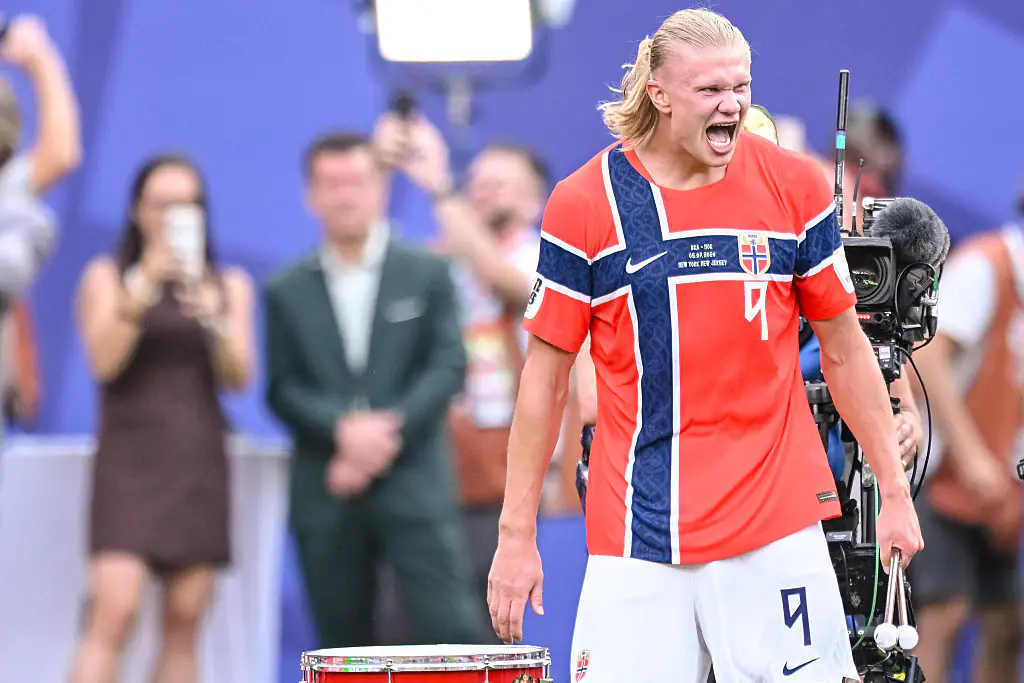
How does Haaland train?
The physical transformation has been staggering.
A former coach at RB Salzburg described the teenager who arrived at the club as a 'Cyborgoal' - a football cyborg - after he gained 12 kilograms of muscle in just 15 months.
His training regime prioritises speed, power, and endurance over heavy lifting.
Former Salzburg coach Stanislav Macek revealed that Haaland was doing 300 press-ups and 1,000 sit-ups a day during his time at the club.
He runs hill sprints repeatedly, favours HIIT sessions over traditional gym work, and finishes every session with 10 to 20 minutes of stretching and mobility work.
At 6ft 4in and 94kg, he is built more like a sprinter than a traditional striker. He told AS that the weight gain was "gross muscle mass" rather than bulk, and that his diet was the driving force behind it.
"The better food you put in your body, the better you're going to get things out of it," he said on the Man City podcast. "And performance as well."
What about his recovery routine?
This is where it tips from disciplined into obsessive.
Haaland's daily recovery routine includes cryotherapy, red light therapy, hot stone baths, saunas, and personalised physiotherapy sessions.
He wears blue-light-blocking glasses before bed.
He tapes his mouth shut at night to encourage nasal breathing during sleep.
He drinks only filtered water. He makes a point of getting morning sunlight and fresh air, and has said that one of his favourite summer habits is eating breakfast outdoors to regulate his circadian rhythm.
He sleeps around 10 hours a night and has described sleep as the single most important factor in his performance.
"Sleep is the most important thing," he told The Mirror.
"I am obsessed with sleep. If I sleep well, I play well. It is the clearest connection in my life."
He also meditates daily - the habit behind his famous cross-legged goal celebration. He has said it helps him "find an inner peace" that translates directly to how he plays.
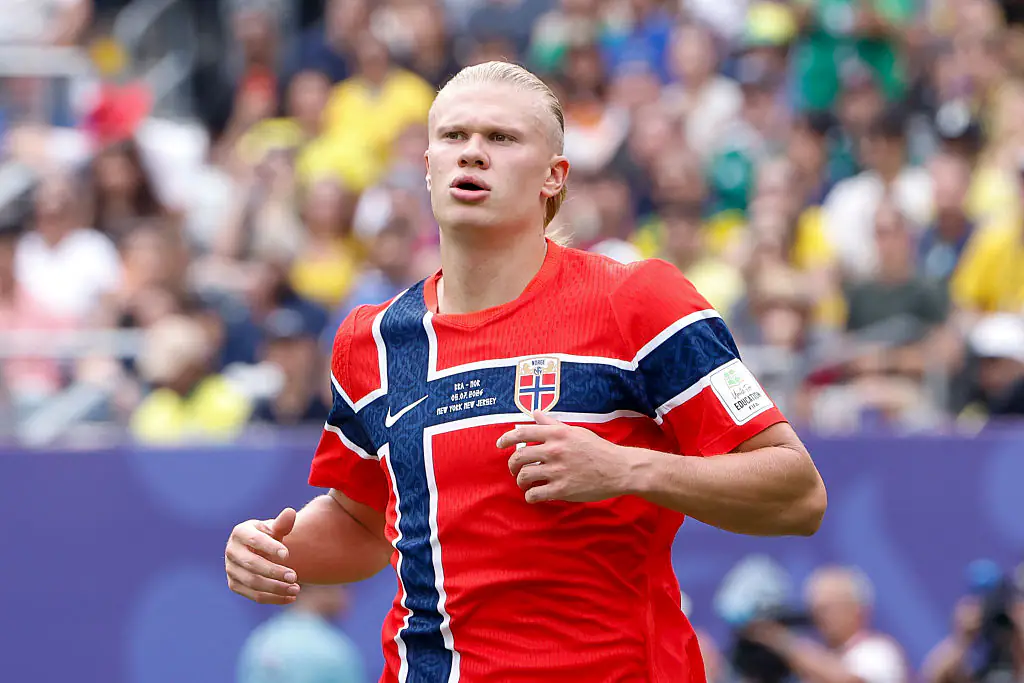
Where does the 'Viking' identity come from?
Haaland was born in Leeds in 2000 while his father Alf-Inge was playing in the Premier League for Leeds United.
Alf-Inge also played for Nottingham Forest and Manchester City, creating a family legacy his son would later continue at the Etihad.
Despite being born in England, Haaland grew up in Bryne, a small town on Norway's southwestern coast.
He is fiercely proud of his Norwegian identity and has leaned into the Viking imagery more than most.
In March, he spent 1.3 million Norwegian kroner - around $136,000 - to buy a one-of-a-kind 16th-century Viking history book and put it on public display in Bryne.
Before the World Cup, Norway's squad posed as Vikings on the shore in full battle regalia.
The team have since embraced the 'Viking Row' - a fan-created chant in which thousands of supporters sit on the ground in a longboat formation and row to the beat of a Norse horn and drum.
It has become the defining image of the tournament, drawing comparisons with Iceland's 'Thunder Clap' at Euro 2016.
Haaland and captain Martin Ødegaard joined the fans in performing the row after Norway's 3-2 win over Senegal, which confirmed their place in the knockout rounds.
"I saw it online; it's gone completely viral," Haaland told Fox Sports.
"Martin asked me before the game: 'Do you think we should join in?'"
How good has he been at this World Cup?
Historically good. Haaland has scored in every competitive game for Norway since October 2024 - a run of 14 matches and 27 goals that has no modern equivalent in international football.
He scored twice in the 4-1 opening win over Iraq and has not stopped since.
"I'm incredibly proud to make my World Cup debut and to win Norway's first World Cup match in 28 years," he said after that first game. "I hope people will party."
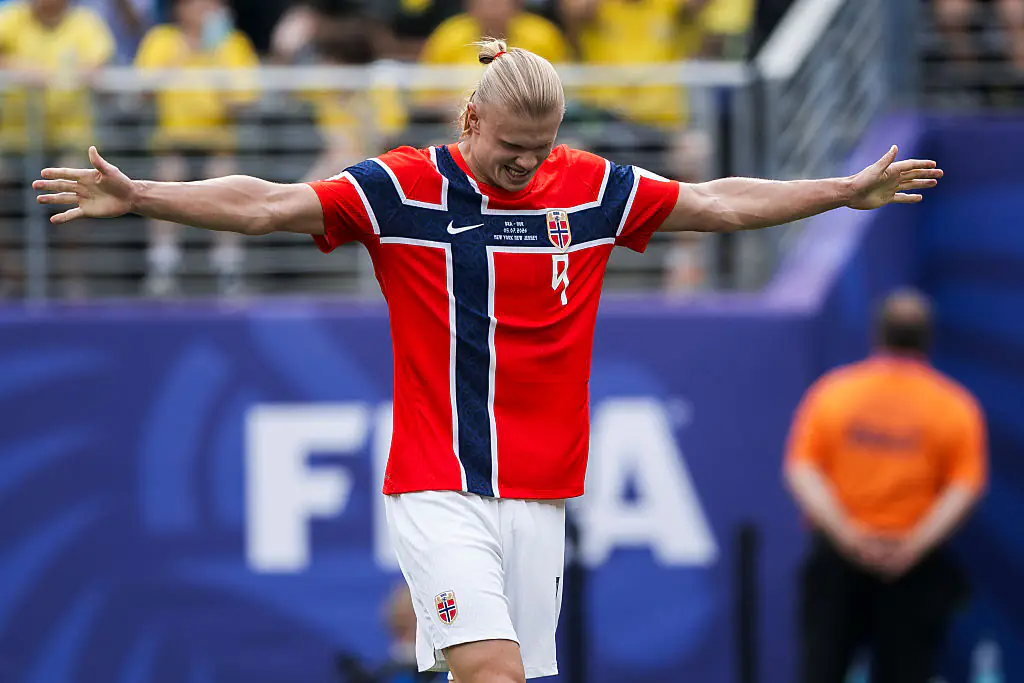
What happens next?
England. In the quarter-final. A Manchester City striker coming up against the country of his birth.
It is one of those fixtures that this World Cup seems to have been building towards.
Norway were not supposed to be here, they had not qualified for a major tournament knockout stage in almost three decades.
But Haaland, Ødegaard, and the Viking Row have turned them into one of the stories of the tournament - and England will know exactly what they are walking into.
The 2026 World Cup has had no shortage of talking points, from travel ban controversies to surprise results.
But few stories have captured the imagination quite like Norway's run - and the man at the centre of it who eats cow hearts for fuel and tapes his mouth shut before bed.
England have been warned.



.jpg_I4Ebof?tr=cr-0.338.2730.3068,f-webp,q-70,w-1024)


