ADVERT
Sport10 min(s) read
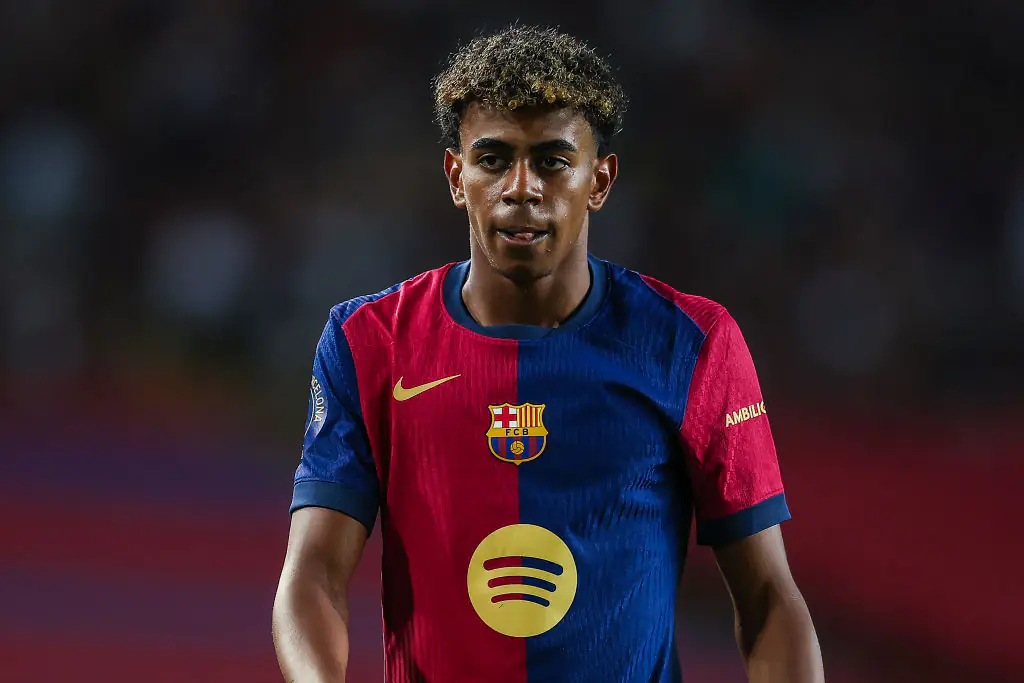
Lamine Yamal wakes at 4:00am during Ramadan to eat before sunrise, has a pre-match meal his mother has cooked for him since he was a child, and came back from a hamstring injury in six weeks to play at his first World Cup.
He turned 19 yesterday, has already won the Euros, finished runner-up for the Ballon d'Or, inherited the No. 10 shirt at Barcelona from Lionel Messi, and helped Spain reach the semi-finals of the 2026 World Cup after a 2-1 quarter-final win over Belgium on Thursday.
Today he faces Kylian Mbappé and France at Dallas Stadium.
The two are rivals at club level through El Clásico.
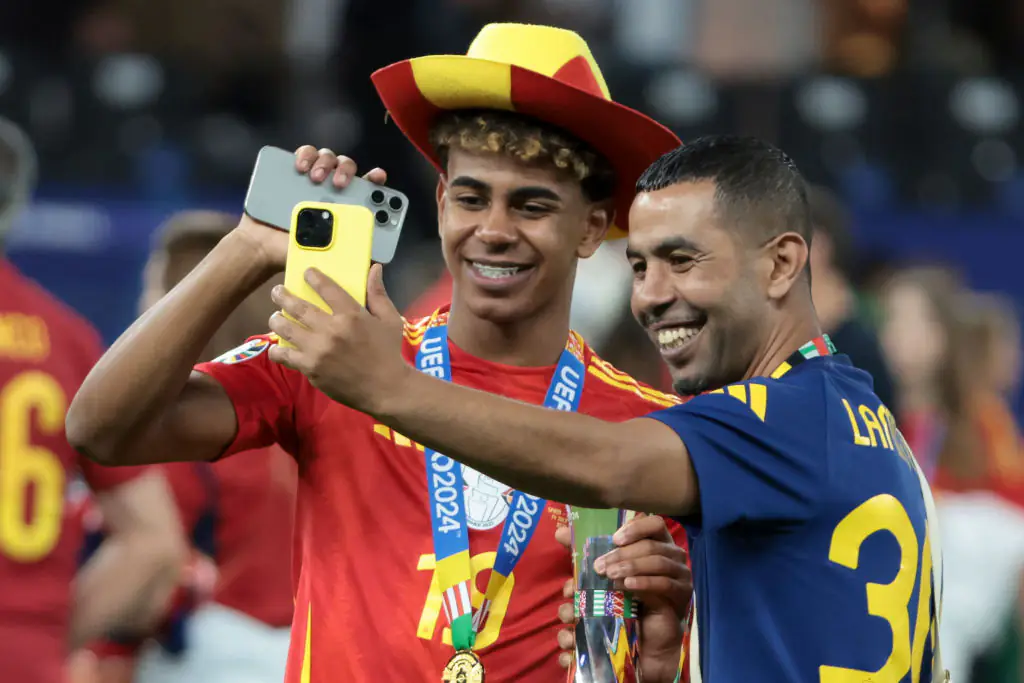
On the international stage, it is a rematch of the Euro 2024 semi-final, which Spain won 2-1, with Yamal scoring one of the goals of the tournament.
So what is fuelling the best teenager in world football?
His day-to-day nutrition is managed by Barcelona's head of nutrition, Silvia Tremoleda, who has overseen his dietary plan since he broke into the first team at 15.
The focus is on slow-absorbing carbohydrates for sustained energy: oats, rice, legumes, potatoes, sweet potatoes, wholegrain bread.
Protein comes from chicken, fish, and yogurt. Everything is clean, whole, and designed to support both his performance and his physical development. He is still growing.
But the meal that matters most has nothing to do with Barcelona's nutritionists.
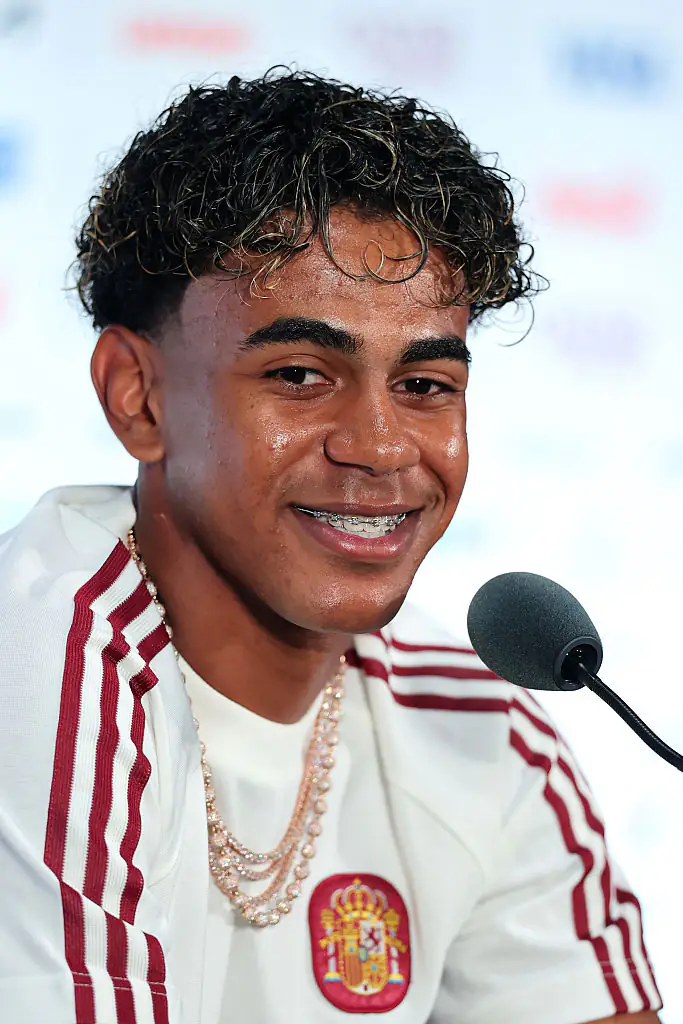
Before every game, Yamal eats chicken with rice and peanut sauce.
It is a traditional dish from Equatorial Guinea, the homeland of his mother Sheila Ebana.
She has cooked it for him before matches since he was a kid playing youth football in Rocafonda.
"My mom always made it for me before I played," Yamal has said.
"It's a dish that gives me strength."
It is also a genuinely smart piece of sports nutrition, whether or not that was the original intention.
The rice provides complex carbohydrates for slow-release energy.
The peanut sauce delivers healthy fats, plant-based protein, fibre, and minerals including magnesium and phosphorus.
Nutritionists Jaume Giménez and May Morón have both flagged natural peanut butter as one of the best energy sources available to a high-level athlete, provided it is free from added sugars.
Yamal's version comes from his mother's kitchen. It has followed him from local pitches in Mataró to Camp Nou, and now to the World Cup in America.
Yes. Yamal is a practising Muslim and actively observes Ramadan, abstaining from food and drink between sunrise and sunset during the holy month.
His first full observance came in 2025, when he was 17.
He asked Barcelona for permission to fast. The club said yes.
The decision was deeply personal, influenced by his close relationship with his grandmother Fatima, who was on a pilgrimage to Mecca at the time.
In 2026, Ramadan ran from February 18 through late March.
It coincided with one of the heaviest stretches of Barcelona's season.
Four consecutive La Liga fixtures kicked off at 4:15pm, with the sun not setting in Spain until somewhere between 6:30 and 7:00pm.
That meant Yamal was playing competitive football, at the highest level, during the most restrictive phase of his fast.
No food. No water. Not during the warm-up, not during the game, not at half-time.
Barcelona's response was thorough.
Tremoleda designed a personalised nutrition plan built around nighttime eating and strategic hydration.
Yamal's Ramadan routine starts at 4am, when he wakes for suhoor, the pre-dawn meal.
The focus at that hour is on slow-absorbing carbohydrates and proteins that will carry him through the fasting hours.
He goes back to sleep, then joins team training later in the morning as normal.
During permitted hours, he follows an aggressive hydration protocol using electrolyte solutions.
After sunset, he breaks his fast at his uncle Abdul's house in Rocafonda, where his extended family gathers every evening.
He was also granted a religious exemption by Islamic authorities to break the fast on matchdays, a concession permitted under Islamic law for those engaged in physically demanding work.
Yamal uses the exemption only on game days. Every other day of Ramadan, he fasts strictly.
Barcelona had done this before with Ousmane Dembélé, Franck Kessié, and Ansu Fati.
There are currently 34 Muslim footballers active in La Liga, according to Relevo.
Yamal's form during both Ramadan periods has been unaffected.
In 2025, he maintained a high competitive level throughout.
In 2026, he scored and assisted during the fasting period with no measurable drop in output.
His coach Hansi Flick said of the squad during Ramadan: "There's a great atmosphere in the locker room. Everyone takes care of each other, and I love that."
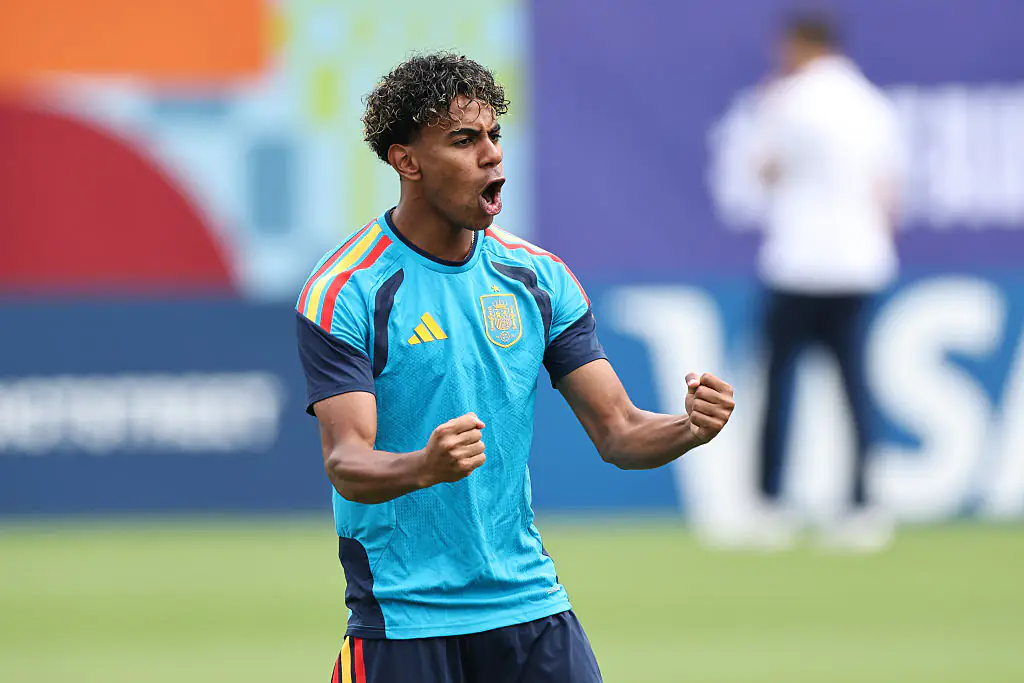
Everything about Yamal's programme is built around three things: protecting a body that is still developing, maintaining the explosive acceleration and direction changes that define his game, and managing workload across a schedule that has been relentless since he was 15.
He suffered a grade two tear to his left hamstring while scoring a penalty for Barcelona against Celta Vigo in April.
It ended his domestic season and put his World Cup participation in doubt.
Barcelona set strict conditions on his involvement with Spain, working closely with the national team's medical staff and technical director Aitor Karanka.
"We were with the Barca medical services, and we are all seeing when is the best time," Karanka said.
Yamal returned to full training with Spain at their base camp in Chattanooga, Tennessee, on June 12. Three days later, the tournament started.
He was named on the bench against Cape Verde and came on as a substitute after 70 minutes.
By the second group game against Saudi Arabia, he was starting. He scored Spain's opening goal in a 4-0 win.
"I'm at 90-80% and getting better, it doesn't go down," he told Tiempo de Juego. "I'm ready for 90 minutes. The coach decides."
In the quarter-final against Belgium on Thursday, he played the full 90.
Six games, five starts, one goal, 405 minutes. The raw numbers do not tell the full story.
His goal against Saudi Arabia on June 21 came after a moment that said as much about him as the finish itself.
The camera found him on the 360-degree screen during warm-ups and the Atlanta crowd erupted.
He was already smiling, chewing gum, completely unaware the spotlight was on him.
Less than an hour later, he had his first World Cup goal.
Teammate Alex Baena told FIFA: "Having Lamine on the pitch, whether it's for five minutes or the whole game, is extraordinary.
"What he generates simply through his presence gives us so much."
His goal contributions since Saudi Arabia have dried up, and FOX Sports pundit Alexi Lalas has been vocal in questioning whether Yamal has delivered at this tournament.
But his performances have improved with every game since his return from injury, and Spain's results tell their own story.
They went six consecutive matches without conceding a goal before Belgium's consolation on Thursday, a record clean sheet streak in World Cup history.
Every win except the Saudi Arabia and Austria games has been decided by a single goal, with two match-winners coming after the 85th minute.
Spain's performances have been functional rather than spectacular, and they have faced criticism for not matching the fluidity that won them Euro 2024.
The 2026 World Cup has generated plenty of headlines beyond the football, but Spain have ground their way through a difficult draw.
Yamal addressed the criticism directly: "Is our level the same as the Euros? I have played well many times with Barca and we have gone home, but the important thing is to win."
He also described the emotion of scoring at a World Cup with typical understatement: "I have never felt so much happiness.
"The World Cup is different and it is with your country. I never get excited, I don't cry. I cried when I got hurt, when I saw my mother cry.
"If I win the World Cup I won't cry, it's impossible."
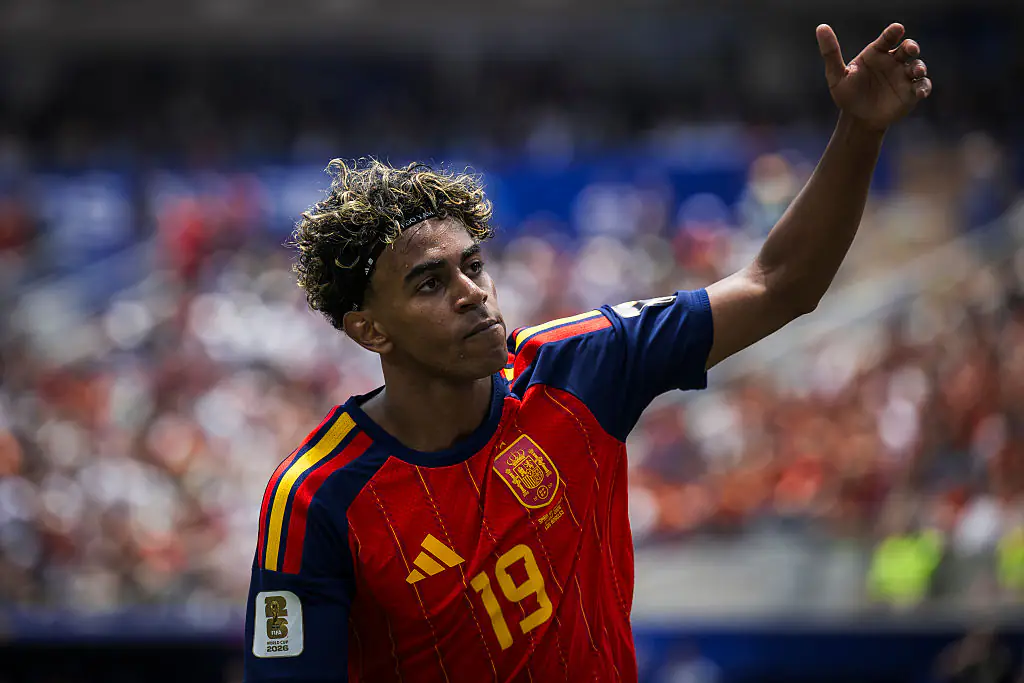
The Golden Boot is led by Mbappé and Lionel Messi, level on eight goals apiece.
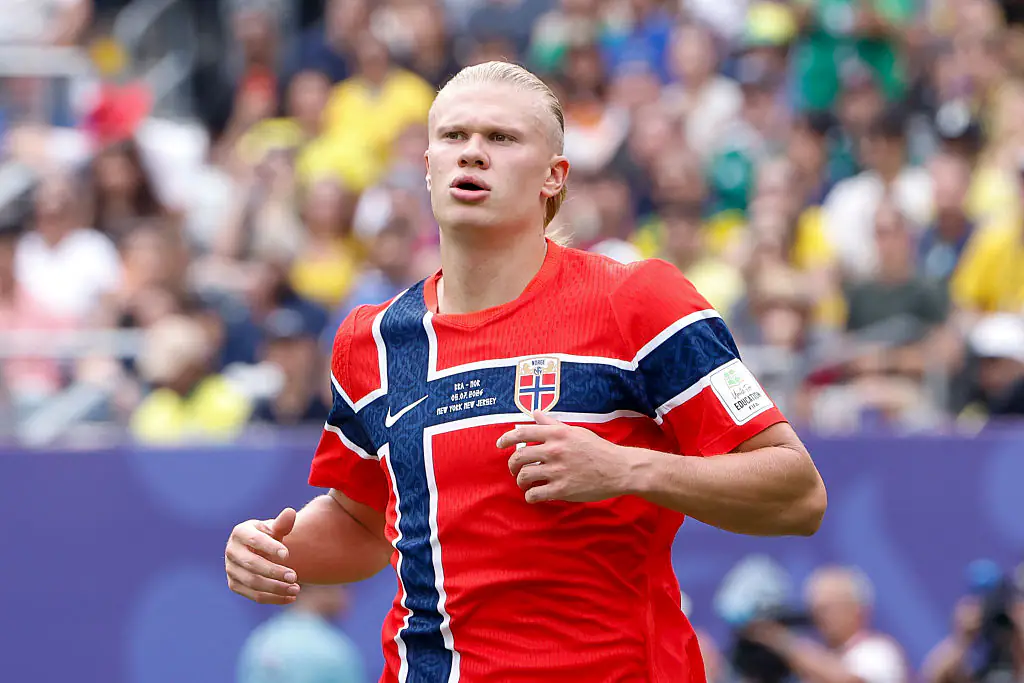
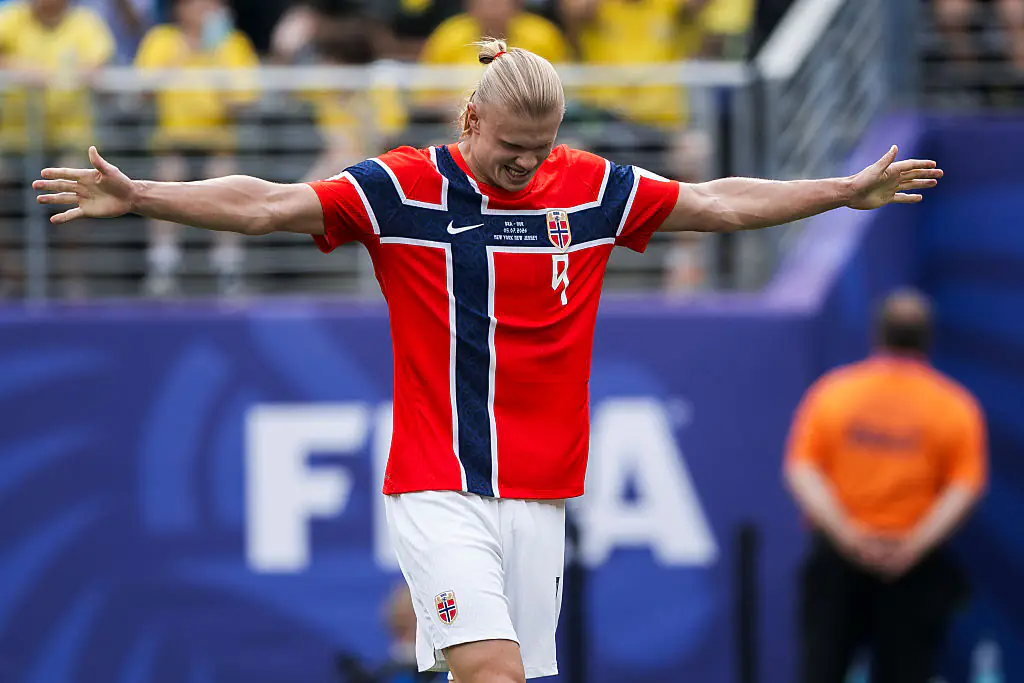
Erling Haaland finished on seven after Norway were knocked out 2-1 by England in an extra-time thriller on Saturday, with Jude Bellingham scoring twice.
Yamal's single goal puts him well behind the scorers, but his role for Spain has never been about volume.
He is a creator, a disruptor, the player opposition defences build their entire shape around.
Each of the top scorers has a very different approach to preparation.
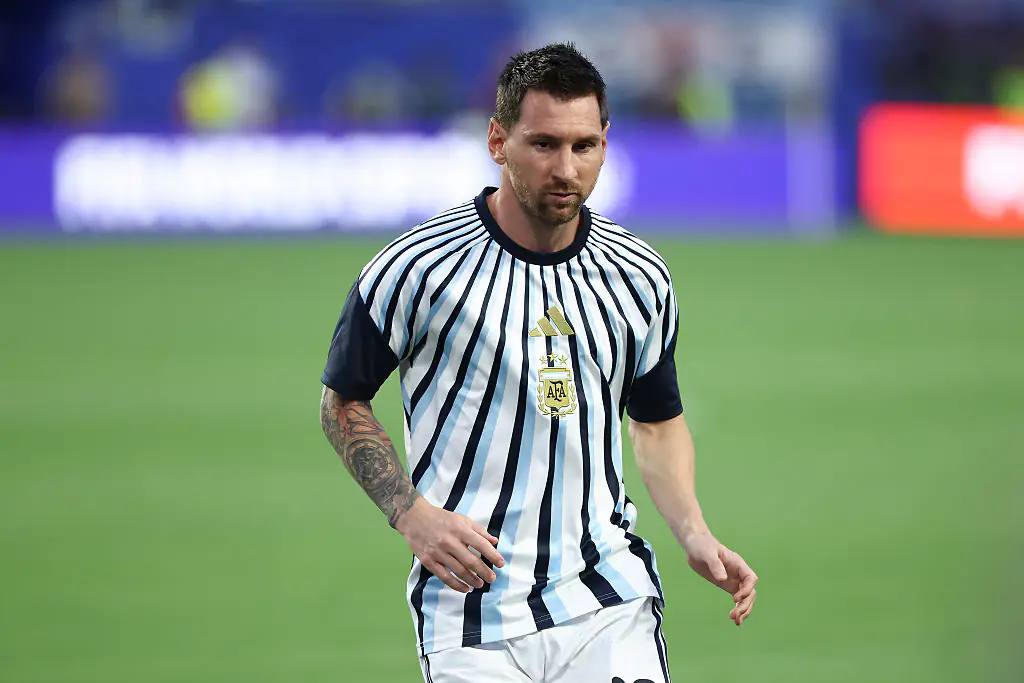
Messi has not eaten pizza or drunk a fizzy drink in 12 years and starts every morning with yerba mate from a gourd he has carried since childhood.
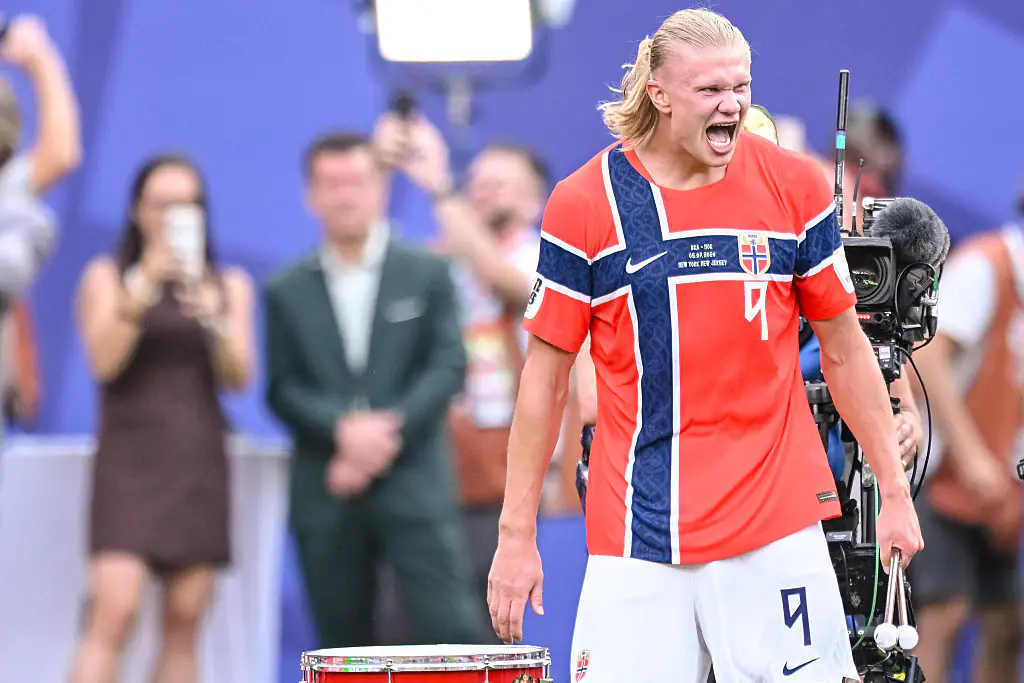
Haaland ate 6,000 calories a day including beef heart and liver, slept 10 hours with tape over his mouth, meditated before every game, and wore his mother's maiden name on his Norway shirt to honor her side of the family.
Mbappé follows a regimented schedule designed by personal nutritionists and has spoken about sleeping in a specially designed low-oxygen chamber.
Yamal eats his mum's chicken and rice.
There is something about that.
Lamine Yamal Nasraoui Ebana was born on July 13, 2007, in Esplugues de Llobregat in the Barcelona metropolitan area.
He grew up in Rocafonda, a neighbourhood in Mataró that El País described as 'forgotten, isolated, and stigmatised'.
His father Mounir Nasraoui is Moroccan, from Larache. His mother Sheila Ebana is from Bata, Equatorial Guinea.
He was given his compound name to honour two people, Lamine and Yamal, who helped his family financially shortly before he was born.
He joined La Masia as a child and became the youngest player to feature in Barcelona's first team when he debuted against Real Betis in April 2023, aged 15 years and 291 days.
He was called up for Euro 2024, scored the goal of the tournament in the semi-final against France, and won the Young Player award. He was 16.
He inherited Barcelona's No. 10 shirt ahead of the 2025-26 season, signing a contract through 2031.
He scored 24 goals and provided 18 assists across all competitions, was named La Liga Player of the Year, and finished second to Dembélé for the 2025 Ballon d'Or.
During Barcelona's La Liga title parade in May 2026, he waved a Palestinian flag from the open-top bus. In June, he was named a UNICEF Goodwill Ambassador.
He turned 19 yesterday.
Today, he faces France in a World Cup semi-final in Dallas with his mother's cooking still in his system.
In a tournament that has generated headlines for travel bans and political interference from the White House, the simplest story might end up being the best one: a 19-year-old from Rocafonda, his mother's recipe, and a World Cup to win.
For more sport, follow VT.
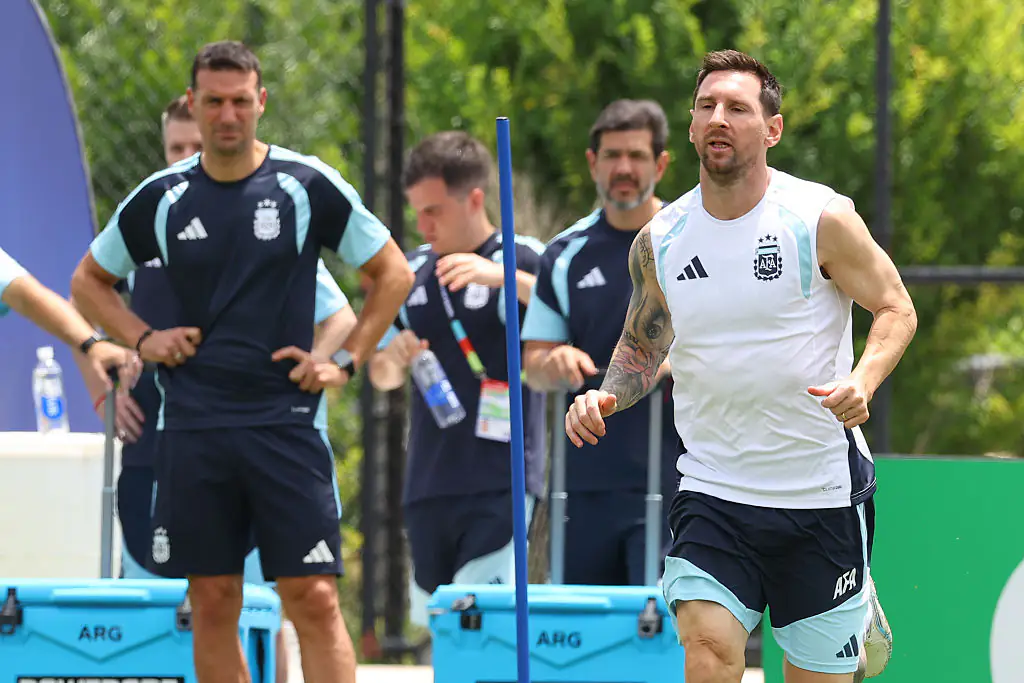
world3 min(s) read
sport7 min(s) read
uncategorised3 min(s) read
celebrity1 min(s) read
Lionel Messi has not eaten pizza or drunk a soda in 12 years.
He starts every morning with yerba mate from a gourd he has carried with him since childhood.
He has scored 20 World Cup goals - more than any man in history - and he turned 39 three days before the crowd at AT&T Stadium chanted his name so loudly that he could hear it on the bench.
He is, by any reasonable measure, not supposed to still be doing this.
But here he is, leading the 2026 World Cup Golden Boot race with eight goals, playing in his record sixth tournament, and lining up against Egypt in the round of 16 today in Atlanta.
Argentina have won all five of their games so far. Messi has scored in eight consecutive World Cup matches - a run that has no historical precedent in the men's game.
Even his rivals cannot quite believe it.
After Messi scored a hat trick against Algeria on the opening day - breaking Cristiano Ronaldo's record as the oldest player to score a World Cup hat trick in the process - Erling Haaland, who had scored twice himself earlier that afternoon, posted a single reaction on Snapchat: "Messi is a madman."
The question everyone keeps asking is how.
In 2014, Messi was a different player physically.
He was plagued by recurring vomiting episodes during matches and persistent soft-tissue injuries.
His diet at the time included chocolate, fizzy drinks, and regular fast food.
His then-manager Pep Guardiola told him bluntly that if he wanted to extend his career at the highest level, pizza and carbonated drinks had to go permanently.
Messi listened, and he has not touched either in 12 years.
He began working with Italian nutritionist Giuliano Poser, who stripped the diet back to five core categories: water, extra virgin olive oil, whole grains, fresh fruit, and fresh vegetables.
Refined sugars and processed flour were eliminated entirely.
His daily intake now revolves around lean proteins - particularly roasted chicken with root vegetables, prepared with minimal salt and a drizzle of olive oil, which he has described as his favourite meal.
He eats fresh fish regularly, uses olive oil as his primary cooking fat, and focuses on low-GI carbohydrates that release energy slowly rather than spiking blood sugar.
The results were almost immediate.
Within months of overhauling his diet, the vomiting stopped, the soft-tissue injuries became less frequent, and his body composition visibly changed.
It is a different approach to the one taken by Haaland, whose own World Cup campaign has been fuelled by a 6,000-calorie daily intake built around beef heart, liver, and a self-blended 'magic potion' of raw milk, spinach, and kale.
Where Haaland eats like a Viking, Messi eats like a nutritionist's case study.
Both are level on seven tournament goals so far.
The first thing Messi does every morning - before food, before training, before anything - is prepare yerba mate.
It is an Argentine tradition, but for Messi it borders on the sacred.
He drinks it from a gourd through a metal straw called a bombilla, and has done so every single day since he was a child in Rosario.
"Yerba mate is part of my life," he has said.
"It has always been. Since I was a child. I can't imagine a morning without it."
The drink delivers caffeine and theobromine - the same compound found in dark chocolate - providing a smooth, sustained energy release without the crash associated with coffee.
It has travelled with him from Rosario to Barcelona to Paris to Miami, and now across the United States as Argentina chase a second consecutive World Cup title.
Messi does not wake at 4am. He does not post topless gym selfies. He is not Cristiano Ronaldo.
Ronaldo, who at 41 is the oldest outfield player at this World Cup and the first man to score in six separate tournaments, is famous for training six times a week, sleeping in five precisely timed 90-minute cycles, and maintaining a biological age reportedly assessed at 28.9 years old.
His approach is pure optimisation - every hour of every day engineered for performance.
Messi's is the opposite.
He typically rises between 8 and 9am, eats breakfast with his wife Antonela and their three sons - Thiago, Mateo, and Ciro - and arrives at training mid-morning.
His sessions are built around functional movements designed to maintain the speed, agility, and balance that define his game.
His programme includes multi-directional speed drills, linear sprinting work, strength training focused on his core, back, glutes, and lower body, and extensive flexibility and mobility sessions.
He finishes every training day with 10 to 20 minutes of stretching.
The emphasis is on injury prevention rather than muscle building.
At 5ft 7in and around 72kg, Messi's advantage has never been physical power - it is his low center of gravity, his explosive first step, and his ability to change direction at full speed.
His training is designed entirely to protect those attributes.
His former Barcelona physio Juanjo Brau, who worked with him for over a decade, built daily prehab and rehab sessions into his schedule that were as non-negotiable as training itself.
After training, Messi follows a structured recovery protocol that includes contrast water therapy - alternating between hot and cold water immersion - and soft tissue work with his physiotherapy team.
At Inter Miami, his recovery load is managed based on match frequency and training intensity.
His evenings are deliberately low-key.
He eats a light dinner of lean protein and vegetables, spends time with his family, and goes to bed early.
He has described family time not as a luxury but as a genuine recovery tool - a mental reset that has sustained him over a career spanning more than two decades.
Guardiola once explained Messi's most misunderstood habit: walking.
During matches, Messi spends long stretches barely moving, which casual viewers interpret as laziness. Guardiola saw the opposite.
"Don't try to describe him - watch him," Guardiola said.
"He walks and reads, then acts."
Analysts have since confirmed that during those walking phases, Messi performs more visual scans of the pitch than almost any other player, absorbing positional data before exploding into action. It is not rest. It is preparation.
The numbers border on absurd.
Messi scored a hat trick in Argentina's 3-0 opening win over Algeria - his first ever at a World Cup and a performance that earned a perfect 10 rating from WhoScored.
He added two more against Austria to break Miroslav Klose's all-time World Cup goalscoring record, then came off the bench against Jordan to curl in a free kick and seal a perfect group stage campaign.
In the round of 32 against Cape Verde, he scored his seventh of the tournament in the first half and then played all 120 minutes as Argentina were pushed to extra time by the African debutants before eventually winning 3-2.
He scored again from a corner-kick assist situation, taking his tally to eight and his career total to 20 - two clear of Kylian Mbappé in second place.
He has scored in eight consecutive World Cup matches.
Twelve goal contributions in knockout rounds.
He has scored more World Cup goals after turning 35 (nine) than Diego Maradona, Rivaldo, Thierry Henry, and Romário scored in their entire careers.
His manager Lionel Scaloni has run out of ways to describe it.
"What you're seeing, I'm seeing the same thing," Scaloni said after the Jordan game.
"It's a little bit of an uncomfortable situation every single time people ask because I no longer know what to say."
Egypt are up first.
Today. Mohamed Salah against Lionel Messi in Atlanta - two of the greatest forwards of their generation, meeting in the World Cup knockout rounds for the first time.
The Opta supercomputer gives Argentina a 69 per cent chance of winning in normal time.
Beyond that, the bracket opens up in a way that could produce one of the great World Cup storylines.
A quarter-final could pit Messi's Argentina against one of the tournament's surprise packages. A semi-final could mean England or Norway - and Haaland, the only player currently matching Messi's output, after knocking Brazil out with a second-half brace in the round of 16.
A final could mean France and a rematch of 2022 - widely considered the greatest World Cup final ever played.
Messi has not confirmed whether this will be his last World Cup.
He has not needed to. At 39, with 20 goals, eight straight scoring appearances, and a diet that has not included a slice of pizza since 2014, the answer appears to be that he will stop when his body tells him to.
It has not told him yet.
For more sport coverage, including all the latest from the 2026 World Cup, follow VT.
The father of Lamine Yamal, the 17-year-old who lit up the Euros with Spain, has been stabbed multiple times.
According to Spanish newspaper La Vanguardia and cited by Sky News, Mounir Nasraoui, the father of the young footballer, was attacked in a car park in Mataró, a town close to Barcelona.
He was immediately taken to the hospital where his condition is described as serious but stable.
Authorities have made three arrests in connection with the incident, although no further details have been provided at this time.
Earlier on Wednesday, El Pais reported that Nasraoui reportedly had an argument with a group of people while walking his dog.
Hours later, he was allegedly approached by the same group in a car park and was subsequently stabbed “multiple times.” The motive behind the attack remains unclear.
In a later update, sports website Relevo, also citing official sources, reported that Nasraoui has since been discharged from the hospital.
Local police have yet to issue an official statement regarding the incident and did not respond to requests for comment.
Yamal, a soccer player for Barcelona, was one of the standout players in the Euros this summer, as he and his team won the tournament.
Nasraoui also made headlines when he shared a long-forgotten photo on social media showing Lionel Messi posing with Yamal as a baby, creating one of the tournament’s most viral moments.
The Rocafonda neighborhood, where the stabbing took place, also gained attention during the tournament.
Yamal celebrated his achievements by signaling "304" with his hands, representing the last three digits of Rocafonda’s postal code, highlighting the pride he feels for his diverse, working-class neighborhood, per the Guardian.
This is not the first time Nasraoui has been involved in a confrontation.
Last year, he was fined €546 by a court in Mataró after insulting and throwing eggs at a tent set up by the far-right Vox party to rally votes.
“They had come here to get a rise out of people,” Juan Carlos Serrano Muñoz, owner of the small El Cordobés bar where Yamal and his father often stopped for breakfast before taking the 90-minute train to Barcelona for practice.
“And (Nasraoui) got annoyed, asking ‘what are you doing coming here? You’re just here to provoke,'" he told the Guardian.
Following his triumphs during the summer, Yamal is one of the most talked about soccer players right now, which is no surprise considering he was 16 when the tournament began.
He finished the tournament with one goal and four assists, including one in the final against England that put them 1-0 up.
Erling Haaland eats beef hearts for breakfast, sleeps 10 hours a night with tape over his mouth, meditates before every match, and has scored in every single competitive game for Norway since October 2024.
Now he is coming for England.
The 25-year-old Manchester City striker has been the standout player at the 2026 World Cup, firing Norway into a quarter-final against the Three Lions after a tournament that has seen him rack up seven goals in four games.
Norway, who had not qualified for a World Cup since 1998, are now one win away from the semi-finals - and the man leading the charge runs on a regime that makes most elite athletes' routines look casual.
This is where it gets interesting.
Haaland consumes around 6,000 calories a day - roughly three times the recommended intake for an adult male.
His diet is built around whole, unprocessed foods with an emphasis on organ meats that most people would not touch.
In his 2022 Viaplay documentary Haaland: The Big Decision, he was filmed carrying a bag of beef liver and heart from a local butcher.
"People say meat is bad for you," he said.
"But which meat? The meat you buy at McDonald's? Or the local cow eating grass right over there?
"I eat the heart and the liver."
British tabloids labelled the diet 'cannibalistic'.
Nutritionists, on the other hand, pointed out that liver is arguably the most nutrient-dense single food that exists - packed with vitamin A, every B vitamin, folate, copper, iron, and high-quality protein.
The rest of his daily intake includes fatty steaks (ribeye and tomahawk are his favourites), eggs, fresh fish, sourdough bread, and what he calls his 'magic potion' - a blend of raw milk, spinach, and kale that he carries to training sessions.
He adds maple syrup and raw unpasteurised milk to his morning coffee, which he considers "a superfood if you do it right".
His girlfriend, Norwegian footballer Isabel Haugseng Johansen, summed it up in a YouTube video: "Oh my god, he eats so much. Everything is about, 'When is the next meal? What should we eat? What shall we make?'"
His one ritual that never changes is the lasagne his father Alf-Inge cooks for him before every home match. Pep Guardiola reportedly joked about hiring Alf-Inge as Manchester City's club chef.
His rare cheat meal? A kebab pizza from his hometown of Bryne.
"I never eat it, only on special occasions," he has said.
"Maybe once a year, if I'm lucky."
The physical transformation has been staggering.
A former coach at RB Salzburg described the teenager who arrived at the club as a 'Cyborgoal' - a football cyborg - after he gained 12 kilograms of muscle in just 15 months.
His training regime prioritises speed, power, and endurance over heavy lifting.
Former Salzburg coach Stanislav Macek revealed that Haaland was doing 300 press-ups and 1,000 sit-ups a day during his time at the club.
He runs hill sprints repeatedly, favours HIIT sessions over traditional gym work, and finishes every session with 10 to 20 minutes of stretching and mobility work.
At 6ft 4in and 94kg, he is built more like a sprinter than a traditional striker. He told AS that the weight gain was "gross muscle mass" rather than bulk, and that his diet was the driving force behind it.
"The better food you put in your body, the better you're going to get things out of it," he said on the Man City podcast. "And performance as well."
This is where it tips from disciplined into obsessive.
Haaland's daily recovery routine includes cryotherapy, red light therapy, hot stone baths, saunas, and personalised physiotherapy sessions.
He wears blue-light-blocking glasses before bed.
He tapes his mouth shut at night to encourage nasal breathing during sleep.
He drinks only filtered water. He makes a point of getting morning sunlight and fresh air, and has said that one of his favourite summer habits is eating breakfast outdoors to regulate his circadian rhythm.
He sleeps around 10 hours a night and has described sleep as the single most important factor in his performance.
"Sleep is the most important thing," he told The Mirror.
"I am obsessed with sleep. If I sleep well, I play well. It is the clearest connection in my life."
He also meditates daily - the habit behind his famous cross-legged goal celebration. He has said it helps him "find an inner peace" that translates directly to how he plays.
Haaland was born in Leeds in 2000 while his father Alf-Inge was playing in the Premier League for Leeds United.
Alf-Inge also played for Nottingham Forest and Manchester City, creating a family legacy his son would later continue at the Etihad.
Despite being born in England, Haaland grew up in Bryne, a small town on Norway's southwestern coast.
He is fiercely proud of his Norwegian identity and has leaned into the Viking imagery more than most.
In March, he spent 1.3 million Norwegian kroner - around $136,000 - to buy a one-of-a-kind 16th-century Viking history book and put it on public display in Bryne.
Before the World Cup, Norway's squad posed as Vikings on the shore in full battle regalia.
The team have since embraced the 'Viking Row' - a fan-created chant in which thousands of supporters sit on the ground in a longboat formation and row to the beat of a Norse horn and drum.
It has become the defining image of the tournament, drawing comparisons with Iceland's 'Thunder Clap' at Euro 2016.
Haaland and captain Martin Ødegaard joined the fans in performing the row after Norway's 3-2 win over Senegal, which confirmed their place in the knockout rounds.
"I saw it online; it's gone completely viral," Haaland told Fox Sports.
"Martin asked me before the game: 'Do you think we should join in?'"
Historically good. Haaland has scored in every competitive game for Norway since October 2024 - a run of 14 matches and 27 goals that has no modern equivalent in international football.
He scored twice in the 4-1 opening win over Iraq and has not stopped since.
"I'm incredibly proud to make my World Cup debut and to win Norway's first World Cup match in 28 years," he said after that first game. "I hope people will party."
England. In the quarter-final. A Manchester City striker coming up against the country of his birth.
It is one of those fixtures that this World Cup seems to have been building towards.
Norway were not supposed to be here, they had not qualified for a major tournament knockout stage in almost three decades.
But Haaland, Ødegaard, and the Viking Row have turned them into one of the stories of the tournament - and England will know exactly what they are walking into.
The 2026 World Cup has had no shortage of talking points, from travel ban controversies to surprise results.
But few stories have captured the imagination quite like Norway's run - and the man at the centre of it who eats cow hearts for fuel and tapes his mouth shut before bed.
England have been warned.
We're well aware athletes have certain rituals they execute before a big game.
Olympians tend to eat a controlled portion of carbs to get them through their heat or final, LeBron James goes really lean with his food for big games and through the playoffs (that still can't help him carry a whole team against the Golden State Warriors). Superstar football player Cristiano Ronaldo apparently eats whatever he likes (within reason) for big games.
Speaking of the Beautiful Game, the stakes are pretty high at the World Cup right now. 32 men's national teams have convened on Russia to see who is the best of the best at kicking a ball around. But some teams are more cautious than others; in particular, the English national team.
After the March nerve agent attack on ex-spy Sergei Skripal and his daughter Yulia in Salisbury, the English soccer team now faces a food ban while they stay in Russia for the games. National paper the Sun reports that security around kitchens is on “high alert”, with the team “under strict orders to reject any food not approved by their expert chefs.”
Nutritionists and chefs have also been flown to their hotel.
Harry Kane, Raheem Sterling, Jessie Lingard and the rest of the are not allowed to grab anything from the mini-bar or room service. The hope is that they’re still eating something to get them to peak performance for their many matchups, just not from anything they perceive to be Russian made - which is a shame, because a lot of the media seems to report a very welcoming hospitality from the Russians during their stay at the many locations for the tournament.
The Sun reported: “Players are snacking on items such as sushi and oatcakes with cream cheese. Only drinks such as herbal teas made by the nutritionists are allowed." The players have to eat about 5,000 calories at five meals during the tournament, which may consist of “tiny pieces of dark and white chocolate, small dishes of apple or brownies.
Breakfast will include up to five eggs, cooked how each player prefers. Guess victory requires a lot of protein. So far, the team has defeated Tunisia 2-1 and faces Panama on Sunday, June 24. This is before their third and final group match against a potential European juggernaut in Belgium on Thursday, June 28.
As England's prospects in the tournament go, they are pretty decent. It's a cliché to state that game one of the groups is a must-win, but it's never been truer for this crop of aspiring World Cup winners.
With a new manager, a focus on young potential and a new system, there were bound to be nerves going into the first game. Against a Tunisia side that is difficult to break down, the England captain Harry Kane led by example, scoring two goals to take the team to the top of the group.
As invigorating as it was to see England's main man do what he does best, it will fall to other rising stars and even the exuberant youth to take England beyond the quarter finals. Let's hope their diet and potential poisoning doesn't get in the way.
Soccer star Cristiano Ronaldo is known for his impeccably muscular physique, a physique he has evidently trained hard for, through his incredibly disciplined and painstaking fitness regime.
But as they always say, abs are made in the kitchen, and Ronaldo relies on a nutritious, balanced diet to maintain his chiseled body.
Per the Sun, the 34-year-old eats little and often, enjoying up to six meals a day. Unsurprisingly, given its many health benefits, fish is a huge part of his diet.
This is the emotional moment Cristiano Ronaldo cried during a candid interview with Piers Morgan:
[[jwplayerwidget||https://content.jwplatform.com/videos/LHVOMM8h-dkXnENEs.mp4||LHVOMM8h]]
According to the publication, Swordfish, tuna, and braised cod are amongst the former Manchester United star's favorite fish dishes.
In fact, Ronaldo apparently referred to fish as "magical" due to its high protein and low-fat content.
For an early-morning breakfast, the athlete will indulge in ham and cheese and low-fat yogurt. And if he doesn't have it for breakfast, Ronaldo will help himself to some avocado toast for a snack.
[[instagramwidget||https://www.instagram.com/p/B7DuHeOg4xB/]]
A typical lunch will either be chicken and salad, or a fish dish - for instance, tuna with salad, eggs, and olives.
For dinner, Ronaldo enjoys a meal primarily made of either meat or fish. For instance, a typical dinner might be made up of braised cod, onions, thinly sliced potatoes, and scrambled eggs.
[[instagramwidget||https://www.instagram.com/p/B6u4TgxgFVQ/]]
His diet aside, Ronaldo has his home gym to thank for much of his training and those enviable abs.
He explained to Goal.com:
"In training we do a few laps of the pitch, stretching, and cardio exercises [to warm-up]. Make sure you do something similar in your training, even if it is jogging to the gym or a warm up on the treadmill or bicycle."
He added: “We do a lot of sprinting drills in training and they can be incorporated into your workout whether you are in the gym or outdoors. Try and add it to every workout you do."