ADVERT
Sport3 min(s) read
Soccer fans across the world have started to notice a strange trend that is spreading rapidly across the pitches, and it certainly is not endorsed by any brand.
While eagle-eyed fans may have noticed that players have been cutting holes into their socks during major tournaments for the last few years, cutting holes into their boots appears to be a newer phenomenon.
Some players cut the back of their socks to release the pressure on their calves and help them move more freely about the pitch. They might also take scissors to their socks as a solution to ward off cramping or reduce muscle strains and fatigue during a gruelling 90-minute game.

The reason players are now cutting holes in the heels of boots, which likely cost hundreds, if not thousands, of dollars, is also not for aesthetic purposes. Similarly, it is more of a medical choice.
According to some of the world's best athletes, exposing the back of the heel can relieve pain and prevent inflammation. Many soccer players and Doc Martens wearers suffer from a rather niche medical condition called Haglund’s Heel.
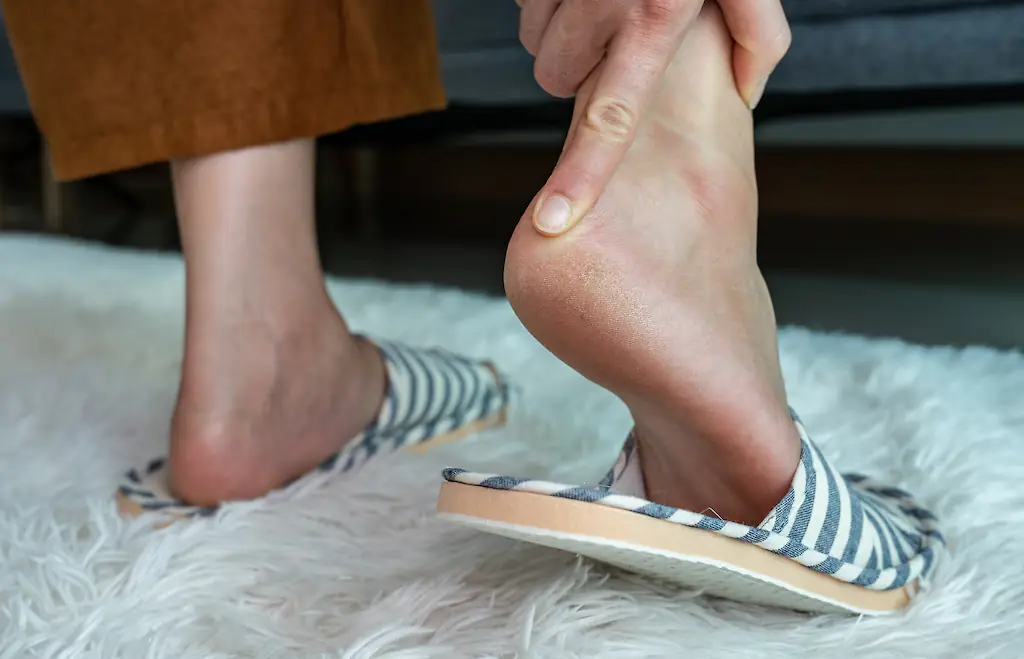
Often called the “pump bump” by sportspeople, it is a bony bump that forms on the back of the heel bone following constant pressure and rubbing by tight, stiff shoes. Although it might seem like a minor inconvenience to most people, 90 minutes of running with tough material rubbing on it can trigger painful inflammation of the Achilles and bursitis.
This would also explain why soccer players are frequently seen wearing sliders and other open-back shoes between games; it’s not just because they can’t tie their laces.
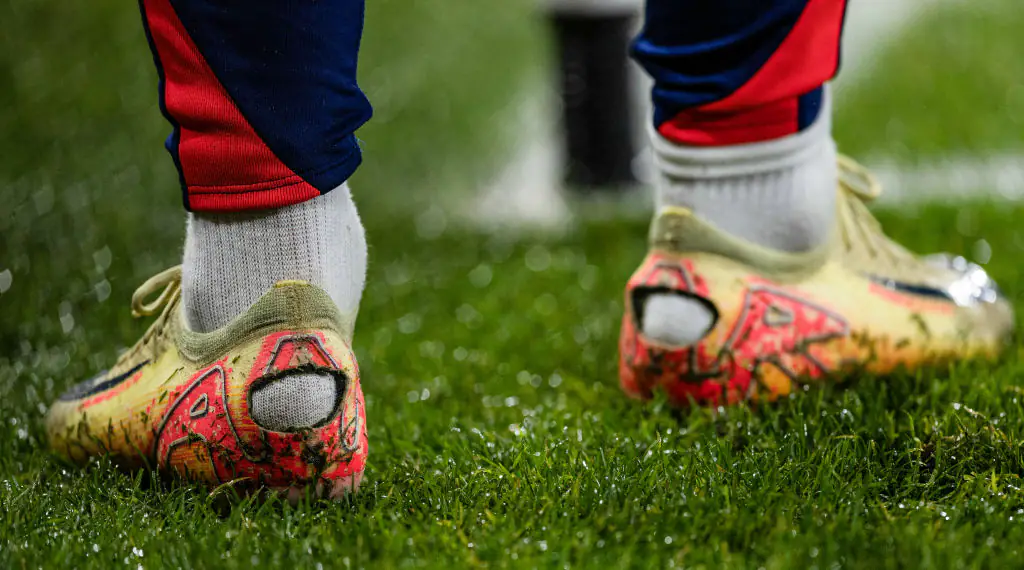
As Haglund’s Heel plagues so many players, a changing room genius worked out that by cutting a rather large hole in the back of the boot, removing the hardest part, a huge amount of pressure is relieved and the shoes become far more comfortable to wear while running and hopefully goal scoring.
Throughout this year's World Cup, soccer fans have been speculating whether the modification is a fashion choice, some sort of medical intervention, or simply because the shoes are too small.
One X user shared another theory that suggested that players wore boots too small intentionally, writing, “Most footballers wear smaller sizes so they get a better feel for the ball, Lamine [Yamal] for example wears a couple sizes down than his normal boot size.”
Whatever the reason is, it seems to be working, as several players are making World Cup history by scoring a record number of goals already with a week and a half still left to go.
health4 min(s) read
sport1 min(s) read
health3 min(s) read
lifestyle3 min(s) read
Have you ever wondered what those dark red circles are on the backs of some athletes at the Olympics?
As Paris 2024 continues on, more questions are being raised about why certain things take place.
For example why athletes bite their medals - this is due to tradition because it used to be the done thing to test their authenticity.
Or perhaps you've wondered what are in those little boxes that are given out during the medal ceremonies?
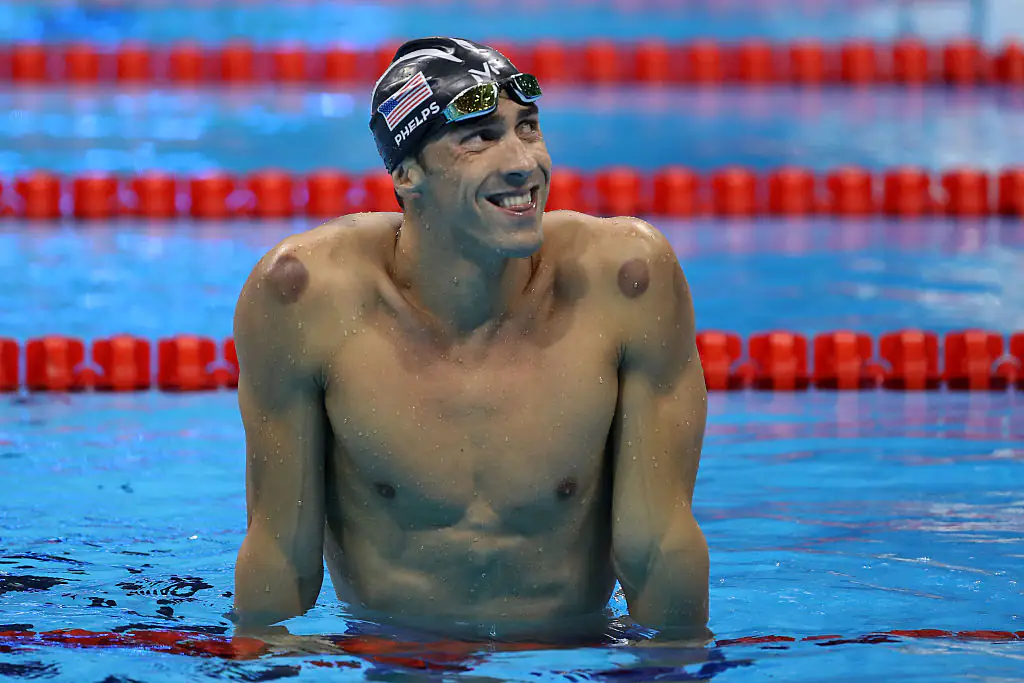
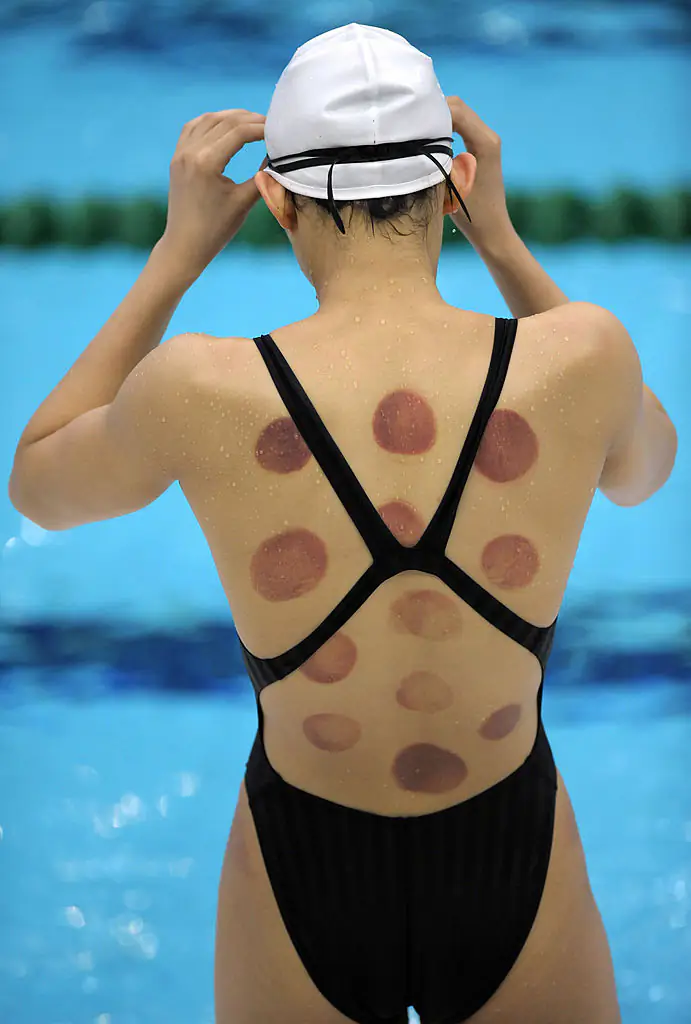
A question that seems to pop up during every Olympics revolves around the dark red circles seen on some athletes.
These marks are the result of cupping therapy, an ancient healing practice.
Cupping involves placing cups on the skin to create suction, which is believed to increase blood flow and aid muscle recovery, functioning as a form of deep tissue massage.
The distinctive bruises from cupping therapy first garnered widespread attention during the Rio Olympics in 2016.
Gymnast Alexander Naddour told USA Today then that cupping was his "secret" to maintaining health, saying: "It's been better than any money I've spent on anything else."
Beyond the Olympics, basketball player Kyle Singler has also endorsed the practice.
"The bruises do look more intense than what they actually feel like, but the benefit from it is really great," he told Sports Illustrated. Singler noted that while the effects might not be immediate, cupping helps with recovery and loosening tissue over time.
The effectiveness of cupping therapy remains a topic of debate among experts.
Harvard Health reports that some studies suggest cupping may provide relief for musculoskeletal and sports-related conditions, though the quality of this evidence is "limited."
A 2022 review indicated that wet cupping, as opposed to dry cupping, could be effective for lower back pain.
While the effects look pretty extreme, it is generally considered a safe practice.
Harvard Health explains: "Most experts agree that cupping is safe. As long as those treated don't mind the circular discolorations (which fade over a number of days or weeks), side effects tend to be limited to the pinch experienced during skin suction."
While we're on the topic of Olympic questions... why do divers shower after they dive?
During the 2020 Tokyo Olympics, United States diving coach Jacob Brehmer told CNN: “Divers shower in between dives typically just to keep themselves and their muscles warm.”
Brehmer continued: “Usually after a diver does a dive, they will have to wait a good amount of time before their next dive. The air temperature on the pool deck may be a little chilly, so the shower can help keep muscles warm.”
"Diving is such a precise and fast-twitch sport, if the diver gets a little cold and tight, it could really affect their performance," he added.
The coach also revealed that divers use tiny, water-absorbent towels called chamois to dry off quickly.
“When the divers are flipping through the air, they are grabbing onto their legs and squeezing very tight,” he explained.
“If their legs are wet, then there’s a good possibility that … their hands will slip off their legs and they will come out of the dive early – which could result in injury and almost always lower scores.”
Not only are we watching the best athletes at the Olympics, but we're also learning things at the same time!
A soccer player shouted "you can see his f***ing bone" after his teammate suffered a nasty injury.
The incident took place at the Tottenham Hotspur Stadium during a fourth-round FA Cup replay on Wednesday night. There, Shang Long canceled out Jack Stephens' goal to even the score for Southampton in the 34th minute.
However, for some, the match was overshadowed by a bad injury sustained by Saints midfielder James Ward Prowse to his knee. The match was halted as Ward Prowse was given oxygen while receiving treatment.
Watch the shocking incident below:
[[jwplayerwidget||https://content.jwplatform.com/videos/l4kOIqGQ-dkXnENEs.mp4||l4kOIqGQ]]
While Ward-Prouse appeared to handle the injury well, his calmness couldn't have been helped by Long who, in the video above, shouts: "F*** me, you can see his f***ing bone!"
He was subsequently given oxygen and removed from the field by medics, and it was later revealed that his injury, though gruesome, wasn't believed to be as serious as first feared.
"I'm happy that Prowsey's injury is not that bad," Ralph Hasenhuttl said after Southampton's 3-2 defeat.
"That would've been horrible - to lose the game and lose him for longer, so this is the positive thing.
"It's only a cut on the knee - a deep one and you could see the bone, so it will take a little bit of time to heal, but if it was a ligament injury, it would be more of a problem for us.’
Jose Mourinho went on to praise his players for their performance in the game, saying: "My team performance was in the limits. It was in the limits for me with players available and not available. It was in the limits for them because two days ago they played such an incredible match.
"We suffered. We played against a very good team, we played against a team that was the best team on the pitch but we deserved to win because we were in our limits."
Mourinho continued: "They had their best players, they had one more day rest, they were fresh.
"I think I did very well because I had to manage a team with so many difficulties. I changed from the back five to the back four in the moment when I could. Then Dele Alli became the link.
"The players [played with their] souls, and heart and gave absolutely everything. Four matches over two rounds, really hard for the boys. They deserve this happiness."
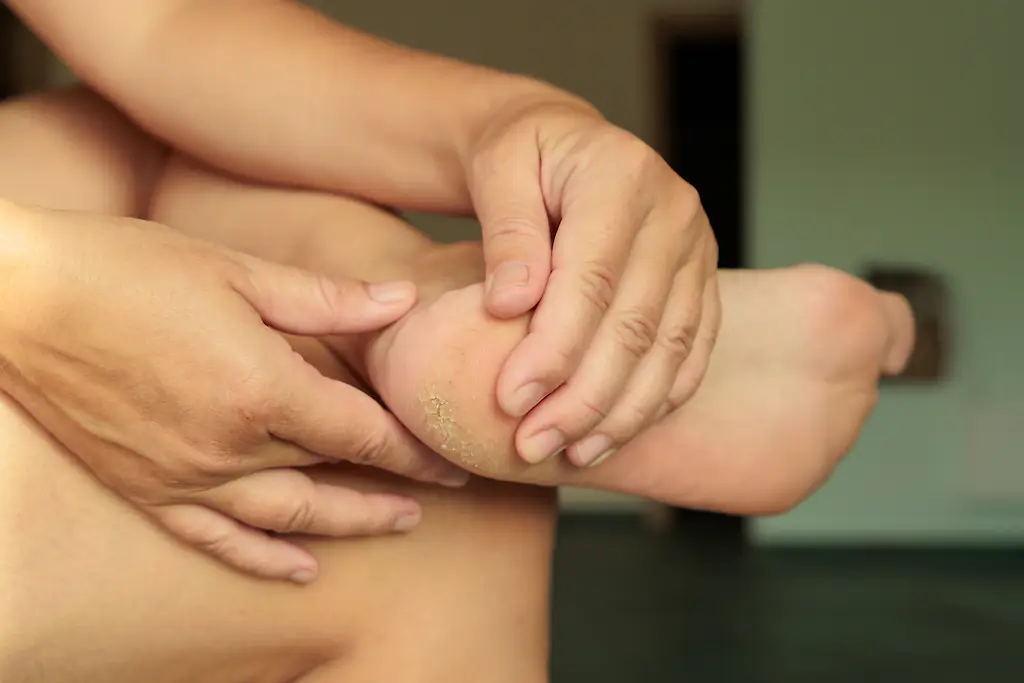
Cracked heels may seem like nothing more than a cosmetic nuisance, but experts warn they could be a red flag for something far more serious: undiagnosed diabetes.
Diabetes is a condition that causes blood glucose (sugar) levels to become too high.
According to Mayo Clinic, symptoms include constant thirst, frequent urination, blurry vision, slow-healing sores, fatigue, and unintentional weight loss.
Type 1 diabetes is usually diagnosed in childhood and cannot be prevented, while Type 2 can sometimes be delayed or prevented with lifestyle changes and treatment.
Niamh McMillan, pharmacy superintendent at Superdrug, explained to The Express that your feet "can reveal a lot about your overall health," and that there are several symptoms "that might seem minor but could indicate something more serious".
One of the biggest warning signs to watch for, she said, is cracked heels or wounds that don’t heal.
“If small cuts or sores on your feet aren't healing within a few days, then this could be a red flag,” McMillan warned.
“Diabetes can reduce blood flow to the feet, which delays the healing process and can increase the risk of complications.”
Raised blood sugar levels can damage the small blood vessels that supply nerves in the feet.
Mayo Clinic explains that when these blood vessels are damaged, essential nutrients can’t reach the nerves - leading to peripheral neuropathy, or nerve damage.
That can cause a range of issues, from tingling and numbness to a burning sensation in the feet.
“A frequent symptom of diabetes is peripheral neuropathy, nerve damage caused by high blood sugar levels.
"This can lead to tingling, numbness, or even a burning feeling in the feet,” McMillan outlined.
“It often goes unnoticed at first, but it’s one of the earliest signs of nerve damage and should always be discussed with a healthcare professional.”
She also cautioned that “even mild inflammation around a crack or cut can quickly become serious for people with diabetes," adding: "If you notice any redness, warmth, or swelling around a wound on the foot, seek medical advice immediately."
Diabetes UK has shared that other symptoms of diabetes-related foot problems include a dull ache or loss of feeling in the feet or legs, swollen feet, shiny or smooth skin, cramping in the calves when resting or walking, and even hair loss on the legs and feet.
While cracked heels can sometimes be harmless and caused by simple dryness, McMillan stressed the importance of paying attention to them - especially if you haven’t been tested for diabetes.
“If you haven't been tested for diabetes and are experiencing any of these signs, it's worth speaking to a healthcare professional,” she said.
Social media users have been left baffled after a couple removed the soles of their shoes to walk barefoot.
Content creator Christi Fritz (@christifritz) and her husband discovered a way to go to stores while maintaining their barefoot lifestyle, calling it: "incognito barefoot."
The couple shared a video on the social media platform that showed them cutting off the soles on all their shoes, which include numerous pairs of designer shoes like Golden Goose, Off-White, and Burberry.
"We decided to start walking barefoot and one of our followers had a great idea," Fritz said. "Since some businesses don't want us being completely barefoot if we cut the bottom of our shoes off, it allows us to be barefoot and blend in with everyone else."
Watch the video below:The woman - who has 2.2 million followers - confessed it was a "huge commitment" to be destroying her shoe collection, but that it was one she and her partner were willing to make.
"Our shoe collection is worth more than $20,000, but this is a sacrifice we're willing to take because walking barefoot means the world to us," she said, adding: "The benefits of walking barefoot are priceless."
After removing the soles, they put the bottomless shoes on and headed down to Sephora. "It’s the perfect way to get all the benefits of going barefoot but also no one has to know," Fritz concluded.
She reiterated her excitement in the caption, penning: "The new age of barefoot walking has begun and I couldn’t be more [excited] or thankful."
The TikTok clip amassed 51.6 million views on the platform, with many people feeling dumbfounded by the couple's decision to go to extreme lengths to be barefoot.
One confused person said: "HUH? I like walking barefoot but there’s dangerous things on the ground in the world I wear them in public," while another chimed in: "I’d be afraid I’d get ringworm or something nasty."
A third wrote: "I’ll do anything to protect my foot from touching anything other than my socks. Girl I sleep in my socks. Just think about all the diseases," and a fourth added: "Not me with my sensory issues and I HAVE to have shoes on."
Some people suggested that while walking barefoot on natural ground is appealing, walking around in the middle of a city is not.
One user shared: "I understand how cool it is to walk barefoot growing up in a huge farm to be connected to nature, but on the asphalt in the city I don’t think it has the same effect."
A second interjected: "Going barefoot grounding on the grass, soil, or sand in order to get connected with the earth’s energy is something that I totally understand if you live in the countryside but not in the city."
Many others pointed out that the couple could purchase barefoot shoes, which are specifically designed to allow people to connect with the ground without going completely barefoot.
We all know the struggle of running late, and being completely unable to locate a clean pair of socks. I mean, depending on what you're wearing, you can't leave the house without them, and trainers without socks? Blasphemy.
Luckily, this may be a thing of the past thanks to Nike. The footwear brand has released a pair of lace-up socks, so you'll never have an excuse for inflicting your sweaty feet on the world again.
The unique item is low cut, and features a lace-up tie with Nike logo detailing. You can purchase them on Asos in the white color-way, where they retail for a mere £13 ($16).
"Bring a statement look to your street 'fits with these women's Lace-up Socks from Nike. In a fresh white and black color-way, these socks are made from a soft yet stretchy poly fabric and have tie-up ankle laces that a knitted to the base of the foot for a seamless feel. With a cushioned heel and added comfort, its dynamic arch band adds support to your fit. Finished with Nike branding to the Aglets," reads the product description on JD Sports - where you can also purchase the black version.
Whoever said athleisure wasn't "fashion" clearly hadn't seen these...