ADVERT
Health3 min(s) read
A surrogate has given birth to a baby she fought to carry to term, but has now been prohibited from seeing or holding him following a bitter legal dispute with his intended parents.
McKenna West, from Alaska, was acting as a surrogate for a California couple when doctors discovered at around 20 weeks that the unborn baby had hypoplastic left heart syndrome (HLHS), a rare condition in which the left side of the heart is severely underdeveloped.
The condition can be treated with surgery shortly after birth, although children who survive can face significant lifelong health complications.
After learning about the diagnosis, the baby's biological parents reportedly asked West to terminate the pregnancy, something they were entitled to request under the terms of the surrogacy agreement.
The contract reportedly contained a provision allowing for termination if a fetal "anomaly" was discovered during the pregnancy. West refused and subsequently travelled to Texas, where abortion laws are among the most restrictive in the US.
A court in Texas later ruled that West could remain there and seek medical treatment for the baby's heart condition.
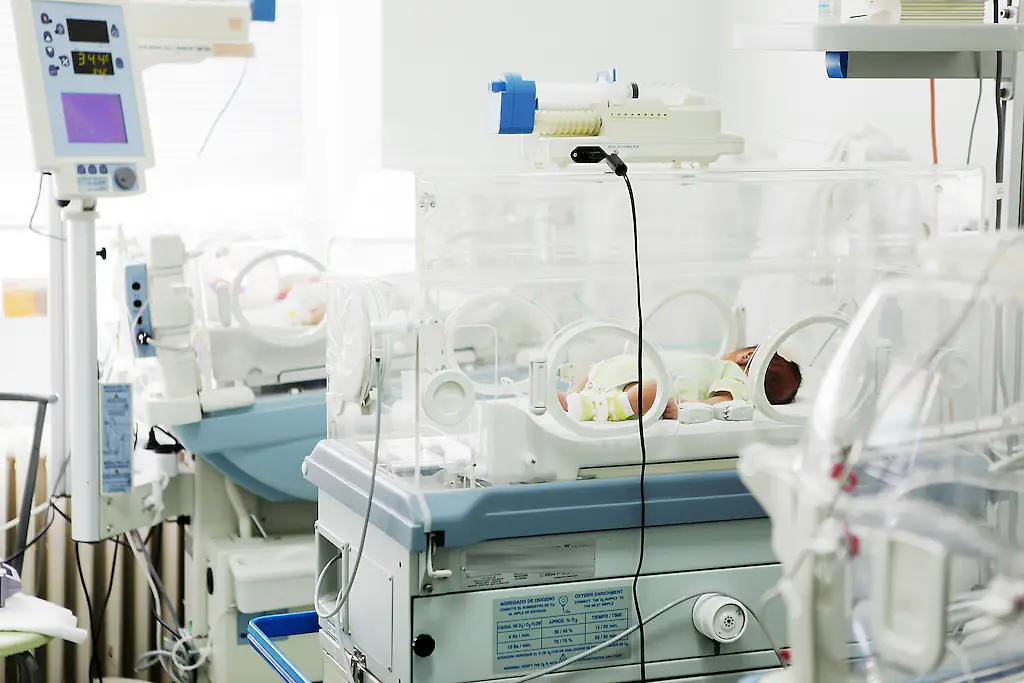
The baby has now been born prematurely and is receiving medical treatment. West's lawyers have referred to him as "Baby Gabriel", according to The Dallas Morning News.
Texas lawyer General Ken Paxton has also become involved in the dispute, declaring: "Baby Gabriel deserves a chance at life, and I will not allow anyone to unlawfully deny him medically necessary care."
A court order issued on Tuesday stated: "Upon the child's live birth, medically indicated stabilizing and life-sustaining care shall be provided to the child pending further order of this Court."
The order further stated: "No person shall withhold, direct the withholding of, obstruct, or delay that care."
The intended parents, Nausheen Gilkar and Omar Ahmed, are due to appear at a hearing on August 25.
Their attorney, Lee Budner, said their sole priority is making sure their son receives the treatment he needs while allowing them to be with him.
"Our clients’ only focus at this time is ensuring that their baby receives the medical care that he vitally needs and that they, as his parents, are able to spend every precious moment they can with him," Budner said.
He added: "Our clients will continue, as they always have, to place their baby’s health and well-being first, following the advice of the baby’s medical team, just as any loving parent would."
Budner also accused West and her legal representatives of turning the baby's situation into "political theater", arguing that his birth and medical condition had been caught up in the wider legal battle.
Meanwhile, a court order currently prevents West from seeing or holding the newborn.
Her attorney, Lincoln Wilson, has questioned whether Gilkar and Ahmed have been genetically confirmed as the baby's biological parents, claiming that genetic testing has not yet taken place.
Wilson has also said West would consider seeking custody of the baby if the courts allowed.
He has further attacked the terms of the original surrogacy agreement, describing it as "offensive to state and federal law" and even calling it a "hit man contract."
weird3 min(s) read
celebrity3 min(s) read
us4 min(s) read
A surrogate is fighting for custody of a baby she carried to term after claiming she had an affair with the child's father.
Per court documents obtained by The Daily Beast, the woman in question hails from British Columbia in Canada, and is referred to purely by the initials "K.B." to protect her identity.
K.B. claims that she met the father, who had been married to his wife for five years at the time, in 2014 and the pair began having an affair shortly afterwards.
During the affair, K.B. alleges that she fell pregnant twice but terminated each pregnancy via abortion.
Despite their complicated history, K.B. claims that she wanted to help the father, referred to as M.S.B in court documents, after learning he and his wife were having problems conceiving and agreed to be the couple's surrogate.
However, after a failed attempt to inseminate her artificially, K.B alleges that M.S.B. asked her to consider falling pregnant with his child naturally.
At the time, the duo were allegedly still having an affair with M.S.B. reportedly promising to leave his wife for K.B. after the baby was born with the intention that they would raise the child together instead as husband and wife.
But fast forward for years and M.S.B has not left his wife and the couple are now denying K.B. any visitation rights at all.
K.B. is now contesting this in the province’s top court, claiming she had a maternal role in the child’s life during the baby's first two years: breastfeeding her, changing diapers and seeing her around six times per week.
With regards to her decision to sign an agreement in which she handed over full custody to the couple, K.B. insists she only did this as she believed it was necessary for her daughter to receive health insurance.
However, M.S.B and his wife forced the surrogate to cut contact after she began making "progressively greater demands" such as a $100,000 payment and scheduled visits with the child.
Court documents show that presiding judge, Supreme Court Justice Warren Milman, said: "Given the highly unusual facts of this case, there is no comparable precedent driving me to any particular result on this issue."
Despite this, he ultimately ruled that the child needed stability and that contact with K.B. would not currently be in the child's best interests.
He concluded: "KB has not met the burden she carries to show that an order allowing her to resume contact with [the child] at this stage would be in [the child's] best interests. It follows that her application must be refused."
1. At the end of the day, it's your choice
2. You're not selfish
3. Never hold anyone to a promise they made years and years ago
4. Tokophobia is a serious condition
5. Carrying a child is a serious commitment
6. It's a tough thing to say
7. She'll come around eventually
8. There has to be something in it for you, too
9. You tried, and that's all that counts
10. It's a lot to ask of someone
11. To each their own
12. It must have been difficult
12. It's easy to feel guilty in situations like this
13. Fair
Well, there you have it. It's evident that being a surrogate is a difficult, and life-changing decision, and while we must admire those who undertake the opportunity, it's important remember that it's a highly personal decision.Spanish TV actress Ana Obregón has revealed that the baby she had by surrogacy was actually fathered by her dead son.
Obregón, 68, revealed that she had paid for surrogacy in the US in order to fulfill her late son Aless Lequio's final wish to start a family.
In Spain, it is illegal to have a woman give birth on your behalf but adopting a child that has been born via surrogacy abroad is considered lawful.
Prior to Lequio's death from cancer at the age of 27 in 2020, his sperm was frozen and stored in New York, and the surrogate is believed to have been a woman of Cuban origin living in Florida.
Speaking of the unusual arrangement, Obregón told ¡Hola! magazine: "This girl isn't my daughter, she's my granddaughter."
She said that she and her son had spoken about his final wish to have a baby a week before his death, adding: "This was Aless's final wish, to bring a child of his own into the world."
Obregón's decision to go ahead with surrogacy in the US despite the practice being illegal in Spain caused controversy and attracted attention from ministers in the left-wing government.
She believes the national debate her decision created was "absurd" as surrogacy is legal in most countries in the world besides Spain.
While surrogacy is legal in many countries, there are different rules about whether a woman can be paid to bear a child for another, with some only allowing her expenses to be covered rather than large payments to compensate the surrogate.
Equality Minister Irene Montero condemned the practice as "a form of violence against women" and others have questioned whether there is an ethical issue with the child being adopted by a grandparent.
Under Article 175 of Spain's civil code, per the BBC, a grandparent is not entitled to adopt a "descendant", however, the loophole in Obregón's case is that she is legally the child's mother, despite being her grandmother biologically.
Using the semen of a dead man is a common practice for assisted reproduction in Spain but is only allowed within 12 months of the man's death and the mother would have to be his widow.
Social philosophy commentator Gonzalo Velasco also discussed the ethical implications of Obregón's decision, telling Cadena SER radio station: "Ana Obregón has taken it upon herself to interpret her dead son's wishes and that is going too far.
"No child is ever the property of his parents and neither is a dead child. No mother or father has the power to interpret the wishes of their child."
Obregón's former partner, Alessandro Lequio, who is her son's father, also declined to comment on the baby's birth.
The baby, who has been named Ana Sandra, is set to be registered at the Spanish consulate in Miami, where Obregón currently is before the pair fly to Madrid together.
Obregón has also refused to rule out giving the baby girl a brother or sister in the future.
A couple was forced to legally adopt their own biological children in order that they could be listed on their birth certificate as their parents.
Tammy and Jordan Myers' legal fight began when their fraternal twins, Ellison and Eames, had not yet been born, as reported by PEOPLE.
The couple - who already had a daughter together - had decided to grow their family through gestational surrogacy after the mom was diagnosed with breast cancer in 2015 and was unable to carry children.
They then found a gestational carrier and began the process. During that time, they also went ahead and applied for a pre-birth order for the twins because of the strict surrogacy laws in Michigan.
Things took a turn for the parents on January 11, 2021, when their twin newborns ended up being born eight weeks early and the pre-birth order was not approved in time, meaning they could not be named on their offspring's birth certificates.
"It's something that we have struggled with day in and day out," Tammy said, according to ABC News. "It sucked the joy out of something that should have been only happy feelings. It just has been a hard pill to swallow. But at the same time, it's kind of fueled our ambitions to change the situation."
Since February 2021, the couple had two of their pre-birth order applications denied, which left them with the option of adoption. However, the state's Surrogate Parenting Act of 1988 requires a judge to rule that someone going through surrogacy be named parent to the child, or go through the adoption process.
Being unable to place themselves on their children's birth certificates, the Myers asked the twins' gestational carrier and her husband to be Eames and Ellison's co-godparents.
Jordan opened up about the legal proceedings, sharing that it was "really hard" for his family, and adding: "We had our dreams coming true and it just felt like the floor was falling out from beneath us and now we were kind of being thrown into a bit of a tailspin from a legal perspective."
In December 2022, the couple was finally allowed to adopt their children, but the mom wasn't satisfied with the result after enduring a tough two-year legal battle over an outdated law. Tammy, who’s been fighting to change the laws for more than three years now, told ABC: "I honestly don't think that I'll be able to put it behind me until I see this law changed."
As many people share a similar story to Tammy and Jordan, last Thursday (March 14), the state Senate moved the new Michigan Family Protection Act vote to this week so that families impacted by the rule can have closure. The legislation would allow all children born in Michigan to have access to a secure legal relationship with their parents, which is essential to their well-being.
Michigan Governor Gretchen Whitmer shared on X (formerly Twitter) that she was just waiting for the bill to make it to her desk, writing: "I will continue working closely with my partners in the Michigan Legislature to make our state the best place to start, raise, and grow your family."
Congresswoman Hillary Scholten also added that the law change comes after "the grit, bravery, and strength of Tammy and Jordan Myers, and every family who stepped forward to share their stories, that will help us in our effort," adding: "I cannot thank these heroes enough."
Now, approximately fifteen months on from adopting their kids, the proud mom spoke to PEOPLE about what this fight meant to her, sharing: "It's never felt done because for me, the end wasn't our adoption.
"The end was changing and righting this wrong, that I didn't want any other family to go through this," she continued. "The whirlwind of the last three years and the trauma that has ensued because of it, I was so fixated on the end goal that it was a race to get across the finish line.
"Knowing that if these bills are passed into law it will help countless Michigan families who will someday walk in my shoes puts it all into perspective for me," she concluded.
A couple who say they were promised they would have a baby girl by a fertility clinic is suing them after their baby turned out to be a boy.
Heather Wilhelm-Routenberg only agreed to have children with her wife Robin (Robbie) Routenberg-Wilhelm on the condition that they had girls because of sexual assault trauma.
The CNY fertility clinic in Latham, New York, assured them that they could accurately determine the sex of an embryo before transferring it into Heather's womb, the pair say. So the Buffalo couple were shocked when - at 15 weeks pregnant - they discovered they were having a boy.
In a first-person piece for the New York Post, Heather opened up about the trauma surrounding her pregnancy and detailed their legal case against CNY, who they are suing on 11 counts including breach of contract, medical malpractice, and battery.
Heather begins by explaining how the clinic took an egg from Robbie and donor sperm to create the embryo, which was then transferred to her womb.
"We selected CNY because they agreed we would be able to select female embryos," she recalled, before explaining that: "We didn’t want to have a boy because of the assaults and because of the socialization of boys — there’s constant socialization of what it means to be a 'real man.' People say, 'Oh, he’s a boy, let him hit you,' and all the camouflage and guns don’t help. It reinforces masculinity, and that’s a reminder of the assaults every time."
Robbie added that, while she didn't have Heather's trauma to contend with, she was also against having a boy because of enforced masculinity, saying: "We did not sign up for that."
When they discovered that Heather was in fact pregnant with a baby boy, the couple was convinced that they had been given the wrong embryo. "That’s when I flipped out," Heather described, adding: "That’s when I felt my body was taken hostage."
"It scared the s*** out of me. I don’t know how to explain this — it felt like there was an alien living inside of me," she continued.
It took seven weeks to determine that Heather was in fact carrying the correct embryo, during which time she describes having no connection with the baby growing inside her. When their son was born in December 2020, both mothers struggled to bond with their son and Heather became suicidal.
Since then, they have managed to bond with their son and now love him as well as any parent could. However, they still feel that the fertility clinic robbed them of that initial connection.
"He’s an innocent being, he didn’t deserve any of this. The clinic messed with something so integral: our baby’s first formative years. That’s the reason I am doing this — because I love my kid so much. We think our son deserved that bond from the start," said Heather.