Russian President Vladimir Putin has ordered for military deterrence forces - which include nuclear weapons - to be put on "special alert", BBC reports.
In a statement to defense chiefs on Sunday, Putin explained that the measures were being taken because of "aggressive statements" and "unfriendly measures" from Western nations who had condemned his invasion of Ukraine.
In a translation by The Guardian, Putin said: "as you can see, not only do Western countries continue to take unfriendly measures against our country in the economic dimension - I mean the illegal sanctions that everyone knows about very well - but also the top officials of leading NATO countries to make aggressive statements with regards to our country."
He went on to add: "That is why I order defence minister and chief of the general staff to put Russian army deterrence forces on high combat alert."
The announcement constitutes a considerable threat by Putin to use any measures possible to continue his campaign in Ukraine unhindered. It was immediately condemned by the US, who called it an "unacceptable escalation" per BBC.
Putin seemed to allude to his nuclear capabilities last week when he warned that "whoever tries to hinder" his troops in Ukraine would face consequences "you have never seen in your history."
Despite his threat, Russia has been widely condemned by the global community. A rare emergency session of the UN was called to discuss Ukraine despite Putin's attempts to stop it.
Meanwhile, the EU, Turkey, and Sweeden are just some of the countries that have placed sanctions on Russia and sent aid to the invaded Ukraine.
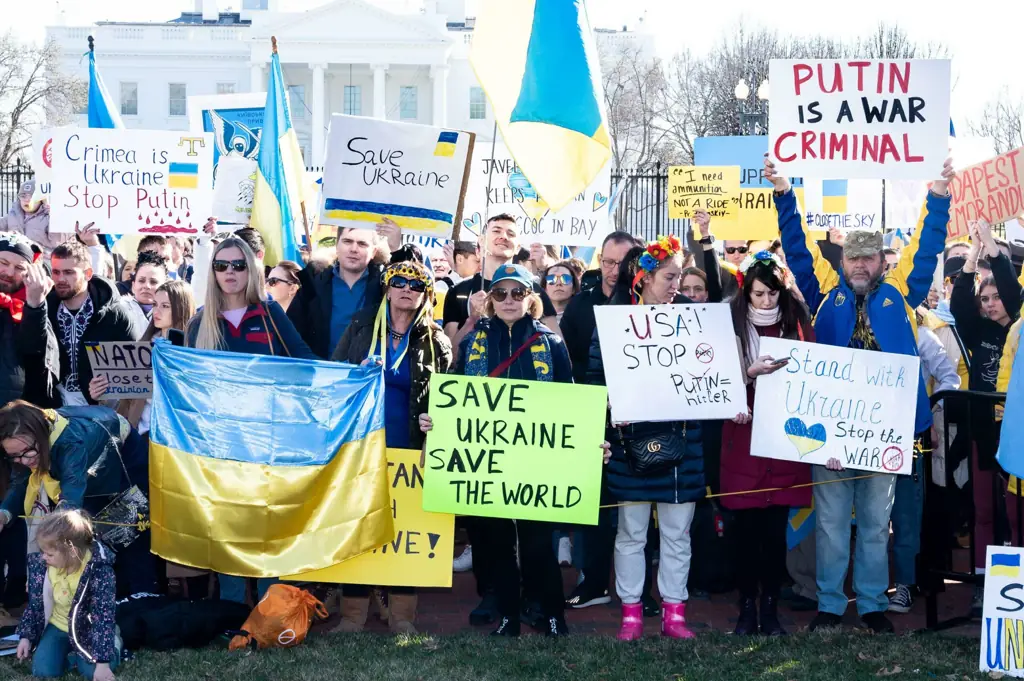
Protestors at a 'Stand with Ukraine' rally in Washington, United States on February 27 2022. Credit: SOPA Images Limited / Alamy
NATO secretary general Jens Stoltenberg told CNN that Putin's latest threat is "dangerous rhetoric" and "behavior which is irresponsible."
The US ambassador to the United Nations Linda Thomas-Greenfield also reacted to the move during an appearance on CBS.
"President Putin is continuing to escalate this war in a manner that is totally unacceptable and we have to continue to condemn his actions in the strongest possible way," she said.
A number of eastern European NATO countries have triggered Article 4 in response to Russia's invasion of Ukraine.
This morning, Russian President Vladimir Putin appeared in an early morning televised address to the people of Russia, President Vladimir Putin has announced a military operation in Ukraine.
In the national address, Putin announced that the "special military operation" is aimed at the "demilitarisation and denazification" of Ukraine. He added that the main goal of the operation is to protect those who have "suffered from abuse and genocide from the Kyiv regime".
Putin also urged the Ukrainian forces to lay down their weapons and go home, and warned that "those who may be tempted to intervene" will face consequences. He said:
"Whoever tries to interfere with us, and even more so to create threats to our country, to our people, should know that Russia's response will be immediate and will lead you to such consequences as you have never experienced in your history."
President Zelensky of Ukraine responded by saying: "If we are attacked militarily, if they try to take away our freedom, our lives, our children's lives, we will defend ourselves."
"When you attack, you will see our faces and not our spines, our faces," Zelensky added.
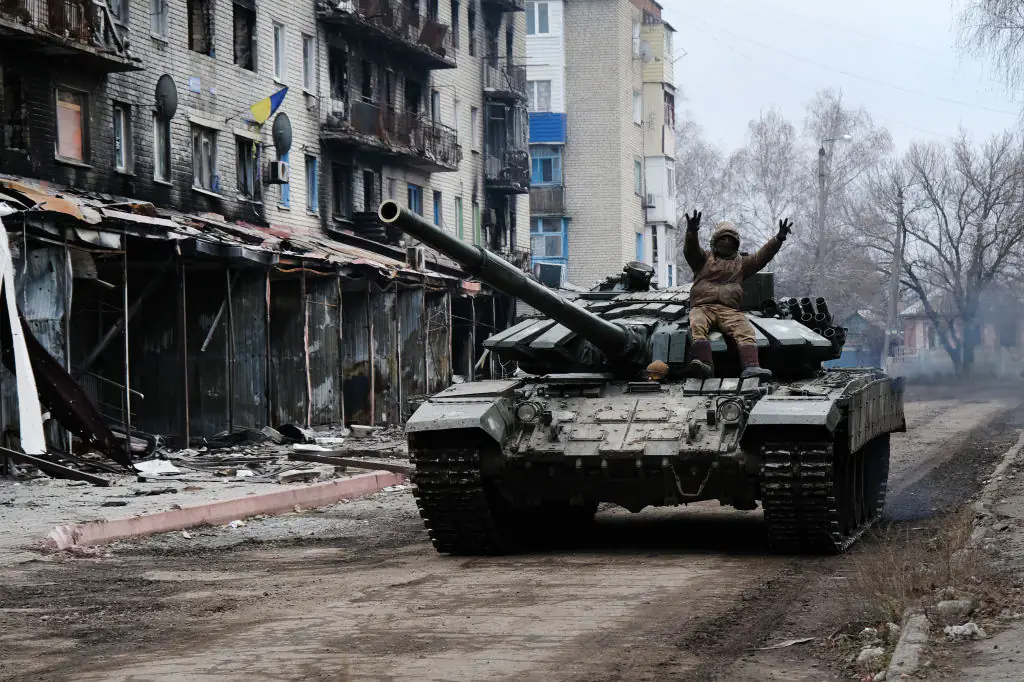
A number of Russian military trucks approach the Perekop checkpoint on the Ukrainian border. Credit: ITAR-TASS News Agency / Alamy
Over the last few hours, CNN has reported that several explosions have been reported across many Ukrainian cities, including the capital Kyiv.
In response, CNN has now declared that the European countries of Poland, Estonia, Latvia, and Lithuania have triggered NATO Article 4 in an effort to launch consultations within the alliance over Russia's attack on Ukraine.
Per The North Atlantic Treaty, Article 4 states: "The Parties will consult together whenever, in the opinion of any of them, the territorial integrity, political independence or security of any of the Parties is threatened."
On Twitter the Estonian government added:
"#Estonia unequivocally condemns #Russia's military attack on #Ukraine and we have decided to launch #NATO consultations under Article 4 of the North Atlantic Treaty with Latvia, Lithuania, Poland, and other Allies."
Per the official NATO website, Article 4 consultations can lead to collective action among the 30 member states.
The website adds: "In Article 4 of NATO’s founding treaty, members can bring any issue of concern, especially related to the security of a member country, to the table for discussion within the North Atlantic Council."
Article 4 has been invoked six times in the 63-year history of the alliance - most recently in February of 2020 when dozens of Turkish soldiers were killed following an attack by Syrian government forces.
On two instances of Article 4 being invoked, NATO responded with military aid. In 2003, it sent aircraft and missile batteries to southeastern Turkey along the border with Iraq and in 2012, it sent Patriot missile batteries to protect against Syrian attacks.
Earlier today, NATO released a statement in response to Russia's invasion, stating:
"We condemn in the strongest possible terms Russia’s horrifying attack on Ukraine, which is entirely unjustified and unprovoked. Our thoughts are with all those killed and injured, and with the people of Ukraine. We also condemn Belarus for enabling this attack."
It adds: "We stand with the people of Ukraine and its legitimate, democratically elected president, parliament, and government. We will always maintain our full support for the territorial integrity and sovereignty of Ukraine within its internationally recognized borders, including its territorial waters.
"We call on Russia to immediately cease its military action and withdraw all its forces from in and around Ukraine, to fully respect international humanitarian law, and to allow safe and unhindered humanitarian access and assistance to all persons in need."
Featured image credit: ITAR-TASS News Agency / Alamy
In an early morning televised address to the people of Russia, President Vladimir Putin has announced a military operation in Ukraine.
As reported by CNN, Putin announced that the "special military operation" is aimed at the "demilitarisation and denazification" of Ukraine. The statement refers to the Kremlin's claims that Ukraine’s military is being run by neo-Nazis and poses a threat to Russia.
He added that the main goal of the operation is to protect those who have "suffered from abuse and genocide from the Kyiv regime".
The address was broadcast on Russian national television on Thursday morning, and saw Putin urge Ukrainian forces to lay down their weapons and go home.
"Our plans are not to occupy Ukraine, we do not plan to impose ourselves on anyone," Putin said. He added that "those who may be tempted to intervene" will face consequences, and that any possible bloodshed will be down to the Ukrainian government.
Putin said:
"Whoever tries to interfere with us, and even more so to create threats to our country, to our people, should know that Russia's response will be immediate and will lead you to such consequences as you have never experienced in your history."
Per the New York Times and various other news outlets, "large explosions" have been heard and seen in Ukraine, in places such as Kyiv, Kharkiv, and Odessa. CNN adds that the office of Ukraine President Zelensky has released images showing large explosions to the east of the capital Kyiv, with billowing columns of smoke erupting into the air.
President Zelensky has responded to Russia's "operation" by saying: "If we are attacked militarily, if they try to take away our freedom, our lives, our children's lives, we will defend ourselves."
"When you attack, you will see our faces and not our spines, our faces," Zelensky added.
BBC News has reported this morning that Ukrainian police had announced that seven people have died as a result of Russian forces bombing a military unit in Podilsk.
President Joe Biden has issued a statement in response to Russia's invasion, saying: "President Putin has chosen a premeditated war that will bring a catastrophic loss of life and human suffering."
"Russia alone is responsible for the death and destruction this attack will bring, and the United States and its Allies and partners will respond in a united and decisive way. The world will hold Russia accountable," Biden added.
BBC News adds that EU leaders have also condemned the "operation", with UK Prime Minister Boris Johnson saying that he is "appalled" by the "unprovoked attack", adding that the United Kingdom would "respond decisively".
Additionally, Italian Prime Minister Mario Draghi has stated that Russia's actions are "unjustified and unjustifiable".
Russian leader Vladimir Putin has made a huge move regarding his nuclear weapons, which could be a signal of intent.
When it comes to Putin, fear is not a word many would use to describe him.
The Russian President warned the Baltic states about potential upcoming invasions earlier this year, but he has now shot a warning out to nations around the world.
According to Putin's aide Patrushev, the nation has transferred its naval nuclear forces to a state of full combat readiness.
He also called the Northern European nations, Ukraine, and the AUKUS bloc (Australia, the UK and the US), threats to Russia.
Apparently, Putin ordered this to be done, with his aide informing the Kremlin media of the decision.
Putin has prepared Russia's nuclear arsenal. Credit: Contributor / Getty
Putin chooses to respond to "threats"
His aide stated that "the creation of a naval alliance of Northern European countries and Ukraine must be taken into account in the list of military threats to Russia," as per UNN.
By specifically naming the threats to the nation, he brought attention to the apparent activities of the AUKUS bloc, which involves the reported buildup of Australian naval capabilities.
The nation has been upping its efforts to control shipping in the Pacific and Indian Oceans.
"All threats emanating from potential adversaries are taken into account in the development plans of the Navy, in particular in the Strategy for the Development of the Navy until 2050," Patrushev's statement read.
Russia even claimed that they have footage of the delivery of their nuclear warheads to the likes of Belarus, as part of its continued wide-scale nuclear exercises.
It doesn't sound too wide of the mark, as video footage circulated online earlier this year, revealing Russia's successful launch of the Samrat missile.
The warhead is the latest and 'most powerful' missile in the nation's arsenal.
Russia had test-fired its newest intercontinental ballistic missile, as President Vladimir Putin further flexed his muscles at his perceived adversaries.
Putin isn't afraid of putting the Russian military to use. Credit: Spencer Platt/Getty Images
Previous warning to Baltic states
Ukrainian internal affairs minister Anton Gerashchenko claimed in May that Moscow is looking to appeal to the International Court of Justice over the 'suppression of the rights of Russian speakers' in Latvia, Lithuania, and Estonia.
Gerashchenko explained on X: "The foreign ministry pretends that negotiations 'have yielded no results' and that complaints submitted to the UN and OSCE have been ignored — therefore, the Kremlin is allegedly forced to go to court."
The former minister said that every refusal to follow Russia's orders will be considered as 'Western bias,' resulting in 'extrajudicial actions.'
Gerashchenko further wrote: "The scheme is not new. Before the 2008 war in Georgia, Russia spent years talking about the 'genocide of Ossetians,' distributing passports to residents of Abkhazia and South Ossetia, and then used the claim of 'protecting Russian citizens' as a formal justification for invasion."
After this war, the Russian President at the time was Dmitry Medvedev, and he signed amendments to Russia's Law on Defense.
This meant that the military could be utilized overseas to protect Russian citizens.
He highlighted: "The Kremlin then moved the concept of 'protecting compatriots' from propaganda into formal law."
Several US officials believe President Vladimir Putin is so angry at the resistance Russian troops have been met with in Ukraine that he may launch a more aggressive attack on the neighboring country.
Since invading Ukraine last week following months of threats, Russian troops have attempted to seize the capital city of Kyiv, but have been met with staggering resistance from Ukrainian forces and civilians alike.
Putin's aggression toward Ukraine has been widely condemned by the international community, including with economic sanctions and NATO troops massing in the region.
Credit: ITAR-TASS News Agency / Alamy
As a result of the unforeseen resistance, Putin has reportedly been left confused, frustrated, and directing bursts of anger at people in his inner circle, NBC News reported, citing intelligence from US officials.
"The main concern is the information he's getting and how isolated he is. The isolation is a really big concern," a Western diplomat told NBC News. "We don't believe he has a realistic understanding of what's going on."
US officials also told reporters on Monday that they fear Putin will escalate his invasion following the lack of success in the first six days of the invasion.
Credit: Sipa US / Alamy
"They have been slowed and they have been frustrated by their lack of progress on Kyiv, and one of the things that could result is a reevaluation of their tactics and the potential for them to be more aggressive and more overt in both the size and the scale of their targeting of Kyiv," a senior defense official told reporters on Monday, per CNN.
Meanwhile, another Western official told Insider on Monday: "There are some risks that come as a consequence of Russia's lack of progress.
"I fear the way in which Russia is frustrated in achieving its aims on the ground is leading to the use of more indiscriminate fires and as a consequence, we're going to see an increase in civilian casualties."
Credit: ITAR-TASS News Agency / Alamy
US officials also warned the country's lawmakers in a classified briefing on Monday that Russia could put Kyiv under siege and that the situation would deteriorate quickly, CNN reported.
"We're certainly mindful that the frustrations could lead to a more aggressive approach by the Russians," a US official told reporters Monday, per The Daily Beast.
"One of the things that could result is a reevaluation of their tactics and the potential for them to be more aggressive and more overt in both the size and scale of their targeting of Kyiv."
Russian President Vladimir Putin has once again sharpened his rhetoric, this time warning European powers that if they provoke a war with Russia, there would be consequences.
Speaking to reporters on Tuesday, Putin emphasized that any conflict with Europe would end so swiftly that Russia would have no one left to negotiate with, highlighting the military might at Moscow's disposal, per Reuters.
"If Europe suddenly wants to start a war with us and starts it," Putin said, "then it would end so swiftly for Europe that Russia would have no one left to negotiate with."
This statement comes amid the ongoing conflict in Ukraine, a war that has escalated into the deadliest European confrontation since World War II.
Putin's Response to European Intervention in Ukraine
Since Russia’s invasion of Ukraine in February 2022, Moscow has struggled to make significant gains, despite substantial losses on both sides.
Putin has consistently dismissed claims that his military ambitions could extend to NATO countries, describing such warnings as "nonsense."
However, the Russian leader also accused European nations of obstructing efforts to end the war.
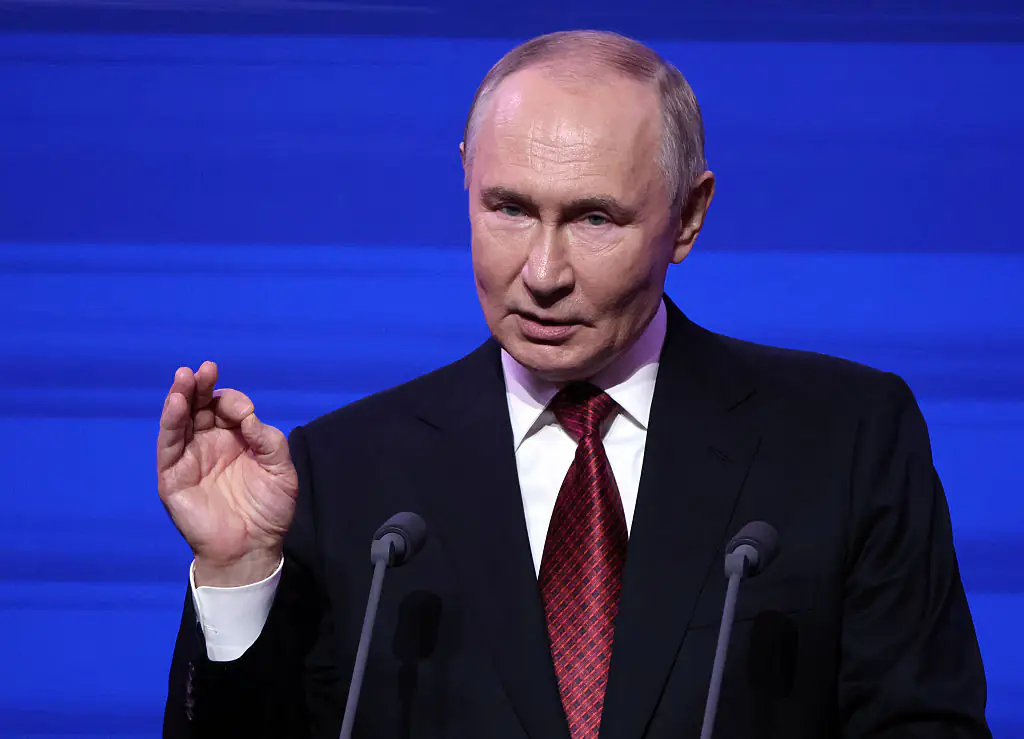
Putin has threatened Europe. Credit: Contributor / Getty
He claimed that European powers hindered U.S. President Donald Trump’s peace initiatives by presenting proposals that were intentionally unacceptable to Moscow, using them as a means to accuse Russia of not seeking peace.
“They are on the side of war,” Putin said, referring to European states that severed ties with Russia, making diplomatic solutions more difficult.
Despite Russia's mounting losses in Ukraine, Putin remains defiant, warning of further escalation in response to drone strikes on Russian tankers in the Black Sea.
Moscow, in turn, may retaliate by cutting off Ukraine's access to the sea, an escalation that could have dire consequences for global shipping and regional stability.
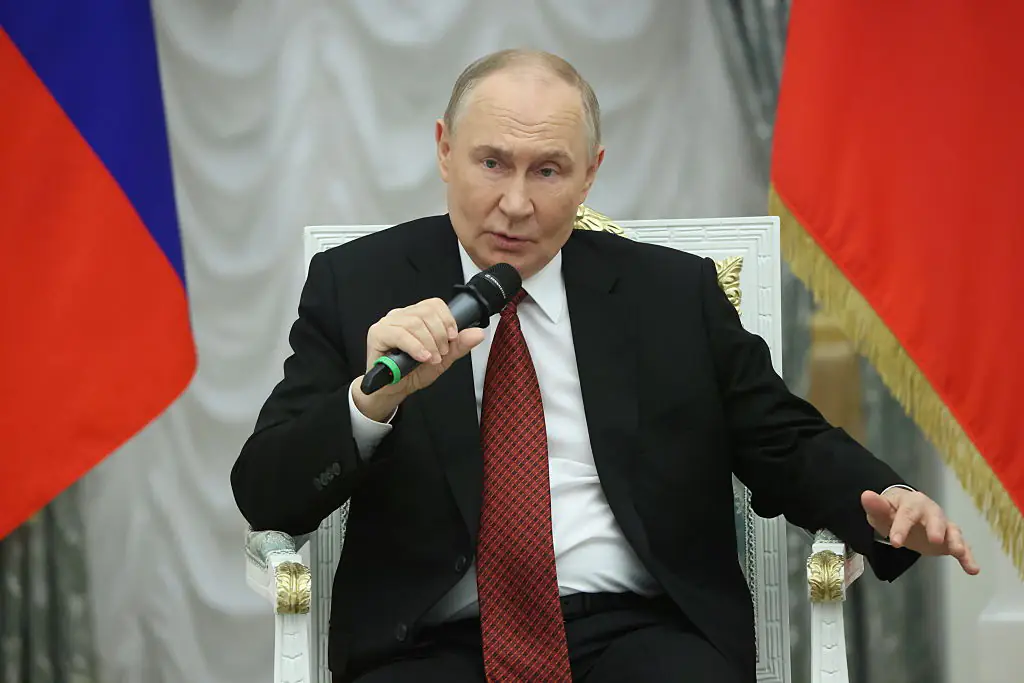
Putin claims he doesn't want to attack NATO territory. Credit: Contributor / Getty
Drones Breach NATO Airspace: A New Phase of Russian Aggression?
The risk of further escalation came into sharper focus recently when Russian drones breached NATO airspace, heightening fears of a direct confrontation between Russia and the West.
Polish airspace was violated by multiple drones, including Iranian-made Shaheds, which triggered a dramatic response from NATO forces.
Polish Prime Minister Donald Tusk confirmed that 19 drone incursions had been recorded, some of which entered Polish territory from Belarus, an ally of Moscow.
This incident marked the first time NATO forces directly engaged with Russian military hardware since the war in Ukraine began.
Polish Foreign Minister Radoslaw Sikorski suggested that the incursions were an attempt by Moscow to test NATO's resolve, while Ukraine’s UN representative Andriy Melnyk warned that the situation could escalate further, per the Mirror.
“If this escalation remains without a decisive response, Russia will not stop at Poland,” Melnyk said, adding: “Tomorrow it could be drones or even missiles that fall on Berlin, Paris, or London.”
Zelenskyy has warned about Russian aggression. Credit: Global Images Ukraine / Getty
The Threat of World War III: Zelenskyy and the UN's Response
As tensions rise, Ukrainian President Volodymyr Zelenskyy called drone incursions in Poland “an extremely dangerous precedent for Europe.”
Speaking on social media, he stressed that Russia’s aggressive actions were pushing the boundaries of international law and order.
“Moscow always pushes the boundaries of what is possible, and if it does not encounter a strong reaction, it remains at the new level of escalation,” Zelenskyy said.
The Ukrainian leader warned that further inaction would only embolden Russia, urging the West to strengthen sanctions and provide more military support to Ukraine. He also emphasized the need for a swift and coordinated response to prevent further escalation of the conflict.
The United States echoed Zelenskyy’s concerns, with Dorothy Shea, the U.S. Acting Permanent Representative to the UN, reaffirming America’s commitment to defending every inch of NATO territory.
Representative Joe Wilson labeled the drone incursion as an “act of war,” calling for tougher sanctions on Russia to weaken its military capabilities, per The Hill.
This sentiment was shared by many Western leaders, who expressed alarm over the possibility of Russian aggression extending beyond Ukraine and Poland.
In response to the escalating situation, NATO allies have stepped up their defense efforts.
France deployed three Rafale fighter jets to Poland, while President Emmanuel Macron reiterated the importance of a united NATO front in the face of Russian threats.
Macron emphasized that any further aggression would not go unchallenged, a sentiment echoed by NATO Secretary-General Mark Rutte and British Prime Minister Sir Keir Starmer.