


US4 min(s) read
Former FBI boss tells Americans to stockpile food and water now as Pentagon reveals FORTRESS plan

Dan Bongino, the former FBI Deputy Director, has told Americans to stop treating government preparedness warnings as background noise and to stockpile at least three days of food, water, and power immediately.
The warning, issued on his podcast this week, came hours after details of FORTRESS were revealed, a Pentagon plan to keep US military bases self-sufficient for at least 90 days even if civilian infrastructure completely fails.
"Get your stuff today. Please. Do it for your family," Bongino said on The Dan Bongino Show.
What Bongino said
He did not dress it up. He listed exactly what he thinks every household should have ready.
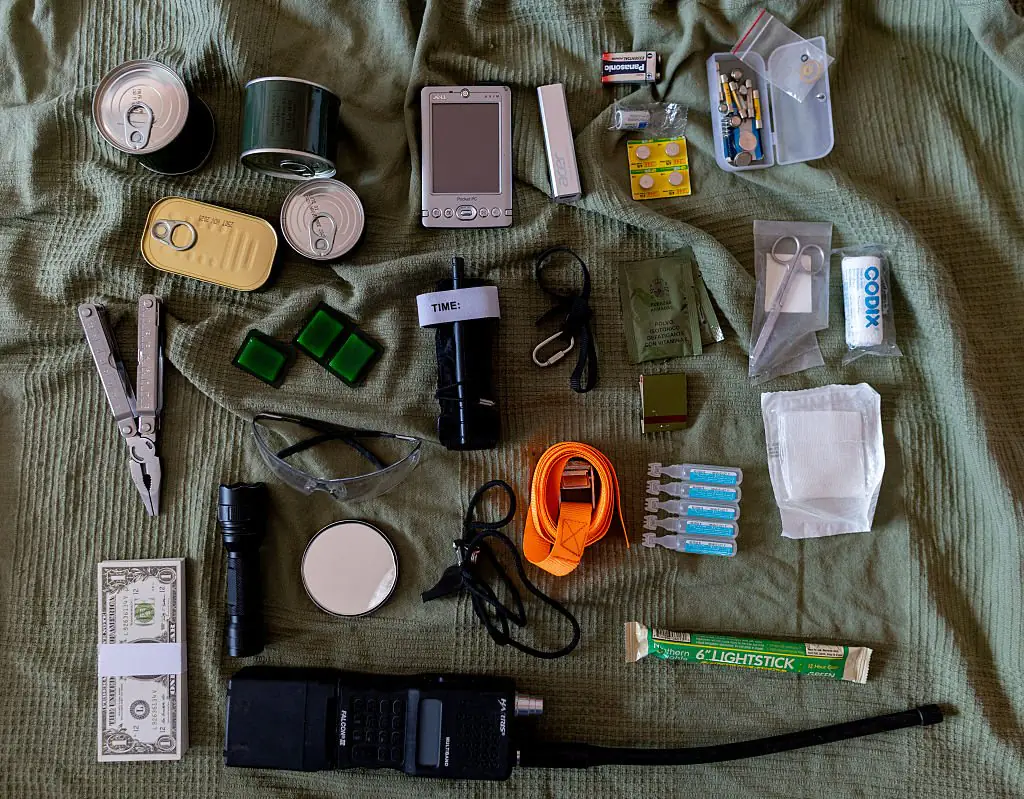
"Have yourself an emergency radio, have yourself some batteries, get yourself some emergency food, get yourself a rain collection and water filtration, some filtration tablets."
Then he framed it the way a parent would.
"The best day of your life, you don't need them. And in 10 years, you're like, 'Ah, I wasted $1,000 or whatever.' The worst day in your life is your kids looking you in the face like, 'Hey Dad, Mom, where's the water?' And, 'Well, we don't have any.'"
He added: "Your neighbors are not going to have any extra food."
Bongino, who also served in the Secret Service and the NYPD, referenced the Pentagon's FORTRESS programme directly. "The Pentagon's doing its job to keep our national security safe and make 'Fortress America'," he said. "You have to make 'Fortress my house', 'Fortress my apartment'."

What the Pentagon is doing
FORTRESS is the Pentagon's plan to ensure that US military bases can continue operating for at least 90 days without relying on any civilian infrastructure. That means no public water supply, no public electricity grid, no civilian logistics.
Pentagon chief spokesperson Sean Parnell told Fox News: "We don't want to rely on standard civilian municipal infrastructure to run our national defense."
The plan involves portable nuclear reactors, large-scale battery systems, and independent local power grids to keep bases running through blackouts. It also includes civilian factories pre-designated to switch to defence production, and stockpiles of ammunition, fuel, critical minerals, and medical supplies.
The fact that the Department of Defense is actively planning for a scenario in which American civilian infrastructure stops functioning is the context that gives Bongino's warning its weight. The government is not telling you to prepare because it is cautious. It is telling you to prepare because it is already preparing for the same thing on a much bigger scale.
What FEMA recommends stockpiling
The federal government, through FEMA and Ready.gov, currently advises households to have enough supplies to last at least three days, and ideally up to two weeks.
The official checklist includes one gallon of water per person per day for drinking and sanitation, a multi-day supply of non-perishable food that requires no cooking, battery-powered or hand-crank NOAA weather radios, flashlights, extra batteries, a first aid kit, a seven to 10 day supply of prescription medications, sanitation items including garbage bags and wet wipes, local maps, cell phone power banks, dust masks, and plastic sheeting and duct tape for sheltering in place.
What other countries are telling their citizens
It is not just the US. Governments across Europe and Asia have issued similar warnings in recent weeks.
The UK updated its civil emergency guidance this month, explicitly recommending three days of supplies in case severe weather, cyberattacks, or other disruptions interrupt essential services. Sweden, Germany, Ireland, the Netherlands, and France have all issued comparable advice.
Japan's Disaster Management Minister announced that every household will be formally urged to keep at least three days of food, water, and toilet supplies from November 2.
When one government tells its citizens to prepare, it could be routine caution. When a dozen governments on three continents do it within the same month, while the Pentagon simultaneously builds a plan to keep military bases running without civilian help, it reads differently.
A doomsday simulation showing the 10 safest countries if World War 3 erupts has been trending alongside the FORTRESS coverage. A separate doomsday map showing the 12 safest places to be if global conflict breaks out has been shared widely in the wake of the CIA boss's warning about Putin.
Bongino's closing message was the simplest of all of them: "Panic kills. Prepare."