


US3 min(s) read
Doctor claims smokers were ‘immune’ to COVID

A doctor has claimed that smokers were less affected by COVID-19 than non-smokers.
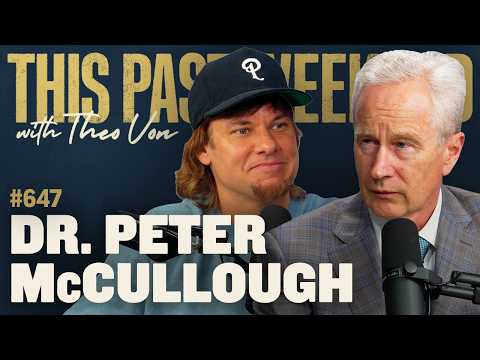
Dr Peter McCullough made the comments during his recent appearance on comedian Theo Von's podcast.
As many people will remember, COVID-19 is a respiratory illness that can have serious consequences, particularly for those with underlying health conditions or weakened immune systems.
But McCullough argued that smokers experienced the opposite effect.

The doctor's explanation
According to McCullough, smokers were less vulnerable to the virus, claiming they "got very mild cases" and "don't get long covid".
When Von asked why that might be the case, the cardiologist pointed to nicotine.
"Because smokers maintain a level of nicotine in the bloodstream," he said. "Smoking blocks the spike protein. It's amazing. I thought smokers were going to go down."
He also claimed that "nicotine patches are perfectly safe" and suggested people suffering from Long Covid should use them.
However, health experts have warned that nicotine is not risk-free. According to the Cleveland Clinic, excessive nicotine intake, including through patches or vaping products, can cause symptoms such as nausea and vomiting, dizziness, increased heart rate, and abdominal pain.
WHO advice says the opposite
The remarks have gotten a lot of attention because they directly contradict guidance from the World Health Organization (WHO), which has consistently maintained that smoking increases the risks associated with the virus.
The WHO states that tobacco users face a higher risk of infection through hand-to-mouth contact while smoking and warns that smokers who contract the virus are more likely to develop severe illness because their lung health "is already compromised".
The organization has also urged governments to continue anti-smoking initiatives as part of wider public health efforts.
"To protect the public from the devastating health consequences of tobacco use, WHO urges national authorities to follow its recommendations and their commitments under the WHO Framework Convention on Tobacco Control, within the context of their response to the COVID-19 pandemic," they added.
.jpg_wlrXB4?tr=cr-0.0.737.474,f-webp,q-70,w-1024)
The controversial 'smoker's paradox'
McCullough's statement has revived a controversial debate that occurred during the pandemic around the so-called "smoker's paradox" theory.
According to The Guardian, one research paper from 2021, published in the European Respiratory Journal, claimed smokers were 23% less likely to be diagnosed with COVID-19 than non-smokers and found that "current smoking was not associated with adverse outcome" in hospitalized patients.
However, the paper was later retracted after the editors found that two authors had failed to disclose financial ties to organizations linked to the tobacco industry.
The journal's retraction notice stated: "It was brought to the editors' attention that two of the authors had failed to disclose potential conflicts of interest at the time of the manuscript's submission."
Although the editors said there was no evidence of scientific misconduct beyond the undisclosed conflicts, they decided to retract the paper because of the topic's sensitive nature.
Dr Sarah White, director of Quit Victoria, said: "We really rely in research in being able to take a dispassionate look at the data but also the interpretation of that data.
"The reader needs to know that the authors have some potential or actual conflict of interest, or they've actually been involved with the industry," she added.