ADVERT
US3 min(s) read
Taco Bell has temporarily removed key items from its menu at certain restaurants as health officials investigate a fast-growing parasite outbreak linked to explosive diarrhea.
Some locations have posted notices informing customers they are unable to serve several produce items.
"We are currently unable to sell Lettuce, Cilantro Onion, Pico de Gallo and Guacamole due to a nationwide recall," the signs read. "We apologize for the inconvenience. Any items ordered that normally come with these items WILL NOT contain them."
The missing ingredients are staples in a number of Taco Bell favorites, including tacos, the Crunchwrap Supreme, and Cantina Chicken menu items.
It is not yet clear whether some customers have become sick after eating the affected ingredients.
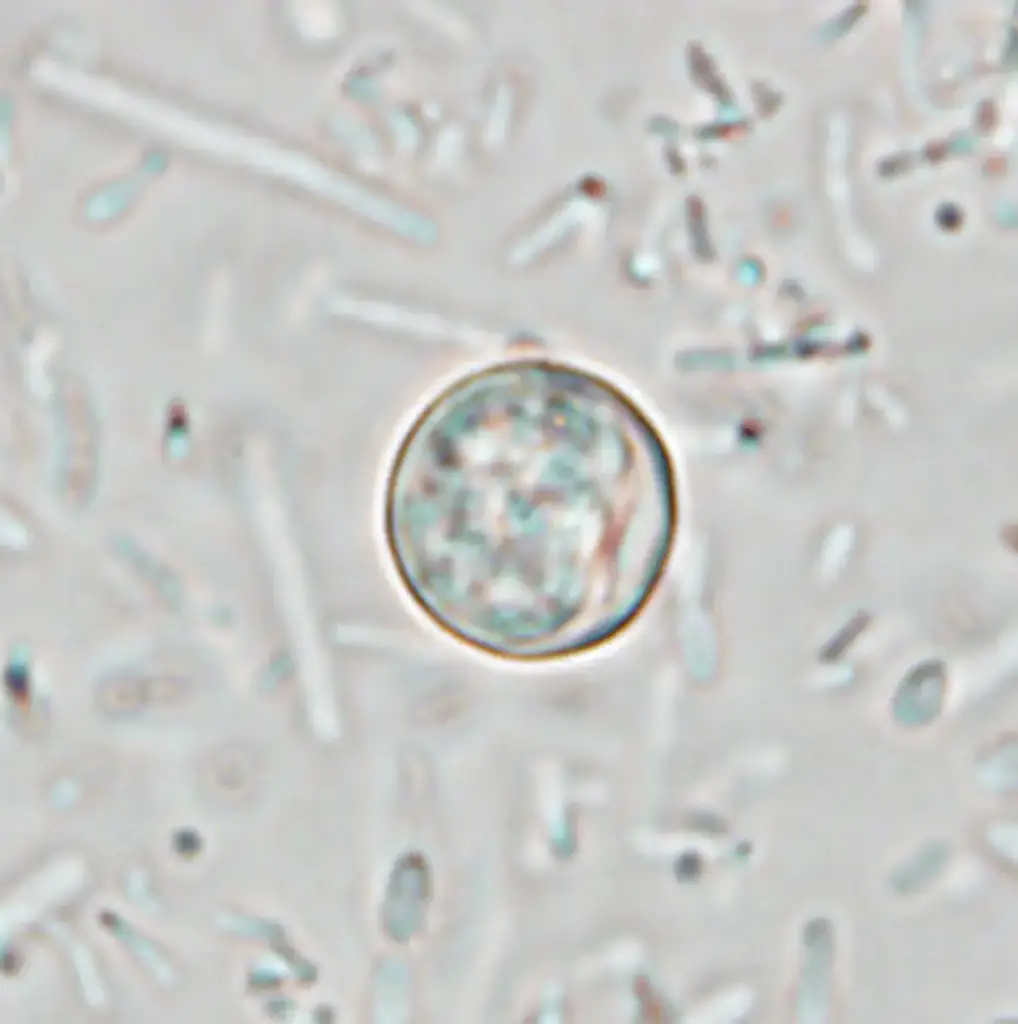
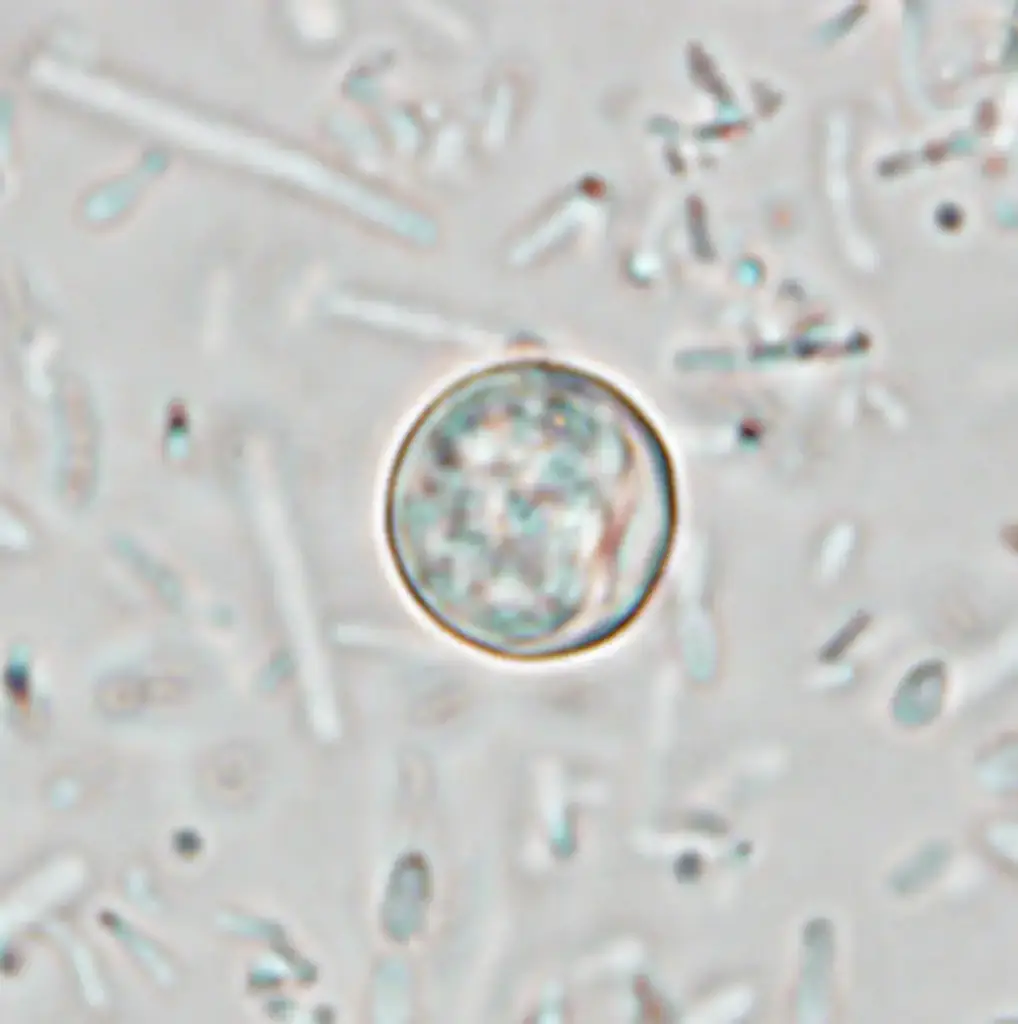
The menu changes come as health officials investigate a growing outbreak of cyclosporiasis, an intestinal illness caused by the Cyclospora parasite.
According to the Michigan Department of Health and Human Services, the state has reported 992 cases connected to the outbreak, an increase compared with the roughly 50 cases it normally records each year.
New York City has also seen a sharp rise, confirming 273 cases since May 1 and 301 cases so far in 2026, according to the city's Health Department.
Meanwhile, the Centers for Disease Control and Prevention (CDC) previously reported that 145 people between the ages of five and 86 contracted Cyclospora cayetanensis between May and June 16.
Twenty people were hospitalized, though no deaths were reported.

The CDC says the parasite can cause "watery diarrhea" and "frequent and sometimes explosive bowel movements" that may last for a month or longer.
Other symptoms include stomach cramps, nausea, bloating, fatigue, loss of appetite, and weight loss.
Some patients may also experience vomiting, low-grade fever, headaches, body aches, and increased gas, while others may show no symptoms at all.
Although many people recover without treatment, symptoms can last for several days to more than a month, increasing the risk of dehydration if left untreated.
Doctors usually treat the illness with the antibiotic trimethoprim-sulfamethoxazole, sold under the brand names Bactrim, Septra, and Cotrim.
Investigators revealed that fresh imported produce was linked to several previous cases of cyclosporiasis in the United States.
Foods previously associated with outbreaks include cilantro, raspberries, sweet peas, mesclun lettuce, and basil.
In 2019, imported basil from Mexico was linked to an outbreak, while contaminated McDonald's salads left nearly 400 people sick in 2018.
Health officials are now urging people to thoroughly wash their produce, clean kitchen utensils and surfaces, and cook raw produce whenever possible.
health3 min(s) read
lifestyle1 min(s) read
health3 min(s) read
health3 min(s) read
A parasite known to cause explosive, watery diarrhea has sparked concern among health officials.
The Centers for Disease Control and Prevention (CDC) has announced that 145 people between the ages of 5 and 86 contracted Cyclospora cayetanensis between May and June 16.
Twenty people have been hospitalized, although no deaths have been reported.
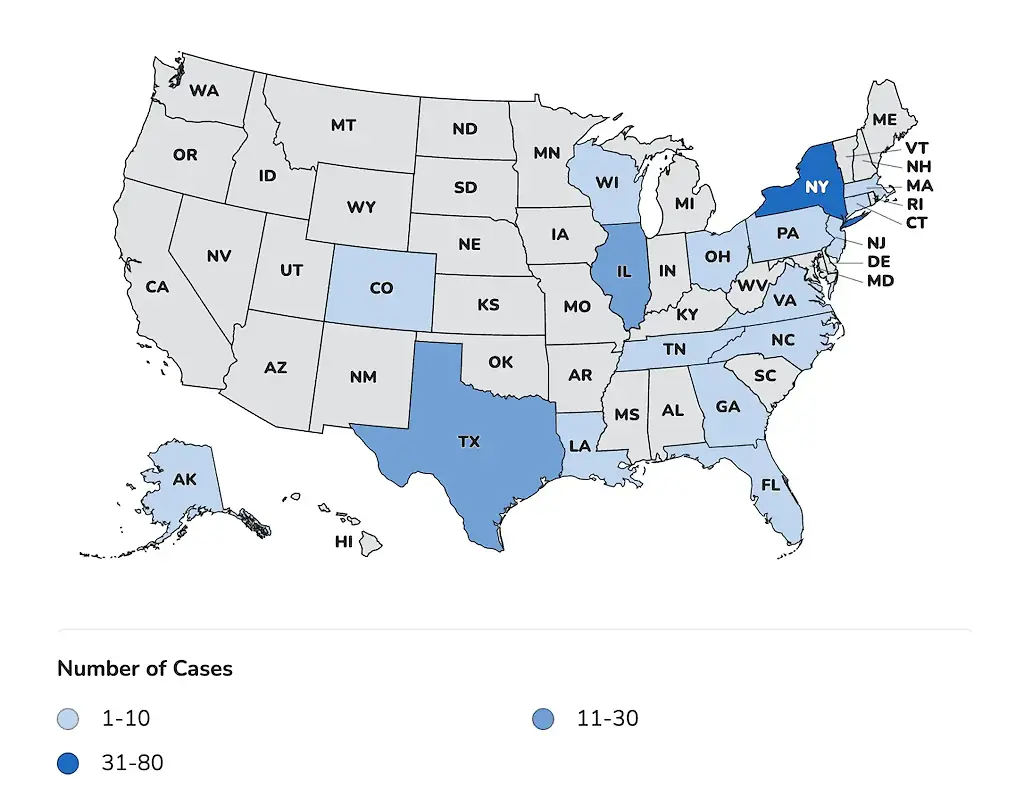
New York has reported the largest number of cases, with the CDC placing it in the 31 to 80 case range. Texas and Illinois have each reported between 11 and 30 cases, while the remaining affected states have reported between one and 10 infections.
Despite the growing number of cases, investigators have yet to pinpoint exactly what caused the outbreak.
Cyclospora infections are usually associated with ingesting food or water contaminated with feces while traveling in tropical or subtropical regions.
However, because none of the current patients reported recent international travel, officials believe the infections were contracted from food consumed within the country.
There is also no evidence that the parasite spreads from person to person.
"Local, state, and federal (CDC, FDA) public health authorities are investigating several clusters of cases in more than one state. Investigations to identify potential sources are ongoing," the agency reported.
Officials have also cautioned that the true number of infections is likely higher than reported, as more cases may not yet have been diagnosed, and the parasite could already be present in states that have not officially reported infections.
The parasite causes cyclosporiasis, a foodborne illness that primarily affects the intestines.
Symptoms usually appear about a week after infection and include watery diarrhea, severe stomach cramps, bloating, nausea, vomiting, fatigue, loss of appetite, and low-grade fever.
Some people may also experience increased gas, weight loss, body aches, headaches, and other flu-like symptoms, while others may not develop symptoms at all.
Cyclosporiasis is considered a nationally notifiable disease, meaning healthcare providers are mandated to report cases to federal health authorities.
Although some infections resolve without treatment, symptoms can last for several days to more than a month, increasing the risk of dehydration if left untreated.
Doctors normally treat the illness with the antibiotic trimethoprim-sulfamethoxazole, sold under the brand names Bactrim, Septra, and Cotrim.
While investigators have not identified the food responsible for the current outbreak, fresh imported produce has been linked to several previous cases of cyclosporiasis in the United States.
Foods previously associated with outbreaks include cilantro, raspberries, sweet peas, mesclun lettuce, and basil.
In 2019, imported basil from Mexico was linked to an outbreak, while contaminated McDonald's salads left nearly 400 people sick in 2018.
In disastrous news for eccentric Taco Bell fans, the faux-Mexican mashup specialists have announced that they are cutting back on a few of their more unorthodox menu choices. Some of the proposed changes will affect popular items like the Doritos Locos tacos and Double Decker taco, marking a dramatic shift in the company’s approach to cooking. RIP insane taco ideas. You will be missed.
[[twitterwidget||https://twitter.com/tacobell/status/1166906055017807872]]
In total, Taco Bell has revealed that nine items are set for the chop, starting from September 12th. The full list includes the Beefy Mini Quesadilla, Chipotle Chicken Loaded Griller, Double Decker Taco, Cool Ranch Doritos Locos Taco, Fiery Doritos Locos Taco, Double Tostada, Power Menu Burrito and XXL Grilled Stuft Burrito, as well as chips and salsa, according to a report by Insider.
[[twitterwidget||https://twitter.com/foodandwine/status/1167120239793967106]]
This slimming down coincides with the chain’s decision to revamp the chain’s iconic combination menu. The current range of around 20 items will be trimmed back to Taco Bell’s 13 most popular items, including popular orders such as three Crunchy Tacos Supreme and a beverage, a Burrito Supreme and a Crunchwrap Supreme, as per Insider.
[[twitterwidget||https://twitter.com/mikexnichols/status/1167184415031734273]]
According to a guilty sounding press release, the company confessed that the decision was almost akin to a midlife crisis. As they put it, “[Have you ever] had that moment...where you just want to chop all your hair off, buy new clothes and get a fresh, new start? Well, we kind of did a thing..." Clearly, they suspect that many fans might not be overjoyed at this latest development
[[twitterwidget||https://twitter.com/juliaprescott/status/1167225770256633856]]
However, Taco Bell have also been quick to highlight what they hope will be the dividends of their new approach. In a series of posts, they revealed how the new menu will compare to the old, hopefully making the ordering process more straightforward for fans new and old. It might be the end of an ear for Doritos taco fans, but change isn’t always bad news.
This article originally appeared on twistedfood.co.uk
Not too long ago, restaurants and food outlets across America came to a standstill when it was discovered batches of Romaine lettuce were giving people E. coli. About 200 people were sickened in the E. coli outbreak and five people died. The outbreak, which started in the spring, is now over, the Centers for Disease Control and Prevention said.
The illnesses in 36 states were previously traced to romaine lettuce grown in Yuma, Arizona, which provides most of the romaine sold in the US during the winter. As it turns out, tainted irrigation water appears to be the source of a national food poisoning outbreak linked to romaine lettuce, health officials said earlier this week.
On Thursday, officials said the outbreak strain of E. coli bacteria was found in an irrigation canal in the Yuma area. They are still investigating how the bacteria got into the canal and whether there was contamination elsewhere. They declined to give details about the canal, including its location, until a report can be completed.
“More work needs to be done to determine just how and why this strain of E. coli O157:H7 could have gotten into this body of water and how that led to contamination of romaine lettuce from multiple farms,” said Dr Scott Gottlieb, commissioner of the Food and Drug Administration, in a statement.
Officials had tied eight illnesses at a jail in Alaska to whole-head romaine lettuce grown at Harrison Farms in Yuma. But they were unable to find a single farm or packaging or distribution site that could clearly be fingered as the source of contamination for the other cases.
The outbreak was the nation’s largest E. coli food poisoning outbreak in more than a decade. Most of the people got sick in March and April, but new illnesses were reported as recently as early this month. Some of those who got sick didn’t eat romaine lettuce, but had been in close contact with someone who did.
Throughout the outbreak, some restaurants opted to continue serving romaine, issuing statements to their customers clarifying where their lettuce had originated. However, some others chose to pull the leafy green from their menu altogether until the outbreak was under control. As health scares go it wasn't the worst, or rather the grossest.
The last large E. coli outbreak like this involved spinach grown in California in 2006. Officials suspect cattle contaminated a nearby stream, and wild pigs roaming the area spread it to fields. Currently, health scares lie somewhere between packets of buns at your favorite restaurants.
Both Wendy's and Rose Acre farms were in the news after rats were found scurrying in and around their produce. Interestingly for Rose Acre farms, it was concluded by the FDA that the levels of rodent activity weren't considered acceptable for any action to be taken. I'm sure they know what they're doing there but damn, surely any level of rodent activity is too high. At least we can eat Chipotle again without any worries.
Here's a very simple reminder that you may want to leave that pork chop on the grill for a few minutes longer.
A doctor has taken to social media to share a concerning scan photo of a woman's legs, before asking his followers what they thought the diagnosis could be.
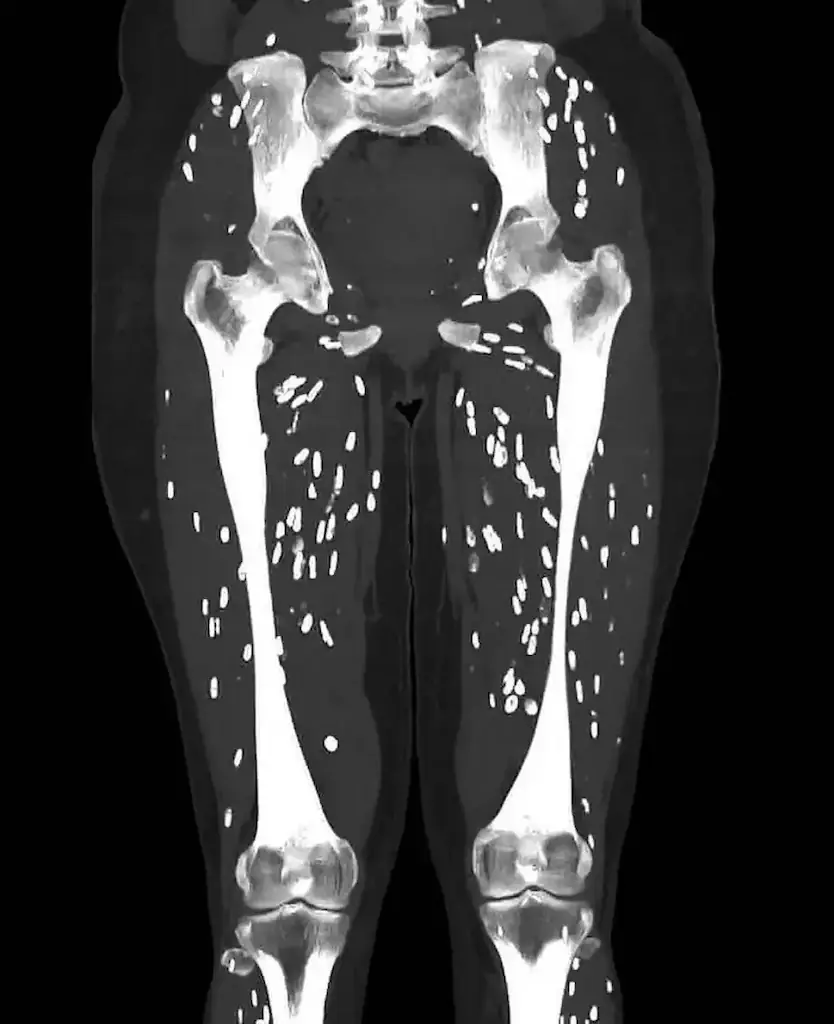
Describing the image as "one of the craziest CT scans he's ever seen", Sam Ghali, M.D. - who boasts more than 630,000 followers on X - shared the image of a female patient's legs.
However, white blotches could be seen all over the scan image, leading to concerns from followers.
After giving people 24 hours to guess what they thought the answer could be, Dr. Ghali revealed that the patient in question had been suffering from Cysticercosis, which he explained is the "infamous parasitic infection caused by ingestion of larval cysts of Taenia Solium, also known as: Pork Tapeworm".
The National Organisation for Rare Disorders explains that "cysticercosis arises from the ingestion of the pork tapeworm’s eggs through fecal-oral contamination, and involves the development of cysts throughout the body, but not in the intestinal tract".
Dr. Ghali explained in his follow-up tweet that "after the eggs are ingested (humans or pigs) they release larvae which penetrate the intestinal wall and invade into the bloodstream (via mesenteric venules) and from there can spread to literally anywhere in the entire body."
The most common areas of the body, according to Dr. Ghali, are the "brain, eyes, subcutaneous tissues, and skeletal muscles".
Wherever the larvae end up, they form cysts known as cysticerci.
The scan in the tweet shows the body's natural inflammatory response to the cysticerci - which kills them off and causes calcification, known as "rice grain calcifications" due to their appearance.
What's terrifying is what Dr. Ghali wrote next: "What can be really bad is when the larvae end up traveling up to the brain and form cysts in actual brain tissue. This specific condition is known as neurocysticercosis. It can lead to headaches, confusion, seizures, and other serious neurologic problems."
The NORD adds that the condition "can affect anyone at any age and affects males and females in equal numbers".
The organization adds that, in most cases, cysticercosis is benign and patients won't need treatment. However, there are medications for those who do.
The World Health Organization adds that neurocysticercosis (NCC) can lead to epileptic seizures. According to WHO, Taenia solium is reportedly the cause of "30% of epilepsy cases in many endemic areas where people and roaming pigs live in close proximity."
Additionally, "in high-risk communities, it can be associated with as many as 70% of epilepsy cases."
"The treatment for cysticercosis located within the nervous system (neurocysticercosis) consists of antiparasitic therapy, corticosteroids, antiepileptic drugs, and/or surgery. Treatment is always individualized for each patient," NORD adds.
In a final message to his followers, Dr. Ghali writes: "So the moral of the story here is do your best to keep clean, always wash your hands, and never, ever eat raw or undercooked pork."
I may just be avoiding it altogether.
A salmonella outbreak has forced a massive recall of more than 200 million eggs across the East Coast of the United States this month. According to a report by the Centres for Disease Control and Prevention, at least 35 people across nine states in the US have been infected by the salmonella virus, and more are predicted to succumb in the near future. The Food and Drug Administration has apparently traced the sudden outbreak back to Rose Acre Farms, situated in North Carolina.
The potentially infected eggs were apparently distributed between January 11 and April 12. The FDA reported that Rose Acre Farms had contravened several health and hygiene regulations; inspectors spotted evidence of a rodent infestation on site, as well as observing employees touching dirty equipment without washing their hands. In response, Rose Acre farms claimed that it had "not only corrected deficiencies at the farm [but] also taken steps to ensure the farm meets or exceeds the standards of the FDA and USDA."
The recall concerns eggs which have the plant number P-1065. They were sold under brand names such as Crystal Farms, Country Daybreak, Coburn Farms, Sunshine Farms, Publix, Sunups, Coburn Farms, Glenview and Great Value, as well as at Walmart and Food Lion stores across the country.
The CDC has also claimed that more people might be infected than their initial estimates accounted for, because: "Illnesses that occurred after March 23, 2018, might not yet be reported due to the time it takes between when a person becomes ill with Salmonella and when the illness is reported. This takes an average of two to four weeks."
Salmonella is a common form of virulent gastric bacteria which affects the body's intestinal tract. It is typically transmitted through contaminated water or food, such as raw or undercooked meat, poultry, and eggs. The incubation period of salmonella can range anywhere from an afternoon up to 48 hours.
The symptoms of salmonella manifest themselves in a variety of ways, including nausea, vomiting, abdominal cramps, diarrhoea, fever and headaches. Salmonella is not typically life-threatening, but it can prove fatal in children or elderly adults, and it is known to kill many people in developing countries who don't have access to medical services. Due to salmonella often being deeply dehydrating, treatment often focuses on replacing lost fluids and electrolytes, as well as courses of antibiotics if the immune system has been severely compromised.