ADVERT
World3 min(s) read
Published 13:17 16 Jul 2026 GMT
The reason behind Omayra Sánchez Garzón's eerie black eyes in a now-infamous photo has been explained.
The Colombian was just 13 years old when she became stuck under the roof of her home after a landslide destroyed her village.
Following the eruption of Nevado del Ruiz in Armero on November 13, 1985, a mudflow was formed, desecrating the surrounding area.
Omayra stared death in the face as she became stuck in a large puddle of volcanic lava and ice.
This was formed after a small eruption caused 10 percent of the glacier at the summit of the volcano to melt, forming a mixture of volcanic lava and ice.
Known also as lahar, this is what made its way into river valleys and nearby villages, consuming everything in its way as around 25,000 people died and 14 nearby villages were destroyed.
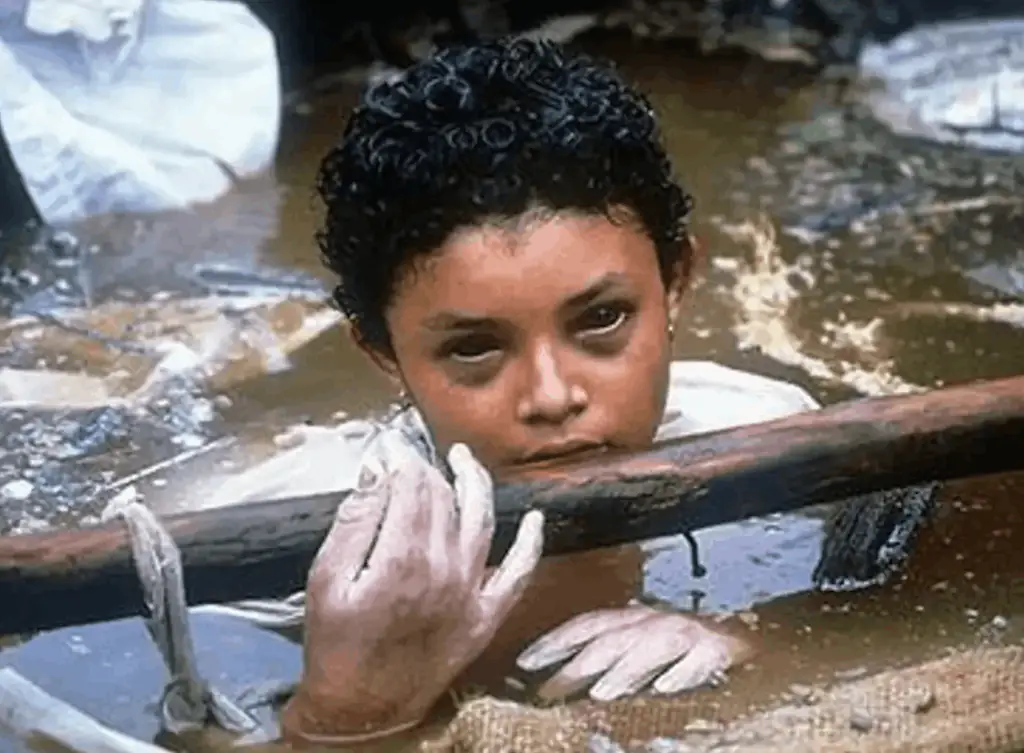
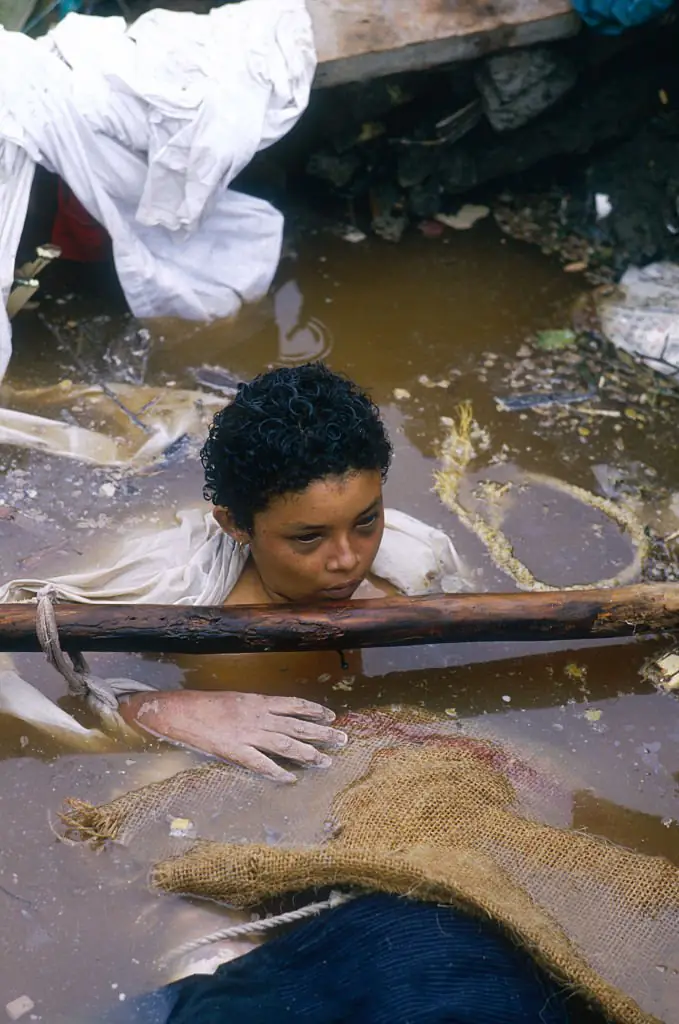
Photojournalist Frank Fournier sat with the young teen, who would go on to become the face of the disaster, in her final hours.
This is when he snapped a picture of her with black eyes, which would even win the World Press Photo of the Year in 1986.
Despite several failed rescue attempts, the photographer was criticized for failing to help her, though he said that it was "impossible" to do so
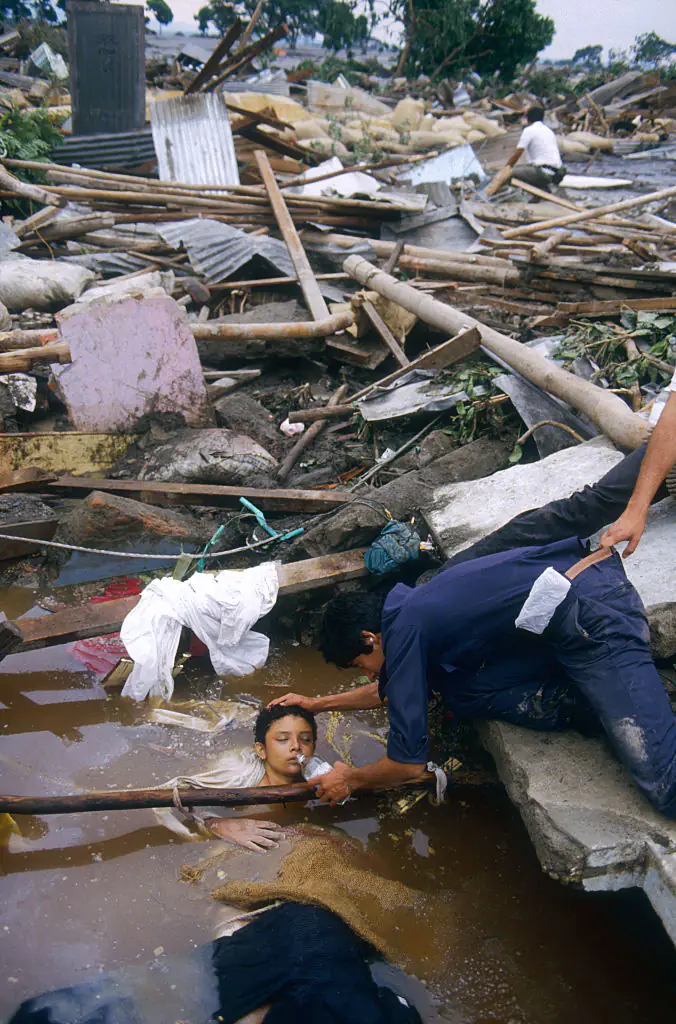
Reflecting on Omayra's death, he told the BBC: "She was in a large puddle, trapped from the waist down by concrete and other debris from the collapsed houses.
"She had been there for almost three days. Dawn was just breaking and the poor girl was in pain and very confused.
"All around, hundreds of people were trapped. Rescuers were having difficulty reaching them. I could hear people screaming for help and then silence - an eerie silence. It was very haunting."
It is said that her eyes were as dark as her hair because her legs were trapped underwater by concrete and debris, while she was also trapped underwater for a total of three days.
Due to this, her eyes were so bloodshot that they looked black, in addition to pale white hands and a swollen face.
Speaking directly into the camera, her last words were: "Mommy, I love you so much, daddy I love you, brother I love you."
Omayra would die on November 16, 1985.
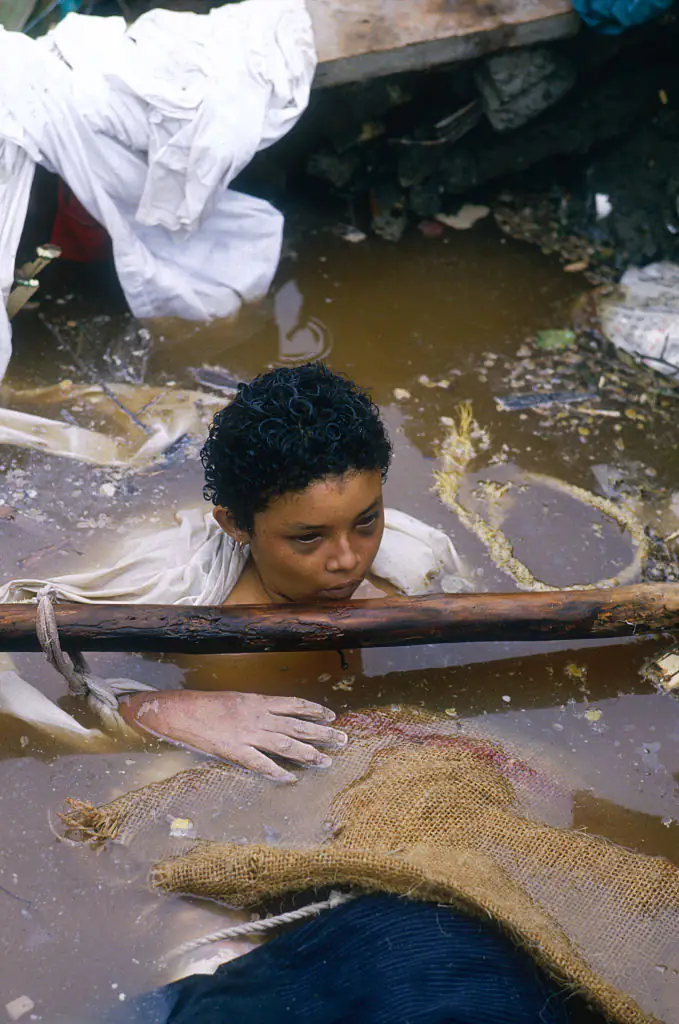
The photographer further reflected: "When I took the pictures, I felt totally powerless in front of this little girl, who was facing death with courage and dignity. She could sense that her life was going.
"I felt that the only thing I could do was to report properly on the courage and the suffering and the dignity of the little girl and hope that it would mobilise people to help the ones that had been rescued and had been saved.
"I felt I had to report what this little girl had to go through."
So while many thought that the photographer could have done more, the fact is that without him, we would never know the late teen's story.
uncategorised7 min(s) read
Published 01:53 23 Dec 2017 GMT
Published 10:58 06 Jul 2025 GMT
A photographer who captured a famous portrait of a young girl before her tragic death has opened up about the experience.
In 1985, the eruption of the Nevado del Ruiz volcano in Colombia claimed the lives of over 20,000 people, with one haunting image from the tragedy seared into global memory.
Frank Fournier, a French photographer, became renowned for capturing the heartbreaking final moments of 13-year-old Omayra Sánchez Garzón, who was trapped in debris for 60 hours before her death.
The catastrophic eruption triggered a deadly lahar - a lethal mix of volcanic lava, ice, and mud - that surged into the river valleys, engulfing villages like Armero, per the Sun.
Among the victims was Omayra, who became a symbol of the disaster’s devastation.
Rescue workers tried repeatedly to free Omayra, but her legs were pinned beneath a brick door, with the body of her deceased aunt entangled around her legs.
Each attempt to pull her free caused more water to rise around her, risking drowning.
To keep her afloat, rescuers placed a tire around her body and provided her with sweet food and soda in her final hours.
Before succumbing to her injuries on November 16, 1985, Omayra gave a tearful message on camera: "Mommy, I love you so much, Daddy I love you, brother I love you." It is believed her death was caused by either gangrene or hypothermia.
Fournier’s photograph of Omayra, her eyes bloodshot, hands whitened, and face swollen, became a haunting symbol of the disaster.
The powerful image sparked global outcry and raised difficult ethical questions about the role of journalists during tragedies.
In a heartbreaking recollection, Fournier shared that Omayra began to hallucinate during her final hours, asking him to take her to school because she feared she would be late.
The photographer opened up about the heartwrenching picture in a 2005 interview with the BBC, revealing that people asked him why he didn't help the teen or get her out.
At the time, the now-77-year-old responded that it was "impossible" to rescue her, explaining: "There was an outcry - debates on television on the nature of the photojournalist, how much he or she is a vulture.
"But I felt the story was important for me to report and I was happier that there was some reaction; it would have been worse if people had not cared about it," he continued. "I am very clear about what I do and how I do it, and I try to do my job with as much honesty and integrity as possible."
Fournier believes the picture helped raise money "from around the world in aid" as well as "helped highlight the irresponsibility and lack of courage of the country's leaders".
"There was an obvious lack of leadership. There were no evacuation plans, yet scientists had foreseen the catastrophic extent of the volcano's eruption," he explained. "People still find the picture disturbing."
He said the picture highlights "the lasting power of this little girl," adding: "I was lucky that I could act as a bridge to link people with her. It's the magic of the thing."
This tragic moment inspired the title of a lecture Fournier delivered in 2022 at the Xposure International Photography Festival: "Please Take Me to School". During the lecture, Fournier revisited the Nevado del Ruiz eruption and its aftermath, before turning his focus to Omayra, the courageous girl whose image became a symbol of both suffering and resilience.
"For three nights and three days - stuck in a pool of sewage water at the bottom of a small hill, crushed under layers upon layers of fallen wall - a voice was to speak in the name of 28 thousand," Fournier told the audience.
"It was a voice of an ordinary little girl who will cross land and time, and will bounce and pierce the heart of millions of people."
He continued, describing Omayra's "commanding dignity, stunning courage, and relentless kindness" as she faced what he called "a slow, violent, implacable death."
"As the sewage water kept rising slowly to reach the level of her lips, 12-year-old Omayra Sánchez faced a slow, violent, implacable death," Fournier said, reflecting on the tragedy.
"The cruel fate of this lost life - here, but also in the other story imposed to all of us to preserve and share is the singularity of human life at all costs," he said.
Fournier continued: "No matter the specific mode of existence, the social and cultural condition, we need to challenge the vicious politics of life inequality imposed on others by our leaders and by ourselves.
"It is not only a practical, but ethical, political, imperative, as each individual has a right to life for the gain of everyone."
Published 10:08 06 Jan 2026 GMT
A photographer who took one of the most recognizable and haunting photographs of a young girl trapped in a volcanic mudflow for 60 hours explains why he didn't try to help save her life.
Frank Fournier became renowned for his coverage of the 1985 eruption of the Nevado del Ruiz volcano in Armero, Colombia.
The South American nation suffered a devastating eruption that claimed the lives of 20,000 residents after a deadly mixture of volcanic lava and ice - called lahar - rushed into the river valleys and entered the villages.
One of the victims was 13-year-old Omayra Sánchez Garzón, who tragically passed after being trapped in debris caused by a mudslide for 60 hours.
Several rescue efforts were made to save Omayra's life, however, her legs were caught under a brick door, with her deceased aunt's arms clutched tightly around her legs and feet, according to The Sun.
Each time someone tried to pull her free, more water pooled around her, which made it seem as if she would drown if they let her go. So, rescue workers placed a tire around her to keep her afloat, and gave her sweet food and cans of soda during her final hours.
Onlookers said that she sometimes cried from fear, but as she got closer to death, she began to hallucinate and told them that she did not want to be late for school.
Before closing her eyes for the final time, the teen shared a heartbreaking message on camera, saying: "Mommy, I love you so much, Daddy I love you, brother I love you."
Omayra passed away on November 16, with her cause of death believed to be either gangrene or hypothermia.
Her horrific fate was known around the world because of a haunting portrait captured by French photographer Frank Fournier.
See the image below:
The photo showed that her eyes were so bloodshot that they appeared completely black, her fingers were eerily white and her face had swelled.
The photographer opened up about the picture in a 2005 interview with the BBC, revealing that he was often asked why he didn't help the teen or try to get her out of where she was trapped.
At the time, the now-77-year-old responded that it was "impossible" to rescue her, explaining: "There was an outcry - debates on television on the nature of the photojournalist, how much he or she is a vulture.
"But I felt the story was important for me to report and I was happier that there was some reaction; it would have been worse if people had not cared about it," he continued. "I am very clear about what I do and how I do it, and I try to do my job with as much honesty and integrity as possible."
He added: "When I took the pictures I felt totally powerless in front of this little girl, who was facing death with courage and dignity. She could sense that her life was going.
"I felt that the only thing I could do was to report properly on the courage and the suffering and the dignity of the little girl and hope that it would mobilise people to help the ones that had been rescued and had been saved. I felt I had to report what this little girl had to go through."
Fournier believes the picture helped raise money "from around the world in aid" as well as "helped highlight the irresponsibility and lack of courage of the country's leaders".
"There was an obvious lack of leadership. There were no evacuation plans, yet scientists had foreseen the catastrophic extent of the volcano's eruption," he explained. "People still find the picture disturbing."
He said the picture highlights "the lasting power of this little girl," adding: "I was lucky that I could act as a bridge to link people with her. It's the magic of the thing."
Published 09:17 09 Sep 2025 GMT
The photographer who took the heartbreaking picture of a young girl trapped in a volcanic mudflow for 60 hours explains why he didn't help her.
Frank Fournier became renowned for his coverage of the 1985 eruption of the Nevado del Ruiz volcano in Armero, Colombia.
The South American nation suffered a devastating eruption that claimed the lives of 20,000 residents after a deadly mixture of volcanic lava and ice - called lahar - rushed into the river valleys and entered the villages.
One of those victims was 13-year-old Omayra Sánchez Garzón, who tragically passed after being trapped in debris caused by a mudslide for 60 hours.
Several rescue efforts were made to save Omayra's life, however, her legs were caught under a brick door, with her deceased aunt's arms clutched tightly around her legs and feet, according to The Sun.
Each time someone tried to pull her free, more water pooled around her, which made it seem as if she would drown if they let her go. So, rescue workers placed a tire around her to keep her afloat, and gave her sweet food and soda cans during her last few hours.
Before closing her eyes for the final time, the teen shared a heartbreaking message on camera, saying: "Mommy, I love you so much, Daddy I love you, brother I love you."
Omayra passed away on November 16, with her cause of death believed to be either gangrene or hypothermia.
Her horrific fate was known around the world because of a haunting portrait captured by French photographer Frank Fournier.
Check out the photo taken by Fournier below:
The photo showed that her eyes were so bloodshot that they looked black, her hands had whitened and her face had swelled.
The photographer opened up about the heartwrenching picture in a 2005 interview with the BBC, revealing that people asked him why he didn't help the teen or get her out.
At the time, the now-76-year-old responded that it was "impossible" to rescue her, explaining: "There was an outcry - debates on television on the nature of the photojournalist, how much he or she is a vulture.
"But I felt the story was important for me to report and I was happier that there was some reaction; it would have been worse if people had not cared about it," he continued. "I am very clear about what I do and how I do it, and I try to do my job with as much honesty and integrity as possible."
Fournier believes the picture helped raise money "from around the world in aid" as well as "helped highlight the irresponsibility and lack of courage of the country's leaders".
"There was an obvious lack of leadership. There were no evacuation plans, yet scientists had foreseen the catastrophic extent of the volcano's eruption," he explained. "People still find the picture disturbing."
He said the picture highlights "the lasting power of this little girl," adding: "I was lucky that I could act as a bridge to link people with her. It's the magic of the thing."
1. The Afghan Girl
In 1984, 12-year old Afghan girl Sharbat Gula was living in the Nasir Bagh refugee camp in Pakistan, as a result of Soviet bombing runs. She had lost both parents in a bombing run at the age of six and she and her grandmother, brother, and three sisters had trekked across the mountains to seek shelter. Journalist Steve McCurry snapped a picture of the girl, whose intense stare and vivid green eyes were attention-grabbing enough to be featured in National Geographic magazine. Her face became symbolic of the victims of the conflict, and in the years to come many journalists sought and struggled to identify her. In 2002, National Geographic managed to find the now-30 year old woman in a remote region of Afghanistan. She'd returned to Afghanistan in 1992, and her identity was confirmed by John Daugman using iris recognition. She had never seen the famous photograph until then. Last year, Gula was arrested in Pakistan for living there with forged documents and spent 15 days in jail as a result.2. The Hanging Man
In the midst of the Iraq war, the Western world was shocked by images of the brutal and degrading torture techniques employed by the CIA at the Abu Ghraib prison. But it was the picture of Iraqi man, Ali Shallal al-Qaisi, garbed in a ragged hood and cloak and standing on a wooden box, that evoked the most shock and outrage. Qaisi was left traumatised by his experiences there, after he was shocked with electrodes, beaten, shackled, stripped naked, starved, spit and urinated upon, and later underwent six separate surgeries to repair the damage that was done to him. Qaisi owned a Baghdad football pitch in the al-Amiriya district, where US troops used to dump bodies during the 2003 invasion. When Qaisi leaked this info to the press, he was arrested by American troops, questioned and detained. Once the story broke, a mere 11 soldiers were convicted of charges relating to all incidents at Abu Ghraib; many still believe they were following orders from the top of the military-industrial complex.3. The Unknown Rebel
The image of the Tank Man is almost cinematic in its grandeur and its scale: the lone man with his bags of shopping stopping a column of tanks from driving into Tiananmen Square. It's a picture that magnificently captures the power of passive resistance in the face overwhelming military force, and yet the identity of the man who took a stand against authority is still unknown. Many experts have since advanced theories regarding his ultimate fate. British tabloid newspaper The Sunday Express claimed his name was Wang Weilin (王维林), a 19-year-old student, who was later arrested. However, the Chinese Communist Party has disputed this. Many other people have claimed that Weilin was killed or executed by secret police forces, while another theory is that he escaped to Taiwan where he currently works as an archaeologist. Images of the Tank Man are still censored in China to this day.4. Migrant Mother
For many, this black and white image of an anxious-looking mother seems to sum up the hard times of the Great Depression. But who was this woman who embodied the profound economic collapse? Florence Owens Thompson was a Cherokee-born woman, who later married Cleo Owens, a 23-year-old farmer's son. They had six children together. Cleo died after the family migrated to the Sacramento Valley in California and the single mother was forced to pick cotton and shell peas, and work in bars and hospitals to support her offspring. On the day this photo was taken, Florence was travelling to the lettuce fields of the Pajaro Valley when her car broke down. By the time they reached the pea-pickers camp, they learned that heavy rainfall had destroyed the crops, which meant that they would not be paid. Photographer Dorothea Lange took a few snaps of the worried-looking Florence, and the rest is history. Thompson's identity was not known for over 40 years, and she later stated that Lange had promised her that the pictures wouldn't be published. Thompson's identity was discovered in 1978 by reporter Emmett Corrigan. She died of cancer and a heart condition in 1983.5. Phan Thi Kim Phuc
The image of Phan Thi Kim Phuc, naked and screaming in terror after a napalm strike on her village, seemed to sum up American misgivings about the treatment of civilians in the Vietnam War. The nine-year-old girl sustained extremely serious burns on her back when photographer Nick Ut snapped this iconic photo of her in 1972. In the years since, Phuc, now 54 years old, is a Canadian citizen and has used her status as a Pulitzer prize-winning subject to promote a message of peace and goodwill. She has certainly lived a remarkable life: becoming friends with prime minister Phạm Văn Đồng and later establishing the Kim Phúc Foundation in the US, which provides medical and psychological assistance to child victims of war. She's since forgiven the US for the injuries she sustained, stating in 2008: "Forgiveness made me free from hatred. I still have many scars on my body and severe pain most days but my heart is cleansed. Napalm is very powerful, but faith, forgiveness, and love are much more powerful."6. The Marlboro Marine
James Blake Miller never expected to be famous, but the 20-year-old marine and Kentucky native ended up becoming an iconic figure inadvertently. Photographer Luis Sinco snapped a photograph of Miller leaning against a wall smoking after an intense firefight during the Second Battle of Fallujah in 2004. Miller's thousand-yard-stare was captivating enough that the American public didn't want him to be grievously injured, and General Richard Natonski met with Miller to extend him an invitation to leave the front line. Miller refused to abandon his comrades and stayed. He was discharged in 2005 and suffered psychologically afterwards as a result of PTSD.
7. Samar Hassan
Chris Hondros took this picture of Samar Hassan in 2005, after her parents were shot by American soldiers who thought the vehicle was carrying insurgents or a suicide bomber. Hondros, who worked for Getty Images, was embedded with the army, publishing the shocking images of the tear-stricken child days later. These pictures forced the military to revise checkpoint procedures, but also forced us to ask how humanely Iraqi civilians were being treated during the conflict. Hassan was tracked down in 2011 and it was revealed that she had left school because she was too shy and not doing well, but hoped to return and become a doctor. It was also stated that she only left the house on infrequent family excursions, mostly spending her days cleaning, listening to music and watching her Turkish soap opera, but had two friends who visited to play with dolls and chat. Yes, the art of photography has a lot to teach us about the human condition - but that story is so much richer if we know the context behind it, and it's inspiring to know that these images will be preserved forever, long after their subjects have vanished.