


World4 min(s) read
Haunting last words doctor said to rape victim before euthanizing her at just 17
.webp_SmgFsc?tr=cr-292.0.1244.952,f-webp,q-70,w-100)
A prominent Dutch psychiatrist is facing intense public scrutiny following revelations regarding his practice of administering lethal injections to patients suffering from severe mental health issues, including teenagers.
Dr. Menno Oosterhoff, who specializes in child and adolescent psychiatry, has assisted patients with terminating their lives for several years, The Atlantic reports.
While the procedure is legal under specific guidelines in the Netherlands, his actions have sparked a fierce debate across Europe regarding the ethics of psychiatric euthanasia.
The legal framework for medically assisted suicide in the Netherlands was established by lawmakers in 2002. Under this law, physicians are permitted to grant euthanasia requests provided they are voluntary, well-considered, and stem from unbearable suffering with no prospect of improvement or reasonable alternative solutions.
Dr. Oosterhoff primarily handles individuals who do not possess physical disabilities, operating under the belief that providing an authorized path for those with terminal mental diagnoses helps prevent unassisted suicide and shortens prolonged suffering.
Public opinion on the matter remains deeply divided. While some supporters view the psychiatrist as a compassionate figure who helps individuals facing desperate circumstances, critics have raised significant alarms.
The conversation intensified nationwide following a public television broadcast titled Milou's Battle Continues, which detailed the experience of a 17-year-old girl who sought out Dr. Oosterhoff to end her life.

The doctor's last words to the teen
The teenager, Milou Verhoof, sought assistance after experiencing years of severe trauma, including a sexual assault at age 13 and a near-fatal illness affecting her brother.
Following multiple suicide attempts and lengthy delays from other medical professionals, she met with Dr. Oosterhoff. On October 2, 2023, the procedure was carried out in her childhood bedroom.
Before administering the injection, Dr. Oosterhoff said (per The Manchester Evening News) to Milou, "Girl, have a good trip," in front of her parents. At her funeral, he later noted, "You've been through so much," to express sympathy for her long struggles.
Her mother, Mireille Verhoof, defended the decision in an email correspondence, stating, "Because of Dr. Oosterhoff's extremely careful and cautious approach, we as parents trusted that his conclusion-that Milou truly could not go on and that the days were unliveable for her-was the only correct one and confirmed what we as parents had long seen in our child."
This case highlights a broader statistical shift in the country of 18 million people. Though the vast majority of the 9,958 euthanasia cases in 2024 involved terminal physical ailments, psychiatric euthanasia instances grew from 88 in 2020 to 219 in 2024.
Legal challenges and debate in Spain
The discussion surrounding medically assisted death has also intensified in other parts of Europe, notably following a high-profile case in Spain involving a 25-year-old woman named Noelia Castillo Ramos.
She became quadriplegic in 2024 after jumping from a building following a gang rape. Before her scheduled procedure, she gave a final television interview, declaring, "I have four days left because on the 26 they will perform euthanasia on me," which brought widespread attention to the legal battle over her choice.
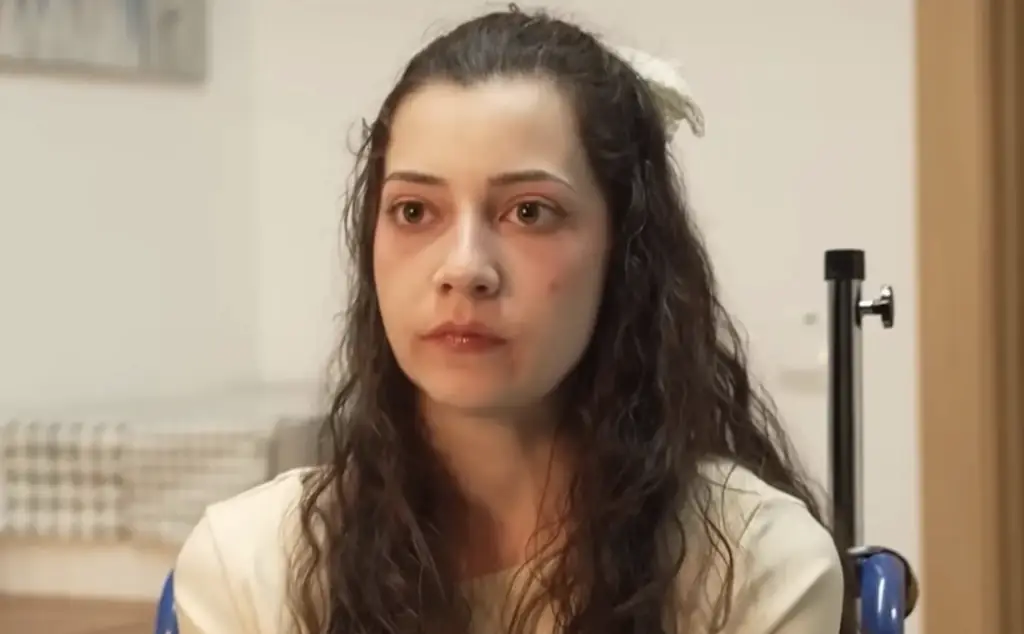
Her father strongly fought the decision in court, arguing that his daughter suffered from a personality disorder and was dependent on the state mental healthcare system prior to her assault.
Castillo Ramos expressed that the legal opposition from her family increased her emotional pain, noting that none of her relatives supported her path.
She defended her autonomy by asking, "None of my family is in favor of euthanasia. I am a pillar of the family. I leave them suffering. But what about my suffering?"
She further argued that "the happiness of a father, a mother, or a sister should not be more important than that of a daughter or the life of a daughter," before her legal termination was ultimately carried out.
If you or someone you know is struggling or in crisis, help is available. Call or text 988 or visit 988lifeline.org.

.jpg_MvNIPx?tr=cr-0.0.2124.1412,f-webp,q-70,w-1024)


.webp_QQJmGo?tr=cr-345.0.1535.1190,f-webp,q-70,w-100)

.webp_lli6Ty?tr=cr-74.9.445.380,f-webp,q-70,w-100)


.jpg_MvNIPx?tr=cr-0.0.2124.1195,f-webp,q-70,w-525,h-200)


.webp_SmgFsc?tr=cr-292.0.1244.952,f-webp,q-70,w-1024)

.webp_QQJmGo?tr=cr-345.0.1535.1190,f-webp,q-70,w-1024)

.webp_lli6Ty?tr=cr-74.9.445.380,f-webp,q-70,w-1024)