ADVERT
World3 min(s) read
Published 15:48 29 Jul 2026 GMT
A scientist who was best known for inventing the plastination process has died aged 81 after a battle with Parkinson's.
Dr Gunther von Hagens is best known for discovering and developing a method to preserve dead human bodies in a rigid state.
Known also as "Doctor Death," the German developed a technique called plastination, which replaces fluids and fatty tissue in corpses with rubber and polymers.
He would then display them in his own Body Worlds exhibition, and it's been revealed that his final wish will be granted.
Over 58 million people around the world have viewed his exhibitions, but it isn't without controversy, with many religious groups and members of the public against his display of human remains.
But in a statement released by his family, it was revealed that "Dr Death" would make his own body available for plastination.

Dr von Hagens' family confirmed that he passed away on Friday (July 24), after being admitted to a clinic in Heidelberg, Germany, with a brain hemorrhage.
The anatomist had been battling Parkinson's Disease for almost two decades.
"It was Gunther von Hagens' own wish to make his body available for plastination after his death," the statement said.
"His family will respect and carry out this wish."
His institute also confirmed his passing in a statement, which read: "It is with deep sadness that the family and the Institute for Plastination announce the passing of Dr Gunther von Hagens, inventor of plastination and creator of the Body Worlds exhibitions."
Dr von Hagens hadn't kept this wish secret, having told the media in the past that he wanted his body to be preserved.
He told the Guardian in 2018: “I could envisage my plastinated body standing in a welcoming pose at the entrance of an exhibition, or rendered into slices and distributed across various sites.”
That same year, von Hagens' wife Dr Angelina Whalley revealed that he requested that she personally treat his body once he dies, as she was also an anatomist.
She explained to the Guardian: “He said to me, ‘Angelina, you are entitled to freeze me down to -25C for one year, but after that time you really need to put your hands on me because otherwise I will get freeze burn.’ So I have one year for mourning and then I will have to do it.”
Dr Whalley would eventually accept the responsibility, though she admitted: “Of course, in the very beginning I thought, Gunther, you are kidding me! This is something I would never be able to do.”
However, she said that it would be "finalizing his life's work," adding: “I understand now that it’s more an appreciation and an expression of love for me to do it.”
uncategorised2 min(s) read
Published 13:55 10 May 2018 GMT
world3 min(s) read
entertainment news3 min(s) read
celebrity1 min(s) read
A 104-year-old scientist who vehemently campaigned for the legalisation of euthanasia has ended his life at a Swiss clinic, after giving one final powerful statement on assisted suicide. David Goodall, a respected Australian botanist and ecologist, died Thursday at the Life Circle clinic in Basel, Switzerland, after administering a lethal drug under the guidance of doctors.
Exit International, an international non-profit organisation which advocates for the legalisation of euthanasia and represented the scientist, said that he passed away while listening to Beethoven's Ode to Joy.
Four family members and a close friend had reportedly travelled to be at his side when he ended his life, and staff at the clinic in Basel told reporters that he had "gone in peace".
The day before he died, Goodall revealed he had no doubts about going through with his plan and hoped his much-publicised case would raise awareness about the issues of aging and dying. At a press conference held the day before his death, he spoke to reporters from his wheelchair, telling them he hoped "something positive" came from his story.
Asked if he had any doubts - even fleeting - while wearing a jumper with the words "Aging Disgracefully", he said, "None whatsoever" and went onto state: "My abilities and eyesight are declining, and I no longer want to live this way. I hope something positive will come out of my story and that other countries will adopt a more liberal view of assisted suicide. I'd like to be remembered as an instrument for freeing the elderly to choose their own death."
In addition, he told the packed news conference: "There are many things I would like to do, but it's too late. I'm content to leave them undone... One should be free to choose the death, when death is at an appropriate time... I no longer want to continue life."
[[twitterwidget||https://twitter.com/skynewsmichelle/status/994509639399215105]]
Goodall had arrived in Basel on Monday after flying from his home in Perth, Australia, where assisted suicide is banned.
His struggle to be allowed to die had reached thousands and he had raised over $20,000 in donations from the public to help fund his journey to Europe from Perth.
Currently, assisted suicide is only legal in a small number of countries, including Canada, Belgium and the Netherlands. However, in these countries, euthanasia laws only apply to people living there with incurable diseases.
Switzerland’s right-to-die legislation is much broader: it does not exclude foreigners and gives patients the option to end their life if they have psychological or physical problems associated with age.
Published 10:03 28 Jul 2026 GMT
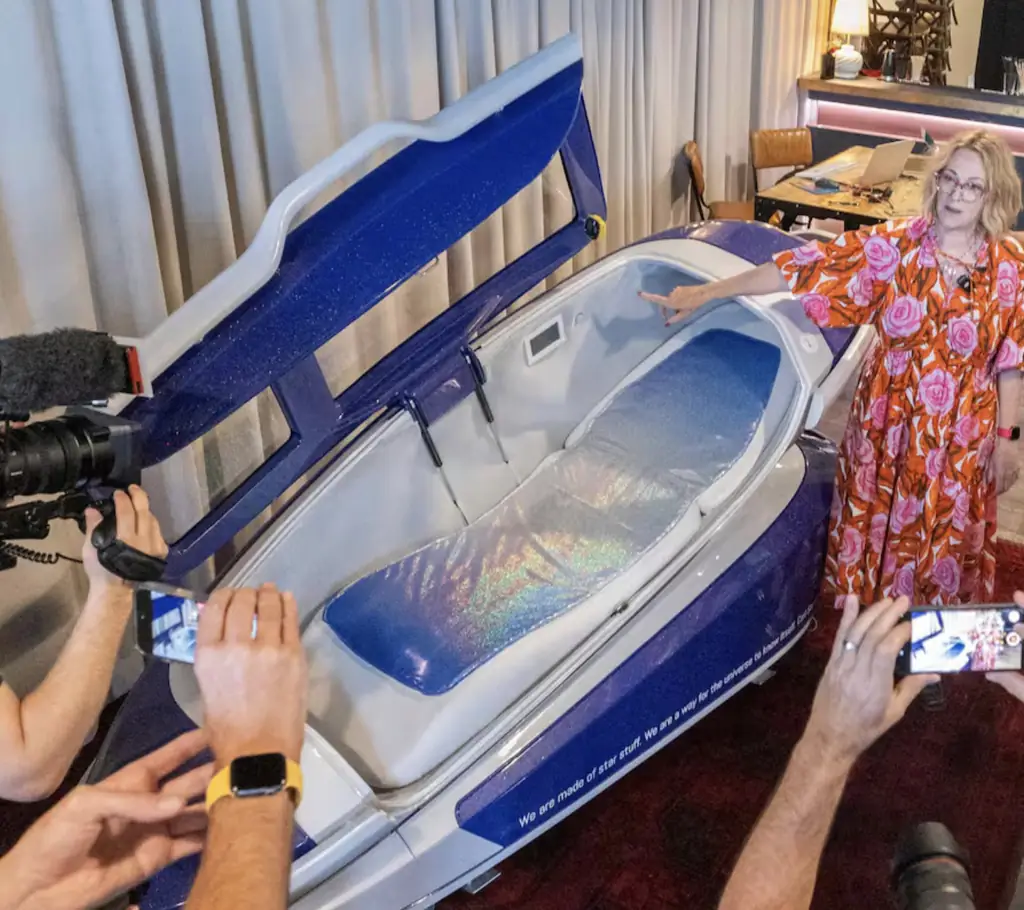
The inventor of the controversial Sarco 'suicide pod' has revealed that the machine asks users three important questions before they choose to die.
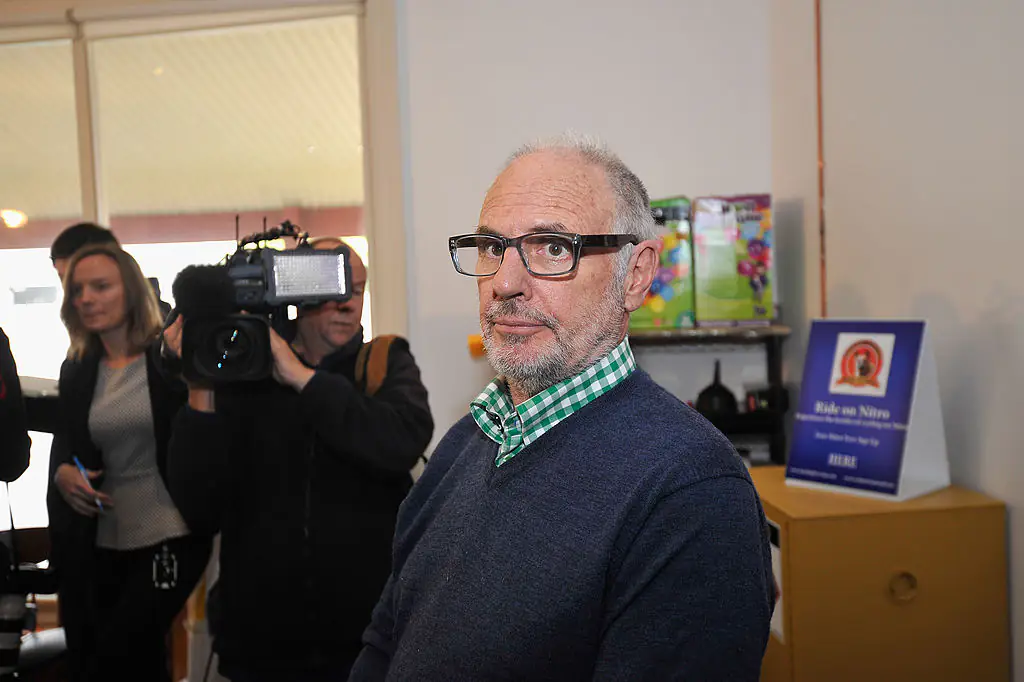
The Sarco pod, designed by Dr. Philip Nitschke, a former physician also known as "Dr. Death", aims to provide a self-administered, painless method for assisted suicide.
The pod works by replacing oxygen with nitrogen gas, causing death by hypoxia, according to reports from the BBC.
Dr. Nitschke explained that the device allows individuals to end their lives peacefully and autonomously without the use of drugs.
The capsule is an alternative to other legal methods of assisted dying, which usually involve the administering of drugs such as liquid sodium pentobarbital to cause the person's death.
Nitschke told Ladbible in 2021: "I’ve always wanted to remove the role [and the] need for professional people to prescribe difficult drugs to use.
"The idea of using a gas, in this case an inert gas came up, because if you can find a suitably elegant and attractive container, climb in, and then flood that container with an inert gas like nitrogen so that the level of oxygen rapidly drops, you rapidly go into a state of cerebral hypoxia, which is pretty quick, and you’ll faint very quickly and die within a few minutes. That’s the idea behind it."
Nitschke revealed to the MailOnline that the pods, which cost between $4,000 and $8,000, ask users three questions when they enter the machine: "Who are you?", "Where are you?", and "Do you know what happens if you press the button?"
He explained: "If they answer those questions verbally, the software then switches the power on so that the button can then be pressed.
"And if they press the button they will die very quickly. When you climb into Sarco the oxygen level is 21 percent but after you press the button it takes 30 seconds for the oxygen to drop to less than one percent."
The Last Resort, the company behind the pods, has strict criteria on its website for those considering using the services.
Their website has the following examples of reasons for using the pods: "Advanced old age, poly-pathologies of old age, Illness – serious, chronic or terminal, to anyone who is face to face with the dying process, be that slow or fast, and early dementia – as long as mental capacity is retained."
However, it states: "The Last Resort does not assist young people to die, unless they have a serious physical illness (ie. not psychiatric)."
The website also specifies that use of the pods is free to "approved users" at the Last Resort.
In 2024, an unnamed 64-year-old American woman became the first to use one to end her life.
She reportedly passed away "almost immediately" after pressing the button, in a remote forest near Merishausen, northern Switzerland.
Though the Last Resort says use of the pod is free, an article by the Daily Mail suggested the American woman paid for her usage, but the cost was low.
She reportedly paid around 18 Swiss francs ($20) for the nitrogen used in the machine, which stands in sharp contrast to traditional Swiss assisted suicide clinics, which can charge as much as $13,360.
While assisted suicide has been legal in Switzerland since 1942, provided the person makes the decision freely, without external pressure or selfish motives, euthanasia - where another person directly causes death - remains illegal in the country.
If you or someone you know is struggling or in crisis, help is available. Call or text 988 or visit 988lifeline.org.
Published 11:32 04 Dec 2024 GMT
Dr. Kelly Powers - a well-known Fox News commentator and accomplished physician - has tragically died at the age of 45.
Dr. Powers' death comes following her battle with brain cancer.
Powers was diagnosed with glioblastoma in 2020 and passed away on Sunday, December 1, as confirmed by Deadline.
An obituary described Powers as “a brave and beautiful soul who could make friends anywhere she went.” It continued: “Kelly had a love for people, and she was dedicated to helping others.”
Following her heartbreaking death, fans have shared tributes on her social media pages, where her final posts were shared.
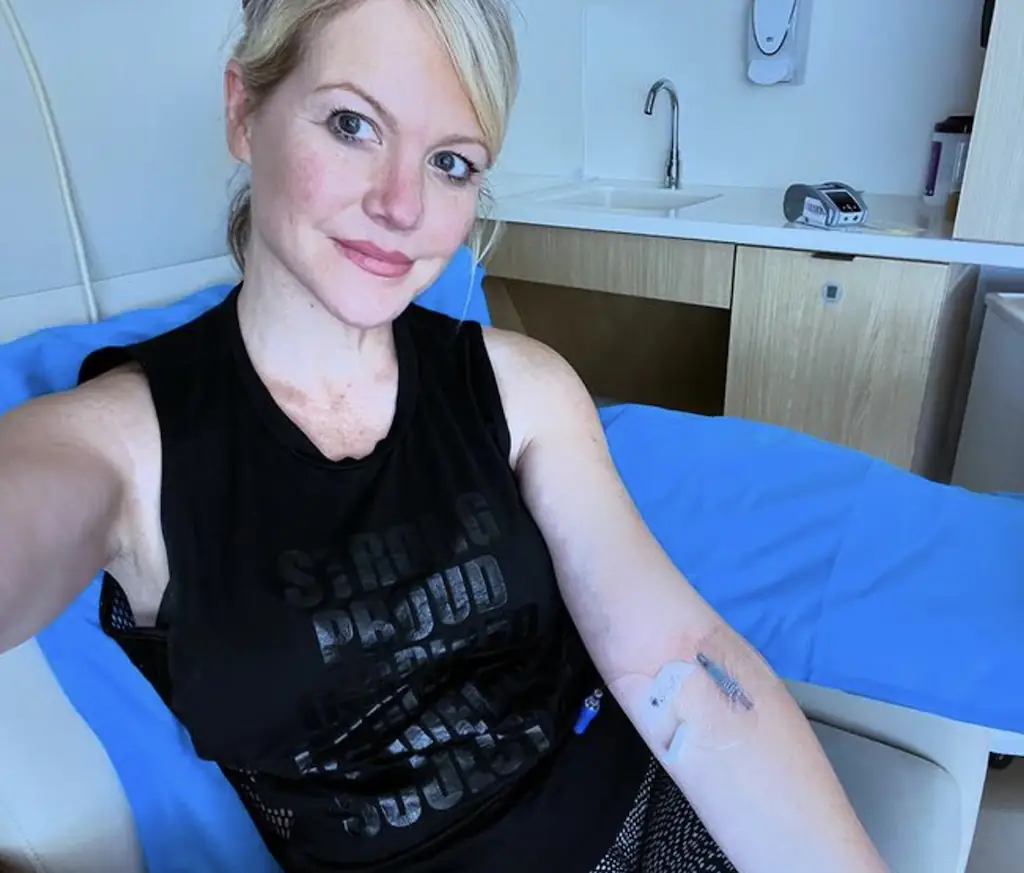
In one of her final posts shared just 15 weeks before her death, Dr. Powers shared a selfie of her undergoing cancer treatment. In a now heartbreaking caption, the defiant and determined doctor wrote: "Keytruda + Avastin = I will survive".
The following day, Dr. Powers shares a post calling for supporters to donate so she could continue receiving treatment in Germany.
A GoFundMe set up for the star by her friends revealed: "Unfortunately, conventional chemotherapy and radiation are no longer effective at this point. The only chance to keep Kelly with her family (and us) is a groundbreaking and innovative treatment that is only available in Germany. CeGat has accepted her, but now comes the hard part: the cost."
Dr. Powers wrote in her final post that she had been traveling back and forth to Germany for over two years to receive the treatment, and expressed "immeasurable gratitude" to those who had helped fund her care.
Powers was a skilled surgeon and a charismatic media presence. She studied at the New York College of Podiatric Medicine and completed her residency at Georgetown University and the Boston University School of Medicine.
Her television appearances included Red Eye, Fox & Friends, and The Willis Report on Fox Business.
Known for her vibrant personality and many interests, Powers enjoyed hobbies such as gardening, surfing, ballet, biking, and horseback riding. Despite her public success, "most important to her was her family," her obituary read.
Her passing prompted an outpouring of tributes. Meghan McCain wrote on X (formerly Twitter): “Sending so much love, light, and prayers to Dr. Powers’ family and loved ones. Glioblastoma is pure, unadulterated evil that no person or family should go through.”
Cindy McCain also paid tribute, tweeting: “I’m so sorry to hear of the death of @DrKellyPowers of glioblastoma. We must find a cure!”
Fox host Britt McHenry, who shared a similar battle with brain cancer, wrote: “Kelly Powers was a wonderful, strong, and kind woman. We would text each other about our brain cancer struggles, and she was someone I admired deeply. In tears and devastated about this. She loved her family.”
Mayo Clinic describes glioblastoma as "a type of cancer that starts as a growth of cells in the brain or spinal cord. It grows quickly and can invade and destroy healthy tissue."
The site adds: "There's no cure for glioblastoma. Treatments might slow cancer growth and reduce symptoms."
Dr. Powers is survived by her husband, Steven Doll, her son, Bennett, her parents, and her in-laws, Daniel and Laraine Doll.
Our thoughts go out to Powers' family, friends, and fans at this time.
Published 11:37 06 Apr 2018 GMT
People sometimes go to extreme lengths in order to achieve their dream body. This may involve dangerous dieting habits, unhealthy approaches to exercise, or - for a small minority of folks- cosmetic surgery.
These treatments can range from simple wrinkle-eliminating botox injections to complex (and often highly risky) invasive surgeries, but the things that surgeons have on offer really do run the gamut in terms of variety. Statistics from 2016 show that breast augmentations were the most popular cosmetic augmentation performed in the US, with recipients collectively spending more than a billion dollars on getting their chests enhanced.
However, even though more than 300,000 of that specific operation takes place every year - making it a fairly routine procedure for a trained surgeon - people still die on the operating table.
And Heidi Montag was one of them.
[[instagramwidget||https://www.instagram.com/p/BgE_Me1DC3x/?hl=en&taken-by=heidipratt]]
The American TV personality has had a number of surgeries in the past, and once endeavored to get 10 augmentations and alterations in just one sitting. Unfortunately, the ambitious procedures didn't quite go as planned, and The Hills star technically died for a minute after her heart stopped.
Speaking to Paper magazine, she recalled how her husband, Spencer Pratt, was told that she wouldn't survive the surgeries.
"My security guards called Spencer and told him, 'Heidi's heart stopped. She's not going to make it'," she said. "And I easily could've. Cutting yourself up isn't something I'd recommend, and Demerol [the medication she was given afterwards] isn't anything to play around with. That's how Michael Jackson died."
All the operations that Montag had were fairly standard - brow lifts, a second breast enhancement, a second rhinoplasty (nose job), ear pinnings, and a chin reduction - but something inevitably didn't go to plan.
[[instagramwidget||https://www.instagram.com/p/Bf_l4Okjhn2/?hl=en&taken-by=heidipratt]]
However, that was nearly a decade ago now, and Montag has changed her attitude towards cosmetic surgery in the meantime.
Just last year, she gave birth to her first child - a baby boy named Gunner - and is now solely focused on being the best mom she possibly can. In preparation for her little one, she had her size F breast implants removed, and says that her near-death experience made her reconsider a lot of things about herself.
"A lot of positive things came out of that. I had to look at myself in the mirror everyday healing, and be like, 'What did I do to myself? How did I get here? What is going on?' I basically had to hit that rock-bottom moment in my life, to realize what was important to me."
[[instagramwidget||https://www.instagram.com/p/BgtvaSVlIpb/?hl=en&taken-by=heidipratt]]
After her botched operations, Montag spent a significant time in recovery. "With that much surgery, I had to have 24-hour nurse care and Spencer didn't want to leave my side," she explained. "I was at a recovery center."
Understandably, an experience like that would be traumatic enough to put anyone off having further procedures done - and Montag says it was a wake-up call about how she was willing to risk her "own life for vanity."
Now, however, she has her family to concentrate on, and she appears to be a whole lot happier for it.
Published 15:10 25 Sep 2024 GMT
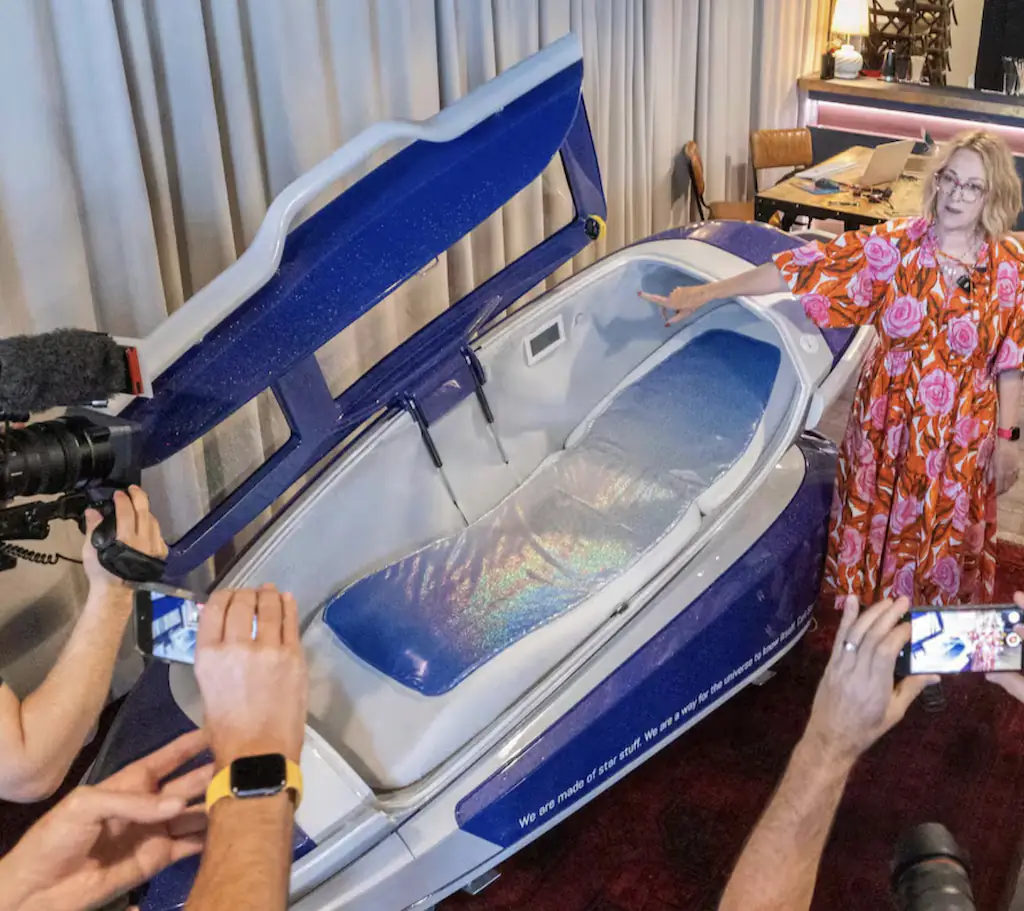
Before an American woman became the first person to die via a suicide pod, the creator shared a 10-word warning.
The Sarco pods, designed by Dr. Philip Nitschke - commonly referred to as "Dr. Death" - offer a new method of assisted suicide, providing users a way to end their lives autonomously.
The device, which induces death by oxygen deprivation through nitrogen gas, is intended to provide a painless, self-administered death.
According to a report by BBC News, the pod allows users to initiate the process without the need for medical professionals or drugs.
As reported by News.com.au, a 64-year-old American woman has become the first person to die using the controversial Sarco suicide pod.
The woman reportedly died "almost immediately" on Monday in the device, located near a forest hut in Merishausen, northern Switzerland, under a canopy of trees.
Dr. Nitschke, speaking to Dutch newspaper de Volkskrant, commented on her determination to end her life: "When she entered the Sarco, she almost immediately pressed the button. She didn’t say anything. She really wanted to die."
Nitschke estimated that the woman lost consciousness within two minutes and was dead within five.
“We saw jerky, small twitches of the muscles in her arms, but she was probably already unconscious by then. It looked exactly how we expected it to look," he added.
The former physician, who has long campaigned for legalized euthanasia, criticized society's approach to death.
“It seems we demand humans to live with indignity, pain, and anguish whereas we are kinder to our pets when their suffering becomes too much," Nitschke said in 2009.
He has often challenged long-standing religious and ethical objections to assisted suicide, calling them "illogical" and "immature."
The American woman, whose name has not been released, left a four-minute audio message for The Last Resort before her death.
According to De Volkskrant, she stated that she had been "immune compromised" and in "severe pain" for at least two years.
She also shared that her two sons, who were not present at the time of her death, supported her decision "100 percent."
Despite the legal hurdles, Dr. Nitschke and his team argue that the Sarco pod provides an alternative to assisted dying that does not require medical supervision or pharmaceuticals.
The pod can be 3D-printed and assembled at home, making it portable and accessible for those seeking an assisted death in different settings.
Dr. Nitschke issued a grim warning earlier this year when unveiling the device: “Once the button is pressed, there is no way back,” per the New York Post.
A German scientist, Florian Willet, who helped create the Sarco pod, echoed Nitschke’s sentiments and said he would “probably use the Sarco myself instead of living through my last days in a miserable state while seriously ill.”
Following the American woman's death, authorities recovered both the device and the body at a forest hut in Merishausen, near the German border.
Swiss police stated that several people were detained on suspicion of incitement and aiding and abetting suicide.
If you or someone you know is struggling or in crisis, help is available. Call or text 988 or visit 988lifeline.org.