


World4 min(s) read
Horrifying reason archaeologists will never open the tomb of China's first Emperor

The frightening reason why archaeologists have refused to open the tomb of China's first Emperor has been revealed.
The tomb of Qin Shu Huang, who became the first ruler of a unified China from 221 to 210 BC, lies beneath an incredible burial complex in the Lintong District, Xi'an, Shaanxi.
It is surrounded by the Terracotta Army, which consists of thousands of life-sized clay soldiers and horses that are meant to protect him in the afterlife.
Even after decades of archaeological discoveries at the site, the emperor's central burial chamber has remained sealed for more than 2,200 years.
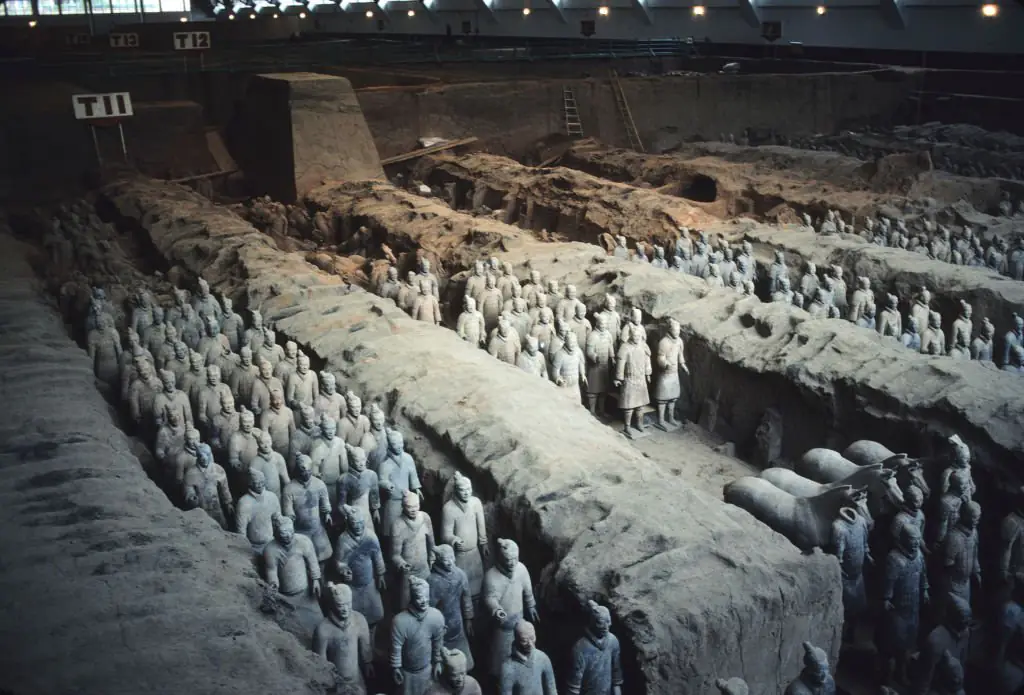
Farmers stumbled upon ancient army in 1974
The extraordinary discovery began in March 1974, when farmer Yang Zhifa, his five brothers, and their neighbour Wang Puzhi were digging a well in the farmland in the northeast of Xi’an.
While working in the pomegranate and persimmon fields, they hit a terracotta head they mistook for an image of the Buddha.
Within months, archaeologists and officials arrived to investigate and uncovered thousands of crafted warriors, horses, and chariots buried around the emperor's mausoleum.
While parts of the cemetery have been explored, researchers have avoided opening the tomb due to fears of what might be inside.
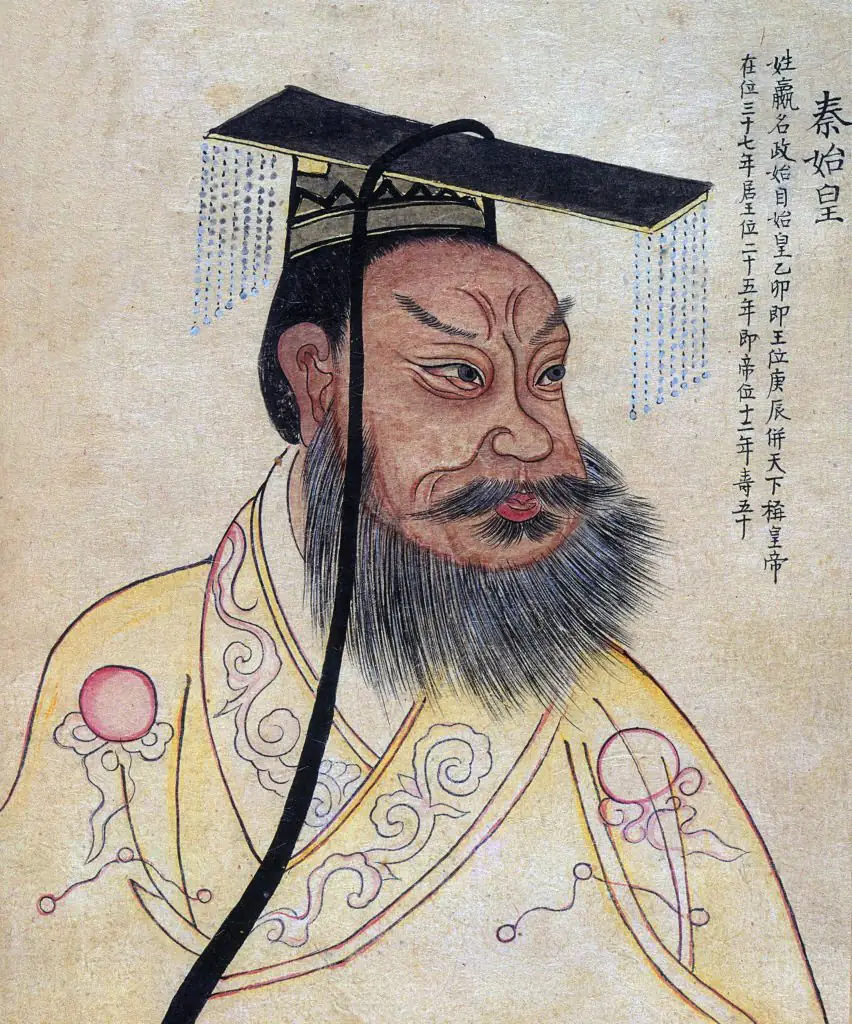
Ancient texts warn of deadly booby traps
An ancient Chinese historian named Sima Qian penned an account about 100 years after the emperor's death, describing deadly booby traps inside the tomb that could kill curious intruders.
According to IFL Science, the text read: "Palaces and scenic towers for a hundred officials were constructed and the tomb was filled with rare artifacts and wonderful treasure.
"Craftsmen were ordered to make crossbows and arrows primed to shoot at anyone who enters the tomb. Mercury was used to simulate the hundred rivers, the Yangtze and Yellow River, and the great sea, and set to flow mechanically," he continued.
While some archaeologists have dismissed the accounts, a 2020 study found mercury concentrations around the tomb were extremely high.
"Highly volatile mercury may be escaping through cracks, which developed in the structure over time, and our investigation supports ancient chronicle records on the tomb, which is believed never to have been opened/looted," one 2020 paper read.
Emperor reportedly consumed mercury in pursuit of immortality
Qin Shi Huang was the first man to rule a unified China, and historical reports have said he drank mercury-containing substances in a desperate attempt to achieve eternal life.
Per BBC News, he often consumed wine laced with mercury, and it is believed that he died of mercury poisoning at the age of 49.
However, his exact cause of death remains unknown, and the mercury-poisoning theory has never been proven.
The emperor's mausoleum and the terracotta army were designated as UNESCO World Heritage Sites in 1987 and remain among the world's most significant archaeological treasures.
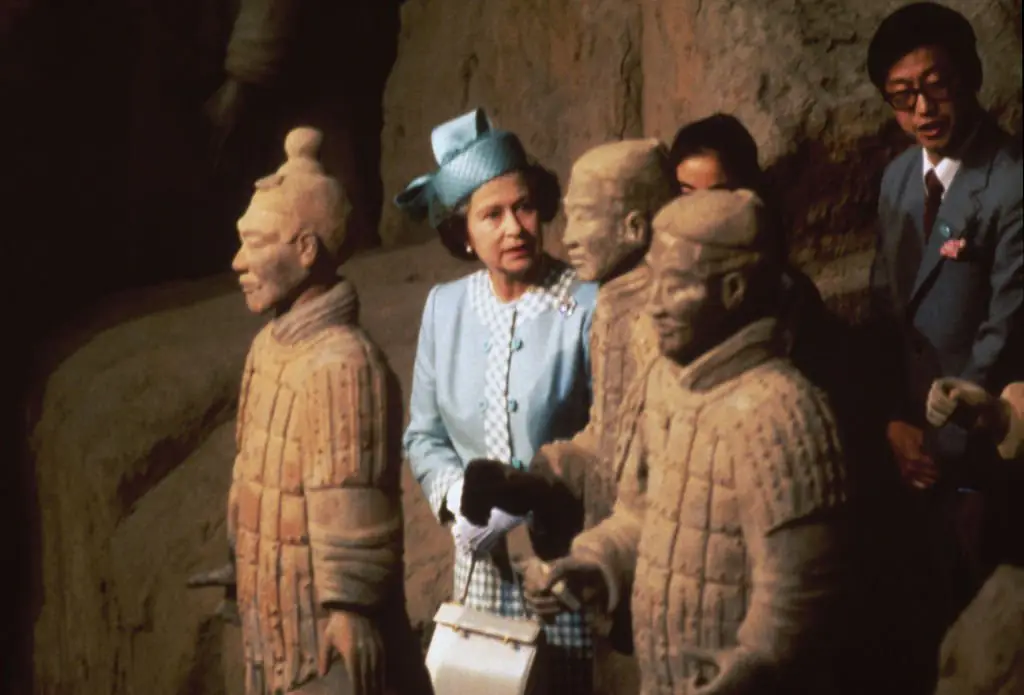
Farmers who discovered the army faced tragic consequences
Despite making one of the most incredible discoveries in modern history, the farmers responsible reportedly received little financial benefit.
Their farmland was taken over as the archaeological site expanded and became a major tourist destination, leaving several struggling financially.
Wang Puzhi died by suicide in 1997 after suffering from a serious illness and being unable to afford medical treatment. Within three years, Yang Wenhai and Yang Yanxin, jobless and unable to afford doctors, died in their early 50s.