Loading...
World4 min(s) read
world6 min(s) read
world3 min(s) read
health4 min(s) read
Published 11:28 10 Jun 2026 GMT
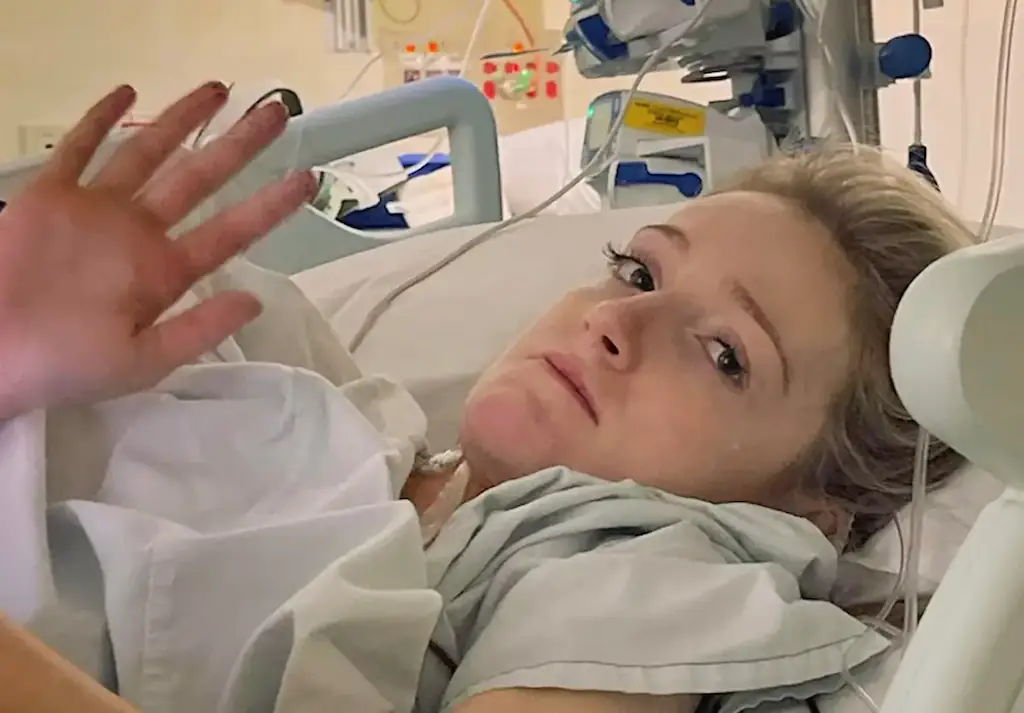
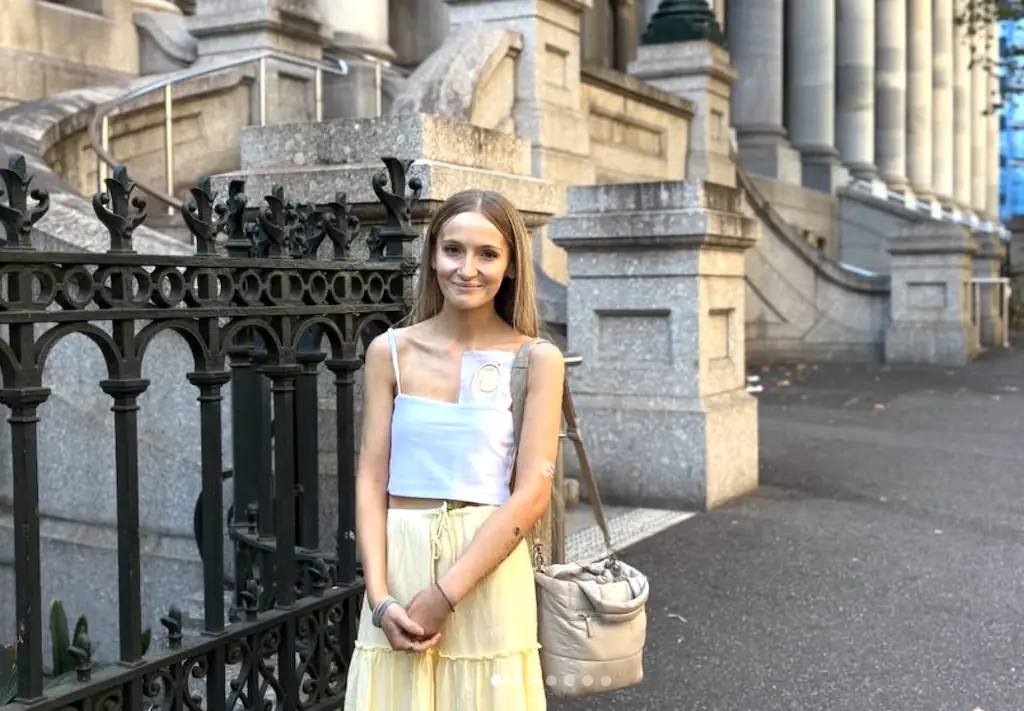
A 26-year-old woman who is planning to end her life by assisted dying has revealed the things she wants people to know before she dies.
Annaliese Holland, from Adelaide, has suffered from chronic illnesses since she was 12, and at 18, she was diagnosed with a rare condition called Autoimmune Autonomic Ganglionopathy (AAG), a condition that causes the immune system to attack the autonomic nervous system.
Though it is not always fatal, Holland's body has experienced severe damage as a result and she has not been able to eat a meal for the last decade, relying instead on total parenteral nutrition (TPN), fed directly into her bloodstream through the last viable vein in her chest.
Revealing the seriousness of it, she told A Current Affair: “If this vein gets blocked, then basically there’s no way of giving me hydration or food… you basically starve to death.”
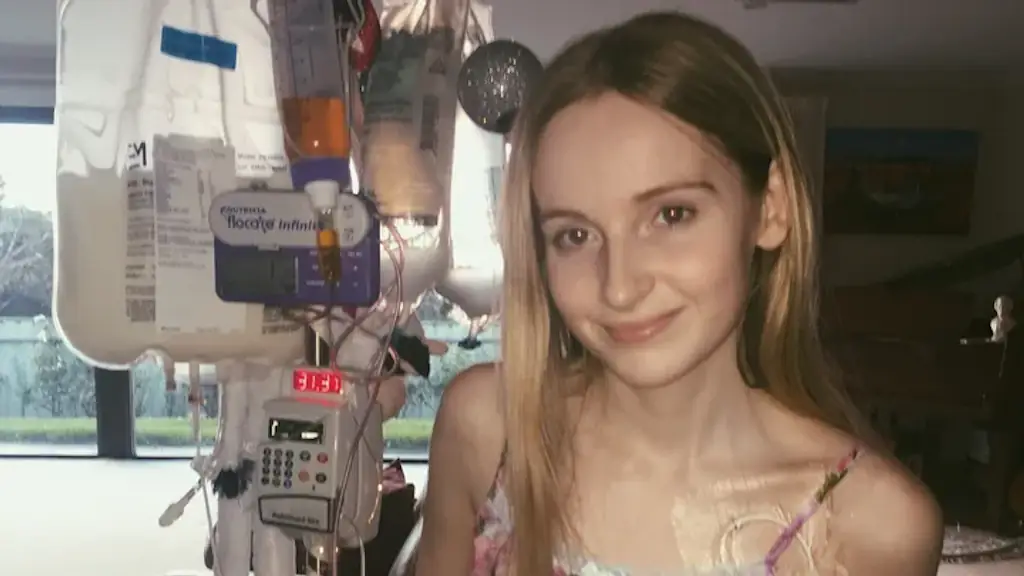
The condition means that Holland won't reach old age, and she has made the decision to end her own life through Australia’s voluntary assisted dying program (VAD).
Currently available in every state and territory in Australia except the Northern Territory, VAD is only accessible to people living with a condition that is likely to cause death within six to 12 months, as determined by two specially trained doctors.
Holland has been told by doctors that she likely has less than 12 months to live, and has decided to take the decision into her own hands and pass away with her loved ones around her.
She revealed that she has written a 'f**k it list' of things that she wants to do before she dies, and has already ticked off renting her own apartment, flown in a helicopter, watched a friend’s baby being born, and seen her dad’s face as she tried on a wedding dress.
Holland also revealed that she wants people to know that she no longer fears death and that it was a "really happy thing" when she was told she has less than 12 months left to live.
She told ABC.net: "When you've been sick for such a long time it becomes something that's not so scary. It sounds strange but it's incredibly empowering."
Holland admitted: "If I really think about it at night, it kind of f**ks with me. We don't know what happens after we close our eyes. So I'm a little scared, in that sense."
Holland has already chosen the date she will die, but will not be revealing it publicly in order to protect her family from the intrusion it could bring.
She revealed that she chose to make the difficult decision to end her life after spending years living in agony, adding: "At that point, my suffering was so much and I'd become such a shell of myself that I realised quality is so much more important than quantity.
"I probably spend 17 hours a day in bed or on the couch. Soon I'll have my teeth removed," she added, as her jaw is slowly crumbling.
"I've watched others with my disease go through that and it's a horrible way to go."
She revealed that she was previously against the concept of assisted dying, but her views "completely changed" after her health deteriorated to the point where surviving each day is a struggle.
One thing that she wishes she could have done is to have a child of her own, explaining: "I'm OK with dying, but the bit that gets me is the fact that I've always wanted to be a mom.
"All of my friends and girls my age are having babies and I can't do that."
Holland has already made plans for her funeral, choosing to have a "celebration of life" with a playlist including songs from Lily Allen, the Beatles, and 'Over the Rainbow'.
She chose to speak out about assisted dying so that others in a similar position would be aware that it is an option.
She explained: "If you don't know about it, you don't know it's a choice. I had a bit of a fight with a few doctors about it because not everyone believes in it.
"But it's something that needs to be spoken about and needs to be brought up because it is a choice and no-one's saying you have to do it."
Holland also revealed the message she hopes people take from her story, sharing her advice for others: "Forget about the bulls**t. If you're not happy, do something to change it, and do whatever that takes."
Published 12:55 08 Jun 2026 GMT
Annalise Holland, a 26-year-old from Adelaide, has revealed all the things she wants to do before she ends her own life through assisted dying.
The young woman has suffered from chronic illnesses since she was 12, and at 18, she was diagnosed with a rare condition called Autoimmune Autonomic Ganglionopathy (AAG).
AAG is a condition that causes the immune system to attack the autonomic nervous system. Although it is not always fatal, doctors told her that the damage to her body was severe.
Holland has not eaten a meal in ten years and survives entirely on total parenteral nutrition (TPN), fed directly into her bloodstream through the last viable vein in her chest.
Tragically, she told A Current Affair, “If this vein gets blocked, then basically there’s no way of giving me hydration or food… you basically starve to death.”
As she is aware that she will never reach old age, Annaliese has decided to end her own life through Australia’s voluntary assisted dying program (VAD).
Currently available in every state and territory in Australia except the Northern Territory, VAD is only accessible to people living with a condition that is likely to cause death within six to 12 months, as determined by two specially trained doctors.
Since being informed that she has less than a year to live, Annaliese has decided when exactly she will end her life, allowing her to leave this life with dignity and her loved ones surrounding her.
Despite her short life coming to an end, Holland is determined to live what she has left of it to the fullest, so she has written a “f*** it” list.
The list is a collection of experiences that she wants to have while she still can.
Already she has rented her own apartment, flown in a helicopter, watched a friend’s baby being born, and seen her dad’s face as she tried on a wedding dress.
Holland has made the decision to end her life in just a few months, but is very positive about her end-of-life care and has already chosen the date she wishes to die. However, she has decided not to reveal it publicly.
"The most important thing is protecting my family," she says.
She told the Hack podcast that deciding when to die “was a really happy thing,
"When you've been sick for such a long time, it becomes something that's not so scary.
"It sounds strange, but it's incredibly empowering," she added.
The Palliative care specialist and VAD practitioner who will guide Holland through saying her final goodbyes, Dr Chloe Furst, has hit back at people criticising the AAG sufferer’s choice to end her own life at such a young age.
She said to A Current Affair, “Why prolong suffering and have reduced dignity when we have an option that gives people that choice?”
Supporting Holland’s decision, she added that age should not undermine her choice, saying, “Annie’s suffering is no more or less than someone that’s 90.”
Published 15:29 19 Nov 2025 GMT
A 25-year-old woman has opened up about her decision to end her life using assisted dying after living most of her life in excruciating pain.
Annaliese Holland, who is from Adelaide, South Australia, revealed why she is set to pursue voluntary assisted dying after being diagnosed with a rare and incurable condition.
The young woman revealed that she'd spent most of her childhood in and out of hospital, suffering from an unknown illness.
She dealt with a mass of symptoms, including chronic pain, nausea, and vomiting a her health declined significantly over the years, including needing to be fed through IVs on total parenteral nutrition (TPN).
Annaliese's condition had baffled doctors and it wasn't until she was 18 years old and transitioned from a pediatric facility to the general hospital that she was finally diagnosed with autoimmune autonomic ganglionopathy, a rare neurological disease that damages the nerves that control heart rate, blood pressure, digestion and urination.
Explaining some of the most drastic symptoms she experiences, Annaliese told News.com.au in a new documentary: "My bowel acts as if it’s blocked but there’s nothing actually blocking it. It’s just the nerves don’t work so, as gross as this is, my stools would back up so much that I would throw it up or drain out my tummy.
"I had feeding tubes placed in me and I was still vomiting and then we discovered that my stomach wasn’t emptying so I was put on TPN. Because the line straight into your bloodstream, if you get an infection it turns to sepsis really quickly which is very, very, dangerous.”
By the age of 22, Annaliese was tragically told that the condition was terminal, and she is now dealing with multi-organ failure after having survived sepsis 25 times.
As well as the deterioration in her health, the medications Annaliese is on have also worsened her condition, as she has developed osteoporosis which led to her fracturing her spine in four places, cracking her sternum in half, and almost crushing her heart and lungs.
Steroids that she takes to help manage her symptoms have also caused necrosis - a condition where blood supply to the bones has failed - leading to her teeth becoming discolored abd beginning to fall out.
Annaliese admitted: "I was so miserable. You can’t change it so you have to just deal with it really. Even though there’s beautiful moments in my days, they are exhausting and long. I’m in chronic debilitating pain."
She revealed that her health battles have forced her to miss many milestone moments in her young life, from 18th and 21st birthdays, as well as formals, graduations, and other big events as she was in the hospital.
"All my friends, they’re having babies, getting engaged, married. Everyone’s life is moving and I’m just stuck. I’m not living. I’m surviving every day, which is tough," she explained.
Annaliese likened the condition to "walking on a field of landmines" as her life revolves around managing her symptoms with medications and just "trying to get through the day" before going to sleep, only to wake up and have to do it all over again.
She has now reached the stage where she does not want to endure the pain any longer, and has chosen to "die on [her] own terms" with medical assistance.
"I have the most incredible team of doctors and nurses who have watched what I have been through and I told them I don’t want this anymore," she admitted.
While Annaliese has chosen to pursue voluntary assisted dying, the decision has not been easy on her family.
Annaliese's mother, Amanda, admitted that she still hold out for a miracle to cure the condition, but "knows realistically" how difficult her daughter's daily life is.
Her father, Patrick, told the outlet that he has watched her overcome every hurdle thrown her way so far and believes she can get through anything.
Patrick explained: "Every time she goes to the hospital, she fights for her own life. The amount of times Annie has been in hospital and on her deathbed… to have to sit there and watch her go through it … but she is amazing."
Annaliese added: "I remember talking to my dad in the kitchen one night and I said, ‘Dad, I’ve had enough.’ And he went, ‘So you’re giving up?’"
She revealed that the turning point for her father to finally come to terms with her decision was when he saw her after she had been resuscitated by the doctors and she pleaded with him: "Dad, please let me go. I will not hate you if you let me go."
"I said, ‘If this happens again, I don’t want anything. And please know that in my heart, you letting me go and saying no to treatment… I’m happy with and that’s what I want,’” she recalled, through tears. “He turned to me and goes, ‘I don’t know how you do it and I totally understand that you’ve had enough.’"
Annaliese then went through discussions with psychologists and an extensive qualification process, and found out three weeks later that she had been approved for voluntary assisted dying (VAD).
VAD and medical aid in dying (MAID) are legal in every state in Australia for people who are living with a terminal illness and involves the patient administering themselves with drugs prescribed by a doctor to end their lives, whereas euthanasia - where the drugs would be administered by a medical practitioner rather than the patient themselves - is illegal.
Describing the option as a "safety blanket" for when she is no longer able to bear the condition, Annaliese admitted: "I think it’s so weird to be happy, but I was so happy when I found out I was approved, I was crying.
"It’s hard because for me I am in pain and then I am at peace, but then I put the pain onto my family. You have this battle in your head of not wanting to hurt them so I will put some thought into how it will happen.
"For me, I don’t want to have to wake up every day with anxiety about the pain that I know is ahead for me. The pain of starving to death when they can’t feed me anymore, or the horror of sepsis.
"Knowing I can go when the time is right is just a huge relief. I feel so lucky that I do have this choice."
Annaliese also hit back at the assumption that choosing medically assisted dying is akin to "giving up", explaining: "It’s one of the bravest things you could ever do, to say I want VAD. It’s not giving up. You’ve had enough and you fought bloody hard."
Published 15:04 09 Apr 2026 GMT
When she was told she will die within the next 12 months Annaliese Holland was “really happy” - and she's explained why she made the difficult choice to end her life.
The 26-year-old from Adelaide has suffered from chronic illnesses since childhood and at 18 she was diagnosed with a rare condition called Autoimmune Autonomic Ganglionopathy (AAG).
The condition causes the immune system to attack the autonomic nervous system, although it is not always terminal, doctors told her the damage to her body was severe.
As she has known she will never reach old age, Annaliese has decided to end her own life through the voluntary assisted dying program (VAD).
The program is currently available in every state and territory in Australia except the Northern Territory.
VAD is only accessible to people living with a condition that is likely to cause death within six to 12 months, as determined by two specially trained doctors.
So now that Annaliese has been told she has less than a year to live she has decided when she wants to die, allowing her to leave this life with dignity and her loved ones surrounding her.
Annaliese, known as Annie to her friends and family, will end her life in a few months but is very positive about her end-of-life care.
She told Hack podcast that deciding when to die “was a really happy thing,
"When you've been sick for such a long time it becomes something that's not so scary.
"It sounds strange but it's incredibly empowering," she added.
Annie was against voluntary assisted dying until she became sick and watched a friend who also had AAG suffer and end her life with the program.
She lives in constant agony, spends most of her days in bed, vomits constantly and receives over a dozen injections a day for pain relief.
Last year, after contracting sepsis following a major surgery and needing to be resuscitated, Annie decided she’d had enough.
"It was the first time I was more terrified of being around in five years' time, than I was to die,
“I realised quality is so much more important than quantity,” she said.
Annie has written a “f*** it list”, naming the things she wants to do before she dies.
It includes seeing herself in a wedding dress, witnessing a birth, and holding a newborn baby.
"I'm OK with dying, but the bit that gets me is the fact that I've always wanted to be a mum,” she told the podcast.
Also on the list is a “celebration of life” instead of a funeral, which she has already made the playlist for.
On the day she will be surrounded by family and friends while her “beautiful” doctor Chloe Furst administers the life-ending medication.
Although Annie has decided the day she will die within the coming months, she has chosen not to reveal it publicly.
Annie hopes that by telling her story she will encourage young people to talk about death and end-of-life plans while living life to the full.
Published 11:50 20 Nov 2025 GMT
A woman made an emotional plea to her father as she shared the heartbreaking reason behind her decision to end her life at the age of 25.
Annaliese Holland, from Adelaide, South Australia, has opened up about her devastating decision to pursue voluntary assisted dying (VAD) after enduring a life filled with chronic pain, illness, and hospital stays.
Diagnosed with autoimmune autonomic ganglionopathy, a rare and terminal neurological disease, Holland has faced years of excruciating symptoms, including nausea, vomiting, and the inability to digest food properly.
For the past decade, she has relied on total parenteral nutrition (TPN), a method that delivers nutrition directly into her bloodstream via an IV.
Her disease, which causes the body to attack its own autonomic nervous system, left her unable to digest food and battling severe complications, including repeated life-threatening infections that led to sepsis 25 times.
Annaliese Holland chose to die at age 25. Credit: GoFundMe
Holland’s battle to understand her illness culminated when she turned 18 and transitioned from pediatric care to an adult hospital.
It was only then that doctors diagnosed her with autoimmune autonomic ganglionopathy. At the age of 22, she received the devastating news that her condition was terminal.
The medications made her bones so fragile that she's had multiple fractures, and she struggled with necrosis, where blood flow to her bones has been compromised, leading to discolored teeth and tooth loss.
Despite these severe physical tolls, the pain has remained a constant presence in her life.
"You can’t change it, so you have to just deal with it, really. Even though there are beautiful moments in my days, they are exhausting and long. I’m in chronic debilitating pain," she said, cited by The New York Post.
“Everyone’s life is moving, and I’m just stuck. I’m not living. I’m surviving every day, which is tough,” she added.
After spending her 18th and 21st birthdays in the hospital, Holland reached a breaking point.
At 25, she made the painful decision to end her life on her own terms through voluntary assisted dying, a legal option in Australia for those with terminal illnesses who wish to end their lives on their own terms.
“Life for me now is getting up each day, doing what I need to do medically, taking the painkillers, trying to get through the day, just to go to bed and do it all again,” she said. “I have the most incredible team of doctors and nurses who have watched what I have been through, and I told them I don’t want this anymore.”
Her choice to pursue VAD is not without its emotional toll on her family. While her mother, Armanda, still holds out hope for a miracle, she knows the reality of her daughter’s condition.
However, it was her father, Patrick, who struggled the most with her decision.
Holland recalled a moment with her father in the kitchen where she said: “Dad, I’ve had enough.”
Her father’s immediate response was: “So you’re giving up?” But the turning point came when Holland was revived by doctors after a close brush with death.
“Dad, please let me go. I won’t hate you if you do,” she pleaded through tears. “I told him, ‘If this happens again, I don’t want anything. Please know that in my heart, you letting me go and saying no to treatment… I’m happy with and that’s what I want.’”
Patrick, who has watched his daughter fight through every medical crisis, finally understood. “I don’t know how you do it, but I totally understand that you’ve had enough,” he told her.
Annaliese Holland has multiple organ failure as a result of the condition. Credit: Instagram/Annaliese Holland
After undergoing a three-week evaluation process, Holland was approved for VAD. Though she acknowledged the complex emotions surrounding her choice, she expressed relief.
"It’s one of the bravest things you could ever do, to say I want VAD. It’s not giving up. You’ve had enough and you fought bloody hard,” Holland said.
For the 25-year-old, the decision to end her life offers her a sense of control and peace in the face of constant suffering.
"Knowing I can go when the time is right is just a huge relief. I feel so lucky that I do have this choice," she explained.
Published 11:07 21 Nov 2025 GMT
Annaliese Holland, a 25-year-old woman from Adelaide, South Australia, has made the heart-wrenching decision to end her life through voluntary assisted dying (VAD) after a lifetime of battling chronic pain, nausea, and a rare, terminal neurological disease.
Holland, who has been ill since childhood, has endured numerous hospitalizations and surgeries as doctors struggled to diagnose her condition.
At 18, she was finally diagnosed with autoimmune autonomic ganglionopathy, a rare autoimmune disease in which the body attacks the autonomic nervous system, leaving her unable to control involuntary bodily functions.
According to the Cleveland Clinic, AAG is extremely rare, as in the United States, doctors diagnose about 100 people with the condition each year.
Holland said she had been told her condition was terminal when she turned 22. Credit: Annaliese Holland/Instagram
Holland’s illness has caused debilitating symptoms such as chronic pain, vomiting, and an inability to digest food, requiring her to rely on total parenteral nutrition (TPN) for the past decade.
TPN delivers nutrients directly into the bloodstream via an IV, bypassing the digestive system.
This method, while essential for survival, comes with the risk of life-threatening infections.
Holland has survived sepsis 25 times - an infection that causes the body’s immune response to damage its own organs and tissues.
Her condition has left her with fractures in her spine and sternum, putting dangerous pressure on her heart and lungs.
“You can’t change it, so you have to just deal with it really,” Holland said in an interview. “Even though there are beautiful moments in my days, they are exhausting and long. I’m in chronic debilitating pain.”
It wasn’t until Holland turned 18 and transitioned from pediatric to adult care that doctors were able to properly diagnose her condition.
By the time she turned 22, she had been told that her disease was terminal.
Despite various treatments, her health continued to decline, with medications weakening her bones and causing other life-altering complications, such as necrosis, which has affected her teeth and bone structure.
“I was so miserable,” she recalled. “I’m not living. I’m surviving every day, which is tough.”
As her friends married and started families, Holland found herself “stuck” in a hospital room, unable to live the life she once imagined.
Her disease felt like “walking on a field of landmines,” she said, adding that she struggled with feelings of isolation. “No man wants to date someone dying, I get it.”
Annaliese Holland chose to die at age 25. Credit: GoFundMe
After years of enduring constant pain and medical interventions, Holland has made the difficult decision to end her life on her own terms through voluntary assisted dying (VAD).
The option, which is legal in Australia, allows terminally ill patients to end their life with self-administered medication.
“Life for me now is getting up each day, doing what I need to do medically, taking the painkillers, trying to get through the day, just to go to bed and do it all again,” she explained.
While Holland has found peace in her decision, it has been an emotional struggle for her family.
Her mother, Armanda, still hopes for a miracle, but she also understands the immense challenges her daughter faces.
Holland’s father, Patrick, initially struggled with her decision. “So you’re giving up?” he asked when she first brought up ending her life. However, after a particularly close brush with death, the 25-year-old was able to express her feelings clearly.
“Dad, please let me go. I won’t hate you if you do,” she said through tears. “I told him, ‘If this happens again, I don’t want anything. Please know that in my heart, you letting me go and saying no to treatment… I’m happy with and that’s what I want.’”
Patrick finally came to terms with her decision, telling his daughter: “I don’t know how you do it, but I totally understand that you’ve had enough.”
After a three-week evaluation process, Holland was approved for VAD.
“It’s one of the bravest things you could ever do, to say I want VAD,” she said. “It’s not giving up. You’ve had enough and you fought bloody hard.”
While her decision has torn her family apart emotionally, the young woman takes solace in knowing that she is finally able to choose when and how her suffering will end.
“Knowing I can go when the time is right is just a huge relief,” she shared. “I feel so lucky that I do have this choice.”