Uncategorised3 min(s) read
world2 min(s) read
The issue of euthanasia is one of the most pressing more conundrums facing our society, and assisted dying is something which still continues to divide people. One person who is desperate to marshal her own suffering and disability in the service of change is 27-year-old Holly Warland. Holly has an advanced form of muscular dystrophy which will eventually prove fatal, and her physical condition has deteriorated to the point where she is either confined to bed or a wheelchair. She needs a carer to help her perform basic tasks, and is in chronic pain.
Because of all of this, Holly wants to be able to be euthanised, and die relatively painlessly before her condition deteriorates any further. However, euthanasia remains illegal in Australia, and so Holly does not have a choice in the matter. Because of this, she's not started an eye-opening Instagram blog, where she openly discusses some of the physical and mental problems she faces on a daily basis as a result of her poor health. She hopes that she will be an inspiration to others, and her story will affect a change in legislation.
[[instagramwidget||https://www.instagram.com/p/BpoQTa4gLaw/]]
Commenting on her condition, Holly stated: "Disabled people haven't always got good stories. We are broken and sometimes we have to accept that and the fact that it’s permanent. I don’t buy into the whole ‘proud’ of my disabled body thing. I lost the genetic lottery and here I am. I’m not proud and I would happily trade my body with someone else’s. I consider my condition to be terminal, as I am not going to recover and it will shorten my life by, say 20 years or more."
"I started Instagramming how my body was falling apart to raise awareness of people like me, who want to die with dignity. There is no cure for people like me, only pills to ease the pain, nausea and heart complications that come with the illness. When I’ve had enough, I want to be able to decide to end my life, but I may need help and I don’t want anyone to be prosecuted for assisting me."
[[instagramwidget||https://www.instagram.com/p/BgJcJhBlM7W/]]
She added: "There are so many laws and ways to control life, but so little to control how and when we die. We shouldn’t treat disabled people as though they all have a death wish, but we should at least let them have that choice ... As an atheist, I know once it’s done I’ll be extremely relieved to know there’s nothing afterwards. I’m not scared, Death is only hard for the people you leave behind. I’m not sure when it comes to it if I will be this brave, but I’ve had a lot of time to sit around in bed and think about it and I know it’s what I want, although I don’t like the word ‘euthanasia,’ as it sounds so negative – I see it as assisted dying."
If you'd like to keep up with Holly's life then why not check out her Instagram for further updates?
world4 min(s) read
Warning: This article contains references to death and euthanasia which some users may find distressing.
A man who died by euthanasia earlier today shared a powerful final message to his followers before ending his life.
Scott Hollingshed, from Australia, decided to end his life at New South Wales (NSW) hospital under new voluntary assisted dying (VAD) laws.
The laws state that voluntary assisted dying is only available for residents in the area who are older than 18 and have an advanced illness or disease that will cause death in under 12 months.
They must also be in the right state of mind and under no duress or pressure from an outside party.
Hollingshed was suffering from Stage 4 lung cancer, which he was only diagnosed with back in June. However, since then, his condition has deteriorated rapidly to the point where he has only been given six months to live.
He was also told that treatment would not be an option as chemotherapy is too intense for his body to handle at this point, while other related treatments would only provide some relief but no hope of a cure.
As a result, Hollingshed decided that he wanted to have a say in the matter, choosing to end his life "with dignity."
Speaking to 7News, he previously opened up about the thought process when it comes to making such a big decision.
"I’m at the point where I’ve got something you just can’t fix,” he explained, noting that watching his father die in hospice care changed his own perspective on things.
"But seeing him wither away ... I don’t want to see myself like that and I don’t want other people to see me like that, especially people who care about me," Hollingshed continued.
"It got to the point where I couldn’t even put my socks on and my missus used to get down on her hands and knees and put my socks on,” Hollingshed said of his condition. "I know people do things for people they love but that broke my heart seeing her do that."
Fighting back tears, Hollingshed reflected on his love for his "incredible" partner, who it pains him to leave behind.
"I’m not scared of dying. It happens to everyone,” he added. "My partner’s been through so much and now she’s going through this. It’s going to break her, that’s the only thing that scares me."
Hollingshed's life was ended earlier today, as confirmed by a statement posted to his official Facebook page.
"Scott wanted to share one last post with those of you who followed his journey," the statement read. "He went peacefully today and with dignity and was so grateful that his journey could help someone. Maybe to give anyone a new perspective on life. Give you the courage to be more compassionate, be more loving, do the right things."
It continued: "You don't go out of this world the same as you came in, you're not the equivalent of your lived trauma, you learn, you grow, you lift above whatever is trying to keep you down. And some days you'll fail, but that's ok. Embrace your journey, love more, settle into positivity and try to make a difference to someone who needs it.
"Thank you all for coming here being part of the end of Scott's journey," it added before concluding: "He was amazed by your comments, kindness and help to finish things up without stress. Sending you all light and love."
In a separate post before he passed away, he posted one final, personal video message for his followers.
"Good morning on my last morning, today’s the day," he said. "I’m walking into hospital at 12 o’clock, so I’ve got a few hours for my close friends to turn up, to be there for my beautiful future wife-to-be in the next life, and I guess to say goodbye.
"But I’ve got one final point to get across... just to love one another and be there for one another and f****** give a f***," he added.
After the news was announced, his friend Kellie Lott started a fundraiser in the hopes that the money could help his partner after his death.
So far, it has raised just over $6,000 AUD ($4,000).
world2 min(s) read
Voluntary euthanasia will become legal in Victoria on Wednesday, making it Australia's only state to allow people to choose when they end their lives.
The country's only assisted-dying scheme was passed last year by state parliament, following more than 100 hours of debate, and will be accessible only to terminally ill Victorian adults with less than six months to live.
It's the first time that voluntary euthanasia has been allowed in Australia since the Northern Territory legalised it two decades ago, only for the Federal Parliament to quickly retract the law.
Under the new rules, adults must meet 68 criteria to be able to request a lethal concoction of drugs from their doctor. They must be of sound mind, have less than a year to live (or under six months for those with neurodegenerative conditions) and their suffering must be deemed "intolerable."
The voluntary assisted dying laws also state that the patient - who has to be an Australian citizen or permanent resident - must have lived in Victoria for at least 12 months, must make three clear requests to die, and must be assessed by two experienced doctors, including at least one specialist.
The historic move may spark a domino effect, said state Health Minister Jenny Mikakos, who claimed that other parts of the Commonwealth country would be looking to Victoria as an example.
"This is a historic change for Victoria and the entire country - we know other states will be looking to us and watching closely," Mikakos said. "We've made voluntary assisted dying legal because a person's quality of death is part of their quality of life."
So far, 89 doctors have completed the training and there is reportedly at least one public health service in each region with qualified staff who can do assessments.
To date, more than 2,200 people have attended health department information sessions about the new scheme, but formal applications will not be accepted by doctors until tomorrow.
Nonetheless, prominent euthanasia campaigner, Philip Nitschke, believes that the strict bureaucratic processes and eligibility requirements are so watertight that few people will be given the go-ahead to end their own lives. According to the Daily Mail, the government anticipates that between 100 and 150 people will access the laws per year.
However, former Australian Medical Association Victoria president, Stephen Parnis, has opposed the new law and is concerned there could be wrongful deaths.
Instead, Parnis favours palliative care options, stating: 'The fact that 60-plus so-called safeguards need to be applied, that means many opportunities for the system to fall down, for errors to take place."
world4 min(s) read
A prominent Dutch psychiatrist is facing intense public scrutiny following revelations regarding his practice of administering lethal injections to patients suffering from severe mental health issues, including teenagers.
Dr. Menno Oosterhoff, who specializes in child and adolescent psychiatry, has assisted patients with terminating their lives for several years, The Atlantic reports.
While the procedure is legal under specific guidelines in the Netherlands, his actions have sparked a fierce debate across Europe regarding the ethics of psychiatric euthanasia.
The legal framework for medically assisted suicide in the Netherlands was established by lawmakers in 2002. Under this law, physicians are permitted to grant euthanasia requests provided they are voluntary, well-considered, and stem from unbearable suffering with no prospect of improvement or reasonable alternative solutions.
Dr. Oosterhoff primarily handles individuals who do not possess physical disabilities, operating under the belief that providing an authorized path for those with terminal mental diagnoses helps prevent unassisted suicide and shortens prolonged suffering.
Public opinion on the matter remains deeply divided. While some supporters view the psychiatrist as a compassionate figure who helps individuals facing desperate circumstances, critics have raised significant alarms.
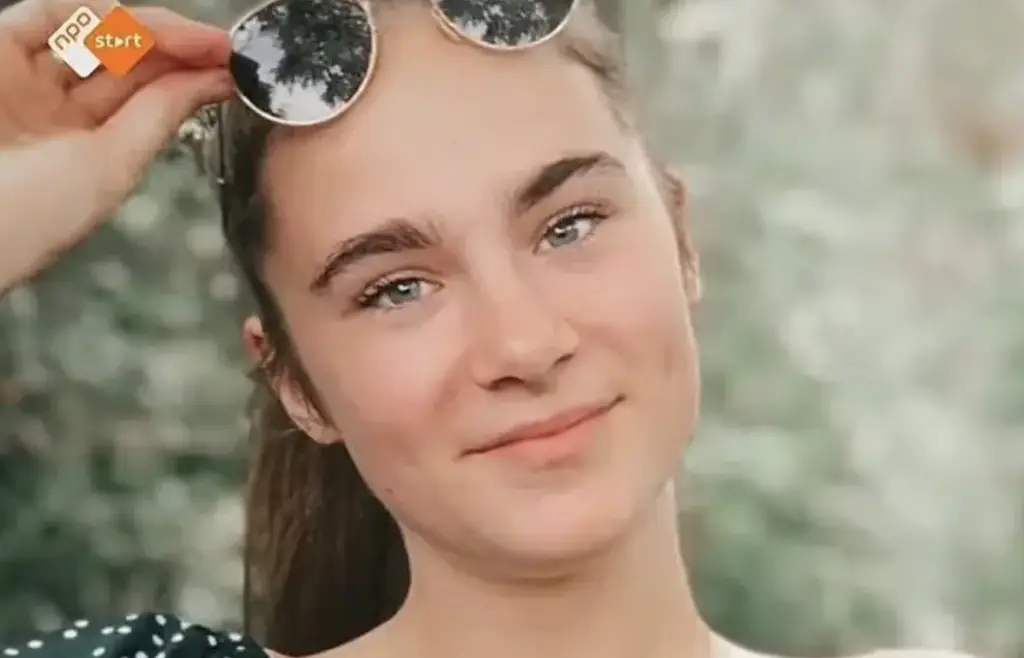
The conversation intensified nationwide following a public television broadcast titled Milou's Battle Continues, which detailed the experience of a 17-year-old girl who sought out Dr. Oosterhoff to end her life.
The teenager, Milou Verhoof, sought assistance after experiencing years of severe trauma, including a sexual assault at age 13 and a near-fatal illness affecting her brother.
Following multiple suicide attempts and lengthy delays from other medical professionals, she met with Dr. Oosterhoff. On October 2, 2023, the procedure was carried out in her childhood bedroom.
Before administering the injection, Dr. Oosterhoff said (per The Manchester Evening News) to Milou, "Girl, have a good trip," in front of her parents. At her funeral, he later noted, "You've been through so much," to express sympathy for her long struggles.
Her mother, Mireille Verhoof, defended the decision in an email correspondence, stating, "Because of Dr. Oosterhoff's extremely careful and cautious approach, we as parents trusted that his conclusion-that Milou truly could not go on and that the days were unliveable for her-was the only correct one and confirmed what we as parents had long seen in our child."
This case highlights a broader statistical shift in the country of 18 million people. Though the vast majority of the 9,958 euthanasia cases in 2024 involved terminal physical ailments, psychiatric euthanasia instances grew from 88 in 2020 to 219 in 2024.
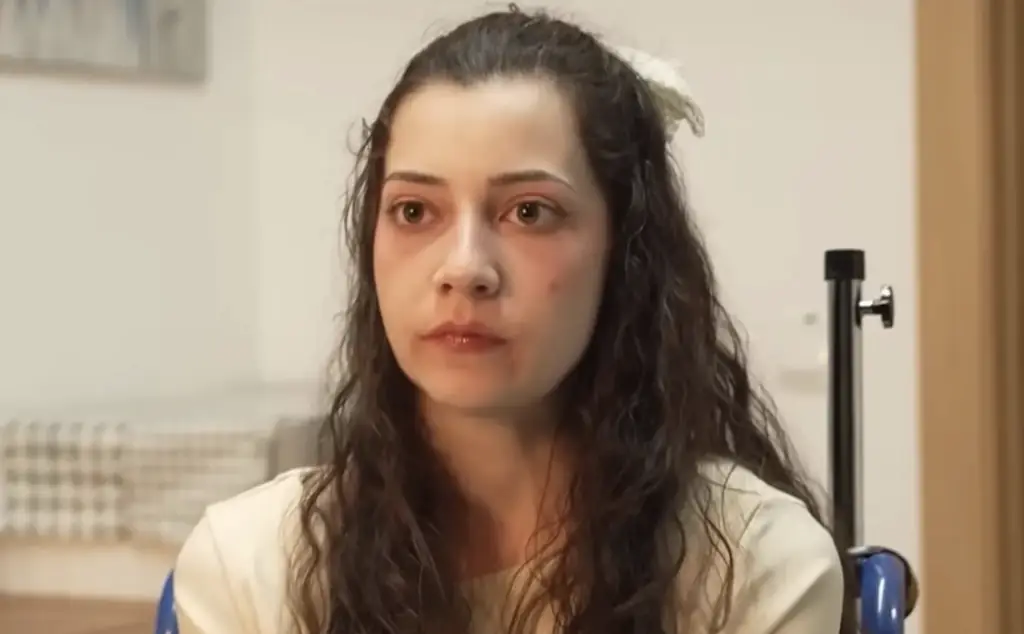
The discussion surrounding medically assisted death has also intensified in other parts of Europe, notably following a high-profile case in Spain involving a 25-year-old woman named Noelia Castillo Ramos.
She became quadriplegic in 2024 after jumping from a building following a gang rape. Before her scheduled procedure, she gave a final television interview, declaring, "I have four days left because on the 26 they will perform euthanasia on me," which brought widespread attention to the legal battle over her choice.
Her father strongly fought the decision in court, arguing that his daughter suffered from a personality disorder and was dependent on the state mental healthcare system prior to her assault.
Castillo Ramos expressed that the legal opposition from her family increased her emotional pain, noting that none of her relatives supported her path.
She defended her autonomy by asking, "None of my family is in favor of euthanasia. I am a pillar of the family. I leave them suffering. But what about my suffering?"
She further argued that "the happiness of a father, a mother, or a sister should not be more important than that of a daughter or the life of a daughter," before her legal termination was ultimately carried out.
If you or someone you know is struggling or in crisis, help is available. Call or text 988 or visit 988lifeline.org.
uk3 min(s) read
A judge has ruled that doctors can lawfully withdraw treatment from a 20-year-old man who is on life support following a brain injury.
Andy Casey was left with a brain injury following a fight in a pub garden on July 9, where he was "punched to the head" and fell to the ground.
He has been on a ventilator since the incident with the hospital's legal team arguing that treatment should be stopped after specialists declared him dead on July 16 following a brain stem test.
His family had argued that they do not want his treatment to be stopped as they claimed to have seen movements and signs of life, and say that Casey reacts to pain.
Tragically, despite taking the case to the High Court in London, a judge has now ruled that doctors can lawfully end his treatment.
Barrister Abis Mahmood, representing the hospital trust where Casey is currently being treated, told the judge that specialists had diagnosed death on July 16.
Specialists have said that the former roofer's brain stem function was not responsive and therefore he is clinically dead, to which the judge, Mr Justice MacDonald who oversaw the private trial in the Family Division of the High Court on Friday, has agreed.
While the hospital can now lawfully end treatment on Casey, his family have argued that they want it continue as they claimed to have seen signs of life.
His sister, Christine, 27, told the judge that she does not believe her brother is brain stem dead, adding: "He reacts to pain. I showed the judge so many videos. How can someone who reacts to pain be dead? We are looking at an appeal."
She said that the ruling had left her "so angry" and that the family is planning to launch an appeal against the decision.
Mr Justice MacDonald said in a written ruling, via Sky News: "Whilst I understand fully the conclusions that the family and friends of Mr Casey have, in their sorrow, drawn from his movements and apparent responses to the ventilator, having regard to the totality of evidence before the court, I am also satisfied that what the family are seeing are in fact well-recognised base reflexes that can survive brain stem death.
"Cruelly, the flattering voice of hope convinces those that love Mr Casey that these are signs that Mr Casey is not dead.
"With regret, I am satisfied that the brain stem testing undertaken... demonstrate(s) that he is."
He concluded with "very great sadness" that it was accurate that Casey "died on 16 July 2023 at 11.51PM" and acknowledged that his ruling would "come as a bitter disappointment to Mr Casey's family and friends."
The judge added: "The now blurred boundary between life and death can be delineated by reference to philosophy, to ethics or to the cardinal tenets of the world's great religions.
"But the task of this court is to consider whether Mr Casey has crossed over that boundary for the purposes of the law.
"I recognize that this is a tragedy for his family and friends and whilst I am certain that it will offer little comfort, they have my profound sympathy."
Casey's family has set up a GoFundMe to raise money to continue their fight by helping with their legal costs, with any outstanding money set to go towards "rehabilitation" if he were to survive.