Loading...
Health5 min(s) read
health3 min(s) read
health3 min(s) read
health3 min(s) read
health3 min(s) read
health3 min(s) read
Published 15:10 21 Jun 2026 GMT
A consultant urologist at the Cleveland Clinic has opened up about a rare health condition that is said to affect up to 10 percent of men.
The medical professional opened up on how his job consists of uncomfortable conversations, such as the one he had fairly recently, telling the Daily Mail that "shame, embarrassment and silence are almost always part of the story."
But he said that one patient in his late 40s opened up about something that was happening to his manhood.
Just years earlier, he recalled that his penis started to change shape, which was most noticeable when he was erect.
He recalled that it was subtle at first, with a slight bend upwards to the left, but it soon became far worse.
Describing it as "grotesque," he said that it would "bend to the left at around a 45-degree angle," which negatively affected his performance in the bedroom.
It's called Peyronie's disease, and the man's condition is apparently "one of the most common reasons" men are sent to the expert.
He explained to the publication that the condition is "characterized by an abnormal curvature of the penis, (which) is caused by a build-up of fibrous scar tissue – known as plaques – within the shaft."
In the long-term, this can lead to the bending and distortion of the penis while erect.
Symptoms of this include pain and difficulty with sex, which can also lead to permanent shortening of the penis length as well.
Peyronie's can affect as many as one in ten men, yet it is largely underdiagnosed, with the National Institutes of Health suggesting that only one in 100 men with the condition is formally diagnosed.
It is suggested that too many men are ashamed to seek help, hoping the issue will resolve itself, while others may not be aware they have a problem at all.
"I've had patients who didn't come in until things had deteriorated so badly that it cost them their relationship," the expert admitted.
Peyronie's is treatable, especially if caught early, says the expert.
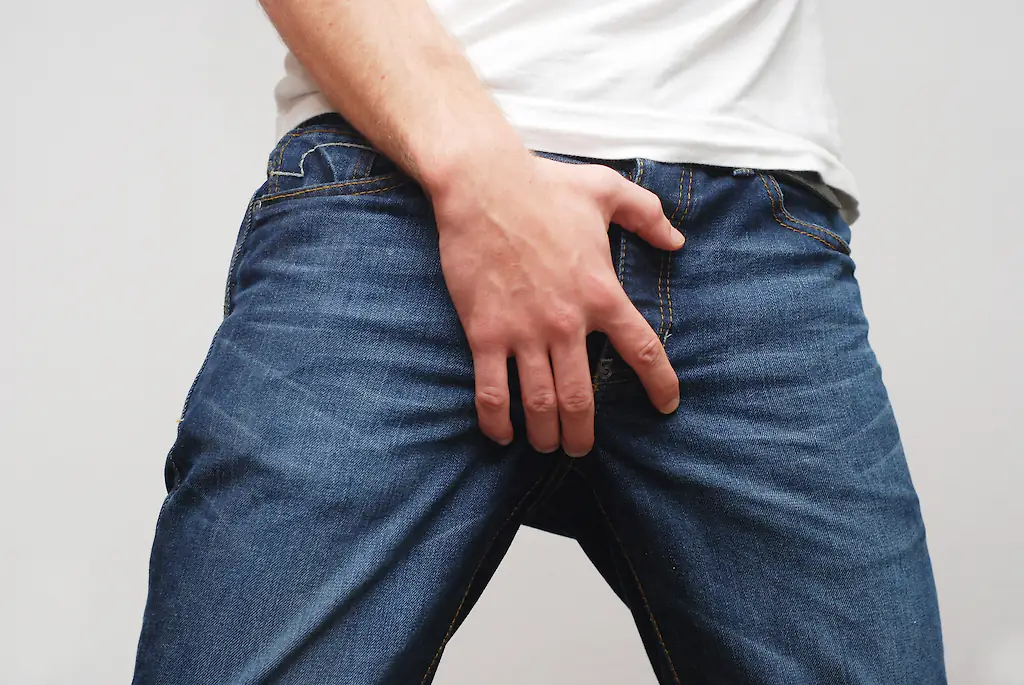
The expert says that this condition can be triggered by tiny injuries to the penis, which can occur during sex.
In fact, the individual may not even notice the changes until much later.
The healthy healing process allows the tissue to repair itself smoothly, but in Peyronie's disease, the body lays down excess scar tissue instead, creating hard plaques.
Experts are unsure why this happens to some men and not others, though there is thought to be a difference in how the body heals, taking factors such as age, genetics, diabetes, and smoking into consideration.
So, because fibrous plaques do not stretch, when the penis is erect, the damaged area cannot expand in the same way as the surrounding tissue.
This causes the bend, and some men may experience several plaques forming, meaning that the penis curves in more than one direction.
Pain during erections is also expected, especially in earlier stages - the expert highlighted that men of all ages have come to see him about the disease.
Few men have perfectly straight erections; in fact, a curve is normal, but it is Peyronie's when it causes pain or distress.

The treatment of Peyronie's depends largely on the phase you're in - if you're in the first 12 to 18 months, also known as the active phase, as the penile curvature is increasing, you would be prescribed medication.
He explained: "Initially, they would take a daily low dose of the erectile dysfunction medication tadalafil. It works by relaxing blood vessels in the penis and we believe this helps to slow the disease progression and manage pain.
"I would also prescribe them traction therapy for an hour a day. This involves wearing a device that gently stretches the penis."
Over time, this tension helps the scar tissue remodel and become less tight, reducing curvature and limiting shortening.
But if it is in the stable phase, which is when the penis has had the same angle for three months or more, injections, traction therapy, or surgery are options.
Injections involve an enzyme known as collagenase, which breaks down plaques.
He claims that his patients "see improvements of 60 percent or more."
The expert stated: "My advice to men who think they might have this problem is, please don't feel ashamed," encouraging them to speak about it with their partner or physician.
Published 13:31 28 Apr 2026 GMT
A man who has a rare health condition has revealed what it's like living with it from day to day.
The 43-year-old individual, who has remained anonymous, has been candid about the negative impacts that having a micropenis can have.
Micropenises themselves are rare, with less than one percent of men affected around the world, with Cleveland Clinic estimating this figure to be around 0.6 percent.
It is said that the average stretched penile length (SPL) for adult males is 5.25 inches, while healthcare providers will diagnose a micropenis if its length is "less than 2.5 standard deviations below the average".
Going by this, a manhood with an SPL of 2.67 inches or under in male adults will be classified as a micropenis.
While there are feelings of anxiety with having a small penis, those who have one still usually have normal sexual function.
The man, known only as Sebastian to protect his anonymity, told Esquire: “My penis didn’t just affect my dating life, though. It affected my daily life.
“I tried to avoid using urinals. I stopped playing football because of the locker room situation after games. I always wear big hoodies or baggy shorts to hide my lack of a bulge."
He also said that on colder days, his penis can become inverted, making them the "absolute worst," revealing that he had to "warm it up" before peeing so he wouldn't "splash on myself."
Sebastian still aims to get married and settle down one day, but his fears over the size of his penis will likely stop him from realising this dream.
A delivery driver by day, he said that while he has a girlfriend, she admitted that his penis was "the smallest she'd ever seen," which is a line sure to shoot down the confidence of any man.
Sebastian also stumbled upon an eight-inch purple rabbit vibrator inside her wardrobe, which made his "heart sink".
He admitted: “It made me feel very self-conscious because it was obviously a lot bigger than me.”
The man also admitted that he didn't know he had a micropenis until he was about 12 years old and in PE class, a common occurrence with those who have the condition.
Sebastian isn't alone in opening up about the stigmatised condition, as a 26-year-old man anonymously appeared on the Other People's Lives podcast, sharing how it has affected his relationships.
He admitted that fear of judgment often caused him to end relationships prematurely, saying: “I cut it off because I was nervous and scared.” He continued by adding: “That’s how it was for a long time. Still is, to be honest.”
After years of avoiding deeper connections, he eventually opened up to a woman he said he had “proper feelings for.”
In an intimate moment, he revealed his condition to her. Although she tried to be understanding, he sensed that she was uncomfortable.
“She knew it was terrible, which she tried her hardest not to tell me,” he admitted.
“But she’s an honest person as well, and I could tell... I don’t blame a woman for thinking, ‘I don’t want this.’ I don’t blame that at all.”
He also spoke about the challenges of deciding when and how to be open about it, asking: “If you can, you should tell the woman, but when do you tell her?”
Published 10:30 27 Apr 2026 GMT
A man has shared his experience of a rare and serious illness that ultimately led to part of his penis being amputated.
Steven Hamill was just 26 when he was diagnosed with penile cancer in 2019, a condition that affects a very small number of men each year.
Speaking on This Morning, he recalled: “I woke up one morning and as every man does they'll go for their morning wee, and I looked down, it was very swollen, and instantly I didn't really know what was going on. Something isn't right.”
At first, he didn’t take immediate action, saying: “As a 26-year-old man it was very 'hmm what's this', so I did what every guy would probably do - ignore it [and] hope it goes away itself.”
But things quickly escalated. He later described making a cup of tea when he suddenly noticed something was wrong.
He revealed he "felt something wet” in his groin — and when he checked, he said there was “blood everywhere”.
After calling for his partner, who initially wondered if it might be a nosebleed, Steven realised he needed urgent medical attention. At the time, he admitted he didn’t even know the condition existed, only that “something isn't right.”
When he first sought medical help, doctors were unsure. Because of his age, cancer wasn’t initially suspected. Steven said he was told: “But it can't be penile cancer, you're 26, it only affects men over 50.”
Instead, he was treated for balanitis, a bacterial infection, and given cream. For weeks, he continued with treatment, hoping things would improve. “I was just living life like that, putting this cream on hoping it would get better,” he said.
But the pain intensified dramatically, he described it as: “if I had a needle and I was just poking the head consistently every second… there was no respite.”
Around a month later, his condition worsened again, he added: “I was in my brother's car in Morrisons' car park when the big one happened. I just passed out.”
Despite this, he initially tried to carry on with normal life, even attending his sister’s wedding while managing ongoing bleeding.
It wasn’t until a later appointment that the seriousness of the situation became clear. Seeing a nurse wearing a Macmillan Cancer Support lanyard made him realise what he might be facing. He was soon diagnosed with penile cancer and rushed in for emergency surgery.
The operation successfully removed the tumor, but it required amputating four inches of his penis. Thankfully, the procedure was effective, and Steven is now in remission.
According to the NHS, penile cancer most commonly affects the foreskin or the head (glans) of the penis. While very rare, with fewer than one in 100,000 men diagnosed annually in the US, early detection is key to successful treatment.
Common warning signs include:
If you’re concerned about any symptoms, speaking to a medical professional as soon as possible can make a crucial difference.
Published 10:16 24 May 2026 GMT
A doctor has revealed a pretty X-rated way that men can prevent their penises from shrinking.
As we get older, our bodies tend to go through a lot of changes, and for some men, this can mean things getting smaller downstairs.
This probably isn't something that you'd tell anyone other than a doctor, but I imagine it would be quite difficult.
But fear not, because a doctor has a way to stop this from happening... though it's very NSFW.
According to a report from the Daily Mail, Gen Z adults are reportedly having less sex than any previous generation, and this is alarming to experts.
Dr. Tara Suwinyattichaiporn, a sex and relationship expert, told the outlet that sexually inactive men could develop a rare condition known as penile atrophy.
This condition causes the tissue of the penis to lose elasticity, potentially shrinking by one to two centimeters.
"Most people need affection, touch, and sexual connections with others," Suwinyattichaiporn said.
Without these, she warned, mental health can deteriorate, leading to anxiety, depression, and increased stress levels.
In short, men should seek to have sex in order to stop their penis from shrinking.
A 2021 study from the University of California found that 38% of young adults aged 18 to 30 had not engaged in sexual activity in the previous year.
This marks a significant increase from past decades, with abstention rates nearly doubling since 2011.
According to Suwinyattichaiporn, going without sex for weeks, months, or even years can have detrimental effects on both mental and physical health.
"Sex releases hormones like oxytocin, dopamine, and serotonin, which regulate emotions and boost mood," she explained.
The absence of these feel-good chemicals could lead to feelings of frustration, anxiety, and in some cases, aggression.
Sex therapist Sari Cooper highlighted how sexual droughts can strain relationships.
"If couples aren't having sex, they don’t approach their partner with softness or vulnerability," she told the Daily Mail. "They may resort to criticism or guilt to get their needs met."
For men, long-term abstinence poses even more severe risks, including an increased chance of developing prostate cancer.
Studies suggest that regular ejaculation may help prevent the build-up of carcinogens in the prostate.
Women, too, are not immune to the risks of sexual inactivity. When women go without sex for extended periods, they may experience vaginal atrophy, a condition where tissues become dry and thin, making intercourse painful.
Regular sexual activity helps maintain blood flow and tissue elasticity, which can prevent these issues.
To combat the psychological and physical impacts of sexual inactivity, Suwinyattichaiporn advised individuals to manage stress, as it can interfere with sexual desire.
"Stressed out people don't have the capacity to enjoy sex," she noted, suggesting stress-reduction techniques such as yoga, tai chi, meditation, and regular date nights with a partner.
Published 16:00 07 Sep 2024 GMT
A doctor has revealed a pretty X-rated way that men can prevent their penises from shrinking.
As we get older our bodies tend to go through a lot of changes, and for some men, this can mean things getting smaller downstairs.
This probably isn't something that you'd tell anyone other than a doctor, but I imagine it would be quite alarming and embarrassing.
But fear not, because a doctor has a way to stop this from happening... though it's very NSFW.
According to a report from the Daily Mail, Gen Z adults are reportedly having less sex than any previous generation, and this is alarming to experts.
Dr. Tara Suwinyattichaiporn, a sex and relationship expert, told the outlet that sexually inactive men could develop a rare condition known as penile atrophy.
This condition causes the tissue of the penis to lose elasticity, potentially shrinking by one to two centimeters.
"Most people need affection, touch, and sexual connections with others," Suwinyattichaiporn said.
Without these, she warned, mental health can deteriorate, leading to anxiety, depression, and increased stress levels.
In short, men should seek to have sex in order to stop their penis from shrinking.
A 2021 study from the University of California found that 38% of young adults aged 18 to 30 had not engaged in sexual activity in the previous year.
This marks a significant increase from past decades, with abstention rates nearly doubling since 2011.
According to Suwinyattichaiporn, going without sex for weeks, months, or even years can have detrimental effects on both mental and physical health.
"Sex releases hormones like oxytocin, dopamine, and serotonin, which regulate emotions and boost mood," she explained.
The absence of these feel-good chemicals could lead to feelings of frustration, anxiety, and in some cases, aggression.
Sex therapist Sari Cooper highlighted how sexual droughts can strain relationships.
"If couples aren't having sex, they don’t approach their partner with softness or vulnerability," she told the Daily Mail. "They may resort to criticism or guilt to get their needs met."
For men, long-term abstinence poses even more severe risks, including an increased chance of developing prostate cancer.
Studies suggest that regular ejaculation may help prevent the build-up of carcinogens in the prostate.
Women, too, are not immune to the risks of sexual inactivity. When women go without sex for extended periods, they may experience vaginal atrophy, a condition where tissues become dry and thin, making intercourse painful.
Regular sexual activity helps maintain blood flow and tissue elasticity, which can prevent these issues.
To combat the psychological and physical impacts of sexual inactivity, Suwinyattichaiporn advised individuals to manage stress, as it can interfere with sexual desire.
"Stressed out people don't have the capacity to enjoy sex," she noted, suggesting stress-reduction techniques such as yoga, tai chi, meditation, and regular date nights with a partner.
Published 16:01 03 Sep 2024 GMT