ADVERT
US2 min(s) read
Many have wondered if they might have some links to the British Royal Family at one time or another - as ridiculous as it sounds.
With ancestry tests and having the technology to trace your lineage back centuries, anyone could have a distant link to the throne if they're lucky.
Many Americans believe they have descended from royalty, but for millions of Brits, that may prove to be true.
Sadly though, being a distant descendant of a 12th-century monarch won't secure you a seat at the next Royal function.
Numerous families have links to royalty, and one of the easiest ways you can explore this is through a number of ancestry websites, such as Documenting Royal Ancestry on FamilySearch.
As exciting as it may sound, having connections to royalty is more common than you'd think.
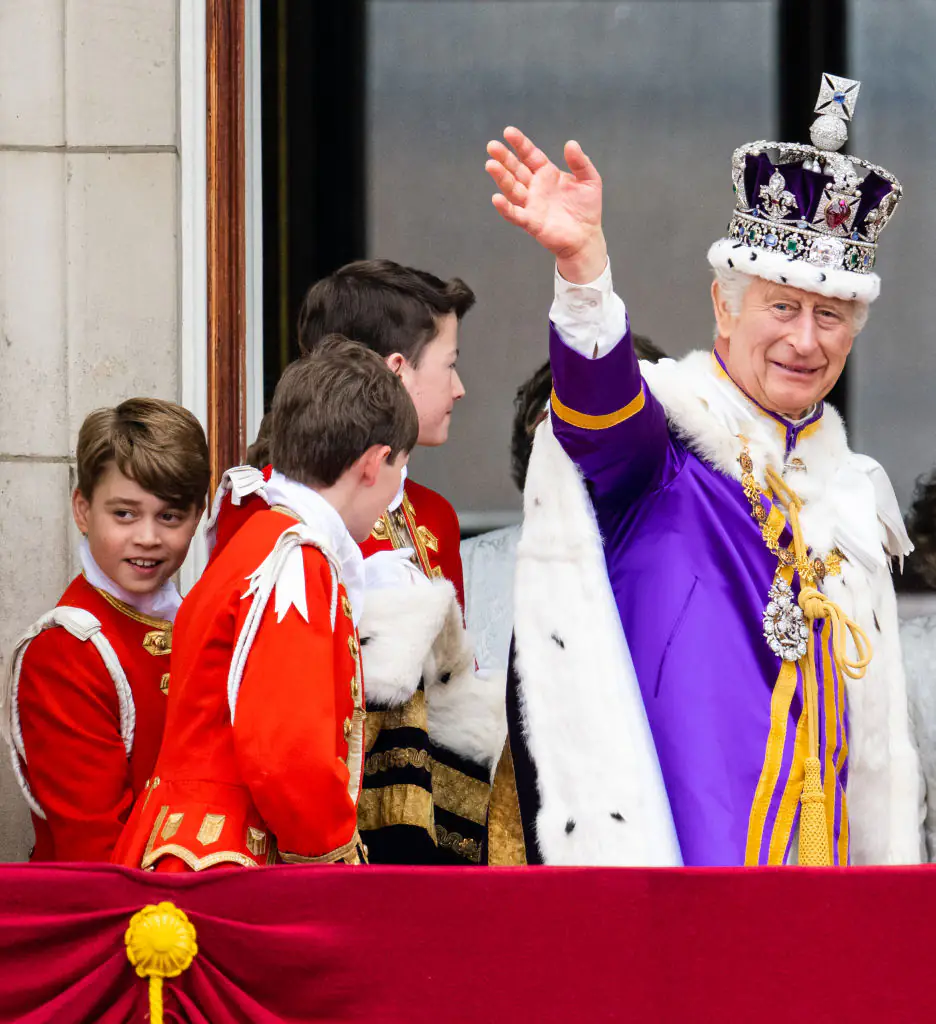
One of the first places you should look is at your early American ancestors, as many of these families had connections to people with power, back in the day.
One of the first literary works documenting this was Americans of Royal Descent by Charles H. Browning, which was published in 1891, and includes hundreds of surnames and documents the royal family trees in depth.
If your name isn't there, you can use Hathitrust, where you will find several other family names with royal ancestors.
While some names have been rumored to link to royalty in the past, Family History Daily has listed 100 surnames which could highlight a link to the British throne:
It should be noted that having one of these surnames does not automatically mean you have royal ancestry; these names are linked to specific people.
Browning's book will reveal more about the people who match these surnames.
But equally, not finding your name here doesn't mean that you have no link to the Royal Family, and some further digging could reveal what you want to see.
This list is simply a sample of royal last names, so finding your family's name might pique your interest and push you to do further research.
On the other hand, maybe you're not fussed at all and having a 26-times removed cousin in the Royal Family won't change anything.
To each their own.
weird3 min(s) read
Have you ever wondered whether you're in line for the British throne?
There are many people who believe that they have descended from royalty, and for millions of people in the UK, that is actually true.
Sadly, being a distant descendant of William the Conqueror doesn't mean you will be invited for dinner at Buckingham Palace anytime soon.
But if you are interested in your lineage, there are many sites that can help you trace it.
MyHeritage has compiled a list of 35 surnames that might just suggest a connection to royalty.
These names, traditionally associated with nobility, could lead you to a surprising revelation about your own lineage.
While having one of these surnames doesn't guarantee you're related to a royal family member, it can be a fascinating starting point for anyone intrigued by the possibility of royal ties.
Here’s a list of 35 surnames that MyHeritage suggests could hint at a royal lineage:
Do any of you reading now think you could be related to royalty?
uk3 min(s) read
It has long been known that the British royal family doesn't have the most diverse gene pool, but it may still come as a surprise to some to learn that the current reigning monarch - Queen Elizabeth II - is actually a close relative of her husband, Prince Philip.
Their shared lineage goes back a few generations, with both of them being a direct descendant of Queen Victoria. We've known about this for a while but, after the travel website Expedia created an online tool to show how the Scandinavian and British royal families have been linked throughout history, the closeness of their bloodline became more apparent.
In order to establish exactly how closely they are linked, we first have to go back to February 1840 - at which point good ol' Queen Vic married Prince Albert of Saxe-Coburg-Gotha.
The couple had nine children - four sons and five daughters - the eldest of which was Edward. He took over as king in 1901 after his mother died (at which point she was the longest reigning monarch ever), but gave up the throne in 1910 to his younger brother, George - who you might know better as Colin Firth in The King's Speech.
His son, also named George, took over in 1936 and - upon his death in 1952 - eventually handed the throne to Liz II.
This means that our current reigning queen is related to Queen Victoria on her father's side. Meanwhile, Philip is linked to the 19th-century monarch through his mother's bloodline.
Let's jump back again to 1943: the year in which Victoria's second daughter, Princess Alice, was born.
At the age of 19. Alice went on to marry Ludwig IV, the Grand Duke of Hesse and had seven children. The oldest child - named Victoria after her grandmother - eventually went on to marry one of her father's cousins, Prince Louis of Battenburg, in 1884.
Still following along?
Princess Victoria then had a child named Alice (there's a pattern emerging here...) who, in 1903, married Prince Andrew of Greece. The couple had five children, the youngest of which being Prince Philip.
This means that Queen Victoria is Philip's great-great-grandmother through his mother's side. At the same time, the famously unamused queen was also Elizabeth's great-great-grandmother - but her paternal lineage meant it was she who ended up as the heir to claim the throne.
Technically, then, our current queen and her husband are third cousins.
This isn't actually all that uncommon, however, as ruling families throughout history have been encouraged to marry within their own ranks in order to keep the same royal bloodline going.
"In many countries, you would lose your right to the throne if you married a commoner," said Sandra Pearson at Expedia, "hence your choice was very limited and you most probably would be related."
Today, such practices are not as commonly practised - though it might shock you to know that even Meghan and Harry are very distant cousins. Still, with more and more non-royals marrying into the British monarchy, it means that the gene pool is finally becoming a little more diversified.
Oh, and on that note, if any of Prince Harry's hot cousins want to hit me up, I'd be more than happy to contribute my non-royal genes to the family lineage.
uncategorised2 min(s) read
uk3 min(s) read
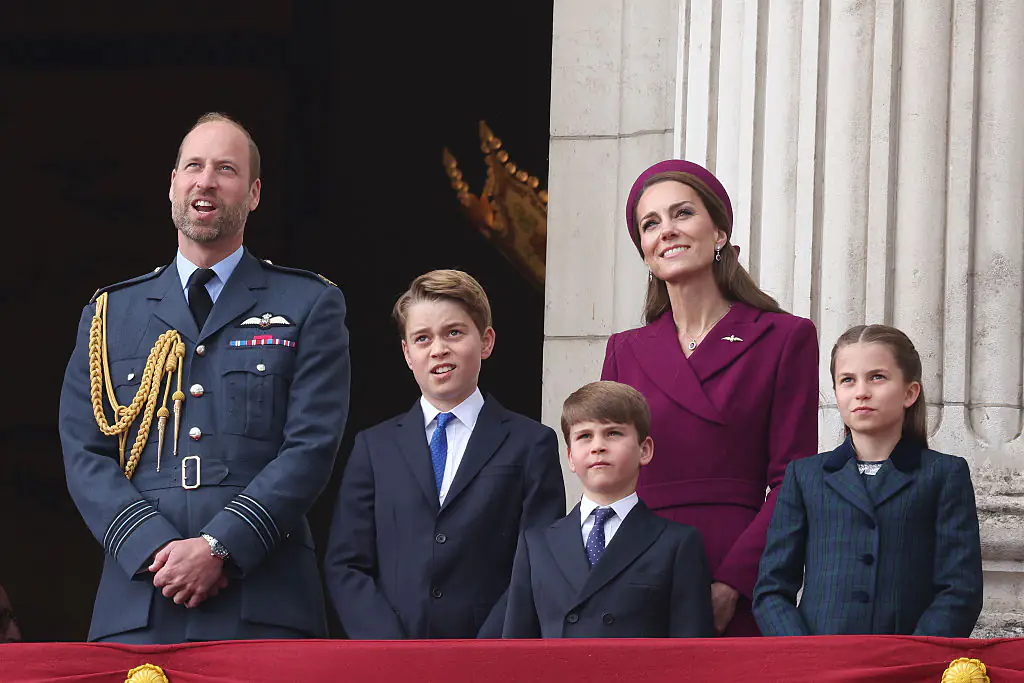
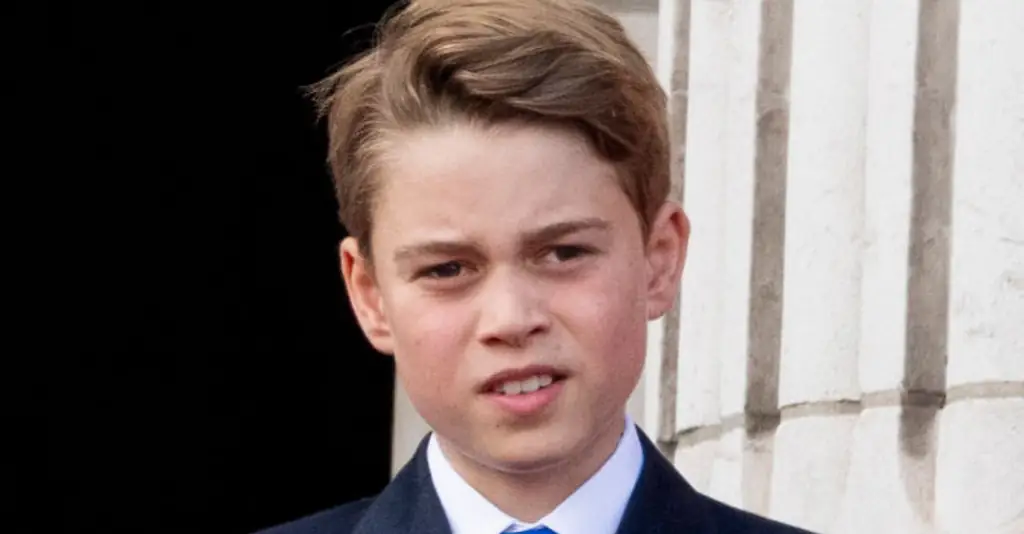
Prince George, the 12-year-old who is second in line for the British throne, possesses a trait that a King has not had in the country for centuries.
The eldest son of Prince William, many genealogists have described the tween as the most "normal" monarch so far.
While Royal experts have described this as a "transitional period" for the British Royal family, George has reportedly been undergoing serious training to take over the mantle of his grandfather one day.
This includes making public appearances alongside his father, such as attending the prestigious VE Day 80th anniversary event in 2025, which involved meeting and drinking tea with war veterans.
Much like the 43-year-old William, George is a soccer fan, with the pair attending the 2024 Euro final between England and Spain, showing off their lighter sides.
The former has already spoken of a more "streamlined monarchy", turning attention away from traditional formalities and protocol when he is on the throne, and it's no surprise that George is expected to follow suit.
There's an aspect of Prince George that may go a long way in modernizing the Royal Family, as genealogist Anthony Adolph explained that George will become the first king to come from a non-aristocratic mother.
He explained in a blog: "Prince George has all the royal ancestry of his father, but unlike all previous monarchs since William the Conqueror, this future monarch will have half his ancestry from perfectly normal families, across the whole spectrum of society and from across the whole of England.
"Right across Britain, thousands of genealogists who have traced their ancestry back to forebears who were lorry drivers, coal miners, agricultural labourers, industrial workers, servants, carpenters and clerks, not to say bank managers, cloth manufacturers, clergymen and mayors, and had thus found a link to the ancestry of the Duchess of Cambridge, were able to add the new royal baby to that branch of their family trees," Adolph explained.
The Duchess of Cambridge, Kate Middleton, actually grew up in a middle-class household.
Rewind the clock a few centuries, and she may even have been described as a "commoner," so her children, including the likes of George, Princess Charlotte, and Prince Louis, are considered more "normal" than their Royal dad.
George's grandmother, the late Princess Diana, had famously come from an aristocratic family too, the Spencers.
Adolph went on: "The modern royal family is reverting to an older model, whereby monarchs, rather than being genealogically isolated from their people, are very much the head of the greater families of their nations,
"The marriage of Prince William and Catherine Middleton provides new royal links for countless people with 'ordinary' British blood and creates an exciting focus for many family trees."
Experts believe that the way the 12-year-old has been nurtured will go a long way in redefining what really makes a Royal.
celebrity1 min(s) read
Yesterday, fans of the royal family around the world were delighted to hear that Prince Harry and Meghan Markle are expecting their first child. In an official announcement on Instagram, Kensington Palace wrote:
"Their Royal Highnesses The Duke and Duchess of Sussex are very pleased to announce that The Duchess of Sussex is expecting a baby in the Spring of 2019.
"Their Royal Highnesses have appreciated all of the support they have received from people around the world since their wedding in May and are delighted to be able to share this happy news with the public."
As well as excitement and anticipation, however, the announcement also brought with it a number of questions. What will the new baby be called? How far in line to the throne will they be? And what title will they have?
Well, as it turns out, the new arrival probably won't be a prince or princess. In fact, the little one might not have a royal title at all.
As with pretty much everything to do with the British royal family, the process of assigning a title to a new royal baby is entrenched in archaic rules and complicated regulations that must be adhered to.
It's already been established that the new arrival will be too far away in line to the throne (seventh, to be precise) to be named prince or princess - though that could change if the Queen decides to make an exception. If she doesn't, however, then the new baby might not inherit a title by default.
As royal commentator Richard Fitzwilliams explained earlier this year: "Under the current system, any child of the Duke and Duchess won’t automatically have a royal title. The peerage, unlike the succession to the crown, favours males and if they have only daughters, the title of Sussex could die out as it did before."
[[instagramwidget||https://www.instagram.com/p/Bo_QEK5nLor/?taken-by=kensingtonroyal]]
At the moment, though, it is expected that a son of the couple will be given the title, 'Earl of Dumbarton', while a daughter would be known as 'Lady Mountbatten-Windsor'.
It's not entirely unlikely that the Queen won't name her new grandchild a prince or princess, though.
Before Prince George was born, Queen Elizabeth changed the rules so that any child of Prince William's would be a prince or princess. In the past, only the firstborn son would be known as a prince, and, in the event that his first child was a girl, she would have been a Lady.
"This raises an interesting question what Harry and Meghan, who may prove to be unconventional royal parents when they start a family, want for their children," said Fitzwilliams.
[[instagramwidget||https://www.instagram.com/p/Bog-zw-nxkO/?taken-by=kensingtonroyal]]
Whether or not they get the fancy title to go with their heritage is basically irrelevant, however, as the new heir will be the great-grandchild of the current reigning monarch and, eventually, will be a cousin to the king when it comes time for George to take the throne.
Plus, they'll get to have the adorable Harry and Meghan as their parents - and, really, what more could a kid ask for?