ADVERT
US3 min(s) read
Published 15:38 27 Jul 2026 GMT
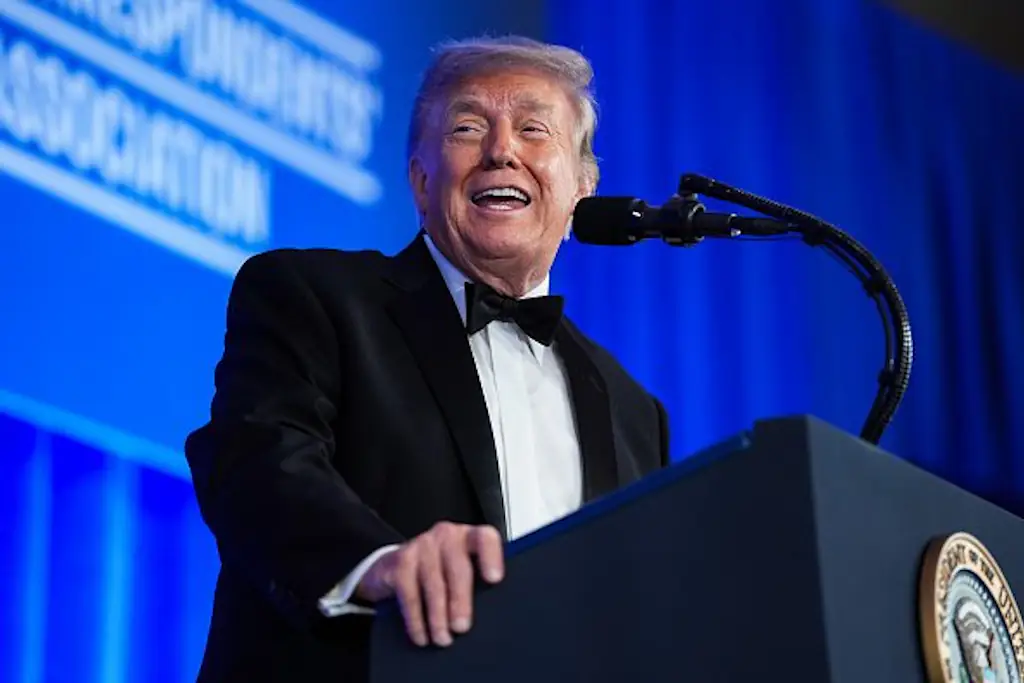
A body language expert has highlighted what he describes as a “concerning” moment in Donald Trump’s White House Correspondents’ Dinner speech, suggesting it may point to a “steep” mental decline.
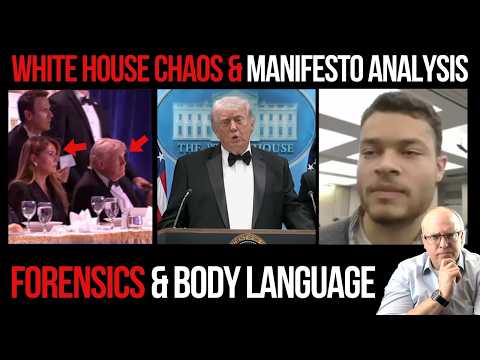
In a YouTube breakdown, Dr G Explains makes clear he is offering opinion rather than diagnosis, stating: “I wanted to make sure you know this is not a psychological evaluation of any kind. These are just my opinions.”
From the outset, he characterizes the speech as unusually erratic, saying he would be “analyzing today… Trump’s strange behavior” and noting he has been “extensively covering President Trump’s mental decline, his strange brain glitches, his odd behaviors,” which he claims are “getting progressively worse.”
Referring to specific parts of Trump’s speech, he admitted: “I cannot figure out what on earth that’s in reference to or what it’s supposed to mean.” He adds: “I think that we are hearing internal thoughts out loud… I think there’s a lot of confusion.”
According to Dr G, the issue is twofold: “One is that he’s saying things that make no sense. And two, he seems unaware that he said it.”
He also points to signs of strain even when Trump appears to be following prepared remarks, claiming: “Even when he’s reading off the teleprompter he is struggling right now. He cannot get full sentences out. He gets distracted mid-sentence.”
Throughout the speech, the expert highlights instances of slurring, repetition, and verbal stumbles, including Trump saying “conscious” instead of “concert”, arguing that “the further this goes, the more he’s starting to slur his words” and “the harder it is for him to keep his energy up.”
At several points, Dr G suggests Trump loses track of meaning entirely. After a disjointed passage, he remarks: “Everything in the middle is just nonsense. It’s just gibberish basically.”
He also flags moments of visible frustration and anger, describing the tone as “very mean-spirited” and later escalating to “so much rage and so much seething anger.”
Another example cited is Trump’s confusing phrasing during a segment about TikTok negotiations, where he said: “Mostly Americans. I were told President Xi.” The expert calls this “just incoherent,” adding: “He is struggling so much to make sense.”
Dr G further argues Trump appears confused by his own teleprompter, particularly when misreading nicknames as real names. Referencing repeated mentions of “Gavin Nuskum,” he says: “He does not realize that’s a nickname… he’s confused by it.”
He also highlights what he sees as misplaced or incorrect word choices, noting: “Instead of saying accused, he said sued, which makes no sense.”
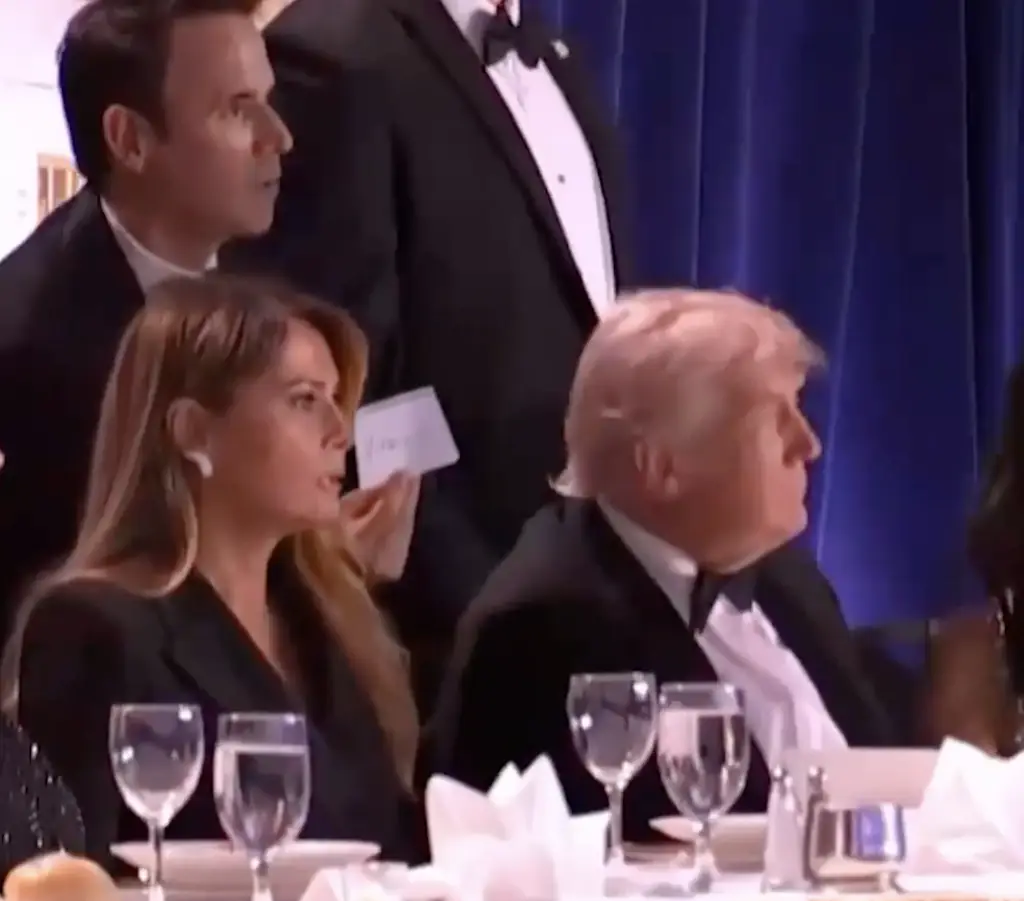
Beyond speech patterns, the video examines Trump’s demeanor during the event, including a moment where the expert claims he appeared to fall asleep during a performance. “I think that he is fully asleep right there,” he says, later suggesting Trump attempted to cover it: “He’s saying he’s good. He’s trying to cover the fact that he was just sleeping.”
The analysis concludes with a stark assessment: “We saw someone who was raging, impulsive. His judgment was bad… he was confused so many times. I do not think he knew half the time what he was reading.”
Dr G adds that, in his view, the trajectory is unlikely to improve, warning: “I think in the next 6 to 8 months, we’re going to see a dramatic change in the way that he presents.”
While the claims remain speculative, the video has sparked renewed debate online about Trump’s public performances — and how closely they are being scrutinized.
us2 min(s) read
us3 min(s) read
us4 min(s) read
us2 min(s) read
Published 12:31 29 Jan 2026 GMT
us2 min(s) read
Published 11:10 27 Apr 2026 GMT
As footage from the chaotic moments at the White House Correspondents’ Dinner continues to circulate, one detail has viewers doing a double-take: Donald Trump’s surprisingly calm reaction as reports of gunfire began to spread.
While people around him appear visibly alarmed, Trump seems almost unfazed, and now, a body language expert is weighing in on why that might be.
In the now-viral clip, guests at the Washington Hilton can be seen reacting as the situation unfolds. According to the expert, the contrast between Trump and those around him is striking: “So he looks indifferent, almost unimpressed by what's going on around him.”
Meanwhile, others nearby appear to instinctively freeze. “If you look at the three people that he's surrounded by… we're all seeing the freeze response… Freeze is the first step.”
The expert explained that what viewers are seeing is a textbook example of how humans respond to sudden danger: “Now they're all realizing that there is danger. And the three of them are all freezing.”
As the situation escalates, those around Trump begin to move. “You saw them freeze and now you're seeing them escape. So that's the flight part of it,” he added.
Continuing in his analysis, Dr G says: “You'll notice that… they all leaned backward. Even though physically that's not actually going to do anything, that's part of the instinct.”
Despite the visible fear around him, Trump’s demeanor appears largely unchanged throughout the clip, Dr G adds: “President Trump still does not seem to be particularly concerned about what's going on. You'll notice his facial expression doesn't really change through any of this.”
According to the expert, this could come down to how individuals perceive and process danger: “Part of what I think this says is that President Trump may interpret danger differently than other people.”
Footage from other angles also shows that people closer to the source of the disturbance reacted more quickly: “Individuals that are at the tables that are lower and closer clearly are reacting to this first," he added.
While some viewers have described Trump’s reaction as unusual, others argue it’s being overanalyzed, pointing out that in fast-moving, confusing situations, people don’t always react immediately or in expected ways.
Published 11:30 08 Apr 2026 GMT
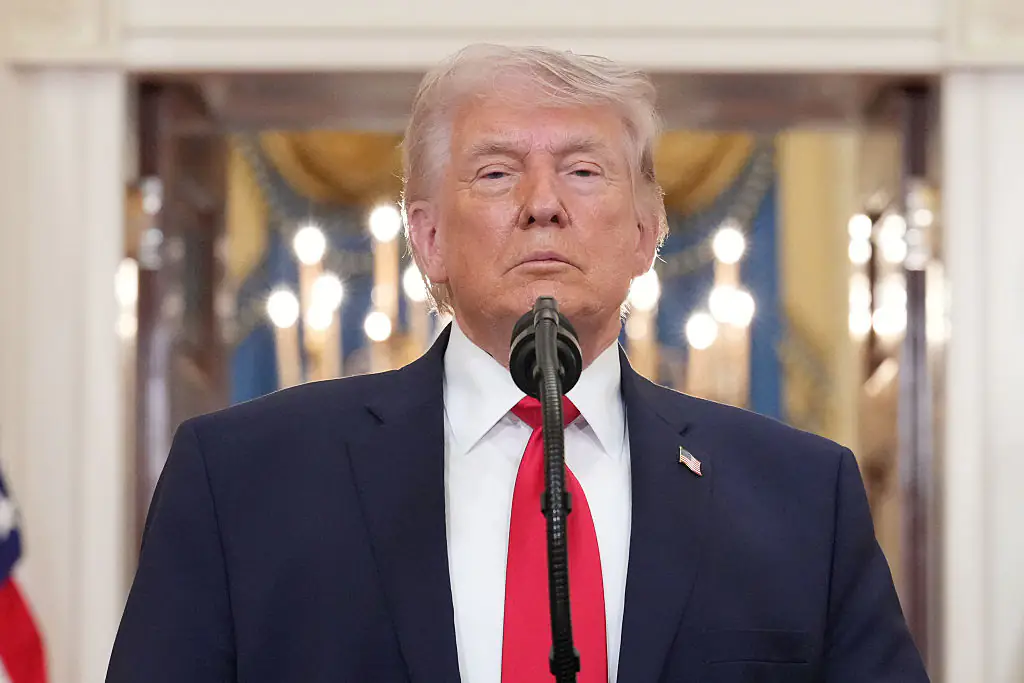
A clinical and forensic psychologist has examined Donald Trump's comments after he claimed he could wipe out the ‘whole civilization’ of Iran this week.
Many will be relieved to hear that a two-week ceasefire was agreed upon late last night (April 7), with the US President taking to Truth Social to announce the good news.
Fears around the world rose overnight, with Trump setting a deadline for Iran to agree to terms, primarily centered around the Strait of Hormuz, to ensure that military action would cease.
However, Trump's earlier claim that he could wipe the Iranian civilization off the face of the Earth hasn't faded into the periphery, as an expert has examined what the president may have meant.
The president had fielded some questions about the Iran war after making a number of contrasting statements, which ranged from peace to all-out conflict.
When asked by a journalist about his conflicting comments on whether the "war is coming to an end," or if "we're bombing Iran to the stone ages," the president replied: "I can't tell you. I don't know."
The confusion was felt among those in the press room, as shown by the video uploaded to YouTube, but a body language pro has now commented on his response.
Dr. G, a YouTuber, psychologist and body language expert, has analysed the short response Trump had to a number of questions about his threats to destroy Iranian power plants, bridges, and broader infrastructure.
Zeroing in on the question about his mixed responses about the war, Dr. G explained: "Now, there was an important part of what he just said. He said, "I can't tell you. I can't tell you." Then he said, "I don't know."
"And that's important because he's either saying things that he doesn't mean, or he's letting people know he actually doesn't know how we're going to move forward with this."
The psychologist went on: "So, there may be the question of whether or not he would actually follow through with these threats.
"But just the fact that he is making them, that he's using the judgment to believe that this is a good idea, I do think suggests a personality change."
The expert noted that his response was "qualitatively different" to how he has responded to similar questions in the past, "even though and historically he has been very outspoken."
Trump has previously taken to Truth Social to speak of what he could do to Iran, claiming earlier this week: "A whole civilization will die tonight, never to be brought back again. I don’t want that to happen, but it probably will,
"We will find out tonight, one of the most important moments in the long and complex history of the World."
Speaking more on Truth Social, the President said: “However, now that we have Complete and Total Regime Change, where different, smarter, and less radicalized minds prevail, maybe something revolutionarily wonderful can happen, WHO KNOWS?
“We will find out tonight, one of the most important moments in the long and complex history of the World. 47 years of extortion, corruption, and death, will finally end.”
Published 11:24 03 Sep 2025 GMT
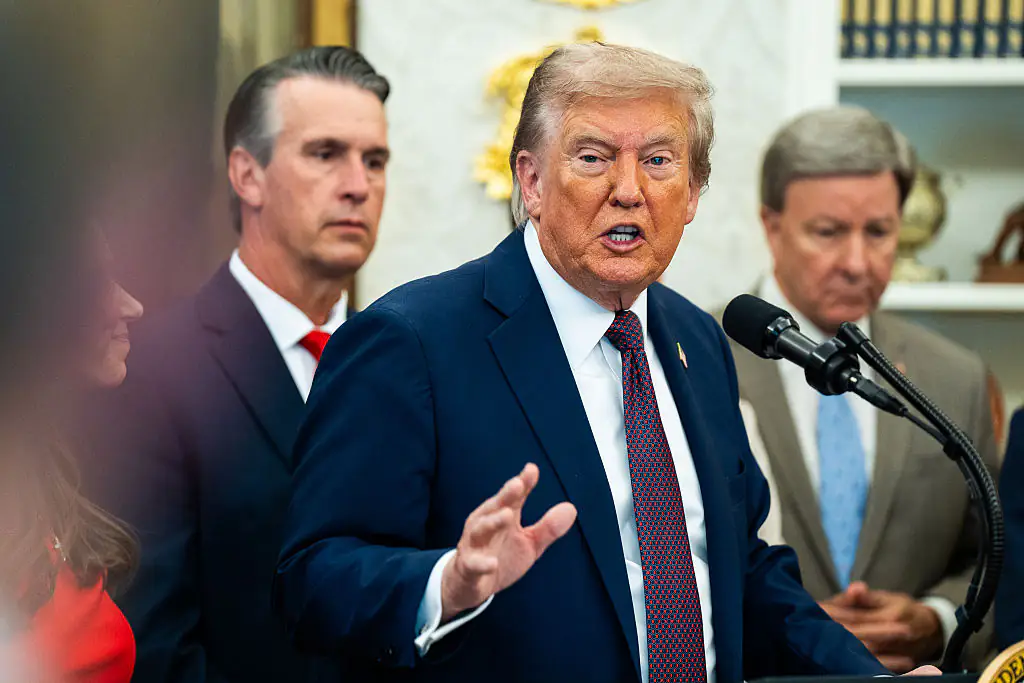
A body language expert has given insight into Donald Trump's hidden response when he was questioned about the recent rumors that he had died.
The 79-year-old President addressed the speculation during a nearly 50-minute press event, dismissing the rumors while also offering some pointed commentary about the media's treatment of his health compared to former President Joe Biden's.
The death rumors gained traction after Trump had no public events scheduled for a couple of days, which led to speculation about his well-being.
Fox News correspondent Peter Doocy asked him about the chatter, prompting Trump to respond with a casual “I have heard, it’s sort of crazy… It’s so fake.” He continued: “I was very active this Labor Day,” laughing off the claim, per the Telegraph.
The president also took the opportunity to comment on the media’s tendency to scrutinize his health while giving President Biden a pass.
“I didn’t do any [public events] for two days, and they said there must be something wrong with him. Biden would not do them for months… and nobody ever said there was anything wrong with him,” Trump said.
The speculation around Trump’s health started on Friday with the hashtag #whereistrump trending across social media.
While paparazzi had photographed the president traveling to and from his golf club in Sterling, Virginia, this only fueled the rumors.
Despite sightings of Trump golfing with his granddaughter and former NFL coach Jon Gruden over the weekend, online skeptics persisted, claiming that photos of Trump had been doctored or were outdated.
While Trump joked about the rumors, body language expert Inbaal Honigman, speaking on behalf of Covers.com in an interview with LadBible, noticed some subtle cues that could provide deeper insight into how the president was feeling about the speculation.
Honigman observed that Trump’s hand movements during his second term in office have become more restrained compared to his first term, when he was known for using “wide, broad hand moves.”
This change in gesture was described as a shift towards a more controlled and less expressive style of communication.
Honigman pointed out that Trump seemed more reserved with his hand movements, often keeping his hands under the podium or in his lap.
She suggested that someone might have advised Trump to reduce his excessive gestures, creating a more polished and less animated appearance.
However, during the press conference, Honigman noted that Trump did not appear to be hiding his hands but instead adjusted his tie and pointed at journalists, showing a bit more openness than in past appearances.
When the topic of the death rumors came up, Trump kept a serious demeanor, maintaining a “presidential” facial expression.
According to Honigman, this involved an “unsmiling face trying to appear serious,” with his head slightly tilted to the side to convey that he was listening carefully.
Trump maintained direct eye contact with the journalists, which was interpreted as an effort to appear sincere and unafraid of addressing the rumors.
However, Honigman also noticed a subtle, “almost imperceptible” shift in Trump’s behavior when he initially heard the question.
As he responded to the death rumors, he briefly broke eye contact with the journalist and glanced sideways.
This, according to the body language expert, was a tiny protective gesture that signaled vulnerability. “Eye contact can make someone feel vulnerable, and looking to the side shows that his mind is active,” Honigman explained.
In a recent video posted by The David Pakman Show, Adam James, a licensed physical therapist with 14 years of experience, shared his concerns about President Donald Trump's health.
James, who operates under the name Epistemic Crisis, discussed the neurological symptoms Trump has been displaying and made a shocking prediction about his life expectancy.
According to James, based on his professional experience, Trump appears to be dealing with severe health issues, including what he believes may be Frontotemporal dementia.
This condition has progressive symptoms, with life expectancy typically ranging from seven to twelve years after diagnosis. However, James speculates that Trump may only have two to four years left to live, given the apparent rapid progression of his symptoms.
James highlighted several signs of neurological decline that Trump has displayed over time. These include abnormal gait patterns, such as a swinging leg motion and balance issues, which could indicate right-sided weakness possibly resulting from a stroke-like event.
James also pointed to Trump's slurred speech, confusion with basic facts (e.g., mixing up Greenland and Iceland), and the repetition of a narrow set of words as potential symptoms of dementia.
These physical and cognitive issues have been particularly evident during public appearances, raising concerns about Trump's overall neurological health. "His frontal lobe is shrinking inside of his skull," James explained, citing MRIs and cognitive assessments as possible indicators of the condition.
He also noted that Trump’s inability to control what he says - such as discussing classified military information - reflects damage to the part of the brain responsible for decision-making and impulse control.
While James’ prediction of Trump’s life expectancy being as short as two to four years may sound drastic, he points out that Frontotemporal dementia’s progression can vary.
Trump's specific case, however, seems concerning given the combination of cognitive decline and his age. Additionally, James speculated about other chronic health issues Trump may be facing, such as congestive heart failure or chronic kidney disease, which could further shorten his lifespan.
Although Trump has access to top-tier healthcare as a president, James pointed out that this does not necessarily guarantee a prolonged life if the underlying conditions remain unchecked.
James emphasized that non-compliance with medical advice, such as not following proper health regimens, can significantly impact outcomes, especially when combined with a condition like dementia.
So while there is no official diagnosis of Frontotemporal dementia or any other condition from Trump's medical team, James’ assessment based on public symptoms suggests a troubling future. As health conditions continue to progress, the questions surrounding Trump's well-being may only grow louder in the coming years.
Published 10:33 29 Oct 2025 GMT
Donald Trump, at 79 years old, has found himself at the center of scrutiny once again following his recent admission about a dementia screening test. The president openly shared that he found the test, which included identifying animals like “a tiger, an elephant, a giraffe,” to be “very hard.”
While Trump also claimed to have earned a "perfect score" on his MRI - his second of the year - the internet has been quick to react, raising new questions about his cognitive health.
Trump's comments about the test have sparked a variety of responses, especially given the nature of the test and his age. Medical experts and critics alike have used his remarks to suggest that his cognitive abilities may be cause for concern, given his struggle with something as simple as identifying animals.
His public statements on these medical matters have only fueled the growing debate about his overall health.
The reaction online has been a mix of humor and concern. Some have mocked his comments, while others have raised serious questions about his cognitive function.
David Pakman, a political commentator, posted on X (formerly Twitter), “Trump admitted today that he found the dementia screening test very difficult. Really says a lot.” His post has gained traction, resonating with those who are questioning whether the president's cognitive health should be more closely examined.
BrooklynDad_Defiant! also commented on the situation, pointing out that Trump’s bragging about a “perfect score” on his MRI, while simultaneously calling the dementia test "very hard," might suggest that he’s not doing as well as he claims.
He wrote on X, “If you’re bragging about getting a ‘perfect score’ on an MRI as well as a dementia test, while also saying that dementia test (where you point out zebras and rhinos) is a very hard test, you’re not doing well.”
Adding to the online discourse, Representative Alexandria Ocasio-Cortez had a pointed question for Trump.
She tweeted, “Hello Mr. President! Out of curiosity, did those doctors ask you to draw a clock by any chance? Was that part hard for you, too? Asking for 340 million people.”
Her tweet highlighted the common aspects of a dementia screening that involve drawing a clock, a test often used to detect cognitive decline. It seems her post was a direct challenge to Trump’s earlier statements, asking if he could manage even simpler tasks that are typically part of such exams.
The debate over Trump's health has taken on a larger significance in the political world. His medical status, now a more prominent issue, has sparked renewed discussions about his ability to effectively govern.
As the scrutiny continues, it remains to be seen whether these health concerns will have an impact on his future political aspirations.