ADVERT
US4 min(s) read
A judge has made a huge decision in the Charlie Kirk case, and it's to do with Tyler Robinson, who is accused of murdering the right-wing podcaster.
Robinson's legal team recently argued that prosecutors should face sanctions for allegedly violating a gag order by discussing the case publicly, with the latest update linked to the death penalty.
There has been an ongoing dispute between the parties over whether the death penalty should remain an option.
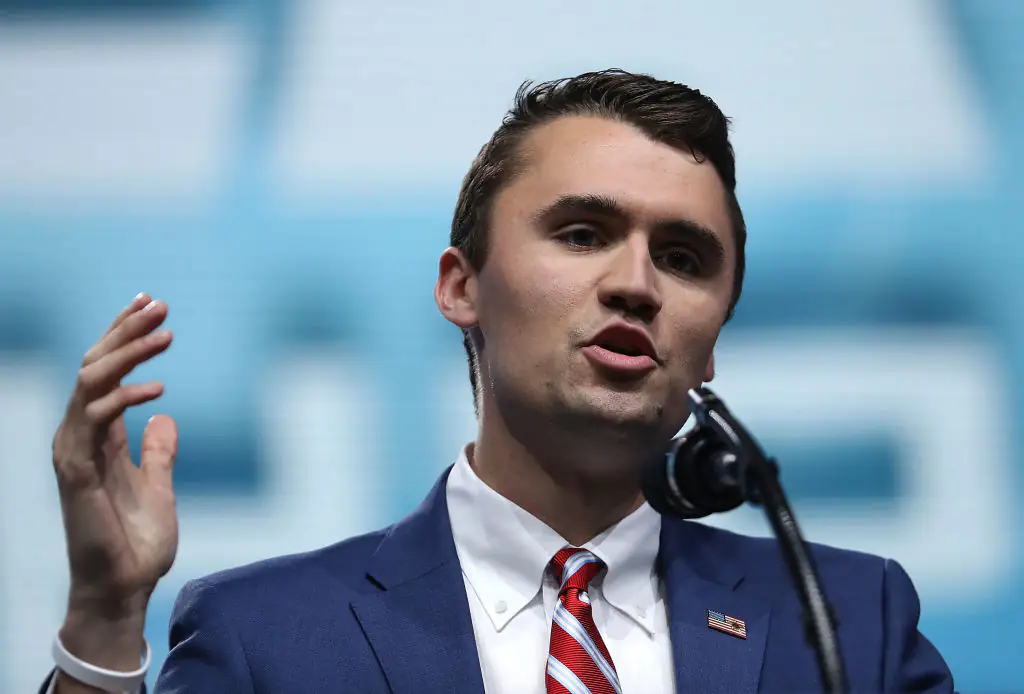
Robinson was arrested just two days after gunning down the Turning Point USA founder during an event at Utah Valley University on September 10, 2025.
He was held without bail before being handed four charges - aggravated murder, felony discharge of a firearm, obstruction of justice and witness tampering.
The case has not gone to trial yet, but in the preliminary hearing, there have been a lot of question marks and controversy around proceedings.
One of the biggest moves by Judge Tony Graf came last month, when he found one of the prosecutors to be in contempt of court after violating a pre-trial gag order.
According to CNN, this prevented him from speaking about the case, resulting in the pre-trial ruling.
This unfolded after Robinson's defense team filed an ATF ballistics report, with results suggesting that the bullet fragment recovered from Kirk's body wasn't conclusively matched to the rifle allegedly used by the defendant.
Prosector Christopher Ballard then proceeded to go on a "media tour," as described by the judge, fighting suggestions that the report weakened the prosecution's defense.
Judge Graf acknowledged that Ballard could correct misleading public reporting in connection to the report, but he could not state that he had "ample evidence to prove Robinson was guilty."
While this isn't a rare occurrence in high-profile trials, a pre-trial publicity order was put in place, limiting what lawyers are allowed to say in public.
This is usually done to protect the defendant’s right to a fair trial.
Despite Judge Graf finding Ballard in contempt of court, he has not removed the death penalty as an option if Robinson is found guilty.
There is a high chance that he will face the death penalty if found guilty, as prosecutors haven't hid the fact that they will be seeking it in the case.
But it will be up to the jury to decide if Robinson should be sentenced to death, if he is found guilty in the first place.
Prosecutors have argued in favor of the death penalty several times, claiming the killing was planned and that Kirk was a target due to his political views, while the shooting took place in a public area with children present.
After the prosecution was found to be in contempt of court, the defense argued that they should face punishment.
They suggested that capital punishment be taken off the table altogether, as attorneys Kathryn Nester, Richard Novak, Michael Burt, and Staci Visser made clear in a statement.
“The only way that this Court can demonstrate that its orders, and the ethical rules that counsel must obey, are not optional when it comes to the State’s attorneys, even in this case, is to impose the sanction undersigned counsel have urged upon this Court: striking the State’s death notice,” they stated.
The prosecution has disagreed with this being a fair consequence.
Deputy Utah County Attorney Ryan McBride additionally said: “A reduction in the aggravated-murder charge from a capital felony to a first-degree felony is dramatically disproportionate to the alleged misconduct.”
Robinson has not yet entered a plea, but on July 6, the judge will decide if there is probable cause for the case to proceed to trial.
us4 min(s) read
us3 min(s) read
us3 min(s) read
us3 min(s) read
us2 min(s) read
Defense attorneys for Tyler Robinson, the alleged murderer of Charlie Kirk, are urging a Utah judge to throw out prosecutors’ latest filing, escalating an ongoing dispute over whether the death penalty should remain an option in the case.
In a motion filed Thursday, Robinson’s legal team argued that prosecutors should face sanctions for allegedly violating a gag order by discussing the case publicly.
As a resolution, they are asking the court to remove the possibility of capital punishment.
“The only way that this Court can demonstrate that its orders, and the ethical rules that counsel must obey, are not optional when it comes to the State’s attorneys, even in this case, is to impose the sanction undersigned counsel have urged upon this Court: striking the State’s death notice,” the defense wrote in a filing signed by attorneys Kathryn Nester, Richard Novak, Michael Burt, and Staci Visser.
Prosecutors, however, deny any wrongdoing. They maintain they did not breach the gag order and say their public comments were necessary to “set the record straight” after what they described as a misleading defense claim gained widespread media attention.
At the center of the dispute is forensic evidence tied to the fatal shooting of Charlie Kirk. Defense filings suggested that the Bureau of Alcohol, Tobacco, Firearms and Explosives (ATF) could not link the fatal bullet to the suspected weapon — Robinson’s grandfather’s rifle.
According to court records, the ATF determined the tool mark analysis was inconclusive, meaning investigators could neither confirm nor rule out the rifle as the source of the bullet fragment. However, prosecutors note that the caliber matched and that a spent casing was linked to the weapon.
Robinson is accused of assassinating Kirk during a Turning Point USA event at Utah Valley University on September 10, 2025. Prosecutors have already indicated they intend to pursue the death penalty if he is convicted.
The disagreement between both sides has intensified into a broader legal and public battle. Prosecutors accuse the defense of spreading misleading information through court filings, while Robinson’s lawyers claim prosecutors acted with “hubris” by discussing the case in media interviews, allegedly violating the gag order.
The defense is also asking the judge to strike the prosecution’s written opposition entirely, arguing it was submitted without being requested.
They say that during a recent hearing, the court instructed both sides to address the contempt allegations orally, not through additional filings. They further claim prosecutors failed to coordinate with them before submitting their objection.
For Robinson’s legal team, removing the death penalty would be an appropriate consequence for what they describe as misconduct. Prosecutors strongly disagree, calling the proposed sanction excessive.
“A reduction in the aggravated-murder charge from a capital felony to a first-degree felony is dramatically disproportionate to the alleged misconduct,” wrote Deputy Utah County Attorney Ryan McBride.
He argued that neither the gag order nor court rules prevented prosecutors from responding to what they viewed as inaccurate claims, adding that state law “expressly allows attorneys to make ‘statements that a reasonable lawyer would believe is required to protect a client from the substantial undue prejudicial effect of recent publicity not initiated by the lawyer.’”
Prosecutors continue to insist they acted within their rights to clarify the record, particularly after the defense’s claims, which prosecutor Christopher Ballard called “misleading” and “misstated”, gained significant traction online and in the media.
Ballard also argued that the defense omitted key context in its filings. “The ATF was unable to identify or exclude the bullet as having been fired from the rifle,” he wrote, emphasizing the point.
He added that the defense compounded the issue by stating “the defense may very well decide to offer the testimony of the ATF firearm analyst as exculpatory evidence,” which he said reinforced a misleading narrative.
Judge Tony Graf Jr. is expected to rule on the dispute during a virtual hearing on Monday.
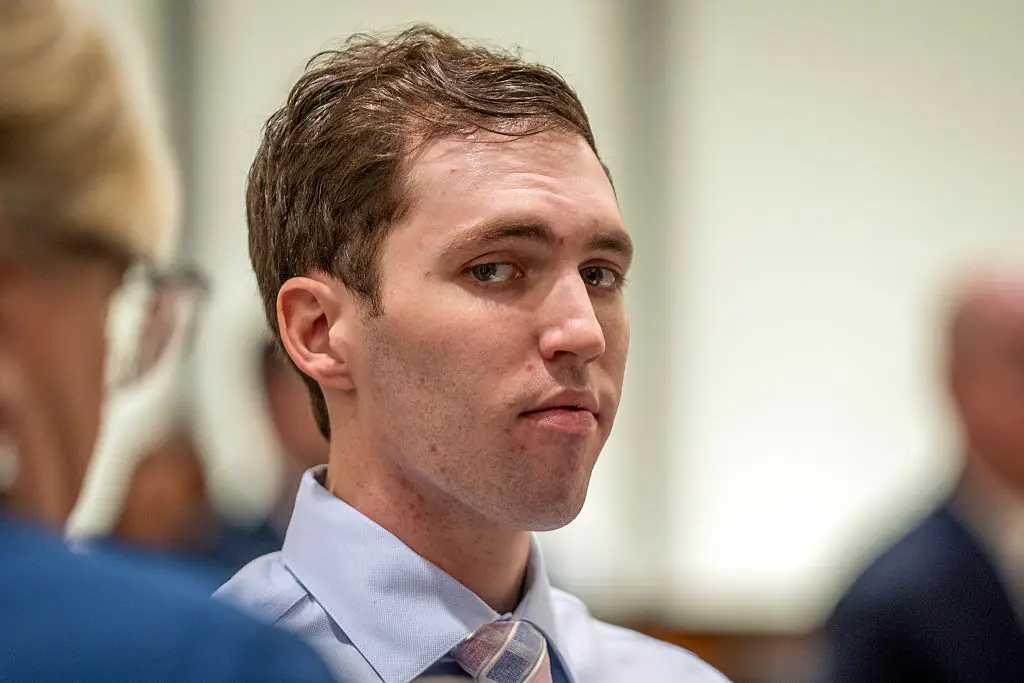
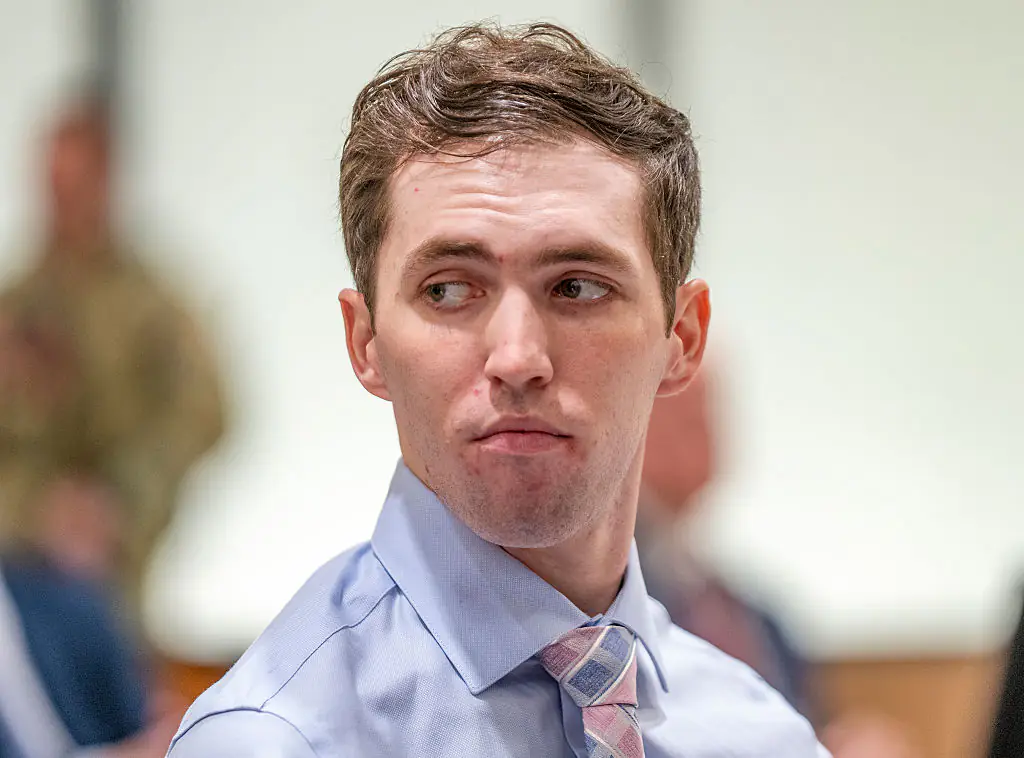
Tyler Robinson, the man accused of gunning down conservative activist Charlie Kirk, smirked during his first in-person court appearance Thursday - moments before his mother was kicked out in tears following a failed request to remain in the room.
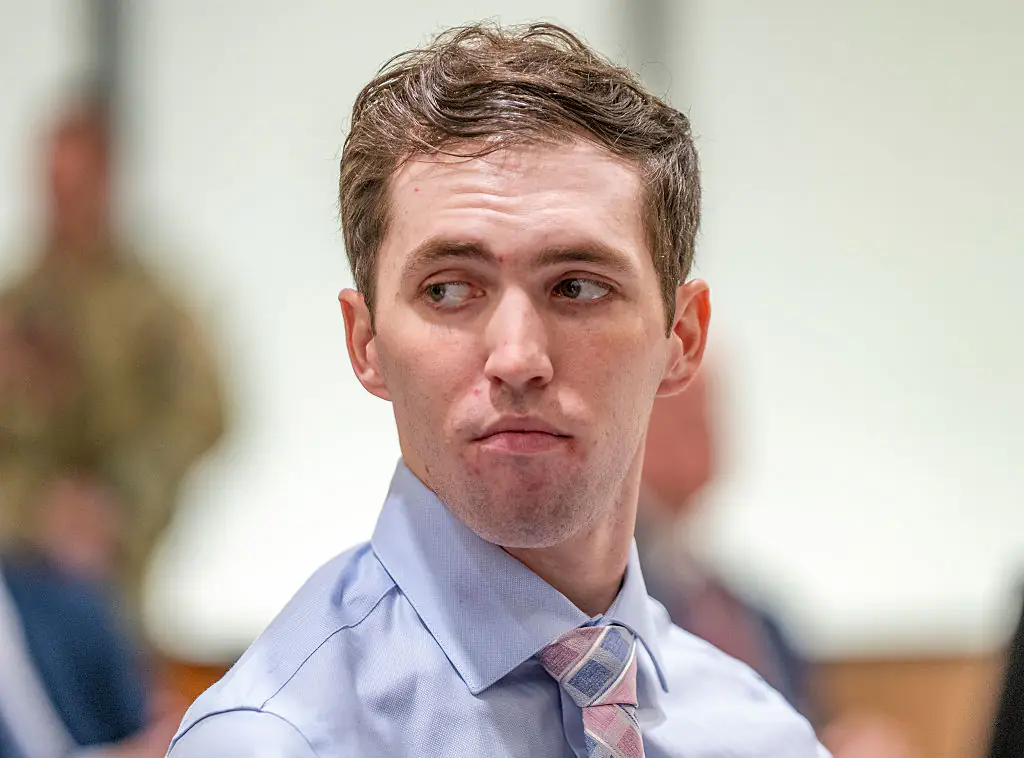
Robinson, 22, appeared relaxed as he sat between attorneys in a Provo, Utah courtroom wearing a blue shirt and tie, having been granted permission to ditch his jail-issued jumpsuit. Cameras caught him smiling and leaning in to whisper with his legal team, drawing backlash from supporters of the late Turning Point USA co-founder.
Just feet away, his family - including his father, mother, and brother - were seated behind him in the gallery. But tensions exploded when Judge Tony Graf ordered the room cleared for a private portion of the hearing. After a plea from Robinson’s legal team to allow his family to stay was denied, his mother was seen sobbing in the hallway, per Reuters.
Judge Graf, noting the case had drawn “extraordinary” public attention, took steps to protect Robinson’s presumption of innocence by limiting camera access. While he allowed TV crews to remain, he banned any images showing Robinson’s shackles and ordered cameras moved to the back of the courtroom after defense attorneys said earlier footage had shown inappropriate angles and caught private moments between lawyers.
Tyler Robinson in his first in-person court appearance Thursday. Credit: Pool / Getty
Robinson’s team and the Utah County Sheriff’s Office both supported restrictions, arguing that extensive media coverage could impact jury selection and raise security issues. Media access in Utah courtrooms is already tightly controlled, typically allowing only a single videographer and photographer to capture proceedings and share with other outlets.
On the other side, Erika Kirk - the widow of Charlie Kirk - has pushed for full transparency. She believes the country has a right to witness the trial of the man accused of murdering her husband during a public event at Utah Valley University.
Robinson is charged with aggravated murder, obstruction of justice, felony discharge of a firearm causing serious injury, two counts of witness tampering, and committing a violent offense in the presence of a child. He has not yet entered a plea but could face the death penalty by firing squad under Utah law if convicted, ABC News reports.
Investigators allege Robinson opened fire on Kirk during a speaking event on September 10, hitting the 31-year-old conservative figure in the neck in front of a packed crowd of students. Authorities say Robinson was arrested 33 hours later after his father recognized him in circulated images and turned him in.
Charlie Kirk was killed at a university event. Credit: Joe Raedle / Getty
Police later recovered bullet casings at the scene engraved with disturbing messages referencing video game culture and antifascist slogans, including “Hey fascist! Catch!” and “Bella ciao, bella ciao, bella ciao.” Officials also cited text messages in which Robinson allegedly admitted the killing and detailed where the murder weapon had been hidden.
The judge’s effort to prevent further leaks comes after digitally manipulated images falsely portraying Robinson crying in court or having emotional outbursts went viral online. In reality, he remained calm and even jovial during the hearing, a detail that has only intensified scrutiny around the proceedings.
On September 10, Charlie Kirk was fatally shot during a speaking event at Utah Valley University.
The killing, which has shocked many, prompted a swift investigation and a manhunt that ultimately led to the arrest of 22-year-old Tyler Robinson.
Robinson is now facing a series of grave charges, including aggravated murder, which could result in the death penalty if convicted.
While law enforcement was still investigating, CCTV footage showed a man on the roof of a nearby building, leading to a manhunt that ended with Robinson’s capture just 33 hours later.
Authorities soon revealed disturbing details about Robinson's views on Kirk. According to messages allegedly sent by Robinson, he had planned the shooting for some time, openly voicing his disdain for Kirk's political stance. One message sent to a roommate reportedly said: “I have the opportunity to take out Charlie Kirk and I'm going to take it."
The situation took another turn when, during a court appearance, Tyler Robinson was informed that prosecutors intended to seek the death penalty.
Video footage from the Utah State Courts captured Robinson’s reaction. When hearing the news, Robinson briefly appeared shocked, but his emotions quickly seemed to neutralize.
His reaction was analyzed by body language expert Dr. G, who observed that Robinson’s nodding might indicate a sense of pride regarding Kirk’s death.
Tyler Robinson’s body language has become a subject of analysis following his court appearance. Dr. G, a popular YouTube channel, examined footage of Robinson in court and pointed out a few interesting details.
During the hearing, Robinson remained unusually still, but when the death penalty was mentioned, he exhibited signs of anxiety, such as swallowing and slight nodding.
Dr. G interpreted these gestures as an indication that Robinson may have been trying to suppress his nervousness about the severe charges against him.
This behavior could reflect the intense pressure Robinson faces, knowing that his fate now lies in the hands of the judicial system, with the death penalty looming as a possible outcome.
According to Dr. G, “Robinson is doing his best to suppress any indications that he was anxious about the charges and potential punishment,” a sign that the gravity of the situation is weighing heavily on him.
Tyler Robinson now faces multiple charges, each of which underscores the brutal and politically motivated nature of the crime. The charges include:
Utah County Attorney Jeff Gray expressed his determination to bring justice not only for Charlie Kirk but for the broader community impacted by the senseless violence.
The man accused of assassinating conservative activist Charlie Kirk will be allowed to wear civilian clothing during his upcoming murder trial, a Utah judge ruled Monday.
Tyler Robinson, 22, is charged with fatally shooting Kirk at Utah Valley University on September 10. During Monday’s virtual hearing, Robinson, who did not appear on camera, confirmed to the court that he could hear the proceedings, responding simply: “Yes, I can.”
District Court Judge Tony F. Grant Jr. granted Robinson’s request to dress in civilian attire, highlight the defendant’s right to the presumption of innocence. “The court recognizes that Mr. Robinson has no criminal history and no record of misconduct while in custody,” the judge said. “However, the charges he faces are extraordinarily serious, carrying potential penalties of life imprisonment or death.”
Although Robinson may wear non-prison clothing, the judge ruled that he must still remain handcuffed and shackled in court for security reasons, BBC News reports.
Tyler Robinson. Credit: Utah State Courts / Getty Images.
Judge Grant also barred media outlets from filming Robinson entering or exiting the courtroom and prohibited cameras from showing his restraints.
The decision mirrors rulings in other recent high-profile murder trials, including those involving Bryan Kohberger, who pleaded guilty to murdering four University of Idaho students, and Luigi Mangione, accused of assassinating UnitedHealthcare CEO Brian Thompson.
In both cases, defendants were allowed to wear civilian clothes; though Mangione, like Robinson, was required to remain shackled during proceedings.
Robinson’s attorneys argued that appearing in jail-issued garb could unfairly prejudice jurors, given the intense media attention surrounding the case.
“With each development generating thousands of articles and comments online, the likelihood of potential jurors seeing and drawing conclusions regarding Mr. Robinson’s guilt will only increase,” the defense wrote in a motion, via the Daily Mail.
They added that the 22-year-old has been “polite and cooperative” in custody, with no disciplinary incidents since his arrest.
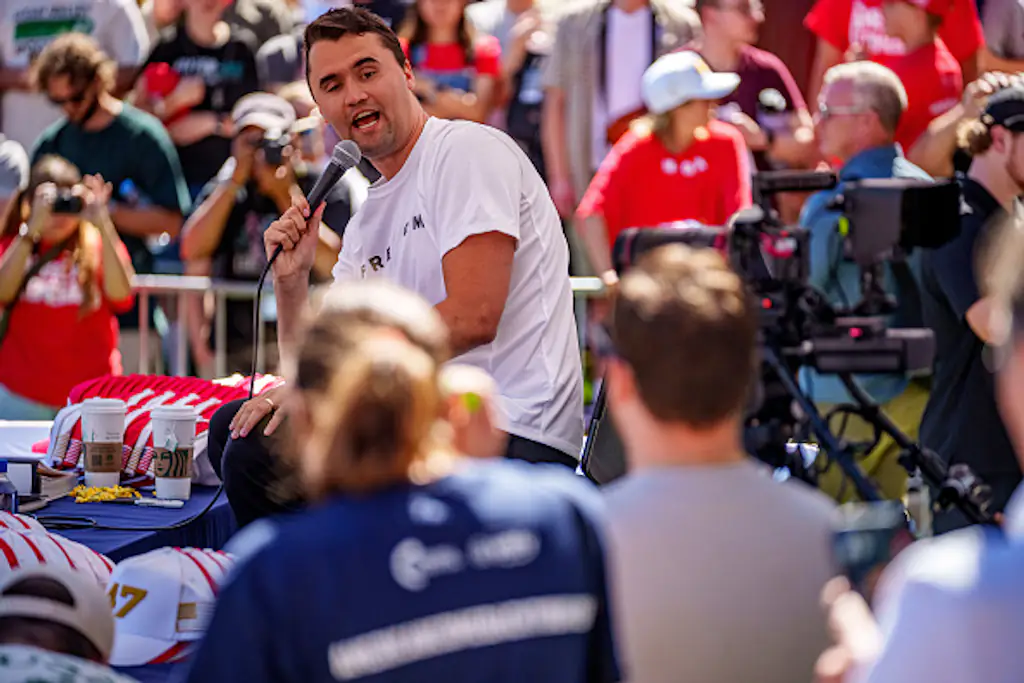
Kirk pictured at a Utah university rally, minutes before he was fatally shot. Credit: Trent Nelson / The Salt Lake Tribune / Getty Images.
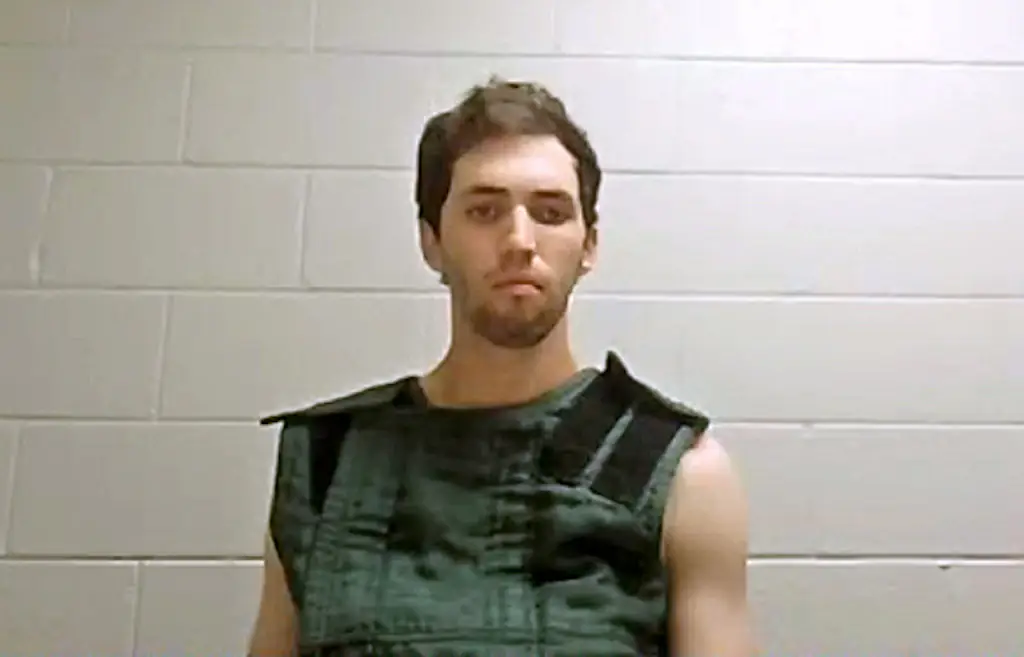
Robinson remains on suicide watch at the Utah County Jail, where he is constantly monitored and required to wear an anti-suicide smock, a thick, tear-resistant garment designed to prevent self-harm.
Such smocks are made from stiff, quilted material that cannot be rolled or tied into a noose, and inmates housed in suicide-watch cells are typically surrounded by padded walls and floors.
Authorities say Robinson turned himself in at a sheriff’s office in southwest Utah, more than three hours from the scene of the shooting. Prosecutors claim they have DNA evidence and incriminating text messages linking Robinson to the killing. According to Utah County Attorney Jeff Gray, a note found by investigators suggested that Robinson viewed the attack as an act of political retribution.
“He wrote to his partner that he had the opportunity to kill one of the nation’s leading conservative voices, ‘and I’m going to take it,’” Gray told reporters, as per Global News.
The alleged assassination of Kirk (a prominent Trump ally and founder of Turning Point USA) has sent shockwaves through the political landscape.
Tyler Robinson has been charged with aggravated murder and could face the death penalty if found guilty of killing Charlie Kirk.
The 22-year-old, who has no history of criminality, was arrested in connection with the shooting of the Turning Point USA founder at Utah Valley University last Wednesday.
Now, the list of charges against him has been announced.
Tyler Robinson could face the death penalty if found guilty
Kirk’s murder, described by Utah County attorney Jeff Gray as an ‘American tragedy’, took place during one of the 31-year-old’s Turning Point events on the campus in Orem.
Gray said he was ‘charged with bringing justice to those who are harmed’ and ‘charged with bringing justice for Charlie Kirk’.
He then went on to detail the charges.
The first, aggravated murder, is the most serious and could carry the death penalty if Robinson is convicted.
The 22-year-old was also charged with felony discharge of a firearm causing serious bodily injury, with aggravating factors including the fact that it is believed to have been a political murder, and the presence of Kirk's children.
Robinson was also charged with obstruction of justice (two counts) for disposing of a rifle and clothing, as well as two counts of witness tampering involving his roommate, and commission of a violent offence in the presence of a child.
Gray also said that it was his ‘independent’ decision to pursue the death penalty against Robinson.
“The defendant will continue to be held without bail in a Utah county jail”, he concluded.