ADVERT
US3 min(s) read
Published 09:17 01 Aug 2026 GMT
A warning has been issued over lethal injections, ahead of Christa Gail Pike's execution on September 30, 2026.
It's been over three decades since PIke was sentenced to death after she was found guilty of killing 19-year-old Colleen Slemmer, aged just 18.
Pike is the only female on death row in the US state, and is set to become the first woman executed in Tennessee for over 200 years.
It's said that she had become jealous of her boyfriend at the time, believing that Slemmer was interested in him while they were part of the Knoxville Job Corps program.
She would respond by murdering her classmate, using a cleaver, a box cutter, and a piece of asphalt after luring her to the woods, beating and stabbing her before carving a pentagram into her chest.
Pike is also serving time for the attempted murder of an inmate in 2004.
Now, an expert has highlighted the risks of using lethal injections as a method of death, weeks before Pike is executed.

Pike is set to die by lethal injection, despite her protests, in a method which has been criticized over the years by experts.
Matt Wells, the Deputy Director of Reprieve US, a non-profit organization that fights for justice for marginalized people who are facing human rights abuses, claims that the method isn't clean-cut.
Speaking to UNILAD, Wells explained: "Two months ago, Tony Carruthers was strapped to a gurney for over an hour while prison staff stabbed him with needles more than a dozen times as they failed to establish an IV line."
Due to medics failing to find a vein, his execution had to be halted, with some describing the situation as "barbaric," with the inmate forced to endure intense pain for over an hour.
Wells claimed that this wasn't the only occasion, adding: "Our research showed that more than a quarter of botched lethal injections in the modern era lasted over an hour."
He said that Tennessee going ahead with the method after torturing Carruthers was "beyond belief," further adding: "There is a high risk that Christa Pike could suffer a prolonged and agonizing death."
He also claimed that US states go out of their way to "hide information about executions," to trick the American public into thinking that the lethal injection is humane.
Wells stated: "The reality is there is no such thing."
Her attorney, Stephen Ferrell, also raised concerns about Pike's blood condition, thrombocytopenia, which can lead to excessive bleeding, while pointing out her small veins.
"The difficulty establishing IV lines is a known complication that has caused prolonged and botched executions for years," Ferrell pointed out, while also making a special request to the state.
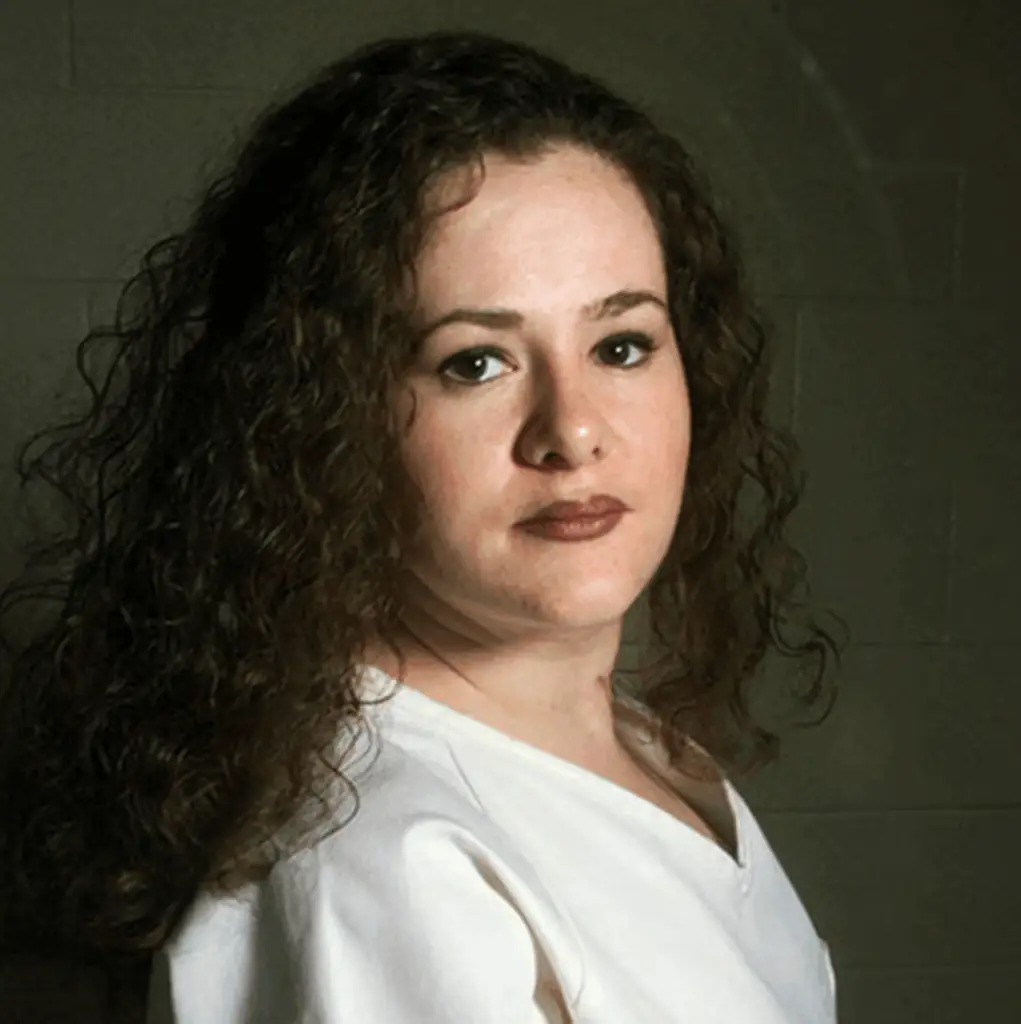
Shelby County Senior Judge Mark Ward has been appointed as special master by the Tennessee Supreme Court ahead of Pike's execution.
Ward's job will be to assess whether the execution is constitutional, as Pike's legal team has spoken at length about the 50-year-old's physical and mental health.
He will also decide whether Pike will undergo too much pain during execution, going through options alongside the inmate's Buddhist advisor with her.
But with Ward being appointed, the case has become the first of its kind in Tennessee to have a special master involved.

us5 min(s) read
us3 min(s) read
us3 min(s) read
us3 min(s) read
Published 11:42 22 Apr 2026 GMT
Christa Gail Pike is set to become the first woman to be executed in the US in over two centuries.
The felon is the only woman on death row in Tennessee, after being convicted of a murder so gruesome that it still sends chills down the spines of those familiar with the case.
Pike was sentenced to death after she was found guilty of killing 19-year-old Colleen Slemmer on January 12, 1995, when she was just 18.
The horrific murder took place in a wooded area near the University of Tennessee’s agricultural campus, as the teenagers were part of the Knoxville Job Corps program.
Pike had become jealous of her boyfriend at the time, 17-year-old Tadaryl Shipp, as she thought Slemmer was interested in him.
As a result, she would murder her classmate with a box cutter, a cleaver, and a piece of asphalt in an extremely disturbing crime.
Despite facing death in less than six months, Pike filed a lawsuit in the Davidson County Chancery Court, challenging the state's lethal injection protocol.
Her legal team has claimed that the method could cause excessive pain and violate her constitutional rights, while also arguing that her medical condition, thrombocytosis (a blood-clotting condition), could lead to complications.
They also add that her Buddhist beliefs prevent her from choosing electrocution as an alternative, though she pushed for this method back in 2002 before changing her mind.
Tennessee's new execution protocol relies on pentobarbital, which induces respiratory and cardiac arrest, instead of relying on the former three-drug cocktail.
Pike has argued that the state's limitation on clergy, which excludes her Buddhist spiritual advisor, limits her “sincerely held religious belief of Buddhism,” and violates her First Amendment rights as it “burdens” her right to free exercise of religion.
The counsel for Pike explained the three reasons behind her lawsuit to the Nashville Banner, saying: “First, given Christa’s unique medical conditions, we have serious reservations about the State of Tennessee’s ability to prevent a torturous execution.
"Second, the State’s protocol fails to make any contingency plans for when things go wrong.
"Finally, requiring a prisoner to select electrocution to avoid being isolated in the final weeks of their life is particularly cruel and arbitrary — especially for a prisoner like Christa, who was forced to live in solitary confinement for over 25 years and suffers from severe mental illness.”
Pike is set to be executed on September 30, 2026, becoming the only person executed in the state for a crime committed at age 18, 19, or 20 in the modern death penalty era.
The suit also details that Pike suffers from several conditions, including: "Bipolar disorder, PTSD, hyperlipidemia, and 'small veins that make insertion of a needle difficult'."
They claim that due to her conditions, "there is a substantial risk that [Pike] will experience unnecessary superadded pain and suffering, terror, and disgrace."
Court records reveal that Pike killed Slemmer after suspecting that she had developed feelings for her boyfriend, using a box cutter to cut her, before striking the teen with a cleaver and crushing her skull with a piece of asphalt.
She wasn't alone, as Pike was joined by her boyfriend, Shipp, and her friend, 18-year-old Shadolla Peterson, in carrying out the evil act.
A pentagram was also carved into Slemmer's chest, as Pike and boyfriend Shipp had developed an interest in the occult and devil worship.
Pike even kept a piece of Slemmer's skull, showing it off around school before the three were arrested in just 36 hours.
According to CBS News, a groundskeeper found Slemmer's body and said that she was "so badly beaten that he had first mistaken [her body] for the corpse of an animal."
Pike admitted that she continued to be violent even when Slemmer "begged" her to stop.
A University of Tennessee police officer testified that Pike returned to the scene after the body was found and "seemed amused", noting that "she was giggling," according to a report from USA Today.
Despite their involvement in the crime, Shipp was handed a life sentence, while Peterson was given probation for testifying against Pike and Shipp.
Pike was the only one who was capitally charged, with her legal team continuing to argue that her age at the time, history of abuse, and mental health conditions should exempt her from execution.
"Christa’s childhood was fraught with years of physical and sexual abuse and neglect," her defense team said.
"With time and treatment, she has become a thoughtful woman with deep remorse for her crime."
Pike even apologised in a letter, saying: "I was a mentally ill 18 yr. old kid. It took me numerous years to even realize the gravity of what I'd done. Even more to accept how many lives I effected [sic].
"I took the life of someone's child, sister, friend. It sickens me now to think that someone as loving and compassionate as myself had the ability to commit such a crime."
Her team claims that if she were tried today, she would not be sentenced to death.
Published 12:57 05 Jan 2026 GMT
Christa Gail Pike has spent nearly 30 years behind bars since being sent to death row in Tennessee for the murder of her classmate.
Pike was just 20 when a jury convicted her of torturing and killing Colleen Slemmer in a remote woodland near Knoxville in 1995.
Now, Tennessee has set Pike’s execution date for September 30, 2026, making her the first woman to be executed in the state in over 200 years and only the 19th woman executed in the United States since 1976.
The brutal nature of the crime shocked the community. Slemmer, then 19, was beaten, stabbed, bludgeoned and had a pentagram carved into her chest.
A groundskeeper first thought the remains were those of an animal. Pike’s case has drawn fresh attention because of her arguments against execution decades after the crime.
Pike has spoken out about her sentence and accepts that she “deserves” to be in prison for life.
“I know I don't deserve to be out walking around with everybody else in normal society. I did something horrible that is unacceptable and I realize that,” she said from her prison cell in a WEtv documentary. However Pike also says she does not “deserve” to die for what she calls “the action of three individuals.” She has repeated, “I'm only one person.”
Her comments highlight that others were involved in the crime. Pike’s then-boyfriend, Tadaryl Shipp, was convicted of first-degree murder for his role but avoided the death penalty because he was 17 at the time.
He received a life sentence and will be eligible for parole in November. Another accomplice, Shadolla Peterson, claimed she only watched and later testified against Pike. Peterson was sentenced to probation.
Attorneys for Pike have argued that her execution date should be delayed indefinitely and that she should instead serve life in prison without the possibility of parole. They contend that if Pike were tried now, a jury would likely not support the death penalty for someone who was 18 at the time of the offence.
Her legal team has also raised Pike’s troubled childhood, stating her early years included “years of physical and sexual abuse and neglect,” and that this background was not heard by the court in 1996.
The debate over Pike’s fate raises complex questions about sentencing for young offenders and how past cases are viewed through modern legal standards.
Published 16:24 06 Oct 2025 GMT
Convicted killer Christa Gail Pike is set to make U.S. history as the first woman to be executed in 200 years.
The 49-year-old, who brutally murdered a fellow student in 1995, has been scheduled for execution in Tennessee.
The horrific case that landed Pike on death row at just 20 years old is resurfacing as legal teams fight to spare her life, and the victim’s family pushes for justice to finally be served.
Pike was just 18 when she lured Colleen Slemmer, 19, into the woods near the University of Tennessee in Knoxville, convinced the young woman was trying to steal her boyfriend.
On January 12, 1995, Pike, along with her boyfriend Tadaryl Shipp and friend Shadolla Peterson, carried out what would become one of the most gruesome murders in modern Tennessee history.
Armed with a box cutter and a piece of asphalt, Pike cut, beat, and bludgeoned Slemmer, even carving a pentagram into her chest. Court records reveal the attack was so savage that a groundskeeper initially thought Slemmer’s body belonged to an animal.
But the horror didn’t end there. Pike reportedly kept a piece of Slemmer’s skull as a trophy and showed it off to others on campus.
“I took the life of someone's child, sister, friend. It sickens me now to think that someone as loving and compassionate as myself had the ability to commit such a crime,” Pike later wrote in a letter to The Tennessean.
“Think back to the worst mistake you made as a reckless teenager. Well, mine happened to be huge, unforgettable, and ruined countless lives…”
In a prison interview for a WEtv documentary, Pike acknowledged her guilt but pleaded for life instead of death.
“I know I don't deserve to be out walking around with everybody else in normal society. I did something horrible that is unacceptable and I realize that,” she said.
“I'm only one person.”
She added that while she accepts life behind bars, she doesn’t believe she should die for what she called “the action of three individuals.”
After nearly 30 years behind bars, Pike’s execution date has been set for September 30, 2026, at the Riverbend Maximum Security Institution in Nashville.
The Tennessee Supreme Court’s decision makes her the 19th woman to be executed in the U.S. since 1976 and the first in Tennessee since the early 1800s.
Nationwide, there are only 48 women on death row, compared to nearly 2,100 men.
By August 28, 2026, the state must inform Pike of the execution method.
Pike’s defense team continues to push for clemency, arguing that today’s juries would be far less likely to sentence an 18-year-old to death, especially one with a documented history of mental illness and abuse.
“Christa’s childhood was fraught with years of physical and sexual abuse and neglect,” her attorneys said.
“With time and treatment for bipolar and post-traumatic stress disorders, which were not diagnosed until years later, Christa has become a thoughtful woman with deep remorse for her crime.”
They also emphasize that these details were never presented during her original 1996 sentencing.
Published 10:21 22 Jan 2026 GMT
The only woman on death row in the state of Tennessee, Christa Gail Pike, is currently suing the state over the method of her upcoming execution.
Pike, convicted of a 1995 murder, alleges that the lethal injection violates her rights and religious beliefs.
In 1996, Pike was among three people convicted of the murder of Colleen Slemmer in an incident that became known locally as the ‘Jobs Corps Murder’.
Pike and her boyfriend Tiddell Shipp, as well as friend Shadolla Peterson, faced prosecution together.
Pike was convicted of smashing Slemmer’s head with a block of asphalt and accused of keeping a piece of the dead girl’s skull as a souvenir of the murder.
She was sentenced to death for her crimes, but her sentence has yet to be carried out and she remains on death row, from where she has now brought a lawsuit against the State of Tennessee.
The date for her execution was recently set for September 30.
She would become the first woman executed in Tennessee for over 200 years.
Pike's suit, filed on January 8, is against Attorney General Jonathan Skrmetti, the Commissioner of the Tennessee Department of Correction Frank Strada, and the wardens of Riverbend Maximum Security Prison and Debra K. Johnson Rehabilitation Center.
Pike alleges that the method of execution used in the state, lethal injection, can bring on what is known as a flash pulmonary edema, which can cause a drowning sensation.
She argues that because of a ‘severe medical condition’ using this method will ‘very likely produce an even more severe pattern of bloody froth in the lungs.’
The suit alleges: “This is death by drowning on one’s own blood.”
The suit also claims that being unresponsive is not the same as being unconscious, and that the injection can cause extreme pain, as well as terror.
Pike’s suit claims that this method is ‘very likely to result in unnecessary and superadded pain and suffering, terror, and disgrace in violation of the United States Constitution and the Tennessee Constitution.’
She claims to have ‘unique medical conditions’ and the lack of a contingency plan for botched execution make her proposed killing unconstitutional.
The legal documents also claim that ‘any alternative method pleading requirement violates the Due Process Clause of the Fourteenth Amendment’ as it ‘violates her rights to conscience and/or to the free exercise of religion under the First Amendment.’
This is because Pike is a practising Buddhist and - the suit claims - an ‘alternative method violates her sincerely held religious beliefs against participating in any process leading to her own death.’
In the lawsuit, she asks for the method of execution to be declared unconstitutional and a permanent injunction put in place on the use of lethal injection.
She also asks for a contingency plan in the result of an execution going wrong, as well as for life-saving medical procedures to be brought in if death has not occurred after five minutes.
She argues against a 14 day isolation period, as well as for a temporary injuction being put in place to stop her execution until the resolution of two other cases from 2018 and 2019 that she has asked for equal protection of the laws and orders over.
As for Slemmer’s family, they continue to be outspoken for justice.
Her mother May Martinez has frequently told reporters that she wants to see justice for her daughter, and her hopes that no parent has to endure what she has endured over the years.
If executed on September 30th, Pike would become the first woman killed by the state of Tennessee in over 200 years.
Published 09:52 24 Dec 2025 GMT
Tennessee is preparing to carry out its first execution of a woman in more than two centuries after the state Supreme Court scheduled the execution of Christa Gail Pike, the only woman currently on Tennessee’s death row.
According to court filings dated September 30, Pike, now 49, is set to be executed on September 30, 2026.
If the sentence is carried out, she would become the first woman executed in Tennessee since 1820 and just the fourth woman executed by the state in its history.
Records from the Death Penalty Information Center show that the last woman executed in Tennessee was Martin Eve, who was hanged in 1820 for her role as an accessory to murder.
Pike was convicted for the killing of 19-year-old Colleen Slemmer in January 1995, a crime that remains one of the most notorious in the state’s history.
At the time, Pike was 18 and enrolled in the Knoxville Job Corps, a federal job training program.
Prosecutors said Pike became consumed by jealousy after beginning a relationship with fellow student Tadaryl Shipp, believing Slemmer was romantically interested in him.
On January 12, 1995, Pike lured Slemmer to a wooded area near the University of Tennessee’s agricultural campus.
Court records detail an exceptionally violent attack in which Pike used a box cutter and a meat cleaver, carved a pentagram into Slemmer’s body, and ultimately crushed her skull with a piece of asphalt.
Prosecutors also said Pike later kept part of the victim’s skull as a trophy.
In 1996, Pike was convicted of first-degree murder and sentenced to death.
Shipp received a life sentence with the possibility of parole, while a third accomplice testified against Pike and was granted probation.
Pike’s violent behavior continued behind bars.
In 2004, she was convicted of attempting to strangle another inmate, resulting in an additional 25-year sentence added to her existing punishment, according to the Nashville Banner.
For nearly three decades, Pike’s legal team has pursued appeals, arguing that her execution would be unconstitutional due to her mental health history and the abuse she suffered as a child.
Her attorneys say she endured years of physical and sexual abuse and neglect and was not properly diagnosed with bipolar disorder and post-traumatic stress disorder until years after her conviction.
In a statement to USA TODAY, Pike’s legal team said that with treatment and time, she has shown remorse and personal growth, stating: "Christa’s childhood was fraught with years of physical and sexual abuse and neglect … With time and treatment for bipolar and post-traumatic stress disorders, which were not diagnosed until years later, Christa has become a thoughtful woman with deep remorse for her crime."
Tennessee resumed executions after a multi-year pause to review lethal injection procedures, carrying out its most recent execution in 2025.
Pike’s scheduled execution has already reignited debate, with supporters emphasizing the brutality of the crime and opponents calling for clemency based on her mental health and traumatic upbringing.
Unless her remaining appeals are successful, Pike is set to become a grim historical milestone for Tennessee more than 200 years after the state last executed a woman.