


US4 min(s) read
Psychologists have explained why Trump uses this eight-word catchphrase at the end of his messages
.jpg_I4Ebof?tr=cr-0.338.2730.3068,f-webp,q-70,w-100)
If you’ve read one of Donald Trump’s online messages recently, you’ve probably heard his famous catchphrases, but do you know where they come from?
Luckily, some experts have given their opinion on why they think he ends every message with ‘thank you for your attention to this matter’.
Donald Trump has a number of famous catchphrases
The POTUS is not backward in coming forward when it comes to his opinion.
In fact, some people have even questioned his health as a result of his often unusual statements.
Whether it is lashing out at female journalists or cracking ill-advised jokes around foreign dignitaries, Trump will tell you exactly what he is thinking, often exactly as the thought pops into his head.
To his supporters, this is a sign of his honesty and transparency, but to others, it is unstatesmanlike and - at times - straight up crass.
Even before he was president there were famous outbursts, and he’s always had a catchphrase since his days on The Apprentice, but now instead of ending his messages with ‘you’re fired’ he tends to sign off important statements with ‘thank you for your attention to this matter’ - but why?
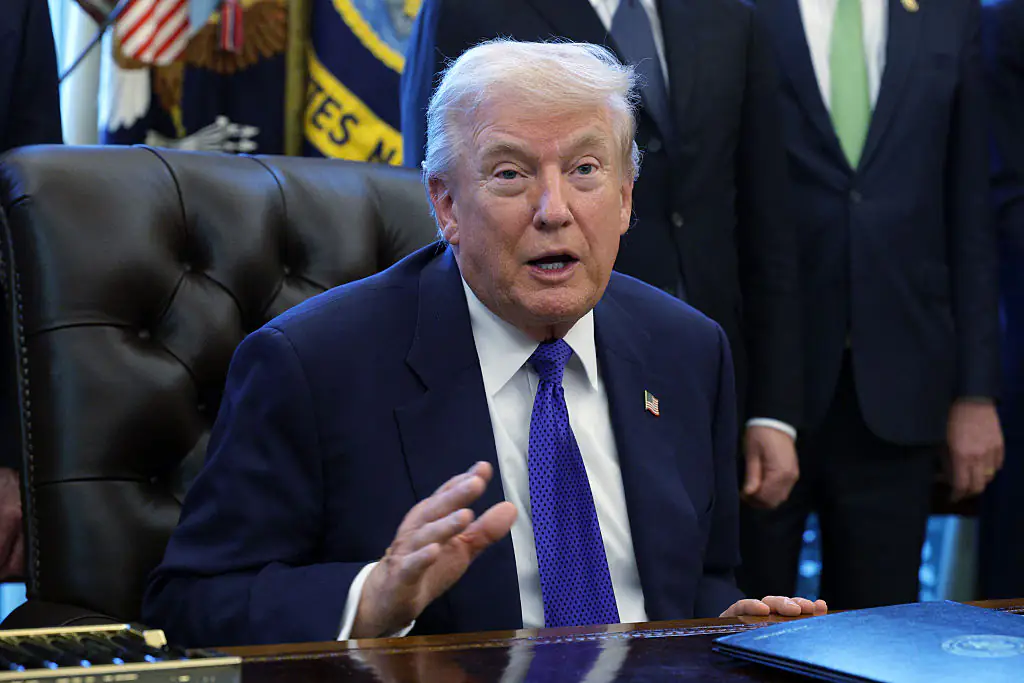
Experts think they have figured out Donald Trump’s intent
To start with, this sort of post is very different to the sort of stuff that Trump usually posts, which can be scattergun, often long paragraphs containing many capital letters, sometimes entirely capitals.
Claire Robertson, a psychologist in political polarization and extremism at Colby College in Maine said that Trump employs ‘the kind of moral-emotional language that we know attracts attention,’ using words like ‘hoax’ and ‘corrupt’.
Once that language is involved, the post tends to spread like wildfire among his power base as they share it and the moral outrage increases.
However, she noted: “But, ‘thank you for your attention to this matter’ is not negative or moral, so it’s especially interesting,
“It doesn’t play super nicely with some of the established findings. It’s just weirdly formal.”
So, why is he doing it?
It’s all to do with - the experts think - control, authority, and power.
It’s formal, it carries an inherent message of control - the person saying it can be believed to have acted decisively.
Holistic psychotherapist Shennika Moore-Clarke told HuffPost: “From a clinical standpoint, the repeated use of the phrase ‘thank you for your attention to this matter’ may read as more than formality. It carries undertones of control and authority.”
Robertson added: “We know Trump is very conscious of wanting to be in control of a situation.”
A glance at his handshakes can tell us that.
“It’s assuming that everyone is giving this attention,” Robertson explained.
Moore-Clarke further added: “It’s less about gratitude and more about command,
“It’s a way of asserting control, implying that readers should comply or take note.”
“It ... comes off as ‘this is something important that you need to pay attention to,’ so it [kind of] draws you in.
“I get [the] sense that it’s strategic and it makes his followers trust him more as a source of power, even if what he had to say is not true or harmful to certain groups.”
.jpg_70qiuU?tr=cr-0.0.1024.683,f-webp,q-70,w-1024)
‘Micro-cultures’ are important language indicators
Language carries with it certain cues, and certain ways of speaking or writing can become familiar, creating these ‘micro-cultures’ where meaning is inferred rather than direct.
So, you might call your favorite bar ‘the pub’ rather than the actual name - everyone knows what you mean, though.
As for Trump’s choice of language, ‘thank you for your attention to this matter’ indicates that this is different to his usual schtick - this is important, and you must pay attention to the matter.
Whether or not he is doing this on purpose or not is up for debate, we all do stuff like this all the time.
However, it’s not out of the question that this is a deliberate tactic, employed to get people’s attention, assert control, and prove that you are in charge of the situation.
Thank you for your attention to this matter.