ADVERT
World3 min(s) read
The disappearance of an elderly lady with Alzheimer's had plagued a quiet neighborhood for two years until an unlikely discovery was made online.
Paulette Landrieux, 83, from Andenne, Belgium, who was cared for by her husband, mysteriously went missing on November 2, 2020, after she was left unattended watching television.
In a video investigating how the woman’s disappearance went unsolved for so long, true crime content creator MrBallen said: "Paulette needed help remembering to eat or to take her medications on time.
“Sometimes she would just wander off without telling Marcel, and he would have to go and corral her and bring her back home.”
In spite of an extensive search operation that involved a helicopter, Landrieux was not found and weeks quickly turned into months without the octogenarian being located.
Tragically, her husband Marcel began to believe that he would die without ever knowing what happened to his wife.
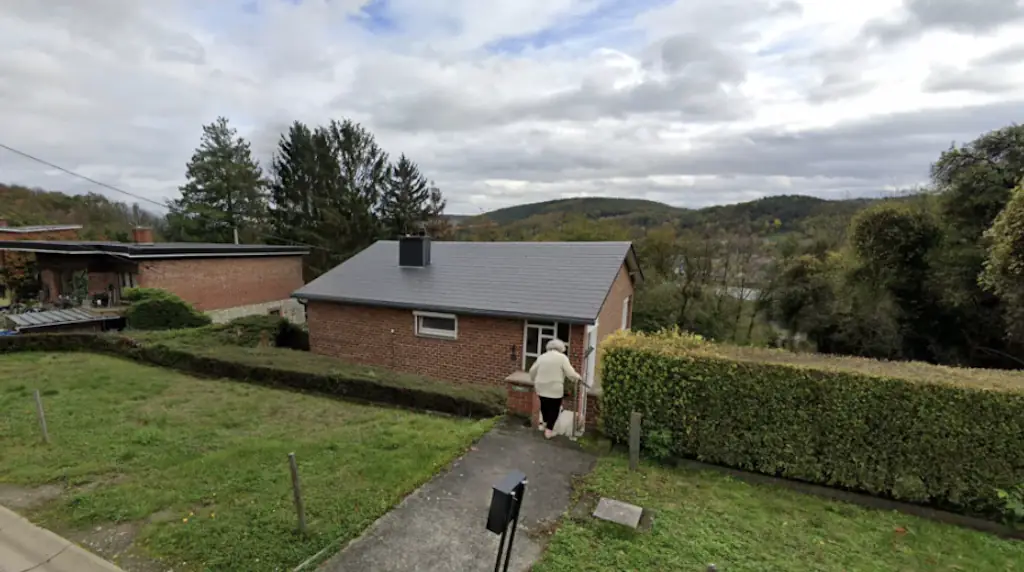
However, two years later a chilling discovery was made by a neighbor who was baffled by the disappearance. While browsing the local area, they found a picture of Landrieux on Google Maps.
She was spotted walking away from her house while Marcel could be seen in the background hanging up laundry on a washing line.
The knowledgeable neighbor quickly alerted the authorities, which prompted investigators to reconstruct Landrieux’s route.
According to MrBallen: “Across the street was a steep hill that led down to a thick bramble bush.”
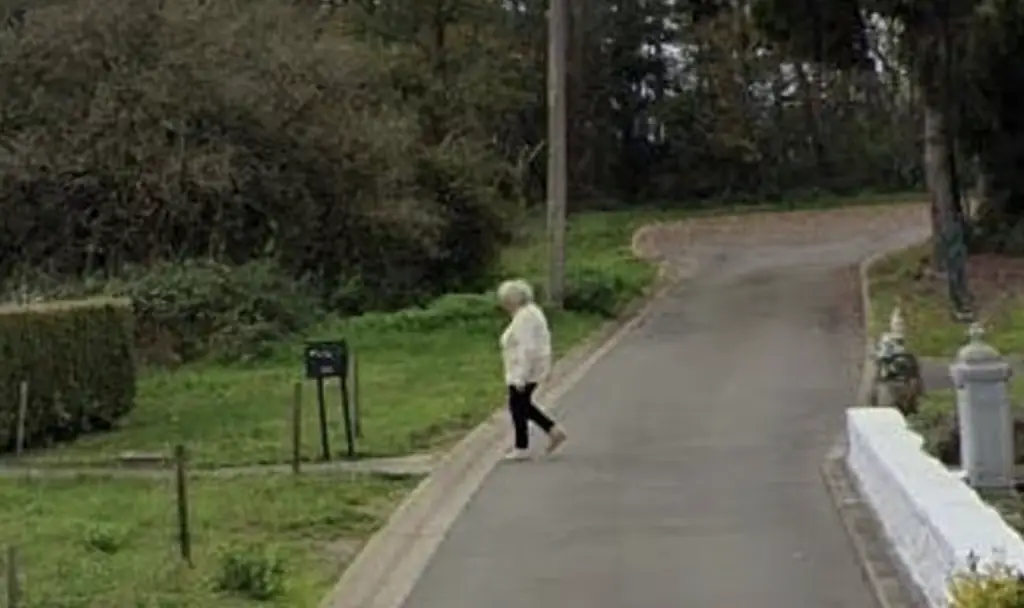
Tragically, Landrieux’s body was found in that bush shortly after the operation began.
“When that huge search for her was going on, very likely she was just trapped down there,” the podcaster explained.
“She didn’t understand what was going on, couldn’t necessarily yell up to communicate with anybody, and so she stayed down there and died.”
In a bizarre turn of events, Landrieux’s tragic fate was discovered not through forensic science or the surfacing of a previously private witness, but an eagle-eyed neighbor browsing a digital map.
The heartbreaking story proves that sometimes even the tiniest details need to be trawled through to uncover the truth.
One of the most gut-wrenching facts about this case is that she was so close to her heartbroken husband; it was only terrain, circumstance, and a missed digital clue that separated them.
Also, Landrieux serves as a stark reminder about the fragility of life and how hard it can be for someone with Alzheimer's and their loved ones.
us5 min(s) read
Geraldine Largay, 66, was making her way through the popular Appalachian Trail in the Eastern US before going missing.
The tragic incident resulted in the elderly woman sadly passing away.
It is believed that the Tennessee native survived for 26 days in the wild before her death, with her body remaining missing for two years.
'Gerry', as she is known to loved ones, went missing on July 22, 2013, after stepping off the Appalachian Trail to relieve herself, before getting lost between West Virginia and Mount Katahdin, Maine.
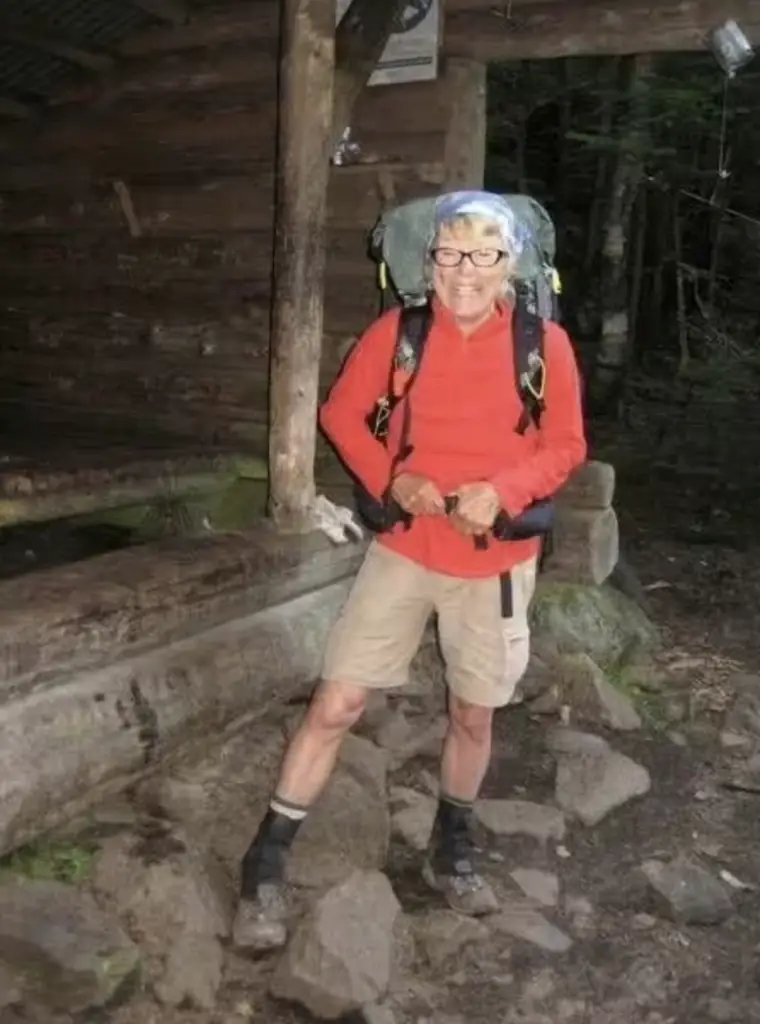
A picture of Gerry taken on the morning of the day she disappeared, eerily, remained as the most substantial clue.
The former air force nurse was missing for over two years until authorities discovered her remains in the wild.
Gerry was discovered by Lieutenant Kevin Adam, a forester employed by the US Navy, on October 16, 2015.
It came after at least three K9 units came within 100 yards of her campsite, though they failed to find the missing woman or her body.
Reports from the Boston Globe, which included a 1,500-page study into Gerry's disappearance and death, included statements from Lieutenant Adam, admitting he found a "possible body" in October 2015.
He recalled thinking: "The possibilities were: it was a human body; it was animal bones, or if it was a human body, was it Gerry Largay?"
Tragically, Gerry's husband, George Largay, was not far away on the morning she vanished, as he used the Route 27 Crossing, which was approximately a 22-mile trek from the shelter where Gerry was last seen.
Documents revealed that she had tried several times to get in touch with George after becoming lost.
The first of these messages were typed at about 11AM on the day she went missing, and it read: "In somm trouble. Got off trail to go to br. Now lost. Can u call AMC to c if a trail maintainer can help me. Somewhere north of woods road. XOX."
However, she did not have a great cellular signal, so the text message never reached her husband.
Sadly, over the next 90 minutes, she would text her husband another 10 times, asking for help, before deciding to settle down for the night.
The next day, she sent another undelivered text at 4:18PM, reading: "Lost since yesterday. Off trail 3 or 4 miles. Call police for what to do pls. XOX."
Her remains would be discovered at her makeshift campsite, along with her notebook, which was covered in moss and titled "George Please Read XOXO".
The notebook detailed that she had spent two days wandering aimlessly after taking a wrong turn, and wardens were able to paint a picture of Gerry's final days thanks to her journal entries and unsent texts, according to the Daily Record.
A particular journal entry was one of Gerry's last messages to loved ones, penned on August 6, 2013.
She wrote: "When you find my body, please call my husband George and my daughter Kerry.
"It will be the greatest kindness for them to know that I am dead and where you found me – no matter how many years from now.
"Please find it in your heart to mail the contents of this bag to one of them."
In addition to her body, other items were found at the campsite, including maps, a space blanket, string, a working torch, a blue baseball cap, a rain jacket, dental floss, and a handmade necklace.
George told the Brentwood Home Page in 2013 that hiking the Appalachian Trail was "not on my bucket list," but noted that his wife needed help.
"But she needed to be supported on the hike, because she had limits on what she could carry, so I simply had to say, 'OK, suck it up. What's six months in the grand scheme of things?' So I did it," he said.
Jane Lee, one of Gerry's close friends, completed a chunk of the trail with her before being called away with a personal emergency, and she had told wardens that Gerry struggled to keep pace and wasn't the best with a compass.
The woman's family released an official statement following her death, reading: "After all of the communication and information from everyone involved, including the Medical Examiner's Office, Navy, and the Maine Attorney General's Office, these findings are conclusive in that no foul play was involved and that Gerry simply made a wrong turn shortly after crossing Orbeton Stream.
"We wish to thank all of those who gave their time and prayers while searching for our wife, sister, mother, and grandmother. We especially would like to thank the entire Maine Warden Service for their dedication to this case.
"It became apparent from day one that this was personal to them and they would not rest until Gerry was found.
"Now that we know her death was an accident, we again ask all media for the respect of our privacy as we continue our grieving process with this new chapter of closure."
us2 min(s) read
A toddler in Georgia made local headlines after he inadvertently discovered an elderly woman who had been missing from her home for several days.
Ethan Moore, who is only one-and-a-half, was playing with his mother and blowing bubbles in their Coweta County garden last Friday (August 12), CBS46 reports. As the wind carried some of the bubbles towards their back fence, Ethan and his dogs chased after them.
In doing so, Ethan's mother, Brittany Moore, said that something caught her child's eye. "I went over there and was like, 'What do you see buddy?' and he pointed and said, 'Feet,'" she told the local news station. When she asked her son again, he gave the same answer: "Feet."
Peering into the bushes, Brittney couldn't see anything resembling feet. But, when she bent down to little Ethan's level, she noticed a pair of feet protruding from the shrubbery.
Brittney recalls panicking, as any mom would, before contacting the police: "I didn't know if I needed to go into fight or flight because I had my little boy out here and the other inside."
Upon arrival, first responders were able to identify that the person was 82-year-old Nina Lipscomb, a woman suffering with early-stage Alzheimer's who had been missing for four days, per People. Her discovery had marked the end of a days-long search operation, which included using thermal technology to locate her.
Karen Lipscomb, Nina's daughter, had appealed to the public to help find her mother, telling FOX5 Atlanta: "We're relying on some of the people in the area, who have been extremely kind, to help." Karen also added that her mother was a cooperative and humble person, who would recognize her birthday and name if she was asked.
After first responders located Nina and brought her to the hospital, the Coweta County Sheriff's Office made the announcement that they had located the 82-year-old, who was "conscious and alert," People detailed.
When Nina was eventually released from hospital, she was able to meet the toddler who her family credited with saving her life.
"We pulled out every resource we thought we needed," Karen told CBS46, saying that it ended up being a little boy who came to the rescue. She expressed her gratitude to Ethan and his mom for finding Nina, calling the toddler an "angel."
us4 min(s) read
A missing woman who vanished without a trace more than 60 years ago has been found alive — and the detective who tracked her took just two months to find her.
Audrey Backeberg - who was just 20 years old when she disappeared from her hometown of Reedsburg, Wisconsin, in July 1962 - has been located “alive and well” at the age of 82, authorities announced on May 2, 2025.
The case had haunted her family and investigators for decades. Audrey had told her husband she was heading out to collect a paycheck at a local woolen mill. She never returned.
“I ended up locating an arrest record that I suspected was likely Audrey, so I contacted her family. She has a living sister in the area," Detective Isaac Hanson told WMTV.
Hanson had reopened the case in 2024 as part of a wider cold case review by the Sauk County Sheriff’s Office.
According to Hanson, it was a combination of combing through dusty archives, faded microfilm records, and old police files that began to produce leads.
“[Audrey's sister] had been collecting materials and several other family members had been collecting over the years," Hanson revealed, before adding: “What helped the case immensely was combing through death records and marriage licenses.”
But it wasn’t until Audrey’s sister’s Ancestry.com profile lit up with a connection to a specific address that things took a turn. Putting all the "puzzle pieces" together, he asked the local sheriff’s office to check out the address.
“I had high hopes; there wasn’t a certainty that we would know it was her,” Hanson told WISN.
“So, I called the local sheriff’s department, said ‘Hey, there’s this lady living at this address. Do you guys have somebody, you can just go pop in?’ ... Ten minutes later, she called me, and we talked for 45 minutes.”
That phone call changed everything. After more than six decades of searching, Audrey Backeberg was no longer a missing person - and it took Hanson less than two months to piece everything together.
“[Audrey] sounded happy. Confident in her decision. No regrets,” Hanson told WISN. “I think she just was removed and, you know, moved on from things and kind of did her own thing and lead her life.”
Authorities confirmed that Audrey had left her home of her own accord and was not a victim of crime or foul play. “Detectives were able to determine Backeberg left her home of her own accord,” the sheriff’s office said in a statement. “She decided to leave and had not been a victim of criminal or foul play.”
At the time, her marriage to Ronald Backeberg — who has since died — was reportedly troubled. Then-Sheriff Randy Stammen noted that a criminal complaint had been filed just days before she vanished, including allegations of abuse.
Still, it’s unclear why Audrey never made contact again. “I told Audrey I'd keep it private. She had her reasons for leaving,” Hanson said.
Those reasons remain with her.
Despite taking Hanson less than two months to locate Audrey, the case was anything but simple. Early leads, including one from a 14-year-old babysitter, pointed to Audrey hitchhiking to Madison and then on to Indianapolis. The babysitter said Audrey left the bus stop and vanished.
Years later, that same woman recalled Audrey taking “a bunch of pills, put them in a Coke can and drank it,” and said she may have “hooked up with some construction workers.”
For decades, the truth remained out of reach. Files were digitised or destroyed. “Some of the evidence was on microfilms,” Hanson explained. “Records that weren’t felonies or open criminal investigation — all those records got wiped out.”
But Hanson wasn’t the only one looking. Audrey’s sister had been collecting materials and several other family members had been collecting over the years. It was this collection — combined with modern genealogy tools — that finally cracked the case.
Now, after 62 years of silence, there’s a strange and bittersweet sense of closure — not because of a funeral or a gravestone, but because Audrey was found alive, simply living a different life.
Sauk County Sheriff Chip Meister praised the work of investigators. “Despite the significant challenges that many cold cases present, this resolution underscores both the importance of continued work and the dedication of the Sheriff's Office to providing answers to families and the community.”
It remains unknown whether Audrey plans to reconnect with her family or return to Wisconsin. For now, she’s reportedly content where she is — living quietly, and, in her own words, without regret.