Uncategorised5 min(s) read
health4 min(s) read
A man who was diagnosed with early-onset dementia has revealed a warning sign that happens pretty often.
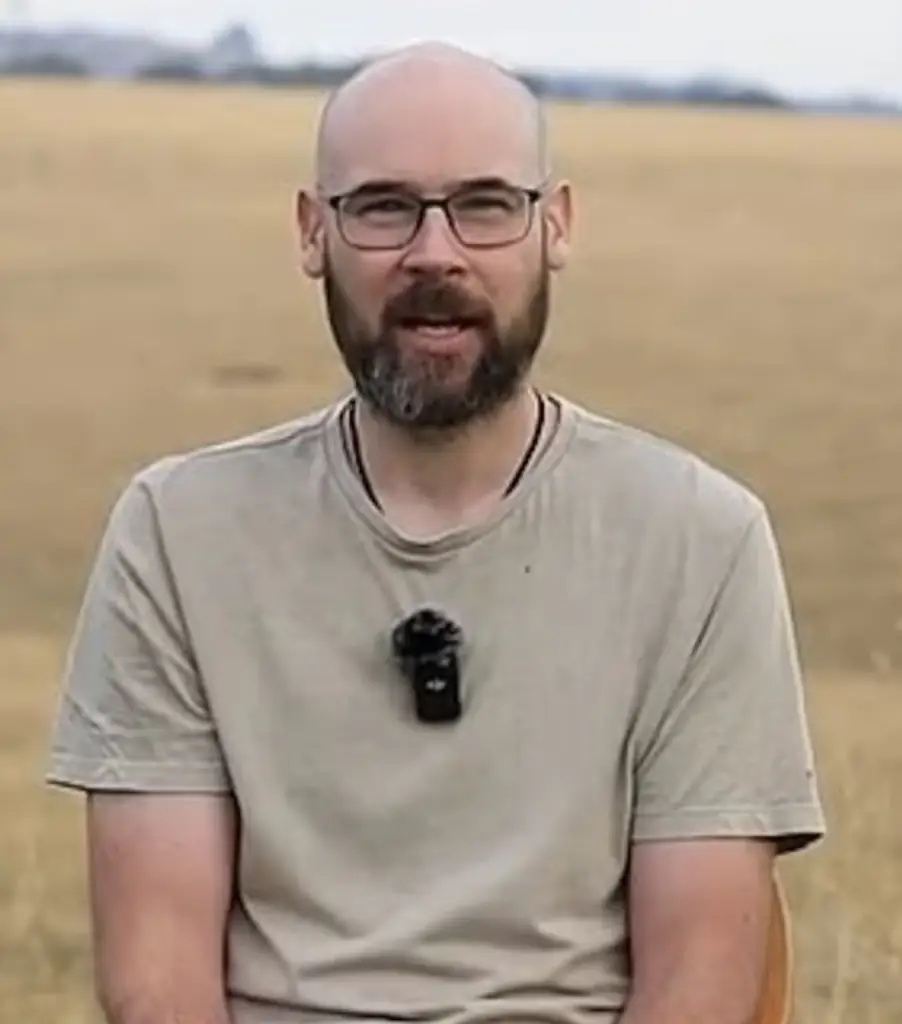
Fraser, a 41-year-old Australian teacher and researcher, was diagnosed with early-onset dementia, a condition most commonly linked to older adults, per GB News.
But in rare cases, like his, it strikes younger people too.
Fraser is now spending his time creating YouTube videos, with one featuring 21 raw, candid observations about life with dementia before the age of 65.
His journey began in his late 30s, during a low-stress lifestyle shift from suburban living to rural tranquility.
“I sort of put everything down to being stressed initially, and then I moved from suburbia down to the countryside. Lifestyle and everything got a lot better," he said.
But relief wasn’t coming, despite the improved environment: “After a while, I noticed that my stress and anxiety had gone, the issues that I was experiencing with my memory were still present.”
One terrifying moment was when Fraser genuinely thought his daughter had disappeared.
He later discovered she had gone to the cinema - something she’d plainly told him many times before.
That moment, and many like it, pushed Fraser to seek answers.
What followed was a diagnosis that shattered every expectation of what dementia “should” look like.
In a deeply moving video, Fraser lays out 21 raw observations about life with the disease - details that go far beyond forgetting names or misplacing keys.
He explains that language is one of the first things to be affected. “Most evenings you will have difficulty speaking,” he shared, noting how even basic communication can become a struggle by the end of the day.
It’s not just about memory loss. Dementia, Fraser says, warps your personality.
He’s noticed himself becoming more selfish, less reliable, and increasingly anxious. “You will get anxious and depressed and need help getting through it.
But, reducing stress will have a bigger impact than you think,” he said. Research backs him up - stress has been linked to a 24% higher risk of developing dementia.
Experts aren’t sure exactly why, but it may be tied to stress triggering depression, itself a potential warning sign of cognitive decline.
Fraser describes days when his brain feels like it’s in a haze. “A fog just comes over your brain and you just can't really focus on things very well, and you're in a haze,” he said.
He also shared how mundane tasks - like turning off the shower or planning his day - have become complicated. And while you might expect a diagnosis like this to spark spiritual reflection, Fraser’s experience was the opposite.
“You will not turn to God or spend your days thinking about the meaning of life,” he wrote, adding that he doesn’t think about death and isn’t afraid of it either.
Instead, Fraser is focused on the here and now - spending more time with loved ones and taking trips when he can.
His diagnosis has forced him to slow down and re-prioritize what matters most. “Some months you will have less foggy days and you will learn new things easier than you thought.
"You will be certain you have it and certain you do not have it,” he noted, capturing the strange duality of certainty and doubt that can accompany a long diagnostic journey.
Experts agree that diagnosing early-onset dementia can be tricky. “The misunderstanding that dementia is a disease of older adults leaves people with young-onset dementia fighting to be heard,” said Molly Murray from the University of West Scotland, per the Daily Mail.
She also pointed out that rarer types of dementia can present with atypical symptoms, which often get missed, further delaying diagnosis.
health5 min(s) read
Sadly, hundreds of thousands of people across the world end their lives by suicide each year. According to the Mental Health Foundation, that is around 800,000 people globally.
It's a sobering statistic, and one that we must consider seriously. Though we have taken strides to destigmatise mental health, we must always hold space for conversation; especially in the midst of the coronavirus pandemic - which has resulted in 49 per cent of the UK population saying they have experienced an uptick in negative thoughts.
Suicide, in particular, can affect anyone, and this is something that was touched upon in the Channel 4 documentary, Caroline Flack: Her Life and Death. The programme aired on Tuesday, and explored the factors that led to the suicide of the television presenter, aged 40.
With this in mind, VT spoke to José Veiga, a BACP registered counsellor and psychotherapist, about what to do when someone opens up about their struggles, and voices suicidal thoughts.
"When someone is experiencing suicidal thoughts, there is normally some unspoken pain that needs to be let out," Veiga explains. "So, it's very important - especially if someone has confided in you - to not brush it off. Take it seriously, and listen to what they have to say, as talking about suicide can be very difficult for the individual involved.
"There is a misconception that if you talk to someone about their suicidal thoughts, they will be more likely to commit the act. But the opposite is true," Veiga continues. "Somebody who is suicidal is in a lot of pain, and they need to be heard. I would give as much space for them to talk as possible. This may include asking what support they would like, and what they think they need to deal with their feelings."
If someone is in crisis, and a suicide attempt may be imminent, Veiga says to speak to them about your intention to call an ambulance for their protection.
Otherwise, if they are not in immediate danger, and do not feel comfortable continuing the conversation with you, you should encourage them to reach out to professionals. Veiga cites The Samaritans, Rethink Mental Illness, and Mind (which has branches in most regions across the UK), as useful resources.
Counselling can also provide invaluable support. "If someone is experiencing suicidal thoughts that don't go away, counselling can help them explore what the issues are in more detail."
"Speaking to professionals allows the individual to see just how much support is available," he explains. "It's important for them to not be alone when they're having these feelings."
The psychotherapist stresses the importance of regularly keeping in contact with the individual in question. "Even if there is no resolution - which there likely won't be for that initial conversation - it's about staying in touch," he says.
Veiga also explains that people demonstrate suicidal thoughts and behaviour in different ways. This is why it is so important to check in on loved ones who are behaving in a way that is out of the ordinary for them, especially during this trying time.
"When you're asking how they are, ensure to be actually interested in the answer," he continues. "Very often when we ask 'how are you?', we're not necessarily interested in a depressing or negative answer, but we need to remember to be genuinely interested in how our loved ones are, even if they're not feeling great."
"You must also look after yourself," the psychotherapist concludes. "Listening to someone speak about their suicidal ideation can be difficult to hear, especially if it's somebody who is close to you. So, reach out to somebody yourself. It's always the single most important thing a person who is struggling can do."
Anyone can contact Samaritans FREE any time from any phone on 116 123, even a mobile without credit. This number won’t show up on your phone bill. Or you can email [email protected].
You can follow Samaritans on social media on Twitter, Facebook and Instagram. Find out how you can support The Samaritans or volunteer with us here.
José Veiga is a BACP Registered counsellor and psychotherapist, you can visit his website, here.(Feature Image Credit: Unsplash)
health4 min(s) read
One doctor has claimed that there's something we can all do to reduce the likelihood of developing dementia.
The medical expert has claimed that a new morning routine could be the answer to swerving the health condition altogether.
Rates across the globe could drop if Dr Neal K. Shah is to be believed, as he has explained that new scientific data points towards nonagenarians (people aged 90 or over) who remain "cognitively sharp."
The medical expert and YouTube content creator pointed towards neurological experiment stats, which reveal that the habit lies in their morning routine, which may be more important than we think.
Apparently, the human brain carries out a full cleaning cycle every night in our sleep, which gets rid of toxic proteins that fester and build up in Alzheimer's patients.
In a YouTube Short, the doctor said: "Neurologists studied people who stayed cognitively sharp into their 90s and they kept finding the same thing in their morning routine. But first, you need to understand what happens to your brain at night."
"Here's what most people don't know: the quality of tonight's cleaning cycle is determined by what you do tomorrow morning," he revealed.
Apparently, the first half hour of your day is paramount.
He explained: "Within the first 30 minutes of waking, most people grab their phone, scroll, and in doing so they accidentally sabotage the most protective thing in their ageing brain
"Your brain has a master clock, one specific trigger sets it every morning. Get it right and tonight's sleep is deep and restorative, get it wrong for years and the proteins will start building up.
"This habit is free, it takes 10 minutes and almost nobody does it deliberately," he insisted - so what is it?
Well, it's all to do with getting sunlight into those tired eyes.
"Within the first 30 minutes of waking, before any screens, even before coffee, before anything. That one decision sets your cortisol levels, your melatonin and your brain's overnight cleaning cycle," he claimed.
While it is easier to enjoy year-round morning sun in some states compared to others, doing it while possible could be a lifesaver.
According to a 2022 study published in the BMC Medicine journal, it was found across 362,094 UK Biobank participants that people who spent two hours outside in the summer and one hour outside in the winter had the lowest chance of dementia.
However, it also revealed that too much sunlight can also increase the risk of dementia, similar to getting too little sunlight.
A separate study by the University of Exeter published in 2014 involved 1,658 Americans, finding that people with a serious Vitamin D deficiency were twice as likely to get dementia.
Those with a moderate deficiency were 53 percent more likely to develop the condition too - people can increase their intake of the vitamin by eating oily fish, red meat and egg yolks, in addition to sunlight exposure.
According to the CDC, there are some signs to look out for when it comes to detecting dementia in its early stages.
Symptoms
Telltale signs
Other signs of dementia include:
health2 min(s) read
A mother from West Lothian, Scotland is opening up about the tragic ordeal she has been forced to endure since her now-two-year-old daughter first started developing dementia from the age of one, the Mirror reports.
The condition - which usually only affects the elderly - has already taken its toll on two-year-old Mirryn, her mother Vicky Cunningham says.
According to the 34-year-old, Mirryn is unable to stand without assistance and has little choice but to lay down for most of the day as a result of "half her brain" being "eaten away by a chromosome disorder".
The toddler was diagnosed with a very rare condition known as CLN1 Battens. The illness attacks the sufferer's nervous system and causes a decline in their vision, mobility and their ability to think.
Mirryn was a premature newborn, arriving into the world at just 31 weeks and two days and weighing a worrying 3lb 2oz.
Following her premature birth, Mirryn stayed in a special care unit for the next two months and was treated for jaundice.
After the two-month stay, however, it then appeared that baby Mirryn had recovered extraordinarily well and that she would grow to be a healthy child.
"She was developing normally. She would gurgle and smile. She was really lovely and had a cheeky personality developing," her mother said.
Unfortunately, the plain-sailing phase in Mirryn's development didn't last long.
When her baby was about 10 months old, Cunningham started spotting some worrying signs.
"She was no longer gripping properly," the 34-year-old recalls. "She seemed to be weakening in general and I just instinctively knew something was not right."
Following trips to the doctors', Mirryn was referred to St John’s Hospital, and after various tests, the two-year-old was diagnosed with childhood dementia in January of this year.
"It’s heartbreaking to see," Cunningham adds. "She should be starting nursery but I know it will never happen. There’s so much she will be missing."
Due to how rare the condition is, very little research has been conducted into the area and there is currently no cure.
Unfortunately, this means the mental and physical abilities of Cunningham's baby girl will only continue to decline and the heartbroken mum admits that she could lose her any day now.
celebrity3 min(s) read
Wendy Williams has spoken out following her diagnoses of dementia and aphasia, asking for "personal space".
In a press release from Williams' team, it was disclosed that the former host of The Wendy Williams Show received her diagnosis last year following a series of medical assessments in 2023.
The statement, issued on February 22, disclosed that doctors identified primary progressive aphasia in the 59-year-old, a condition affecting communication, speech, writing, and language comprehension, as outlined by Mayo Clinic.
Additionally, she was diagnosed with frontotemporal dementia (FTD), a group of brain disorders affecting behavior, personality, language, and movement, according to Johns Hopkins Medicine.
Symptoms of FTD range from loss of motor skills to difficulties in speech and tend to worsen over time. While it typically manifests between the ages of 40 and 65, it can affect younger individuals and is the most common form of dementia for those under 60.
Following her diagnosis, Williams spoke with PageSix to discuss her health and the support that she has received in the aftermath.
Fans were left 'heartbroken' after seeing Williams in this clip from her upcoming documentary:"I want to say I have immense gratitude for the love and kind words I have received after sharing my diagnosis of Aphasia and Frontotemporal Dementia (FTD). Let me say, wow! Your response has been overwhelming," Williams said.
She continued: "The messages shared with me have touched me, reminding me of the power of unity and the need for compassion."
Expressing her desire to help others facing similar challenges, Williams extended her appreciation to the Association for Frontotemporal Degeneration for their support and efforts in raising awareness of FTD.
While acknowledging the support of her fans, Williams emphasized her need for space and peace to navigate her health journey, stating that she "[needs] personal space and peace to thrive."
In the wake of her diagnosis, snippets from Williams' upcoming documentary, Where Is Wendy Williams? set to air on February 24 and 25 on Lifetime, have circulated widely on social media platforms.
Executive produced by Williams herself, the documentary delves into the renowned host's health struggles, including Graves' disease, memory loss, and substance abuse.
One particular clip that has left many of Williams' supporters devastated is when former reality star Angela 'Blac Chyna' White checks in on her, and says: "You've always been like, honest with me, and put me in my place, in the most motherly, kind way."
The TV personality responded: "Well, my real name is Wendy Hunter. Yep. And I’m divorced. He’s got no money." White then gets emotional as she realizes her friend didn't understand anything she's been saying. White then says "I love you" to Williams, who replies: "So do I."
Williams has been undergoing treatment with specialists at Weill Cornell Medicine. The disclosure of her diagnosis aims to counteract "inaccurate and hurtful rumors" surrounding her health, according to her care team.
In a bid to raise awareness and advocate for understanding, the team emphasized the importance of dispelling the stigma surrounding aphasia and frontotemporal dementia.